Sponsored

Battery and Charging

DukeCanBuildit

Well-Known Member
First Name
Duke
Joined
Jul 27, 2020
Threads
66
Messages
9,675
Reaction score
46,280
Location
Kitchener, Ontario
Vehicle(s)
2019 XLT SuperCab - FTW!
Occupation
Retired (P/T) Caregiver (F/T)
Vehicle Showcase
1
Correct me if I'm wrong, a maintainer needs to be on the battery almost constantly?
I live in a condo complex and cannot run a cord to my truck.
That's why I asked about a trickle charger, as my only option is to plug it in at work. It's not something I can do every day either.
So, I need to be enlightened if I'm wrong and why?
AGM batteries don’t look any different but they are, and they need a “smarter” charger or you can break them. A maintainer doesn’t need to be on every day. You should be able to keep decent battery levels by doing this at work, even if it’s not all day, every day. My truck sits for days or a week and then only makes a small run - I have no battery maintainer and no issues but I know when the battery is a bit low because my ASS won’t engage until I’ve been driving for a while. So, not needed “all the time”.

Here’s the enlightenment you seek, straight from the Interstate Batteries site…

AGM batteries have special charging needs.
Some battery chargers offer an AGM or Absorbed setting to meet those special charging requirements.​
An AGM-compatible battery charger sends more amps into a lead-acid battery while keeping the voltage less than 14-15 volts. AGM chargers go through the three charging phases (bulk, absorption and float) just like a regular charger. However, a regular charger could exceed 17 volts when charging a battery.​
AGM batteries can absorb more current than a regular car battery, which is why they can recharge faster. It takes time to charge regular batteries. They need slow, low-amp charging to prevent overheating — and they need more volts to push through their internal resistance.​
AGM batteries don’t have nearly as much internal resistance, which is how they absorb 30, 40, even 50 amps at a time instead of a regular battery getting stressed out at more than 10 amps. This is also why an AGM battery needs special charging.​
Regular battery charging can break AGM batteries.
Regular batteries need 15-17 volts to get the same amps. However, voltage greater than 15 volts can overheat an AGM and generate enough pressure to pop its safety valve. That one-way valve is supposed to relieve excess pressure from the harmless gases that come when a battery’s charging. Too much voltage becomes too much pressure, and pop. Without an airtight seal, an AGM will dry out in hours. Then you’re in the market for a new AGM battery.​
Bottom line: Do not use a regular battery charger for an AGM battery. Make sure you use the AGM or Absorbed setting. If you’re not sure, don’t risk it.​
Sponsored


chasvs

Well-Known Member
Joined
Feb 6, 2019
Threads
18
Messages
1,017
Reaction score
1,488
Location
Tampa
Vehicle(s)
2019 Ranger Lariat
Vehicle Showcase
1
I have a battery charging issue which may be twofold.
First, due to life and health challenges, I don't drive a lot. Typically about 10 miles a weekday and maybe 20 on the weekend.
My Ranger is a 2020 and I have less than 14,000 miles on it,

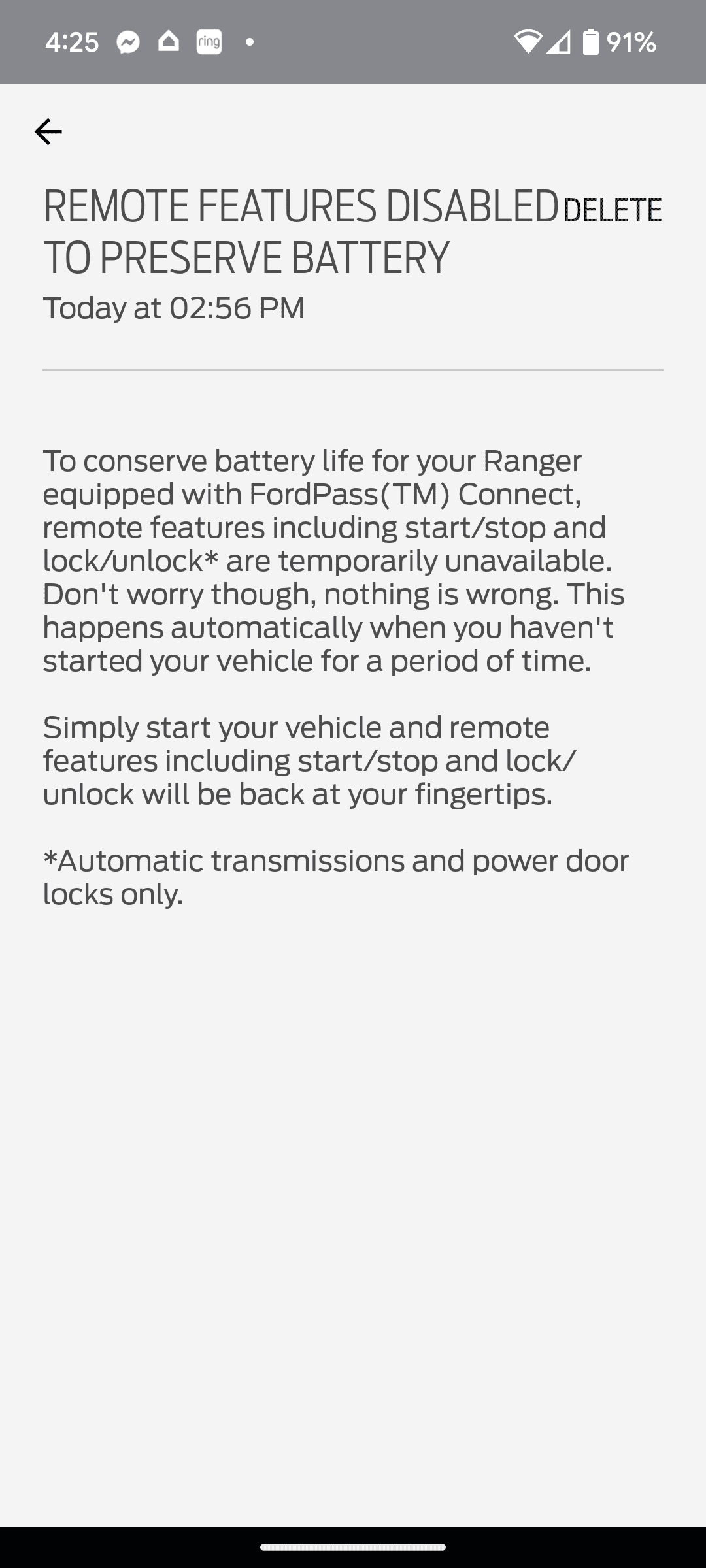
My challenge is I keep getting notifications that FordPass keeps telling me my "Remote Features Disabled to Preserve Battery life".
I get this notice shortly after I drive anywhere.
I occasionally take long drives on the freeway but it only delays the notice. Maybe for a day. Considering the price of gas in California, this is an expensive way to charge the battery.

Ford recently replace my battery under warranty as defective.

So now my questions are - Is the low charge due to my lack of driving the truck?
Is there possibly something wrong with my charging system?
(I have a Garmin Dashcam plugged into my OB2 port but it pulls barely any power and most parking options are disabled)

I have considered getting a trickle charger to charge the battery.
But since I live in a condo complex, my only option is at work.
Will charging 8 hours at a time make a significant difference?

This has been annoying for a while. I appreciate any guidance or feedback.

FordPass.png
Just get a trickle charger and your issues will disappear
 

OrangeStreak

Well-Known Member
First Name
Paul
Joined
Aug 18, 2020
Threads
32
Messages
3,195
Reaction score
13,997
Location
New Mexico
Vehicle(s)
2020 SCab STX 4X4 Towing Pkg. BFG K02's 265/70/17
Occupation
Retired. MTS. ANG veteran. 2nd Amendment supporter.
David,

The lack of use allows your battery to drain down too far. A regular “trickle charger” is not the right way to maintain the battery in your Ranger. You’ll need a proper battery maintainer and if I’m not mistaken, our other David, @subquark , can likely fill you in on what to buy. I’m pretty sure he has one - he has everything else. If not him, then maybe @OrangeStreak . Paul? David?
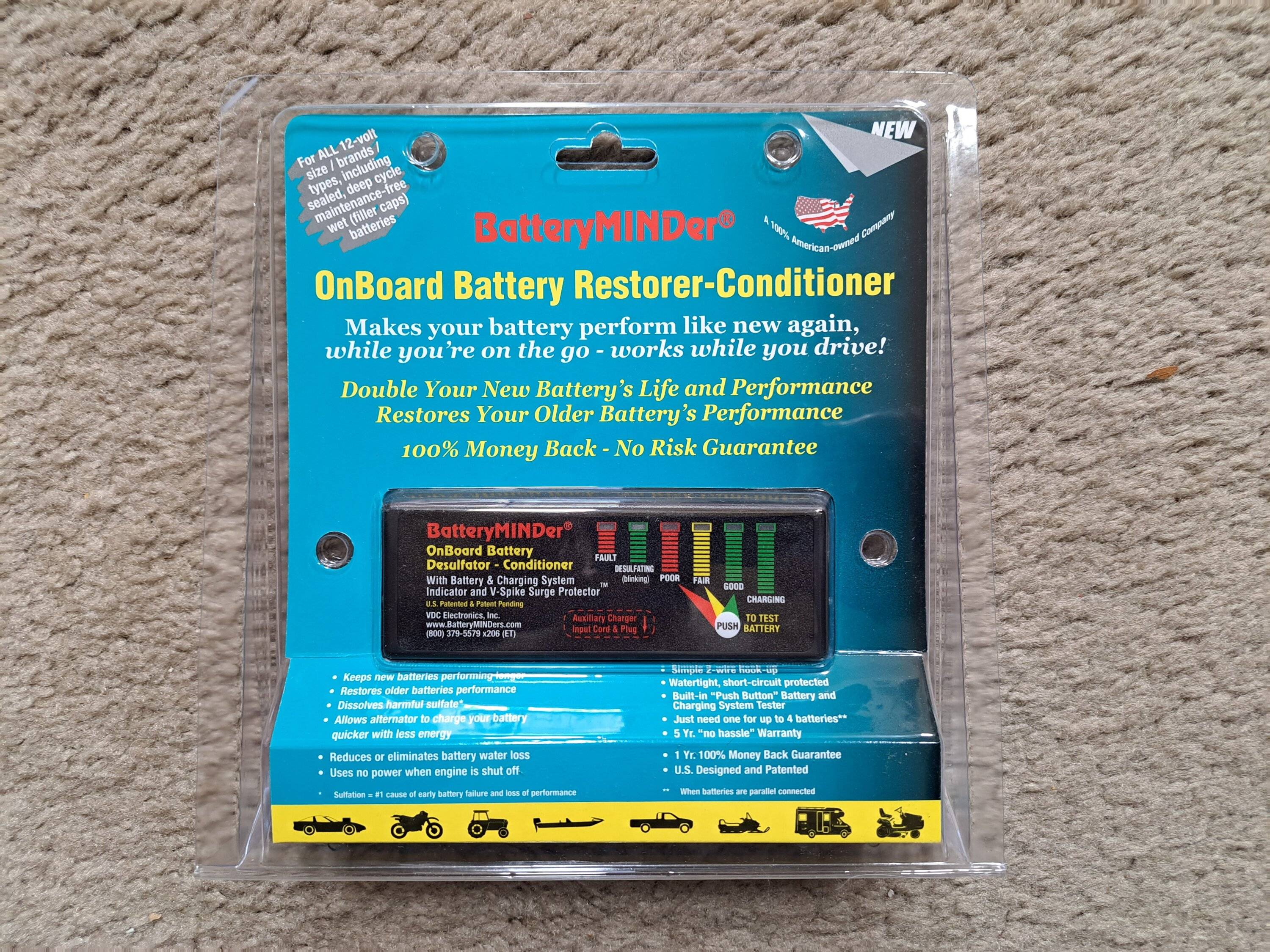
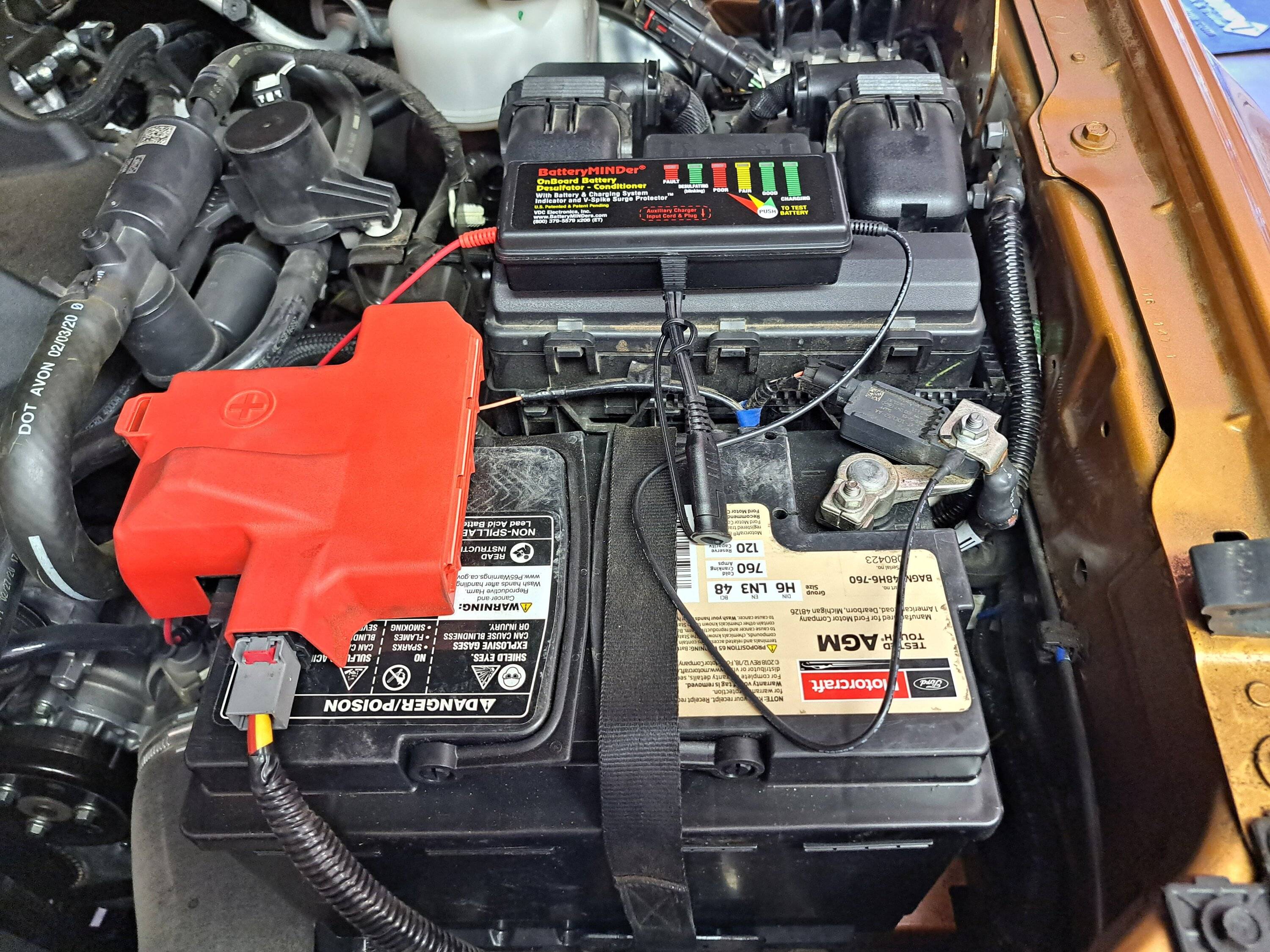
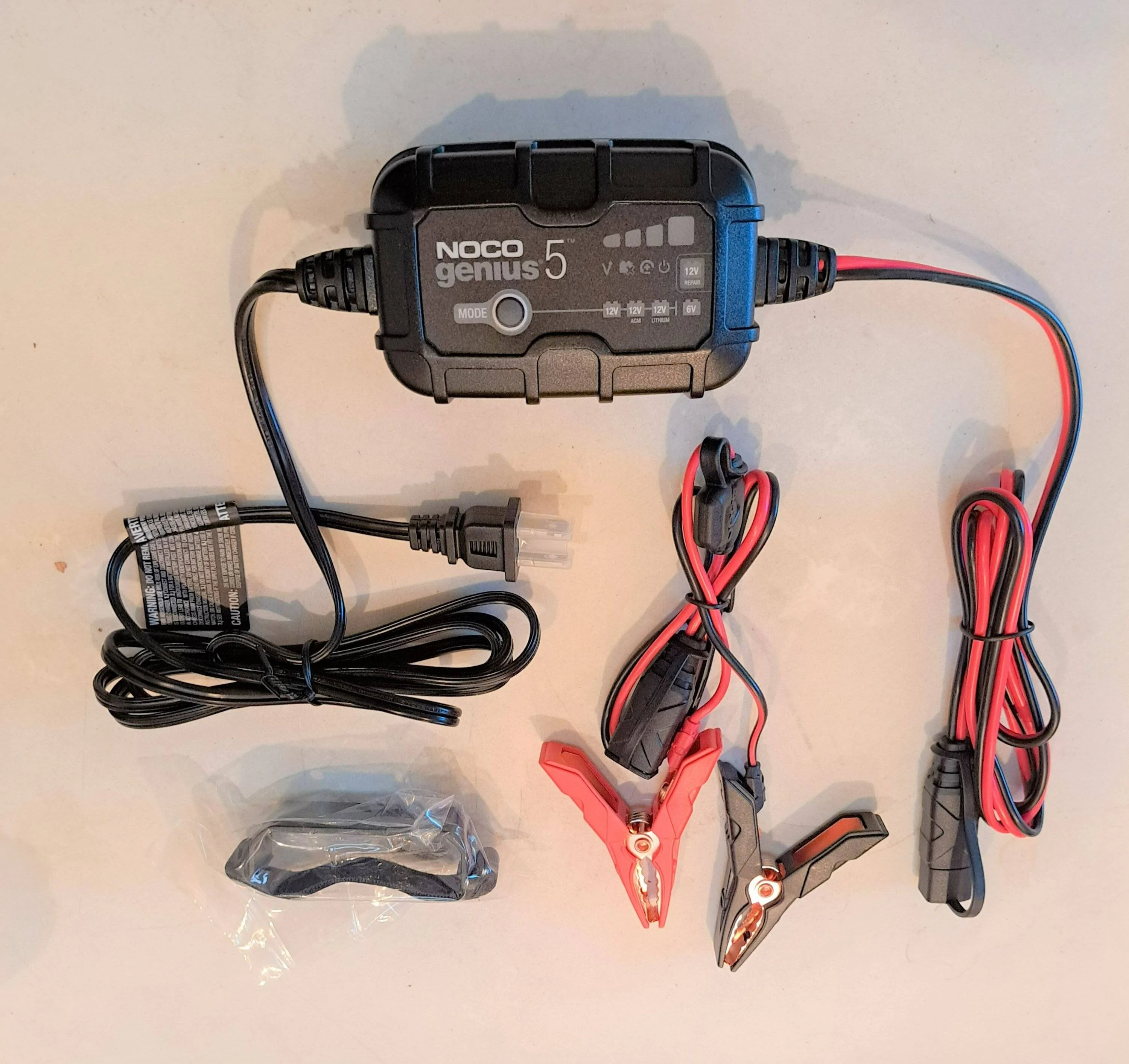
Duke, that is right. My battery maintainer (BatteryMINDer) was recommended by a very knowledgeable source... Tony @TJC and has worked well for me. It is installed to the battery and disulfates it while the truck is being driven. I also use a NOCO charger which I connect to the battery when the truck is parked in the garage to maintain the correct charge and also disulfate the battery when the truck is idle.

1709574726075.jpeg


1709574821722.jpeg


1709574880765.jpeg
 
Last edited:

moorejl57

Well-Known Member
First Name
Jamie
Joined
Jun 21, 2021
Threads
3
Messages
253
Reaction score
934
Location
Corvallis Oregon
Vehicle(s)
2021 Ranger Lariat FX4, 501A, fully damped
Occupation
Engineer
This is a function of the BMS recharging setting. That 12.55V threshold is ~70% to 75% battery charged level. Ford does not allow the battery to ever be fully charged. They are using the 25% space to allow for the high voltage spike regenerative charge feature when you coast to a stop / decelerate.

It is not healthy to keep a lead acid battery (flooded or AGM) consistently undercharged, but Ford built that feature into the charging system. Even if you manually charge the battery to 100%, the Ford charging system will immediately discharge the battery to 70%-75% capacity depending on the trim level of your Ranger.

Battery sulfation begins when the charge level drops below ~12.65v. Sulfation will destroy your battery over time.

Ford traded battery life for an ever so slightly higher EPA rating.

To override the Ford BMS charging system
  1. simply unplug the BMS sensor at the neg battery terminal,
  2. or disable ASS/BMS in Forscan,
  3. and/or (in combo with #2) raise the battery charge level in Forscan,
  4. or live with it and replace your battery every 18 months to 3 years, depending on your driving patterns.
You "pick your poison" and live with the consequences.

FWIW, even if you disable BMS, the dark voltage drain on the 5G Ranger is significant enough to drain your battery much faster than the previous generation Rangers.

I have tried Option 1, and a combo of option 2 & 3, and I am coming to the opinion that Option 1 is the closest to the previous gen Rangers charging system. I believe that when you pull the plug on the BMS sensor, the BMS system sees a faulty sensor, logs an error, and goes into backup charging mode, which is something very similar to the old standard charging system used by Ford for years.

I've been comparing the charging patterns of the 5G to my old 4G Ranger under different scenarios.

The 4G is easy to understand. You start the truck, the charging system looks at the state of charge and temperature, and maybe a few other parameters unknown to me, and it sets the charging range voltage. The charging system will stay within that range the entire time that the truck is running. Turn off the truck and restart, and the charging system will reevaluate and reset the voltage to a lower level. I've seen my 4G go from an initial charge rate of 14.4v down to 14.1v and stay there. Turning off the truck and immediately restarting resulted in a charge rate of 13.9v that dropped to 13.6v within 10 miles. Charge voltage will drop even lower depending on ambient temperature. I have seen my 4G charge rate as low as 13.1V. I have never seen it go above 14.4v

On the 5G Ranger, I have seen charge voltage go up above 15.5v when coasting or braking, and well below the accepted 12 battery trickle charge rates. My testing with the BMS constantly enabled has been limited, as I view the BMS system as harmful to battery health. I have seen enough to know I don't want the stock parameters of the BMS system controlling my battery charge rates.

With the BMS sensor cable on the 5G unplugged I see the same behavior as the 4G Ranger, but at a slightly higher voltage level (.2v-.3v higher). Perhaps due to different charging strategies of AGM batteries vs the flooded batteries used in the 4G Rangers.

With the BMS sensor plugged in I see different behavior and I am looking for a definable repeatable pattern. Still playing with Forscan settings and BMS charging thresholds. I currently have ASS/BMS disabled and battery charge threshold at 95% via Forscan updates.

One last thing, if I let my truck sit for 2 weeks I will need to put a charger on it as the battery will be significantly discharged. To minimize current draw when the truck is off I have turned off much of the electrical toys that Ford has on by default. I don't need my truck lighting up like a Christmas tree when I open the door. Or headlights staying on when I exit my truck, etc.

If it were possible to set the truck into deep sleep mode when I exit it, I would. The dark power drain is greater than I am comfortable with.

Edited to correct spelling, punctuation, and to clarify thoughts
I have mine set to 85% in Forscan and it wouldn't charge beyond 12.55V even with my NOCO Genius5 charger directly connected to the battery terminals for 3 days. So in my case, it is likely a sick battery.
 

mtbikernate

Well-Known Member
Joined
Apr 13, 2020
Threads
11
Messages
1,174
Reaction score
2,636
Location
NC
Vehicle(s)
2019 Ranger XLT 4x4
I put a NOCO Genius 2D in mine. On mine, I've got the charger permanently mounted inside the engine bay and I attached a GCP AC port (the 1E IIRC)

GCP AC Ports (no.co)

52703533325_a923a21fb8.jpg


This way, my charger/maintainer is always with me and all I need is a regular ol extension cord.

52707155840_0a9047483c.jpg


As others have suggested, you might need more juice to get a good charge in 8hrs. My little 2A charger took a good while to get my battery back in shape when I first plugged it in. As in, probably 2 weeks. But now I only plug it in pretty occasionally (overnight for a day or two every few weeks) and I haven't seen those power warnings in a LONG time.

And FWIW, mine is a 2019 with its original battery. Still checks out in tip top shape when I bring it in for service.


TJC

Well-Known Member
First Name
Tony
Joined
Aug 28, 2020
Threads
45
Messages
3,949
Reaction score
9,928
Location
North Carolina
Vehicle(s)
93 Miata, 05 Ranger 4x4, 20 Ranger 4x4, 23 CX-5
The question is - What is the charge voltage from the alternator with the engine running?

Step 1 - Get out a voltmeter and measure the voltage on the battery with the truck running. It will probably be as low as in 12.55v.

Step 2 - Turn off the truck. Temporarily unplug the BMS Cable located on the negative battery terminal. Start the truck up and measure across the battery again. You'll see your charge voltage much higher.
 

SigOris

Well-Known Member
First Name
John
Joined
May 18, 2022
Threads
47
Messages
1,243
Reaction score
4,089
Location
Greenwood Maine
Vehicle(s)
MY23 F150 CC Lariat PB & MY25 Mustang GT Convertible 60th #0807
Occupation
Retired DoD EE
If you have approximately 8 hours to charge, I suggest getting a charger with at least 4-5 amp capacity. Also, since your battery is AGM type, get a charger that’s compatible with AGM batteries. This is what I have. It works great.
I’ve got that same charger for my Ranger, Bronco Sport, Branson Compact Tractor, and Polaris Ranger
 
OP
OP
Cwbyfan62

Cwbyfan62

Well-Known Member
First Name
David
Joined
Sep 1, 2020
Threads
11
Messages
50
Reaction score
131
Location
Simi Valley, CA
Vehicle(s)
2020 Ford Ranger XLT
Occupation
I work
Duke, that is right. My battery maintainer (BatteryMINDer) was recommended by a very knowledgeable source... Tony @TJC and has worked well for me. It is installed to the battery and disulfates it while the truck is being driven. I also use a NOCO charger which I connect to the battery when the truck is parked in the garage to maintain the correct charge and also disulfate the battery when the truck is idle.

1709574726075.jpeg


1709574821722.jpeg


1709574880765.jpeg
Ok, several questions.
At best I will have access to an electrical power source once a week, maybe once every 2 weeks.
This is where I'm confused, will 8 hours of a battery maintainer do what I need it to do? Charge my battery to a charge that will last a week or two.
Articles I read said a maintainer is for a parked or stored vehicle, one that rarely moves?
My thought (however wrong I might be? ?) is a smart trickle charger will do more for my battery in 8 hours than a maintainer will.

As for the rest of your suggestions, not likely at this time.
I cannot/will not add a maintainer to my truck until my warranty expires. I'm not going to give Ford any excuse not to honor it if something goes wrong. Plus, any work on the truck is a physical challenge for me. ?
 
OP
OP
Cwbyfan62

Cwbyfan62

Well-Known Member
First Name
David
Joined
Sep 1, 2020
Threads
11
Messages
50
Reaction score
131
Location
Simi Valley, CA
Vehicle(s)
2020 Ford Ranger XLT
Occupation
I work
I want to take a minute and say thank you to everyone who has replied, offered their thoughts and solutions. How cool is this!
I'm still confused, but thrilled that everyone has taken the time to help!
 

got3fords

Well-Known Member
First Name
James
Joined
Apr 12, 2021
Threads
131
Messages
5,325
Reaction score
13,838
Location
22973
Vehicle(s)
2026 Marsh Gray Ranger Raptor, 1995 Harley XLH1200
Occupation
Mom Joke Professional
Yes, many great suggestions. You are limited to when you can plug in any kind of charge/maintainer. Same here. I have no garage, where I park at work there is no AC outlet. So I have been considering some type of solar charger. But I haven't seen any with an AGM specific maintainer capability. Most are just 12V supply.
 

EJH

Well-Known Member
First Name
Ed
Joined
Oct 7, 2020
Threads
17
Messages
932
Reaction score
1,832
Location
Oregon
Vehicle(s)
Subarus, 2021 Ranger
Occupation
Engineer
Yes, many great suggestions. You are limited to when you can plug in any kind of charge/maintainer. Same here. I have no garage, where I park at work there is no AC outlet. So I have been considering some type of solar charger. But I haven't seen any with an AGM specific maintainer capability. Most are just 12V supply.
Many solar charge controller have AGM settings. The couple different models that I have used on my travel trailer can be switched between lead acid, AGM and Lithium 12V. I current use a Renogy MPPT charge controller, but even their less expensive PWM controllers can be set for AGM. You could get a PWM 10A controller and 100W panel for less than $150. Keep the panel in the truck bed :)
 
Last edited:

got3fords

Well-Known Member
First Name
James
Joined
Apr 12, 2021
Threads
131
Messages
5,325
Reaction score
13,838
Location
22973
Vehicle(s)
2026 Marsh Gray Ranger Raptor, 1995 Harley XLH1200
Occupation
Mom Joke Professional
Many solar charge controller have AGM settings. The couple different models that I have used on my travel trailer can be switched between lead acid, AGM and Lithium 12V. I current use a Renogy MPPT charge controller, but even their less expensive PWM controllers can be set for AGM. You could get a PWM 10A controller and 100W panel for less than $150. Keep the panel in the truck bed :)
That is indeed a very interesting option. Hmmmmm! Also wandering if I should just get a boost jump pack. Similarly priced. Might be better for long trips where I am not stopping for much. Two totally different approaches I guess.
 

TJC

Well-Known Member
First Name
Tony
Joined
Aug 28, 2020
Threads
45
Messages
3,949
Reaction score
9,928
Location
North Carolina
Vehicle(s)
93 Miata, 05 Ranger 4x4, 20 Ranger 4x4, 23 CX-5
That is indeed a very interesting option. Hmmmmm! Also wandering if I should just get a boost jump pack. Similarly priced. Might be better for long trips where I am not stopping for much. Two totally different approaches I guess.
Long trips should charge your battery to 75% if ASS/BMS is active, and 100% if you pull the BMS Cable off the sensor on the negative battery terminal.
 

OrangeStreak

Well-Known Member
First Name
Paul
Joined
Aug 18, 2020
Threads
32
Messages
3,195
Reaction score
13,997
Location
New Mexico
Vehicle(s)
2020 SCab STX 4X4 Towing Pkg. BFG K02's 265/70/17
Occupation
Retired. MTS. ANG veteran. 2nd Amendment supporter.
Ok, several questions.
At best I will have access to an electrical power source once a week, maybe once every 2 weeks.
This is where I'm confused, will 8 hours of a battery maintainer do what I need it to do? Charge my battery to a charge that will last a week or two.
Articles I read said a maintainer is for a parked or stored vehicle, one that rarely moves?
My thought (however wrong I might be? ?) is a smart trickle charger will do more for my battery in 8 hours than a maintainer will.

As for the rest of your suggestions, not likely at this time.
I cannot/will not add a maintainer to my truck until my warranty expires. I'm not going to give Ford any excuse not to honor it if something goes wrong. Plus, any work on the truck is a physical challenge for me. ?
Good questions.
Sorry, but I am not that familiar with battery operation and issues so hopefully Tony @TJC who is very knowledgeable about this will respond here to your inquiry! :)


Top