Sponsored

Maximizing Battery Life

got3fords

Well-Known Member
First Name
James
Joined
Apr 12, 2021
Threads
131
Messages
5,319
Reaction score
13,809
Location
22973
Vehicle(s)
2026 Marsh Gray Ranger Raptor, 1995 Harley XLH1200
Occupation
Mom Joke Professional
Well, It has been 6 months since I installed the Batteryminder onboard Desulfator. Here are the initial reading and the reading 6 months later.
Both with a State of Rest of 5 Hours

- Initial check - After full Battery Charge
- 6 Month check - Simply driving the truck and waiting 5 hours after shutting it down

Ford Battery Rated at 760 CCA

Initial

Voltage = 12.37
Internal Resistance = 5.19 mOhm
CCA = 485.7

6 Months Later (Newer Battery Tester)
State of Health = 100%
State of Charge = 100%
Voltage = 12.66
Internal Resistance = 3.06 mOhm
CCA = 980

The results speaks for themselves.
Are these repeatable? I always get a different reading everytime I connect the tester. Also, you don't give initial SOH or SOC, is that because of a different tester?
Sponsored

 
OP
OP

TJC

Well-Known Member
First Name
Tony
Joined
Aug 28, 2020
Threads
45
Messages
3,932
Reaction score
9,867
Location
North Carolina
Vehicle(s)
93 Miata, 05 Ranger 4x4, 20 Ranger 4x4, 23 CX-5
Are these repeatable? I always get a different reading everytime I connect the tester. Also, you don't give initial SOH or SOC, is that because of a different tester?
The battery is 6 months older and I had ASS shut off using the module installed between the switch and cable. The BMS sensor was also unplugged well before I began testing.

Regarding the readings not showing SOC and SOH, Yes the initial old tester did not report that data.

I was reaching 14.5V charging early one. Now only seeing 13.8 at the peak, and typically see 13.6v-13.7v.

I recently set the Batter SOC target in Forscan to 95% from the stock setting of 75%. But it has not been in place long enough to make a difference.

I have used the BatteryMinder Onboard Desulfator on 4 previous cars. All batteries have lasted at least 9 years. The on that lasted only 9 years gave up the ghost after the alternator died 120 miles from my destination on a trip. I drove the 2005 Ranger using just the battery and just made that 120 miles, An alternator was waiting and installed when I arrive, but the battery was severely depleted. It lasted a full 2 years after the trip. The other 3 batteries went well over 10 years.

One more observation. I other vehicles do not have the extreme variances in battery charge states as the 2020 Ranger. When I first began testing the 2020 Ranger Battery, the readings varied more than I had ever seen in any of my previous autos.

I think that I has smoothed out those highs and lows. I'll know more in a month or more as I finish dialing in my charge strategy. I will be lowering the SOC threshold to 90%. If after a few weeks usage I see the SOC or SOH fall off I will go back to the previous high.

I feel like I am that very close to having the charging system on my 2020 Ranger tuned for maximizing battery life over fuel savings.
 

got3fords

Well-Known Member
First Name
James
Joined
Apr 12, 2021
Threads
131
Messages
5,319
Reaction score
13,809
Location
22973
Vehicle(s)
2026 Marsh Gray Ranger Raptor, 1995 Harley XLH1200
Occupation
Mom Joke Professional
The battery is 6 months older and I had ASS shut off using the module installed between the switch and cable. The BMS sensor was also unplugged well before I began testing.

Regarding the readings not showing SOC and SOH, Yes the initial old tester did not report that data.

I was reaching 14.5V charging early one. Now only seeing 13.8 at the peak, and typically see 13.6v-13.7v.
Is it safe to assume you do not have regen charging anymore with the BMS disabled? I have a battery monitor plugged into a 12V port and I can see when the regen is working. I installed the Battery Mindr just over 8k ago. Last health check pretty good. But as I said, every time I connect the tester I get a different resut, but generally it's good.
 
OP
OP

TJC

Well-Known Member
First Name
Tony
Joined
Aug 28, 2020
Threads
45
Messages
3,932
Reaction score
9,867
Location
North Carolina
Vehicle(s)
93 Miata, 05 Ranger 4x4, 20 Ranger 4x4, 23 CX-5
Is it safe to assume you do not have regen charging anymore with the BMS disabled? I have a battery monitor plugged into a 12V port and I can see when the regen is working. I installed the Battery Mindr just over 8k ago. Last health check pretty good. But as I said, every time I connect the tester I get a different resut, but generally it's good.
Yes , no regenerative charging. I think having it off leads to a more consistent charging pattern. I like defineable repeatable results. Much easier to determine progress (or lack of). Regenerative charging and low SOC will result in wildly changing results.

Like I said earlier, I prefer maximizing battery life over fuel economy. Ford chose otherwise - as is there prerogative. It not wrong, it simply does not align with what I consider important. I find it unacceptable to replace a car battery every 3-5 years. Once every 10 years suits me just fine.

Keep an eye on several things

1 - Internal resistance is primary. If it is at or near 5 milliOhms things have begun to degrade, but it is still possible to reverse the damage at this point.

2 - CCA should be well above the battery rating

3 - SOC is important. You want your car to start even in harsh conditions.

That's my $.02 FWIW.


OP
OP

TJC

Well-Known Member
First Name
Tony
Joined
Aug 28, 2020
Threads
45
Messages
3,932
Reaction score
9,867
Location
North Carolina
Vehicle(s)
93 Miata, 05 Ranger 4x4, 20 Ranger 4x4, 23 CX-5
The secret to maximizing battery life is actually driving the truck and putting miles on it…
Generally, you are correct, but modern technology has weakened this strategy. Other options are

Keeping a battery charger on it when not in use... but with the SOC at 75%, your battery will discharge from 100% to 75% very quickly as your alternator will not keep the battery charged above 75%

Or keeping an onboard desulfator on it that eliminates sulfur crystals off the lead plates while you drive. Again , you are still fighting an up hill battle as the lower the SOC, the faster the sulfate process growth rate.

Having a state of charge at 75% is not optimal and no matter how much you drive you are going to have a sulfate build up on the plates.

The "goldilocks zone" or "sweet spot" for an AGM battery is 80% - 90% SOC. Over charging is just as bad as under charging. I am testing at 95% right now short term, as I know my Ranger dark current discharges the battery at a faster rate than any of my other vehicles.... including my 2023 Mazda CX-5.

If I see telltale signs of heat damage I'll drop it to 90%. Over the last 3 days charge rates have been steady at 13.8V, dropping within seconds to 13.6v-13.7v. No more wild swings even with headlights and AC on.

- T
 

pboggini

Well-Known Member
First Name
Pete
Joined
Nov 30, 2018
Threads
12
Messages
235
Reaction score
253
Location
San Jose, CA
Vehicle(s)
2019 Lightning Blue XL Ranger 4x2 Supercrew.
The "goldilocks zone" or "sweet spot" for an AGM battery is 80% - 90% SOC. Over charging is just as bad as under charging. I am testing at 95% right now short term, as I know my Ranger dark current discharges the battery at a faster rate than any of my other vehicles.... including my 2023 Mazda CX-5.

If I see telltale signs of heat damage I'll drop it to 90%. Over the last 3 days charge rates have been steady at 13.8V, dropping within seconds to 13.6v-13.7v. No more wild swings even with headlights and AC on.

- T
I find it interesting that you say the "goldilocks zone" is 80-90%. I up'd mine from 90% to 95% a couple of months ago and I can tel you that I see below 14volts more often now and Auto Stop/Start works much more consistently and my voltage after I turn off the truck is higher and more stable for longer than before.

As you all know from this thread, I know a little about this stuff since I used to work at and manage at a parts store and I've done a lot of wrenching. But, I certainly don't know 1/2 of what you, airline tech and dtech know so I can't say for sure I would know if my battery is cooking but I don't smell acid at all and the battery is never warm or anything.

Note that many months ago, I did back down from 95% to 90% on the fear that I might be overcharging but I could tell my battery state of charge both measured and watching voltage after shutoff and the behavior of Auto Stop/Start suffered so I put it back.

Anyway, just my random ramblings about 80%-90% being idea.
 

Big Blue

Well-Known Member
First Name
Lee
Joined
May 5, 2020
Threads
16
Messages
3,927
Reaction score
9,352
Location
Wisconsin
Vehicle(s)
2019 Ford Ranger XLT FX4 Supercrew lighting blue
Occupation
Retired mechanical designer
The battery is 6 months older and I had ASS shut off using the module installed between the switch and cable. The BMS sensor was also unplugged well before I began testing.

I recently set the Batter SOC target in Forscan to 95% from the stock setting of 75%. But it has not been in place long enough to make a difference.
Haven't checked on this thread in a while, but have some questions. Doesn't having the BMS sensor unplugged take the SOC setting out of the picture? Isn't that what the BMS uses to determine the SOC and control the level of charging? Isn't that why unplugging it disables ASS? And what disables regenerative charging?
 
OP
OP

TJC

Well-Known Member
First Name
Tony
Joined
Aug 28, 2020
Threads
45
Messages
3,932
Reaction score
9,867
Location
North Carolina
Vehicle(s)
93 Miata, 05 Ranger 4x4, 20 Ranger 4x4, 23 CX-5
This is what I have experienced.

Doesn't having the BMS sensor unplugged take the SOC setting out of the picture?
I can only answer that question this way. When I unplugged the sensor (with a moderately weakened battery) I found the charging and voltage patterns to mirror what my 2005 Ranger produced, only .3V higher. it also set an error flag, but that was to be expected. I ran my truck several years with the sensor unplugged, with an onboard desulfator, and the battery increasingly grew healthier.

Isn't that what the BMS uses to determine the SOC and control the level of charging?
Yes, but it may use other input as well.

Isn't that why unplugging it disables ASS?
Yes

And what disables regenerative charging?
Unplugging the sensor will disable regenerative charging

Other notes / comments
My battery is now in optimal condition - literally good as new, and far better than it was a week after driving off the lot. In the last moth or so I reattached the sensor and disable BMS/ASS using Forscan and set the SOC to 95% (I'm considering lowering it to 90%). My charge voltage now never exceeds 13.8v, and is usually around 13.6v . This measurement was taken in one of the 12v ports in the cabin. I have found the readings in that port are .3V lower than the readings taken directly from the battery posts. I have no idea why, but I have validated it on multiple occasions. So the battery is seeing 13.9v - 14.1v.

With the BMS sensor disconnected I was seeing up to 14.6v charging, but never the regenerative surge of voltage when braking.

I also noted on my 2005 Ranger that charging voltage on dropped within a given range window, until the truck was shut down and restarted. The charge voltage range window was reset lower when the truck was restarted allowing the charge voltage to drop even lower.

I have not seen this behavior in the 2020 Ranger.... yet. I have notbene monitoring things as closely lately as my battery is staying at 100% SOC and Health, with optimal Voltage and resistance numbers, CCA is now at 980 vs the battery rating of 760, and the actual rating at it's low of ~450. That last number is from memory. Whatever the actual CCA was, It was very low for such a new battery.

Hope this helps.
 

BladeRanger

Well-Known Member
First Name
Bladimir
Joined
May 16, 2020
Threads
4
Messages
907
Reaction score
2,267
Location
Escondido Ca
Vehicle(s)
Ranger 2020 XLT FX4
Occupation
Electronic Engineer
Vehicle Showcase
1
Our modern autos are almost too complicated for their own good! The old rules no longer apply, and our new autos are much more fragile than our largely mechanical cars of the past. I've purchased two items that I think may help me (and maybe others) avoid one of the pitfalls, short battery life.... and the accompanying problems of having to have your truck systems resetting to defaults and needing to relearn your driving style. Another member noticed transmission shift issues beginning after the battery was removed.

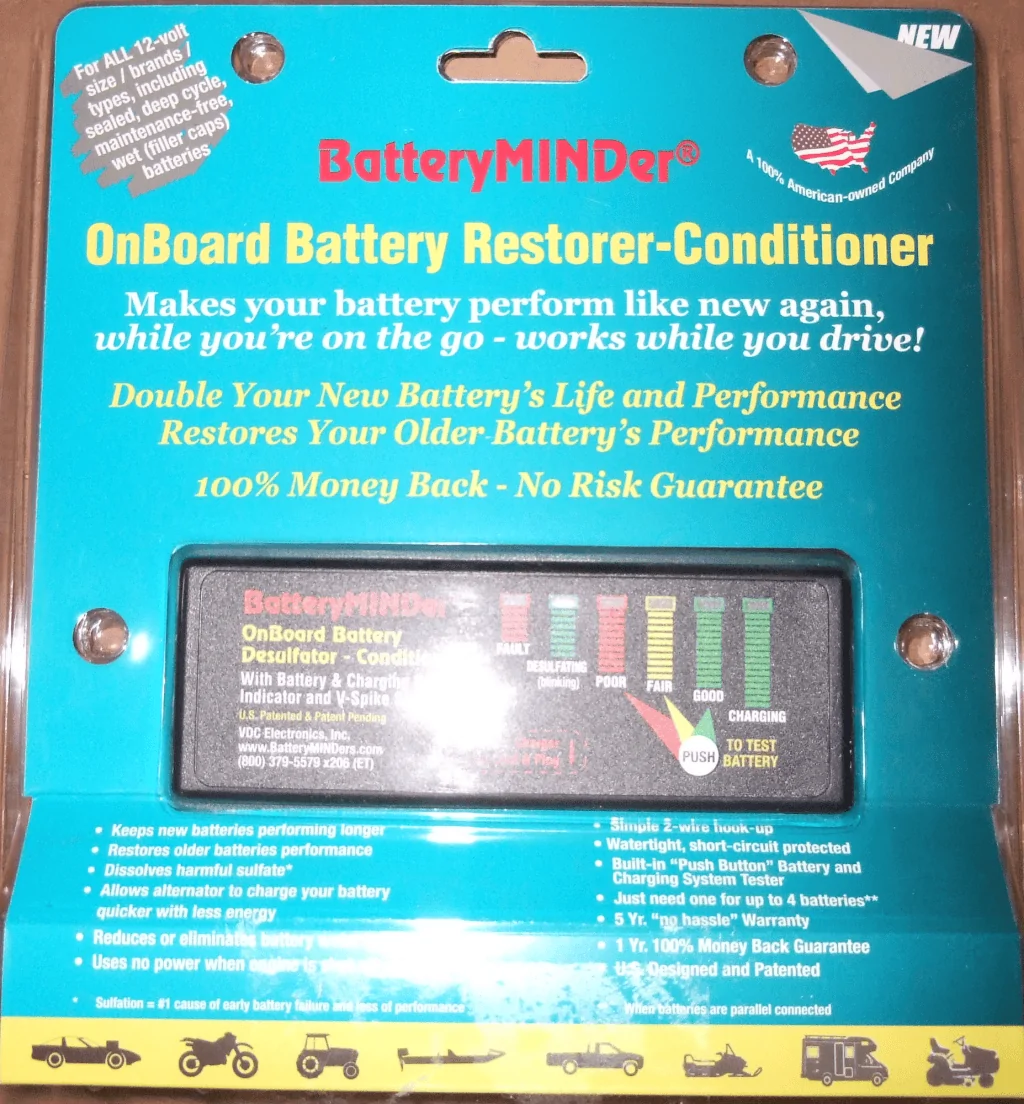
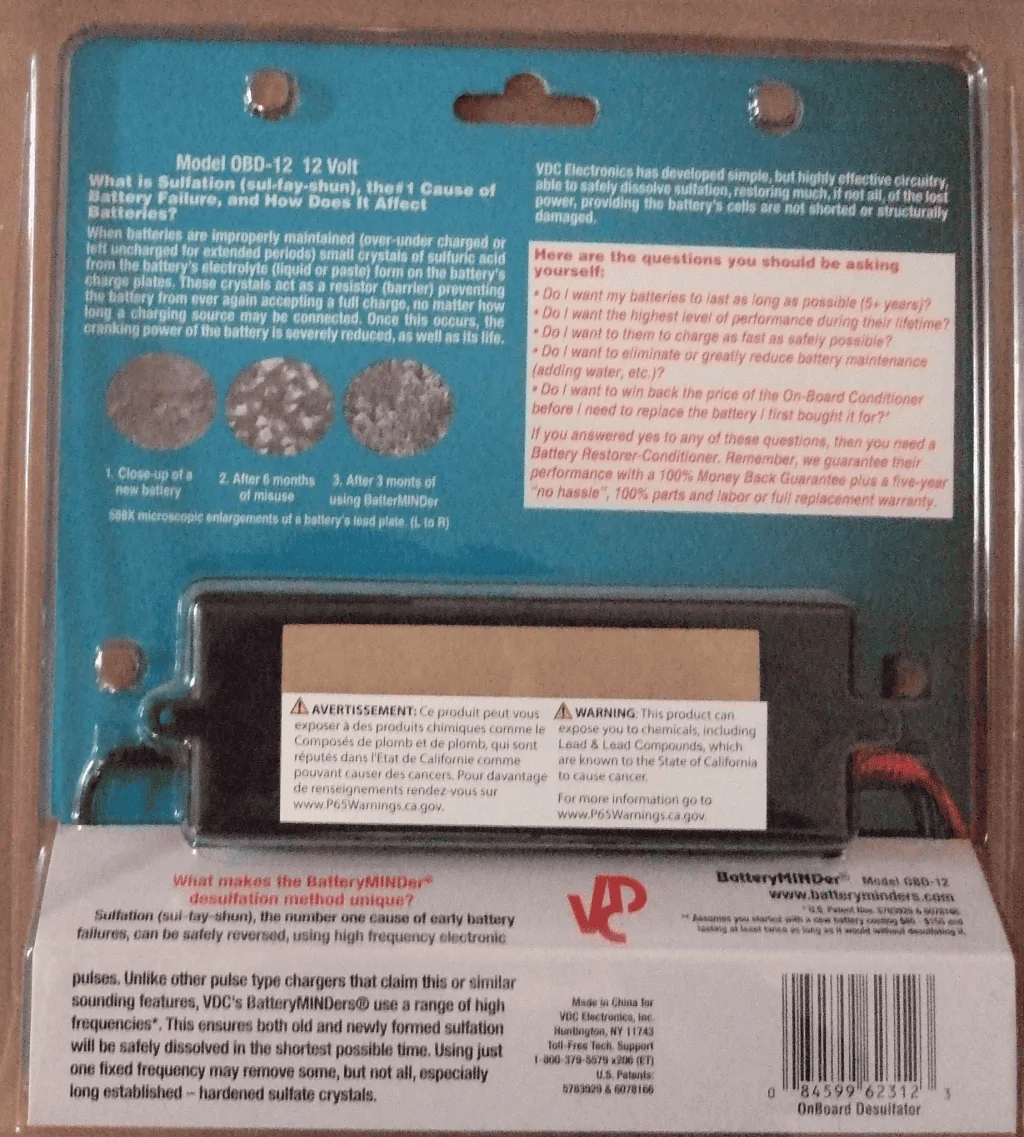
About 10 years ago I purchased a BatteryMINDer Model OBD-12 Desulfator for 2 of my vehicles. It is a simple to hook up device that breaks down the sulfur crystals on the lead battery plates whenever your engine is running and charge voltage is >13.5v. Since installing, my batteries last 3x longer than my neighbors. I got 10 years out of my last two batteries in both vehicles that had these Desulfators installed in them.

I have just ordered another one for my 2020 Ranger. Prices have gone up since then (was $35) and the best price I could find was at an RV shop for $82 delivered to the door. This website is a little tricky and has a link to click to get the lower price of ~$65 + tax + shipping instead of the price listed at ~$79.

BM1.png
BM2.png


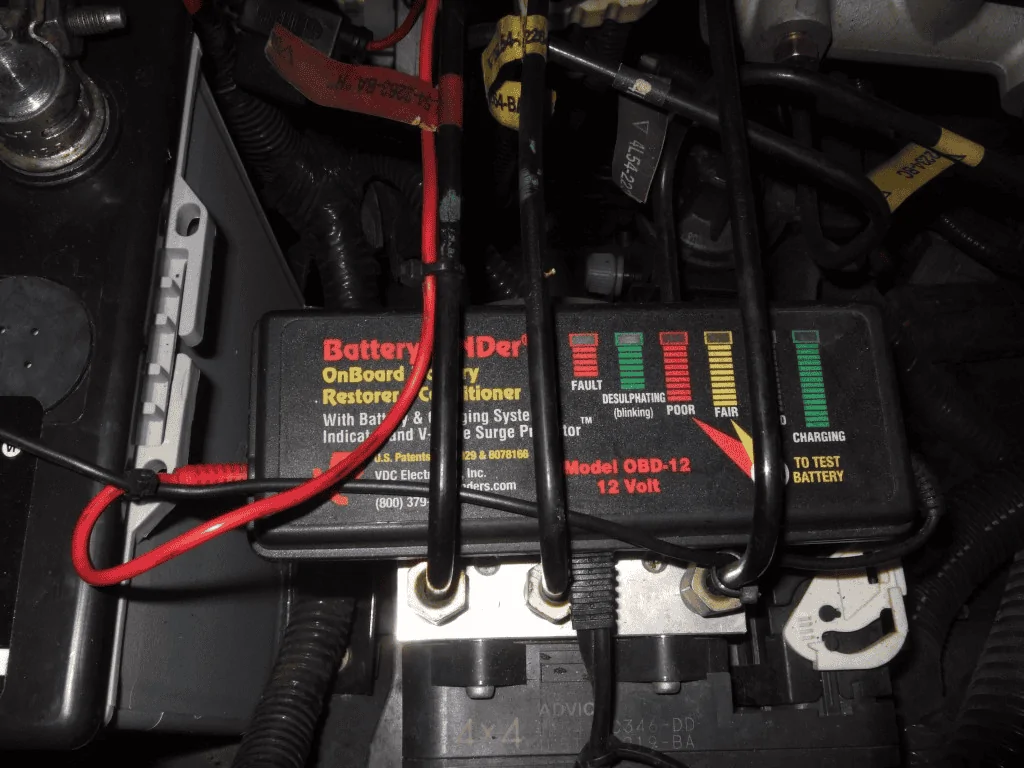
Here is a picture of the BM desulfator installed in my 2005 Ranger. It is sitting on the antilock brake module next to the battery. Nothing more than Velcro holding it in place. Been there for a very long time, 10-15 years. I've lost track of when I purchased it. I just put battery #3 in the truck 3 months ago. So 2 batteries replaced in 17 years, and the first one went a few years without the desulfator installed.

BM4.png


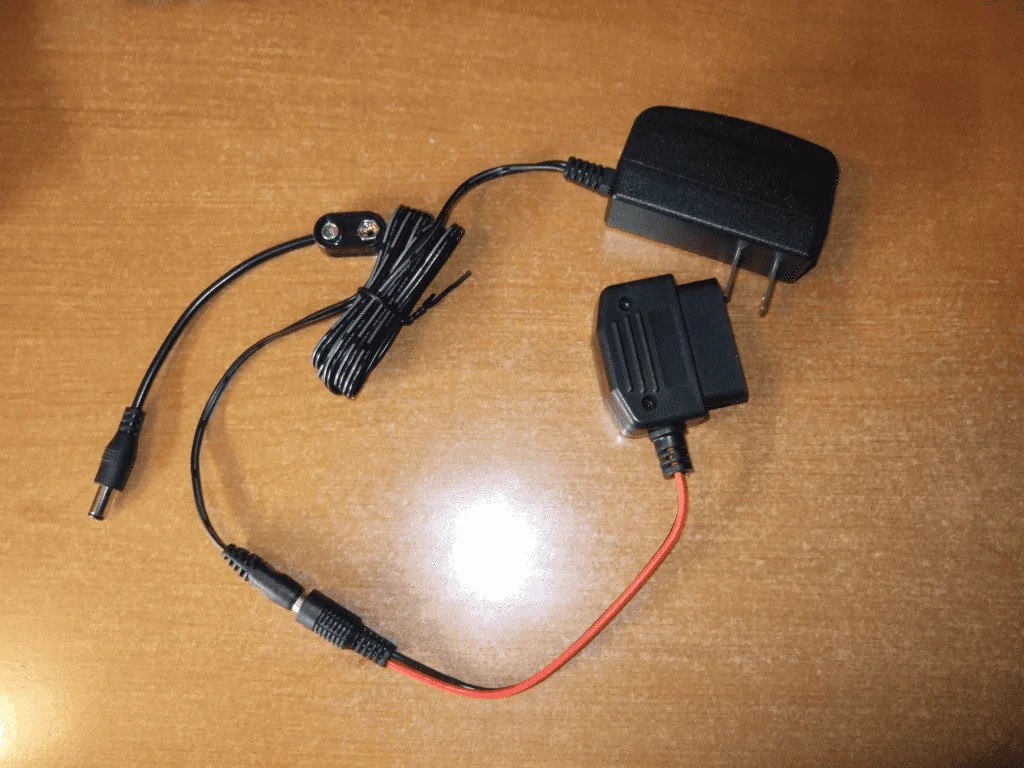
The second item was purchased quite a while back when I bought the truck. It is a small 12 volt adapter that is designed to keep your auto's computer settings when changing batteries. This means you must change the battery before a catastrophic battery failure occurs. You simply plug the device into you trucks Diagnostic port, and plug it into either a 9V battery (good for ~30 minutes with a new 9v battery), or a 110v wall outlet with a 12V wall wart PS. Then remove and replace your truck battery. This keeps power to your Truck systems while you switch out your battery. I bought it on a whim, and thought I'd never need it. Here is a similar device available from Amazon.

BM3.png


I will be connecting m BM Desulfator to the posts ( I will not be disconnecting the battery, just taking off the nut). And yes, it as simple as that. The pigtail is used when you wish to charge the battery through the desulfator. Simply plug your charger into the pigtail, and it will charge and desulfate at the same time. The same is true if you connect to the + battery post and to the nut before the BCM on the negative terminal.. The desulfator goes to work when it sees a charging voltage, be from the alternator or an external charger.

I am attempting to revive a long discharged / discarded sealed AGM battery (made in Jan 2006) through the BM desulfator charger
(I will keep updating the progress by editing this entry.)

Battery is rated at 725 CCA.

Results of Initial health check (It failed while attempting to charge it with another very expensive Schumacher "smart" battery charger. )
000 CCA - 0% of CCA of new Battery Voltage = 4.v Resistance = 31 Ohms BatteryMinder level = 1 Poor

UPDATE: 12 Hours from Start
123 CCA - 17% of CCA of new Battery Voltage = 13.31v Resistance = 20 Ohms BatteryMinder level = 1 Poor

UPDATE: 24 Hours from Start
261 CCA - 36% of CCA of new Battery Voltage = 13.35v Resistance = 14 Ohms BatteryMinder level = 2 Fair

UPDATE: 36 Hours from Start
332 CCA - 46% of CCA of new Battery Voltage = 13.35v Resistance = 10 Ohms Battery Minder level = 2 Fair

UPDATE: 48 Hours from Start
375 CCA - 50% of CCA of new Battery Voltage = 13.35v Resistance = 8 Ohms BatteryMinder level = 2 Fair

UPDATE: 60 Hours from Start
430 CCA - 60% of CCA of new Battery Voltage = 13.26v Resistance = 7 Ohms BatteryMinder level = 3 Good

UPDATE: 72 Hours from Start (things seem to be slowing)
444 CCA - 61% of CCA of new Battery Voltage = 13.26v Resistance = 7 Ohms BatteryMinder level = 3 Good

UPDATE: 84 Hours from Start (things seem to be stalled but it was very cold last night) Going to give it 1 more day to see if trend holds.
--------------------------
450 CCA - 61% of CCA of new Battery Voltage = 13.26v Resistance = 7 Ohms BatteryMinder level = 3 Good

UPDATE: 96 Hours from Start (very cold again last night, but a major positive change)
--------------------------
658.6 CCA - 91.5% of CCA of new Battery Voltage = 13.73v Resistance = 5.5 Ohms BatteryMinder level = 4 Excellent ( this battery is now reporting better condition than my 2020 Ranger battery!)

--------------------------
UPDATE: 108 Hours from Start (A reversion back down!)
--------------------------
462.9 CCA - 63.9% of CCA of new Battery Voltage = 13.29v Resistance = 6.9 Ohms BatteryMinder level = 4 Excellent ( this battery is now on par with my 2020 Ranger battery!)

If the battery does not have shorted cells there is a good possibility of bringing it back to 80% or better of its original capacity. It just takes some time. Desulfating uses very little energy. My Battery Minder charger was putting out 8 Amps early on, but now it is simply maintaining and desulfating.... at a cost of ~35 cents / month.

My other smart chargers reported "battery bad" and gave up. My very old dumb chargers would have boiled the water out of the battery with 15 Amps going in.

I know there are several very nice modern chargers on the market, but I have no personal experience with them.

-T
Hi Tony,
Do you have a pic on how your battery Minder is connected? Is the Red connected after the primary or secondary fuse or direct to the red lug? And the Black is it on the black lugs od chassis GND?
Thanks this info, this is interesting and I would like to try it since my battery is acting up.
 

airline tech

Well-Known Member
Joined
Aug 24, 2022
Threads
28
Messages
4,448
Reaction score
8,507
Location
Midwest - KS
Vehicle(s)
2022 Ranger Lariat-Super Crew, Cactus Gray
Occupation
Aircraft Tech
The reason for a small voltage drops at the Power Points is due to the fact that:

1. The Power to the Ports - Goes through a Power Point Relay
There are (2) relays - 1 feeds the front cab and 1 feeds the rear cab
2. The Power Feed is monitored by a (FET), Field Effect Transistor to protect the circuit from overloads (Shorts)
 
OP
OP

TJC

Well-Known Member
First Name
Tony
Joined
Aug 28, 2020
Threads
45
Messages
3,932
Reaction score
9,867
Location
North Carolina
Vehicle(s)
93 Miata, 05 Ranger 4x4, 20 Ranger 4x4, 23 CX-5
Hi Tony,
Do you have a pic on how your battery Minder is connected? Is the Red connected after the primary or secondary fuse or direct to the red lug? And the Black is it on the black lugs od chassis GND?
Thanks this info, this is interesting and I would like to try it since my battery is acting up.
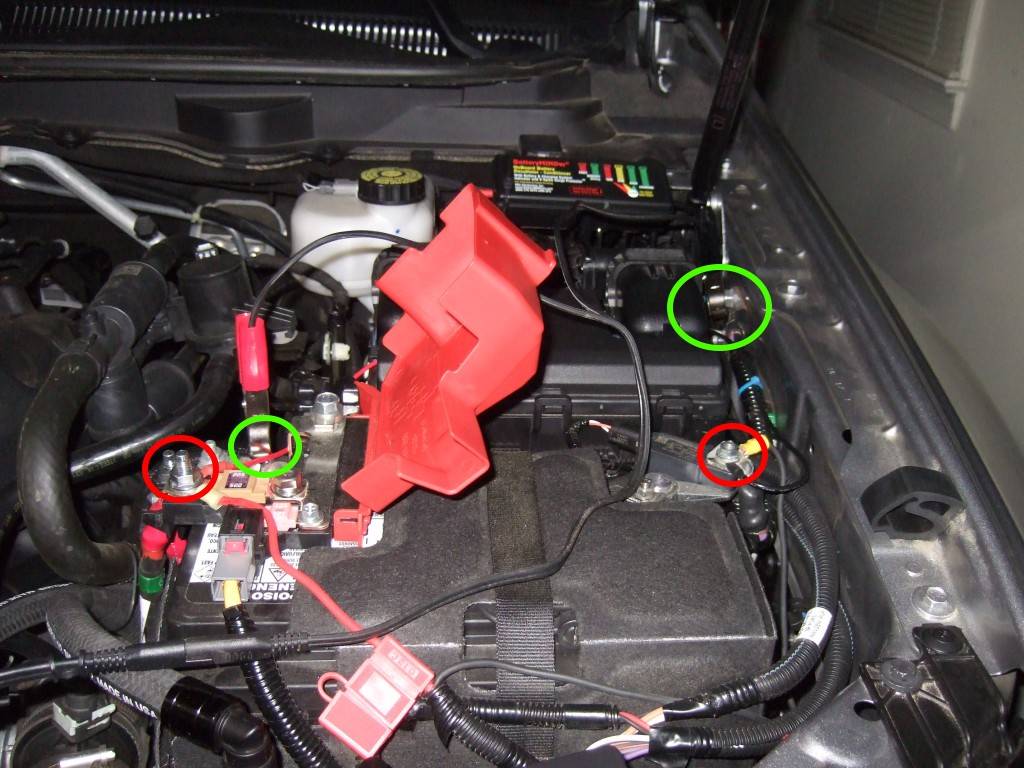
I have the desulfator connected to the battery (Red Circles), The green circles are where I place the battery charger clamps . The green Neg connection point is the neg cable connection to the fender well. Note that I don't think the ground connection matters now that BMS is disabled in Forscan. So I now go directly to the Neg battery terminal after the BMS sensor (Red circle). The green circle on the positive battery post is optimal.

When testing the battery I use the same connection points as the battery charging points.

desulator-battery-connections-jpg-jpg.jpg
 
OP
OP

TJC

Well-Known Member
First Name
Tony
Joined
Aug 28, 2020
Threads
45
Messages
3,932
Reaction score
9,867
Location
North Carolina
Vehicle(s)
93 Miata, 05 Ranger 4x4, 20 Ranger 4x4, 23 CX-5
Iirc - my test points are to the bolt head - to the right of your positive clamp - and my negative is directly to the post- if you test at the fender ground you are adding resistance of the negative cable to your test result
And since the positive post is a little difficult to get a good connection- due to slight recess - I hook up to the most direct point from it
I found that altering from this gives inaccurate results
I test and charge at the same points that you do. The green circle near the positive terminal is that recessed bolt. I only used the fender ground when BMS was active. Now use the neg post after the BMS Sensor.
 

BladeRanger

Well-Known Member
First Name
Bladimir
Joined
May 16, 2020
Threads
4
Messages
907
Reaction score
2,267
Location
Escondido Ca
Vehicle(s)
Ranger 2020 XLT FX4
Occupation
Electronic Engineer
Vehicle Showcase
1
I have the desulfator connected to the battery (Red Circles), The green circles are where I place the battery charger clamps . The green Neg connection point is the neg cable connection to the fender well. Note that I don't think the ground connection matters now that BMS is disabled in Forscan. So I now go directly to the Neg battery terminal after the BMS sensor (Red circle). The green circle on the positive battery post is optimal.

When testing the battery I use the same connection points as the battery charging points.

desulator-battery-connections-jpg-jpg.jpg
Thanks for the info, I appreciate it. I'll definitely look into this that I have another SUV that can use same desulfator.
 
OP
OP

TJC

Well-Known Member
First Name
Tony
Joined
Aug 28, 2020
Threads
45
Messages
3,932
Reaction score
9,867
Location
North Carolina
Vehicle(s)
93 Miata, 05 Ranger 4x4, 20 Ranger 4x4, 23 CX-5
Well, it has been a while since I reported back on my results at maximizing battery life.

During this time I have simply driven the truck normally, and have let it sit for up to 2 weeks at a time. I have not charged it with an external charger for the last 3 months. No long distance driving over 70 miles at a time at all. Just around town averaging 20 miles / trip.

I have been actively monitoring charge voltages realtime while driving, and observing the desulvator panel when I shutdown the truck and when, for whatever reason I need the truck running with the hood up.

Two changes that I have recently noticed gave cause for concern.
  • The onboard desulvator was not running nearly as much. It flashes an LED whenever it is active, and it has been curiously absent.
  • The charge rate from the 12V port inside the cabin was reporting lower charge voltage that I had been previously experiencing. I was routinely seeing 14.3-14.5v charging voltages after starting the truck that would drop after 15-20 miles to 14.1v.

    I am now seeing 13.8v upon startup dropping very quickly to the 13.3v - 13.5v range.
Whenever I notice a change from the norm, I check to determine if there is a problem. So I broke out my battery tester to check the state of battery. I was somewhat surprised by what I found.

Battery Status
Battery Charge = 100%​
Battery Health = 100%​
CCA = 984 (rated at 760)​
Voltage = 12.66​
Internal Resistance = 3.05 mOhm​

My conclusion
I have the same desulvator installed on my 2005 Ranger and used it as the target goal to measure against changes I was making to optimize the 2020 Rangers BMS system.

The BMS system, when tuned properly, will outperform the standard charging system found on the 2005 Ranger. Based on my experience, the BMS does not overcharge the battery with a SOC at 95%.

The trick is to optimize for battery life over EPA mileage goals. Ford has set BMS up to gain some minuscule mileage increase by sacrificing battery life. I find this unacceptable, and I am forced to wonder if a fully charged optimized battery does more for EPA mileage (as the alternator is under far less load) than the present Ford BMS settings.

With the settings that I am using, BMS is literally trickle (Float Charging) charging my battery most of the time, instead of actively discharging it (down to 75% SOC) and then force feeding the battery with charge voltages well above optimal levels. Ford's BMS Regenerative charges are much higher than the charge rates listed below. To be blunt, the Ford BMS settings are abusing your battery, it is as simple as that!

Optimal AGM Absorption Charge = 14.2v - 14.6v​
Optimal AGM Float Charge = 13.2v - 13.8v​

To refresh all on what changes and additions have been made to my truck to insure a long life for my battery, here's the list that I have finally settled on:
  • Turned off ASS/BMS in Forscan (I don't think it actually turns off BMS, it simply neuters it! And the neutered algorithms are superior to those of the 2005 Ranger)
  • Raised Battery State of Charge Target (SOC) to 95% (from 75%) in Forscan
  • Minimized the headlight timers to shortest time or shut off entirely
  • Turned off various bells and chimes in Forscan
  • Installed a onboard BatteryMinder Desulfator Model OBD-12 that breaks down the sulfur crystals on the lead plates (lowering internal resistance) whenever the battery is being charged by the alternator.
I will sporadically monitor the system, but I am very satisfied with the results. I don't foresee any further work in this area.

Now on to the transmission issues!
Sponsored


Top