
Wes Siler
Well-Known Member
- First Name
- Wes
- Joined
- Mar 12, 2019
- Threads
- 10
- Messages
- 522
- Reaction score
- 1,111
- Location
- Bozeman, MT
- Website
- WesSiler.com
- Vehicle(s)
- 2021 Ford Ranger XLT FX4, 2020 Toyota Land Cruiser
- Occupation
- Writer
- Thread starter
- #1
There's a million threads with a million posts on this, many of which get into the weeds pretty fast. Figured it might be helpful, particularly for current or prospective Ranger owners who aren't super active forum users to have a concise source of information.
Or: I'm so in love with this tune that I just really wanted to write something about it.
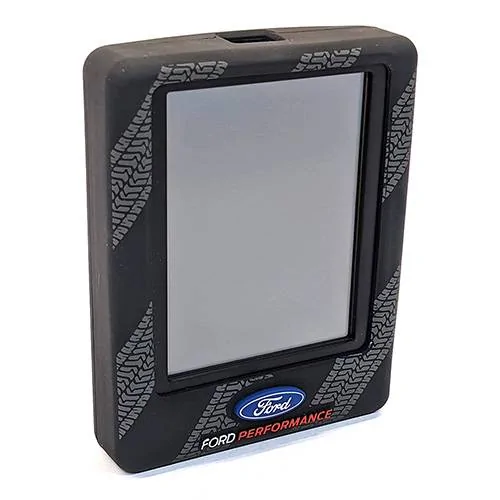
What Is It? It's a $900 ECU-flash that ships with the installer device, and a drop-in K&N filter replacement. Ford Performance claims it's good for +45bhp @ 4,500 RPM and +60lb-ft @2,500 RPM. Those numbers are on 93 octane; it requires 91+. Note that those quoted additions aren't at peak power or torque, so you can' say the tune takes the Ranger to 315/370. What it does is add a significant amount of low and mid-range performance, and some top end.
https://performanceparts.ford.com/part/M-9603-REB
If you have an ASE-certified mechanic install it (get receipts!), it comes with a limited warranty from Ford Performance that's 3 years/36,000 miles from your vehicle's sale date. Note that's total years and miles on your vehicle, not after you install the tune. The tune likely does invalidate OE warranty coverage for any parts it may effect, including in the engine, transmission, driveline, etc.
Why: The Ranger's powertrain is very good, but it does make a few compromises. Programmed to run on 87, the motor's not making as much power as its capable of, and the transmission programming is really aggressively oriented towards maximizing fuel economy, at the expense of responsiveness. Basically it tries to get into 10th gear as quickly as possible, something it does as early as ~37mph. It can then be reluctant to kick down when you need to accelerate, unless your really stomp on the throttle, at which point it must drop like 4-6 gears just to perform minor acceleration tasks like changing lanes. It's annoying, basically. All those issues are exacerbated with larger tires or additional weight on board, especially given that there aren't aftermarket gears available for the Ranger yet.
I chose this tune because of that validation by Ford Performance. That gives me peace of mind on longevity, even though I opted to install it myself, foregoing the warranty.
Some Important Caveats: My truck is on 34s, and is heavy. I live in Montana, where highway speed limits are 80mph, and we have a bunch of high elevation mountain passes. I drive pretty much everywhere at 85mph, and about a third of my total miles are on some form of unpaved surface. So, don't take my fuel economy numbers as relevant to anything but comparison to before/after. I also have no experience of how this tune compares to others, or how it would feel on an otherwise stock truck. We only have access to 91 octane here, so I'm probably not achieving the tune's full potential, but I do have a Magnaflow cat back, so maybe that makes back some power.
Installation: I was a bit intimidated, and had my enginerd little brother come help me install it. The only thing I ended up needing him for was his Windows laptop. The installation module connects to that computer with a USB-A cable. We just followed the instruction, updated the installers firmware, downloaded the tune, and then installed it on the car. The entire process took about 30 minutes, or two beers. The vehicle cycles through a bunch of warning messages, clicks, and whirrs, you don't really need to do anything.
Take the time to click through the menu on the installer device and correct for your wheel size. Just look up the specs on the website of whichever tire brand you have, and grab the RPMs per mile number. FP says they can only do this for up to a certain size, but I think that's just for liability. I had no problem inserting the correct RPMs for my 285/75-17s.
Result: I've done about 1,000 miles so far, which has been a mix of in-town, highway, two-lane, and off-road. My fuel economy has increased from 13 to 15mpg, as calculated at the pump. Mountain passes that I used to take in 5th or 6th gear at 75mph are now easily accomplished in 7th or 8th at 85. Passing RVs on two-lane feels like it takes half the time.
Transmission responsiveness has been completely fixed, without making it overly aggressive. It's actually enjoyable to drive the thing in D now. I have not felt a need to use S or tow/haul at all, but have played around with them a bit to see what they're like (they're both similarly improved). The truck instantly gets into the gear I need when I just tickle the throttle, but at the same time, the extra torque means I'm spending at least twice as much time in 10th gear when cruising at higher speeds. Every acceleration task just feels so much easier, and so much more natural and intuitive than before.
The tune does not melt your face or feel wild in any way, it just feels like you're driving a stock truck that came from the factory with a larger engine. Nothing feels wild or overly performance focussed. This is exactly what I was looking for by sticking with an OE tune over a 3rd party. The Ranger should ship like this, stock. Oh, and the speedometer/odometer is spot on now. I think that helps inform shift points too, but I have no actual confirmation of this from a real source.
Had a former Baja racer buddy take it for a spin the other day. "Wow, this thing rips," was his conclusion.
Altogether with the OME BP-51 suspension system, the whole truck just rides, handles, and performs incredibly well. One of my goals for my total build was to try and make it drive as close to as well as the OE long travel 200-series Land Cruiser I built for my wife last year. I never thought I'd be able to say this, but I think I actually prefer the Ranger now. I'm certainly choosing to drive it more than the 200.
Happy to answer any questions.
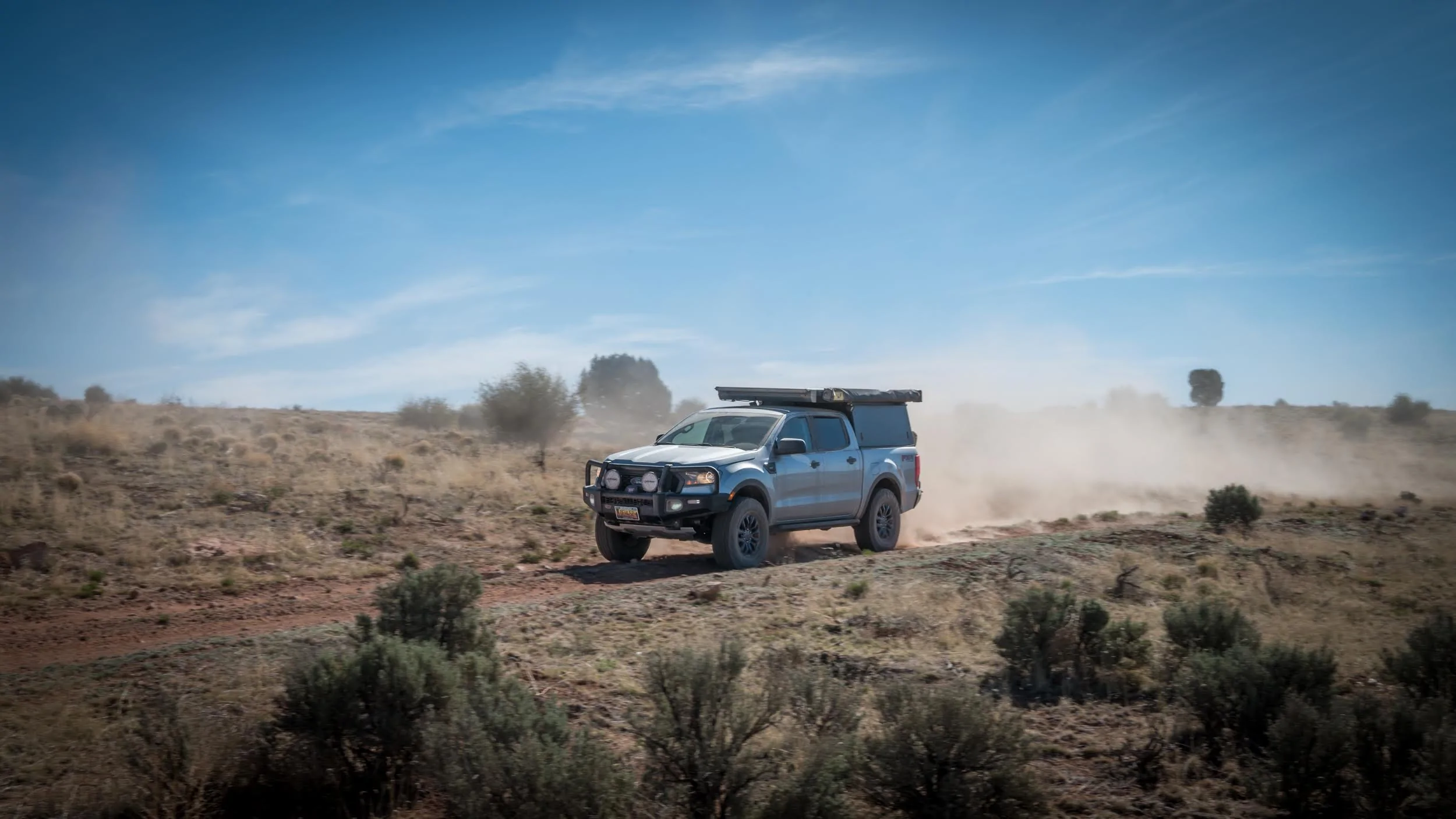
Here's a photo, just because. Credit to Bryon Dorr.

Or: I'm so in love with this tune that I just really wanted to write something about it.
What Is It? It's a $900 ECU-flash that ships with the installer device, and a drop-in K&N filter replacement. Ford Performance claims it's good for +45bhp @ 4,500 RPM and +60lb-ft @2,500 RPM. Those numbers are on 93 octane; it requires 91+. Note that those quoted additions aren't at peak power or torque, so you can' say the tune takes the Ranger to 315/370. What it does is add a significant amount of low and mid-range performance, and some top end.
https://performanceparts.ford.com/part/M-9603-REB
If you have an ASE-certified mechanic install it (get receipts!), it comes with a limited warranty from Ford Performance that's 3 years/36,000 miles from your vehicle's sale date. Note that's total years and miles on your vehicle, not after you install the tune. The tune likely does invalidate OE warranty coverage for any parts it may effect, including in the engine, transmission, driveline, etc.
Why: The Ranger's powertrain is very good, but it does make a few compromises. Programmed to run on 87, the motor's not making as much power as its capable of, and the transmission programming is really aggressively oriented towards maximizing fuel economy, at the expense of responsiveness. Basically it tries to get into 10th gear as quickly as possible, something it does as early as ~37mph. It can then be reluctant to kick down when you need to accelerate, unless your really stomp on the throttle, at which point it must drop like 4-6 gears just to perform minor acceleration tasks like changing lanes. It's annoying, basically. All those issues are exacerbated with larger tires or additional weight on board, especially given that there aren't aftermarket gears available for the Ranger yet.
I chose this tune because of that validation by Ford Performance. That gives me peace of mind on longevity, even though I opted to install it myself, foregoing the warranty.
Some Important Caveats: My truck is on 34s, and is heavy. I live in Montana, where highway speed limits are 80mph, and we have a bunch of high elevation mountain passes. I drive pretty much everywhere at 85mph, and about a third of my total miles are on some form of unpaved surface. So, don't take my fuel economy numbers as relevant to anything but comparison to before/after. I also have no experience of how this tune compares to others, or how it would feel on an otherwise stock truck. We only have access to 91 octane here, so I'm probably not achieving the tune's full potential, but I do have a Magnaflow cat back, so maybe that makes back some power.
Installation: I was a bit intimidated, and had my enginerd little brother come help me install it. The only thing I ended up needing him for was his Windows laptop. The installation module connects to that computer with a USB-A cable. We just followed the instruction, updated the installers firmware, downloaded the tune, and then installed it on the car. The entire process took about 30 minutes, or two beers. The vehicle cycles through a bunch of warning messages, clicks, and whirrs, you don't really need to do anything.
Take the time to click through the menu on the installer device and correct for your wheel size. Just look up the specs on the website of whichever tire brand you have, and grab the RPMs per mile number. FP says they can only do this for up to a certain size, but I think that's just for liability. I had no problem inserting the correct RPMs for my 285/75-17s.
Result: I've done about 1,000 miles so far, which has been a mix of in-town, highway, two-lane, and off-road. My fuel economy has increased from 13 to 15mpg, as calculated at the pump. Mountain passes that I used to take in 5th or 6th gear at 75mph are now easily accomplished in 7th or 8th at 85. Passing RVs on two-lane feels like it takes half the time.
Transmission responsiveness has been completely fixed, without making it overly aggressive. It's actually enjoyable to drive the thing in D now. I have not felt a need to use S or tow/haul at all, but have played around with them a bit to see what they're like (they're both similarly improved). The truck instantly gets into the gear I need when I just tickle the throttle, but at the same time, the extra torque means I'm spending at least twice as much time in 10th gear when cruising at higher speeds. Every acceleration task just feels so much easier, and so much more natural and intuitive than before.
The tune does not melt your face or feel wild in any way, it just feels like you're driving a stock truck that came from the factory with a larger engine. Nothing feels wild or overly performance focussed. This is exactly what I was looking for by sticking with an OE tune over a 3rd party. The Ranger should ship like this, stock. Oh, and the speedometer/odometer is spot on now. I think that helps inform shift points too, but I have no actual confirmation of this from a real source.
Had a former Baja racer buddy take it for a spin the other day. "Wow, this thing rips," was his conclusion.
Altogether with the OME BP-51 suspension system, the whole truck just rides, handles, and performs incredibly well. One of my goals for my total build was to try and make it drive as close to as well as the OE long travel 200-series Land Cruiser I built for my wife last year. I never thought I'd be able to say this, but I think I actually prefer the Ranger now. I'm certainly choosing to drive it more than the 200.
Happy to answer any questions.
Here's a photo, just because. Credit to Bryon Dorr.
Sponsored
Last edited: