Sponsored

Bucking/Surging Epidemic

Samuelc

Member
First Name
Sam
Joined
Jul 15, 2019
Threads
3
Messages
24
Reaction score
77
Location
Winchester, VA
Vehicle(s)
2019 Ford Ranger Lariat FX4
Not that anyone asked but here's my story. I started experiencing these symptoms earlier this year. I browsed the internet and read about all sorts of transmission problems and began to worry. My first step was to take it to Ford. By the way I'm out of my warranty. 2019 with 45k miles. I happen to work for a Large mid Atlantic auto dealership that has a Ford store so its a little easier for me than it is for others. As a favor I had a tech reprogram my transmission. The placebo effect lasted about a day before I gave in and admitted it didn't work.

So more research led me to the PPE Large transmission pan. I bought that and paid for a transmission service. That didn't work either although now I have a better transmission pan and a fresh filter and fluids. Next up is the ford performance tune and its more aggressive transmission coding. That will have to work right? Nope I think it actually made it worse. At this point my truck is almost impossible to drive normally under 45 mph. My wife even noticed and said WTF is wrong with your truck. I had read this thread before the tune but told myself no way its that simple. after the tune however I had no other options.

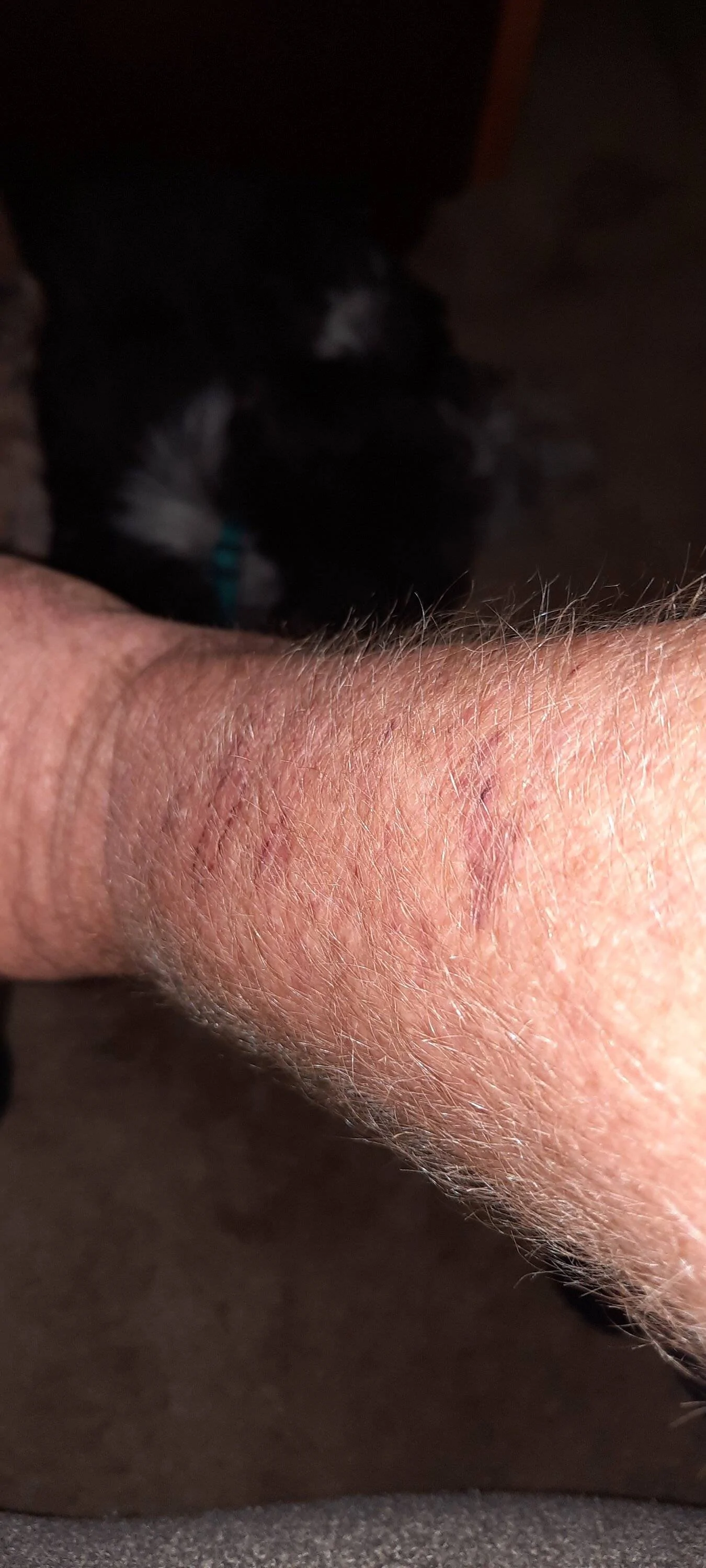
I bought the sensor and spent the hour trying to get off the two top hose clamps while sacrificing blood, sweat and bruising a rib in the process. That's a longer story but yes that did happen for real. Swapped out the sensor and she drives like a new truck. For real. $700 for the pan and service, $900 tune and a $65 dollar part fixed it. And let me save you all some time and effort. Go to amazon and buy the clamp remover and buy the part number that is the whole assembly. The clamp thing is $11 and the whole assembly maybe $20 more than just the sensor itself. Trust me its worth it. I'm truly appreciative of this thread. God only knows what I would have paid for next.
Sponsored


 

airline tech

Well-Known Member
Joined
Aug 24, 2022
Threads
28
Messages
4,447
Reaction score
8,497
Location
Midwest - KS
Vehicle(s)
2022 Ranger Lariat-Super Crew, Cactus Gray
Occupation
Aircraft Tech
Not that anyone asked but here's my story. I started experiencing these symptoms earlier this year. I browsed the internet and read about all sorts of transmission problems and began to worry. My first step was to take it to Ford. By the way I'm out of my warranty. 2019 with 45k miles. I happen to work for a Large mid Atlantic auto dealership that has a Ford store so its a little easier for me than it is for others. As a favor I had a tech reprogram my transmission. The placebo effect lasted about a day before I gave in and admitted it didn't work.

So more research led me to the PPE Large transmission pan. I bought that and paid for a transmission service. That didn't work either although now I have a better transmission pan and a fresh filter and fluids. Next up is the ford performance tune and its more aggressive transmission coding. That will have to work right? Nope I think it actually made it worse. At this point my truck is almost impossible to drive normally under 45 mph. My wife even noticed and said WTF is wrong with your truck. I had read this thread before the tune but told myself no way its that simple. after the tune however I had no other options.

I bought the sensor and spent the hour trying to get off the two top hose clamps while sacrificing blood, sweat and bruising a rib in the process. That's a longer story but yes that did happen for real. Swapped out the sensor and she drives like a new truck. For real. $700 for the pan and service, $900 tune and a $65 dollar part fixed it. And let me save you all some time and effort. Go to amazon and buy the clamp remover and buy the part number that is the whole assembly. The clamp thing is $11 and the whole assembly maybe $20 more than just the sensor itself. Trust me its worth it. I'm truly appreciative of this thread. God only knows what I would have paid for next.
Glad to hear you have a fix, the problem with the DPFE sensor is that it can fail and false report and not code till it reaches the threshold for code P139C.
Plus, the code itself will not generate unless it fails a self-test from the EGR Monitor which is once per drive cycle.


The monitor checks for the differential pressure feedback EGR sensor for opens and shorts. The differential pressure feedback EGR sensor hoses are tested for connection and restriction at idle. The PCM commands the EGR valve closed and the monitor tests for the differential pressure feedback EGR sensor to indicate no flow is present. The PCM commands the EGR valve open and the monitor tests the differential pressure feedback EGR sensor voltage to indicate flow is present. The stop start option on some vehicles requires these hose tests to run during off idle conditions.

The intake manifold pressure is higher when EGR is flowing than when it is not flowing. Therefore, when the exhaust gas is delivered into the intake manifold, the manifold absolute pressure (MAP) sensor reading increases. The detection of EGR flow occurs by monitoring this increase in pressure. If the difference in the pressure between EGR commanded ON versus commanded OFF is below a minimum threshold, then an EGR valve concern has occurred.

After the vehicle has warmed up and normal EGR rates are being commanded by the PCM, the low flow check and the high flow check is carried out. The EGR flow diagnostics execute once per driving cycle and are designed to set a DTC when the total mass flow error results in an emissions increase above a calibrated level.


  1. The EGR system uses inputs from the engine coolant temperature (ECT) sensor or cylinder head temperature (CHT) sensor, the intake air temperature (IAT) sensor, the crankshaft position (CKP) sensor, the manifold absolute pressure (MAP) sensor, exhaust gas reciculation temperature bank 1, sensor 2 (EGRT12), exhaust pressure (EP) sensor, differential pressure feedback EGR sensor and vehicle speed to provide information about engine operating conditions to the PCM.
  1. The PCM uses the sensor inputs to determine the desired amount of EGR gas flow and controls the EGR valve to achieve the desired EGR flow rate.

So, what I believe is happening is the DPFE is not properly reading (No-Flow), the MAP sensor is seeing flow and thinks the DPFE is correct (Low Flow- seen as No-Flow) and this causes improper control of the EGR valve itself.
This is the false reporting of the DPFE sensor.
 

airline tech

Well-Known Member
Joined
Aug 24, 2022
Threads
28
Messages
4,447
Reaction score
8,497
Location
Midwest - KS
Vehicle(s)
2022 Ranger Lariat-Super Crew, Cactus Gray
Occupation
Aircraft Tech
Alright I was thinking about taking it in to the dealer and have them look at it, but figured the $60.00 spent on the sensor is worth the price of not having to go through the hassle of no codes no care, or the classic excuse of can't replicate problem.

So I'm going to order the sensor.

Plus this will give me a chance to run the same test on a known good sensor and I'll update my post with the bad sensor with the results so they will be in the same place for easy reference.
Great Thanks, that would be exactly what we need, Comparison Test
 

VAMike

Well-Known Member
First Name
Mike
Joined
Feb 22, 2019
Threads
1
Messages
3,390
Reaction score
4,408
Location
Virginia
Vehicle(s)
2019 Ranger Lariat SuperCab
Ford must have caught wind of this thread; they jacked up the price of just the sensor.
$60-$100 is what I'm seeing.
couldn't possibly be supply/demand and an unplanned level of parts replacement


airline tech

Well-Known Member
Joined
Aug 24, 2022
Threads
28
Messages
4,447
Reaction score
8,497
Location
Midwest - KS
Vehicle(s)
2022 Ranger Lariat-Super Crew, Cactus Gray
Occupation
Aircraft Tech
@ airline tech

Well instead of letting my old man arms heal up after the last test I decided to beat on them some more today after mens breakfast at church:idea:

20230812_113729.webp


Since the engine was warm I decided to run the test that you posted. Looking at the testing parameters above I can't help but think the sensor was showing fault at the 1.54v.

  • The DPFEGR PID voltage must be between 0.25 and 1.3 volts with the ignition ON and no vacuum applied.
  • The DPFEGR PID voltage must increase to greater than 4 volts with the vacuum applied.
  • The DPFEGR PID must drop to less than 1.5 volts in less than 3 seconds when the vacuum is released.
But we need knowledge so on with the test.

Test conditions: engine warm, KOEO
I disconnected the intake side hose at the EGR pipe not the sensor like the test procedure says I don't have a replacement clamp and it really shouldn't make a difference in the test. I then hooked the vacuum pump to the hose.
I then back probed pin1 on the connector and this is what I got...

No vacuum

20230812_105736.jpg


9 in hg Vacuum

20230812_105641.jpg


Never got close to 4v on the test The highest reading I got was 2.8v.
When I released the vacuum the reading immediately dropped to 1.56v then resettled at the 1.58v
I know my vacuum seal wasn't the best because it would start to slowly decay after about 3 sec. But I still think the test is valid and my sensor is bad.

Well I think we have a test now that we can use to tell if these sensors are bad without just firing the parts cannon.
Would like to see if any of you have the tools and already replaced the sensor do the test on the new and old one then post results here so can get more data on the sensor. For those who take the challenge I thank you:clap:


UPDATE: 8/15/2023
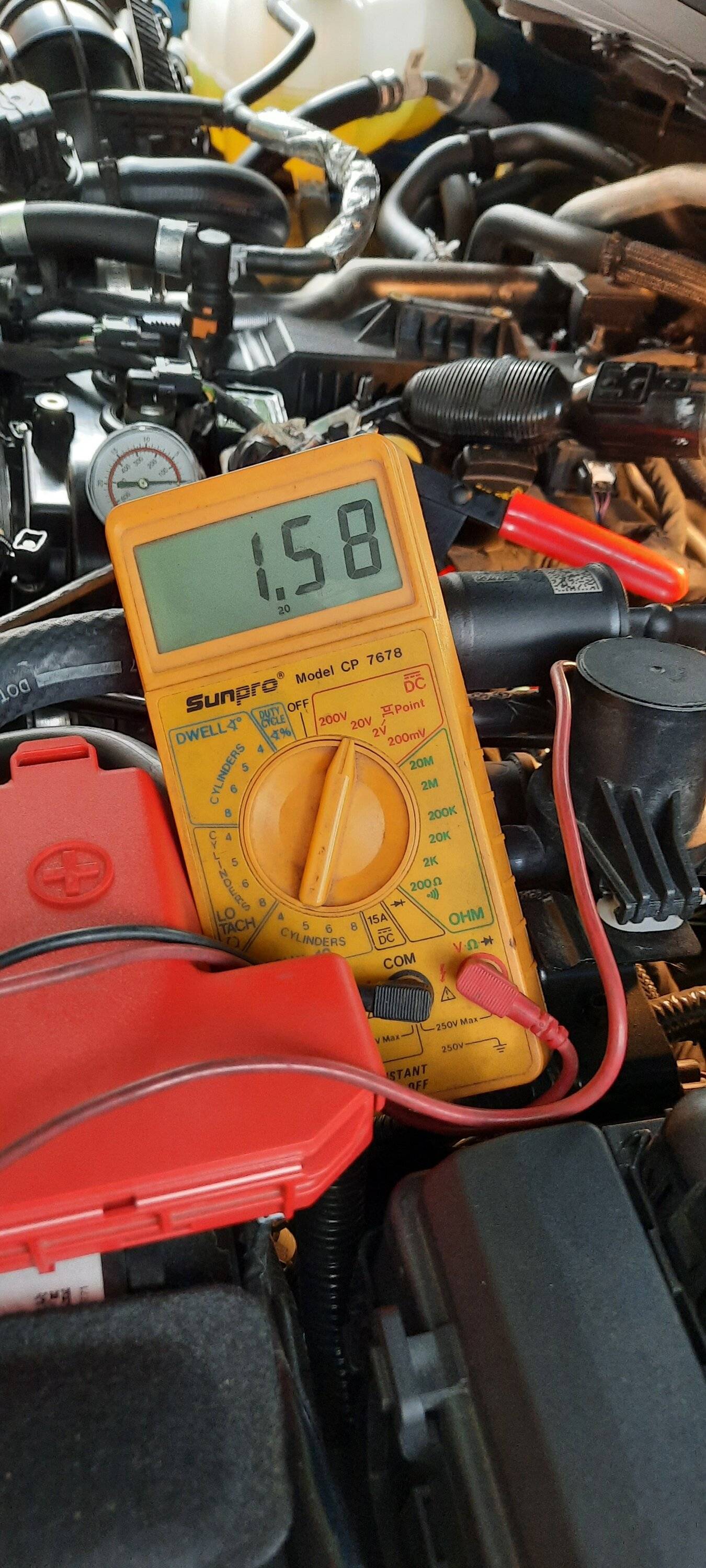
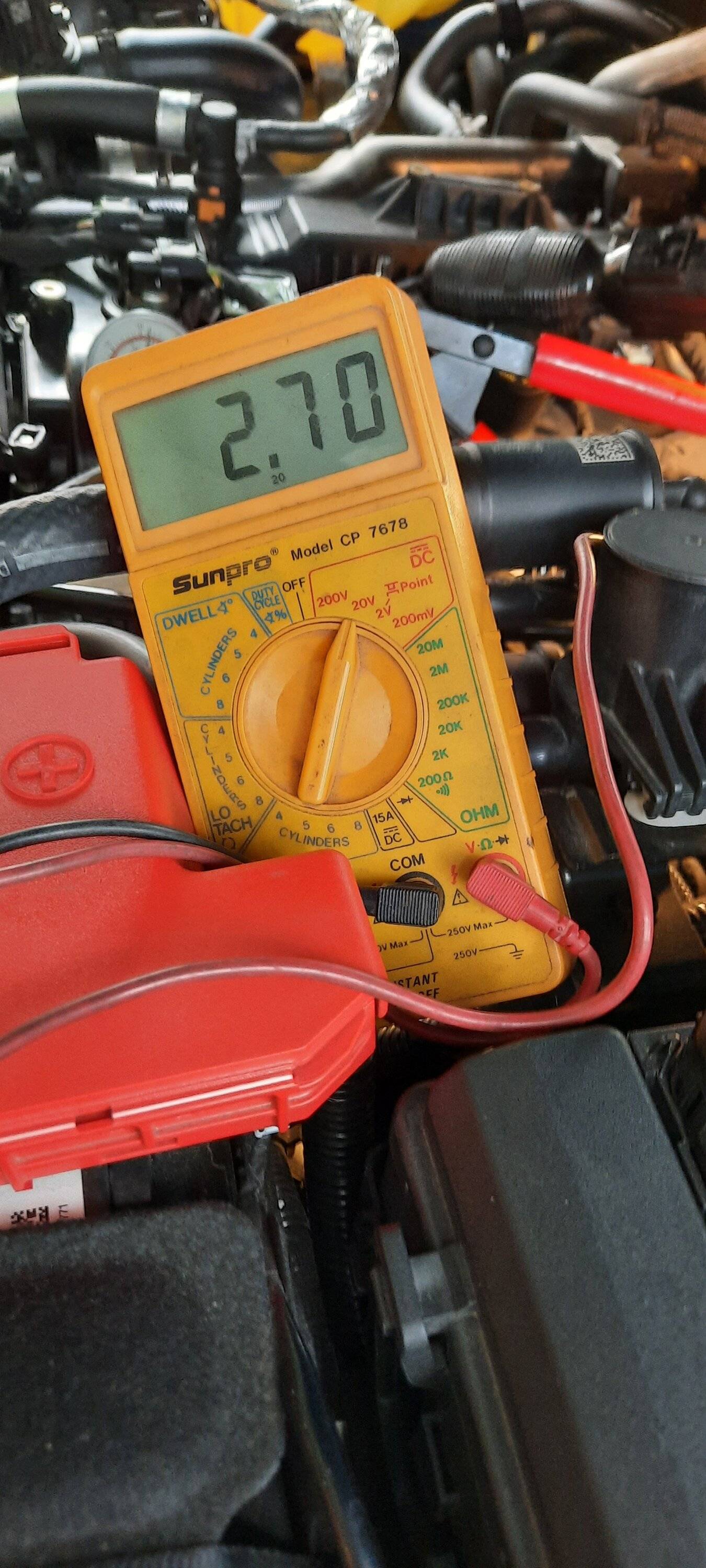
I purchased a new DPFE sensor today for 57.77 - 27.00 I had for points, for a total of 35.00. I'll take that deal:). I haven't installed it yet(need clamps) but plugged it in and ran the same checks as the OE sensor. So here it is.
KOEO no Vacuum: 1.52v

KOEO Vacuum : 2.70v

So .06v difference on the no vacuum and thats it. Its looking like this test is inconclusive on why these sensors are failing. Since this engine is inducted and not NA I'm sure the values are different than a NA engine probably why I'm not seeing the 4 volts. The only thing I think I can do now is try KOER, back probe it, and put a load on the engine. I'll do that when I go to install the new one.

Curious what others failed sensors voltages are?
HOT - Update

After seeing this post for voltage readings of test, I thought some information was not correct with you not seeing the 4.0 volts it is calling for. My current subscription is for the 2020 manual.
I checked the 2023 manual and noted they REVISED it.
Here is the revised version of test and expected voltage readings.

Now a little note about testing for voltage, small variance is normal (generally 1/2 volt (0.5) variance.

So, the revised readings are as follows: - See PDF Attached

KOEO - No Vacuum - 1.7 to 1.9 Volts
KOEO - Apply 9 in vacuum and HOLD for 10-seconds, Voltage should increase to greater than 2.5 Volts with vacuum applied.

Vacuum Released - Drop to less than 2.0 Volts (In 3 seconds)

Now your statement below stands out to me, and I wonder if your test connection was good but the sensor itself was bleeding off vacuum.
This just may be the failure point, of the sensor. (The disc between the 2 ports is possibly leaking)
So, with the test procedure not being entirely clear on this step, I am thinking this step is missing - Pressure should hold.
I have no idea of the importance only applying vacuum for (10 Seconds) and why it states that.
But when I test other Vacuum operated parts, I want to see the part holding vacuum.

I am near 100% certainty that this is the issue for the failed DPFE sensor.

So, this makes sense (if leaking vacuum) as the DPFE would see this as a Low-Flow and command the EGR valve open wider than it needs to be. The system is trying to maintain above 2.5 volts on that sensor and is commanding the EGR valve to open further to achieve it.
The further the EGR valve opens, the greater the voltage on the DPFE sensor.
(Or whatever voltage the PCM is seeking - dependent on current engine parameters)
And although voltage readings are important for the test, the DPFE being able to hold vacuum is the most important part of the test.

So, all of my previous posts of thoughts were leaning towards the low voltage (no-flow) reading but now I am pretty certain it's reading a lower flow than is actually flowing, so I am changing my thought to the high voltage (flow) reading is being misread.

So out of curiosity, did you note any difference between the (2) sensors with the Vacuum Test other than your below statement.

"I know my vacuum seal wasn't the best because it would start to slowly decay after about 3 sec. But I still think the test is valid and my sensor is bad."
 

Attachments

Last edited:

airline tech

Well-Known Member
Joined
Aug 24, 2022
Threads
28
Messages
4,447
Reaction score
8,497
Location
Midwest - KS
Vehicle(s)
2022 Ranger Lariat-Super Crew, Cactus Gray
Occupation
Aircraft Tech
An easy way to describe what that internal disc of the DPFE sensor is:

Think of a juice bottle (cap) with the pressure seal (popper) we all love to play with ( press and release) ( I love that popping sound) :LOL:
 

seasprite

Well-Known Member
Joined
Sep 1, 2022
Threads
25
Messages
468
Reaction score
1,111
Location
Missouri
Vehicle(s)
2022 Ranger XL STX
So out of curiosity, did you note any difference between the (2) sensors with the Vacuum Test other than your below statement.

"I know my vacuum seal wasn't the best because it would start to slowly decay after about 3 sec. But I still think the test is valid and my sensor is bad."
Actually yes I did.
I noticed that the voltage on the OE sensor would return to the 1.5v faster than the replacement sensor.
Figured the new sensor held vacuum because I was able to hook directly to the nipple with vacuum pump and didn't have deal with the hose.

For some reason it didn't even cross my mind that the sensor lost its seal (nice catch airline) so I'm going to re due the vacuum part of test from the bench after I put the new one on. Don't think we need voltages anymore since both sensors are in spec with your updated data.

Plan on stopping by the parts store after work and picking up a couple of 9/16" constant tension clamps to make any future repairs a lot easier.
 

seasprite

Well-Known Member
Joined
Sep 1, 2022
Threads
25
Messages
468
Reaction score
1,111
Location
Missouri
Vehicle(s)
2022 Ranger XL STX
Replaced the sensor today and did a vacuum check after I removed hoses from the OE sensor, and it held vacuum longer than the new one. The new DPFE sensor lost 1in-hg in 10 sec. The old one did not drop at all for 10 sec.
I went ahead and taped the sensor on a clean paper towel and got 3 or 4 drops of water out of the larger port.
After knocking the water out I redid the vacuum test and the decay was the same as the new sensor?
So is the issue just water contamination causing false readings?

Might get some mass air cleaner and spray the ports out and if new sensor starts acting up, swap them out and see.

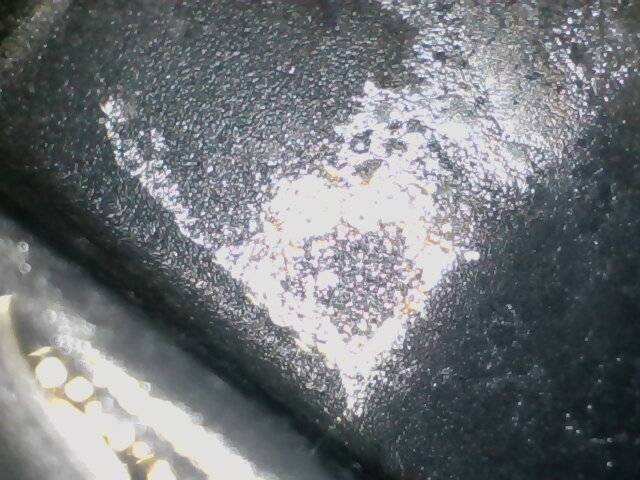
Went ahead stuck my bore scope in there and didn't see much. Some water still and some kind of deposit probably carbon.

2023-08-16-173419.jpg
 

airline tech

Well-Known Member
Joined
Aug 24, 2022
Threads
28
Messages
4,447
Reaction score
8,497
Location
Midwest - KS
Vehicle(s)
2022 Ranger Lariat-Super Crew, Cactus Gray
Occupation
Aircraft Tech
Well at this point I’m ?‍♂
The only known on the DPFE is heat and moisture are it’s enemy.
Specifics on exactly how these 2 actually effect the sensor is the unknown.
we will need more test to be done by confirmed failed sensors to see the common in them - if any
As you (if having) a faulty sensor have not shown anything that stands out, except for what appears to be a coating of corrosion.

The only things that are not being tested with this method is actual system operation and what the PCM is reading.
Backprobe vs PID Data reading
And getting the sensor hot, how is that PCB reacting when it is in normal operation and exposed to the hot exhaust flow with the moisture.

But hopefully you will see a drivability change as the other members have. As I would like to see a positive for you, as you have been very determined for a fix.
 
Last edited:

_N8_

Well-Known Member
Joined
Mar 9, 2020
Threads
2
Messages
45
Reaction score
53
Location
Lancaster, PA
Vehicle(s)
2019 Ford Ranger XLT Sport
Well at this point I’m ?‍♂
The only known on the DPFE is heat and moisture are it’s enemy.
Specifics on exactly how these 2 actually effect the sensor is the unknown.
we will need more test to be done by confirmed failed sensors to see the common in them - if any
As you (if having) a faulty sensor have not shown anything that stands out, except for what appears to be a coating of corrosion.

The only things that are not being tested with this method is actual system operation and what the PCM is reading.
Backprobe vs PID Data reading
And getting the sensor hot, how is that PCB reacting when it is in normal operation and exposed to the hot exhaust flow with the moisture.

But hopefully you will see a drivability change as the other members have. As I would like to see a positive for you, as you have been very determined for a fix.
I'm no proctologist, but I'm pretty confident it's the moisture doing these in.
 

_N8_

Well-Known Member
Joined
Mar 9, 2020
Threads
2
Messages
45
Reaction score
53
Location
Lancaster, PA
Vehicle(s)
2019 Ford Ranger XLT Sport
Well, good news / bad news.

3/9/20 - took ownership of my 2019 Ranger w/ 32 miles on it
7/1/22 - first DFPE sensor replacement at 46,260 miles due to bucking/surging & eventual code P139C
8/19/23 - 2nd DFPE sensor replacement at 71,507 miles

Much milder symptoms this time but I didn't want to wait for it to get that bad again. It was an easy replacement the first time, but this time - knowing what to expect, it was literally a 5 minute job. I'm guessing this will be a 20,000 mile replacement part for me. Not the end of the world, but it is a shame we have to pay for them. I used my FordPass points to pay for the first one.
 

2021Ranger

Well-Known Member
First Name
Barry
Joined
Jan 29, 2023
Threads
46
Messages
453
Reaction score
667
Location
NJ
Vehicle(s)
2021 Ranger
I have been watching/reading this thread and had my truck back to the dealer 2 different times and got the usual answer “they can’t replicate the problem” My ranger is a 21 with 5000 miles on it and thinking of ordering the sensor and doing the install myself.
Truck is garage kept and now thinking if could be moisture. Kind of a PIA to pull it to see if it does indeed have moisture in it.
Also wondering is it is relocated that it may help with the heat if that is indeed an issue. May be worth a try?
Sponsored


Top