Sponsored

Bucking/Surging Epidemic

MrBusses

Well-Known Member
Joined
Jan 5, 2023
Threads
10
Messages
131
Reaction score
490
Location
Florida
Vehicle(s)
2019 Ranger 4dr FX4
Occupation
Ford SMT
The problem is that there's no option to wasting money on guessing; all the ford dealer will do is swap parts at shop rates.

Sounds like you need a new Ford dealer that can diagnos
Sponsored


VAMike

Well-Known Member
First Name
Mike
Joined
Feb 22, 2019
Threads
1
Messages
3,390
Reaction score
4,408
Location
Virginia
Vehicle(s)
2019 Ranger Lariat SuperCab
Does this part/problem not fall under the emissions warranty?
Just for my own memory bank if it happens to my truck.
generally no. maybe under state law. has it caused the vehicle to fail an emissions inspection? for a cheap part like this it's probably not worth your time to fight over it.
 

MrBusses

Well-Known Member
Joined
Jan 5, 2023
Threads
10
Messages
131
Reaction score
490
Location
Florida
Vehicle(s)
2019 Ranger 4dr FX4
Occupation
Ford SMT
so does everyone else ?‍♂
My dealership must be the only one out of 3000 that can i guess.

Sorry but what I said still stands keep guessing, buy yourself a scan tool and learn how to use it and how to read the data or pay a professional.
 

VAMike

Well-Known Member
First Name
Mike
Joined
Feb 22, 2019
Threads
1
Messages
3,390
Reaction score
4,408
Location
Virginia
Vehicle(s)
2019 Ranger Lariat SuperCab
My dealership must be the only one out of 3000 that can i guess.
sounds like it. these forums aren't full of people saying that the dealership fixed their bucking/surging problems. I've been to mine repeatedly over the past 5 years, mostly they've determined there's no problem, sometimes they do a transmission TSB. hasn't fixed shit.


airline tech

Well-Known Member
Joined
Aug 24, 2022
Threads
28
Messages
4,447
Reaction score
8,498
Location
Midwest - KS
Vehicle(s)
2022 Ranger Lariat-Super Crew, Cactus Gray
Occupation
Aircraft Tech
I think the issue is that since this is one of those drivability issues that does not code, unless it electrically or hard fails. It depends on the Tech's knowledge that the DPFE sensor is a known issue to produce the symptoms (Buck / Surge) and to look for it in the PID's.
So, it is based on his knowledge and rather he is going to invest the time and effort in the T/Shoot of a No-Code symptom.

The code P139C (related to this issue) will only generate if the system fails the (once per drive cycle) self-test.

The manuals (testing of the DPFE Sensor) only have you perform electrical tests (wiring) and the bench test of the DPFE sensor.

Note: Regarding the Bench Test - since some of you have performed this test and have found (zero) issues by using that test, this is basically simulating exactly what the (Once per drive cycle self-test) is looking at (an indication of pressure change)
The DPFE sensor is passing both of these tests and at this point it takes an actual drive to see what is happening.

Up until @MrBusses post of his results, I had thought that the Bench Test would show a failure that the PCM would not pick up.
So, what he has done is confirmed to me exactly how the DPFE sensor is failing (it's the switching of it from (+ to -)

Unfortunately, you must have a scanner + a Live Data PID monitor drive cycle to see it.
As of now, Forscan does not have the necessary PID's to see it.

The point he is trying to convey, is that the (DPFE Sensor) is only 1 factor that can cause the same or similar driving issues and if you are replacing the DPFE sensor and issues still remain then something else is causing it.
This is where the Fuel Trim tables, and Misfire Monitor helps possibly isolate the issue

So, if we dive into and focus only on the DPFE, and the drive cycle shows the sensor reading switching back and forth, then its most likely the sensor itself, but you have to also look at the possibility of a leak in the orifice tube or a clog / partial clog causing the sensor readings to go askew.
Then add in the inherent nature of the exhaust flow and the moisture that is present in it, this is the area that appears to be the root cause of the sensor failure and it depends on the outside temperature / humidity / dew point on how much moisture can make it into the sensor.
The sensors over the years have been (modified) to address this issue and have been manufactured to handle that moisture but has yet to be perfected.

So, if ONLY a sensor issue that continuously fails, then it is most likely the moisture content in the exhaust flow that is causing it

 

MrBusses

Well-Known Member
Joined
Jan 5, 2023
Threads
10
Messages
131
Reaction score
490
Location
Florida
Vehicle(s)
2019 Ranger 4dr FX4
Occupation
Ford SMT
I think the issue is that since this is one of those drivability issues that does not code, unless it electrically or hard fails. It depends on the Tech's knowledge that the DPFE sensor is a known issue to produce the symptoms (Buck / Surge) and to look for it in the PID's.
So, it is based on his knowledge and rather he is going to invest the time and effort in the T/Shoot of a No-Code symptom.

The code P139C (related to this issue) will only generate if the system fails the (once per drive cycle) self-test.

The manuals (testing of the DPFE Sensor) only have you perform electrical tests (wiring) and the bench test of the DPFE sensor.

Note: Regarding the Bench Test - since some of you have performed this test and have found (zero) issues by using that test, this is basically simulating exactly what the (Once per drive cycle self-test) is looking at (an indication of pressure change)
The DPFE sensor is passing both of these tests and at this point it takes an actual drive to see what is happening.

Up until @MrBusses post of his results, I had thought that the Bench Test would show a failure that the PCM would not pick up.
So, what he has done is confirmed to me exactly how the DPFE sensor is failing (it's the switching of it from (+ to -)

Unfortunately, you must have a scanner + a Live Data PID monitor drive cycle to see it.
As of now, Forscan does not have the necessary PID's to see it.

The point he is trying to convey, is that the (DPFE Sensor) is only 1 factor that can cause the same or similar driving issues and if you are replacing the DPFE sensor and issues still remain then something else is causing it.
This is where the Fuel Trim tables, and Misfire Monitor helps possibly isolate the issue

So, if we dive into and focus only on the DPFE, and the drive cycle shows the sensor reading switching back and forth, then its most likely the sensor itself, but you have to also look at the possibility of a leak in the orifice tube or a clog / partial clog causing the sensor readings to go askew.
Then add in the inherent nature of the exhaust flow and the moisture that is present in it, this is the area that appears to be the root cause of the sensor failure and it depends on the outside temperature / humidity / dew point on how much moisture can make it into the sensor.
The sensors over the years have been (modified) to address this issue and have been manufactured to handle that moisture but has yet to be perfected.

So, if ONLY a sensor issue that continuously fails, then it is most likely the moisture content in the exhaust flow that is causing it

You said this perfectly. I am a Ford master tech and when I first encountered this condition (not on my own truck) the first tech said it was trans but when I drove it I knew it wasn't transmission related and after talking with another tech he pointed me to the dpfe because years ago on the old rangers f150s ect with egr they had the same issues with the dpfe collecting moisture from the exhaust. After monitoring pids I saw the dpfe pressure erratic I replaced the tube and dpfe reset Kam and problem was solved.

So when my truck started doing the same thing I knew where to go. I just used forscan and my phone since my laptop with fdrs stays in my tool box. Watching the digital readout of the dpfe pressure pid I could see the issue clear as day.

The problem I am seeing here is one people replacing only the sensor and not the tube. It may or may not be part of the problem. If the ports get clogged the it will cause problems. I'm telling you what fixed my truck and several other Rangers I have worked on and I also only use Ford parts, which yes are expensive I paid over $200 for all of my stuff.

Second how many people have checked their sparkplugs? My egr was opening to 70% at times letting in lots of extra exhaust gas, I change my plugs when I did my sensor and they were nasty. Could he related maybe not I was over 100k so they were due anyway.

Third to the people who have changed the sensor and still have problems we do not know if it is a sensor problem again or something else without data to go along with it.

Everyone cries stealership and they just throw parts on but that isn't true for 99% of dealership techs. Sometimes it is a process of elimination and the sensor might just be part of the problem you may have a bad CDF clutch which feels Very similar but unless you have the training and knowledge of the systems good luck fixing it on your own.
 

dapakattack

Well-Known Member
First Name
Daniel
Joined
Dec 30, 2020
Threads
5
Messages
398
Reaction score
1,642
Location
North Texas
Vehicle(s)
2020 Ranger XLT 4x4
...
Second how many people have checked their sparkplugs? My egr was opening to 70% at times letting in lots of extra exhaust gas, I change my plugs when I did my sensor and they were nasty.
...
What plugs did you use?
 
  • Like
Reactions: Doc

TJC

Well-Known Member
First Name
Tony
Joined
Aug 28, 2020
Threads
45
Messages
3,925
Reaction score
9,831
Location
North Carolina
Vehicle(s)
93 Miata, 05 Ranger 4x4, 20 Ranger 4x4, 23 CX-5
Well, I've got both the EGR tube and the pressure sensor that goes into the tube on order. I'll swap the sensor first and see if that stabilizes it. If not, then there has to be some physical issues in the tube itself.
I would think that it is possible to simply clean the EGR tube if it is (partially) clogged. Why replace it? What am I missing?

 

Yinzcity

Well-Known Member
First Name
W
Joined
Oct 8, 2021
Threads
11
Messages
199
Reaction score
429
Location
Detroit, MI
Vehicle(s)
2019 Ranger Lariat
Occupation
Engineer
I would think that it is possible to simply clean the EGR tube if it is (partially) clogged. Why replace it? What am I missing?
It comes as an assembly with a sensor of sorts attached. I'm not seeing the sensor available separately, so I'm getting the tube to be able to test swapping both. If it is the tube itself, then yes, cleaning should be effective.
 

airline tech

Well-Known Member
Joined
Aug 24, 2022
Threads
28
Messages
4,447
Reaction score
8,498
Location
Midwest - KS
Vehicle(s)
2022 Ranger Lariat-Super Crew, Cactus Gray
Occupation
Aircraft Tech
The only way to get the Tube - it appears it to purchase the Tube Assy
That includes the Tube, (EGR Valve Connection -O-Ring) and the EGRT12 sensor -- $111.16

The EGRT12 - Sensor can be purchased separately - P/N KA1Z-9U498-A -- $24.98

However (2) items do not come with the Tube, and that is the Intake Manifold Side connection of the Tube
by the parts diagram

EGR Tube Gasket- P/N LB5Z-9E464-C --$3.38 (Tube to Flange)
EGR Tube - O-Ring - P/N JT4Z-8527-B - $1.89 (Flange to Intake Port)


Yes, it is more than possible just to clean it or even if you can see down in the tube (clog) the point at which it will be clogged is at the (orifice) point in the tube or the smaller nipple coming off of the tube. You could run a piece a safety wire down in it to clean it.

I am not sure if the I/S Diameter of the Tube is large enough for a Borescope to fit in as that could be an option if it does.

The Tube, so far on the 2.3 is just a suggestion of possibly being clogged at this point, and the only way to tell is to pull it and inspect (clean)
However, if you pull it - Replace the Gasket and O-Rings and pull the sensor and inspect the O-Ring on the sensor or replace it - However the parts diagram does not show a P/N for that O-Ring.

So again, if you can confirm that the DPFE is fluctuating (+) to (-) during a drive cycle with the EGR valve staying open - Then the issue is with the DPFE or the Tube and or the attaching Gasket or O-Rings on the tube as well as the DPFE Hoses and Clamps as well any leak in the tube could possibly throw the DPFE sensor readings askew.

Then also tie in the EGRT12 sensor readings from my post above, see if any of the readings are off as compared to the Specs.
We know it should (increase) when EGR flow is present, so if this sensor is bad, it may not be reporting that there is EGR flowing.
So, this sensor is something as a possibility as of now, and as owners do their own testing we shall see if any report back that they have a confirmed failure of it.
 
Last edited:

TJC

Well-Known Member
First Name
Tony
Joined
Aug 28, 2020
Threads
45
Messages
3,925
Reaction score
9,831
Location
North Carolina
Vehicle(s)
93 Miata, 05 Ranger 4x4, 20 Ranger 4x4, 23 CX-5
If the sensors are failing shouldn't a code be thrown?
 
Last edited:
  • Like
Reactions: Doc

Fordstanger

Well-Known Member
Joined
Apr 6, 2019
Threads
3
Messages
53
Reaction score
72
Location
DMV
Vehicle(s)
19 Ranger FX4, 03 LR3, 06 Cayenne, 69 Pro Street Mustang, 17 750i
Vehicle Showcase
1
Replaced the recommended/commonly relpaced valve, drives like new again. It got so bad that the truck was almost undrivable when it was cold. It completely solved the subject problem. Thank you to all those who contributed.


Here is my PSA:
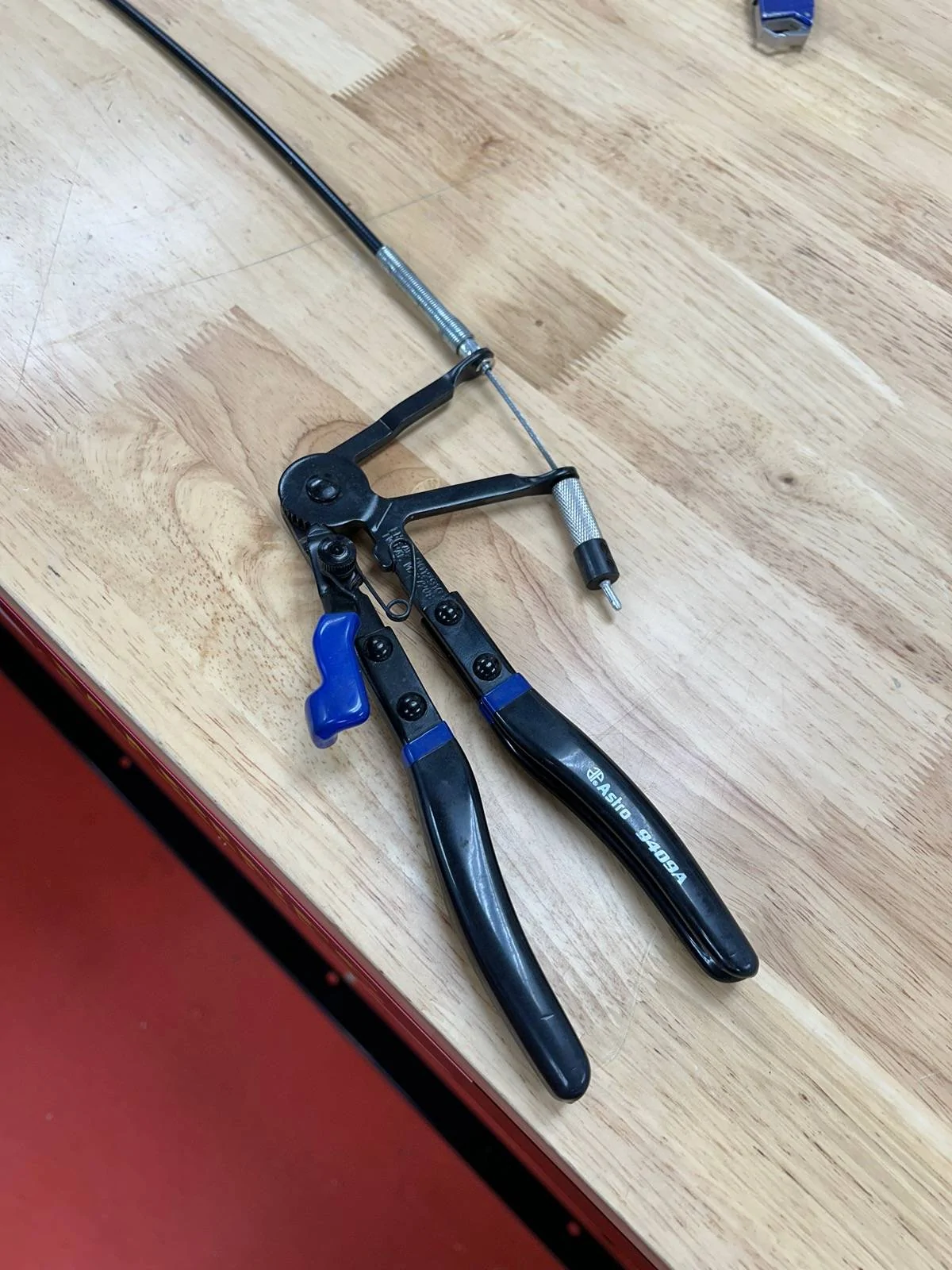
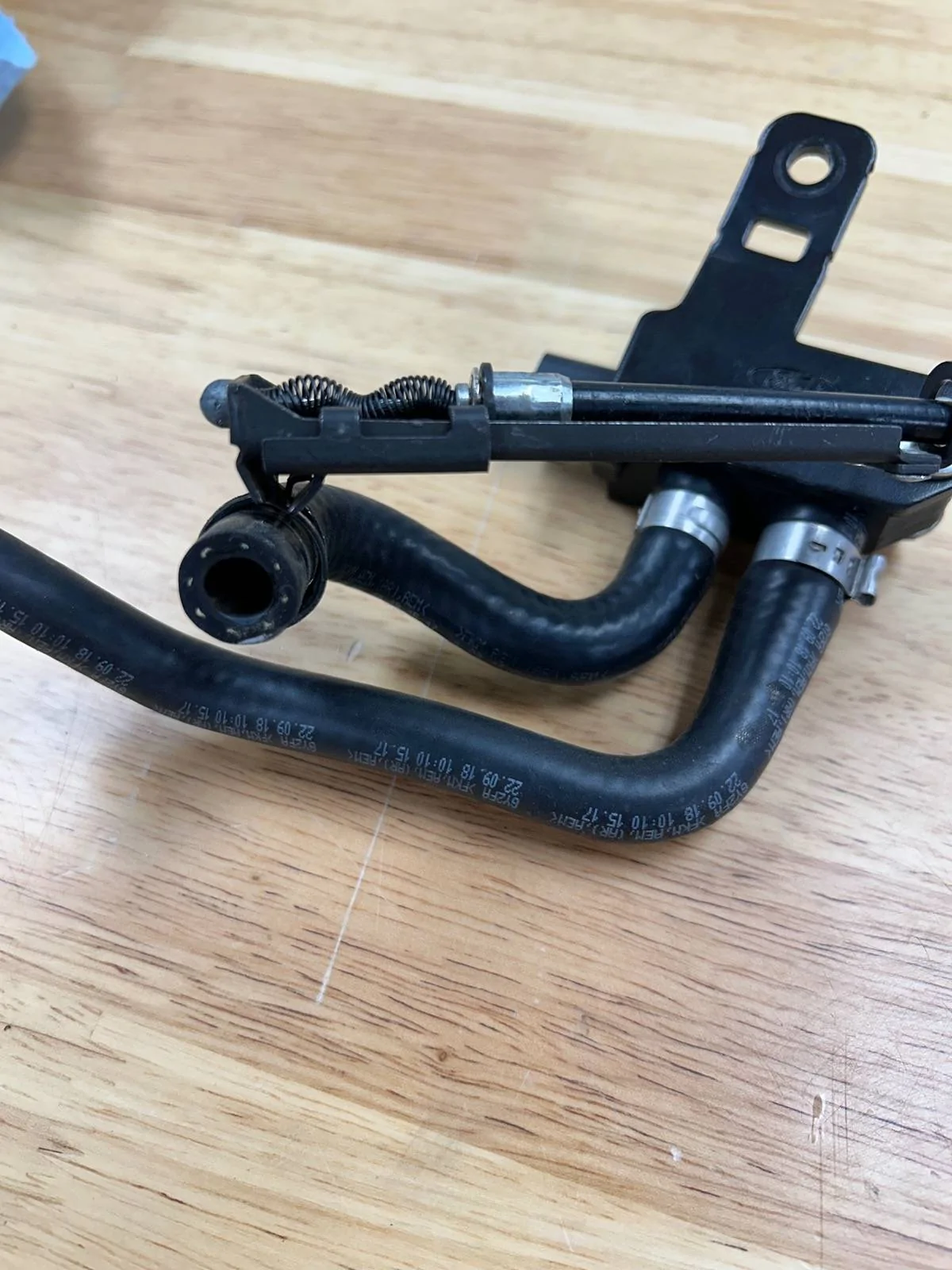
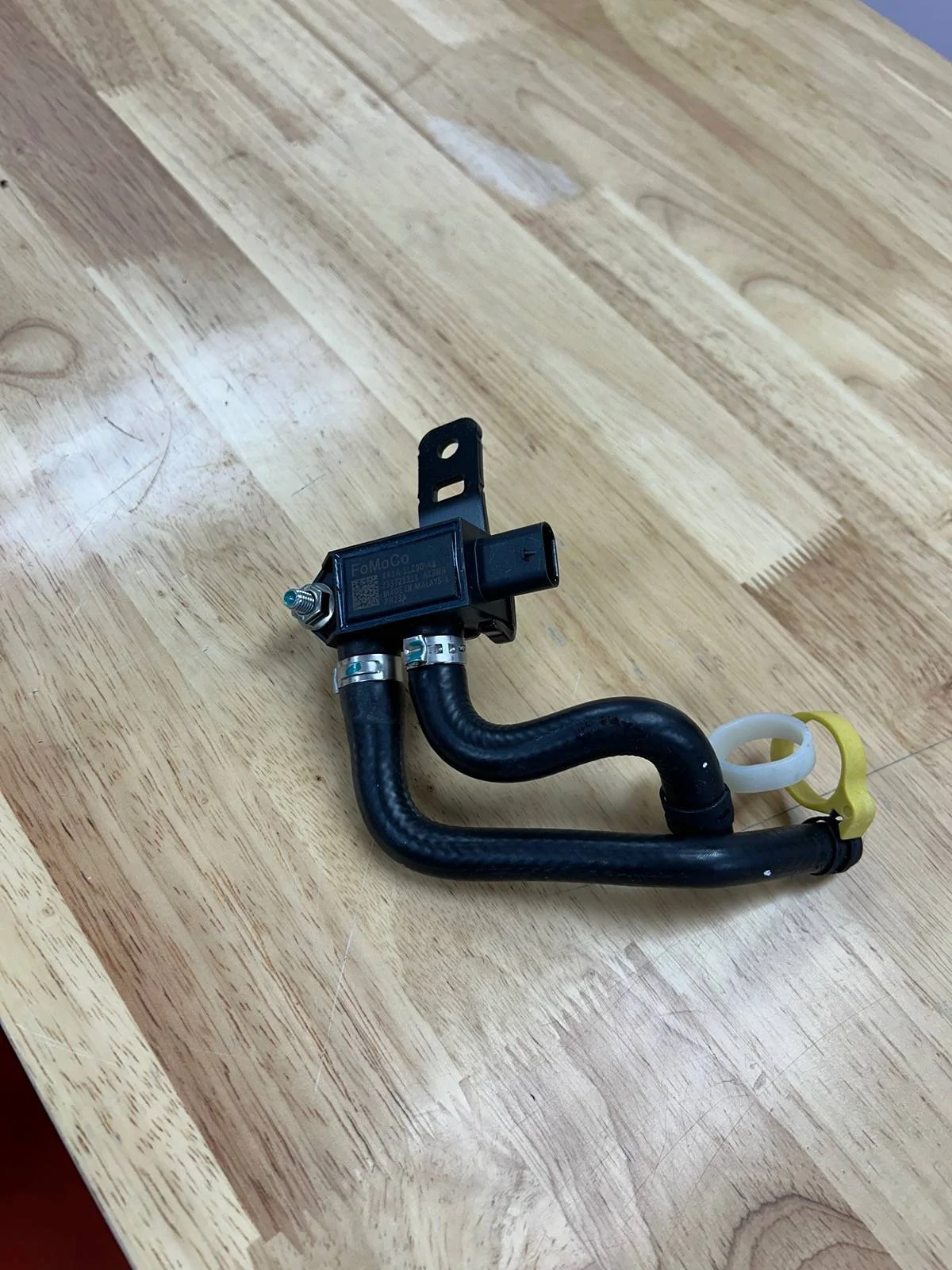
It took longer to over think this, and read the posts than it did to do the task. With the right tools (see image) it took less than 20 min to R&R the component. Got mine for Levittown Ford as others have and got it done. I had a clamp tool as pictured from a while ago that made taking off the old hoses so easy. It is flexible and makes removing the clamps much easier than any other pliers. Well worth the investment. Makes removing these clamps and other OEM clamps less frustrating. It does take a bit of technique but it is so helpful reaching those clamps from an awkward angle. The end that goes on the clamp can be held with one hand while compressing the clamp with the plier end.

Tool: Astro 9409A

Notice if you get PN: LM5Z 9J433 B the clamps come pre-compressed. Trick - I use windex, or other glass cleaner as a lube and it dissipates quickly and does not affect the rubber hose like WD-40 or other oils.

Hope this helps others! *Also go Ford during the 24Hr of Le Mans! (watching live)

IMG_4980.jpeg


IMG_4982.jpeg


IMG_4983.jpeg
 

airline tech

Well-Known Member
Joined
Aug 24, 2022
Threads
28
Messages
4,447
Reaction score
8,498
Location
Midwest - KS
Vehicle(s)
2022 Ranger Lariat-Super Crew, Cactus Gray
Occupation
Aircraft Tech
If the sensors are filing shouldn't a code be thrown?
The problem is Yes and No
The codes that tie to the DPFE are either Electrical Codes (sensor control) or Flow (hose check)

The plagued issue with the sensor is the Flow (hose check) and what it takes to trigger the P139A to P139C codes
P139A - Hoses Reversed
P139B - Upstream Hose Off or Plugged
P139C - Downstream Hose Off or Plugged

Now the manuals are vague on when this self-test is performed as the EGR Flow check is performed (once per driving cycle)
The Flow check uses the MAPT sensor for its reference to EGR flow, If the MAPT sees an increase then it passes.
So, the hose check is either continuous or (once) per drive cycle either way, the most common code and related to the symptoms is P139C.
For that code to generate, it has to see (< -4.0 Kpa for 50 Seconds) with EGR Flow Present

So, if we use the DPFE sensor (typical Readings) and compare that to when it will code and then factor in - Drive Cycle Test- Switching (+) to (-), you can clearly see why it is not coding.
The PCM is not programed to see the (switching) and code, then only time at least for the P139C code is it has to set in the (-) for 50 seconds, the switching is faster than that and the PCM does not see it as an error.

That's why we need to focus specifically for that drivability issue and with a confirmed drivability test actually seeing the switching (we need to focus) on the DPFE sensor and everything that could possibly cause the sensor reading to be erratic (askew)
This being any small leak in the tube or connections or a piece of debris partially clogging a part of the tube. (creating a turbulence of flow) when the pressure is increased in the tube from the EGR Flow.
Then add in (if moisture) is present in the Tube or Sensor, can possibly be causing the switching as the water droplets are moving

DPFE:
KOEO- Same as Idle Readings
Idle: ------ 1.48 Volts - (-0.39 KPA) or (-0.06 PSI)
30 MPH --- 1.49 Volts - (+0.95 KPA) or (+0.14 PSI)
55 MPH --- 1.48 Volts - (+0.63 KPA) or (+0.09 PSI)
Sponsored


Top