
Sponsored

Theory on fuel in oil.

Dgc333

Well-Known Member
First Name
Dave
Joined
Aug 24, 2021
Threads
17
Messages
1,742
Reaction score
4,111
Location
Massachusetts
Vehicle(s)
21 Ranger Lariat
Occupation
Engineer
Well this pretty much eliminates all possible reasons why there is fuel in oil. Most everyone in the big Fuel In Oil thread that have done an oil analysis seem to be at 5% dilution or less. I don't know if there is a similar thread for EcoBoost Mustangs but it would be interesting to compare.
Having been on the Ecoboost Mustang forum for 6 years some one would occasionally say they smelt fuel in the oil but I can't ever recall anyone reporting excessive levels of fuel after an oil analysis or reporting the oil level climbing on the dip stick.
The panic threads that don't seem to die over there are the low side fuel pressure sensor and Ecoboom.
Sponsored


 

Motorpsychology

Well-Known Member
First Name
Chris
Joined
Nov 13, 2019
Threads
21
Messages
3,290
Reaction score
11,482
Location
Prescott, WI
Vehicle(s)
2021 Ranger STX SuperCab 4X4 Carbonized grey; 2025 Mazda CX-90 Platinum Quartz
Occupation
Vagabond
haven't read everyone's responses, and apologise if others have made note of this thought, but if your engine stops in such a position that one cylinder was on the compressions stroke...loaded with fuel....its safe to assume that fuel load will bleed down past the rings as the pressure drops from the blow by.
enough starts and stops (such as ASS, short trips, or whatever else fits the bill) may be adding to the problem.
some people might just be unlucky that one or more cylinder likes to be at TDC when the engine is off.
Cooouulllddd Bee...
But the 'EB Stang and Explorer crowds aren't reporting F-I-O like on R5G. I'm not going to worry about it. Someone on this thread had their whole EFI system gone thru twice and still had FIO. Who knows. Maybe there is a hidden fuel injector in the oil pan.

If gassy oil starts shooting up though the hood seams, then I'll have it towed to the dealer. So far as I can tell, no one has reported an engine failure due to oil dilution.
 

Porpoise Hork

Well-Known Member
First Name
Bret
Joined
Apr 28, 2020
Threads
19
Messages
1,316
Reaction score
2,366
Location
Houston
Vehicle(s)
2022 F150 XLT Powerboost FX4 302A Oxford White
Occupation
IT
Fuel in oil happens on all piston engines. Fuel evaporates at low temperature so normal driving with the oil at temperature will get the fuel to evaporate off. Way back on large radial aircraft engines they had a fuel dilution valve to put fuel into the oil on shutdown in cold climates. This kept the oil from being to thick on startup after sitting at below 0 temperatures. On the next flight the fuel would evaporate off. by doing this you just needed to change the oil more often. Ok back to our engines. I have put a M catch can on my truck and after a couple of thousand miles noticed it is full of mostly a fuel smell thin liquid and a little water. So the catch can is catching some/most/all? of the fuel that is being evaporated off.

Now my theory on why and possibly a way to check. Fuel dilution is common on diesel engines, if you compare our engines in normal driving the RPM’s are similar. Shifting just after 2k and wanting to cruse below 2k. At this speed scavenging will not be as efficient and cylinder pressures will be higher. My plan is to do 2 different tests of the same milage. One will be in normal where the RPM will be kept in it normal range. The 2nd will be in S. I will keep cruse RPM at least 2.5k, more in the normal for a 4 cylinder car. This may take me a while I only drive the truck to work 3 times a week or so.

I have an alternate theory.

It's the rings. Back in the day (pre-GDI) when assembling an engine the rings put out a lot more force against the cylinder walls than they do now. You really had to repeatedly tap the piston assembly fairly hard to get it down past the ring compressor tool so the rod would seat to the crank. A set of new rings on older engines could have up to 30 PSI of tension (per ring) against the cylinder walls.

With ever increasing demands on increased efficiency they way they are today the rings rely more on compression to expand and seal vs having a high base spring tension so they put almost no outward pressure on the cylinder on their own so you can practically push the piston in by hand without any resistance. Low tension rings used in GDI engines can gave up to a 60% reduction in tension compared to non GDI engines. As a result this can allow significantly more blow-by in low rpm conditions where the rings are not subjected the higher pressures as when under boost so will not exert as much force against the cylinder walls sealing them as well. This can account for many GDI engines suffering from increased oil usage (burn) and fuel-oil dilution.

Source for info: https://www.bgprod.com/blog/under-pressure-low-tension-piston-rings/#:~:text=In order to reduce frictional,as high as 30 psi.

In order to reduce frictional drag energy loss and increase fuel efficiency, gasoline direct injection (GDI) engines use thinner and lighter piston rings, called low tension piston rings.

Piston ring spring force in older port fuel injection (PFI) engines used to be as high as 30 psi. New PFI and GDI engines can have more than a 60 percent reduction in sealing pressure on the cylinder walls.

At the same time, new PFI and GDI engine compression ratios have increased from 9:1 to as high as 14:1. These higher compression ratios dramatically increase cylinder compression and the overall pressure for fuel ignition, sometimes as high as 2000 psi.

This huge increase in pressure creates more force on the low tension rings. Piston rings are supposed to prevent fuel and combustion gases from “blowing down” between the piston and cylinder wall and oil from moving up into the cylinder. But, low tension piston rings have a greater tendency to allow blow-by. Crankcase contamination compromises lubrication and promotes oil degradation.
 
Last edited:

Mustang2Ranger

Well-Known Member
First Name
Garrett
Joined
Mar 20, 2019
Threads
7
Messages
691
Reaction score
1,134
Location
Southern California
Vehicle(s)
19 Ranger Lariat,06 Escape Hybrid,01 Sienna,06 TSX
Fuel in oil happens on all piston engines. Fuel evaporates at low temperature so normal driving with the oil at temperature will get the fuel to evaporate off. Way back on large radial aircraft engines they had a fuel dilution valve to put fuel into the oil on shutdown in cold climates. This kept the oil from being to thick on startup after sitting at below 0 temperatures. On the next flight the fuel would evaporate off. by doing this you just needed to change the oil more often. Ok back to our engines. I have put a M catch can on my truck and after a couple of thousand miles noticed it is full of mostly a fuel smell thin liquid and a little water. So the catch can is catching some/most/all? of the fuel that is being evaporated off.

Now my theory on why and possibly a way to check. Fuel dilution is common on diesel engines, if you compare our engines in normal driving the RPM’s are similar. Shifting just after 2k and wanting to cruse below 2k. At this speed scavenging will not be as efficient and cylinder pressures will be higher. My plan is to do 2 different tests of the same mileage. One will be in normal where the RPM will be kept in it normal range. The 2nd will be in S. I will keep cruse RPM at least 2.5k, more in the normal for a 4 cylinder car. This may take me a while I only drive the truck to work 3 times a week or so.
Nice to see someone is taking more of a scientific approach, testing within specific variables and comparing results

Like that Project Farm guy on YouTube. Its not a lab but it is cool to watch and form opinions
 

BladeRanger

Well-Known Member
First Name
Bladimir
Joined
May 16, 2020
Threads
4
Messages
907
Reaction score
2,267
Location
Escondido Ca
Vehicle(s)
Ranger 2020 XLT FX4
Occupation
Electronic Engineer
Vehicle Showcase
1
Fuel in oil happens on all piston engines. Fuel evaporates at low temperature so normal driving with the oil at temperature will get the fuel to evaporate off. Way back on large radial aircraft engines they had a fuel dilution valve to put fuel into the oil on shutdown in cold climates. This kept the oil from being to thick on startup after sitting at below 0 temperatures. On the next flight the fuel would evaporate off. by doing this you just needed to change the oil more often. Ok back to our engines. I have put a M catch can on my truck and after a couple of thousand miles noticed it is full of mostly a fuel smell thin liquid and a little water. So the catch can is catching some/most/all? of the fuel that is being evaporated off.

Now my theory on why and possibly a way to check. Fuel dilution is common on diesel engines, if you compare our engines in normal driving the RPM’s are similar. Shifting just after 2k and wanting to cruse below 2k. At this speed scavenging will not be as efficient and cylinder pressures will be higher. My plan is to do 2 different tests of the same milage. One will be in normal where the RPM will be kept in it normal range. The 2nd will be in S. I will keep cruse RPM at least 2.5k, more in the normal for a 4 cylinder car. This may take me a while I only drive the truck to work 3 times a week or so.
Following for Test Results!!!


GTGallop

Well-Known Member
First Name
Greg
Joined
Mar 1, 2020
Threads
49
Messages
1,079
Reaction score
3,157
Location
Anthem, AZ
Website
www.qrz.com
Vehicle(s)
2019 Ranger XLT 4X4 SOLD - Now 2023 TRD Offroad
Occupation
Program Manager
I vote for stuck piston ring (with zero evidence of why or how).
I'm close to that.
A Ford Engineer in our family told us when we got the wife's Mustang (2017) that it needed to be taken out and run for a distance on the weekends. He explained that the Ecoboost was a high compression engine due to the turbo but Ford backed off on high compression rings (that fit snugger) in favor of looser ones that allowed the engine to spin more efficiently. He said that short haul driving, like little errands and trips to the store or short bursts of hard acceleration were going to cause moisture and fuel that blows by the rings to get into the oil. Getting the engine up to temp and keeping it there bakes off the moisture in the oil.

As an aside to that, I've noticed that people who seem to get more stuff in their can live in humid climates. You see pictures from people in Florida, Georgia, Louisiana, Texas posting up these issues and pics. Haven't seen many from New Mexico, Arizona, Utah, Colorado.

I think it's a combination of the short haul driving and the increased humidity in those areas.
 

Porpoise Hork

Well-Known Member
First Name
Bret
Joined
Apr 28, 2020
Threads
19
Messages
1,316
Reaction score
2,366
Location
Houston
Vehicle(s)
2022 F150 XLT Powerboost FX4 302A Oxford White
Occupation
IT
I'm close to that.
A Ford Engineer in our family told us when we got the wife's Mustang (2017) that it needed to be taken out and run for a distance on the weekends. He explained that the Ecoboost was a high compression engine due to the turbo but Ford backed off on high compression rings (that fit snugger) in favor of looser ones that allowed the engine to spin more efficiently. He said that short haul driving, like little errands and trips to the store or short bursts of hard acceleration were going to cause moisture and fuel that blows by the rings to get into the oil. Getting the engine up to temp and keeping it there bakes off the moisture in the oil.
A good 30-40 mile run at freeway speeds (locking out 10th to keep the revs up over 2K) at least once a week and changing the oil every 5K will resolve most of the issues with fuel dilution. My 2008 GTI and 2014 SantaFe Sport both GDI turbos and well over 140K on the engines and neither had an issue with fuel dilution. Both of these cars saw regular longer sustained freeway drives as well as city driving. The Ranger also sees similar driving habits and so far at 13K no issues with fuel dilution or oil usage.
 

jblc

Well-Known Member
First Name
JB
Joined
Nov 15, 2020
Threads
75
Messages
749
Reaction score
644
Location
USA
Vehicle(s)
2021 XLT FX2 supercab
A good 30-40 mile run at freeway speeds (locking out 10th to keep the revs up over 2K) at least once a week and changing the oil every 5K will resolve most of the issues with fuel dilution.
This reply isn't a response directly to your post, but an opportunity to say this :) , so it's definitely a general comment -- vs to you personally :)
I've said this before on the forums, but I'll mention again:
This engine is supposed to operate normally for anyone. It shouldn't be a "long-trip-only" car -- if it were, there should be a warning that it's designed only for an exclusive set of people: those who have the money and energy to drive extra "just to keep it healthy", not to mention the mental bandwidth to deal with it.

And it's also putting a financial and time burden (time to drive and gas cost) for these excessive rides...and this extra driving also contributes to global warming just to keep Ford's engineering error/design choices happy.
It seems unfair to pass this burden onto the consumer, especially as it seems to imply a needed behavior that only the privileged can afford.
It's true that other cars are also happier with long drives -- that's normal. But most of them don't have fuel dilution issues when not driven long/hot; and I'd have the same message for those rare few other cars that do :)
 

N. J. Jim

Well-Known Member
First Name
Jim
Joined
Apr 23, 2020
Threads
0
Messages
273
Reaction score
447
Location
Vineland,N. J.
Vehicle(s)
2019 Ford Ranger Lariat
Occupation
Retired
This reply isn't a response directly to your post, but an opportunity to say this :) , so it's definitely a general comment -- vs to you personally :)

I've said this before on the forums, but I'll mention again:
This engine is supposed to operate normally for anyone. It shouldn't be a "long-trip-only" car -- if it were, there should be a warning that it's designed only for an exclusive set of people: those who have the money and energy to drive extra "just to keep it healthy", not to mention the mental bandwidth to deal with it.

And it's also putting a financial and time burden (time to drive and gas cost) for these excessive rides...and this extra driving also contributes to global warming just to keep Ford's engineering error/design choices happy.
It seems unfair to pass this burden onto the consumer, especially as it seems to imply a needed behavior that only the privileged can afford.
It's true that other cars are also happier with long drives -- that's normal. But most of them don't have fuel dilution issues when not driven long/hot; and I'd have the same message for those rare few other cars that do :)
Nothing normal about putting an extra quart or more of fuel in the oil in less than for some a few hundred miles. I agree with you 100% you should be able to drive these vehicles in any length of miles without the worry of severe fuel dilution. It is not fair as you stated to put this burden on a customer to deal with this on your own. And to those of you who think we're creating the problem or imagining it, that's easy to say if you don't have this issue!!!
 

Motorpsychology

Well-Known Member
First Name
Chris
Joined
Nov 13, 2019
Threads
21
Messages
3,290
Reaction score
11,482
Location
Prescott, WI
Vehicle(s)
2021 Ranger STX SuperCab 4X4 Carbonized grey; 2025 Mazda CX-90 Platinum Quartz
Occupation
Vagabond
This reply isn't a response directly to your post, but an opportunity to say this :) , so it's definitely a general comment -- vs to you personally :)

I've said this before on the forums, but I'll mention again:
This engine is supposed to operate normally for anyone. It shouldn't be a "long-trip-only" car -- if it were, there should be a warning that it's designed only for an exclusive set of people: those who have the money and energy to drive extra "just to keep it healthy", not to mention the mental bandwidth to deal with it.

And it's also putting a financial and time burden (time to drive and gas cost) for these excessive rides...and this extra driving also contributes to global warming just to keep Ford's engineering error/design choices happy.
It seems unfair to pass this burden onto the consumer, especially as it seems to imply a needed behavior that only the privileged can afford.
It's true that other cars are also happier with long drives -- that's normal. But most of them don't have fuel dilution issues when not driven long/hot; and I'd have the same message for those rare few other cars that do :)
I suspect it's much ado about nothing. On the Fuel In Oil discussion, some advocate using thicker oil to compensate for the added fuel. The oil life indicator doesn't seem to detect anything wrong; a measurable drop in viscosity should show up as a rapid drop in percentage, I would think. I'm starting to lean toward low-tension piston rings as the suspect. Again, R5G doesn't have any posts that I've see about engine failure caused by fuel in oil.
 

BladeRanger

Well-Known Member
First Name
Bladimir
Joined
May 16, 2020
Threads
4
Messages
907
Reaction score
2,267
Location
Escondido Ca
Vehicle(s)
Ranger 2020 XLT FX4
Occupation
Electronic Engineer
Vehicle Showcase
1
I'm close to that.
A Ford Engineer in our family told us when we got the wife's Mustang (2017) that it needed to be taken out and run for a distance on the weekends. He explained that the Ecoboost was a high compression engine due to the turbo but Ford backed off on high compression rings (that fit snugger) in favor of looser ones that allowed the engine to spin more efficiently. He said that short haul driving, like little errands and trips to the store or short bursts of hard acceleration were going to cause moisture and fuel that blows by the rings to get into the oil. Getting the engine up to temp and keeping it there bakes off the moisture in the oil.

As an aside to that, I've noticed that people who seem to get more stuff in their can live in humid climates. You see pictures from people in Florida, Georgia, Louisiana, Texas posting up these issues and pics. Haven't seen many from New Mexico, Arizona, Utah, Colorado.

I think it's a combination of the short haul driving and the increased humidity in those areas.
Thanks for the info, My drive to work and home is about 17 miles total per day, and I probably need to drive the Ranger more often than 17 miles per day
 

Joeiconic

Well-Known Member
First Name
Rob
Joined
Jan 31, 2021
Threads
27
Messages
1,747
Reaction score
5,920
Location
Georgia
Vehicle(s)
2021 Ranger XLT
Occupation
Retired
A good 30-40 mile run at freeway speeds (locking out 10th to keep the revs up over 2K) at least once a week and changing the oil every 5K will resolve most of the issues with fuel dilution. My 2008 GTI and 2014 SantaFe Sport both GDI turbos and well over 140K on the engines and neither had an issue with fuel dilution. Both of these cars saw regular longer sustained freeway drives as well as city driving. The Ranger also sees similar driving habits and so far at 13K no issues with fuel dilution or oil usage.
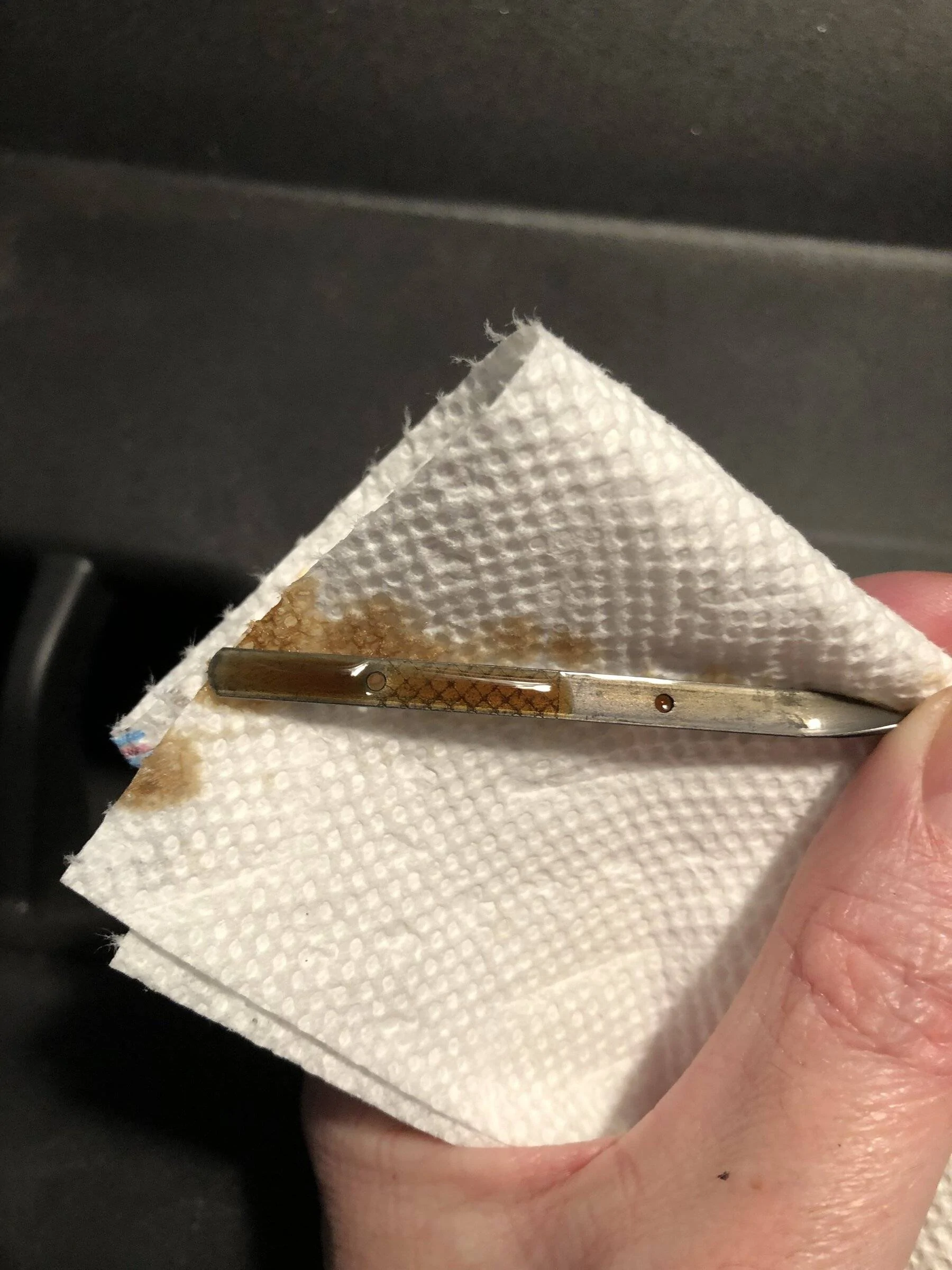
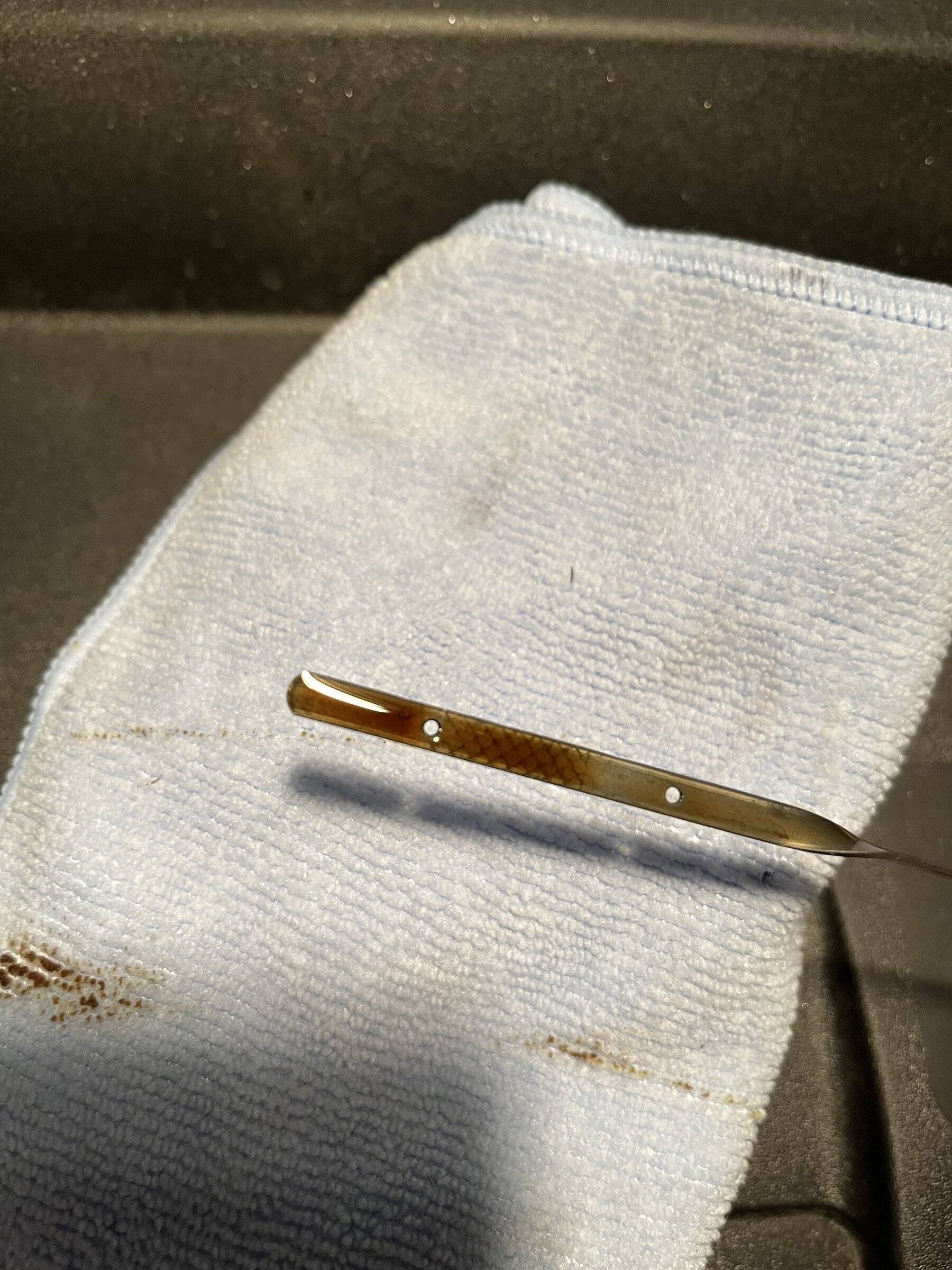
This is the way I drive my truck. I mostly drive it on weekends. I drive an hour and a half to my cabin on Friday and back on Sunday, with short trips in between. I have abut 11,000 on the truck and 3000 on my current oil change. The first pic was taken at 2000 on this oil change and the second was taken today (3000). Same level as when it was first changed and it just smells like oil.

E7E71021-792D-4271-A851-C93C811E9B9C.webp


EA8C5F6A-A0A6-4FC0-BD9E-A3B7E94D222F.jpeg
Sponsored

 
Last edited:


Top