
Sponsored

JACKSMYDOG
Well-Known Member
I watched the video a few days ago and it is the best direct comparison I've seen. The issue, as he notes is that it's largely biased toward rock crawling. Sand, mud, bush trail, and water crossing will not gain the same benefit of tread flex, and in many cases suffer with narrower tread. Even specific to rock crawling, without testing in real climbing application, it's not conclusive how much the flex will benefit over additional width.

Frenchy
Well-Known Member
- First Name
- Chris
- Joined
- Mar 15, 2020
- Threads
- 164
- Messages
- 7,539
- Reaction score
- 10,750
- Location
- Elizabeth, Colorado
- Vehicle(s)
- 2012 Nissan Frontier, 1994 F150 XL, 2022 Ford Transit
- Occupation
- Field Service Technician
Another thing to consider is the difference between brands. Simply goes to prove a different tire will have different characteristics and may require different tire pressures for just one vehicle setup alone. If the tires were on a different vehicle(lighter or heavier) the tire would require a different pressure for similar results

RedRocker
Well-Known Member
I ran 33 10/50s on my Jeep & now 34 11/00 on it & always went where my friends with 35 12/50s went everywhere they did, mostly rock crawling though. BFGs
Grandaccess
Well-Known Member
- First Name
- Robert
- Joined
- Jul 8, 2023
- Threads
- 5
- Messages
- 1,095
- Reaction score
- 2,458
- Location
- Binghamton, N.Y
- Vehicle(s)
- 2021 Ford Ranger XLT FX4
- Occupation
- Computer Consultant
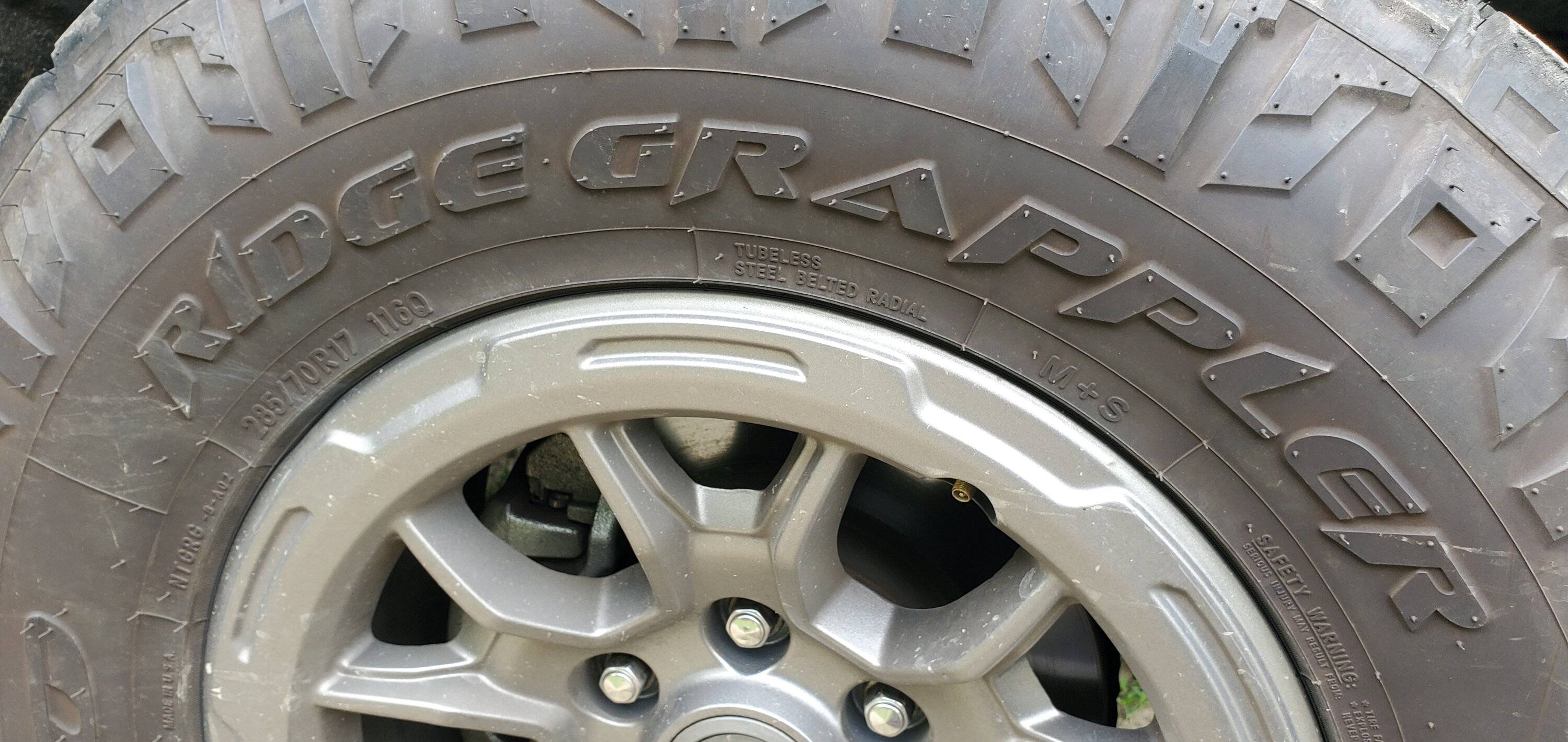
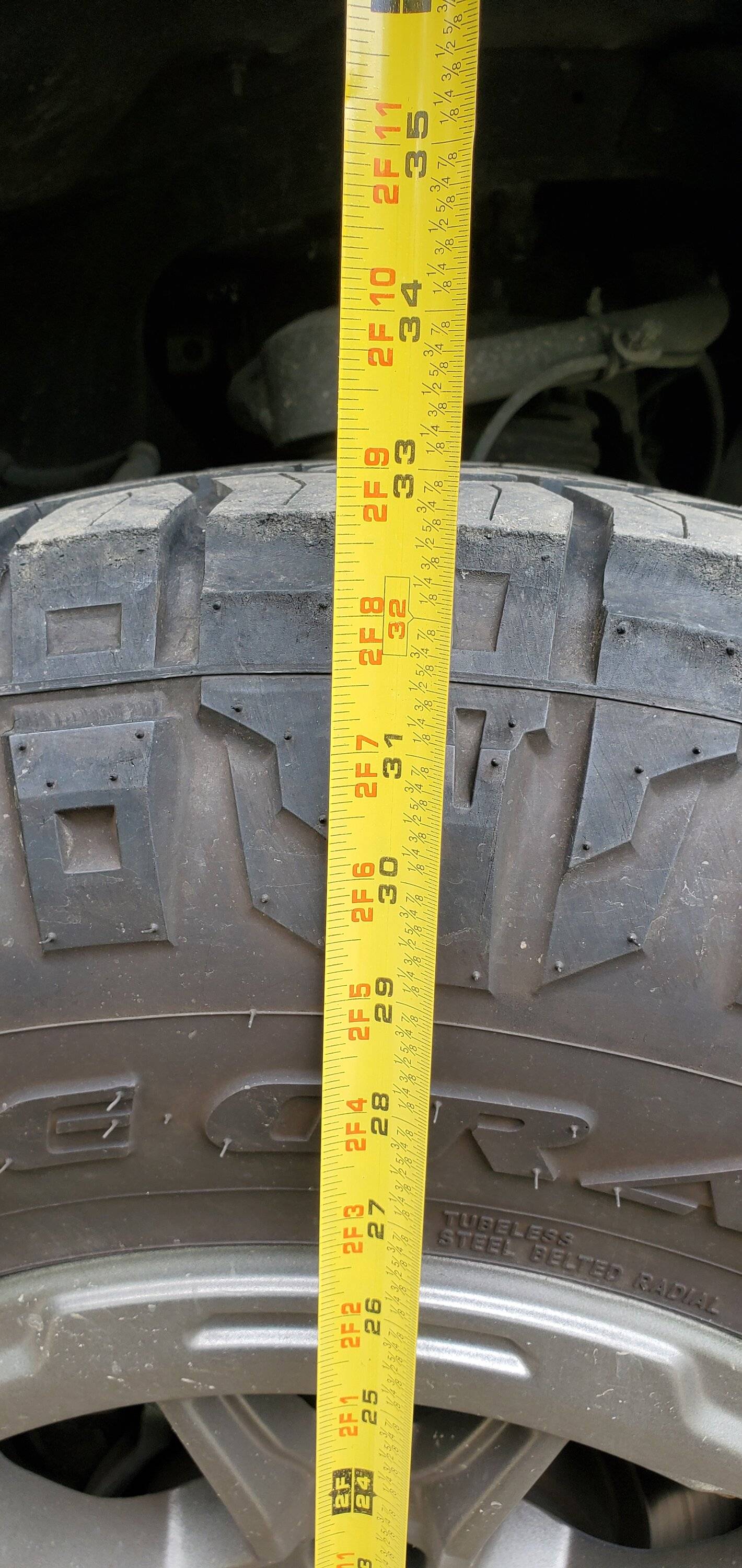
I have had large tires my whole life up to 35s right now 285/70s that equal 33s (I have my crash bars and the tire is nowhere close to them) and being in New York I would mostly be on Mud and Snow anyway and being on the road 1500 miles a month on average (for me) I like to #1 Hear my radio! #2 ride, I dont like bounce or that roller coaster feeling, you can control that feeling of a smooth ride with good shocks and a well made lift ....
I run my ridge grapplers at 44 PSI thats max psi written on the side, I mostly have run my tires 10psi over and have found I get better MPG but only 1 or 2 MPG the handling feels more crisp,
for winter I might run them around 34 psi I will play around and find a good middle ground


I run my ridge grapplers at 44 PSI thats max psi written on the side, I mostly have run my tires 10psi over and have found I get better MPG but only 1 or 2 MPG the handling feels more crisp,
for winter I might run them around 34 psi I will play around and find a good middle ground
Frenchy
Well-Known Member
- First Name
- Chris
- Joined
- Mar 15, 2020
- Threads
- 164
- Messages
- 7,539
- Reaction score
- 10,750
- Location
- Elizabeth, Colorado
- Vehicle(s)
- 2012 Nissan Frontier, 1994 F150 XL, 2022 Ford Transit
- Occupation
- Field Service Technician
That tire pressure that is written on the sidewall is the MAX TIRE PRESSURE that the tire can handle. Not the recommended tire pressure. Yes I learned the hard way too.I have had large tires my whole life up to 35s right now 285/70s that equal 33s (I have my crash bars and the tire is nowhere close to them) and being in New York I would mostly be on Mud and Snow anyway and being on the road 1500 miles a month on average (for me) I like to #1 Hear my radio! #2 ride, I dont like bounce or that roller coaster feeling, you can control that feeling of a smooth ride with good shocks and a well made lift ....
I run my ridge grapplers at 44 PSI thats max psi written on the side, I mostly have run my tires 10psi over and have found I get better MPG but only 1 or 2 MPG the handling feels more crisp,
for winter I might run them around 34 psi I will play around and find a good middle ground
Scott_Anderson_
Well-Known Member
yes, and all of his tire imprints were made in his driveway, so there is no accounting for what they might look like and the imprint size over gravel, loose dirt, etc.I watched the video a few days ago and it is the best direct comparison I've seen. The issue, as he notes is that it's largely biased toward rock crawling. Sand, mud, bush trail, and water crossing will not gain the same benefit of tread flex, and in many cases suffer with narrower tread. Even specific to rock crawling, without testing in real climbing application, it's not conclusive how much the flex will benefit over additional width.
Grandaccess
Well-Known Member
- First Name
- Robert
- Joined
- Jul 8, 2023
- Threads
- 5
- Messages
- 1,095
- Reaction score
- 2,458
- Location
- Binghamton, N.Y
- Vehicle(s)
- 2021 Ford Ranger XLT FX4
- Occupation
- Computer Consultant
that is the way it came to me from the dealership in MD, I am going to lower it to 40 maybe 38 but I have never run my tires at 32That tire pressure that is written on the sidewall is the MAX TIRE PRESSURE that the tire can handle. Not the recommended tire pressure. Yes I learned the hard way too.
my Explorer that had the same size tires I ran at 41 they lasted 75k?
Frenchy
Well-Known Member
- First Name
- Chris
- Joined
- Mar 15, 2020
- Threads
- 164
- Messages
- 7,539
- Reaction score
- 10,750
- Location
- Elizabeth, Colorado
- Vehicle(s)
- 2012 Nissan Frontier, 1994 F150 XL, 2022 Ford Transit
- Occupation
- Field Service Technician
It truly depends on the tire to how long it will last. I would recommend running them closer to the OEM Recommend tire pressurethat is the way it came to me from the dealership in MD, I am going to lower it to 40 maybe 38 but I have never run my tires at 32
my Explorer that had the same size tires I ran at 41 they lasted 75k?
Discount Tire
Well-Known Member
- Joined
- Feb 3, 2020
- Threads
- 15
- Messages
- 459
- Reaction score
- 1,063
- Location
- Arizona, USA
- Website
- discountti.re
- Vehicle(s)
- All Things FORD
- Occupation
- Tire & Wheel Specialists
This was very well done! We've been watching this video make it's rounds across other enthusiast forums.
JACKSMYDOG
Well-Known Member
The specific tire is only part of the story. What pressure, whether you drive on concrete, asphalt or gravel, vehicle load, weight, and maintenance level, suspension type, driver styles, one driver or multi-driver vehicle, air and road temperatures, night/day temperature differential, road and air humidity, etc.It truly depends on the tire to how long it will last. I would recommend running them closer to the OEM Recommend tire pressure
One driver could get 75K from a set and another driver get 35K from the exact same tire model and size, on the same model vehicle.
Frenchy
Well-Known Member
- First Name
- Chris
- Joined
- Mar 15, 2020
- Threads
- 164
- Messages
- 7,539
- Reaction score
- 10,750
- Location
- Elizabeth, Colorado
- Vehicle(s)
- 2012 Nissan Frontier, 1994 F150 XL, 2022 Ford Transit
- Occupation
- Field Service Technician
Maybe on a tire that is rated for 70K. If you have a tire rated for 40K then no matter what you do it will not see 75KThe specific tire is only part of the story. What pressure, whether you drive on concrete, asphalt or gravel, vehicle load, weight, and maintenance level, suspension type, driver styles, one driver or multi-driver vehicle, air and road temperatures, night/day temperature differential, road and air humidity, etc.
One driver could get 75K from a set and another driver get 35K from the exact same tire model and size, on the same model vehicle.
subquark
Well-Known Member
- First Name
- David
- Joined
- Jan 28, 2022
- Threads
- 11
- Messages
- 4,544
- Reaction score
- 23,071
- Location
- Portsmouth, NH
- Website
- subQuark.com
- Vehicle(s)
- Soupie! Race Red '22 XL 101A Scab 4X2 w/steelies
- Occupation
- game publisher
There's only one right answer ...


JACKSMYDOG
Well-Known Member
This statement is not only not factual, but it is side stepping your original point that the tire will determine longevity, not other factors.Maybe on a tire that is rated for 70K. If you have a tire rated for 40K then no matter what you do it will not see 75K
Case in point, my grandmothers 1984 Tempo which she bought brand new, still had factory tires on it when she passed in 2009, and it had 67,000 miles on it. She drove it around the neighbourhood a few times/week, doing about 25mph. We had our mechanic do a safety on it and it passed, then the buyer had their mechanic check it over and also passed it.
Frenchy
Well-Known Member
- First Name
- Chris
- Joined
- Mar 15, 2020
- Threads
- 164
- Messages
- 7,539
- Reaction score
- 10,750
- Location
- Elizabeth, Colorado
- Vehicle(s)
- 2012 Nissan Frontier, 1994 F150 XL, 2022 Ford Transit
- Occupation
- Field Service Technician
Each tire has a mileage rating. You are trying to make it seem like it doesn't matter what the tire rating isThis statement is not only not factual, but it is side stepping your original point that the tire will determine longevity, not other factors.
Case in point, my grandmothers 1984 Tempo which she bought brand new, still had factory tires on it when she passed in 2009, and it had 67,000 miles on it. She drove it around the neighbourhood a few times/week, doing about 25mph. We had our mechanic do a safety on it and it passed, then the buyer had their mechanic check it over and also passed it.
Sponsored


