Sponsored

Oil Catch Can. Yes or No?

Do you have a catch can?


  • Total voters
    44

Danny Ramirez

Well-Known Member
First Name
Daniel
Joined
Sep 3, 2019
Threads
10
Messages
52
Reaction score
65
Location
NorCal
Vehicle(s)
2019 Ranger STX FX4
I’m gonna leave this comment and walk away...

Ill start by saying I bought a new ranger for reliability, warranty, and because I love it. As stated in many of these threads, these engines were stress tested, abused, and then torn apart for inspection. If Ford thought a catch can was necessary, our trucks would have one. We’ve come a long way with technology... I’ll give an example;

I owned a 1998 Expedition that had a 5.4 Triton with 284,000 miles. I loved it, I kept up with Maintenance (always used the same oil!!!!) and it never failed me. I sold it to someone who got it to 300,000 with no issues. I will say, however, that when I went to change the spark plugs (extremely difficult on the Triton 5.4) I looked down the bore into the cylineder... it was caked up with gunk.. note.. 1998 truck with 1998 PCV system.

like wise for my dads bone stock 2002 F250 with a V10... 340,000 miles no issues... just spark plugs and coils.

My 2000 Ram 2500 Cummins diesel however... different story! The 24 valve Cummins came with a catch “bottle” from the factory. My truck with 218,000 miles and a very healthy stock engine had no *noticeable* blow by.. but the bottle still filled up. This is because the Cummins engine creates a ton of crank case gasses/ pressure. Engineers decided the catch can was necessary due to the sheer volume of oil blow by. It’s a lot, Not just a few ounces like some ranger owners are reporting, we’re talking 6-10 ounces of black oil every 5000 miles, and this is normal!


my point is.. yes there will always be blow by and gunk that will add up over time, but if Ford, in 1998, could design 300,000+ mile engines, I’m confident That my 2019 ranger could match if not double this figure.

**I would like to note that I am not comparing our ecoboost engines to the triton engines.. two different animals. I’m simply stating that Ford has done their homework.

Now.. I do believe catch cans can do some good. I just don’t think people should feel like they need to modify their brand new $30,000+ trucks.

YES DEALERS ARE FULL OF SHIT.... BUT REMEMBER, THEY SELL VEHICLES, THEY DONT MAKE THEM
Sponsored

 
Last edited:
jrscobra

Active Member
First Name
Jaime
Joined
Apr 14, 2020
Threads
12
Messages
44
Reaction score
125
Location
Chattanooga
Vehicle(s)
2019 Ford Ranger lariat Crewcab
Occupation
Fleet Vehicle Sales at a Ford Dealership
Vehicle Showcase
1
Installing the Mishimoto Oil catch Can today. 7800 miles on it.
 

TJC

Well-Known Member
First Name
Tony
Joined
Aug 28, 2020
Threads
45
Messages
3,937
Reaction score
9,884
Location
North Carolina
Vehicle(s)
93 Miata, 05 Ranger 4x4, 20 Ranger 4x4, 23 CX-5
I added a UPR catch can on my 2020 Ranger simply as insurance. I keep my trucks long term, and a high performace GDI /Turbo 2.3L 4 cylinder in a 4000+ lb truck is pushing the envelope. If the engine had both fuel injector systems as the newly redesigned Ford V6 GDI EcoBoost engines I would not have bothered. These engines are d@mn complex and I know Ford has engineered and tested them, but they also engineered and tested the drive trains and trannies, and lots of people are complaining about (driveshaft? trannie?) shudder at low speeds.

I want to maximize my engine's life and I figure the investment for a catch can is minimal and won't hurt anything, and may keep me on the road another 100K-150K before an engine rebuild.

There are a great deal of stories floating around concerning GDI engines, and the latest reformulated oils and redesigned hybrid fuel systems to correct the coking valve issues. Ford definitely made changes to the larger GDI EcoBoost engines to correct these issues, but have not gotten around to doing it on the 2.3L yet. I suspect that change is in the cards. Maybe they are waiting to see if the reformulated oils stops the problem. But what do I know?

This is what I do know, I paid over $30K for a truck that I want to last at least 15 years before major repairs are required. A $300 investment for a quality catch can amortizes out a $20 year increase in expenses, and may save me thousands in early costly repairs.

Do I trust Ford not to sell me a truck with a possibly compromised fuel system, not entirely.

Way back in 1978 I purchased a new Oldsmobile with a 350CI Diesel engine based upon the gas 350 V8 Long block. It blew out head gaskets twice in the first 40K miles. After the 2nd incident and repair that I had to eat (warranties were 12K / 12 months back then) I went back to the dealer that sold me the car new and attempted to trade it in for a new car. The dealer flat out refused to take it on trade. That ended my dealing with GM forever. The same engineering argument for catch cans can be made for that GM 350 diesel engine... GM engineers did their homework and it was good to go... yeah right...

My advice, trust but verify, and if you can not verify, take adequate measures to alleviate / minimize the potential problem.

One last thing, it was no picnic installing the catch can at the intake and PCV block connections. And that is due to compomised engine design. This engine wasn't built to be maintained by anyone less than a fully stocked shop. Witness the lack of a Trannie dipstick. By any measure taken, an automatic trannie needs a dipstick to easily check fluid levels. Checking trannie fluid levels cold doesn't cut the mustard. And there's a lot of heat coming out of that turbo into the nearby exhaust right next the trannie.

And while I am questioning the engineering wisdom of leaving out the dip stick, Let's look at the engineering recommendation imparted to us in the owners manual for this trannie, how many of you are going to go 150,000 miles before changing your transmission fluid? Ford Engineers state it is OK. I happen to (strongly) disagree and mine is being changed every 50K with a new filter.
The bottom line here is we all make choices based upon our experience, biases, knowledge, and trust in the manufacturer. So to each, their own.

Me?

I am erring on the side of caution and preventative maintenance. Hence the catch can.

Tony


Floyd

Well-Known Member
Joined
Jan 6, 2019
Threads
38
Messages
2,064
Reaction score
3,132
Location
illinois
Vehicle(s)
'19 Ranger SCab,'16 Connect,'95 MustangGT,'50 Ford
I added a UPR catch can on my 2020 Ranger simply as insurance. I keep my trucks long term, and a high performace GDI /Turbo 2.3L 4 cylinder in a 4000+ lb truck is pushing the envelope. If the engine had both fuel injector systems as the newly redesigned Ford V6 GDI EcoBoost engines I would not have bothered. These engines are d@mn complex and I know Ford has engineered and tested them, but they also engineered and tested the drive trains and trannies, and lots of people are complaining about (driveshaft? trannie?) shudder at low speeds.

I want to maximize my engine's life and I figure the investment for a catch can is minimal and won't hurt anything, and may keep me on the road another 100K-150K before an engine rebuild.

There are a great deal of stories floating around concerning GDI engines, and the latest reformulated oils and redesigned hybrid fuel systems to correct the coking valve issues. Ford definitely made changes to the larger GDI EcoBoost engines to correct these issues, but have not gotten around to doing it on the 2.3L yet. I suspect that change is in the cards. Maybe they are waiting to see if the reformulated oils stops the problem. But what do I know?

This is what I do know, I paid over $30K for a truck that I want to last at least 15 years before major repairs are required. A $300 investment for a quality catch can amortizes out a $20 year increase in expenses, and may save me thousands in early costly repairs.

Do I trust Ford not to sell me a truck with a possibly compromised fuel system, not entirely.

Way back in 1978 I purchased a new Oldsmobile with a 350CI Diesel engine based upon the gas 350 V8 Long block. It blew out head gaskets twice in the first 40K miles. After the 2nd incident and repair that I had to eat (warranties were 12K / 12 months back then) I went back to the dealer that sold me the car new and attempted to trade it in for a new car. The dealer flat out refused to take it on trade. That ended my dealing with GM forever. The same engineering argument for catch cans can be made for that GM 350 diesel engine... GM engineers did their homework and it was good to go... yeah right...

My advice, trust but verify, and if you can not verify, take adequate measures to alleviate / minimize the potential problem.

One last thing, it was no picnic installing the catch can at the intake and PCV block connections. And that is due to compomised engine design. This engine wasn't built to be maintained by anyone less than a fully stocked shop. Witness the lack of a Trannie dipstick. By any measure taken, an automatic trannie needs a dipstick to easily check fluid levels. Checking trannie fluid levels cold doesn't cut the mustard. And there's a lot of heat coming out of that turbo into the nearby exhaust right next the trannie.

And while I am questioning the engineering wisdom of leaving out the dip stick, Let's look at the engineering recommendation imparted to us in the owners manual for this trannie, how many of you are going to go 150,000 miles before changing your transmission fluid? Ford Engineers state it is OK. I happen to (strongly) disagree and mine is being changed every 50K with a new filter.
The bottom line here is we all make choices based upon our experience, biases, knowledge, and trust in the manufacturer. So to each, their own.

Me?

I am erring on the side of caution and preventative maintenance. Hence the catch can.

Tony
How did you get to $300?
Aren't they under $100?

Oh...and remember ...
Ford didn't build Oldsmobiles!
 

steveK

Well-Known Member
First Name
Asteve
Joined
Mar 23, 2020
Threads
5
Messages
62
Reaction score
193
Location
Long Island
Vehicle(s)
2019 Ranger
Occupation
Electronic Tech
Installing the Mishimoto Oil catch Can today. 7800 miles on it.
Any luck with that installation... I'm having problems getting my arm up there onto the crankcase side connector... the video sure makes it look a lot easier than its turning out to be.
 

TJC

Well-Known Member
First Name
Tony
Joined
Aug 28, 2020
Threads
45
Messages
3,937
Reaction score
9,884
Location
North Carolina
Vehicle(s)
93 Miata, 05 Ranger 4x4, 20 Ranger 4x4, 23 CX-5
How did you get to $300?
Aren't they under $100?

Oh...and remember ...
Ford didn't build Oldsmobiles!
Re: Catch Cans
You can get catch can for $15-$30 on ebay or aliexpress.

I purchased the UPR version for the quality of the oil condensation filter in the catch can, the dual stainless steel check valves and the high quality fittings and continental hoses. I do not want to replace them anytime soon. The dual vacuum/check valve system keeps pulling the crankcase vapors when engine vacuum is present in the intake, and when under boost when the intake is pressurized that vacuum path is closed due to the check valve and the vacuum is switched to the intake elbow just in front of the turbo. When turbo drops things return to normal state. Once the oil is in the catch can you really want to keep it there. In a normally aspirated engine you only need one vacuum source and no need for a check valve. If you are mimicking the Ford solution with a catch can inserted you need a single check valve on the intake side.

Re: Yep, its a Ford not a Oldsmobile

Yep, but they did build the Pinto with the top of the gas tank used as the floor board of the trunk. And the automatic pinto could get out of its own way. My 1965 Ford Falcon has the same gas tank trunk design. All manufacturers make mistakes and cut corners.

Bean counters are everywhere.

Tony
 

TJC

Well-Known Member
First Name
Tony
Joined
Aug 28, 2020
Threads
45
Messages
3,937
Reaction score
9,884
Location
North Carolina
Vehicle(s)
93 Miata, 05 Ranger 4x4, 20 Ranger 4x4, 23 CX-5
Any luck with that installation... I'm having problems getting my arm up there onto the crankcase side connector... the video sure makes it look a lot easier than its turning out to be.
The UPR instructions leave a lot to be desired. Watch the Mishimoto catch can install video to see how to best remove the hose.

It is a royal pain to get to them. This is from memory... Once you pull the flap, there is an electrical sensor that needs to be unplugged running parallel with the 1.5"-2" diameter water hose, next push the water hose from its attachment point and move the hose up about 4"-5". this will give you room to identify both the hose ends, but it is difficult to see them. On my engine the intake was yellow, and the PCV end was a 90 degree red elbow. It will pivot in it's mount. It was easier for me to get to it when I rotated it to point away from the block after I released the intake side.

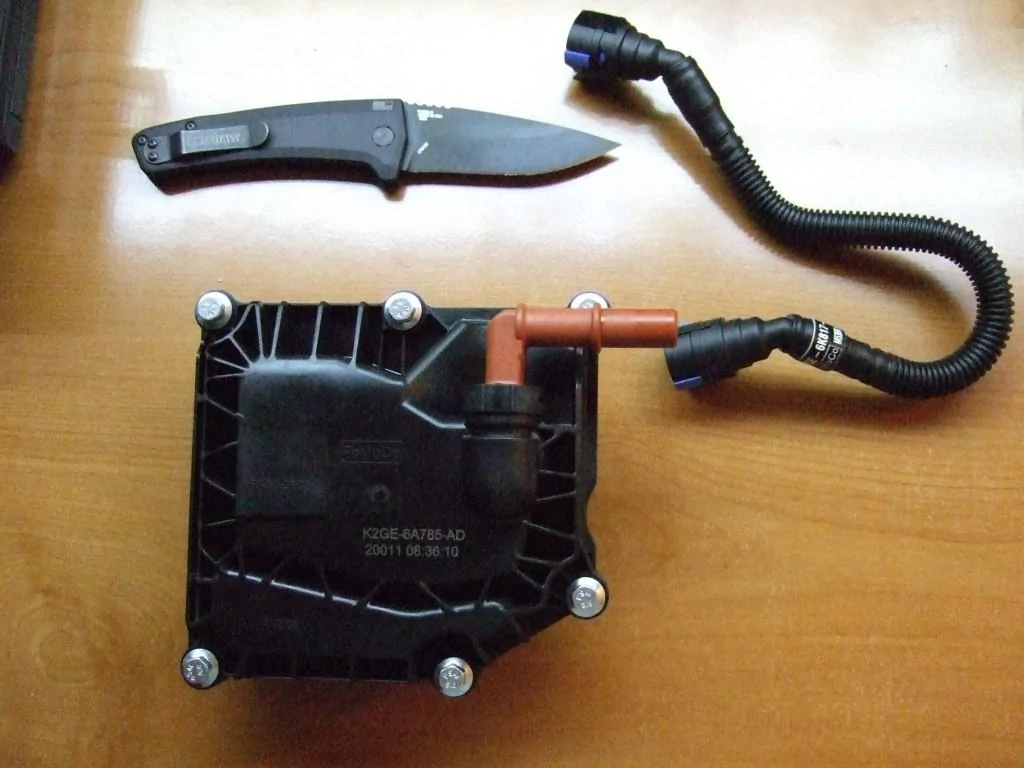
Here is a picture of the oil separator on the Ford 2.3L GDI Turbo engine. And that is the hose you are removing. The short end goes to the intake, the longer section to the red connection below. The separator is tucked in under the intake manifold. The blade is 3.5" long to give you some perspective.
catchcan 2.webp


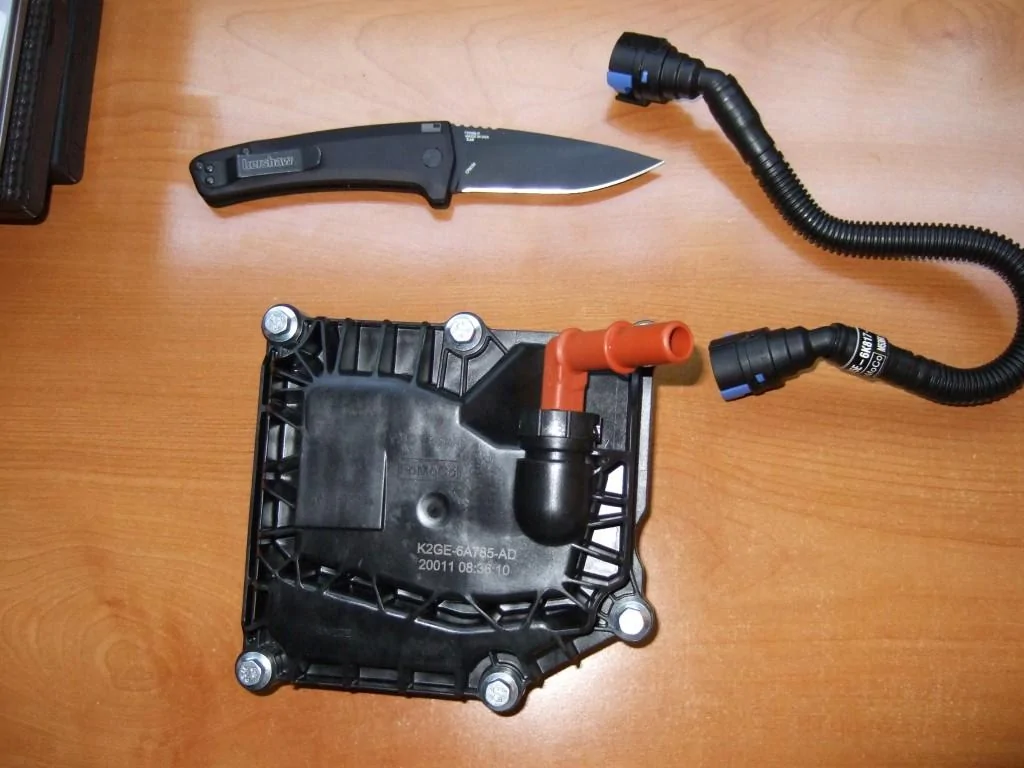
I rotated the nipple. When working on my truck I thought I had broke it when it moved and picked this up to validate all was well and I didn't need to use it. It wasn't very expensive but to install it the intake manifold has to be removed. So don't break it!
catchcan 3.webp


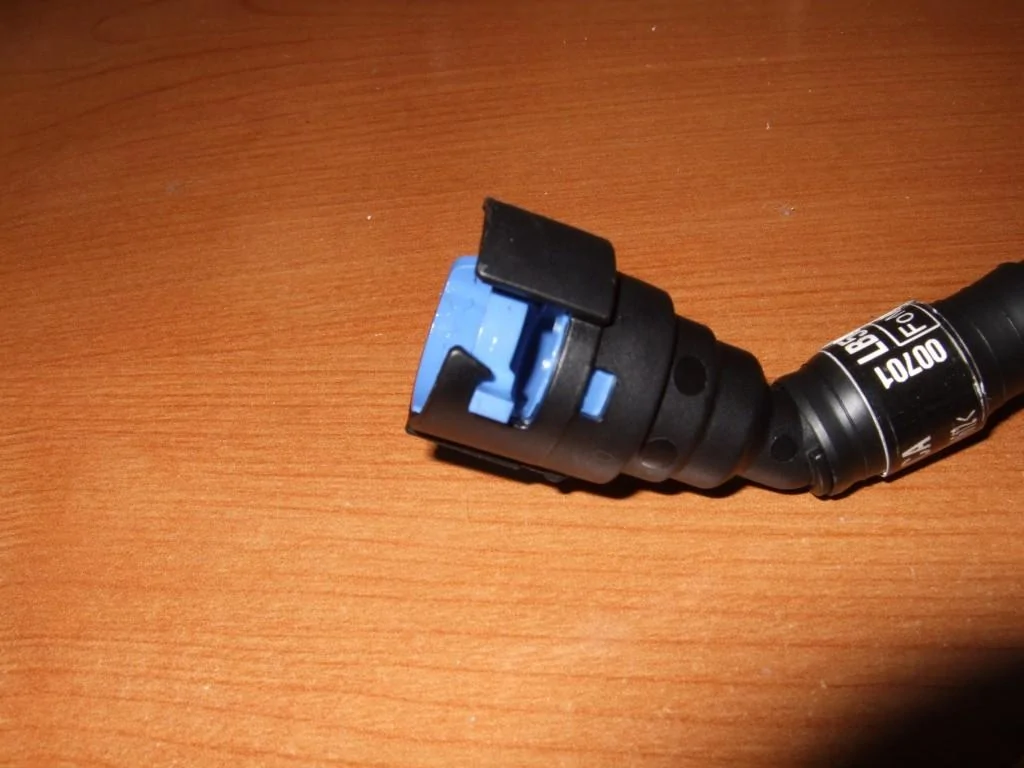
As I mentioned previously I pulled the intake end of the hose off first by moving the tab towards the hose and up counterclockwise. Here is a close up of the hose end. The tab to move is blue.
catchcan 1.webp

Once you remove the old hose be very careful to install the hoses to the correct ports. Do not get it wrong. Removing the new hoses are just as hard as removing the originals, and they may be harder to unlock the clip

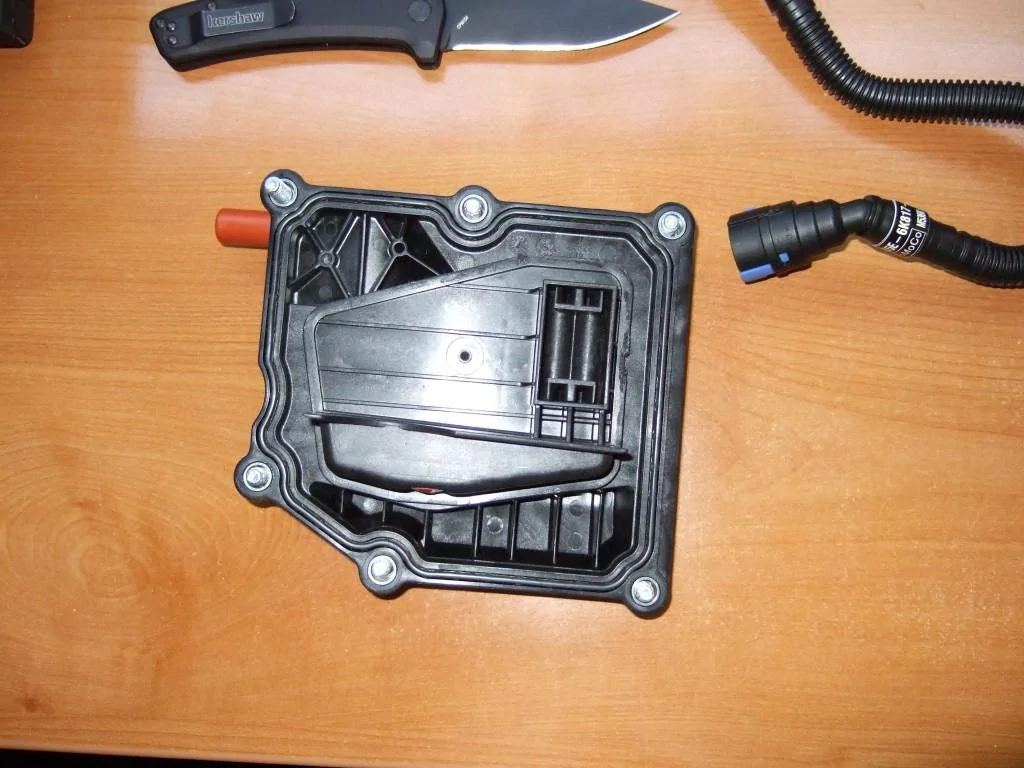
Just for kicks here is the business side of the oil separator. There is some serious engineering in this piece of plastic.
catchcan 4.webp


Tony
 

Floyd

Well-Known Member
Joined
Jan 6, 2019
Threads
38
Messages
2,064
Reaction score
3,132
Location
illinois
Vehicle(s)
'19 Ranger SCab,'16 Connect,'95 MustangGT,'50 Ford
Re: Catch Cans
You can get catch can for $15-$30 on ebay or aliexpress.

I purchased the UPR version for the quality of the oil condensation filter in the catch can, the dual stainless steel check valves and the high quality fittings and continental hoses. I do not want to replace them anytime soon. The dual vacuum/check valve system keeps pulling the crankcase vapors when engine vacuum is present in the intake, and when under boost when the intake is pressurized that vacuum path is closed due to the check valve and the vacuum is switched to the intake elbow just in front of the turbo. When turbo drops things return to normal state. Once the oil is in the catch can you really want to keep it there. In a normally aspirated engine you only need one vacuum source and no need for a check valve. If you are mimicking the Ford solution with a catch can inserted you need a single check valve on the intake side.

Re: Yep, its a Ford not a Oldsmobile
Yep, but they did build the Pinto with the top of the gas tank used as the floor board of the trunk. And the automatic pinto could get out of its own way. My 1965 Ford Falcon has the same gas tank trunk design. All manufacturers make mistakes and cut corners.

Bean counters are everywhere.

Tony
Poor example...
The Pinto is one of the ten best cars ever made.
My 77 (4spd)would beat Supras at stoplights and run an honest 110 MPH top end.
The Pinto did not have the trunk floor as the top of the gas tank.
Sure, every manufacturer makes mistakes, and sometimes so do owners.
 

TJC

Well-Known Member
First Name
Tony
Joined
Aug 28, 2020
Threads
45
Messages
3,937
Reaction score
9,884
Location
North Carolina
Vehicle(s)
93 Miata, 05 Ranger 4x4, 20 Ranger 4x4, 23 CX-5
Poor example...
The Pinto is one of the ten best cars ever made.
My 77 (4spd)would beat Supras at stoplights and run an honest 110 MPH top end.
The Pinto did not have the trunk floor as the top of the gas tank.
Sure, every manufacturer makes mistakes, and sometimes so do owners.
Forgive me... you are correct. Pintos did not have the gas tank as the floor of the car. They simply blew up when rear ended. The fix was $11 / car, but Ford didn't fix them.

BTW, I very much liked the early 71 Pinto.

My point was not to disparage Pintos, but to show that engineering "errors" make it into production automobiles. And I think a better characterization is "engineering tradeoffs" for whatever reason.

Read on here
https://www.popularmechanics.com/cars/a6700/top-automotive-engineering-failures-ford-pinto-fuel-tanks/

Ford Pinto (1971–1980)

"Get rear-ended—and catch on fire." That could have been the unfortunate tagline for Ford's early foray into subcompact hatchbacks. With daring, commendable looks for its time (excluding a wagon version), the Pinto—named for the horse, not the bean—was commissioned to compete against the likes of the AMC Gremlin and Chevy Vega. This meant maintaining a rock-bottom price, a focus which reportedly caused rear-end-collision testing to be pushed until after the car's launch. If not for this deliberate oversight, engineers may have spotted the car's ticking-time-bomb nature sooner. Bolts protruding from the rear bumper and differential could easily penetrate the fuel tank in even low-speed accidents, culminating in fiery results, many of which found their way to court. It taught Ford a pricey lesson about why not to cut corners.

However 1964-1970 Ford Mustangs did, as well as Ford Falcons and I suspect many others of the same time period.

Ford Mustang Engineering Defect in Gas Tank


Here is a snippet of the article.

"In looking into the accident, the Gielows learned a secret about the classic Mustangs, the ones built from 1964 through 1970. For more than 30 years, fires that erupted after crashes in the trunks of some classic Mustangs have spread into the passenger compartment. This American icon has left a trail of suffering and death.

All across America these old Mustangs are treasured so by so many people that they just won't let them go. In addition to the amazing number of classic Mustangs still on the road --up to 1.5 million--there are many thousands off the road just waiting to be restored. From fields, from garages, from junkyards, classic Mustangs are being reclaimed, reconditioned and returned to the nation's highways.

And every one of them carries in the trunk a potentially deadly defect, says San Francisco attorney David Rand. He's representing the parents of Harold Gielow, and sued Ford before on the gas tank design. Because the top of the Mustang's tank is also the floor of the trunk, Rand says, terrible car fires can erupt after even modest rear-end crashes.

"The gas tank is right here, inches away from [the driver],"
Rand says, showing a reporter the layout of the car. "And the gas has a very wide opening to come right from the tank directly into where the people are."

Ford has been sued more than 70 times by people burned in rear-end collisions in classic Mustangs. Most suits have been settled out of court, without publicity.

As part of our automotive-engineering-failures series, Popular Mechanics is rounding up the most dismal design flaws in automotive history. Today: the Ford Pinto fuel tanks. There's a reason the Pinto was one of our 10 cars that deserved to fail. Ford neglected to add reinforcements to protect the easily ruptured fuel tank, endangering drivers while earning the Pinto a reputation for catching fire that persists today. The automaker's public relations black eye lasted for years.
 

grizzly

Well-Known Member
Joined
May 23, 2020
Threads
8
Messages
157
Reaction score
401
Location
New Jersey
Vehicle(s)
2019 Ford Ranger Lariat
Person looking at truck to buy: Whats's that?

Seller: It's a catch can.

Person looking at truck to buy: Is that stock?

Seller: No.

Person looking at truck to buy: Why did you put it on the truck?

Seller: I read something on the Internet that said I should.

Person looking at truck to buy: Oh. It must be needed then.
 

landiscarrier

Well-Known Member
First Name
Landis
Joined
Jun 2, 2020
Threads
19
Messages
965
Reaction score
2,509
Location
Pocono Mtns Pa
Vehicle(s)
2025 Ranger Raptor
Occupation
Sales
Person looking at truck to buy: Whats's that?

Seller: It's a catch can.

Person looking at truck to buy: Is that stock?

Seller: No.

Person looking at truck to buy: Why did you put it on the truck?

Seller: I read something on the Internet that said I should.

Person looking at truck to buy: Oh. It must be needed then.
I agree. Too each their own I guess.
 

Extreme01

Well-Known Member
First Name
Glen
Joined
May 16, 2020
Threads
25
Messages
238
Reaction score
559
Location
Maryland
Vehicle(s)
2020 Ford Ranger XLT FX4, 2008 Shelby GT500
Occupation
Retired
Vehicle Showcase
1
Personally I just use a good intake cleaner added to my gas tank once a month. I've been using Sea Foam or years
 

Big Blue

Well-Known Member
First Name
Lee
Joined
May 5, 2020
Threads
16
Messages
3,927
Reaction score
9,352
Location
Wisconsin
Vehicle(s)
2019 Ford Ranger XLT FX4 Supercrew lighting blue
Occupation
Retired mechanical designer
Personally I just use a good intake cleaner added to my gas tank once a month. I've been using Sea Foam or years
Doesn't do a thing for intake or valves in our engines. In a GDI engine the intake and valves never see fuel on them.
Sponsored


Top