Sponsored

EGR DPFE Sensor Assembly Replacement Write-Up (LB5Z-9J433-B)

DreadPirateRoberts

Well-Known Member
First Name
Mike
Joined
May 5, 2024
Threads
8
Messages
49
Reaction score
112
Location
Louisiana
Vehicle(s)
2021 Ford Ranger STX 2x4
Just put a new LB5Z-9J433-B in mine and it's running like it's new. Thanks for the write up, helped a lot. You made it sound a lot easier than it was but most of my problems were self inflicted. I had to crawl under the truck and dig out wrenchs/pliers a few times.

To anybody considering getting just the sensor and not the assembly to save some money....I wouldn't reccomend it. It took about 2 minutes to put the new assembly on. It would have been a nightmare dealing with radiator clamps with how tight everything was. It probably would have been easier if I weren't so damn short.
Sponsored

 
OP
OP
Trash Panda

Trash Panda

Well-Known Member
First Name
Cody
Joined
Aug 8, 2021
Threads
12
Messages
167
Reaction score
668
Location
Alabama
Vehicle(s)
2019 Ranger Lariat
Just put a new LB5Z-9J433-B in mine and it's running like it's new. Thanks for the write up, helped a lot. You made it sound a lot easier than it was but most of my problems were self inflicted. I had to crawl under the truck and dig out wrenchs/pliers a few times.

To anybody considering getting just the sensor and not the assembly to save some money....I wouldn't reccomend it. It took about 2 minutes to put the new assembly on. It would have been a nightmare dealing with radiator clamps with how tight everything was. It probably would have been easier if I weren't so damn short.
Glad to see it helping others ; I always try to post on here stuff when there’s not many accompanying YouTube videos so you aren’t completely in the dark when it comes time to repair something!

Just remember what really helped my issue was having the dealership reflash and learn my transmission. Will I have to eventually replace the CDF drum, probably, but for now it gets me from point A to B.
 

760magneticranger

Active Member
First Name
Jared
Joined
Dec 9, 2022
Threads
10
Messages
38
Reaction score
48
Location
Victorville, CA
Vehicle(s)
2019 Ford Ranger FX4 Lariat
Occupation
Plant Operator
Man, I can’t thank you enough. My truck was having some weird surging around 15-20MPH, with all the nightmares I’ve read on here about transmissions I was tempted to just sell it before it got worse.

Im glad I saw your right up, it couldn’t of been any easier of an install and now the trucks running like new!
 

Blackturd

New Member
First Name
James
Joined
Sep 3, 2024
Threads
0
Messages
2
Reaction score
3
Location
Virginia
Vehicle(s)
19’ Ford Ranger
Occupation
HVAC
Greetings All,

Dropping another one of my write-ups on the infamous bucking/surging epidemic our Rangers seem to have.
Check out the "Bucking/Surging Epidemic" thread started by @Tim Vogt Sr. for every piece of information you could want.
https://www.ranger5g.com/forum/threads/bucking-surging-epidemic.14581/
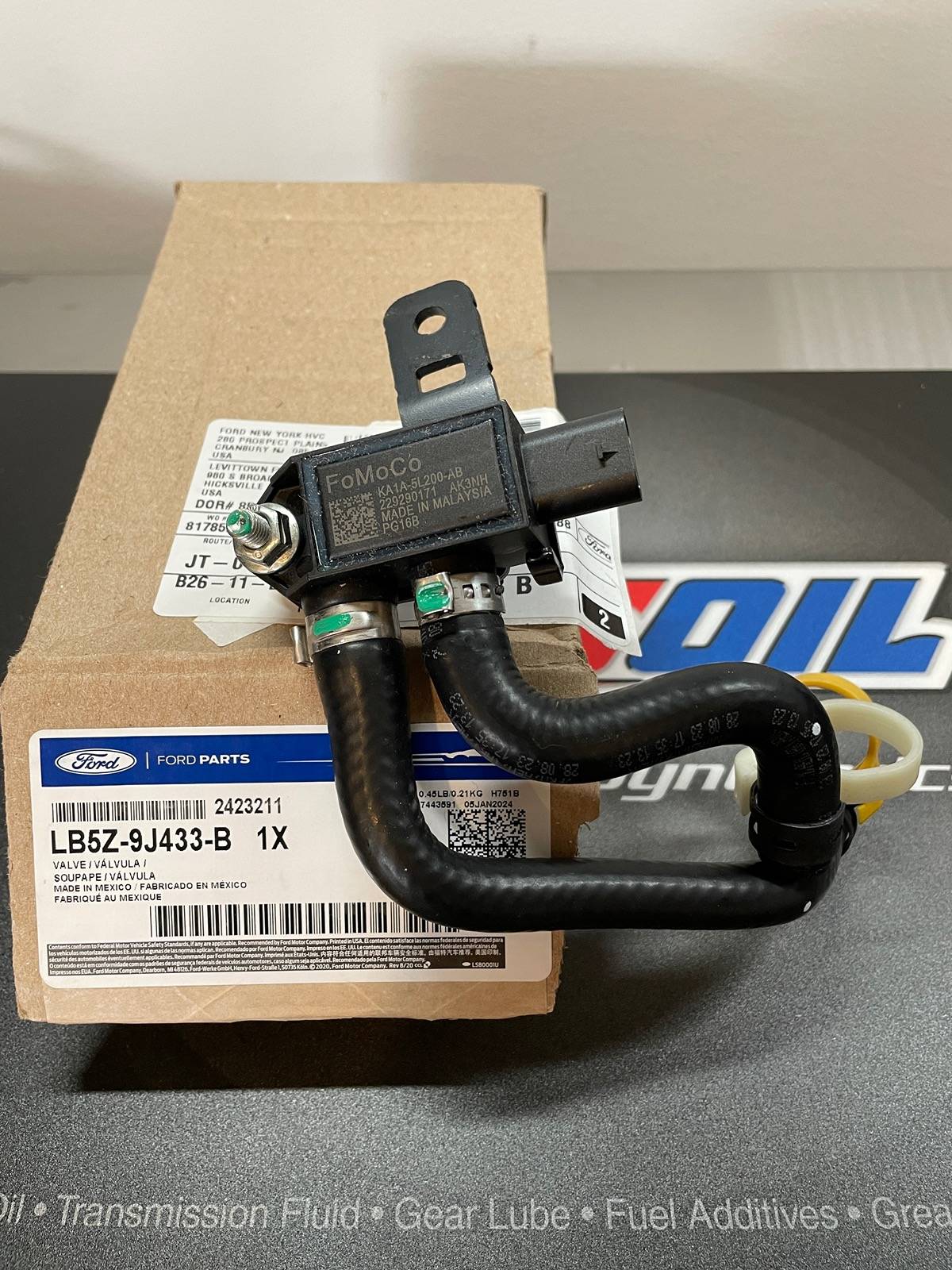
There are two ways to do this job, simply the replacing the DPFE Sensor itself (Ford KA1Z-5L200-A or KA1A-5L200-AB) or the entire assembly (Ford LB5Z-9J433-B). This write-up is geared towards replacing the entire assembly.

My symptoms were prevalent in the low RPM and low speed range. I drive like a peepaw and slowly pulling out of my driveway I would get a "misfire" feeling but no check engine light. I did my plugs last week so an actual misfire would be highly unlikely so my next step was the DPFE sensor. The transmission would search for gears at low RPMs and sometimes it would feel like driving a manual in too high of a gear through my neighborhood.

Supplies Needed :
-DPFE Sensor Assembly (Ford LB5Z-9J433-B) ($97 on @LevittownFordParts.com)
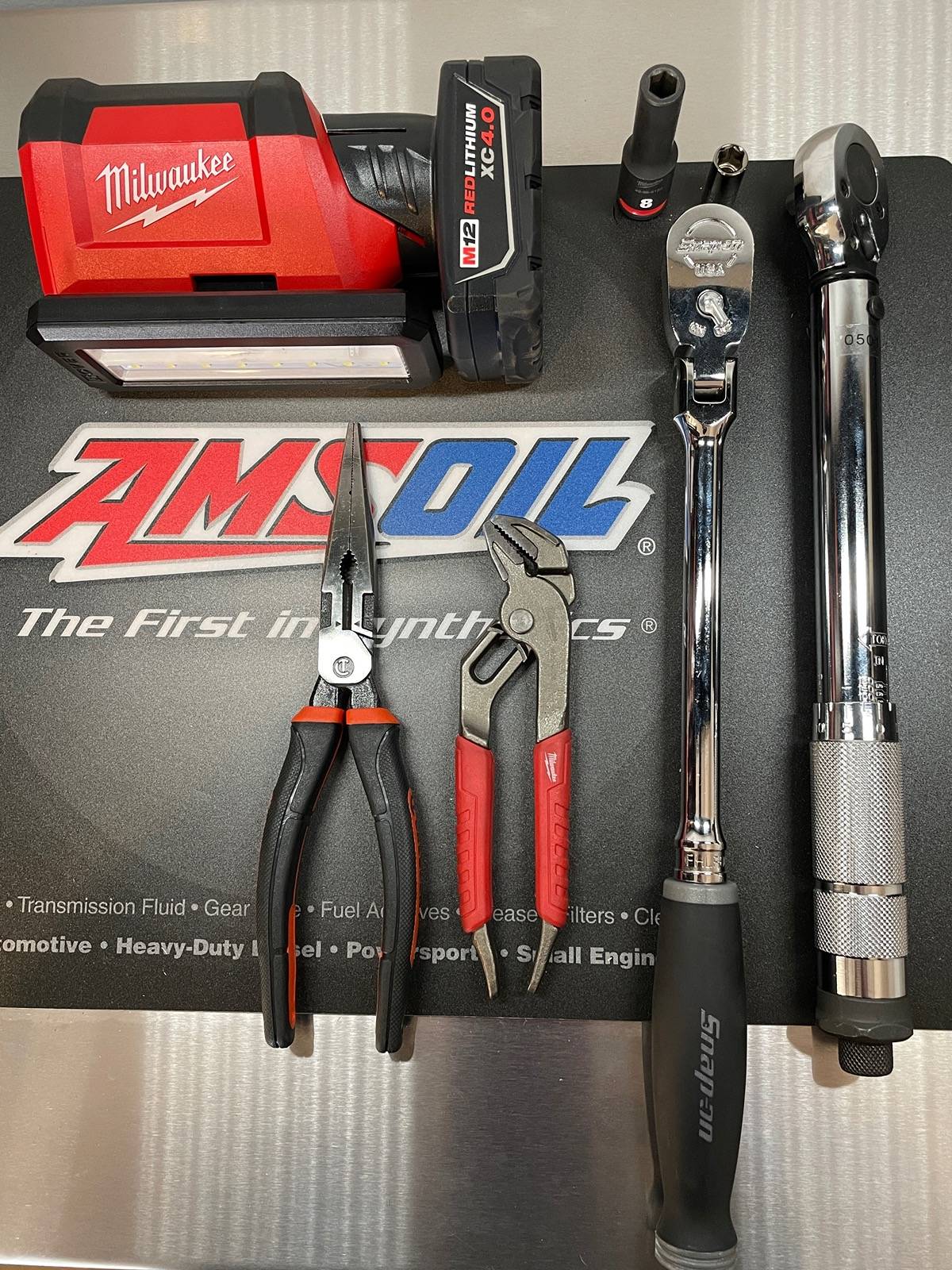
-3/8" or 1/4" Ratchet
-8mm shallow and deep sockets
-1.5" extension (if desired)
-Torque Wrench set to 97 in.lbs
-Needle Nose Pliers
-Straight-Jaw Pliers (I used my Milwaukee 6" 48-22-6306 pliers)
-LIGHT (Headlamp, Milwaukee Rover, etc)
-Work Platform or Step Ladder

IMG_2475.jpeg
IMG_2457.jpeg


Step One :

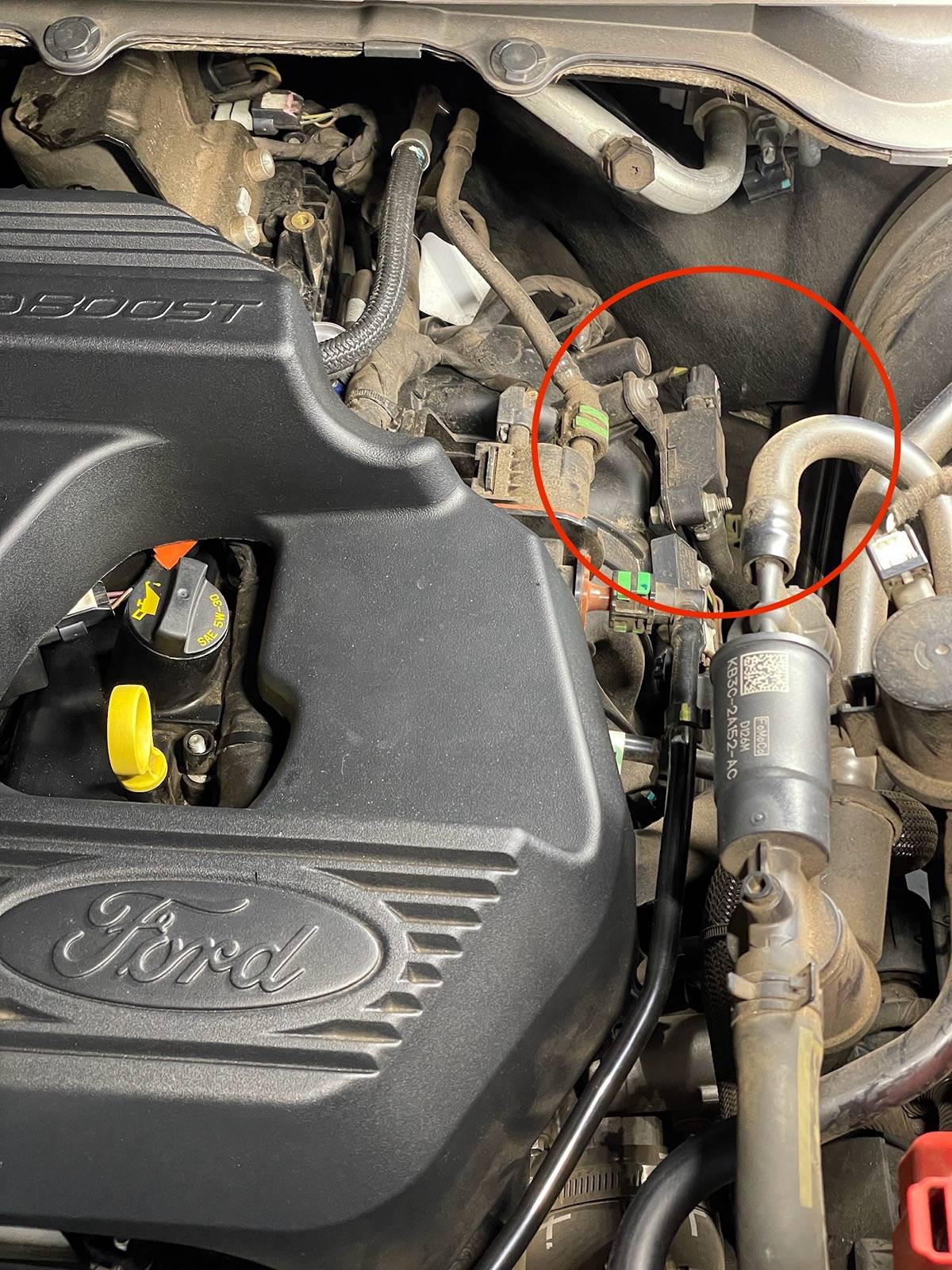
Pop the hood and locate the DPFE sensor. It is located near the back side of the engine on the driver's side of your Ranger near the brake booster.

IMG_2452.jpeg
IMG_2455.jpeg


STEP TWO : (*You could swap this with Step Three if desired)

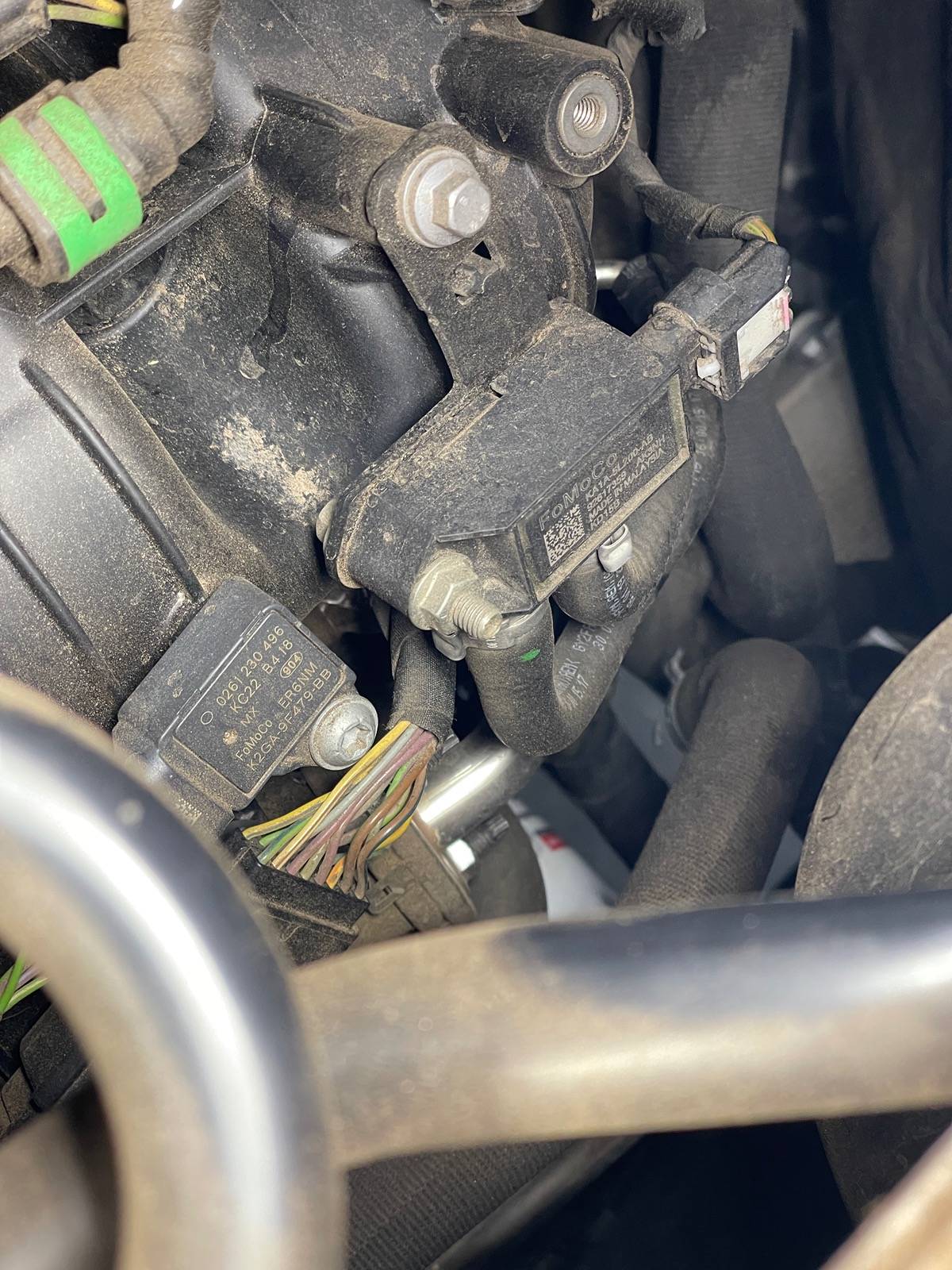
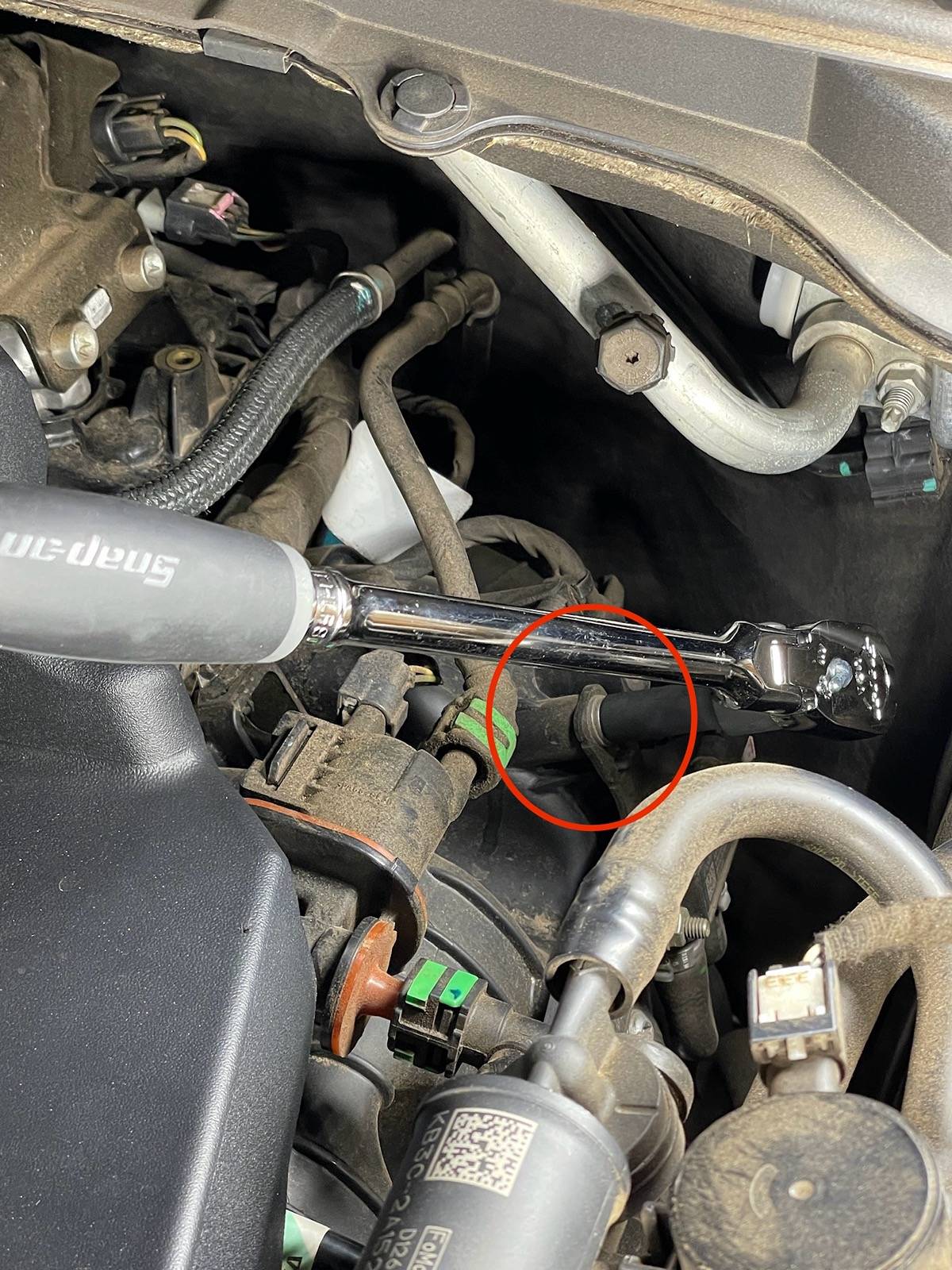
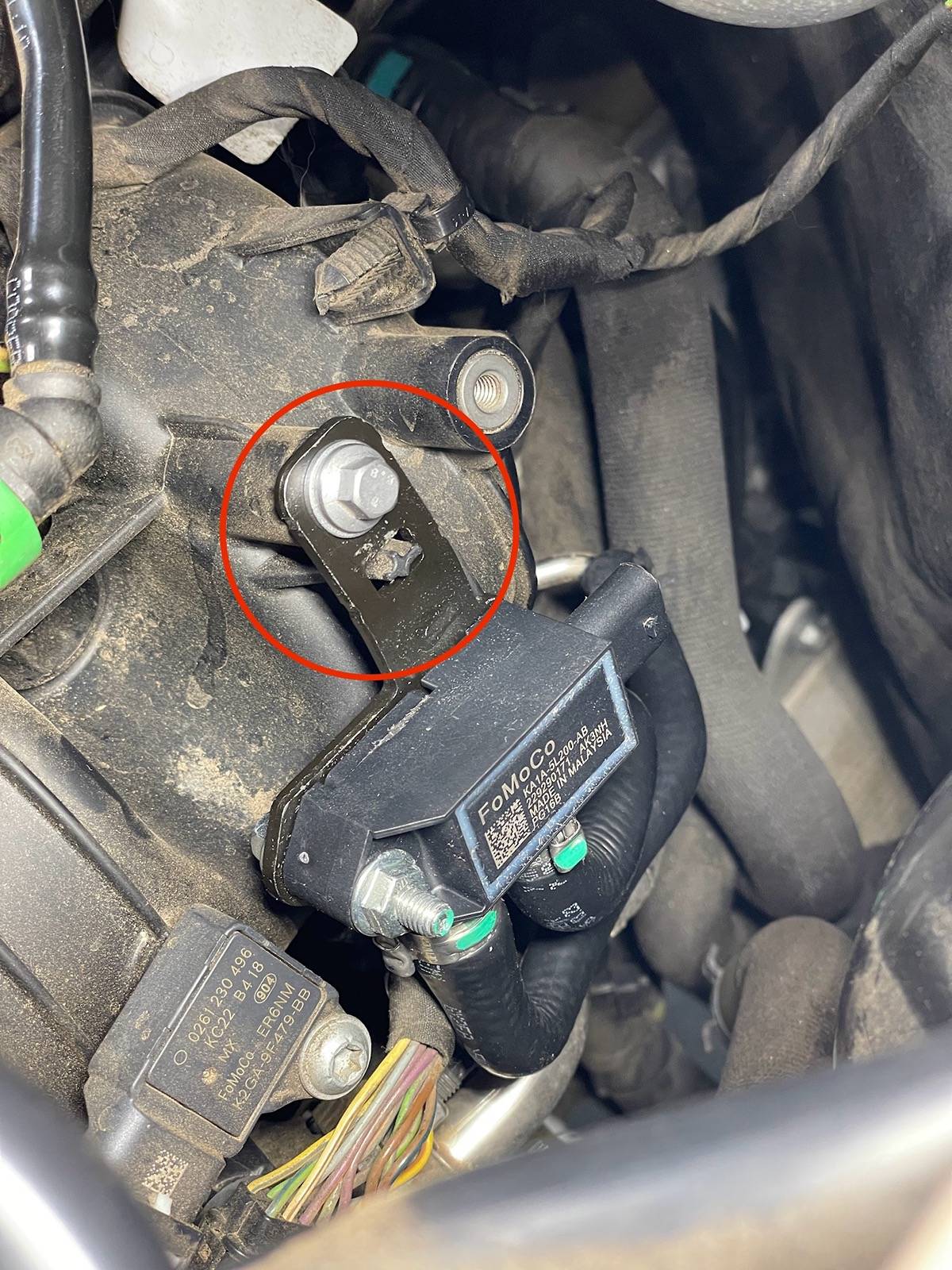
Use your Ratchet and 8mm socket to loosen the single mounting bolt on the top. A deep socket is perfect for this without the brake booster being in the way.
Once you loosen the 8mm bolt, you can easily unthread it all the way using your fingertips to reduce the chances of dropping a socket or the bolt in to the engine bay.

*NOTE there is a washer with the 8mm bolt so be sure to not drop it.

IMG_2458.jpeg


STEP THREE : (*You could swap this with Step Two if desired)

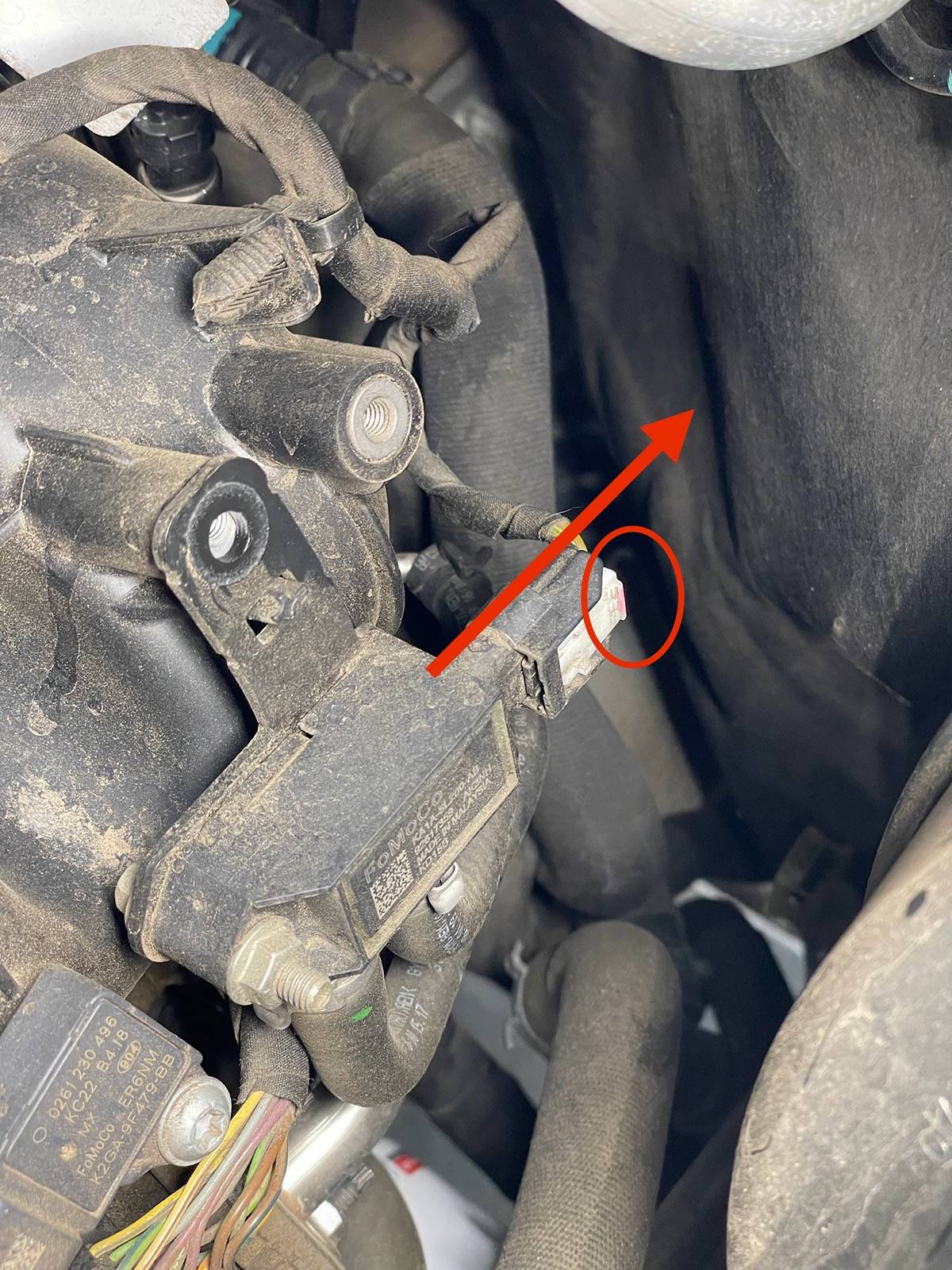
Remove the connector from the DPFE sensor. If you read my Spark Plug write up, the connector works just like the coil pack connectors. Use your fingernail to slide the locking tab out (circled) and wiggle the connector off.
You can hang the connector out of the way on the metal line in the top right of the photo below to prevent damage.

IMG_2460.jpeg


STEP FOUR :

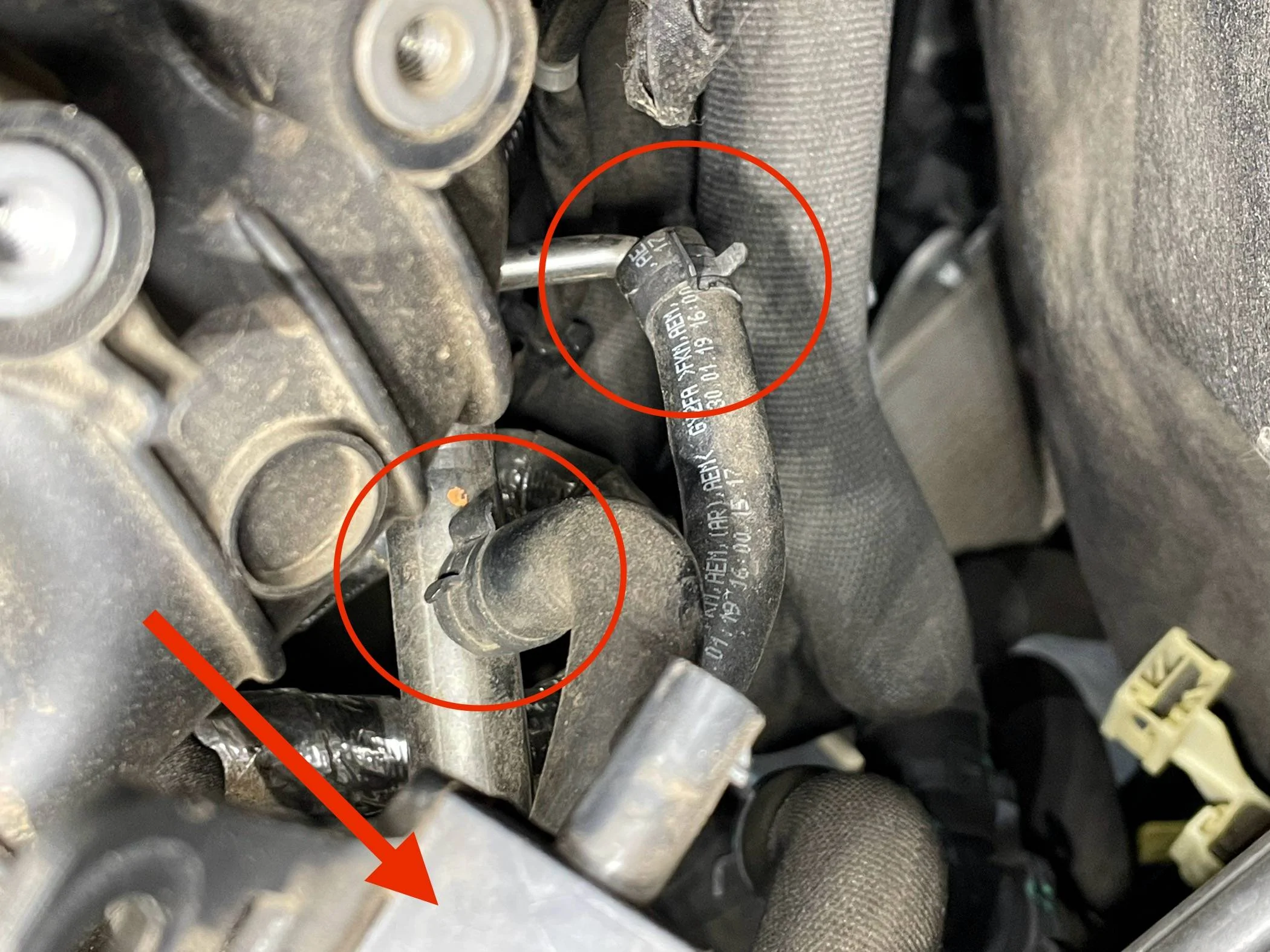
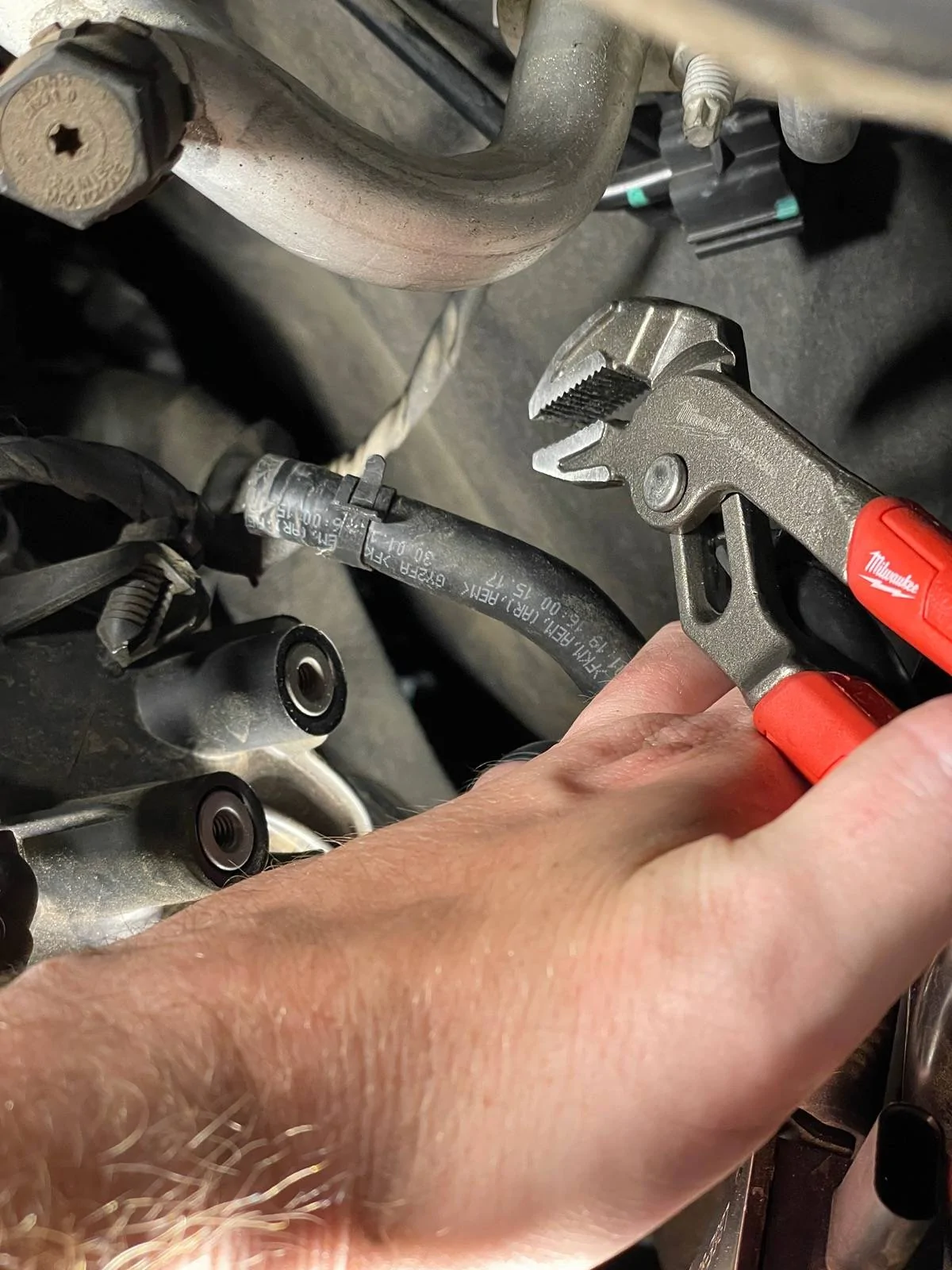
With the DPFE sensor unbolted and unplugged you can pull it out of the way to give you room to access the spring clamps on the hoses. This is where having a light is necessary. Take note of how the spring clamps are oriented. Mine were both facing relatively face-up. Removing the clamps is the most difficult part of the job so just stay calm and take it slow. I started with the shorter hose first to give me more leverage on the longer hose.

IMG_2462.jpeg


STEP FIVE :

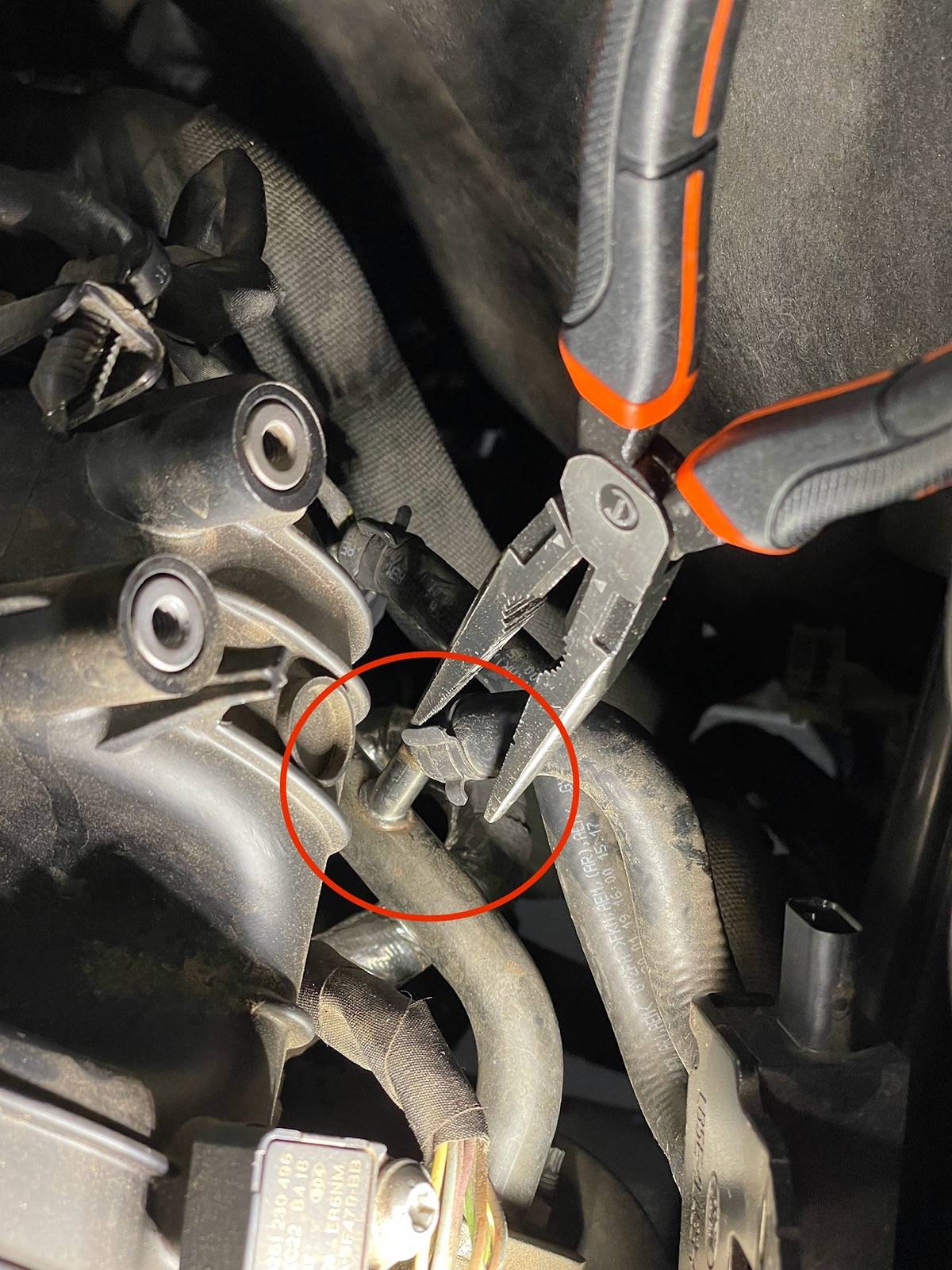
Start with the smaller hose (closest to you) and go straight down with a pair of needle nose pliers (longer ones seemed to work better). When I pinched the spring clamp and pulled up the hose came right off. I did not have to fight it at all. Once the hose is off you can also place it to the side or out of the way to give you the most access to the long hose.

IMG_2463.jpeg


STEP SIX :

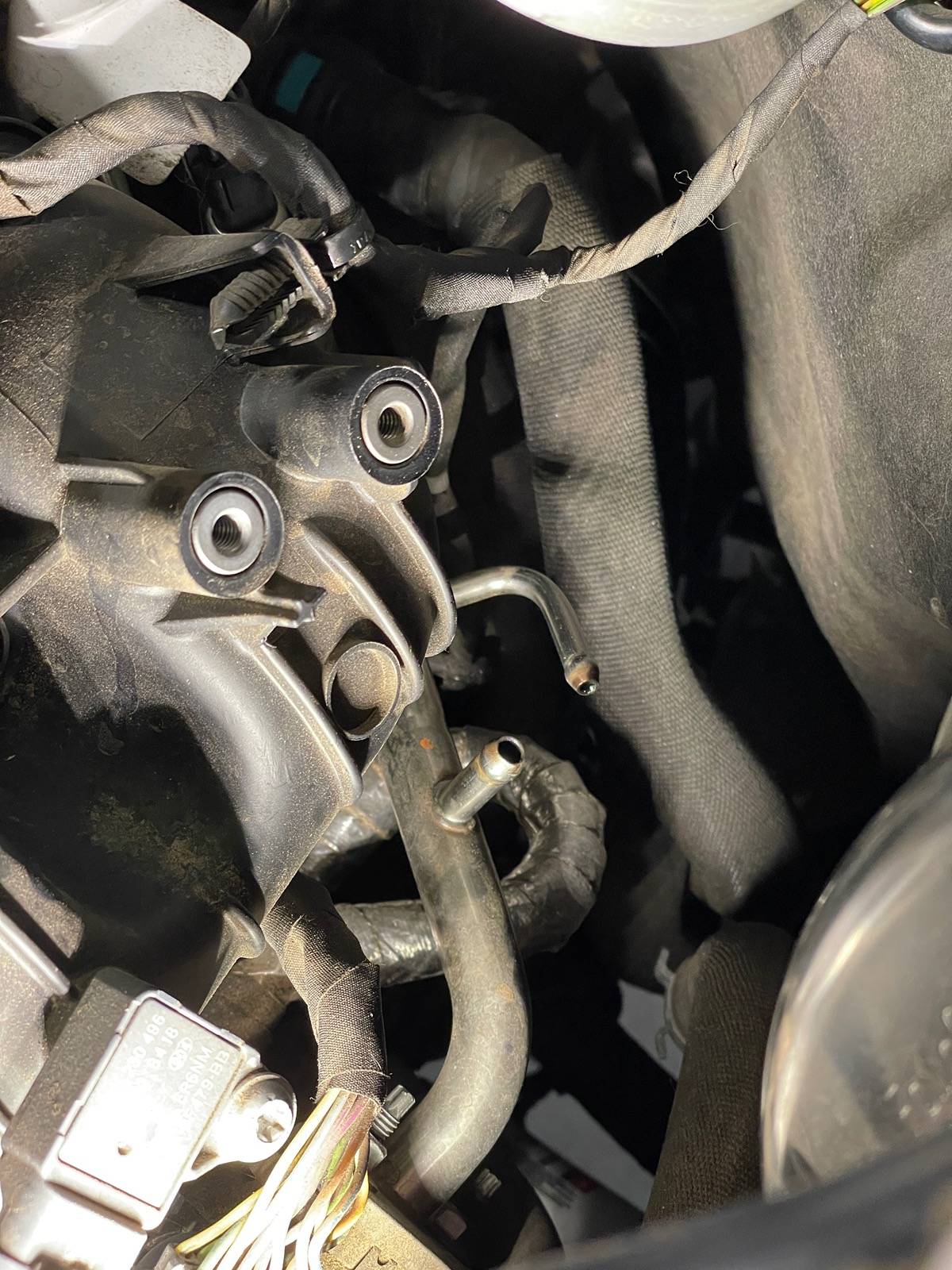
Remove the spring clamp on the longer hose (furthest from you). What worked for me was compressing the spring clamp, pliers in my right hand and pulling the hose horizontally to the right with my left hand. The DPFE sensor is now fully removed.

IMG_2464.jpeg
IMG_2465.jpeg


STEP SEVEN :

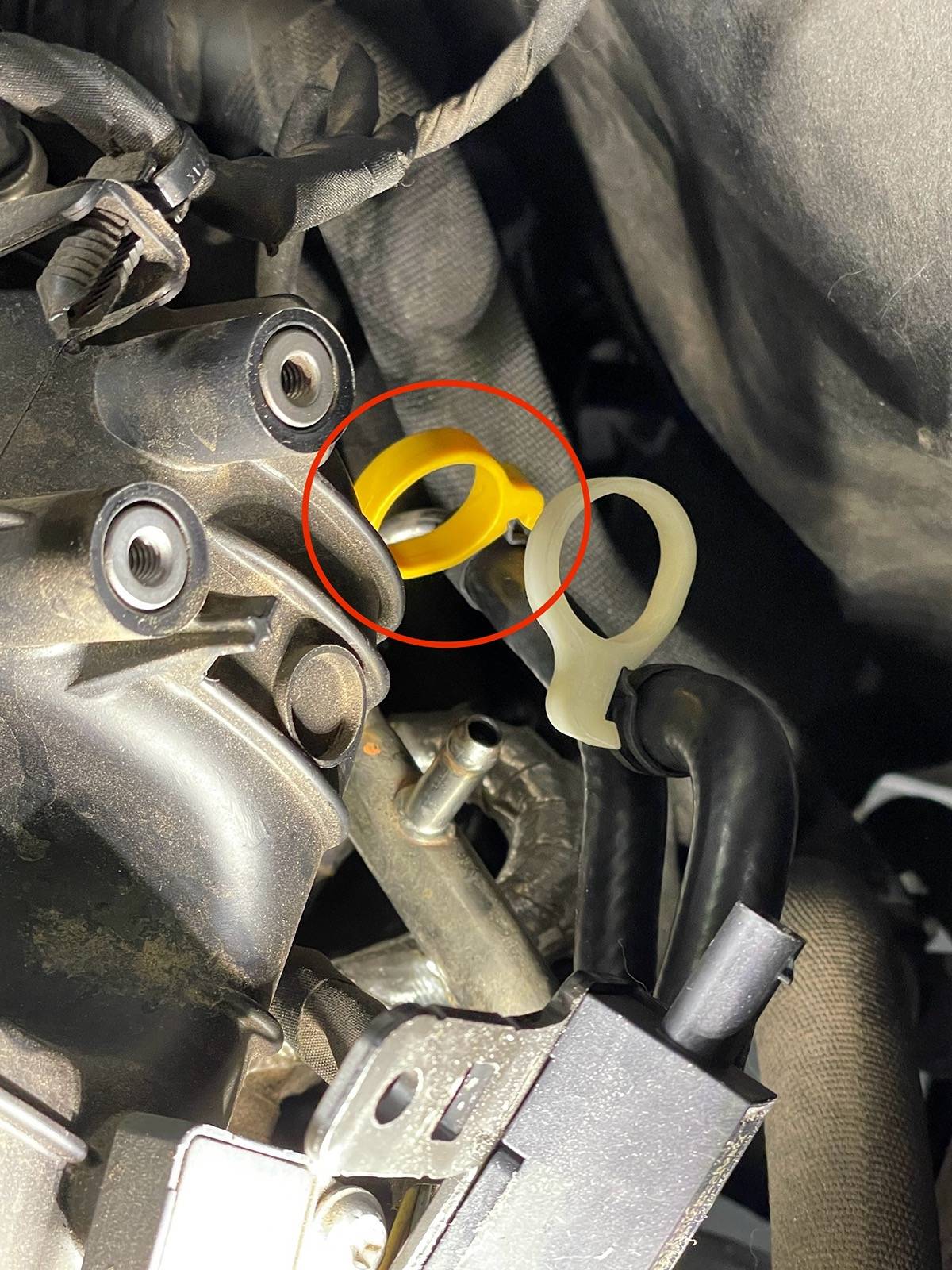
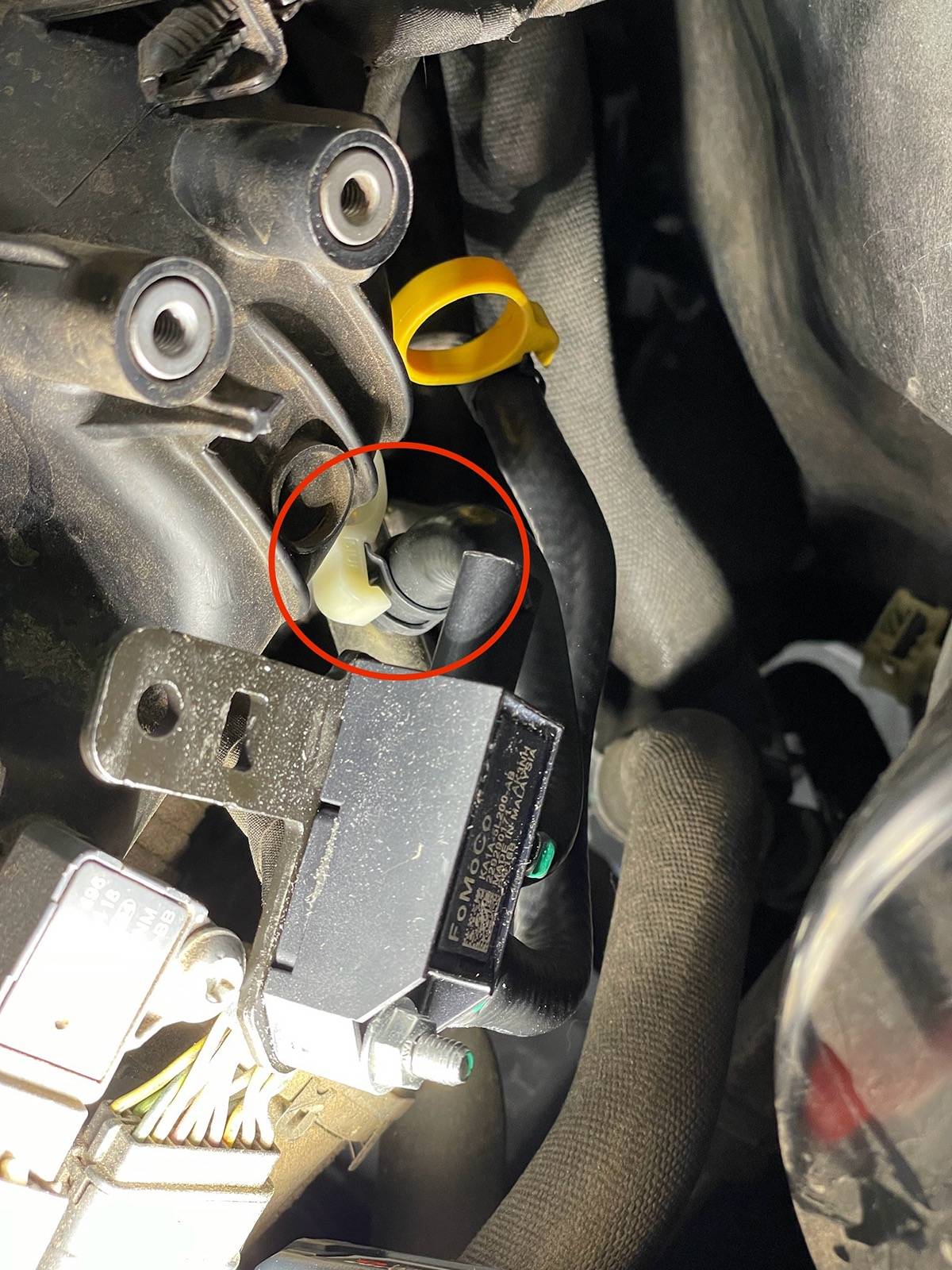
Reverse what you just did in Steps FIVE & SIX and take the new DPFE sensor and slide the long hose(Furthest from you) (yellow clip) on first and the short hose (closest to you) (white clip) on next.
Align the spring clamps facing upward as much as possible to make the job easier the next time you have to potentially perform it.
When the hoses are pushed on as far as possible twist the yellow and white clips clockwise to remove and engage the spring clamps.

IMG_2466.jpeg
IMG_2467.jpeg


STEP EIGHT :

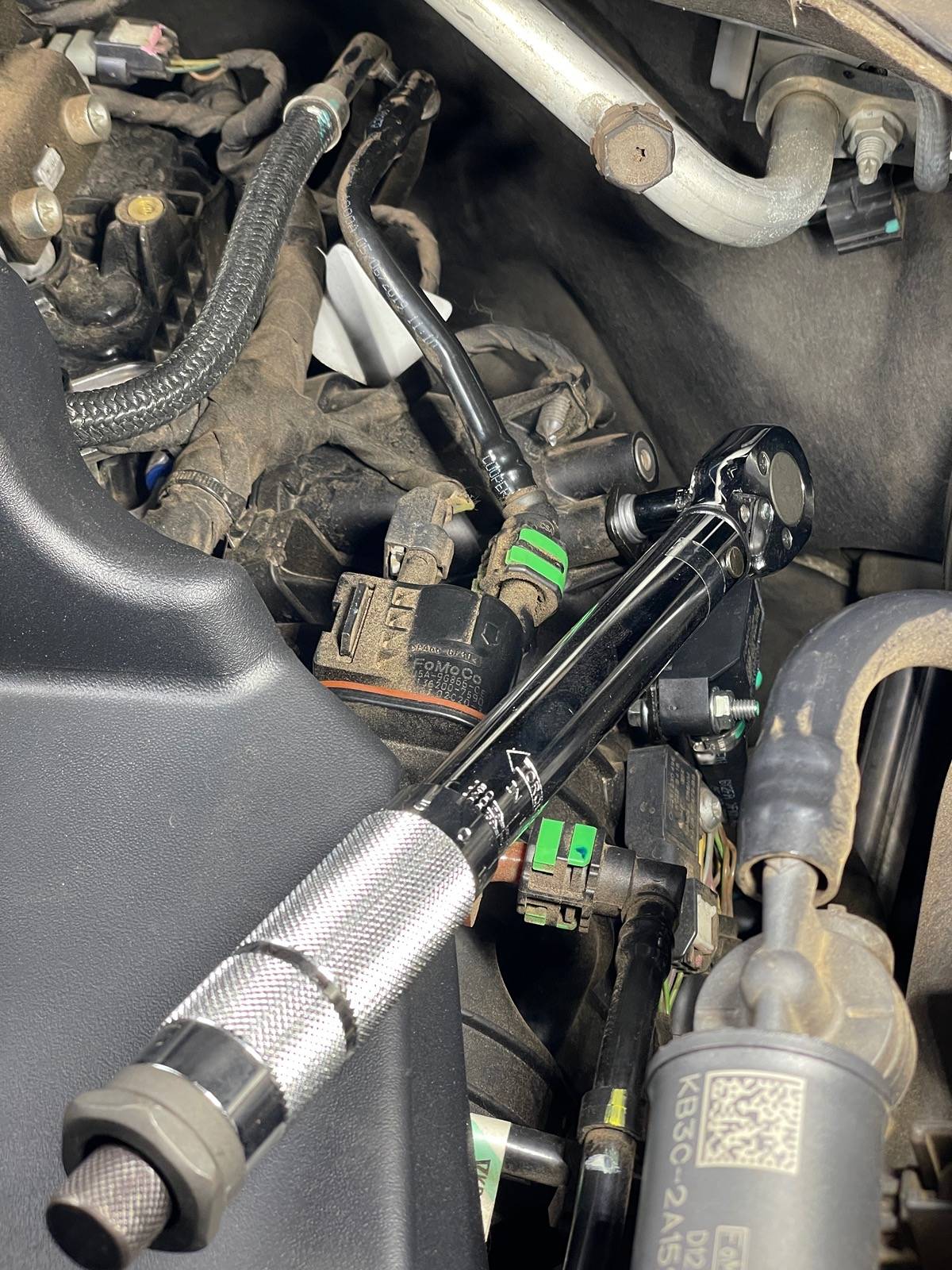
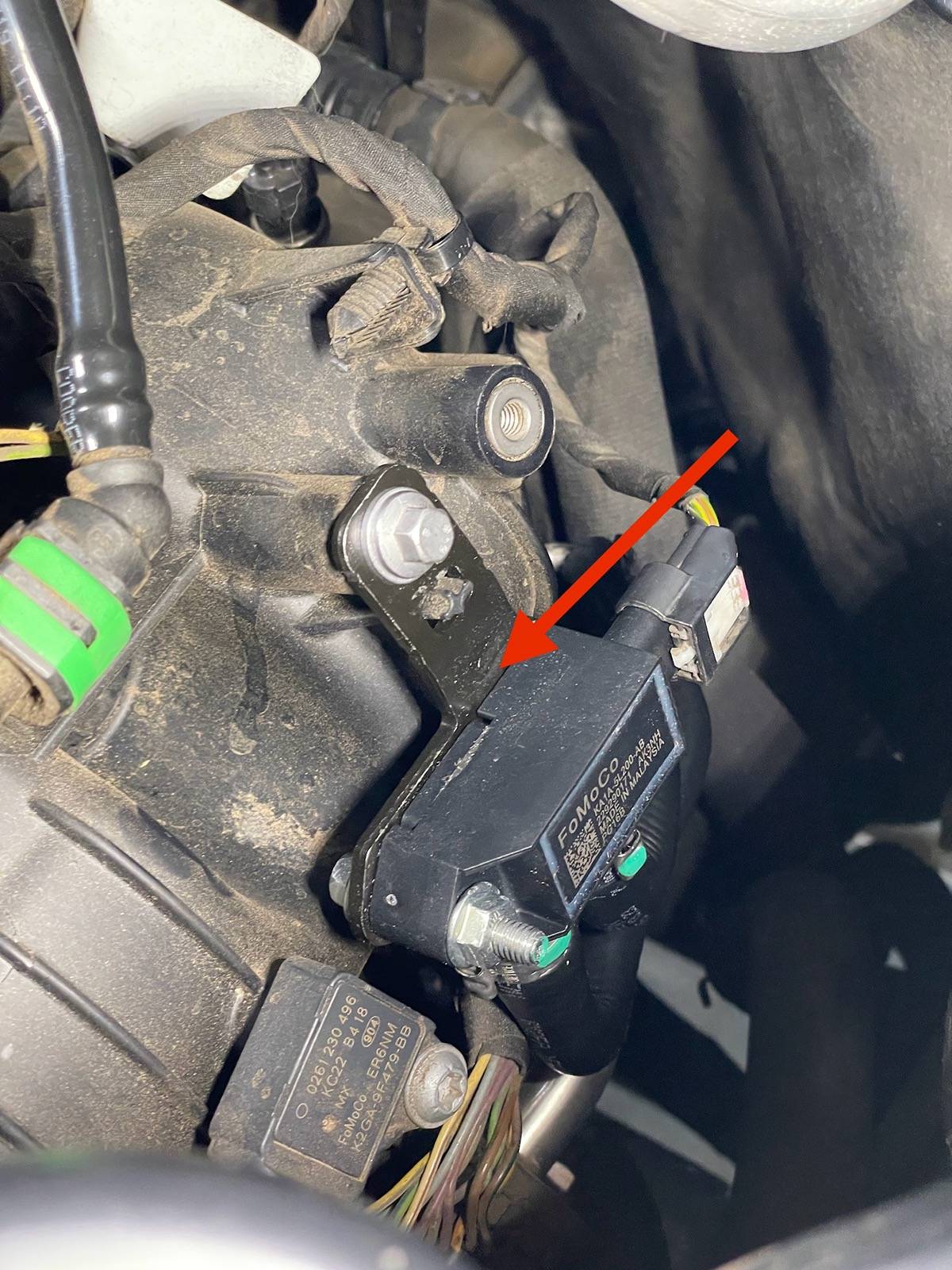
Re-mount your new DPFE sensor using the guide pin and hand thread the 8mm bolt until snug to prevent cross threading. Take your torque wrench set to 97 in.lbs and torque the 8mm bolt. (It takes no effort at all and should click in a second or two)

IMG_2469.jpeg
IMG_2471.jpeg


STEP NINE :

Reconnect the DPFE connector. Slide the connector on until you hear a "click" and use your finger to engage the white locking tab by pushing it from the back towards you.
Crank your Ranger to see if a check engine light or any error message appears. Take a test drive around the neighborhood to see if there is an improvement in the surging/bucking in a low gear. I noticed an instant improvement on my Ranger and it drives like a brand new truck. Time will tell how long the replacement lasts.

IMG_2472.jpeg


That's it! Grab a cold one and enjoy a job well done! :sunglasses::beer:
Yet again it took me longer to write this write-up / take pictures than the actual job did. I would say it is a 30 - 45 minute job as long as you do not lose a socket or bolt in the engine bay. :crackup:


Thank you so much for this post. I’ve been dealing with my Ranger “bucking” for about two years now and the dpfe sensor did the trick! I’ve done trial and error stuff when I had the money available but started out with spark plugs only to find out that the first plug was exposed to a lot of water and the porcelain broke off in the cylinder when trying to remove it (found a method of a make shift ez out to remove instead of pursuing a $2500 quote from a mechanic) idk if it fits hand and hand cause I literally know just the basics of mechanic work like oil, brakes etc. but could there be any correlation between the spark plug cylinder leaking water and the dpfe sensor malfunctioning?
 

airline tech

Well-Known Member
Joined
Aug 24, 2022
Threads
28
Messages
4,448
Reaction score
8,504
Location
Midwest - KS
Vehicle(s)
2022 Ranger Lariat-Super Crew, Cactus Gray
Occupation
Aircraft Tech
Thank you so much for this post. I’ve been dealing with my Ranger “bucking” for about two years now and the dpfe sensor did the trick! I’ve done trial and error stuff when I had the money available but started out with spark plugs only to find out that the first plug was exposed to a lot of water and the porcelain broke off in the cylinder when trying to remove it (found a method of a make shift ez out to remove instead of pursuing a $2500 quote from a mechanic) idk if it fits hand and hand cause I literally know just the basics of mechanic work like oil, brakes etc. but could there be any correlation between the spark plug cylinder leaking water and the dpfe sensor malfunctioning?
The only correlation is water content.

DPFE - Moisture Content - in the exhaust (natural product of combustion) over time damages the internal sensing membrane on the circuit board, giving erroneous false readings and allows the EGR Valve to open when it should be closed. This is the Buck/Surge as the engine is stumbling from the extra fuel vapor being introduced from the opened EGR Valve at low RPMs.

Plug Well - Water accumulation - Watershed runoff from the windshield runs down into the plastic cowling along the bottom, depending on how the truck is parked (nose down) its more prevalent water drips off of the cowl right above #4 Plug, water will follow the path of least resistance and pool up at the #4 plug and seep down into the well past the COP Boot, it also has been known to travel down the valley and pool up at #1 plug as well.

Congrats on getting the broken plug out, I know that was a heart sinking feeling of Oh-Crap.

What type of Easy Out did you use or make?

The addition of the Engine Appearance Cover - Helps SOME but does not eliminate the root cause.
So, some have sealed the cowl area or added a divertor modification to drain any rainwater away from the top of the engine


RangerBill

Well-Known Member
First Name
Bob
Joined
Jun 8, 2022
Threads
3
Messages
1,601
Reaction score
2,123
Location
PA
Vehicle(s)
2019 Ford Ranger Lariat Super Crew FX4
Occupation
retired
but could there be any correlation between the spark plug cylinder leaking water and the dpfe sensor malfunctioning?
The water in the spark plug well comes from rainwater dripping on the top of the engine from the windshield cowling and collecting on the spark plug. The solution is to seal the middle of the cowling at the seam where the two pieces come together. The DPFE sensor problem seems to be caused by moisture from the exhaust condensing in the sensor body and changes its calibration.
 

Blackturd

New Member
First Name
James
Joined
Sep 3, 2024
Threads
0
Messages
2
Reaction score
3
Location
Virginia
Vehicle(s)
19’ Ford Ranger
Occupation
HVAC
The only correlation is water content.

DPFE - Moisture Content - in the exhaust (natural product of combustion) over time damages the internal sensing membrane on the circuit board, giving erroneous false readings and allows the EGR Valve to open when it should be closed. This is the Buck/Surge as the engine is stumbling from the extra fuel vapor being introduced from the opened EGR Valve at low RPMs.

Plug Well - Water accumulation - Watershed runoff from the windshield runs down into the plastic cowling along the bottom, depending on how the truck is parked (nose down) its more prevalent water drips off of the cowl right above #4 Plug, water will follow the path of least resistance and pool up at the #4 plug and seep down into the well past the COP Boot, it also has been known to travel down the valley and pool up at #1 plug as well.

Congrats on getting the broken plug out, I know that was a heart sinking feeling of Oh-Crap.

What type of Easy Out did you use or make?

The addition of the Engine Appearance Cover - Helps SOME but does not eliminate the root cause.
So, some have sealed the cowl area or added a divertor modification to drain any rainwater away from the top of the engine

Yeah my property and driveway is close to 45 degree slope and I park my Ranger nose down, I found another thread on that when it happened and was sad to see that there was not a permanent remedy for that. Oh man i was on the brink of a meltdown when that happened and idk if my heart can take it again ? I found a link I’ll attach where this one guy had the same thing happen to his Tacoma I believe it was and said screw it, I’ll try it out. (Cause I literally couldn’t afford the alternative) https://www.tigraionline.com/broken_sparkplug.html
 

ChiefQM

Well-Known Member
First Name
Bill
Joined
Jun 18, 2020
Threads
9
Messages
208
Reaction score
323
Location
Hiram, GA
Vehicle(s)
2019 Ford Ranger XLT
Occupation
Retired
There were 12,400 miles (in six months of service) on the truck when I bought it - it was (allegedly) a Certified Pre-Owned vehicle - and so far, the replacement part has lasted 9K miles and 13 months. Of course, I drove it for 21K miles with the issue before I stumbled on the fix.
8 Sep 24 Update: We just came home after a three week trip overseas. Driving home from the airport, I noticed the bucking again at low speeds that were not noticed at highway speeds, just like before. Today, I took the sensor and hoses off and found water in both hoses (a few drops, more in the smaller hose) and a few drops shook out of the sensor (photo of the water that came out of the sensor). I did not want to dry either with compressed air so I used a hair dryer on low setting and am sure all three are dry. I only bought that sensor in May of 23; there must be a way to drain those lines before the moisture can get up there to the sensor. I never checked the old sensor when I took it off to see if/how much water was in it. Anybody have and idea of how much moisture will short out the sensor? I am going to put it back on and drive it, I guess that will let me know. The prices for a new sensor, my first thought, have gone from just under $19 to over $90. Cheapest replacement I can find is $56 from a retailer. Is there something I can spray inside the sensor that will repel water? I will post here if drying it out worked.

457136220_1043429770292371_7740982640789090851_n.jpg
 

ChiefQM

Well-Known Member
First Name
Bill
Joined
Jun 18, 2020
Threads
9
Messages
208
Reaction score
323
Location
Hiram, GA
Vehicle(s)
2019 Ford Ranger XLT
Occupation
Retired
Update: I put it all back together and it fixed the problem. Next time (and I can only assume there will be a next time) I will do what I should have and vacuumed out the two tubes to remove any moisture lurking there. I am going to contact the Ford Rep to mention that this is an issue that needs to covered under a TSB.
 

Mellow

Well-Known Member
First Name
Joe
Joined
Mar 11, 2019
Threads
22
Messages
578
Reaction score
1,525
Location
DFW, TX
Vehicle(s)
19 Sport Lariat 2WD Plat. White
@Trash Panda Thanks for the write up!

I bought the entire part a couple years ago when folks were posting they were having some issues and this fixed it. I figured I'd have the issue eventually or, if never, could sell the part here.

I only have 25k miles on the truck but it is 5.5 years old and I haven't noticed any bucking but have been noticing some hesitation when accelerating, especially in low speed conditions.

I figured, why not just replace it since I saw these instructions, seemed pretty easy.

It made a nice difference, no hesitation at all now. I think my gas mileage is also a little better .5 to 1 mpg improvement, maybe...

I have a neighbor across the screen that got a '20 w/44k miles on it and I told him to order the part and we'll install it as he also has some hesitation.

Again, thanks for the write up... no blood extracted so it was a 1 on the blood-install-scale. 10 being a missing eyeball.
 

Stevedbvik1

Well-Known Member
First Name
Steve
Joined
Oct 4, 2021
Threads
38
Messages
2,708
Reaction score
8,043
Location
Michigan
Vehicle(s)
2022 Ranger Tremor XLT
Occupation
Retired
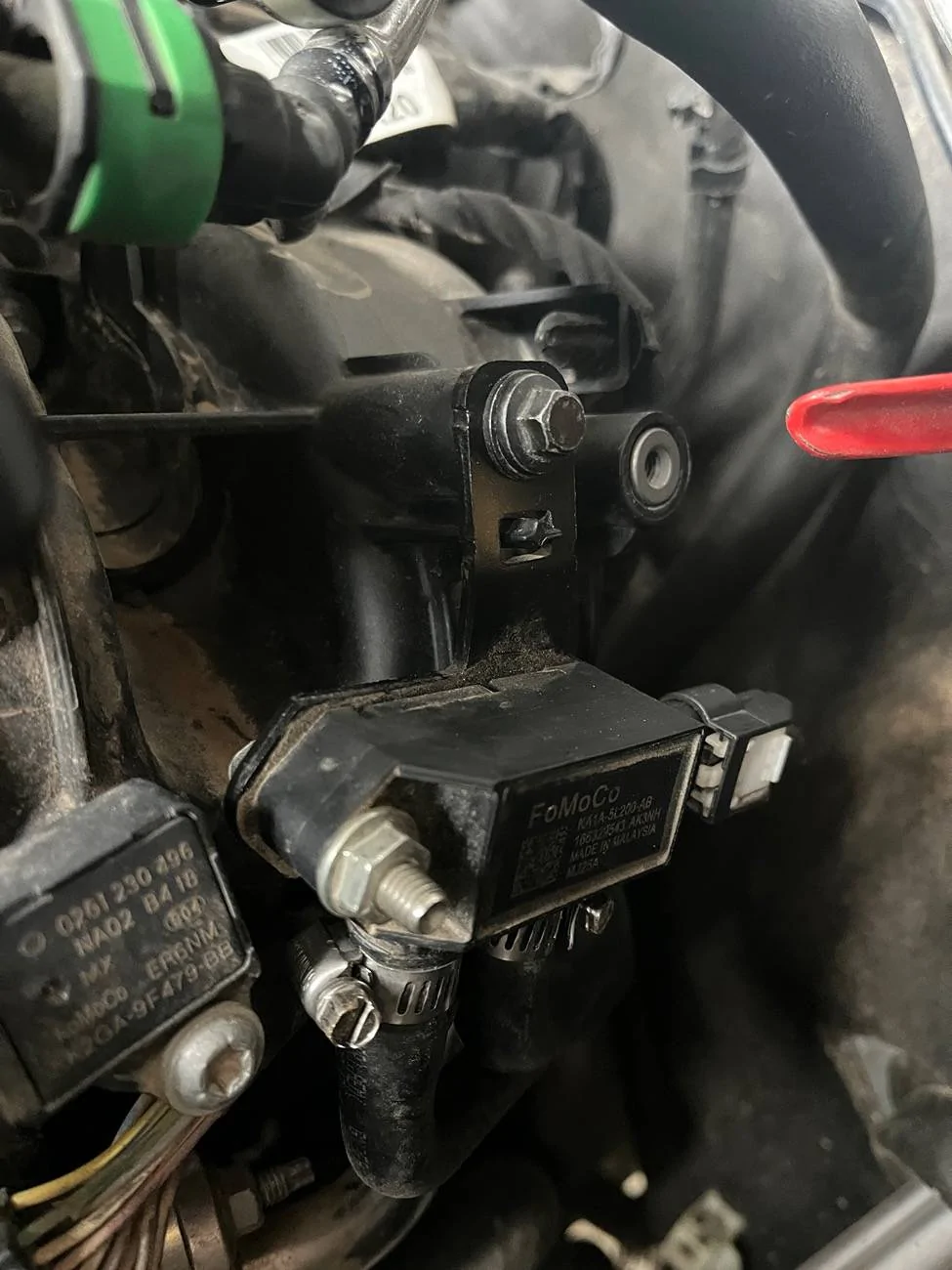
No issues yet. But I did have some spare time the other day and did a preemptive strike on my DPFE sensor. Removed the factory crimp clamps and replaced them with screw type clamps. Will make swapping out with my spare sensor that currently rides in my glove box easy to do when the time comes.

IMG_9946.webp
 

TJC

Well-Known Member
First Name
Tony
Joined
Aug 28, 2020
Threads
45
Messages
3,931
Reaction score
9,861
Location
North Carolina
Vehicle(s)
93 Miata, 05 Ranger 4x4, 20 Ranger 4x4, 23 CX-5
To anybody considering getting just the sensor and not the assembly to save some money....I wouldn't reccomend it. It took about 2 minutes to put the new assembly on. It would have been a nightmare dealing with radiator clamps with how tight everything was. It probably would have been easier if I weren't so damn short.
I found getting the hoses loose at the engine connection to be the most difficult part. Not because it was hard, but because I am short and had to get to the connections from a step stool. Getting those needle nose pliers on the clamps at the lower back of the engine head was difficult for me.

Once I had the sensor and hoses off in 1 piece, it took me 5 minutes to remove the crimp clamps and use 3/4" hose clamps to reattach the hoses to the new sensor. Putting the hoses back on was much easier than taking them off.

From here on out it is a 10 minute job to replace the sensor the next time around. I simply need to loosen the two hose clamps, slide the two hoses off the sensor, remove the bolt holding the sensor in place, slide the hoses back on the new sensor nipples and tighten the hose clamps BEFORE attaching the sensor to the engine. Using this method allows you to twist the sensor 90 degrees (facing you) allowing you to use a nut driver to tighten the clamps.

I think I could easily get to the hose clamps at the sensor with a 1/4" small ratchet as well

Piece of cake!

I'll still need my step stool.
 
Last edited:


Top