
Sponsored

Bucking/Surging Epidemic

4x4AZ

Member
First Name
Kenny
Joined
Nov 18, 2021
Threads
2
Messages
16
Reaction score
40
Location
Roseburg, OR
Vehicle(s)
2021 Ranger FX4
Occupation
Land Surveyor
Just adding my personal experience with this on my 2021... Just hit 43,000 today.

I had an incident a few weeks ago where I took off from a stoplight to make a hard left turn and the throttle literally did nothing for 3-5 seconds no matter how hard I pushed. Truck was fine after, but a weird experience. No codes thrown. Have also been having some very hard shifts especially at low throttle and low speeds. When I really noticed something was wrong was soon after I replaced my spark plugs with NGK laser iridium plugs. I had the characteristic "bucking" described by so many others above, very pronounced between about 20 and 55 at low throttle inputs or when locking into a gear with the RPM between 1000-1400. Also the truck would sort of "bang" into gear when dipping into the throttle after taking the foot off of it for a minute. I assumed that the truck just didn't like the NGK plugs, and of course I first noticed the issue on a road trip, so I ended up picking up a set of Motorcraft plugs and swapping them in at the Autozone parking lot, lol. Thought it helped at first but nope, plugs were not the issue. Found this thread and read through it, seems very common and almost the same exact symptoms of my truck.

I have 0% confidence in my local Ford dealer's service department, especially since the last time I took the truck in it had a very obvious slip yoke lube problem I wanted fixed, they "test drove" my truck (I know because I was in my work truck on the interstate and they came off an on ramp in MY TRUCK doing 15+ over the speed limit), kept it for 2 days, and told me nothing was wrong. So I just decided to buy the part myself and not even mess with the warranty to keep those dipshit's hands off my truck.

Ended up installed the part referenced previously lb5z-9j433-b, decided to go with the version including the hoses and clamps for simplicity sake. In the future, I'm just going to get the sensor only and swap from the ford spring clamps on the sensor side to a small hose clamp and call it a day. Not a bad job, took me about 30 minutes but I was going slow. Mostly just hard to reach, recommend having some good needle nose pliers for the hose clamps. When I pulled the sensor off, there was visible moisture inside it and the interior of the hoses were damp.

Test drive showed that my issues were solved! I still hate the way the 10 speed shifts and it will just never be smooth, but I'm at least back to the previous level of drivability before this happened. No more jittering and feeling like I'm driving a broken truck. Thanks to those of you who researched and solved this issue.
 
First Name
Christopher
Joined
Jun 15, 2023
Threads
0
Messages
7
Reaction score
3
Location
Yuma AZ
Vehicle(s)
2020 ford ranger XLT
Occupation
Electrician
Just adding my personal experience with this on my 2021... Just hit 43,000 today.

I had an incident a few weeks ago where I took off from a stoplight to make a hard left turn and the throttle literally did nothing for 3-5 seconds no matter how hard I pushed. Truck was fine after, but a weird experience. No codes thrown. Have also been having some very hard shifts especially at low throttle and low speeds. When I really noticed something was wrong was soon after I replaced my spark plugs with NGK laser iridium plugs. I had the characteristic "bucking" described by so many others above, very pronounced between about 20 and 55 at low throttle inputs or when locking into a gear with the RPM between 1000-1400. Also the truck would sort of "bang" into gear when dipping into the throttle after taking the foot off of it for a minute. I assumed that the truck just didn't like the NGK plugs, and of course I first noticed the issue on a road trip, so I ended up picking up a set of Motorcraft plugs and swapping them in at the Autozone parking lot, lol. Thought it helped at first but nope, plugs were not the issue. Found this thread and read through it, seems very common and almost the same exact symptoms of my truck.

I have 0% confidence in my local Ford dealer's service department, especially since the last time I took the truck in it had a very obvious slip yoke lube problem I wanted fixed, they "test drove" my truck (I know because I was in my work truck on the interstate and they came off an on ramp in MY TRUCK doing 15+ over the speed limit), kept it for 2 days, and told me nothing was wrong. So I just decided to buy the part myself and not even mess with the warranty to keep those dipshit's hands off my truck.

Ended up installed the part referenced previously lb5z-9j433-b, decided to go with the version including the hoses and clamps for simplicity sake. In the future, I'm just going to get the sensor only and swap from the ford spring clamps on the sensor side to a small hose clamp and call it a day. Not a bad job, took me about 30 minutes but I was going slow. Mostly just hard to reach, recommend having some good needle nose pliers for the hose clamps. When I pulled the sensor off, there was visible moisture inside it and the interior of the hoses were damp.

Test drive showed that my issues were solved! I still hate the way the 10 speed shifts and it will just never be smooth, but I'm at least back to the previous level of drivability before this happened. No more jittering and feeling like I'm driving a broken truck. Thanks to those of you who researched and solved this issue.
I did all you did too and didn’t work for me. When I replaced the valve it stopped for like 2 days then went right back. Finally I had to take it to dealer and have them rest the computer for transmission. Completely fixed my issues.
 

airline tech

Well-Known Member
Joined
Aug 24, 2022
Threads
28
Messages
4,461
Reaction score
8,529
Location
Midwest - KS
Vehicle(s)
2022 Ranger Lariat-Super Crew, Cactus Gray
Occupation
Aircraft Tech
Just adding my personal experience with this on my 2021... Just hit 43,000 today.

I had an incident a few weeks ago where I took off from a stoplight to make a hard left turn and the throttle literally did nothing for 3-5 seconds no matter how hard I pushed. Truck was fine after, but a weird experience. No codes thrown. Have also been having some very hard shifts especially at low throttle and low speeds. When I really noticed something was wrong was soon after I replaced my spark plugs with NGK laser iridium plugs. I had the characteristic "bucking" described by so many others above, very pronounced between about 20 and 55 at low throttle inputs or when locking into a gear with the RPM between 1000-1400. Also the truck would sort of "bang" into gear when dipping into the throttle after taking the foot off of it for a minute. I assumed that the truck just didn't like the NGK plugs, and of course I first noticed the issue on a road trip, so I ended up picking up a set of Motorcraft plugs and swapping them in at the Autozone parking lot, lol. Thought it helped at first but nope, plugs were not the issue. Found this thread and read through it, seems very common and almost the same exact symptoms of my truck.

I have 0% confidence in my local Ford dealer's service department, especially since the last time I took the truck in it had a very obvious slip yoke lube problem I wanted fixed, they "test drove" my truck (I know because I was in my work truck on the interstate and they came off an on ramp in MY TRUCK doing 15+ over the speed limit), kept it for 2 days, and told me nothing was wrong. So I just decided to buy the part myself and not even mess with the warranty to keep those dipshit's hands off my truck.

Ended up installed the part referenced previously lb5z-9j433-b, decided to go with the version including the hoses and clamps for simplicity sake. In the future, I'm just going to get the sensor only and swap from the ford spring clamps on the sensor side to a small hose clamp and call it a day. Not a bad job, took me about 30 minutes but I was going slow. Mostly just hard to reach, recommend having some good needle nose pliers for the hose clamps. When I pulled the sensor off, there was visible moisture inside it and the interior of the hoses were damp.

Test drive showed that my issues were solved! I still hate the way the 10 speed shifts and it will just never be smooth, but I'm at least back to the previous level of drivability before this happened. No more jittering and feeling like I'm driving a broken truck. Thanks to those of you who researched and solved this issue.
Unfortunately, this issue is mainly a no-code issue for most owners. For a dealer technician no-code = no problem, unless he / she decides to dig deeper and actually test the system and most importantly what to look for and that is the DPFE sensor PID reading being out of spec but not bad enough to code.
I would love to see a TSB or at a minimum a SSM on this issue, this will at least get a tech's attention and dig deeper, instead of the owner is an idiot and imagining an issue.
For when it does code P139C, (the most reported code) it directs the tech to inspect the DPFE for moisture and replace if moisture is found.
 

Racket

Well-Known Member
First Name
John
Joined
Jan 21, 2020
Threads
22
Messages
2,205
Reaction score
3,406
Location
Here and There
Vehicle(s)
2019 Lariat Supercrew 2WD
Occupation
Transient
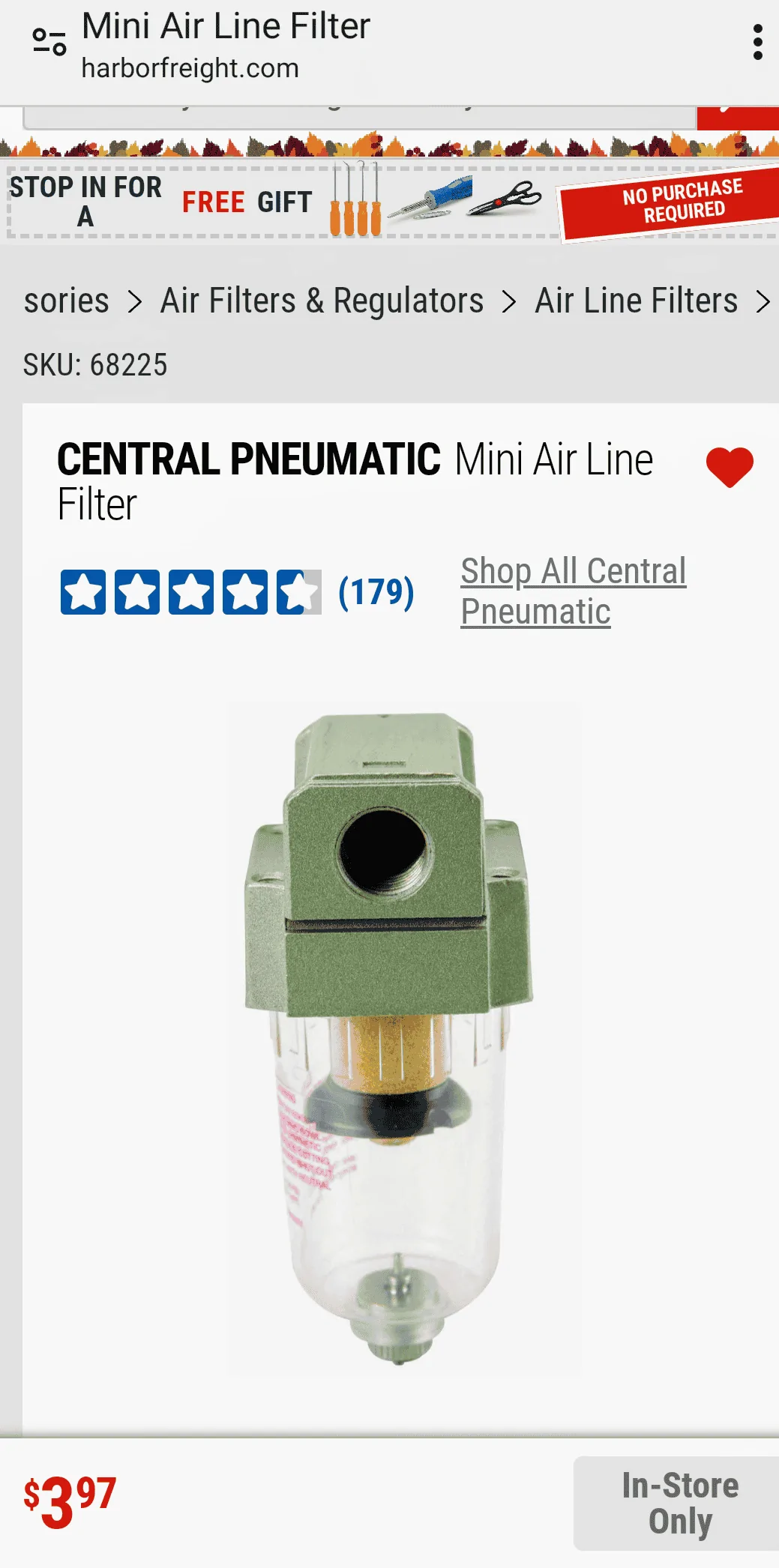
Gets me thinking of rigging up a moisture separator from a compressor in there but what a maintenance headache.
Screenshot_20231007-092505.webp
 
Last edited:


First Name
Christopher
Joined
Jun 15, 2023
Threads
0
Messages
7
Reaction score
3
Location
Yuma AZ
Vehicle(s)
2020 ford ranger XLT
Occupation
Electrician
Unfortunately, this issue is mainly a no-code issue for most owners. For a dealer technician no-code = no problem, unless he / she decides to dig deeper and actually test the system and most importantly what to look for and that is the DPFE sensor PID reading being out of spec but not bad enough to code.
I would love to see a TSB or at a minimum a SSM on this issue, this will at least get a tech's attention and dig deeper, instead of the owner is an idiot and imagining an issue.
For when it does code P139C, (the most reported code) it directs the tech to inspect the DPFE for moisture and replace if moisture is found.
IMG_6646.jpeg
IMG_6646.jpeg

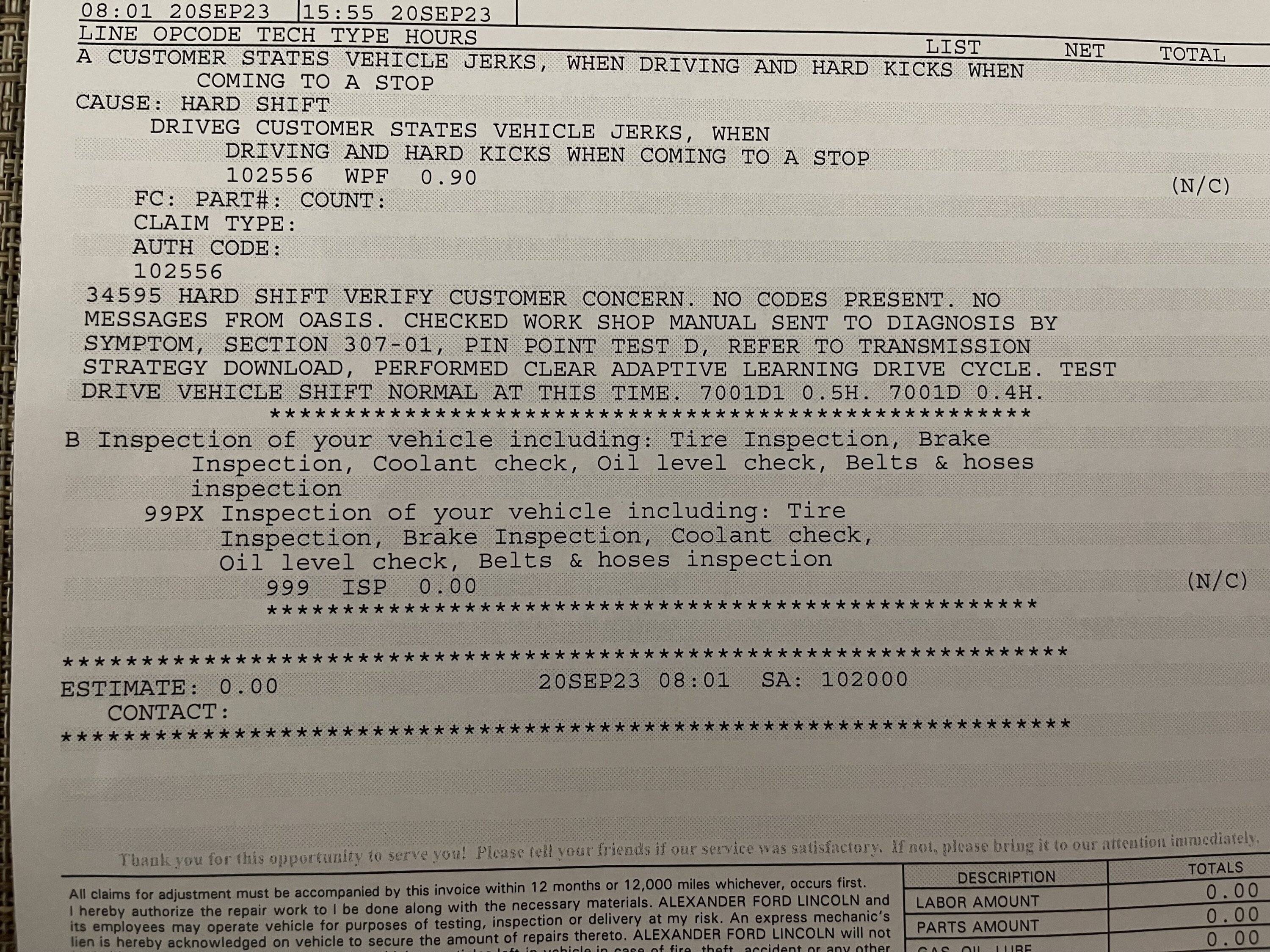
This is what I had done. It finally fixed my issues
 

Yinzcity

Well-Known Member
First Name
W
Joined
Oct 8, 2021
Threads
11
Messages
199
Reaction score
429
Location
Detroit, MI
Vehicle(s)
2019 Ranger Lariat
Occupation
Engineer
IMG_6646.jpeg
IMG_6646.jpeg

This is what I had done. It finally fixed my issues
In my experience, this will fix it for a while, then the transmission seems to learn itself into bad habits again. For anyone who wants to do this themselves, the reset of the adaptive learning can be done through forscan.
 

RedlandRanger

Moderator
First Name
Rob
Joined
Nov 14, 2018
Threads
42
Messages
5,111
Reaction score
11,105
Location
Oregon
Vehicle(s)
2019 Ford Ranger Lariat FX4, 1973 Mercury Capri
Vehicle Showcase
1
Just to clarify here - the problem part is a DPFE sensor, it is not the EGR valve. The EGR Valve is a separate part. Not being an A$$ just don't want others to be confused and tripped up on part names. The EGR valve is a $110 part, vs the DPFE sensor at $58.00 for complete assy
I'm a bit confused on the labeling of the parts - is part # LB5Z-9J433-B correct for the DPFE sensor?
 
First Name
Christopher
Joined
Jun 15, 2023
Threads
0
Messages
7
Reaction score
3
Location
Yuma AZ
Vehicle(s)
2020 ford ranger XLT
Occupation
Electrician
In my experience, this will fix it for a while, then the transmission seems to learn itself into bad habits again. For anyone who wants to do this themselves, the reset of the adaptive learning can be done through forscan.
What’s the next step after this ?
I’ve replaced the erg sensor. Air filter. Spark plugs.
 

Yinzcity

Well-Known Member
First Name
W
Joined
Oct 8, 2021
Threads
11
Messages
199
Reaction score
429
Location
Detroit, MI
Vehicle(s)
2019 Ranger Lariat
Occupation
Engineer
What’s the next step after this ?
I’ve replaced the erg sensor. Air filter. Spark plugs.
I've never got mine to be 100 percent smooth all the time. However, provided the egr sensor is good, resetting both the transmission adaptive values and the PCM learned values in forscan tends to make it decent for a while. One thing to watch out for, reset the adapts when the transmission is at operating temp and try to follow the service guide for driving for a bit after you reset. Basically light acceleration up and down through the gears a few times. I've found that when you try to relearn when the trans is cold, it doesn't adapt as well.
 

airline tech

Well-Known Member
Joined
Aug 24, 2022
Threads
28
Messages
4,461
Reaction score
8,529
Location
Midwest - KS
Vehicle(s)
2022 Ranger Lariat-Super Crew, Cactus Gray
Occupation
Aircraft Tech
I'm a bit confused on the labeling of the parts - is part # LB5Z-9J433-B correct for the DPFE sensor?
Yes, it is a bit confusing on the part name- as it is listed as Vacuum Control and Sensor, and some list is as a valve.

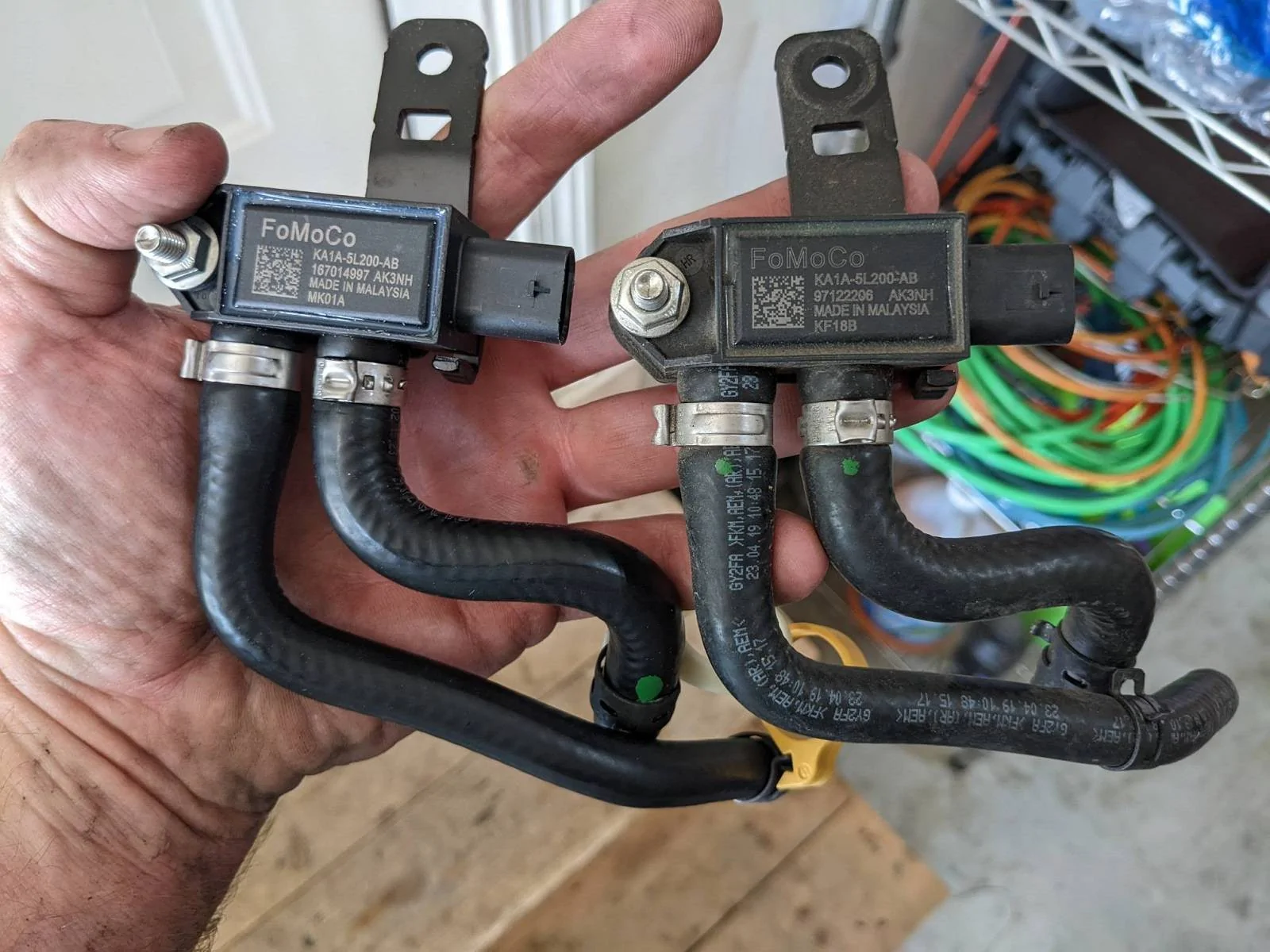
Borrowed Pic

Sensor Only - KA1Z-5L200-AB - Comes without the hoses, you will need to use side cutters to cut the silver clamps off of the old sensor and replace with worm clamps (5/16)
Current Price: $59.26 - Varies by Source
Note: I see varying dash numbers for this (-A) and (-AB) with searching for the sensor only, such as (-A) will be the listed P/N but the pic of part shows (-AB).
It is the same part though.

Kit - LB5Z-9J433-B - Sensor and Hoses - You have to have a small pair of needle nose pliers to get the clamps off of the tube ends, the new one comes with little plastic (finger) rings to ease with re-install - Access to these ends is limited, but doable.
Current Price: $78.62 - Varies by Source

Below is a pic of Old and New - DPFE Sensor - (Differential Pressure Feedback)

1696698600944.jpeg


For Reference Only:

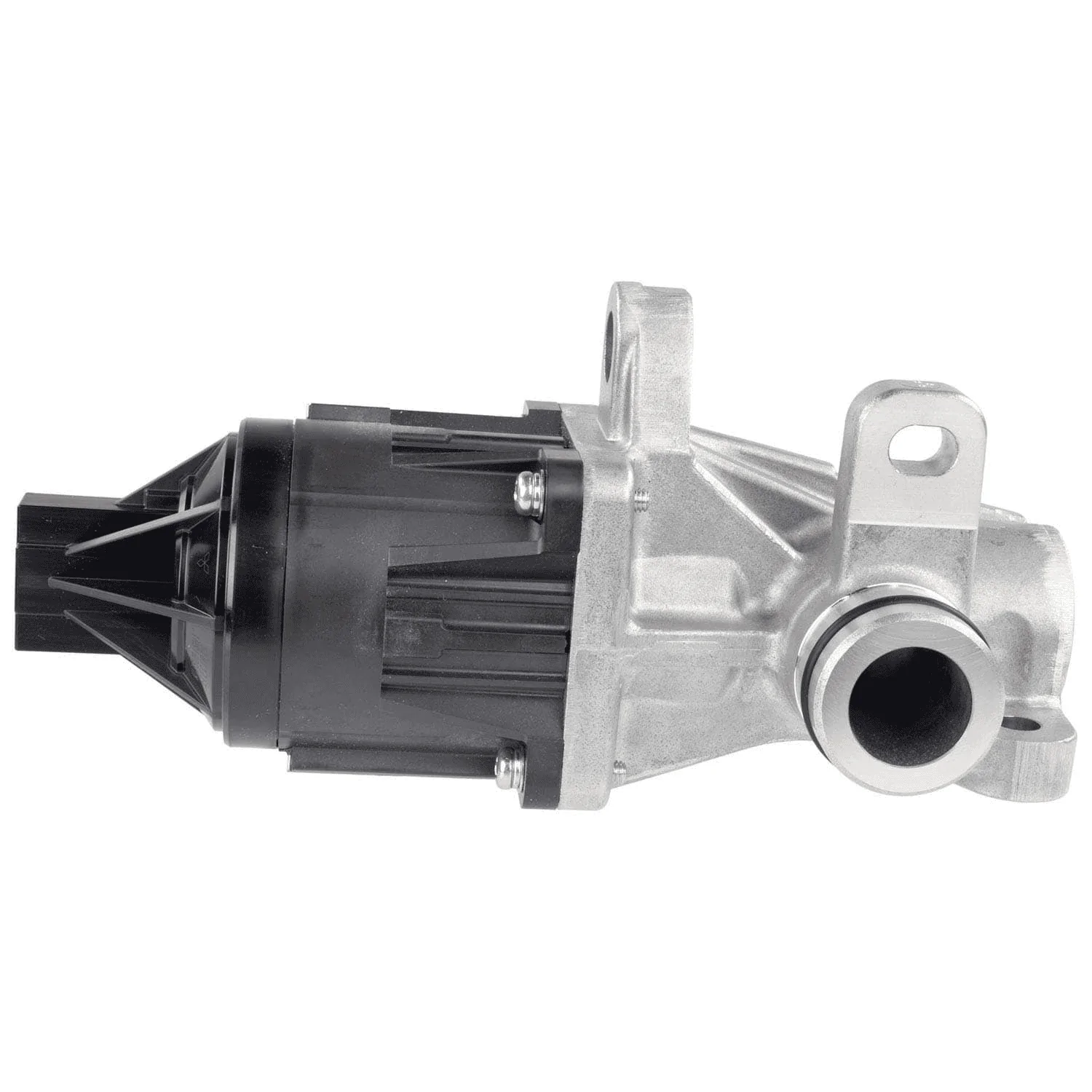
The below part: EGR Valve - P/N- LB5Z-9D475-B is the only VALVE in the EGR system, this part is Current Priced at $111.62.
Now the EGR valve itself will generate different codes; it is rare for them to fail.
This is the valve that is actually opening and causing the buck / surge drivability issues.
But it is receiving false readings from the DPFE sensor, and it is doing what the PCM is commanding from those false readings.
So, opening the valve when it should be closed, allowing unwanted EGR flow into the intake manifold. (at Idle and low RPM & Load conditions), this is the Buck/Surge.
Once you are at speed (cruise) you are overcoming this condition and not as noticeable
As the vacuum differential between the Upstream and Downstream flow (DPFE Sensor) has changed

1696700411743.webp
 
Last edited:

RedlandRanger

Moderator
First Name
Rob
Joined
Nov 14, 2018
Threads
42
Messages
5,111
Reaction score
11,105
Location
Oregon
Vehicle(s)
2019 Ford Ranger Lariat FX4, 1973 Mercury Capri
Vehicle Showcase
1
Yes, it is a bit confusing on the part name- as it is listed as Vacuum Control and Sensor, and some list is as a valve.

Borrowed Pic

Sensor Only - KA1Z-5L200-AB - Comes without the hoses, you will need to use side cutters to cut the silver clamps off of the old sensor and replace with worm clamps (5/16)
Current Price: $59.26 - Varies by Source
Note: I see varying dash numbers for this (-A) and (-AB) with searching for the sensor only, such as (-A) will be the listed P/N but the pic of part shows (-AB).
It is the same part though.

Kit - LB5Z-9J433-B - Sensor and Hoses - You have to have a small pair of needle nose pliers to get the clamps off of the tube ends, the new one comes with little plastic (finger) rings to ease with re-install - Access to these ends is limited, but doable.
Current Price: $78.62 - Varies by Source

Below is a pic of Old and New - DPFE Sensor - (Differential Pressure Feedback)

1696698600944.jpeg


For Reference Only:

The below part: EGR Valve - P/N- LB5Z-9D475-B is the only VALVE in the EGR system, this part is Current Priced at $111.62.
Now the EGR valve itself will generate different codes; it is rare for them to fail.
This is the valve that is actually opening and causing the buck / surge drivability issues.
But it is receiving false readings from the DPFE sensor, and it is doing what the PCM is commanding from those false readings.
So, opening the valve when it should be closed, allowing unwanted EGR flow into the intake manifold. (at Idle and low RPM & Load conditions), this is the Buck/Surge.
Once you are at speed (cruise) you are overcoming this condition and not as noticeable
As the vacuum differential between the Upstream and Downstream flow (DPFE Sensor) has changed

1696700411743.png
Thank you for the details. Interestingly enough, Levittown Ford Parts only lists the kit, not just the sensor.

Next question - where on the engine is this part located? If it was posted previously, my apologies - I didn't see it.
 

airline tech

Well-Known Member
Joined
Aug 24, 2022
Threads
28
Messages
4,461
Reaction score
8,529
Location
Midwest - KS
Vehicle(s)
2022 Ranger Lariat-Super Crew, Cactus Gray
Occupation
Aircraft Tech
Thank you for the details. Interestingly enough, Levittown Ford Parts only lists the kit, not just the sensor.

Next question - where on the engine is this part located? If it was posted previously, my apologies - I didn't see it.
Thank you for the details. Interestingly enough, Levittown Ford Parts only lists the kit, not just the sensor.

Next question - where on the engine is this part located? If it was posted previously, my apologies - I didn't see it.
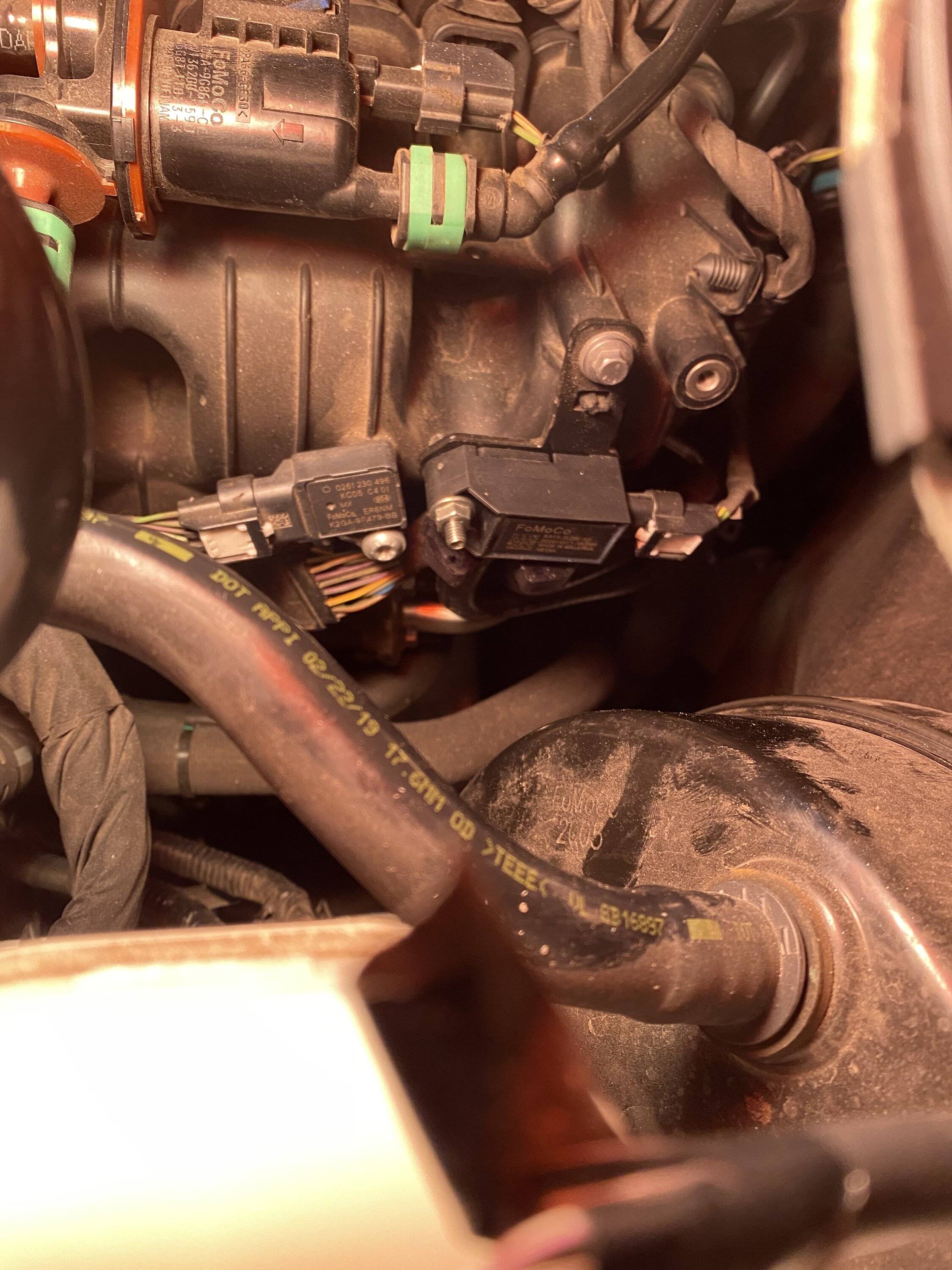
Drivers Side:
By the Brake Booster, the sensor to the left of the DPFE is the MAPT Sensor, you can see a glimpse of the rigid tubing near the firewall that the DPFE hoses connect to.
This is one of those parts where you have to head dive into the engine bay to get to it.
DPFE Location.jpeg
 

RedlandRanger

Moderator
First Name
Rob
Joined
Nov 14, 2018
Threads
42
Messages
5,111
Reaction score
11,105
Location
Oregon
Vehicle(s)
2019 Ford Ranger Lariat FX4, 1973 Mercury Capri
Vehicle Showcase
1
Drivers Side:
By the Brake Booster, the sensor to the left of the DPFE is the MAPT Sensor, you can see a glimpse of the rigid tubing near the firewall that the DPFE hoses connect to.
This is one of those parts where you have to head dive into the engine bay to get to it.
DPFE Location.jpeg
Thank you again - that is very helpful. I can't say I'm looking forward to replacing this, but I'm pretty sure I need to. I only noticed it when I was in rush hour traffic - normally I don't drive in stop and go traffic so I don't notice it, but I really did notice it with the stop and go. Maybe I will just not drive in stop and go traffic. :LOL:
 

Marc S

Active Member
First Name
Marc
Joined
Mar 17, 2021
Threads
1
Messages
36
Reaction score
83
Location
Orange County, CA
Vehicle(s)
2021 Ford Ranger Lariat FX4
Finally got around to replacing it. It’s a pain to get to but man it’s night and day difference. Hopefully that fixes it because it makes me love the truck again!
Sponsored


Top