
Sponsored
Charley
Well-Known Member
Definitely interested. H3ll, I might even be willing to drive across America somewhere so they could use my truck to test fit the tank! (Not willing to drive to Australia since the alternator sits so low and might get wet for a sustained period of time)
On road distance would be great, but think about off-road mileage. Potentially one less thing to pack.
On road distance would be great, but think about off-road mileage. Potentially one less thing to pack.
OP
OP
Frenchy
Well-Known Member
- First Name
- Chris
- Joined
- Mar 15, 2020
- Threads
- 164
- Messages
- 7,541
- Reaction score
- 10,751
- Location
- Elizabeth, Colorado
- Vehicle(s)
- 2012 Nissan Frontier, 1994 F150 XL, 2022 Ford Transit
- Occupation
- Field Service Technician
- Thread starter
- #18
Thankfully the bed does not get removed for this. The instructions from ford show that it drops easily and if you were doing a fuel pump replacement it wouldn't take more than an hour and a half to do so.To be honest I'd be interested in simply a 26 gal tank (size I had in my old F150).
That would get me 600 miles on a tank with a bit to spare on the open road. I'd be happy with that.
BUT I must ask...would this involve removing the bed of the truck? If so then I'd probably just admire from afar.
It's funny how you mention the test fit. When I say I'm working with the company I am going to be doing the test fit to make this possible for everyone but the down side is we are talking a few months out just to make that happen.Definitely interested. H3ll, I might even be willing to drive across America somewhere so they could use my truck to test fit the tank! (Not willing to drive to Australia since the alternator sits so low and might get wet for a sustained period of time)
On road distance would be great, but think about off-road mileage. Potentially one less thing to pack.
r1ch999999
Well-Known Member
- First Name
- Rich
- Joined
- Jan 4, 2020
- Threads
- 28
- Messages
- 1,151
- Reaction score
- 1,927
- Location
- Nashua, NH
- Vehicle(s)
- 2019 Ranger Lariat Crew Cab 4x4
- Occupation
- Software Engineer
I’m curious too, but with me averaging 700 miles a month it’d be a waste.
OP
OP
Frenchy
Well-Known Member
- First Name
- Chris
- Joined
- Mar 15, 2020
- Threads
- 164
- Messages
- 7,541
- Reaction score
- 10,751
- Location
- Elizabeth, Colorado
- Vehicle(s)
- 2012 Nissan Frontier, 1994 F150 XL, 2022 Ford Transit
- Occupation
- Field Service Technician
- Thread starter
- #20
If you have the factory skid plates then you would most likely loose the fuel tank skid plate. Other than that you should be fine. If it is aftermarket skid plates then I honestly don't know.I could go for less stops at the gas station
Edit: Would this affect skid plate placements?
OP
OP
Frenchy
Well-Known Member
- First Name
- Chris
- Joined
- Mar 15, 2020
- Threads
- 164
- Messages
- 7,541
- Reaction score
- 10,751
- Location
- Elizabeth, Colorado
- Vehicle(s)
- 2012 Nissan Frontier, 1994 F150 XL, 2022 Ford Transit
- Occupation
- Field Service Technician
- Thread starter
- #21
It all depends on how you look at it, if anything you would just stop at the gas station less a month so in your case once instead of twice but not everyone likes something new that comes out.I’m curious too, but with me averaging 700 miles a month it’d be a waste.
Sako887
Well-Known Member
- First Name
- Sarkis
- Joined
- Feb 22, 2020
- Threads
- 5
- Messages
- 71
- Reaction score
- 43
- Location
- Los Angeles
- Vehicle(s)
- 2019 Ford Ranger
I would definitely be interested in this.
OP
OP
Frenchy
Well-Known Member
- First Name
- Chris
- Joined
- Mar 15, 2020
- Threads
- 164
- Messages
- 7,541
- Reaction score
- 10,751
- Location
- Elizabeth, Colorado
- Vehicle(s)
- 2012 Nissan Frontier, 1994 F150 XL, 2022 Ford Transit
- Occupation
- Field Service Technician
- Thread starter
- #23
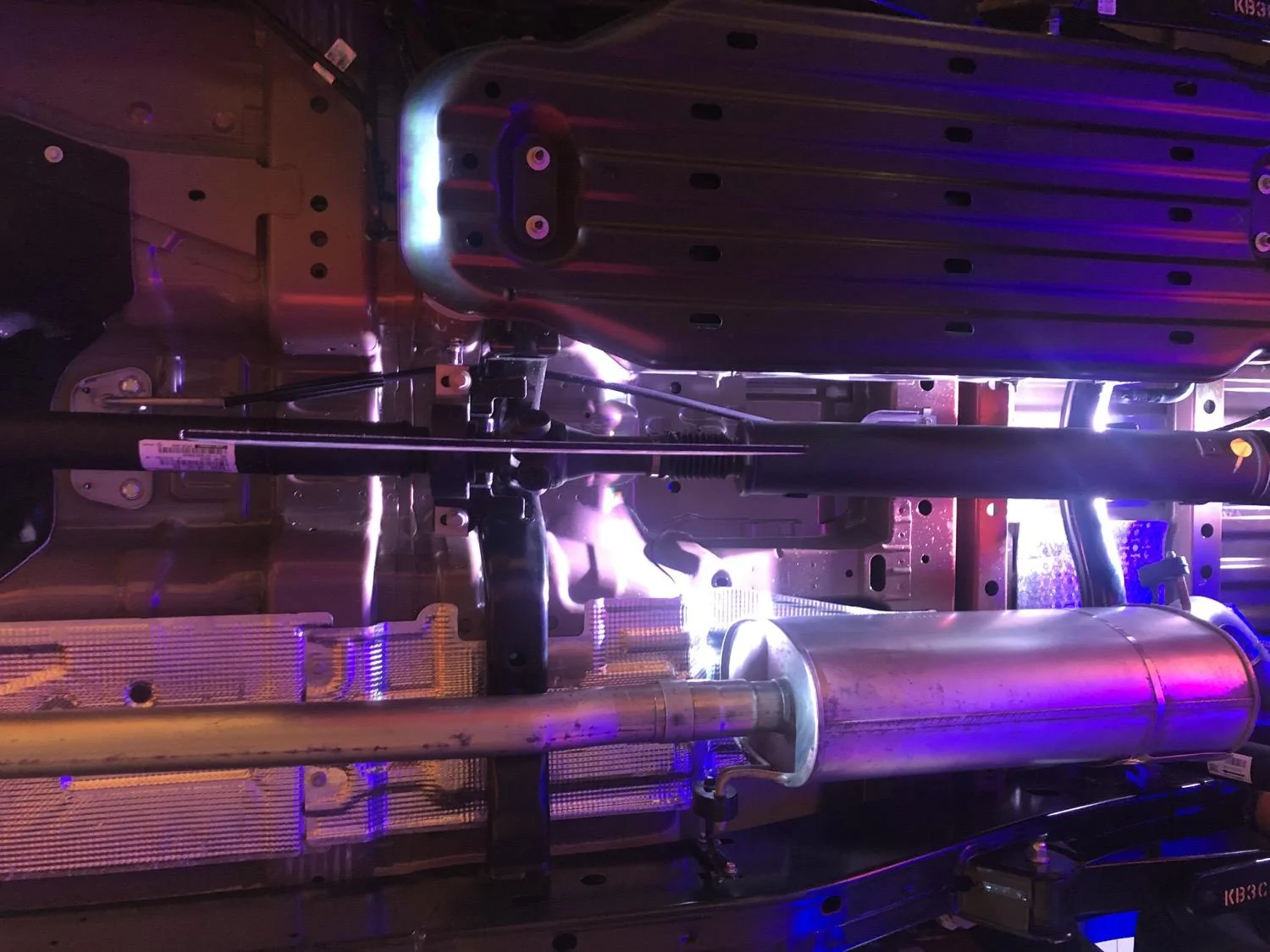
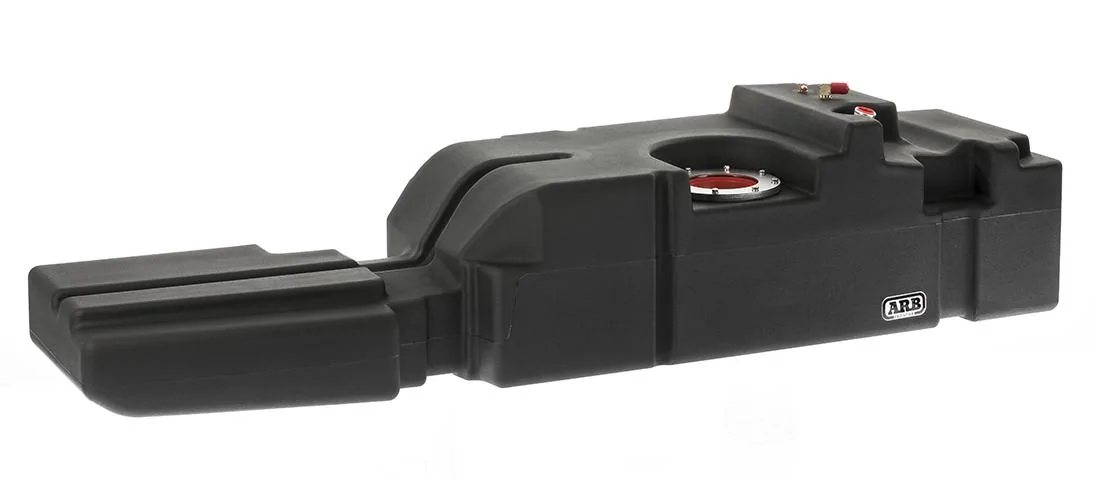
I am well aware of what you're mentioning here. Aftermarket fuel tanks that are bigger usually don't have skid plates to begin with. Also ARB already informed me they wont sell fuel tanks out here. And the company I'm goi g through at this time is similar to ARB where they use every nook and cranny to get the extra capacityits not the best picture, undercarriage photos seem rare online for the truck.
but this is what you're up against. everyone will want to maintain their ground clearance and skid plates.
ARB have a tank for the overseas model, it adds 60 litres I think, and it just looks like it makes use of every available nook and cranny around the current set up.


HenryMac
Well-Known Member
Hauling all that extra gas weight around hurts gas mileage and is just that much more wear and tear on the vehicle. Liquids are heavy, as anybody that carries a 5 gallon gas can can attest to.It all depends on how you look at it, if anything you would just stop at the gas station less a month so in your case once instead of twice but not everyone likes something new that comes out.
I can see the "tanker" option for an off road rig, but for a daily driver it makes no sense at all.
My bladder gives out way before the fuel tank does....
Last edited:

12Bravo20
Well-Known Member
Crash safety probably has a lot to do with it. I'm willing to bet that is why we don't see duel tanks anymore either. And why tanks on trucks were moved from the back of the bed to the front (and inside the frame).
With health issues and age, I could not sit in the truck long enough to go through a larger tank of gas anymore like I could when I was younger.
Current sizes of fuel tanks on all vehicles pretty much have an average range of 300-350 miles per tank. I know that having a range of 300-350 miles per tank has always been a US military requirement for their vehicles and civilian vehicles seem to follow suit. I don't know who came up with that requirement first.
I can see the need in the Australian outback for a bigger than stock tank. I can see where people in parts of the western and southwestern US would too.
With health issues and age, I could not sit in the truck long enough to go through a larger tank of gas anymore like I could when I was younger.
Current sizes of fuel tanks on all vehicles pretty much have an average range of 300-350 miles per tank. I know that having a range of 300-350 miles per tank has always been a US military requirement for their vehicles and civilian vehicles seem to follow suit. I don't know who came up with that requirement first.
I can see the need in the Australian outback for a bigger than stock tank. I can see where people in parts of the western and southwestern US would too.
OP
OP
Frenchy
Well-Known Member
- First Name
- Chris
- Joined
- Mar 15, 2020
- Threads
- 164
- Messages
- 7,541
- Reaction score
- 10,751
- Location
- Elizabeth, Colorado
- Vehicle(s)
- 2012 Nissan Frontier, 1994 F150 XL, 2022 Ford Transit
- Occupation
- Field Service Technician
- Thread starter
- #26
I am sure that the crash safety reasons are why a rear add on tank isnt a thing for the trucks here. Makes perfect sense to me. Would this be good for long trips? Sure, especially if you are towing then you dont have to worry about the lower MPG's for a while. It is definitely great for the offroad as well for the same reason. Is this for everyone? No but im still sure plenty would like the option.Crash safety probably has a lot to do with it. I'm willing to bet that is why we don't see duel tanks anymore either. And why tanks on trucks were moved from the back of the bed to the front (and inside the frame).
With health issues and age, I could not sit in the truck long enough to go through a larger tank of gas anymore like I could when I was younger.
Current sizes of fuel tanks on all vehicles pretty much have an average range of 300-350 miles per tank. I know that having a range of 300-350 miles per tank has always been a US military requirement for their vehicles and civilian vehicles seem to follow suit. I don't know who came up with that requirement first.
I can see the need in the Australian outback for a bigger than stock tank. I can see where people in parts of the western and southwestern US would too.
myothercarizahearse
Well-Known Member
- First Name
- Dave
- Joined
- Apr 26, 2020
- Threads
- 18
- Messages
- 1,880
- Reaction score
- 6,673
- Location
- Cleveland, Ohio
- Vehicle(s)
- 2019 Ranger STX 4x4 w/ GFC V2, 1987 Caddy hearse
- Occupation
- Unretired
so then my next question- would the range estimator be adjusted to account for the extra fuel? and how? I'm on the fence about bigger tank but would really love 500+ miles on a tank
OP
OP
Frenchy
Well-Known Member
- First Name
- Chris
- Joined
- Mar 15, 2020
- Threads
- 164
- Messages
- 7,541
- Reaction score
- 10,751
- Location
- Elizabeth, Colorado
- Vehicle(s)
- 2012 Nissan Frontier, 1994 F150 XL, 2022 Ford Transit
- Occupation
- Field Service Technician
- Thread starter
- #28
There are 2 ways to fix that. 1 is using the FDRS scan tool at Ford. Just have your dealer do the adjustment. They actually have an option for the ARB 140l tank for some reason even though we cant install that tank in our trucks. The other option is to use Forscan as you can adjust it there as well.
mtbikernate
Well-Known Member
Has my attention.
700mi range is a bit more than what I'd ask for, but I would appreciate 400-500mi range when towing my teardrop (at about 20mpg).
With an empty truck and being really easy on the gas, I can break 400mi range on a tank now. I'd like to get to that neighborhood when towing, too. I think the ask for a 24gal tank is reasonable.
700mi range is a bit more than what I'd ask for, but I would appreciate 400-500mi range when towing my teardrop (at about 20mpg).
With an empty truck and being really easy on the gas, I can break 400mi range on a tank now. I'd like to get to that neighborhood when towing, too. I think the ask for a 24gal tank is reasonable.
Guinness
Well-Known Member
Ford recognizes that some want larger tanks with their 36 gallon option over the 23 and 26 smaller tanks for F150s. Towing and offroad do seem like the most likely drivers for it.
We actually were measuring to see if we could stuff a larger tank from a F150 under the Ranger for more range (definitely more work than jerry cans but nicer to have it all in one tank). Unfortunately that wouldn't really work because of the support locations vs. rear axle and where the F150 tank slopes down.
Definitely want to hear more.
We actually were measuring to see if we could stuff a larger tank from a F150 under the Ranger for more range (definitely more work than jerry cans but nicer to have it all in one tank). Unfortunately that wouldn't really work because of the support locations vs. rear axle and where the F150 tank slopes down.
Definitely want to hear more.
Sponsored


