
AzScorpion
Moderator
- First Name
- Dave
- Joined
- Jul 25, 2019
- Threads
- 340
- Messages
- 26,763
- Reaction score
- 135,140
- Location
- Back Home In AZ!
- Vehicle(s)
- 2023 Ford Ranger Tremor
- Occupation
- Retired...Full Time Slacker
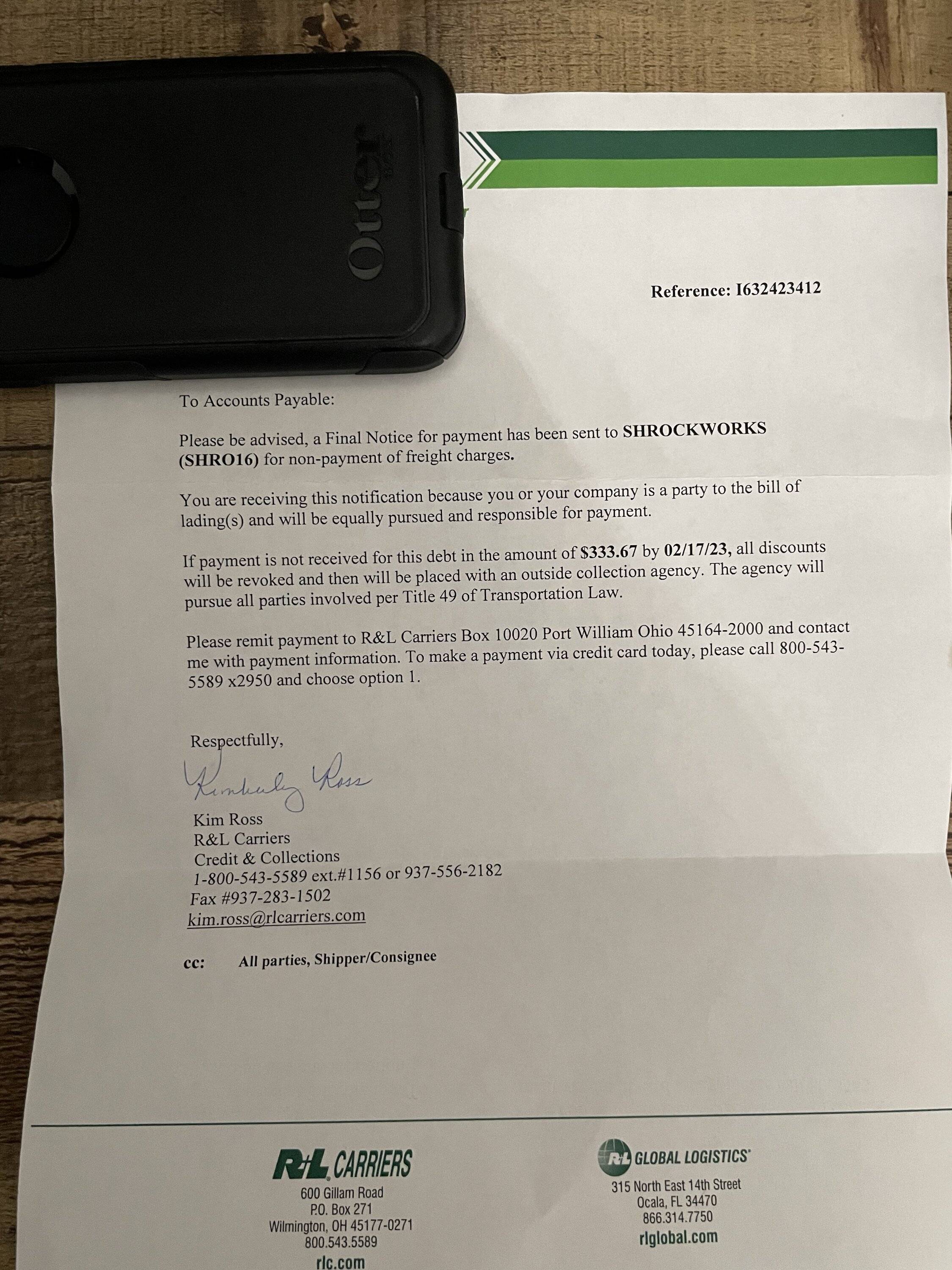
Even after reading most of I still don't understand it. lol This part here describes who is liable but the ;last sentence makes it sound like both could still be?Here's what appears to be a detailed, well-referenced, semi-technical article on the topic written by actual lawyers. I haven't read it, but I'm guessing it provides better info than anybody will provide on a pickup forum.
https://www.scopelitis.com/scopelitis/assets/dynapsis/Carrier Must Get PaidFact or Fiction Tauscher.pdf
Who is Liable?
Generally, the bill of lading deter-
5
mines who is liable. A party’s bill
of lading, however, can be modified by a prior written contract between the shipper and the carrier. If parties enter into a contract before preparing a bill of lading, and there is an irrec- oncilable difference between the two agreements, the prior written agree-
ment controls.
If the bill of lading controls, the courts look to the abbreviated nota- tions found on uniform bills of lading to determine who is liable:
- “Prepaid” means the shipper/ consignor is obligated to pay the carrier.
- “Collect” means the consignee is obligated to pay the carrier.
- “Nonrecourse” (also referred to
as “section 7” language) means a consignor must sign the “nonre- course” box to be free of liability for freight charges.- “Bill to Third Party” notation notifies a carrier that a third party will be paying but does not relieve the consignor from liability unless the consignor has also signed the “nonre- course” box.
Under the uniform bill of lading terms, the shipper/consignor is liable unless the bill of lading is marked “nonrecourse.”7 In contrast, the con- signee is liable for freight charges unless the bill of lading is marked “prepaid” and the consignee has already paid its bill to the consignor.8
Occasionally, courts are faced with interpreting inconsistent nota- tions on bills of lading, such as when both the “prepaid” and “nonrecourse” are marked. In Jones Motor Co. v. Teledyne,9 the court found the ship- per liable in that situation. There, the court held that a bill of lading marked both “prepaid” and “non- recourse” binds the shipper to pay for the “line haul” freight charges but not to pay for the accessorial charges.10 The court relied on the car- rier’s tariff to resolve the conflict. The applicable tariff required the shipper to guarantee payment of the shipping charges if the third party failed to do so.11 Therefore, the tariff prohibited a third-party billing situation because the shipper signed the nonrecourse provision (which was the case there).
The court reached a different result in Gaines Motor Lines, Inc. v. Klaussner Furniture Industries, Inc.12 There, the court looked beyond the bill of lading to determine the respon- sible party because of the conflicting notations. In Gaines, the plaintiff car- riers had been advised by shipper that the third-party logistics company would be the third-party payer.13 In fact, the most recent course of deal- ing showed that plaintiff carriers sent invoices to, and were paid by, the third-party logistics company, not the shipper.14 In reaching its decision that the shipper was not liable, the court distinguished its case from Jones Motor Co., because plaintiff carriers did not contend a tariff similar to the one in Jones Motor Co. applied to their action.
The common law rule of carriage liability applies even if no contract of carriage exists.16 In other words, the uniform bill of lading terms are consistent with common law rules (i.e., while the consignor is primarily liable for payment of freight charges, a consignee who accepts delivery is also liable for freight charges).
Sponsored