RangerBill
Well-Known Member
It was a 1994 that I had till 2019 when I bought my new Ranger. I bought it in 1994 and sold it in 2019.Learn something new every day!
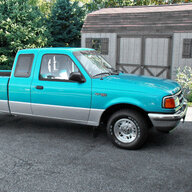
Nice 99 (?) Ranger BTW!
Sponsored
Last edited:

It was a 1994 that I had till 2019 when I bought my new Ranger. I bought it in 1994 and sold it in 2019.Learn something new every day!
Nice 99 (?) Ranger BTW!

Your not alone. My interpretation of the "regen charging" is that normally for fuel economy, the alternator is lightly coupled to the engine (via pulse width modulation?) during normal driving and then it is fully coupled during deceleration increasing loading and charge rate. I am guessing that disabling the BMS allows the alternator to always be fully coupled. If I actually understood how the whole things works, I would likely disable the BMS in Forscan and get the ASS disabled as a bonus.Lots of good discussion on the alternator clutch. I not convinced it has any thing to do with the BMS.
What it does is allow the alternator to spin faster than the drive pulley when the engine slows down when going off throttle or coasting. It will never let the alternator go slower than the drive pulley. This takes load pulses off the drive belt with rapid changes in engine speed, such as during shifts.
As someone with an engineering background. I too, like @TJC would like to see a flow chart of how the BMS works. This regenerative charging thing really makes no sense to me. Especially if it is the reason for keeping the battery in an under charged condition, which it obviously doesn’t like. I cannot believe it gains that much fuel economy to be worth the effort for the average driver.

The risk there is that with BMS/ASS disabled with Forscan there is no charge regulation so it stays at 14.7 volts and can damage the battery. I don't believe there is a one size fits all solution since disconnecting BMS may be fine for occasional drivers but may overcharge for heavy use vehicles.Your not alone. My interpretation of the "regen charging" is that normally for fuel economy, the alternator is lightly coupled to the engine (via pulse width modulation?) during normal driving and then it is fully coupled during deceleration increasing loading and charge rate. I am guessing that disabling the BMS allows the alternator to always be fully coupled. If I actually understood how the whole things works, I would likely disable the BMS in Forscan and get the ASS disabled as a bonus.
I have not found this to be the case when I disconnected the BMS sensor. My charge voltage varies with the battery SOC and ambient temperature. Drops down to 13.8 - 13.9 range all the time if driven long enough. In the heat of summer I expect it to drop a bit more. I see it start to drop in as little as 10-15 miles.The risk there is that with BMS/ASS disabled with Forscan there is no charge regulation so it stays at 14.7 volts and can damage the battery. I don't believe there is a one size fits all solution since disconnecting BMS may be fine for occasional drivers but may overcharge for heavy use vehicles.
I believe the clutch is strickly an overrunning clutch. There is no electrical control of it. If there was slippage in it to control voltage it would be a huge wear issue.Your not alone. My interpretation of the "regen charging" is that normally for fuel economy, the alternator is lightly coupled to the engine (via pulse width modulation?) during normal driving and then it is fully coupled during deceleration increasing loading and charge rate. I am guessing that disabling the BMS allows the alternator to always be fully coupled. If I actually understood how the whole things works, I would likely disable the BMS in Forscan and get the ASS disabled as a bonus.

OK, if you have the BMS sensor disconnected, how is the system detecting SOC and adjusting charge voltage to it? Isn't that what the sensor is for?I have not found this to be the case when I disconnected the BMS sensor. My charge voltage varies with the battery SOC and ambient temperature. Drops down to 13.8 - 13.9 range all the time if driven long enough. In the heat of summer I expect it to drop a bit more. I see it start to drop in as little as 10-15 miles.

The risk there is that with BMS/ASS disabled with Forscan there is no charge regulation so it stays at 14.7 volts and can damage the battery. I don't believe there is a one size fits all solution since disconnecting BMS may be fine for occasional drivers but may overcharge for heavy use vehicles.
Also disagree with saying there is no charge regulation, the ecm has a voltage regulation system, bms just adds additional functions to it, 1.5 yrs of bms being disconnected hasn't killed my battery, in fact I believe it's extended it lifespan.
I infer the same, but I do not understand how the increased resistance from a over charging alternator does not rapidly decelerate a free spinning clutch. The alternator will act like a brake on the free spinning clutch. There has to be more to this puzzle.So, I can accept the free spinning pulley producing the boost and understand it, but the question remains is actually how the boost is maintained throughout the coasting effect until you reach a full stop. I was lead to believe it was all done within the pulley, but now question it and it appears there is more to it than the pulley itself.
The clutch does not appear to have anything to do with charging, only helps smooth the belt operation. The system senses coasting from speed sensors and engine load and excites the alternator to a higher charging voltage until the engine is under load again, utilizing the coasting energy.I infer the same, but I do not understand how the increased resistance from a over charging alternator does not rapidly decelerate a free spinning clutch. The alternator will act like a brake on the free spinning clutch. There has to be more to this puzzle.
It would measure soc via the same electronics in the voltage regulator module that is used when you hook up a batt tester or vohm. At one time rectification and voltage regulation was integrated into the alternator, now it's found in the ecm, probably because of stuff like regen can be added. SOC awareness and voltage regulation is basic to any device that has a rechargeable batt- cell phones, laptops, etc. So the voltage is likely measured from the smaller positive cable that typically runs from the batt to the alternator, but one would need a charging system schematic to be exact.OK, if you have the BMS sensor disconnected, how is the system detecting SOC and adjusting charge voltage to it? Isn't that what the sensor is for?
The problem I see with this is the pulley is not free spinning, it is locked to the motor through the belt. The alternator is allowed to spin faster than the pulley but never slower. This means that when the motor slows down the alternator can spin faster than the pulley until the load on it slows it back down to motor speed. Which I don't think would be very long. Especially if the PCM jacks up the field voltage, causing it to make more charging voltage. The clutch just takes the shock of the initial speed change off the belt like the video talks about.So, I can accept the free spinning pulley producing the boost and understand it, but the question remains is actually how the boost is maintained throughout the coasting effect until you reach a full stop. I was lead to believe it was all done within the pulley, but now question it and it appears there is more to it than the pulley itself.
The problem I see with this is the pulley is not free spinning, it is locked to the motor through the belt. The alternator is allowed to spin faster than the pulley but never slower. This means that when the motor slows down the alternator can spin faster than the pulley until the load on it slows it back down to motor speed. Which I don't think would be very long. Especially if the PCM jacks up the field voltage, causing it to make more charging voltage. The clutch just takes the shock of the initial speed change off the belt like the video talks about.
Regen converts mechanical energy from vehicle drivetrain to electrical energy via the alternator, to use this energy it has to be stored somewhere, hence the bms limits batt soc and this energy is stored in the battery then alt load can be reduced, batt drawn down and the cycle repeats itself. Similar to how evs do it.


