
Sponsored

Mishimoto R&D: Ranger 2.3L Performance Air Intake

Status
Not open for further replies.

krisrayner

Well-Known Member
First Name
Kris
Joined
Feb 27, 2020
Threads
7
Messages
80
Reaction score
137
Location
California
Vehicle(s)
‘20 Ranger FX2
With the Ranger using a speed density injection system, its going to be hard to make more power with mods that don't include retuning the ECM. All the calculations made by the fuel system are based stock air flow rates and, while it can adapt for changes, its not as forgiving as a MAF system which actually measures the air flow as opposed to calculating the air flow.
Sponsored

 

DerangedPony

Well-Known Member
Joined
Nov 12, 2019
Threads
7
Messages
76
Reaction score
191
Location
None
Vehicle(s)
None
Vehicle Showcase
1
With the Ranger using a speed density injection system, its going to be hard to make more power with mods that don't include retuning the ECM. All the calculations made by the fuel system are based stock air flow rates and, while it can adapt for changes, its not as forgiving as a MAF system which actually measures the air flow as opposed to calculating the air flow.
I think this is partly true. It seems like the RS guys say that mods will improve the curve without a tune but yes, you wont get more max torque without a tune.
 
OP
OP
Mishimoto

Mishimoto

Well-Known Member
First Name
Mishimoto
Joined
Jun 9, 2019
Threads
11
Messages
190
Reaction score
423
Location
Wilmington, DE
Vehicle(s)
2019 Ford Ranger Lariat
Thanks everybody! We'll be flow testing the stock intake to determine what components can be improved, but modifying the pipe with the filter media in it could be seen as tampering with an emissions component and it will likely need to stay.

As for power, it is true that most MAP-based vehicles don't pick up power from intake or exhaust modifications without a tune, but we have seen a few that do. Usually, that power gain is lower than it would be on a MAF-based vehicle, but in either case, our aim is to improve flow enough that when you do get a tune, you're making the most of the intake system.

Thanks,
-Steve
 

Tim G.

Well-Known Member
First Name
Tim
Joined
Mar 18, 2020
Threads
0
Messages
49
Reaction score
57
Location
Jackson, NJ
Vehicle(s)
2019 Ford Ranger Lariat 4X4
Occupation
Occupational Health and Safety
Hey everybody,

We're really excited to announce that we're developing a performance air intake for the 2019+ 2.3L EcoBoost Ranger! Check out the first installment of our engineering blog below. This time, we're taking a look at the stock intake and revealing some of its more interesting features.

Thanks!
-Steve

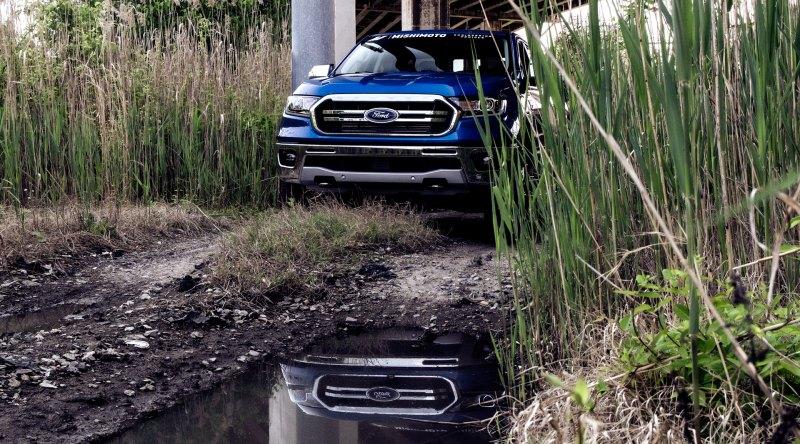
From the crisp, cool air atop Pikes Peak to the smell of freshly cut grass at Fenway Park. From the hard asphalt streets of New York City to the soft sand of the Mojave. No matter where you are or where you’re going, the 2019+ Ford Ranger was built to take in the world.

While we take in the world with our sense of touch, sight, taste, and smell, your 2019+ Ranger takes in the world through its air intake. Air flows into the intake, gets compressed by the turbocharger, and is then forced into the engine. The better the intake flows, the more air can get into the turbocharger and the more air goes into the engine. More air going into the engine means more fuel can be injected, and more fuel equals more power.

MG_9829.jpg

Improving flow through the intake is one of the best ways to improve performance. While the stock intake on the 2.3L EcoBoost under the hood of the 2019+ Ranger is well designed, we think we can make it better. But, before we start building an improved intake, we need to look at the stock intake to know what can be improved.

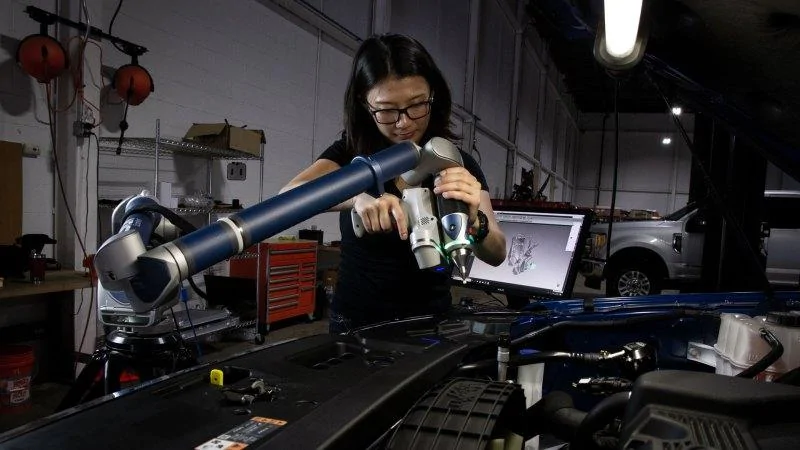
To analyze the stock intake, we started by 3D scanning the intake while it was still installed on the truck. This scan told us how much clearance the stock intake had between all the other components in the engine bay. A second scan of the area with the intake removed gave us our envelope—the space that our replacement intake could occupy.

MG_0947.jpg

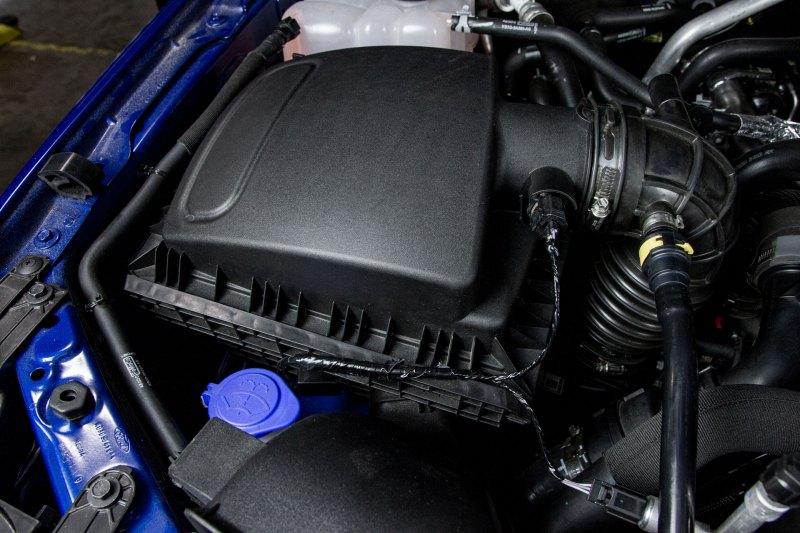
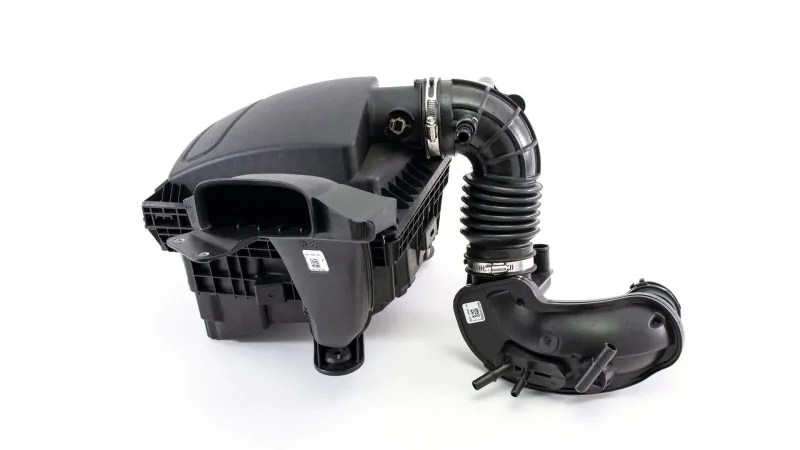
With the stock intake out of the vehicle, we could also see all the elements that may need to be improved. When the intake is installed in the Ranger’s engine bay, it looks unassuming and bland. A box with a tube on it, basically. But when you remove it, you can see just how much lives under the surface.

...Continue Reading>>>
very happy with the effort going into this, Roush in my opinion did what they could to be first on the market but lacked real R&D and therefore way overpriced for what they are providing. Would Mishimoto be open to a possible group buy discount incentive when the time comes? i would be very interested in this unit when it hits production.
 

Tim G.

Well-Known Member
First Name
Tim
Joined
Mar 18, 2020
Threads
0
Messages
49
Reaction score
57
Location
Jackson, NJ
Vehicle(s)
2019 Ford Ranger Lariat 4X4
Occupation
Occupational Health and Safety
Thanks everybody! We'll be flow testing the stock intake to determine what components can be improved, but modifying the pipe with the filter media in it could be seen as tampering with an emissions component and it will likely need to stay.

As for power, it is true that most MAP-based vehicles don't pick up power from intake or exhaust modifications without a tune, but we have seen a few that do. Usually, that power gain is lower than it would be on a MAF-based vehicle, but in either case, our aim is to improve flow enough that when you do get a tune, you're making the most of the intake system.

Thanks,
-Steve
would it be possible to offer an "offroad" version upgrade for the filter media pipe to bypass the emissions standards?


OP
OP
Mishimoto

Mishimoto

Well-Known Member
First Name
Mishimoto
Joined
Jun 9, 2019
Threads
11
Messages
190
Reaction score
423
Location
Wilmington, DE
Vehicle(s)
2019 Ford Ranger Lariat
Very interested in seeing how this turns out
very happy with the effort going into this, Roush in my opinion did what they could to be first on the market but lacked real R&D and therefore way overpriced for what they are providing. Would Mishimoto be open to a possible group buy discount incentive when the time comes? i would be very interested in this unit when it hits production.
Thanks! We'll be doing a discounted pre-sale at the end of development!

would it be possible to offer an "offroad" version upgrade for the filter media pipe to bypass the emissions standards?
Unfortunately not, the EPA is dropping the hammer on anybody who sells parts that bypass emissions components, even if they state "off road use only".

Thanks,
-Steve
 

Tim G.

Well-Known Member
First Name
Tim
Joined
Mar 18, 2020
Threads
0
Messages
49
Reaction score
57
Location
Jackson, NJ
Vehicle(s)
2019 Ford Ranger Lariat 4X4
Occupation
Occupational Health and Safety
Thanks! We'll be doing a discounted pre-sale at the end of development!


Unfortunately not, the EPA is dropping the hammer on anybody who sells parts that bypass emissions components, even if they state "off road use only".

Thanks,
-Steve
thanks for the response! look forward to the release!
 
OP
OP
Mishimoto

Mishimoto

Well-Known Member
First Name
Mishimoto
Joined
Jun 9, 2019
Threads
11
Messages
190
Reaction score
423
Location
Wilmington, DE
Vehicle(s)
2019 Ford Ranger Lariat
Hey everybody,

Check out the next update in our R&D below and let us know what you think!

Thanks,
-Steve

Take in the World – Intake R&D Part 2: Flow Testing
NLT_0261.jpg
We often talk about how your vehicles are more than just the sum of their parts. Your Ranger isn’t about getting from point A to point B with a few bags of mulch in the bed. It’s about being able to go anywhere, anytime, and still fit in the garage. The parts under the hood have similar stories. An intercooler isn’t just about cooling charge air; it’s about letting you spend longer with your right foot on the floor and letting your turbo power your adventures. Radiators don’t just cool your engine, they let your truck work as hard as you do. Intakes let you, and your engine, take in more of the world. But even if a vehicle is about more than the sum of its parts, it still pays to look at each of those parts on its own when modifying any vehicle. The 2019+ Ranger’s intake might be about taking in the world, but at its core, it’s about flow.

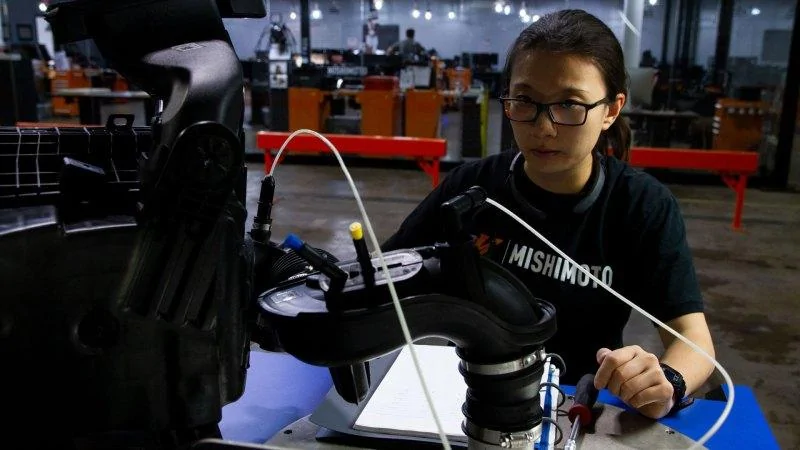
To make the Ranger intake better, we need to know where it stands. To find that out we start by measuring the core of its performance: flow. Our engineer, Ye, began evaluating the stock Ranger intake by removing it from the truck and placing it on our flow bench.

MG_9491.webp
Much like how the Ranger’s ECU calculates airflow into the engine, a flow bench measures how much air can move through an object by referencing the pressure and temperature of that airflow. Instead of manifold pressure, however, the flow bench references atmospheric pressure (14.69 PSI at sea level) and the amount of pressure or vacuum needed to generate a specific air velocity. For example, if a part requires 5 inHg of vacuum to flow 500 CFM, it flows twice as well as a part that requires 10 inHg vacuum to flow the same 500 CFM. The results of this test are expressed as pressure drop (inH2O). In the case of a vacuum-operated flow bench, the pressure drop is the difference in pressure between the air at the inlet of the part (atmosphere) and the vacuum that the flow bench produces to pull a set velocity of air. No matter how the machine operates, a lower pressure drop means more flow, and more flow means a better performing intake.

MG_9470.webp

...Continue Reading >>>
 

HoosierT

Well-Known Member
First Name
Tyler
Joined
Feb 1, 2019
Threads
17
Messages
958
Reaction score
1,559
Location
Fishers, IN
Vehicle(s)
‘19 Ranger Lariat FX4, '17 Explorer Sport
Hey everybody,

Check out the next update in our R&D below and let us know what you think!

Thanks,
-Steve

Take in the World – Intake R&D Part 2: Flow Testing
NLT_0261.jpg
We often talk about how your vehicles are more than just the sum of their parts. Your Ranger isn’t about getting from point A to point B with a few bags of mulch in the bed. It’s about being able to go anywhere, anytime, and still fit in the garage. The parts under the hood have similar stories. An intercooler isn’t just about cooling charge air; it’s about letting you spend longer with your right foot on the floor and letting your turbo power your adventures. Radiators don’t just cool your engine, they let your truck work as hard as you do. Intakes let you, and your engine, take in more of the world. But even if a vehicle is about more than the sum of its parts, it still pays to look at each of those parts on its own when modifying any vehicle. The 2019+ Ranger’s intake might be about taking in the world, but at its core, it’s about flow.

To make the Ranger intake better, we need to know where it stands. To find that out we start by measuring the core of its performance: flow. Our engineer, Ye, began evaluating the stock Ranger intake by removing it from the truck and placing it on our flow bench.

MG_9491.jpg
Much like how the Ranger’s ECU calculates airflow into the engine, a flow bench measures how much air can move through an object by referencing the pressure and temperature of that airflow. Instead of manifold pressure, however, the flow bench references atmospheric pressure (14.69 PSI at sea level) and the amount of pressure or vacuum needed to generate a specific air velocity. For example, if a part requires 5 inHg of vacuum to flow 500 CFM, it flows twice as well as a part that requires 10 inHg vacuum to flow the same 500 CFM. The results of this test are expressed as pressure drop (inH2O). In the case of a vacuum-operated flow bench, the pressure drop is the difference in pressure between the air at the inlet of the part (atmosphere) and the vacuum that the flow bench produces to pull a set velocity of air. No matter how the machine operates, a lower pressure drop means more flow, and more flow means a better performing intake.

MG_9470.jpg

...Continue Reading >>>
Hurry up and take my money.
 

tjanok

Well-Known Member
First Name
Trevor
Joined
Apr 22, 2020
Threads
9
Messages
60
Reaction score
36
Location
USA, MI
Vehicle(s)
2019 Ranger
The R&D follow along is awesome. I wonder why only the Ranger 2.3 has that little filter elbow piece. I don't think the Mustang or Focus does... Doesn't seem like a piece of fabric would do much.
 

Kevin Franklin

Well-Known Member
First Name
Tinmender1963
Joined
Dec 22, 2019
Threads
10
Messages
238
Reaction score
490
Location
Louisville KY
Vehicle(s)
Honda FT500. Honda 700SC. 2019 Ford Ranger Sport. 2014 Ford Focus ST. 2017 Ford Escape Titanium. 1994 Ford Ranger Splash. 1986 Ford Mustang GT Splash
Occupation
Damn good question. A lot of different things
Vehicle Showcase
1
The R&D follow along is awesome. I wonder why only the Ranger 2.3 has that little filter elbow piece. I don't think the Mustang or Focus does... Doesn't seem like a piece of fabric would do much.
I tend to believe it has more to do with the pull that the orifices create than anything. That being said, I wonder what if any errors would occur if one was on there own of course, fabricate a similar elbow of greater dimensions while incorporating the orifices sans the clothe filter
 

RCMUSTANG

Well-Known Member
First Name
Ray
Joined
Jan 22, 2019
Threads
22
Messages
1,867
Reaction score
2,191
Location
Los Angeles
Vehicle(s)
2017 Fusion 1995 Ranger
The R&D follow along is awesome. I wonder why only the Ranger 2.3 has that little filter elbow piece. I don't think the Mustang or Focus does... Doesn't seem like a piece of fabric would do much.
My Fusion 2.7 has it. I'm sure most do and no one notices.
 
OP
OP
Mishimoto

Mishimoto

Well-Known Member
First Name
Mishimoto
Joined
Jun 9, 2019
Threads
11
Messages
190
Reaction score
423
Location
Wilmington, DE
Vehicle(s)
2019 Ford Ranger Lariat
If only we could get our hands on them in the US :( We were able to look at a 3.2L diesel for a short time and develop a few parts, maybe we'll get the chance to do the same for the 2.0L bi-turbo in the future.

The R&D follow along is awesome. I wonder why only the Ranger 2.3 has that little filter elbow piece. I don't think the Mustang or Focus does... Doesn't seem like a piece of fabric would do much.
I tend to believe it has more to do with the pull that the orifices create than anything. That being said, I wonder what if any errors would occur if one was on there own of course, fabricate a similar elbow of greater dimensions while incorporating the orifices sans the clothe filter
It likely has something to do with the PCV/CCV and EVAP systems for each motor. Like Kevin said, it definitely has an effect on the flow from the EVAP system; there's a venturi in one of the connections that boost flow from the EVAP system. We saw a similar design on our 2.0L JL and a few companies got tripped up trying to replicate the flow dynamics to the point that their intakes were throwing check engine lights. You can check out a better write-up on that system here: https://www.mishimoto.com/engineering/2020/01/jeep-wrangler-intake-2018-rd-pt9/

Thanks!
-Steve
 
OP
OP
Mishimoto

Mishimoto

Well-Known Member
First Name
Mishimoto
Joined
Jun 9, 2019
Threads
11
Messages
190
Reaction score
423
Location
Wilmington, DE
Vehicle(s)
2019 Ford Ranger Lariat
Hey everybody,

The next post in our R&D blog will be coming later today but, more excitingly, the discounted pre-sale for this intake is now live! Head over to our website for more details and keep an eye out for the post detailing how we built and tested our intake.

Feel free to let me know if you have any questions! Thanks!
-Steve
Sponsored

 
Status
Not open for further replies.


Top