
Sponsored

Oil Catch Can. Yes or No?

Do you have a catch can?


  • Total voters
    44

u wish u could ride

Well-Known Member
First Name
robert
Joined
Jul 30, 2019
Threads
17
Messages
290
Reaction score
445
Location
lakeland florida
Vehicle(s)
19 xlt in blue
Occupation
building maintenance
How does the carbon get into the catch can...
he means the oil vapors .you stickler you!! I figure with all the fuel in these things catch cans ford is for sure using it to keep the intake valves clean . so maybe taking that nice cleansing fuel out of the pcv system you maybe not helping the valve cleaning. they must of learned something with the millions of ecoboost engines on the road.
Sponsored


Jacob

Well-Known Member
First Name
Jacob
Joined
Feb 25, 2020
Threads
8
Messages
252
Reaction score
619
Location
USA
Vehicle(s)
2019 Ranger XLT Sport 4x4
he means the oil vapors .you stickler you!! I figure with all the fuel in these things catch cans ford is for sure using it to keep the intake valves clean . so maybe taking that nice cleansing fuel out of the pcv system you maybe not helping the valve cleaning. they must of learned something with the millions of ecoboost engines on the road.
I’ve actually been thinking about that. Here’s the only thing I can wrap my head around. So the fuel goes through the PCV without a can and if they are really putting extra in there, then it should clean and burn up its second time around. If this was the case shouldn’t there be no fuel in my oil since I have the catch can? Unfortunately my ranger suffers the same as many others, fuel finds its way into my oil. Mine isn’t as bad though because it’s never enough to change my oil height on the dip stick.

you could have something there tho
 
  • Like
Reactions: Doc

Doc

Well-Known Member
First Name
Doc
Joined
Dec 24, 2018
Threads
94
Messages
5,773
Reaction score
23,264
Location
Live oak fla
Vehicle(s)
2026 5.0 Mustang GT, 2024 Ranger STX
Occupation
Retired
I’ve actually been thinking about that. Here’s the only thing I can wrap my head around. So the fuel goes through the PCV without a can and if they are really putting extra in there, then it should clean and burn up its second time around. If this was the case shouldn’t there be no fuel in my oil since I have the catch can? Unfortunately my ranger suffers the same as many others, fuel finds its way into my oil. Mine isn’t as bad though because it’s never enough to change my oil height on the dip stick.

you could have something there tho
I know how a catch can works however there should be no carbon in there..the carbon is what’s burned on to the valves..fuel in the oil is an over pressure fuel pump, or a bad injector, or unseated rings..
Regards


Jacob

Well-Known Member
First Name
Jacob
Joined
Feb 25, 2020
Threads
8
Messages
252
Reaction score
619
Location
USA
Vehicle(s)
2019 Ranger XLT Sport 4x4
I know how a catch can works however there should be no carbon in there..the carbon is what’s burned on to the valves..fuel in the oil is an over pressure fuel pump, or a bad injector, or unseated rings..
Regards
So explain the carbon I have found on the baffles and within the can when cleaned?
 
  • Like
Reactions: Doc

db_tanker

Well-Known Member
First Name
Darrell
Joined
Mar 21, 2020
Threads
33
Messages
446
Reaction score
968
Location
Texas
Vehicle(s)
2019 Ford Ranger / 2018 Honda Civic EX 5 door
Occupation
Process Professional
jacob,

I am shooting in the dark here but would it have something to do with a combination of us having a boosted engine AND the fact that regardless of how tight the tolerances are you will have blow-by regardless on any engine. These two items combined together with other outside forces (driving style, fuel differences, oil differences, impurities in both, hiccups in the ignition control from the ecu, etc etc) all can combine to cause carbon and such.

I am sure that others can and will have additional data here but just from my experience this is what I believe to be the reason for the carbon.

And because its carbon it ultimately does this -

how dare you.webp
 

Porpoise Hork

Well-Known Member
First Name
Bret
Joined
Apr 28, 2020
Threads
19
Messages
1,316
Reaction score
2,366
Location
Houston
Vehicle(s)
2022 F150 XLT Powerboost FX4 302A Oxford White
Occupation
IT
I know how a catch can works however there should be no carbon in there..the carbon is what’s burned on to the valves..fuel in the oil is an over pressure fuel pump, or a bad injector, or unseated rings..
Regards
So explain the carbon I have found on the baffles and within the can when cleaned?

You can read up on why carbon buildup is an issue with GDI engines from this report on dual port fuel delivery systems (Port Injection & DI). The author explains why there was the push to the DI fuel delivery, the problems it causes and how manufacturers are working to solve it.

GDI sprays gasoline directly into the combustion chamber under much higher pressure (2,200 psi or more) than PFI’s intake manifold spray (40-60 psi). Increased GDI contaminants blow past low-tension piston rings into the oil sump. Then, positive crankcase ventilation (PCV) passes oil-laden contaminants into the intake air stream where, according to SAE Paper 2002-01-2660, oily PCV crankcase vapors and droplets combine with exhaust gas recirculation carbon particles and heat to layer over sticky intake valve coatings and bake into deposits. This creates larger, harder and more crusty deposits in the fuel system.
Article found here.

Another thing that can be done is using oil specially formulated for GDI engines. This article goes into detail on the issues the implementation of GDI has caused for oil contamination, and how improved technology in oil additives to further reduce the carbon deposit buildup. It also outlines differences in oil sold here vs in Europe and why they are not seeing the same buildup issues that we are.

Motor Oil

Hope this helps clear up some of the confusion as to how, why this is happening on DI only engines.
 

weasel1

Well-Known Member
First Name
Derek
Joined
Sep 14, 2019
Threads
8
Messages
566
Reaction score
726
Location
Pembroke, Ontario
Vehicle(s)
19 Ranger Lighting Blue FX4 w/302A
Occupation
Nuclear Operator
I'm curious if a methanol/water injection set-up would be of benefit to keeping the valves clean.
 

jrscobra

Active Member
First Name
Jaime
Joined
Apr 14, 2020
Threads
12
Messages
44
Reaction score
125
Location
Chattanooga
Vehicle(s)
2019 Ford Ranger lariat Crewcab
Occupation
Fleet Vehicle Sales at a Ford Dealership
Vehicle Showcase
1
This is one of the best threads I've ever read. I'll be ordering my catch can for my 19 Ranger as well as my wifes Escape. I see no reason to not have the extra protection with such a low cost to add it as well.
 

Sashimi_Moto

Well-Known Member
Joined
Jan 3, 2020
Threads
5
Messages
225
Reaction score
321
Location
WA
Vehicle(s)
2012 E450 C-Class, 2019 Ranger Lariat 501A FX4
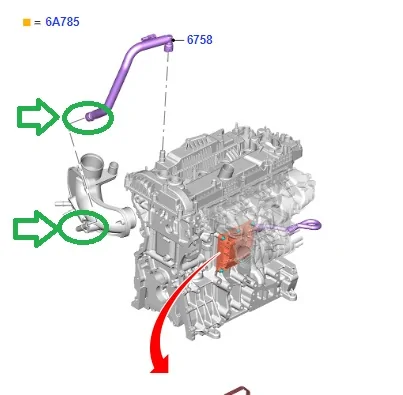
I have a question about the Quick Release fittings. On the PCV side the fittings the male end of the fitting is 1/2".

I want to fit the JLT can to the CCV side but once I had the QR fitting separated from the intake tube I noticed they were larger - 5/8" or maybe 3/4". It would be the cleanest install to remove the 1/2" fittings that came with the JLT kit with the proper size and the bang - CCV side solved.

Anyone know where I can find them?

Picture for reference: This is where I will tie-in the JLT can setup.
RangerHose.jpg


EDIT: Nevermind - a major part of finding a thing, is knowing what the thing is called. Once I discovered these were called Bundy Quick Connect lines the search got a whole bunch easier.

I'll post up once I've installed it.
 
Last edited:

Porpoise Hork

Well-Known Member
First Name
Bret
Joined
Apr 28, 2020
Threads
19
Messages
1,316
Reaction score
2,366
Location
Houston
Vehicle(s)
2022 F150 XLT Powerboost FX4 302A Oxford White
Occupation
IT
So I have been doing some reading on this engine design as well as information put out from Mishimoto. It appears that Ford has been aware of the valve deposit issue for some time and has installed components to mitigate it. In the Mishimoto's engineering articles ( Pt 1, Pt 2, and Pt 3) they did fairly extensive testing on prototype catch cans and reported that the 2.3L in our trucks has an air/oil separator integrated the PCV system. In pt3 they show the results and it appears that their catch can captured separated out what appeared to be a water/fuel mix from the PCV system with almost no oil in it.

Now it's well known that engine blow-by is significantly higher during the break-in period. It has also hotly debated for decades on the length of time needed and exact process to properly break in a new engine, but the general guidelines are the time period being somewhere between 500 and 2000 miles. Once broken in the engine blow-by does drop significantly as the rings (the primary source of blow-by gasses) seat in and a new baseline can be set for your engine's blow-by level.

The Mishimoto test results showing the capture and separation of the heavy fuel laden mix with minimal oil in it shows how efficient the factory oil separator system actually is. Ford's system appears to not only do an impressive job separating oil vapor before being returned to the intake plenum, but also how well it captures the unburned fuel that made it past the rings during the compression stroke preventing it from mixing with the oil in the crank case. This leads me to think that Ford's engineering team saw how the valve deposit problem was being resolved or largely mitigated from the Ford Performance team's oil/air separator for the 2015-2020 EcoBoost-equipped Mustang 2.3L and 2.3 HO engines. With it in place it allows fuel particles to come in contact with the valves and possibly prevent or significantly reduce the carbon buildup and excessive oil consumption. It also may by why they have not included the 2.3l in the dual port injection setup that the larger EcoBoost engines are being updated to. That would explain the implemented a very similar solution on the Ranger version of the 2.3L.

This makes me wonder if similar results are seen across the board, and adding a catch can to the PCV system, is actually preventing the system from working properly by filtering out the unburned fuel before it makes it back to the intake valves. The only way to know if this theory is correct is to run a bore scope down and inspect the valves on 2.3l engines with the factory separator installed as well as some with a catch can to see how the valves look over the life of the engine.

Anyway.. I'm not an engineer so I may be completely wrong but it was something I started to wonder as I was researching the different catch cans and found this additional information about the 2.3L in the Ranger.
 

P. A. Schilke

Well-Known Member
First Name
Phil
Joined
Apr 3, 2019
Threads
149
Messages
7,083
Reaction score
37,188
Location
GV Arizona
Vehicle(s)
2019 Ranger FX4 Lariat 4x4, 2020 Lincoln Nautilus, 2005 Alfa Motorhome
Occupation
Engineer Retired
Vehicle Showcase
1
So I have been doing some reading on this engine design as well as information put out from Mishimoto. It appears that Ford has been aware of the valve deposit issue for some time and has installed components to mitigate it. In the Mishimoto's engineering articles ( Pt 1, Pt 2, and Pt 3) they did fairly extensive testing on prototype catch cans and reported that the 2.3L in our trucks has an air/oil separator integrated the PCV system. In pt3 they show the results and it appears that their catch can captured separated out what appeared to be a water/fuel mix from the PCV system with almost no oil in it.

Now it's well known that engine blow-by is significantly higher during the break-in period. It has also hotly debated for decades on the length of time needed and exact process to properly break in a new engine, but the general guidelines are the time period being somewhere between 500 and 2000 miles. Once broken in the engine blow-by does drop significantly as the rings (the primary source of blow-by gasses) seat in and a new baseline can be set for your engine's blow-by level.

The Mishimoto test results showing the capture and separation of the heavy fuel laden mix with minimal oil in it shows how efficient the factory oil separator system actually is. Ford's system appears to not only do an impressive job separating oil vapor before being returned to the intake plenum, but also how well it captures the unburned fuel that made it past the rings during the compression stroke preventing it from mixing with the oil in the crank case. This leads me to think that Ford's engineering team saw how the valve deposit problem was being resolved or largely mitigated from the Ford Performance team's oil/air separator for the 2015-2020 EcoBoost-equipped Mustang 2.3L and 2.3 HO engines. With it in place it allows fuel particles to come in contact with the valves and possibly prevent or significantly reduce the carbon buildup and excessive oil consumption. It also may by why they have not included the 2.3l in the dual port injection setup that the larger EcoBoost engines are being updated to. That would explain the implemented a very similar solution on the Ranger version of the 2.3L.

This makes me wonder if similar results are seen across the board, and adding a catch can to the PCV system, is actually preventing the system from working properly by filtering out the unburned fuel before it makes it back to the intake valves. The only way to know if this theory is correct is to run a bore scope down and inspect the valves on 2.3l engines with the factory separator installed as well as some with a catch can to see how the valves look over the life of the engine.

Anyway.. I'm not an engineer so I may be completely wrong but it was something I started to wonder as I was researching the different catch cans and found this additional information about the 2.3L in the Ranger.
HI PH,

I are a train driver... I find your assessment above to be very interesting, well done and well stated!

Best.
Phil Schilke
Ranger Vehicle Engineering
Ford Motor Co. Retired
 

RCMUSTANG

Well-Known Member
First Name
Ray
Joined
Jan 22, 2019
Threads
22
Messages
1,867
Reaction score
2,191
Location
Los Angeles
Vehicle(s)
2017 Fusion 1995 Ranger
I regularly check my can and there's still plenty of oil. It's not an insignificant amount. I'm just over 11,000 miles.
Sponsored


Top