Sponsored

Question for the experienced towers

Dgc333

Well-Known Member
First Name
Dave
Joined
Aug 24, 2021
Threads
17
Messages
1,742
Reaction score
4,112
Location
Massachusetts
Vehicle(s)
21 Ranger Lariat
Occupation
Engineer
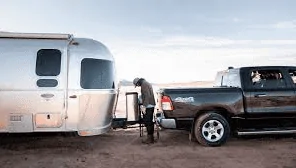
I purchased a used 17' camper this past spring (see picture). We have gone camping three times and on the way home from the last trip I got up to about 65 and the trailer started swaying. As soon as I slowed down it stopped, traffic was such that I never got above 60 again and no swaying. On the other two outings I had extended runs on the hiway where I reached 70 on occasion and traveled mostly at 65 and the trailer was rock steady.

I have a load leveling hitch which also has a friction sway bar. I am looking for advice on what might have caused this. The only thing I forgot to do was fill the tires, when I checked air pressure a couple of days before leaving one of the tires was at 48 psi while all the others were 52/53 psi. Could this have caused it?

IMG_20230508_121006702.jpg
Sponsored


Grumpaw

Well-Known Member
First Name
Steve
Joined
Jul 1, 2021
Threads
84
Messages
5,860
Reaction score
29,196
Location
Fishersville, Va.
Vehicle(s)
Previous 2021 Ranger, Now 2019 Ford Expedition
Occupation
Navy Vet., Retired Police Sgt., Grumpy Old Senior Citizen
Tire pressure on a dual axel trailer is critical...they should all be within 2-4 psi of each other. Doesn't look like they were too much different, but I would try to get them as close to each other as possible.
Without knowing how much the trailer weighs or it's hitch weight or how it's loaded, it's just going to be assumptions, but,
it looks like the trailer is riding just a bit nose high. I would suggest lowering the hitch head one hole down from where it's at now...let the front ride a bit lower to put a bit more weight on the rear of the truck.
As you got it used, I would suggest you measure the axle's to make sure their aligned properly, and even from side to side. Also, being used, check the condition of the springs...if any are shot the trailer will swing and sway all over the road. Replacing is cheap and easy to do.
Also, on a dual axle you have the suspension equalizer and the spring end hangers. Equalizer is the triangular piece supporting the springs.
In all the bushing holes and the spring end hangers, you will find nothing but plastic or nylon bushings that ware after only several thousand miles, when new. You end up with metal holes in the shackles supported by the metal bolts, which leads too the bushing holes becoming elongated. No way to fix if their bad, have to replace. But, again, not expensive to do and easy to do and upgrade to greaseable bolts and better equalizers.
Check out ETrailer's web site. They're about the best in knowledge and info on trailer's...if they don't know it, no one knows it. Lots of good info and DIY tips.
 
Last edited:

brroberts

Well-Known Member
First Name
Randy
Joined
Aug 20, 2021
Threads
10
Messages
439
Reaction score
999
Location
Overbrook, KS
Vehicle(s)
2021 Ford Ranger XLT 2WD SuperCab
Occupation
audio / semi retired
1. I , like you use a wdh with sway control, and I know it is set up properly, not just slapped on. I have an Equalizer brand with 4 point sway control.
2. I know my tongue weight, each wheel weight, and total weight. Somewhere on this forum I have posted a form to use with a scale to get all of that info. I own a personal scale for the tongue and wheels. Most do not.
3. I keep my tongue weight between 12-14 percent of my total weight.
4. I check my tires before every tow.
5. I never tow over 60mph.
6. I only use quality ST rated Goodyear Endurance trailer tires.
I have been in crosswinds that have moved the truck and trailer laterally 6’. They stayed straight as one unit, and fortunately the bridge was devoid of traffic.

Know your weights, know your hitch set up, inspect before each tow, and drive like you have a trailer behind you. It’s worked for me for longer than most folks here have probably been alive. Make sure your hitch is adjusted properly and then do a search for the form and go to a CAT scale loaded for travel.
 

Frenchy

Well-Known Member
First Name
Chris
Joined
Mar 15, 2020
Threads
164
Messages
7,539
Reaction score
10,750
Location
Elizabeth, Colorado
Vehicle(s)
2012 Nissan Frontier, 1994 F150 XL, 2022 Ford Transit
Occupation
Field Service Technician
I can't speak too much on the tires but it does make since to have them as close.to each other as possible. With all that you have I would most likely assume that for some reason the weight in the camper was a bit too far in the back instead of the front. Regardless of you have a weight distribution hitch or not I feel that can still cause a bit of problems. Other then that your guess is as good as mine.


EJH

Well-Known Member
First Name
Ed
Joined
Oct 7, 2020
Threads
17
Messages
932
Reaction score
1,832
Location
Oregon
Vehicle(s)
Subarus, 2021 Ranger
Occupation
Engineer
Grumpaw and brroberts covered most of it. I'll also add that I rarely tow my 5,000 lbs GVWR TT over 60 MPH unless road conditions are perfect. There is a big difference going up to 70 MPH. Our trucks tow well, but remember they are still mid-size trucks, weighing less and having a shorter wheelbase, than a full-size.
 

RangerTX

Well-Known Member
Joined
Jul 18, 2022
Threads
18
Messages
276
Reaction score
1,085
Location
Illinois
Vehicle(s)
2021 Ranger Lariat FX4
I purchased a used 17' camper this past spring (see picture). We have gone camping three times and on the way home from the last trip I got up to about 65 and the trailer started swaying. As soon as I slowed down it stopped, traffic was such that I never got above 60 again and no swaying. On the other two outings I had extended runs on the hiway where I reached 70 on occasion and traveled mostly at 65 and the trailer was rock steady.

I have a load leveling hitch which also has a friction sway bar. I am looking for advice on what might have caused this. The only thing I forgot to do was fill the tires, when I checked air pressure a couple of days before leaving one of the tires was at 48 psi while all the others were 52/53 psi. Could this have caused it?
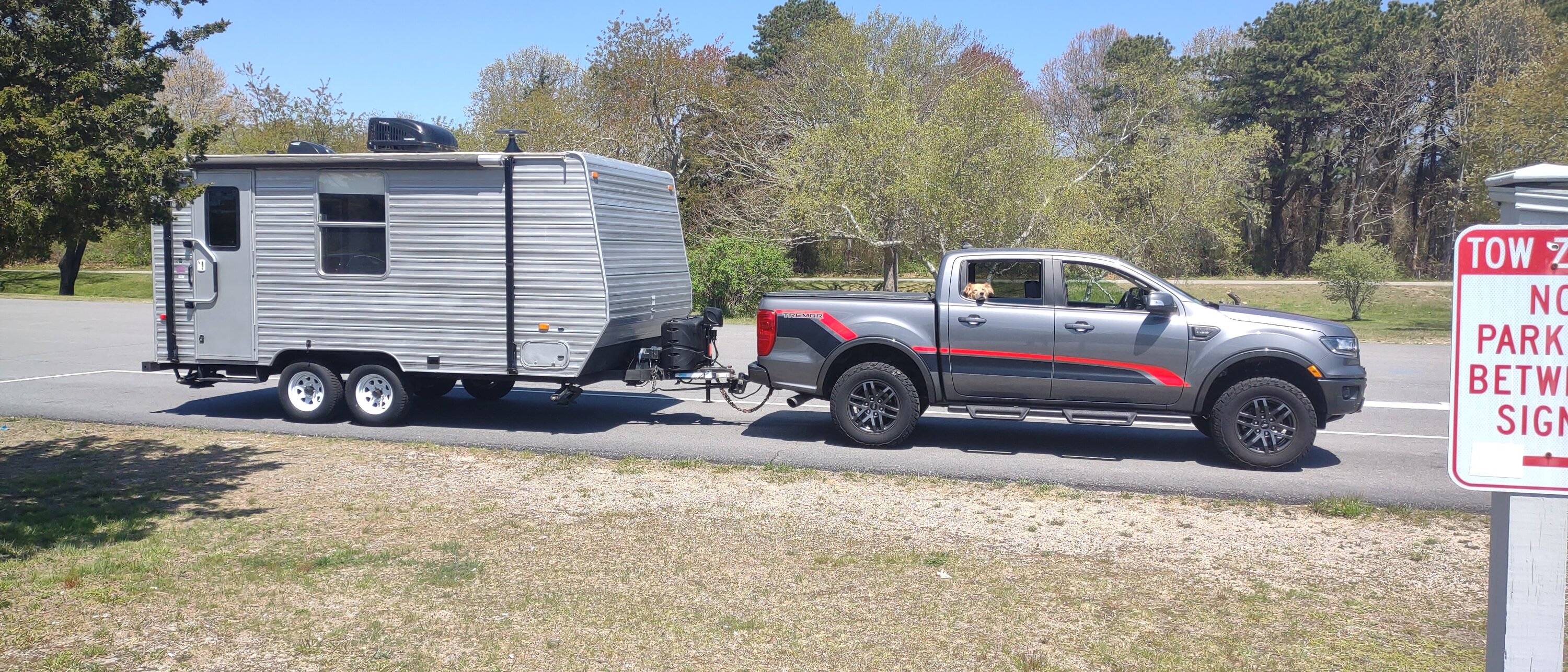
IMG_20230508_121006702.jpg
Weight distribution!!!!!! If all your weigh (inside the trailer) is at the rear... it will sway hard core. Dangerous.
 

Gdub

Well-Known Member
First Name
Gary
Joined
Nov 15, 2022
Threads
3
Messages
48
Reaction score
66
Location
California
Vehicle(s)
2002 Ranger FX4
Occupation
Aerospace Engineer
I tow my race car a lot with my 2002 Ranger. I don't have a load leveling hitch but I am only towing around 4,000 lbs too. I do have air bags on the rear suspension to keep the rear of the truck level. I found it is important to have good weight on the tong of the trailer. That number of 12-14% stated above is probably a good number. High pressure in the truck rear tires is important also as well as no rear sag or too high. The bags really help stabilize the whole thing too but should not be needed with a properly working load leveling hitch.

I can tow up to around 72 mph without fear of swaying. Above that some things can trigger it to sway. I usually keep it around 70 mph. If swaying does happen, you can use the manual trailer brake control (if you have one) to pull it out of the sway. Just make sure you don't make matters worse when you are reaching for the brake control.
 

troutspinner

Well-Known Member
Joined
Feb 14, 2021
Threads
8
Messages
191
Reaction score
555
Location
SE Pa
Vehicle(s)
Tacoma
Weight distribution!!!!!! If all your weigh (inside the trailer) is at the rear... it will sway hard core. Dangerous.
Agreed! Mechanically, I won’t repeat what others have said but I learned on my 31’ TT where we placed our belongings in the trailer affected sway. Note, I was not towing that trailer with a Ranger, I had an F150 in those days.
 

Grumpaw

Well-Known Member
First Name
Steve
Joined
Jul 1, 2021
Threads
84
Messages
5,860
Reaction score
29,196
Location
Fishersville, Va.
Vehicle(s)
Previous 2021 Ranger, Now 2019 Ford Expedition
Occupation
Navy Vet., Retired Police Sgt., Grumpy Old Senior Citizen
Much is going to depend on the hitch weight. It appears to be an older trailer, so the rig weight/hitch weight might not be redily available. Even if it were, older trailers, when sent out, usually did not take into consideration the propane tanks and battery.
The OP's rig looks to have 2 20 gallon tanks, which when filled, run about 40 lbs, and a battery at around 40 lbs. That total adds 120 lbs to the hitch weight
It is easy to move items around inside the rig and the storage compartments to gain/lose hitch weight, but the OP must first get it weighed as it sits now. From there he can go about adjusting to get it right.
As of now we're all just giving assumptions based on a picture.
 

JACKSMYDOG

Well-Known Member
First Name
Jay
Joined
May 8, 2021
Threads
36
Messages
2,012
Reaction score
6,194
Location
Ontario
Vehicle(s)
2020 Ranger Lariat FX4 Black
Occupation
Retired
As @RangerTX said, if it's not a constant sway at the same speed, it's probably a load balance issue.

Here is a video (and there are lots more using treadmills and models) demonstrating how load balance can change the characteristics of a trailer.

Skip ahead to 2:20


notsolinear

Well-Known Member
Joined
Apr 1, 2023
Threads
3
Messages
77
Reaction score
95
Location
Illinois
Vehicle(s)
2021 Ford Ranger Lariat
Admittedly I am not an experienced tower, but eyeballing the photo of that double axle 17’ trailer compared to my own 20’ single axle trailer, if it were me I’d start by getting some measurements on a CAT scale to see how close the tongue weight (as equipped/loaded) is to that target percentage.
 
OP
OP
Dgc333

Dgc333

Well-Known Member
First Name
Dave
Joined
Aug 24, 2021
Threads
17
Messages
1,742
Reaction score
4,112
Location
Massachusetts
Vehicle(s)
21 Ranger Lariat
Occupation
Engineer
Thanks everyone that responded, certainly has given me a lot to check.

A little more about my trailer. It's empty weight is 3240 lbs, the empty tongue weight is 325 lbs. I have two 20lb propane bottles and two batteries mounted up front raising the tongue weight to around 500 lbs. There is a 40 gallon fresh water tank up front and 40 gallon black and grey water tanks at the back. They were all empty when I had the sway incident. The gear in the trailer were our cloths, the food we didn't eat and bedding.

The hitch is a Reese unit that came with the trailer. I know nothing about the spring bars. The guy I bought the trailer from hooked it up on the Ranger the way he did for his Ram pickup. He declared that it was raising the back of the truck and we lengthened the chains by one link which he felt was good. The sway bar has a lever to adjust the friction level but I have not touched it. All I can say is if the length isn't right when I put it on it takes me banging or jerking on it to get the length right to fit over the balls.
 

JACKSMYDOG

Well-Known Member
First Name
Jay
Joined
May 8, 2021
Threads
36
Messages
2,012
Reaction score
6,194
Location
Ontario
Vehicle(s)
2020 Ranger Lariat FX4 Black
Occupation
Retired
For the record this is a tower.

eMfc2Rd.webp


This is a towie :)

G5TPCM2.webp
 

Grumpaw

Well-Known Member
First Name
Steve
Joined
Jul 1, 2021
Threads
84
Messages
5,860
Reaction score
29,196
Location
Fishersville, Va.
Vehicle(s)
Previous 2021 Ranger, Now 2019 Ford Expedition
Occupation
Navy Vet., Retired Police Sgt., Grumpy Old Senior Citizen
Thanks everyone that responded, certainly has given me a lot to check.

A little more about my trailer. It's empty weight is 3240 lbs, the empty tongue weight is 325 lbs. I have two 20lb propane bottles and two batteries mounted up front raising the tongue weight to around 500 lbs. There is a 40 gallon fresh water tank up front and 40 gallon black and grey water tanks at the back. They were all empty when I had the sway incident. The gear in the trailer were our cloths, the food we didn't eat and bedding.

The hitch is a Reese unit that came with the trailer. I know nothing about the spring bars. The guy I bought the trailer from hooked it up on the Ranger the way he did for his Ram pickup. He declared that it was raising the back of the truck and we lengthened the chains by one link which he felt was good. The sway bar has a lever to adjust the friction level but I have not touched it. All I can say is if the length isn't right when I put it on it takes me banging or jerking on it to get the length right to fit over the balls.
Going to add this....
Check the weight rating of the sway bars...there should be some type of sticker of markings to indicate the rating. Possible there too light for the trailer.
If the hitch set up came with the trailer.....what was the previous owner towing it with ? Asking as if he were towing with a full size or heavy duty truck, it would have towed much easier with light rating bars.
The Ranger seems to be very sensitive to the hitch....my Blue Ox set up was ordered, by me, with 750 lb bars....but found out I needed 1000 lb bars.
If the bars have a too light rating, it may cause problems, especially in any kind of weather/wind.
Sponsored


Top