Montana Ranger
Well-Known Member
- First Name
- John
- Joined
- Oct 19, 2019
- Threads
- 1
- Messages
- 297
- Reaction score
- 891
- Location
- Missoula, MT
- Vehicle(s)
- 2019 Ranger Lariat
First, I'd suggest getting your trailer weighted at a CAT or similar scale. Disconnect the truck and have the axles on the rear pad and the tongue on the forward. Roughly 10% of the total weight should be on the tongue. If it's less than that, there's your problem. (as demonstrated in the video above)
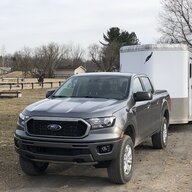
It's difficult to say definitively by your picture, but it looks like your trailer is riding a big high on the hitch, and the back axle of your Ranger are a bit more compressed than preferable. I'd suggest adjusting the hitch. You may not be getting the maximum benefit from your weight distributing hitch transferring as much weight as possible to the front axle. In the perfect scenario, both the trailer & the truck would be near-level.
Second, embrace going slower. I tow a near 7,000 lbs trailer and cruise at a maximum speed of 60. 65 and beyond just doesn't feel as stable as I'd like, and your MPG with a trailer goes to hell after 55 anyway.
It's difficult to say definitively by your picture, but it looks like your trailer is riding a big high on the hitch, and the back axle of your Ranger are a bit more compressed than preferable. I'd suggest adjusting the hitch. You may not be getting the maximum benefit from your weight distributing hitch transferring as much weight as possible to the front axle. In the perfect scenario, both the trailer & the truck would be near-level.
Second, embrace going slower. I tow a near 7,000 lbs trailer and cruise at a maximum speed of 60. 65 and beyond just doesn't feel as stable as I'd like, and your MPG with a trailer goes to hell after 55 anyway.
Sponsored