
Sponsored

Maximizing Battery Life

TXRangerTim

Well-Known Member
First Name
Tim
Joined
Feb 2, 2023
Threads
3
Messages
636
Reaction score
2,891
Location
TX
Vehicle(s)
2021 XLT Tremor
Occupation
Retired
Are these needed under normal driving and weather conditions or special circumstances?
Seems the Rangers don't fully charge the AGM batteries. There are several long threads on this. If most of your driving is shorter trips, then the battery isn't being allowed to charge up. To assist with keeping battery charged and not draining, many use a battery maintainer.
Sponsored


OrangeStreak

Well-Known Member
First Name
Paul
Joined
Aug 18, 2020
Threads
32
Messages
3,195
Reaction score
13,997
Location
New Mexico
Vehicle(s)
2020 SCab STX 4X4 Towing Pkg. BFG K02's 265/70/17
Occupation
Retired. MTS. ANG veteran. 2nd Amendment supporter.
Seems the Rangers don't fully charge the AGM batteries. There are several long threads on this. If most of your driving is shorter trips, then the battery isn't being allowed to charge up. To assist with keeping battery charged and not draining, many use a battery maintainer.
Do the maintainers help prolong battery life or just keep them charged sufficiently?
 

AzScorpion

Moderator
First Name
Dave
Joined
Jul 25, 2019
Threads
335
Messages
26,228
Reaction score
132,060
Location
Back Home In AZ!
Vehicle(s)
2023 Ford Ranger Tremor
Occupation
Retired...Full Time Slacker

TXRangerTim

Well-Known Member
First Name
Tim
Joined
Feb 2, 2023
Threads
3
Messages
636
Reaction score
2,891
Location
TX
Vehicle(s)
2021 XLT Tremor
Occupation
Retired
Do the maintainers help prolong battery life or just keep them charged sufficiently?
The answer you seek is...possibly both. The BMS doesn't allow the AGM batteries to fully charge normally. The BMS maintaining a lesser charge could be a fault in the lifespan.
 
OP
OP

TJC

Well-Known Member
First Name
Tony
Joined
Aug 28, 2020
Threads
45
Messages
3,930
Reaction score
9,848
Location
North Carolina
Vehicle(s)
93 Miata, 05 Ranger 4x4, 20 Ranger 4x4, 23 CX-5
Who makes Interstate batteries?
Interstate Battery does not manufacture any batteries. They are a US privately owned battery marketing and distribution company. They market automotive batteries manufactured by Brookfield Business Partners, Exide Technologies, and others.

Brookfield is s multinational corporate holding company with fingers in most sectors of business around the world. Not sure which wholly owned battery company they own, but it is not one of the primary players.

Interstate Battery is nothing more than a label stamped on batteries sold by BBP.


airline tech

Well-Known Member
Joined
Aug 24, 2022
Threads
28
Messages
4,448
Reaction score
8,500
Location
Midwest - KS
Vehicle(s)
2022 Ranger Lariat-Super Crew, Cactus Gray
Occupation
Aircraft Tech
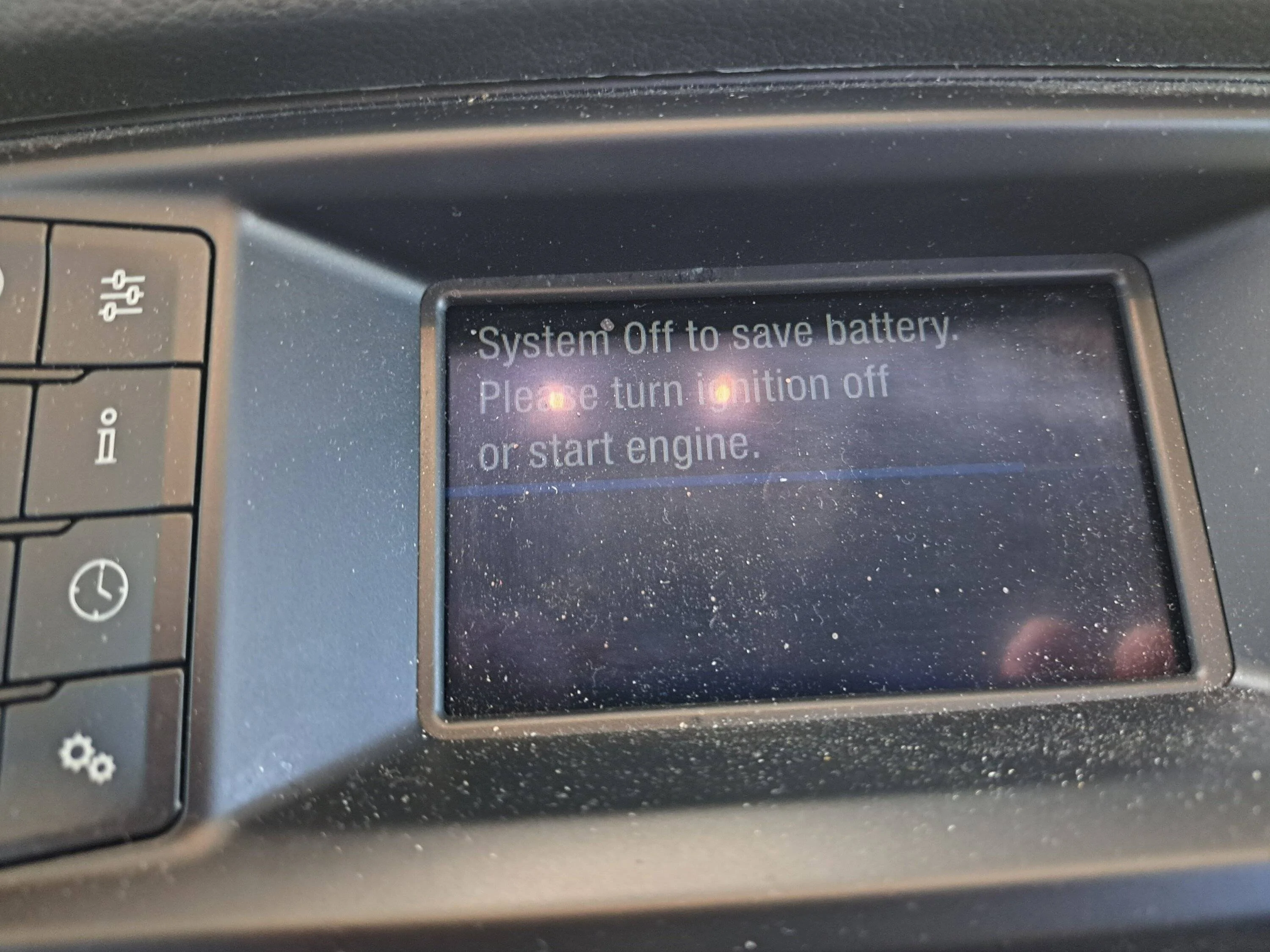
I've been getting this pop up on and off for the past two weeks. No electrical problems or issues. Battery is 2 yrs. & 8 months old and still under factory warranty. Suspect that battery is near the end of life. Will make an appointment with the Dealer tomorrow to have it checked.

Pop up.jpg
If my testing is correct on this message, but not confirmed as of yet - Battery Voltage is dropping below 11.5 volts and triggering the message. While Driving or Initial Start (1st) start of day after sitting overnight - Its part of Load Shedding
 

got3fords

Well-Known Member
First Name
James
Joined
Apr 12, 2021
Threads
131
Messages
5,319
Reaction score
13,805
Location
22973
Vehicle(s)
2026 Marsh Gray Ranger Raptor, 1995 Harley XLH1200
Occupation
Mom Joke Professional
OP, what type of battery tester do you have?
 
OP
OP

TJC

Well-Known Member
First Name
Tony
Joined
Aug 28, 2020
Threads
45
Messages
3,930
Reaction score
9,848
Location
North Carolina
Vehicle(s)
93 Miata, 05 Ranger 4x4, 20 Ranger 4x4, 23 CX-5
Do the maintainers help prolong battery life or just keep them charged sufficiently?
You must control sulfation of the battery to have long battery life. When lead / acid battery voltages drop below about 12.65v, sulfation begins to occur. The lower the voltage, the more rapid the sulfation progresses. Leave it accumulating long enough and resistance levels rise and eventually kill your battery.

Auto companies mastered this issue years ago by fully charging the battery to optimal levels each time you started the engine. Charging systems were optimized for battery life.

That has changed of late, as ever increasing CAFE standards require automakers to stress miles per gallon and EPA arbitrary pollution standards (is C02 really an evil pollutant?) over battery life.

To achieve these guidelines Ford decided to minimize the engine load of the alternator. The BMS charges the battery to 70%-75% leaving the last 25% of charge space for "regenerative" charging. When you come off throttle, your Ford vehicle will automatically engage the alternator to supply a quick burst of higher than normal voltages to the battery. When you raise the throttle, the BMS lowers the charge voltage. The BMS will allow the battery to discharge to the 75% threshold in an effort the leave charging space for the regeneration process. Over charging a battery is as bad as undercharging it.

The bottom line here is that Ford is leaving batteries very very close to the low trigger voltages that allow sulfation levels to rise. (sulfur from the sulfuric acid crystalizes on the lead plates). You let your truck sit for even short times and the dark power draw of the truck will result in voltages dropping too low for the health of the battery, shortening its life.

There are two approaches that do essentially the same thing, keep your battery charged above 12.65v.
  1. Keep your truck on a maintenance charger when not in use (but as soon as you start your truck the technology will see the fully charged battery and immediately begin bleeding off charge until the battery is at the 70%-75% charged threshold.)

  2. Turn off BMS technology. This theoretically reverts to using the old school charging methods.

    Additional options that help
    1. Minimize dark current (don't leave headlights in "auto mode", etc.
    2. Add an onboard desulfator (it runs when the alternator is charging the battery) that breaks down the sulfur crystals, lowering internal battery resistance, and extending battery life.
Many go with option 1, and it will work. You simply must remember to plug in your truck when you park it.

I chose option 2, and the Additional options. I have been using desulfators for years to double/triple the life of my batteries... I don't use headlight auto mode, FordPass, remote start, or WiFi Hot spot... I prefer this tradeoff which results in my batteries lasting 7-9 years, instead of 1.5 years to 3.5 years.

Doing nothing is your worse option - it's gonna cost you in the long run.
 

OrangeStreak

Well-Known Member
First Name
Paul
Joined
Aug 18, 2020
Threads
32
Messages
3,195
Reaction score
13,997
Location
New Mexico
Vehicle(s)
2020 SCab STX 4X4 Towing Pkg. BFG K02's 265/70/17
Occupation
Retired. MTS. ANG veteran. 2nd Amendment supporter.
You must control sulfation of the battery to have long battery life. When lead / acid battery voltages drop below about 12.65v, sulfation begins to occur. The lower the voltage, the more rapid the sulfation progresses. Leave it accumulating long enough and resistance levels rise and eventually kill your battery.

Auto companies mastered this issue years ago by fully charging the battery to optimal levels each time you started the engine. Charging systems were optimized for battery life.

That has changed of late, as ever increasing CAFE standards require automakers to stress miles per gallon and EPA arbitrary pollution standards (is C02 really an evil pollutant?) over battery life.

To achieve these guidelines Ford decided to minimize the engine load of the alternator. The BMS charges the battery to 70%-75% leaving the last 25% of charge space for "regenerative" charging. When you come off throttle, your Ford vehicle will automatically engage the alternator to supply a quick burst of higher than normal voltages to the battery. When you raise the throttle, the BMS lowers the charge voltage. The BMS will allow the battery to discharge to the 75% threshold in an effort the leave charging space for the regeneration process. Over charging a battery is as bad as undercharging it.

The bottom line here is that Ford is leaving batteries very very close to the low trigger voltages that allow sulfation levels to rise. (sulfur from the sulfuric acid crystalizes on the lead plates). You let your truck sit for even short times and the dark power draw of the truck will result in voltages dropping too low for the health of the battery, shortening its life.

There are two approaches that do essentially the same thing, keep your battery charged above 12.65v.
  1. Keep your truck on a maintenance charger when not in use (but as soon as you start your truck the technology will see the fully charged battery and immediately begin bleeding off charge until the battery is at the 70%-75% charged threshold.)

  2. Turn off BMS technology. This theoretically reverts to using the old school charging methods.

    Additional options that help
    1. Minimize dark current (don't leave headlights in "auto mode", etc.
    2. Add an onboard desulfator (it runs when the alternator is charging the battery) that breaks down the sulfur crystals, lowering internal battery resistance, and extending battery life.
Many go with option 1, and it will work. You simply must remember to plug in your truck when you park it.

I chose option 2, and the Additional options. I have been using desulfators for years to double/triple the life of my batteries... I don't use headlight auto mode, FordPass, remote start, or WiFi Hot spot... I prefer this tradeoff which results in my batteries lasting 7-9 years, instead of 1.5 years to 3.5 years.

Doing nothing is your worse option - it's gonna cost you in the long run.
You must control sulfation of the battery to have long battery life. When lead / acid battery voltages drop below about 12.65v, sulfation begins to occur. The lower the voltage, the more rapid the sulfation progresses. Leave it accumulating long enough and resistance levels rise and eventually kill your battery.

Auto companies mastered this issue years ago by fully charging the battery to optimal levels each time you started the engine. Charging systems were optimized for battery life.

That has changed of late, as ever increasing CAFE standards require automakers to stress miles per gallon and EPA arbitrary pollution standards (is C02 really an evil pollutant?) over battery life.

To achieve these guidelines Ford decided to minimize the engine load of the alternator. The BMS charges the battery to 70%-75% leaving the last 25% of charge space for "regenerative" charging. When you come off throttle, your Ford vehicle will automatically engage the alternator to supply a quick burst of higher than normal voltages to the battery. When you raise the throttle, the BMS lowers the charge voltage. The BMS will allow the battery to discharge to the 75% threshold in an effort the leave charging space for the regeneration process. Over charging a battery is as bad as undercharging it.

The bottom line here is that Ford is leaving batteries very very close to the low trigger voltages that allow sulfation levels to rise. (sulfur from the sulfuric acid crystalizes on the lead plates). You let your truck sit for even short times and the dark power draw of the truck will result in voltages dropping too low for the health of the battery, shortening its life.

There are two approaches that do essentially the same thing, keep your battery charged above 12.65v.
  1. Keep your truck on a maintenance charger when not in use (but as soon as you start your truck the technology will see the fully charged battery and immediately begin bleeding off charge until the battery is at the 70%-75% charged threshold.)

  2. Turn off BMS technology. This theoretically reverts to using the old school charging methods.

    Additional options that help
    1. Minimize dark current (don't leave headlights in "auto mode", etc.
    2. Add an onboard desulfator (it runs when the alternator is charging the battery) that breaks down the sulfur crystals, lowering internal battery resistance, and extending battery life.
Many go with option 1, and it will work. You simply must remember to plug in your truck when you park it.

I chose option 2, and the Additional options. I have been using desulfators for years to double/triple the life of my batteries... I don't use headlight auto mode, FordPass, remote start, or WiFi Hot spot... I prefer this tradeoff which results in my batteries lasting 7-9 years, instead of 1.5 years to 3.5 years.

Doing nothing is your worse option - it's gonna cost you in the long run.
Tony,
Great information...clear and factual! :thumbsup:
 

Ranger Roger

Well-Known Member
First Name
Roger
Joined
Feb 28, 2020
Threads
2
Messages
150
Reaction score
177
Location
Dagsboro, DE
Vehicle(s)
2015 Honda Fit, 2004 Honda ST1300abs, 2018 Honda HR-V
Interstate Battery does not manufacture any batteries. They are a US privately owned battery marketing and distribution company. They market automotive batteries manufactured by Brookfield Business Partners, Exide Technologies, and others.

Brookfield is s multinational corporate holding company with fingers in most sectors of business around the world. Not sure which wholly owned battery company they own, but it is not one of the primary players.

Interstate Battery is nothing more than a label stamped on batteries sold by BBP.
i heard that Interstate provides the Best Batteries. Not true?
 

got3fords

Well-Known Member
First Name
James
Joined
Apr 12, 2021
Threads
131
Messages
5,319
Reaction score
13,805
Location
22973
Vehicle(s)
2026 Marsh Gray Ranger Raptor, 1995 Harley XLH1200
Occupation
Mom Joke Professional
  1. Keep your truck on a maintenance charger when not in use (but as soon as you start your truck the technology will see the fully charged battery and immediately begin bleeding off charge until the battery is at the 70%-75% charged threshold.)

  2. Turn off BMS technology. This theoretically reverts to using the old school charging methods.

    Additional options that help
    1. Minimize dark current (don't leave headlights in "auto mode", etc.
What does turning off auto headlights accomplish?
 
OP
OP

TJC

Well-Known Member
First Name
Tony
Joined
Aug 28, 2020
Threads
45
Messages
3,930
Reaction score
9,848
Location
North Carolina
Vehicle(s)
93 Miata, 05 Ranger 4x4, 20 Ranger 4x4, 23 CX-5
What does turning off auto headlights accomplish?
The goal is to minimize battery drain when your truck has been turned off.

Having headlights on after shutdown is a very large power drain. It may only be for a short duration (10-45) seconds, but it quickly adds up over time.

Draining a battery that is already down 25%-30% from an optimal charge only puts undo stress on the battery, and shortens its life.

When I drive at night I use the auto setting on the light switch, but I do not leave it in the "Auto On" position (and I turned off the headlight timer in the settings menu) after the truck is turned off.

Battery SOC drops more than 20% a month in Customer Mode (Ford GSB - Battery Charging) You also want to keep charging at or below 14.6v for the AGM battery
"For AGM Batteries charging at no more than 14.6 volts"

Per the User Manual:
AUTOLAMPS
"When the lighting control is in the autolamps position, the headlamps turn​
on in low light situations, or when the wipers turn on.​
The headlamps remain on for a period of time after you switch the ignition off. Use
the information display controls to adjust the period of time that the headlamps
remain on."
 
Last edited:

got3fords

Well-Known Member
First Name
James
Joined
Apr 12, 2021
Threads
131
Messages
5,319
Reaction score
13,805
Location
22973
Vehicle(s)
2026 Marsh Gray Ranger Raptor, 1995 Harley XLH1200
Occupation
Mom Joke Professional
The goal is to minimize battery drain when your truck has been turned off.

Having headlights on after shutdown is a very large power drain. It may only be for a short duration (10-45) seconds, but it quickly adds up over time.

Draining a battery that is already down 25%-30% from an optimal charge only puts undo stress on the battery, and shortens its life.

When I drive at night I use the auto setting on the light switch, but I do not leave it in the "Auto On" position (and I turned off the headlight timer in the settings menu) after the truck is turned off.

Per the User Manual:
AUTOLAMPS
"When the lighting control is in the autolamps position, the headlamps turn​
on in low light situations, or when the wipers turn on.​
The headlamps remain on for a period of time after you switch the ignition off. Use
the information display controls to adjust the period of time that the headlamps
remain on."
Oh, I see. That makes sense. I wonder how far you can turn down the time until shut off.
Never mind, I see you can turn it off in your post.
 

got3fords

Well-Known Member
First Name
James
Joined
Apr 12, 2021
Threads
131
Messages
5,319
Reaction score
13,805
Location
22973
Vehicle(s)
2026 Marsh Gray Ranger Raptor, 1995 Harley XLH1200
Occupation
Mom Joke Professional
The goal is to minimize battery drain when your truck has been turned off.
What kind of battery tester do you have?
 
OP
OP

TJC

Well-Known Member
First Name
Tony
Joined
Aug 28, 2020
Threads
45
Messages
3,930
Reaction score
9,848
Location
North Carolina
Vehicle(s)
93 Miata, 05 Ranger 4x4, 20 Ranger 4x4, 23 CX-5
I have several battery testing tools.

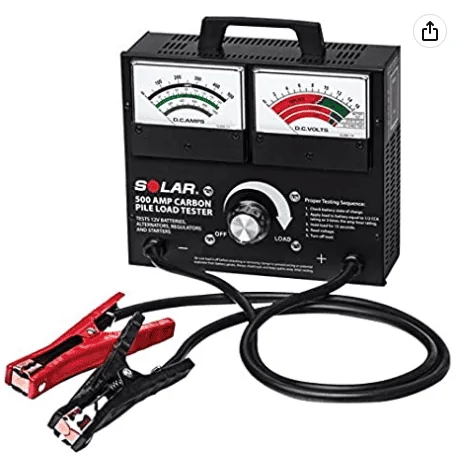
I have a carbon pile load tester. Read up carefully on usage. This will drain your battery quickly!
Load Tester.png


I have a battery tester that reports voltage, CCA, and internal resistance. My battery tester is at least 12 years old and is no longer on the market. But there are many to choose from that are available at Amazon. I stick to the basics. Less is more. The three readings above and optionally a resistive load test are enough to evaluate an automotive battery.

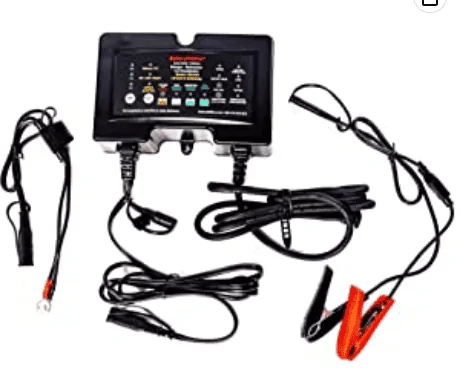
I have a half dozen or so different models of electrical meters that test resistance, AC/DC current and voltage, and many other functions. I have a dozen or so battery chargers - 75% are BatteryMinder Maintainers with built in desulfators, (one unit is homebuilt from the 1930's!) (some are testers as well), the best of which (my opinion) are the BatteryMinder series. They bring back batteries when others don't, and their desulfation features are the best that I have found. Other more expensive models that I own actually have not performed as well for me. I have this model

BM 128cec2 .png


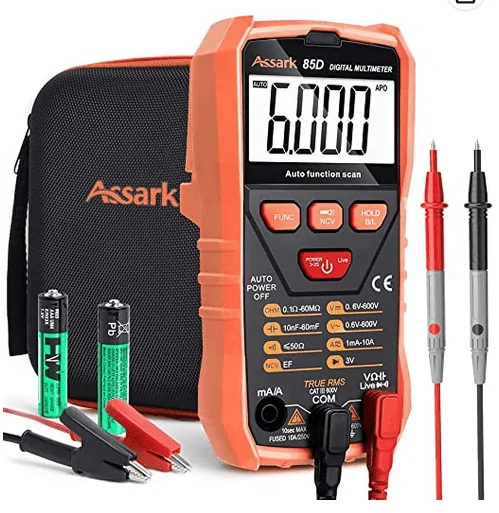
For folks just looking for a basic meter to occasionally check voltage, I'd recommend this VOM from Amazon. It has a nifty auto sense feature that will keep you from destroying it if the settings are incorrect. One is in a kitchen drawer right now for the wife! Assark auto sensing multimeter ($18 Amazon)

azark-85d-meter-png.png


- T
Sponsored

 
Last edited:


Top