Sponsored

Effects of Spacers?

kieefer

Well-Known Member
First Name
keith
Joined
Dec 26, 2017
Threads
25
Messages
1,059
Reaction score
1,960
Location
Tennessee
Vehicle(s)
2025 F150 King Ranch - 97 BMW M3
Occupation
Retired
I ran spacers on an old track car many years ago. They froze to the hub and every nut stripped instead of loosening. Had to take off the hubs with the spacers on and get new hubs.

Edit: If using spacers make sure they are all steel (nuts and bolts too) to match what the hub is. Mine were aluminum spacers on steel hubs so most likely the gallvanic corrosion seized them together.
Concerned about corrosion I put a thin layer of anti-seize on the back side of my steel 1ā€ adapters as a precaution.
Sponsored


P. A. Schilke

Well-Known Member
First Name
Phil
Joined
Apr 3, 2019
Threads
149
Messages
7,083
Reaction score
37,187
Location
GV Arizona
Vehicle(s)
2019 Ranger FX4 Lariat 4x4, 2020 Lincoln Nautilus, 2005 Alfa Motorhome
Occupation
Engineer Retired
Vehicle Showcase
1

apotocki

Well-Known Member
First Name
Alan
Joined
Dec 10, 2019
Threads
19
Messages
271
Reaction score
657
Location
Rochester Hills, Michigan
Vehicle(s)
2019 Ranger XLT
Occupation
Network Force Analyst
Vehicle Showcase
1
Oh no…..another wheel spacer discussion.
Well, there are always those that think they are ā€˜bad’ and ā€˜dangerous’. Not going to say that they are totally ā€˜wrong’ but the instances of wheel spacers causing wheels to come off are very rare and typically due to an incorrect install or really cheap spacers.
As to suspension issues, well….yea just like a level or other suspension mod’s, wheel spacers do alter the factory suspension geometry. This can (and probably) will cause premature wear and issues in time. The question though is in how much time…..probably quite a bit of time. One has to believe that these parts were engineered to withstand more than just your normal driving scenarios and if I run a level and spacers my ball joints, bearings, etc might wear at 75k vs 100k…I’m ok with that.
Everyone has an opinion - mine is that I’m perfectly comfortable with my spacers (FactionFab 1 inch). They have been on for over 1.5 years with over 10k miles with no issues (and I have checked the torque no fewer than 4 times now and never have any of the lugs been different than day 1).
Just make sure you get a quality hub centric spacer and follow the install instructions….BORA (interesting that this stands for Bulletproof Off Road Adapter) or FactionFab are great spacers.

Here is information that is on the BORA site:
Since 1996, Motorsport Tech spacers and adapters have been designed, built, tested, and proven in the toughest conditions on Earth - We've outfitted vehicles in the US Military for combat duty, desert-racing pre-runners, Arctic rescue vehicles, major auto companies including Ford, Chrysler, and Goodyear, and have built parts for thousands of hardcore off-road enthusiasts around the world - including our own vehicles we drive daily.
 

Mustang2Ranger

Well-Known Member
First Name
Garrett
Joined
Mar 20, 2019
Threads
7
Messages
691
Reaction score
1,135
Location
Southern California
Vehicle(s)
19 Ranger Lariat,06 Escape Hybrid,01 Sienna,06 TSX
I've been running the Faction Fab 1" aluminum spacers for about 20k miles

No issues so far

I tow, off road, put weight in the bed
 

kieefer

Well-Known Member
First Name
keith
Joined
Dec 26, 2017
Threads
25
Messages
1,059
Reaction score
1,960
Location
Tennessee
Vehicle(s)
2025 F150 King Ranch - 97 BMW M3
Occupation
Retired
Rack this thread up there with the catch-can threads but if you have a tailgate damper you should get a pass.?


slowmachine

Well-Known Member
First Name
Mike
Joined
Jul 18, 2020
Threads
39
Messages
929
Reaction score
1,978
Location
New Hampshire
Vehicle(s)
2015 Jeep Wrangler, waiting for a Ranger PHEV
As to suspension issues, well….yea just like a level or other suspension mod’s, wheel spacers do alter the factory suspension geometry. This can (and probably) will cause premature wear and issues in time. The question though is in how much time…..probably quite a bit of time.
You can speculate ’til the cows come home about how long it will take for the effects of ā€œwear issuesā€ to require premature replacement of various suspension and steering components. That’s only part of the picture. The safety factor of loss of clamping force has already been discussed, so I won’t repeat it.

My concern is handling characteristics. Every manufacturer spends a large amount of time and money to confirm that a small selection of wheel, tires, springs, and shocks, provide predictable and safe handling for the vehicle. There is no end to complaints about OE tire selections, and I think that nearly no owners replace the original tires with another set of the same when the time comes. That is to be expected, especially as the vehicle ages and tire manufacturers refresh their product lines, often discontinuing production of the OE tire.

The rest of the steering and suspension components, though, can usually be replaced with OE parts as they wear out in service. Maintaining the OE configuration sustains the tested handling characteristics to the greatest extent possible, ensuring that all of the safety testing is still valid for future operation. Every deviation from OE takes the vehicle farther from the tested and validated configuration, and introduces unknown variables and points of failure.

The effects of these untested and unvalidated changes do not creep-in over many miles of wear. They are immediate. You can go on forever with the ā€œhasn’t caused problems yetā€ argument, but that means nothing if the changes haven’t been tested at the vehicle’s performance limits. As with so many things, the correct answer for casual use is found by testing at the extremes. No amount of daily driving, light towing, moderate climate driving, or looking cool/sporty/aggressive in photos is ever going to find that limit. It’s the true emergencies, which we hope to never encounter, that are most likely to demonstrate the undesirable effects of altering the factory steering/braking/suspension.

An aside, which is somewhat philosophically related: In a discussion related to iPhone owners modifying the basic operating system of their phones (jailbreaking) Apple argued that the owners of those devices no longer had iPhones. Their position was that the iPhone was a combination of hardware and software, not just an electronic device, and that Apple would not be responsible for any failures of the hardware or software once it had been modified from the OE configuration.

The owner assumes all risk from that point forward, and the unforeseen consequences of failure can be catastrophic in breadth and severity. What can you afford to lose?
 
Last edited:

landiscarrier

Well-Known Member
First Name
Landis
Joined
Jun 2, 2020
Threads
19
Messages
965
Reaction score
2,509
Location
Pocono Mtns Pa
Vehicle(s)
2025 Ranger Raptor
Occupation
Sales
I will add that, probably for the reasons Phil mentioned, check your state laws as wheel spacers are not legal in every state. They are not legal in PA where I live and your vehicle will not pass state inspection with them.
Legal in PA but only 1/4".....which is kinda' pointless.
 

Dr3wDrop

Well-Known Member
First Name
Andrew
Joined
Dec 14, 2021
Threads
38
Messages
1,242
Reaction score
2,292
Location
OHIO
Vehicle(s)
2021 Lariat Tremor
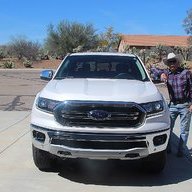
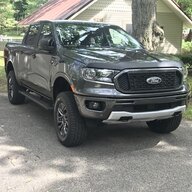
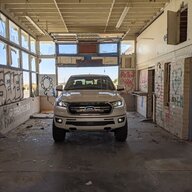
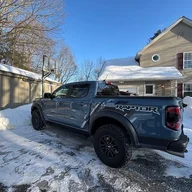
I have a '21 Tremor and put 1" Factionfab wheel spacers. The Tremor has 265/70/17 Grabber ATx tires and the Ranger Raptor wheels.

Zero issues here otherwise and wish I got them sooner.
Pics?
 

gwhalin

Well-Known Member
First Name
Greg
Joined
Aug 7, 2021
Threads
18
Messages
480
Reaction score
1,008
Location
New York
Vehicle(s)
2021 Ford Ranger Lariat Tremor
Occupation
Retired
You can speculate ’til the cows come home about how long it will take for the effects of ā€œwear issuesā€ to require premature replacement of various suspension and steering components. That’s only part of the picture. The safety factor of loss of clamping force has already been discussed, so I won’t repeat it.

My concern is handling characteristics. Every manufacturer spends a large amount of time and money to confirm that a small selection of wheel, tires, springs, and shocks, provide predictable and safe handling for the vehicle. There is no end to complaints about OE tire selections, and I think that nearly no owners replace the original tires with another set of the same when the time comes. That is to be expected, especially as the vehicle ages and tire manufacturers refresh their product lines, often discontinuing production of the OE tire.

The rest of the steering and suspension components, though, can usually be replaced with OE parts as they wear out in service. Maintaining the OE configuration sustains the tested handling characteristics to the greatest extent possible, ensuring that all of the safety testing is still valid for future operation. Every deviation from OE takes the vehicle farther from the tested and validated configuration, and introduces unknown variables and points of failure.

The effects of these untested and unvalidated changes do not creep-in over many miles of wear. They are immediate. You can go on forever with the ā€œhasn’t caused problems yetā€ argument, but that means nothing if the changes haven’t been tested at the vehicle’s performance limits. As with so many things, the correct answer for casual use is found by testing at the extremes. No amount of daily driving, light towing, moderate climate driving, or looking cool/sporty/aggressive in photos is ever going to find that limit. It’s the true emergencies, which we hope to never encounter, that are most likely to demonstrate the undesirable effects of altering the factory steering/braking/suspension.

An aside, which is somewhat philosophically related: In a discussion related to iPhone owners modifying the basic operating system of their phones (jailbreaking) Apple argued that the owners of those devices no longer had iPhones. Their position was that the iPhone was a combination of hardware and software, not just an electronic device, and that Apple would not be responsible for any failures of the hardware or software once it had been modified from the OE configuration.

The owner assumes all risk from that point forward, and the unforeseen consequences of failure can be catastrophic in breadth and severity. What can you afford to lose?
So long winded way of saying don’t modify your truck? Isn’t the point of this forum peer pressure to convince people to spend money modifying their trucks? Betting the most common mod here is suspension changes (including wheels and tires). I mean aside from the tailgate damper of course.
 

Sardog

Well-Known Member
First Name
Jason
Joined
Oct 11, 2020
Threads
8
Messages
75
Reaction score
132
Location
Chula Vista, Ca
Vehicle(s)
2020 Ranger Lariat FX4
Occupation
USN Aircrew
I have the Factionfab 1.5 in spacers with everything else being factory. Had no issues with rub and to me it does feel like the truck is more stable with the wider stance. For the install I did use some anti seize to keep it from rusting to my rotors and I ensure that my torque is to spec whenever the tires are off. Have had no issues even when I am not being nice to my suspension.
 

apotocki

Well-Known Member
First Name
Alan
Joined
Dec 10, 2019
Threads
19
Messages
271
Reaction score
657
Location
Rochester Hills, Michigan
Vehicle(s)
2019 Ranger XLT
Occupation
Network Force Analyst
Vehicle Showcase
1
I thi
You can speculate ’til the cows come home about how long it will take for the effects of ā€œwear issuesā€ to require premature replacement of various suspension and steering components. That’s only part of the picture. The safety factor of loss of clamping force has already been discussed, so I won’t repeat it.

My concern is handling characteristics. Every manufacturer spends a large amount of time and money to confirm that a small selection of wheel, tires, springs, and shocks, provide predictable and safe handling for the vehicle. There is no end to complaints about OE tire selections, and I think that nearly no owners replace the original tires with another set of the same when the time comes. That is to be expected, especially as the vehicle ages and tire manufacturers refresh their product lines, often discontinuing production of the OE tire.

The rest of the steering and suspension components, though, can usually be replaced with OE parts as they wear out in service. Maintaining the OE configuration sustains the tested handling characteristics to the greatest extent possible, ensuring that all of the safety testing is still valid for future operation. Every deviation from OE takes the vehicle farther from the tested and validated configuration, and introduces unknown variables and points of failure.

The effects of these untested and unvalidated changes do not creep-in over many miles of wear. They are immediate. You can go on forever with the ā€œhasn’t caused problems yetā€ argument, but that means nothing if the changes haven’t been tested at the vehicle’s performance limits. As with so many things, the correct answer for casual use is found by testing at the extremes. No amount of daily driving, light towing, moderate climate driving, or looking cool/sporty/aggressive in photos is ever going to find that limit. It’s the true emergencies, which we hope to never encounter, that are most likely to demonstrate the undesirable effects of altering the factory steering/braking/suspension.

An aside, which is somewhat philosophically related: In a discussion related to iPhone owners modifying the basic operating system of their phones (jailbreaking) Apple argued that the owners of those devices no longer had iPhones. Their position was that the iPhone was a combination of hardware and software, not just an electronic device, and that Apple would not be responsible for any failures of the hardware or software once it had been modified from the OE configuration.

The owner assumes all risk from that point forward, and the unforeseen consequences of failure can be catastrophic in breadth and severity. What can you afford to lose?
I think with all that said, the take away is that there are ā€˜many’ mod’s that are done by ā€˜many’ folks that fall under this category (not just wheel spacers). Every person needs to assess the risk/reward and make they’re own decision. The changes to vehicles from OE are commonplace and do have impacts (as you point out).
I respect all opinions expressed on this forum on many topics (well, maybe except when it comes to dampers….) and over the past couple years have learned so much.
One thing I have learned is that there are some things (like religion, politics, dampers, and wheel spacers) that have a pretty big divide in opinions.
 

slowmachine

Well-Known Member
First Name
Mike
Joined
Jul 18, 2020
Threads
39
Messages
929
Reaction score
1,978
Location
New Hampshire
Vehicle(s)
2015 Jeep Wrangler, waiting for a Ranger PHEV
So long winded way of saying don’t modify your truck? Isn’t the point of this forum peer pressure to convince people to spend money modifying their trucks? Betting the most common mod here is suspension changes (including wheels and tires). I mean aside from the tailgate damper of course.
No, no, maybe, I recently installed a damper so I’ll avoid falling into that pit.

I’m not totally against mods, but I would buy a Tremor before trying to build something similar from parts. At some point, an F150 Raptor would be a better choice than a highly-modified Ranger. That’s shopping with my checkbook. I’ve been on off-road trips with people who trailered their trail rigs behind a bone-stock pickup. At some point, that becomes the best option.

I joined this forum to learn, to share my knowledge and opinion, and socialize with a group of people with a common interest. Marketing is no part of it, for me. Feeling peer pressure to spend thousands on dubious ā€œupgradesā€ to your Ranger? I don’t. Maybe it’s an age thing, or maybe I just know what I want.

I come from an extremely unforgiving model of risk management. One motto that we commonly use is, ā€œInitial success, or total failure.ā€ At the extreme limits, your first failure is your last. None of that eliminates innovation or improvement, but it does help to define methods for innovating and improving. Causing injury or death to others in the process is the one unforgivable sin.
 
OP
OP

Cclittle72

Well-Known Member
First Name
Chris
Joined
Nov 18, 2021
Threads
14
Messages
66
Reaction score
97
Location
Michigan
Vehicle(s)
2022 Lariat Tremor
Many thanks to those of you who kept your replies to addressing what was asked. Good information. I will plan to check the torque now, which I hadn't known about before.
I have the Bora 1.25" ready to install when my Ranger arrives.
 

txquailguy

Well-Known Member
First Name
Mark
Joined
Aug 14, 2020
Threads
20
Messages
892
Reaction score
2,241
Location
Colorado
Vehicle(s)
2019 Ford Ranger FX4 Lariat - 2020 Hyundai Kona Ultimate
Occupation
Biologist
Vehicle Showcase
1
I've had the FactionFab 1.5" spacers on my 2019 Ranger for about 40K now.....absolutely no problems. I too have them checked for proper torque (100 ft/lbs) with each tire rotation. They have not caused any excessive wear on the tires. I recently put new wheels on my Ranger with a 30mm offset. I have the stock tire size 265/60 18 and by pushing them out that far (which looks awesome to me) they do rub a bit on the drivers side wheel well, at the crash bar, only on turning the wheel right while backing. So weird but I get the physics of it all. I plan on installing offset crash bars, just haven't got around to it yet......;)

BTW....I never had a rub with the 1.5" spacers till I installed the new wheels.....so you would be good with stock tires and pushing them out 1.5".

Also....with wheel spacers....quality matters, quality matters, quality matters......get it?
Wheel off light = no bueno


Top