OP
OP
Colo_Ranger
Well-Known Member
- Thread starter
- #16
How are you guys monitoring transmission temps?
I have an AeroGauge that is connected through OBDII.
Sponsored

How are you guys monitoring transmission temps?

FWIW. My 2022 with the updated new transmission in 07/24 and around 8000 miles does not have the cold weather shift issues that the original transmission had. Multiple below zero F drives.We just got through a very cold snap. -15F. I also experienced a very hard 2-3 shift. The only shift issue in six years. For the rest of the cold snap I crept up on the acceleration until I got a good 2-3 shift, then all good after.
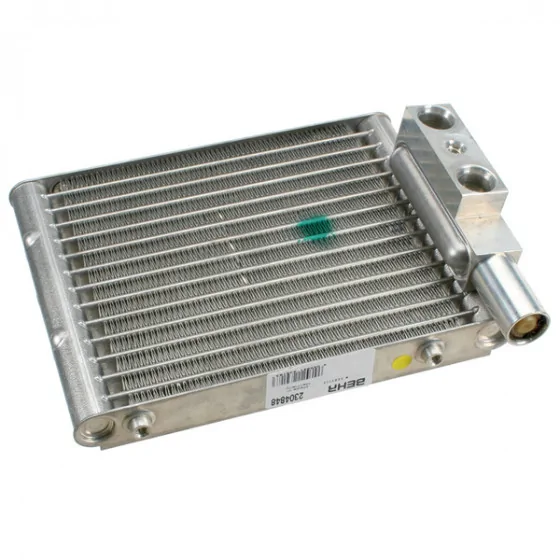
There is fluid temp control internal to the transmission as well (in the valve body) . The coolant thermostat that allows coolant to flow to the heat exchanger only opens when the coolant reaches engine operating temps (195F - 200F). The transmission reaches the 195F-215F all by itself. The heat exchanger/thermostat keeps it from dropping below 195F - 200F. It does try to cool the transmission but only to engine coolant temps.@TJC not sure I under stand the gain here. Normal operating temp for the Ranger is 190° F to 230° F. Using the heat exchanger under the right conditions will be a gain but often a push... the engine coolant will be hotter that the trans temp, rising rather than lowering it.
Two on my other cars use that same exchanger with coolant/engine oil as the two exchanging heat. The one car group is a fan of removing it altogether and there is a block off kit to replace it. (and this car is a 6-speed manual)
I like your second approach more... but now the issue is does the rans get hot enough?? Will there be a thermostat in the circuit to regulate the temp? The other question: I don't have any idea of what the line pressures are in those trans lines to the radiator, will you need a "special" (ie: purpose built) type of radiator to handle it??
On my other car that is an automatic, I am considering using a Audi trans cooler with built in thermostat... line pressure on it are typically in the 30 psi, up to 60 psi.



The transmission heat exchanger does nothing until engine coolant temps hit 195F. It then opens allowing coolant to flow through the exchanger. Transmission fluid flows constantly through the exchanger, but the exchanger does nothing until the coolant begans to flow...keeping the transmission fluid at ~200F.I think that after start up and as while not under a load the heat exchanger may be used to help bring the trans temps up to targets using the engine coolant temp. I would not be surprised to see error codes if the truck sees engine temps at 190, trans temps at 110, and it has the valve set to max heat exchange but not seeing the modeled (expected) increases in trans fluid temps. Basically how disgruntled will the PCM get when the trans temps don't reach it's programmed targets? I think a modified first option is more ideal. That being maybe a lower temp coolant thermostat (or programmed target if electronic) as long as the PCM is not to upset with lower engine coolant temps, along with a aux coolant radiator between the valve and the heat exchanger coolant inlet. Looking at the transmission cooler codes there appear to only be 4, 2 for over temp and 2 for the bypass valve circuit, so none for under temp. So hopefully there are not low temp codes. But looking at the transmission DTC list there are a a code (P0711: Transmission Fluid Temperature Sensor "A" Circuit Range/Performance) that may trigger if temps are out of the expected range for extended periods. The fault trigger condition for P0711 is: This DTC indicates the TFT (transmission fluid temperature) sensor is reading within range, but the PCM detected no change when the vehicle was driven enough that the transmission fluid temperature should have changed. I guess we could monitor the PIDs in ForScan for engine coolant temp, trans coolant temp and the state of the control valve to see when it opens, is it while transmission is needing "pre-warming" and cooling or only for cooling.
Pretty much any automatic transmission I've had tied the transfluid temp to the engine coolant temp in the radiator (Ranger is the first I've had with the heat exchanger on the side). At least one had and a metal tube loop after the transfluid exited the radiator to cool it down a little more before returning to the transmission.
Was your first line supposed to say "The transmission heat exchanger does nothing until transmission fluid temps hit ~200F."? Because if the engine temps are 180 and it'll do nothing at that temp means no cooling at all for the transmission in OE setup, which I doubt is what you meant to say. You stated your method 2 plan, which you said you planned to use, is to bypass the heat exchanger completely and just run a fluid cooler at the front. From my understanding 150-165F should be a good range though, I'm not sure how you plan to bypass the cooler when temps are under 150F so that temps can get to optimal range faster.The transmission heat exchanger does nothing until engine coolant temps hit ~200F. It then opens allowing coolant to flow through the exchanger. Transmission fluid flows constantly through the exchanger, but the exchanger does nothing until the coolant begans to flow...keeping the transmission fluid at ~200F.
The engine threshold is much lower than the 180F - 190F Range. Their are people running 170F coolant thermostats in the 2.3 ecoboost qithout throwing codes. A 170F TStat starts to open at 170F, it doesn't fully open until ~185F.
I have a writeup from a fellow Ranger owner who posted on this forum a few years ago. He installed a 170F Thermostat in the engine and then bypassed the thermal regulator (Transmission external coolant Tstat just above the over exchanger) going straight the the heat exchanger.
Basically simply routing coolant to the exchanger 100% of the time, but the coolant was ~180F. Transmission fluid temps stayed around 175F. Engine coolant temps were slightly higher at 180F.
No DTC coded, no drop in mileage, the truck 2.3L ecoboost engine ran normally, just ~20F cooler.
I formatted his content and saved it years ago. I'm using it as a guide for my project, except I'm taking it a step further with an external fluid cooler. Like I said, I 'm targetting 150F- 165F transmission fluid temps.
See the attached PDF.
I stated it correctly. The coolant "regulator" opens at 195F allowing collant to flow to the transmission heat exchanger. "Heat Exchanger" is a more precise term as it keeps the tranmission fluid temps at ~ the same temps as the engine coolant, ~195F-200F is the lower end of the fluid temps once the drive train warms up. Ford wants to see a minimum of 200F fluid temps.Was your first line supposed to say "The transmission heat exchanger does nothing until transmission fluid temps hit ~200F."? Because if the engine temps are 180 and it'll do nothing at that temp means no cooling at all for the transmission in OE setup, which I doubt is what you meant to say.
I am going to remove the heat exchanger completely, but leave the "Coolant Regulator" in place, but it will not be used either. It still needs to be electrically seen by the ECU to keep from throwing an error code (DTC). But no coolant will be flowing through it.You stated your method 2 plan, which you said you planned to use, is to bypass the heat exchanger completely and just run a fluid cooler at the front. From my understanding 150-165F should be a good range though, I'm not sure how you plan to bypass the cooler when temps are under 150F so that temps can get to optimal range faster.
I'm still not sure that engine coolant temps alone would be the determining factor on if the control valve opens, it just seems like it would be too easy for the transmission to fail under that logic if the engine cooling improved with a larger, more efficient, radiator and lower temp thermostat and resulted in engine coolant temps always 180-185F. Under the logic of the valve only opening with engine coolant is 200, or even 195 as you edited to, the trans fluid could be at 250F and getting no cooling because the engine is not hot enough to allow it to cool the trans fluid.I stated it correctly. The coolant "regulator" opens at 195F allowing collant to flow to the transmission heat exchanger. "Heat Exchanger" is a more precise term as it keeps the tranmission fluid temps at ~ the same temps as the engine coolant, ~195F-200F is the lower end of the fluid temps once the drive train warms up. Ford wants to see a minimum of 200F fluid temps.
I understand your plan, but what about preventing it from cooling before it's needed so the transmission gets to temp as quick is possible? That is the condition that concerns me with a possible P0711 error.I am going to remove the heat exchanger completely, but leave the "Coolant Regulator" in place, but it will not be used either. It still needs to be electrically seen by the ECU to keep from throwing an error code (DTC). But no coolant will be flowing through it.
I'm going to try to run a passive system, but if temps rise above my target I will add a cooling fan to the mix. But I don't think I'm going to need it.
The 10R80 in the Ranger has the same internal fluid thermal bypass valve, and it is what warms the transmission fluid up to temp.I'm still not sure that engine coolant temps alone would be the determining factor on if the control valve opens, it just seems like it would be too easy for the transmission to fail under that logic if the engine cooling improved with a larger, more efficient, radiator and lower temp thermostat and resulted in engine coolant temps always 180-185F. Under the logic of the valve only opening with engine coolant is 200, or even 195 as you edited to, the trans fluid could be at 250F and getting no cooling because the engine is not hot enough to allow it to cool the trans fluid.
I understand your plan, but what about preventing it from cooling before it's needed so the transmission gets to temp as quick is possible? That is the condition that concerns me with a possible P0711 error.
I know on Mustangs the transmission has an internal thermo bypass valve that allows fluid to loop in the trans until up to temp, then it starts routing it to the cooler. Some trucks with the heat exchanger on the side has that thermal bypass within it. But with the coolant flow control valve on the Ranger being computer controlled and if programmed right, it could use coolant heat to prewarm the trans fluid during warmup, and then once the trans is in temp range if coolant is hotter close the valve. Later only open the valve if coolant is cooler than trans fluid and trans temp as reached the upper temp limit.