
Sponsored

Mishimoto R&D: 2019+ Ranger Catch Can Kit

Status
Not open for further replies.
OP
OP
Mishimoto

Mishimoto

Well-Known Member
First Name
Mishimoto
Joined
Jun 9, 2019
Threads
11
Messages
190
Reaction score
423
Location
Wilmington, DE
Vehicle(s)
2019 Ford Ranger Lariat
Very good points @DavidR ! I don't disagree with anything you said; I would just clarify on the point of warranties. It's very unlikely that a dealership will deny a claim unless the issue is very clearly tied to the catch can. In the cases we've seen, an email to corporate or just going to a different dealership solves any warranty issues.

Otherwise, I agree! I own a 2013 VW GTI with 90K on the engine. It doesn't have a catch can on it and it's been through two valve cleanings, the first at the cost of $800 and the second at $550. I'll probably drive it until it needs another valve cleaning in 3-4 years and then trade it in. Unfortunately, adding a catch can on the GTI requires modifying emissions systems and would likely fail inspection here in DE.

It could be worse though, on some earlier GDI vehicles, like the BMW N54 and N55 engines, valve cleanings are recommended every 30-50K miles and cleanings can be upwards of $1,000 :whew:

It's also very common on GDI vehicles that the injectors become damaged by carbon buildup and misfires pursuant to that buildup and need to be replaced when cleaning the valves. It seems like the Ranger's injectors, and the computers controlling them, are very finicky, so we'll be curious to see how that pans out with carbon buildup.

We didn't engineer the Ranger's 2.3L, so we don't know exactly what will happen with carbon buildup and whether valve cleaning will become a maintenance item, but from what we've seen on other platforms, we'd rather spend the money up front to save a recurring cost and performance decline down the road.

Thank you for the great conversation, we welcome your thoughts and feedback! :beer::beer:

-Steve
Sponsored


DavidR

Well-Known Member
First Name
David
Joined
Jul 22, 2019
Threads
4
Messages
389
Reaction score
328
Location
Eastern CA
Vehicle(s)
2019 Ranger XLT Supercab Saber FX4
Occupation
Engineer
Steve,
I agree on the warranty point. Most legal precedent only allows denying warranty claims in cases of clear cause and effect. It could add some hassle, though.

CA is the same, with a catch can generally being considered a modification of the emissions systems. Fortunately, on the Ranger, once you've done the initial installation and know where everything is, it's pretty easy to remove and replace, and it's only once every 2 years. Non-do-it-yourselfers would be at a big disadvantage though.

I'm curious on the finickiness of the 2.3L injectors and ECU. Is that from your experience in developing these products? I'm already planning to use only top-tier fuel and use fuel injector cleaner fairly regularly, but am wondering if there is anything else that would help from your experience, other than the catch can of course :)
 

Indy650

Well-Known Member
First Name
john
Joined
Aug 27, 2019
Threads
10
Messages
295
Reaction score
217
Location
Eastern USA
Vehicle(s)
2019 Ford Ranger Lariat
Hey Steve, how’s the drop-in Mishimoto intercooler for our Rangers coming along?
NOW THAT SOUNDS INTERESTING! There is certainly plenty of room for a larger inter-cooler. A few inches thicker wouldn't be an issue at all. I didn't look if it could be wider but just a few inches thicker would make a difference. I'm also a firm believer in painting them black but I know some are opposed to that thought.
 

beetlespin

Well-Known Member
Joined
Mar 18, 2019
Threads
7
Messages
109
Reaction score
184
Location
NJ
Vehicle(s)
2019 Ford Ranger Lariat Supercrew FX4
In my opinion, Ford addressed this concern with the Ranger 2.3L and it is a waste of time and money. All testing on the Ranger was done without a aftermarket catch.can.

Best,
Phil Schilke
Ranger Vehicle Engineering
Ford Motor Co. Retired

I agree 100%

The only people benefiting from this are the ones selling them.
 

RCMUSTANG

Well-Known Member
First Name
Ray
Joined
Jan 22, 2019
Threads
22
Messages
1,867
Reaction score
2,191
Location
Los Angeles
Vehicle(s)
2017 Fusion 1995 Ranger
I agree 100%

The only people benefiting from this are the ones selling them.
So, all the oil I've collected and dumped out is my imagination? I'm not selling these and I recommend them highly.


Indy650

Well-Known Member
First Name
john
Joined
Aug 27, 2019
Threads
10
Messages
295
Reaction score
217
Location
Eastern USA
Vehicle(s)
2019 Ford Ranger Lariat
Hey everybody,

It sounds like all of the points that I would make have already been made, so thanks! :like:

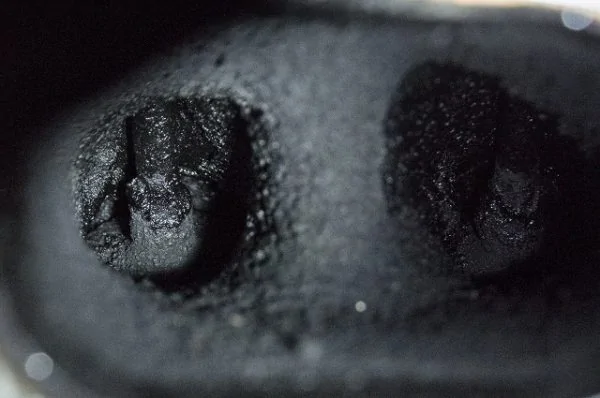
Like others have said, the biggest issue is not the burning of blow-by, but what it does to the valves and everything before the cylinder. Without dual-injection like the new-gen 3.5L any oil vapor and carbon is going to build up on the back of the valves. Below is what we captured from the first-gen 3.5L EcoBoost and what bad carbon buildup can look like (this image is from a VW but demonstrates the concept well).

Unless you're building a bio-diesel system, gasoline engines aren't designed to run on oil—sure, the engineers account for blow-by in the cylinder, but that comes at the compromise of lower cylinder pressure and timing adjustments to reduce knock potential. The engine will always perform its best when it gets clean air and clean fuel. It's not going to be noticeable on the butt-dyno, but over time it adds up.

MG_7012_UL.webp


Valve-Gunkr-600x398.webp


Haha, I have no idea what you're talking about :angel::lipssealed:

Thanks!
-Steve
what is that a picture of? It almost looks more like burnt plastic than carbon build up
 
OP
OP
Mishimoto

Mishimoto

Well-Known Member
First Name
Mishimoto
Joined
Jun 9, 2019
Threads
11
Messages
190
Reaction score
423
Location
Wilmington, DE
Vehicle(s)
2019 Ford Ranger Lariat
Steve,
I agree on the warranty point. Most legal precedent only allows denying warranty claims in cases of clear cause and effect. It could add some hassle, though.

CA is the same, with a catch can generally being considered a modification of the emissions systems. Fortunately, on the Ranger, once you've done the initial installation and know where everything is, it's pretty easy to remove and replace, and it's only once every 2 years. Non-do-it-yourselfers would be at a big disadvantage though.

I'm curious on the finickiness of the 2.3L injectors and ECU. Is that from your experience in developing these products? I'm already planning to use only top-tier fuel and use fuel injector cleaner fairly regularly, but am wondering if there is anything else that would help from your experience, other than the catch can of course :)
Sorry for the late reply! We've noticed that our truck doesn't like code starts and it actually threw a code for "injector 1 performance". After doing some research we found that there's a TSB for that code and symptoms and that many owners are having injectors replaced. The official Ford TSB states a reflash is the fix, but a few owners have reported returns to the dealership after flashing and needing to have the injectors and possibly a fuel line replaced. It could be a simple bad batch of hardware/software that won't affect anything down the line.

As far as protection/prevention goes, we just recommend using high-quality fuel and oil, and doing regular oil changes. We usually recommend following the service schedule, but I personally recommend sending your used oil out to somebody like BlackStone Labs and having an analysis done. They'll be able to tell you how long you can run the oil for or if you need to be looking for anything specific in the oil.

I've had good luck with spray valve cleaners on my GTI (CRC makes a good one). If you can inject them close to the intake, and do it early in the engine's like, it will likely reduce the buildup of carbon on the valves. "Italian tuneups" on DI cars can actually put the engine at a temp range that may facilitate carbon buildup, so we don't really recommend that.

NOW THAT SOUNDS INTERESTING! There is certainly plenty of room for a larger inter-cooler. A few inches thicker wouldn't be an issue at all. I didn't look if it could be wider but just a few inches thicker would make a difference. I'm also a firm believer in painting them black but I know some are opposed to that thought.
Oh there's definitely room to make a bigger intercooler :angel:

Thanks!
-Steve
 
OP
OP
Mishimoto

Mishimoto

Well-Known Member
First Name
Mishimoto
Joined
Jun 9, 2019
Threads
11
Messages
190
Reaction score
423
Location
Wilmington, DE
Vehicle(s)
2019 Ford Ranger Lariat
what is that a picture of? It almost looks more like burnt plastic than carbon build up
It's carbon buildup on a VW intake port and valves. That one is probably the worst I've seen in a properly maintained engine and it was having some misfire / low power issues.

The valves on my GTI were about half that bad when I cleaned them and I gained a few lb-ft of torque after the cleaning and about 5 MPG.

Thanks!
-Steve
 

VAMike

Well-Known Member
First Name
Mike
Joined
Feb 22, 2019
Threads
1
Messages
3,390
Reaction score
4,408
Location
Virginia
Vehicle(s)
2019 Ranger Lariat SuperCab
So, all the oil I've collected and dumped out is my imagination? I'm not selling these and I recommend them highly.
The question isn't whether you can dump something out, it's whether that matters. Snake oil salesmen have come up with demos like that for as long as they've had something to sell.
 
OP
OP
Mishimoto

Mishimoto

Well-Known Member
First Name
Mishimoto
Joined
Jun 9, 2019
Threads
11
Messages
190
Reaction score
423
Location
Wilmington, DE
Vehicle(s)
2019 Ford Ranger Lariat
The question isn't whether you can dump something out, it's whether that matters. Snake oil salesmen have come up with demos like that for as long as they've had something to sell.
Carbon buildup on DI engines is a very real, studied, and documented issue whose main cause is oil and fuel deposits on the valves, primarily from blow-by. Here's a good, independent article on DI carbon buildup and how it's being studied:

https://www.jstor.org/stable/262734...7df8eaaf&socplat=email#page_scan_tab_contents

You'll have to register with JSTOR to read that, but it's the only free source of SAE papers that I can find :inspect:

Thanks!
-Steve
 

VAMike

Well-Known Member
First Name
Mike
Joined
Feb 22, 2019
Threads
1
Messages
3,390
Reaction score
4,408
Location
Virginia
Vehicle(s)
2019 Ranger Lariat SuperCab
Carbon buildup on DI engines is a very real, studied, and documented issue whose main cause is oil and fuel deposits on the valves, primarily from blow-by. Here's a good, independent article on DI carbon buildup and how it's being studied:

https://www.jstor.org/stable/262734...7df8eaaf&socplat=email#page_scan_tab_contents

You'll have to register with JSTOR to read that, but it's the only free source of SAE papers that I can find :inspect:

Thanks!
-Steve
How many 300k mile tests have you run on your product in the ranger application? How does the carbon buildup compare to control samples?
 

RCMUSTANG

Well-Known Member
First Name
Ray
Joined
Jan 22, 2019
Threads
22
Messages
1,867
Reaction score
2,191
Location
Los Angeles
Vehicle(s)
2017 Fusion 1995 Ranger
The question isn't whether you can dump something out, it's whether that matters. Snake oil salesmen have come up with demos like that for as long as they've had something to sell.
Again, either you care about oil and other junk being sucked up back into the system or you don't. There is clearly oil and blowby being reintroduced into the engine. Nobody is telling you have to have one or you'll destroy your engine. Will it help keep it cleaner? Yes. Will you notice over a few thousand miles a difference in performance? Maybe. I keep my vehicles for 300,000 miles or more. Less than a $100 spent for me to keep it cleaner is better than the alternative of having to clean the valves later on. Oil and blowby going back in the mix is acceptable to some people but not for me.
 

DavidR

Well-Known Member
First Name
David
Joined
Jul 22, 2019
Threads
4
Messages
389
Reaction score
328
Location
Eastern CA
Vehicle(s)
2019 Ranger XLT Supercab Saber FX4
Occupation
Engineer
Hi Steve,
Thanks for the reply. Our truck is fairly new (early-August delivery to the dealer), so I'll check the TSB to see if it's still included. It does run a little rough cold, not really that bad but just enough to notice. @RCMUSTANG found that replacing the coils with Holley aftermarket ones helped for him. I haven't done that yet, but I tried switching up to 89 fuel and that has helped, so I'm holding off on the coils for now. Other than that, I plan to do what you suggest.

I've also given some thought to the spray cleaners. They seem almost as controversial as catch cans, due to a handful reports of turbine or cat damage from chunks of carbon. I agree that if you're going to use them, it's probably better to start early in the engine's life and use them fairly often.

EDIT: looks like the TSB for cold rough running doesn't apply to trucks built after Feb. 11. It still runs a tiny bit rough, but nothing really bad. It will be interesting to see what it's like over the winter once the temps drop into the high single digits here.

Sorry for the late reply! We've noticed that our truck doesn't like code starts and it actually threw a code for "injector 1 performance". After doing some research we found that there's a TSB for that code and symptoms and that many owners are having injectors replaced. The official Ford TSB states a reflash is the fix, but a few owners have reported returns to the dealership after flashing and needing to have the injectors and possibly a fuel line replaced. It could be a simple bad batch of hardware/software that won't affect anything down the line.

As far as protection/prevention goes, we just recommend using high-quality fuel and oil, and doing regular oil changes. We usually recommend following the service schedule, but I personally recommend sending your used oil out to somebody like BlackStone Labs and having an analysis done. They'll be able to tell you how long you can run the oil for or if you need to be looking for anything specific in the oil.

I've had good luck with spray valve cleaners on my GTI (CRC makes a good one). If you can inject them close to the intake, and do it early in the engine's like, it will likely reduce the buildup of carbon on the valves. "Italian tuneups" on DI cars can actually put the engine at a temp range that may facilitate carbon buildup, so we don't really recommend that.

Thanks!
-Steve
 
Last edited:
OP
OP
Mishimoto

Mishimoto

Well-Known Member
First Name
Mishimoto
Joined
Jun 9, 2019
Threads
11
Messages
190
Reaction score
423
Location
Wilmington, DE
Vehicle(s)
2019 Ford Ranger Lariat
How many 300k mile tests have you run on your product in the ranger application? How does the carbon buildup compare to control samples?
There's no need to do a 300k mile test on the Ranger. There's nothing that separates the 2.3L EcoBoost from any other DI engine that's been studied for the past 10+ years. Without dual injection, or some method for cleaning the valves, any blow-by that gets into the intake is going to build up on the valves and carbonize eventually. The only thing that will prevent that completely on a DI engine without dual-injection is a 100% effective oil separator, which the 2.3L EcoBoost does not have.

Hi Steve,
Thanks for the reply. Our truck is fairly new (early-August delivery to the dealer), so I'll check the TSB to see if it's still included. It does run a little rough cold, not really that bad but just enough to notice. @RCMUSTANG found that replacing the coils with Holley aftermarket ones helped for him. I haven't done that yet, but I tried switching up to 89 fuel and that has helped, so I'm holding off on the coils for now. Other than that, I plan to do what you suggest.

I've also given some thought to the spray cleaners. They seem almost as controversial as catch cans, due to a handful reports of turbine or cat damage from chunks of carbon. I agree that if you're going to use them, it's probably better to start early in the engine's life and use them fairly often.

EDIT: looks like the TSB for cold rough running doesn't apply to trucks built after Feb. 11. It still runs a tiny bit rough, but nothing really bad. It will be interesting to see what it's like over the winter once the temps drop into the high single digits here.
Yup, that's the TSB we found as well. Our truck occasionally runs like a vacuum hose is disconnected, but it gets better as it warms up.

I've heard the same about the spray cleaners, but I haven't ever talked to anybody who's had one of those issues. Like you said, if you start early, you should be cleaning oil and fuel off the valves before it turns into chunky carbon.

Thanks,
-Steve
 

VAMike

Well-Known Member
First Name
Mike
Joined
Feb 22, 2019
Threads
1
Messages
3,390
Reaction score
4,408
Location
Virginia
Vehicle(s)
2019 Ranger Lariat SuperCab
There's no need to do a 300k mile test on the Ranger. There's nothing that separates the 2.3L EcoBoost from any other DI engine that's been studied for the past 10+ years. Without dual injection, or some method for cleaning the valves, any blow-by that gets into the intake is going to build up on the valves and carbonize eventually. The only thing that will prevent that completely on a DI engine without dual-injection is a 100% effective oil separator, which the 2.3L EcoBoost does not have.
So what I'm reading is that you don't have long term test data showing that your product is effective?
Sponsored

 
Status
Not open for further replies.


Top