Sponsored

Oil Catch Can. Yes or No?

Do you have a catch can?


  • Total voters
    44

Extreme01

Well-Known Member
First Name
Glen
Joined
May 16, 2020
Threads
25
Messages
238
Reaction score
559
Location
Maryland
Vehicle(s)
2020 Ford Ranger XLT FX4, 2008 Shelby GT500
Occupation
Retired
Vehicle Showcase
1
Doesn't do a thing for intake or valves in our engines. In a GDI engine the intake and valves never see fuel on them.
If catch cans were supposed to be on these engines I'm sure the engineers from Ford would have put them on. Just a thought not a sermon
Sponsored


TJC

Well-Known Member
First Name
Tony
Joined
Aug 28, 2020
Threads
45
Messages
3,942
Reaction score
9,895
Location
North Carolina
Vehicle(s)
93 Miata, 05 Ranger 4x4, 20 Ranger 4x4, 23 CX-5
I agree. Too each their own I guess.
I agree with you guys too. But the same can be said for any changes made to any product that you plan to resell. It goes for raised trucks and oversized tires, engine mods, etc.

If I were buying a new truck every 2-3 years I would not be doing anything to that truck. Certainly not if I leased it.

But I buy cash outright and keep my vehicles for the long haul. And I do not purchase unless I have the cash in hand to do so. I walk off the lot with the title, not a mortgage.

Everyone's circumstances are different. There is no one size fits all answer.

I have a 1993 Miata LE heavily modified - was supercharged, but converting to turbo. I like the power/torque curve of the SC, but my wife likes the quietness of the turbo. It is fun car to to drive,
I also own a 2003 Nissan Maxima, a 2005 Ranger 4x4, and the newest addition is the 2020 Ranger. All purchased new and kept in great shape (garaged and maintained).

I am not looking to turn my 2020 Ranger over in a year or two. And I am not looking for buyers. Buyers tend to come to me. My mechanic just offered to purchase my 2005 Ranger and wants first call if I ever sell it.

In my circumstance, it makes sense, but I am a tightwad. I don't replace a vehicle until I get the cost of ownership down to $1000 / year.... and it is getting much harder to do it this time around with the 2020 Ranger, as I doubt that I will still be driving 30 years from now. So this last Ranger was a little bit of a splurge.

Honestly we currently like the 2005 Ranger better than the 2020 model. Hoping the shocks fix the handling in the new ranger - the truck wallows a little too much for my taste. I'll know in 2 weeks when the Eibachs coilovers and rear shocks arrive. I don't plan to level the truck much if at all... Maybe 1" - 1.5". I don't like giving up fuel economy for looks alone. And my crazy offroad days are behind me.

The 4.0L OHC engine in my 2005 Ranger recently developed the death rattle at startup. The timing chain tensioner cassettes bit the dirt. 4 Timing chains in that engine - another Ford engineering design issue. And 25 hours of labor to change them, requiring engine removal. I am not spending $3K to change timing chains on an engine with 175K miles on it. So I made the decision to replace the engine and trannie with Jaspers that are warranted for 3 years 100K miles - parts and labor.

Jasper engines and trannies are very high quality. While I was in there I went ahead and reworked the suspension, AC compressor, brakes, shocks, etc. A $10K rebuild on a 15 year old truck. So payback is 10-12 more years of usage to get to the magic $1K / year expense rate.

My 2005 Ranger is mechanically bone stock with the exception of the touch screen android double dIn radio. It does have a soft tonneau cover, and 3/4" hard rubber horse stall mat in the bed. It has a lifetime warranty on the spray in bedliner, and I should take it to Ford to have them redo it. 175K miles and counting after the reset.

BTW, I trust it more than I do the 2020 Ranger over long distances. That may change over time, but not yet.

- Tony
 

Floyd

Well-Known Member
Joined
Jan 6, 2019
Threads
38
Messages
2,064
Reaction score
3,132
Location
illinois
Vehicle(s)
'19 Ranger SCab,'16 Connect,'95 MustangGT,'50 Ford
Forgive me... you are correct. Pintos did not have the gas tank as the floor of the car. They simply blew up when rear ended. The fix was $11 / car, but Ford didn't fix them.

BTW, I very much liked the early 71 Pinto.

My point was not to disparage Pintos, but to show that engineering "errors" make it into production automobiles. And I think a better characterization is "engineering tradeoffs" for whatever reason.

Read on here
https://www.popularmechanics.com/cars/a6700/top-automotive-engineering-failures-ford-pinto-fuel-tanks/

Ford Pinto (1971–1980)

"Get rear-ended—and catch on fire." That could have been the unfortunate tagline for Ford's early foray into subcompact hatchbacks. With daring, commendable looks for its time (excluding a wagon version), the Pinto—named for the horse, not the bean—was commissioned to compete against the likes of the AMC Gremlin and Chevy Vega. This meant maintaining a rock-bottom price, a focus which reportedly caused rear-end-collision testing to be pushed until after the car's launch. If not for this deliberate oversight, engineers may have spotted the car's ticking-time-bomb nature sooner. Bolts protruding from the rear bumper and differential could easily penetrate the fuel tank in even low-speed accidents, culminating in fiery results, many of which found their way to court. It taught Ford a pricey lesson about why not to cut corners.

However 1964-1970 Ford Mustangs did, as well as Ford Falcons and I suspect many others of the same time period.
Ford Mustang Engineering Defect in Gas Tank


Here is a snippet of the article.

"In looking into the accident, the Gielows learned a secret about the classic Mustangs, the ones built from 1964 through 1970. For more than 30 years, fires that erupted after crashes in the trunks of some classic Mustangs have spread into the passenger compartment. This American icon has left a trail of suffering and death.

All across America these old Mustangs are treasured so by so many people that they just won't let them go. In addition to the amazing number of classic Mustangs still on the road --up to 1.5 million--there are many thousands off the road just waiting to be restored. From fields, from garages, from junkyards, classic Mustangs are being reclaimed, reconditioned and returned to the nation's highways.

And every one of them carries in the trunk a potentially deadly defect, says San Francisco attorney David Rand. He's representing the parents of Harold Gielow, and sued Ford before on the gas tank design. Because the top of the Mustang's tank is also the floor of the trunk, Rand says, terrible car fires can erupt after even modest rear-end crashes.

"The gas tank is right here, inches away from [the driver],"
Rand says, showing a reporter the layout of the car. "And the gas has a very wide opening to come right from the tank directly into where the people are."

Ford has been sued more than 70 times by people burned in rear-end collisions in classic Mustangs. Most suits have been settled out of court, without publicity.

As part of our automotive-engineering-failures series, Popular Mechanics is rounding up the most dismal design flaws in automotive history. Today: the Ford Pinto fuel tanks. There's a reason the Pinto was one of our 10 cars that deserved to fail. Ford neglected to add reinforcements to protect the easily ruptured fuel tank, endangering drivers while earning the Pinto a reputation for catching fire that persists today. The automaker's public relations black eye lasted for years.
Times change... are you aware of the tank location on a Model A?
 

Floyd

Well-Known Member
Joined
Jan 6, 2019
Threads
38
Messages
2,064
Reaction score
3,132
Location
illinois
Vehicle(s)
'19 Ranger SCab,'16 Connect,'95 MustangGT,'50 Ford
I agree with you guys too. But the same can be said for any changes made to any product that you plan to resell. It goes for raised trucks and oversized tires, engine mods, etc.

If I were buying a new truck every 2-3 years I would not be doing anything to that truck. Certainly not if I leased it.

But I buy cash outright and keep my vehicles for the long haul. And I do not purchase unless I have the cash in hand to do so. I walk off the lot with the title, not a mortgage.

Everyone's circumstances are different. There is no one size fits all answer.

I have a 1993 Miata LE heavily modified - was supercharged, but converting to turbo. I like the power/torque curve of the SC, but my wife likes the quietness of the turbo. It is fun car to to drive,
I also own a 2003 Nissan Maxima, a 2005 Ranger 4x4, and the newest addition is the 2020 Ranger. All purchased new and kept in great shape (garaged and maintained).

I am not looking to turn my 2020 Ranger over in a year or two. And I am not looking for buyers. Buyers tend to come to me. My mechanic just offered to purchase my 2005 Ranger and wants first call if I ever sell it.

In my circumstance, it makes sense, but I am a tightwad. I don't replace a vehicle until I get the cost of ownership down to $1000 / year.... and it is getting much harder to do it this time around with the 2020 Ranger, as I doubt that I will still be driving 30 years from now. So this last Ranger was a little bit of a splurge.

Honestly we currently like the 2005 Ranger better than the 2020 model. Hoping the shocks fix the handling in the new ranger - the truck wallows a little too much for my taste. I'll know in 2 weeks when the Eibachs coilovers and rear shocks arrive. I don't plan to level the truck much if at all... Maybe 1" - 1.5". I don't like giving up fuel economy for looks alone. And my crazy offroad days are behind me.

The 4.0L OHC engine in my 2005 Ranger recently developed the death rattle at startup. The timing chain tensioner cassettes bit the dirt. 4 Timing chains in that engine - another Ford engineering design issue. And 25 hours of labor to change them, requiring engine removal. I am not spending $3K to change timing chains on an engine with 175K miles on it. So I made the decision to replace the engine and trannie with Jaspers that are warranted for 3 years 100K miles - parts and labor.

Jasper engines and trannies are very high quality. While I was in there I went ahead and reworked the suspension, AC compressor, brakes, shocks, etc. A $10K rebuild on a 15 year old truck. So payback is 10-12 more years of usage to get to the magic $1K / year expense rate.

My 2005 Ranger is mechanically bone stock with the exception of the touch screen android double dIn radio. It does have a soft tonneau cover, and 3/4" hard rubber horse stall mat in the bed. It has a lifetime warranty on the spray in bedliner, and I should take it to Ford to have them redo it. 175K miles and counting after the reset.

BTW, I trust it more than I do the 2020 Ranger over long distances. That may change over time, but not yet.

- Tony
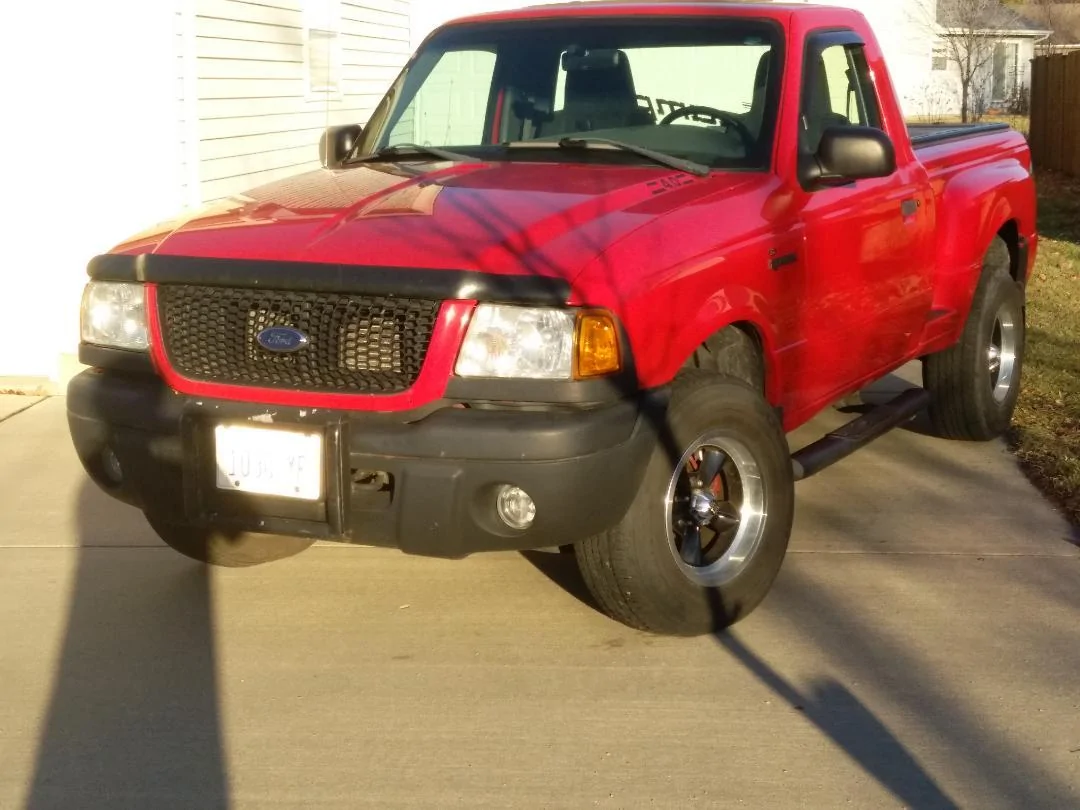
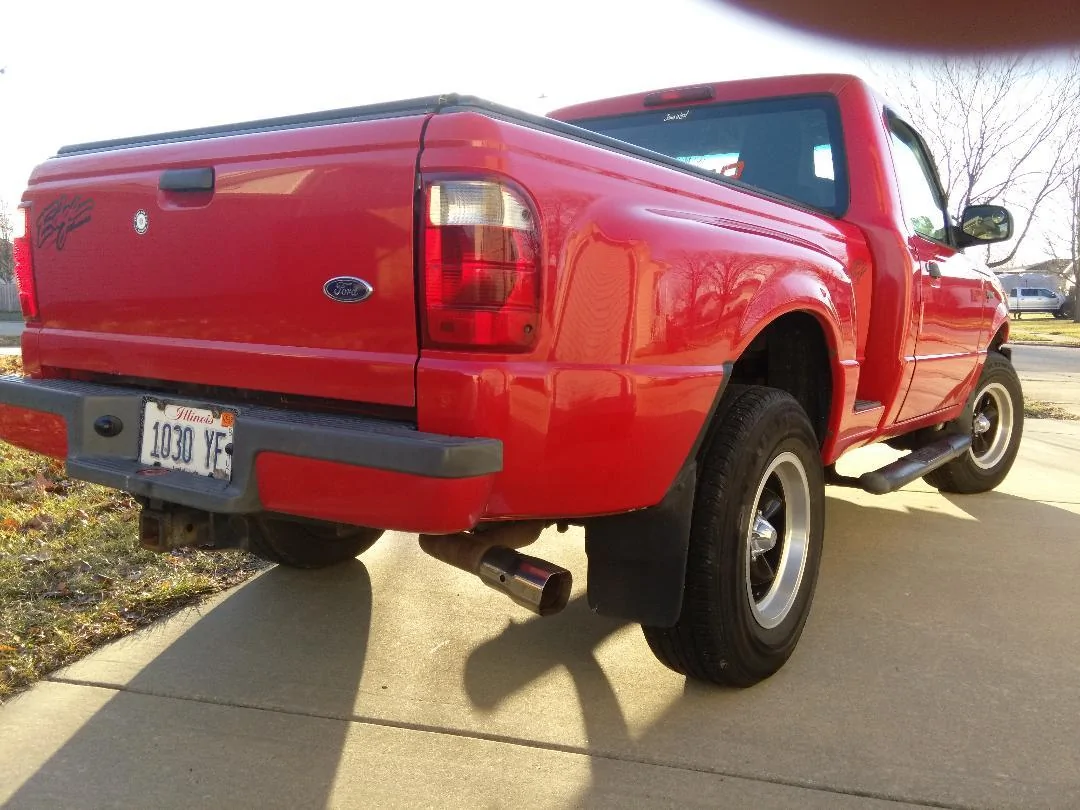
I kept mine too! until the new Ranger came out. I miss it, but no regrets.
I sold my 2001 Ford Ranger 4.0L after 18 years of hard use and 190K miles . No rattle or engine work ever, just good maintenance.
I knew about the strange timing chain design when I bought it new.
Oil change every 4000 miles.
Towed everything with it and drove it aggressively otherwise.
The only additive ever used was Pro-Gard.
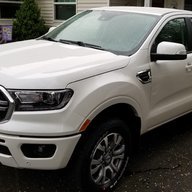
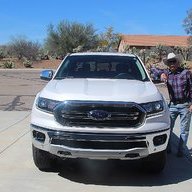
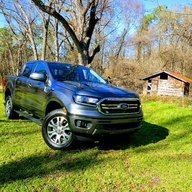
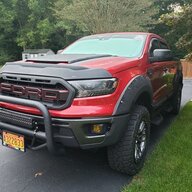
Pics are from 2019...
Yearly purchase net cost....<$500.
Great trucks...both.

thumbnail.jpg ran2.jpg


thumbnail.jpg ranger1.jpg
 
Last edited:

PierreD

Well-Known Member
Joined
Jul 31, 2020
Threads
2
Messages
59
Reaction score
70
Location
Ottawa CA
Vehicle(s)
2020 Ford Ranger XLT
Occupation
AV Tech
If catch cans were supposed to be on these engines I'm sure the engineers from Ford would have put them on. Just a thought not a sermon
In that case, there would be a trailer controller and better shocks on the Trailering package and there isn't....


Extreme01

Well-Known Member
First Name
Glen
Joined
May 16, 2020
Threads
25
Messages
238
Reaction score
559
Location
Maryland
Vehicle(s)
2020 Ford Ranger XLT FX4, 2008 Shelby GT500
Occupation
Retired
Vehicle Showcase
1
In that case, there would be a trailer controller and better shocks on the Trailering package and there isn't....
Sounds like to me you should have bought a Toyota
 

Sashimi_Moto

Well-Known Member
Joined
Jan 3, 2020
Threads
5
Messages
225
Reaction score
321
Location
WA
Vehicle(s)
2012 E450 C-Class, 2019 Ranger Lariat 501A FX4
“If the engineers felt it was needed it would have come with one!”

Thanks for comments like that, I needed a good laugh. Engineers feel like cars need LOTS of things the bean counters don’t/won’t approve. Building to a budget means a lot of “ideals” are compromised.

Which reminds me of the scene from Fight Club where he talks about the recall formula. “AxBxC=X and if X is less than the cost of the recall we don’t do it.”
 

TJC

Well-Known Member
First Name
Tony
Joined
Aug 28, 2020
Threads
45
Messages
3,942
Reaction score
9,895
Location
North Carolina
Vehicle(s)
93 Miata, 05 Ranger 4x4, 20 Ranger 4x4, 23 CX-5
I kept mine too! until the new Ranger came out. I miss it, but no regrets.
I sold my 2001 Ford Ranger 4.0L after 18 years of hard use and 190K miles . No rattle or engine work ever, just good maintenance.
I knew about the strange timing chain design when I bought it new.
Oil change every 4000 miles.
Towed everything with it and drove it aggressively otherwise.
The only additive ever used was Pro-Gard.
Pics are from 2019...
Yearly purchase net cost....<$500.
Great trucks...both.

thumbnail.jpg ran2.jpg


thumbnail.jpg ranger1.jpg
Great little truck! And a very good philosophy regarding ROI...

Tony
 

JoeDirt

Well-Known Member
First Name
Joe
Joined
Dec 8, 2019
Threads
11
Messages
108
Reaction score
339
Location
TX
Vehicle(s)
2021 Ford ranger xlt
Engineers only design things to last as long as the warranty. Then the answer becomes fix it or trade it.
 

RedlandRanger

Moderator
First Name
Rob
Joined
Nov 14, 2018
Threads
42
Messages
5,111
Reaction score
11,105
Location
Oregon
Vehicle(s)
2019 Ford Ranger Lariat FX4, 1973 Mercury Capri
Vehicle Showcase
1
Engineers only design things to last as long as the warranty. Then the answer becomes fix it or trade it.
According our our resident Ford engineer (retired), the engineering objective was to enable 90% of vehicles to go 150,000 miles under heavy use - (I hope I said that correctly Phil). The gist of it is that the minimum engineered lifetime is essentially intended to be 150,000 miles, not 36,000 miles.
 

P. A. Schilke

Well-Known Member
First Name
Phil
Joined
Apr 3, 2019
Threads
149
Messages
7,083
Reaction score
37,188
Location
GV Arizona
Vehicle(s)
2019 Ranger FX4 Lariat 4x4, 2020 Lincoln Nautilus, 2005 Alfa Motorhome
Occupation
Engineer Retired
Vehicle Showcase
1
According our our resident Ford engineer (retired), the engineering objective was to enable 90% of vehicles to go 150,000 miles under heavy use - (I hope I said that correctly Phil). The gist of it is that the minimum engineered lifetime is essentially intended to be 150,000 miles, not 36,000 miles.
Hi Rob,

Correct to a point. The 90% is the customer. A Severe usage customer that is in the top 10% of customers that beat the crap out of their vehicle...Purolator Courrier in Los Angeles with stop and go...oil field service in Texas...Mining operations in Arizona. That means the "regular" customer can expect better performance than that. I am always proud when prior Ranger owners say their older Rangers gave then 200,000 of miles of service or greater. 36,000 is a warranty...not our test requirement. If you ever rode over our durability test route for one lap...you would likely say no way the truck can last for more than a few more laps....It is super severe. Coupled with 1000 cycles of P3-26D pot holes...200 yards of 6" deep steel lined pot holes in a pattern that is so bone jarring that the test track drives can only do about 100 cycles each to keep from kidney damage. Built Ford Tough really means something.

Make Sense?

Best,
Phil Schilke
Ranger Vehicle Engineering
Ford Motor Co. Retired
 

RedlandRanger

Moderator
First Name
Rob
Joined
Nov 14, 2018
Threads
42
Messages
5,111
Reaction score
11,105
Location
Oregon
Vehicle(s)
2019 Ford Ranger Lariat FX4, 1973 Mercury Capri
Vehicle Showcase
1
Hi Rob,

Correct to a point. The 90% is the customer. A Severe usage customer that is in the top 10% of customers that beat the crap out of their vehicle...Purolator Courrier in Los Angeles with stop and go...oil field service in Texas...Mining operations in Arizona. That means the "regular" customer can expect better performance than that. I am always proud when prior Ranger owners say their older Rangers gave then 200,000 of miles of service or greater. 36,000 is a warranty...not our test requirement. If you ever rode over our durability test route for one lap...you would likely say no way the truck can last for more than a few more laps....It is super severe. Coupled with 1000 cycles of P3-26D pot holes...200 yards of 6" deep steel lined pot holes in a pattern that is so bone jarring that the test track drives can only do about 100 cycles each to keep from kidney damage. Built Ford Tough really means something.

Make Sense?

Best,
Phil Schilke
Ranger Vehicle Engineering
Ford Motor Co. Retired
I knew you'd say it better than I did. The bottom line is that these trucks are engineered to go a long time - not planned obsolescence as soon as the warranty is done - they are just getting started when the warranty expires!!!
 

landiscarrier

Well-Known Member
First Name
Landis
Joined
Jun 2, 2020
Threads
19
Messages
965
Reaction score
2,509
Location
Pocono Mtns Pa
Vehicle(s)
2025 Ranger Raptor
Occupation
Sales
Open the hood of any stock modern day direct injection car or truck (performance built or not) and look for the factory installed catch can......you'll be looking for a long time.
 

Ace Holliday

Well-Known Member
First Name
Scott K
Joined
Apr 19, 2020
Threads
5
Messages
405
Reaction score
890
Location
South Kalifornikstan
Vehicle(s)
2019 Ranger XLT Super Crew
Occupation
Aerospace Machinist/CNC Programmer - Retired
I am glad I installed a catch can. It alerted me to my "fuel in the oil" issue.

I check the contents of the catch can every couple of weeks. My truck has 7,300 miles on it. Every time it was checked there was almost nothing in it. I was to the point of thinking I wasted my money. Then about two weeks ago when I checked it it was almost half full of gasoline. Now after ever 150 miles or so there is an ounce of gas in the catch can. (Oil level on the dipstick was up almost a half an inch over full).

I am currently working with my dealership to resolve the issue. They are still in the denial stage. My Blackstone results will be back next week.
 

Racket

Well-Known Member
First Name
John
Joined
Jan 21, 2020
Threads
22
Messages
2,205
Reaction score
3,406
Location
Here and There
Vehicle(s)
2019 Lariat Supercrew 2WD
Occupation
Transient
I knew you'd say it better than I did. The bottom line is that these trucks are engineered to go a long time - not planned obsolescence as soon as the warranty is done - they are just getting started when the warranty expires!!!
When I worked at NASA I noticed one of the engineers drove a pickup truck. I knew he could afford anything he wanted and asked why a truck? His response was that trucks are over-engineered compared to sedans from alternators to cooling, suspension and brakes etc. therefore a more reliable form of transportation. We didn't debate efficiency costs, but back then he was driving a small-ish truck (can't remember the make - coulda been a Datsun).
Sponsored


Top