
Sponsored

Oil Catch Can. Yes or No?

Do you have a catch can?


  • Total voters
    44

Jacob

Well-Known Member
First Name
Jacob
Joined
Feb 25, 2020
Threads
8
Messages
252
Reaction score
619
Location
USA
Vehicle(s)
2019 Ranger XLT Sport 4x4
CF38D160-BAA3-48BC-AF29-F238DD7EE24D.webp

don’t know why it shows up upside down, either way here’s another update:
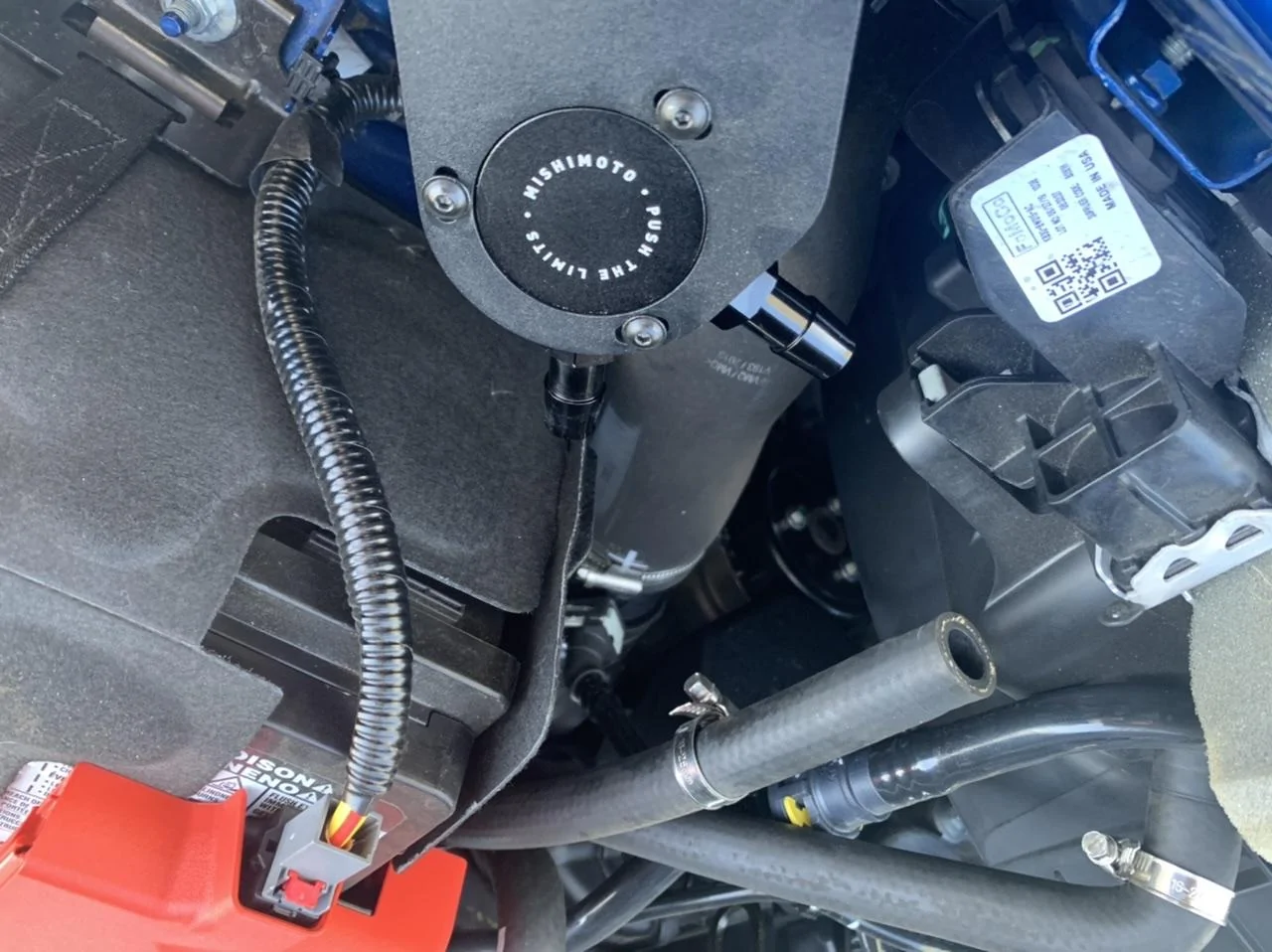
So the valve idea is a double edged sword. Mine seized shut on me when I tried to clean it this time. My dumbass forgot to lube up the o-ring. A mistake I won’t make again. Anyways this required me to removed the can itself and when I checked the actual baffle, wow it was caked in carbon and brown petrol mixture. So I cleaned the crap out of that. Followed by the ritual of dumping out the contents of the can.

alright so reason I called it a double edged sword. I now see the simplicity of the valve. Would have made a 20 min job into a 5. On the other side, I’m glad I looked at the baffles, as I said they were caked. Anyways take it as you will. I’ll continue updating as time goes on so those on the fence know what to expect.
Sponsored

 
  • Like
Reactions: Doc

Jacob

Well-Known Member
First Name
Jacob
Joined
Feb 25, 2020
Threads
8
Messages
252
Reaction score
619
Location
USA
Vehicle(s)
2019 Ranger XLT Sport 4x4
LoL... just Say no to catch cans...
Regards
Eh definitely a worth it in my books. Seeing all the carbon deposits and the fluid mixture that it catches, it’s worth it. 1000 easier to clean the can then to clean the valves. I’m actually thinking about installing a valve and feeding it into a bigger container underneath the catch can. I’d like to go clear so I can see what’s in it.
 

db_tanker

Well-Known Member
First Name
Darrell
Joined
Mar 21, 2020
Threads
33
Messages
446
Reaction score
968
Location
Texas
Vehicle(s)
2019 Ford Ranger / 2018 Honda Civic EX 5 door
Occupation
Process Professional
Just ordered my Mishimoto can today. Seeing as I don't have an awesome lift to put the truck in the air it still takes 1.5 hours to install the thing lol

I kept my last truck for 200+ K and I plan on doing the same with this little gem. :)
 

Porpoise Hork

Well-Known Member
First Name
Bret
Joined
Apr 28, 2020
Threads
19
Messages
1,316
Reaction score
2,366
Location
Houston
Vehicle(s)
2022 F150 XLT Powerboost FX4 302A Oxford White
Occupation
IT
I'm new here, and just bought my Ranger on Saturday and was looking at various mods and this one caught my eye. Having owned a car with a DI engine that is notorious for the intake valves getting caked up with deposits. (2008 VW GTI) I can say that in most cases the addition of a catch can is not necessarily a requirement. I put 150K miles on the GTI with a 148K of those having an APR stage II tune on it. As a part of regular preventative maintenance I would perform a SeaFoam treatment on the intake valves every 20K miles. Using a garden sprayer, a fine mist of SeaFoam in 5 second pulses would be injected into the intake. Once 2/3 of the can was run through, a heavy shot to use up the remaining was sprayed in and the engine shut off and left to sit for about 15 min. After that it would be started let idle for about 5 min then taken out and a couple hard runs done on it.

At 120K miles I ran a bore scope down to the valves and was surprised to see there was very minimal buildup on the valves. So as long as you do some regular maintenance like this, valve deposits on a DI engine should not be a major issue.


Porpoise Hork

Well-Known Member
First Name
Bret
Joined
Apr 28, 2020
Threads
19
Messages
1,316
Reaction score
2,366
Location
Houston
Vehicle(s)
2022 F150 XLT Powerboost FX4 302A Oxford White
Occupation
IT
Seems like much more work over 150k miles vs emptying a can every other oil change. Viable solution for sure but I've reached an age where if I can spend a couple bucks more for an "easy button" and avoid another maintenance item - it's money well spent.
Really did't take much to do it. On the front of that particular engine they placed an temp sensor that was very easy to get to., Didn't even have to pull the engine cover off to get to it. Once out start the engine and stick the sprayer wand in the open hole and start spraying. The whole process took about 10 min to apply the cleaner. I have not looked at the setup for the 2.3L so I cannot say if there's a way to do it as easily as that. Installing a catch can or not, if you have a method that works for you is easy to do then there's no need to go off and change it. I mentioned this as for some who don't want to add a catch can, that something like this may be a viable alternative.
 

Sashimi_Moto

Well-Known Member
Joined
Jan 3, 2020
Threads
5
Messages
225
Reaction score
321
Location
WA
Vehicle(s)
2012 E450 C-Class, 2019 Ranger Lariat 501A FX4
I mentioned this as for some who don't want to add a catch can, that something like this may be a viable alternative.
Which is why I deleted my post.

Considering this is a turbo, without a CCV side catch can - your method may still be warranted even with a PCV side catch can.
 

u wish u could ride

Well-Known Member
First Name
robert
Joined
Jul 30, 2019
Threads
17
Messages
290
Reaction score
445
Location
lakeland florida
Vehicle(s)
19 xlt in blue
Occupation
building maintenance
I'm new here, and just bought my Ranger on Saturday and was looking at various mods and this one caught my eye. Having owned a car with a DI engine that is notorious for the intake valves getting caked up with deposits. (2008 VW GTI) I can say that in most cases the addition of a catch can is not necessarily a requirement. I put 150K miles on the GTI with a 148K of those having an APR stage II tune on it. As a part of regular preventative maintenance I would perform a SeaFoam treatment on the intake valves every 20K miles. Using a garden sprayer, a fine mist of SeaFoam in 5 second pulses would be injected into the intake. Once 2/3 of the can was run through, a heavy shot to use up the remaining was sprayed in and the engine shut off and left to sit for about 15 min. After that it would be started let idle for about 5 min then taken out and a couple hard runs done on it.

At 120K miles I ran a bore scope down to the valves and was surprised to see there was very minimal buildup on the valves. So as long as you do some regular maintenance like this, valve deposits on a DI engine should not be a major issue.
if and when you get your seafoam process down can you take a video or do a write up? thanks for your efforts and time!!
 

Porpoise Hork

Well-Known Member
First Name
Bret
Joined
Apr 28, 2020
Threads
19
Messages
1,316
Reaction score
2,366
Location
Houston
Vehicle(s)
2022 F150 XLT Powerboost FX4 302A Oxford White
Occupation
IT
if and when you get your seafoam process down can you take a video or do a write up? thanks for your efforts and time!!
Sure thing. I'll probably get in there and poke around in the next weekend or two and see what/where would be the most optimal location to access the intake plenum for cleaning.
 

Doc

Well-Known Member
First Name
Doc
Joined
Dec 24, 2018
Threads
94
Messages
5,767
Reaction score
23,233
Location
Live oak fla
Vehicle(s)
2026 5.0 Mustang GT, 2024 Ranger STX
Occupation
Retired
Eh definitely a worth it in my books. Seeing all the carbon deposits and the fluid mixture that it catches, it’s worth it. 1000 easier to clean the can then to clean the valves. I’m actually thinking about installing a valve and feeding it into a bigger container underneath the catch can. I’d like to go clear so I can see what’s in it.
And where would the carbon deposit come from?
 

Porpoise Hork

Well-Known Member
First Name
Bret
Joined
Apr 28, 2020
Threads
19
Messages
1,316
Reaction score
2,366
Location
Houston
Vehicle(s)
2022 F150 XLT Powerboost FX4 302A Oxford White
Occupation
IT
And where would the carbon deposit come from?
The carbon deposits the result of the PVC system. It's an inherent issue on all DI engines that lack any sort of pre-injector mounted on the intake plenum before the valves.

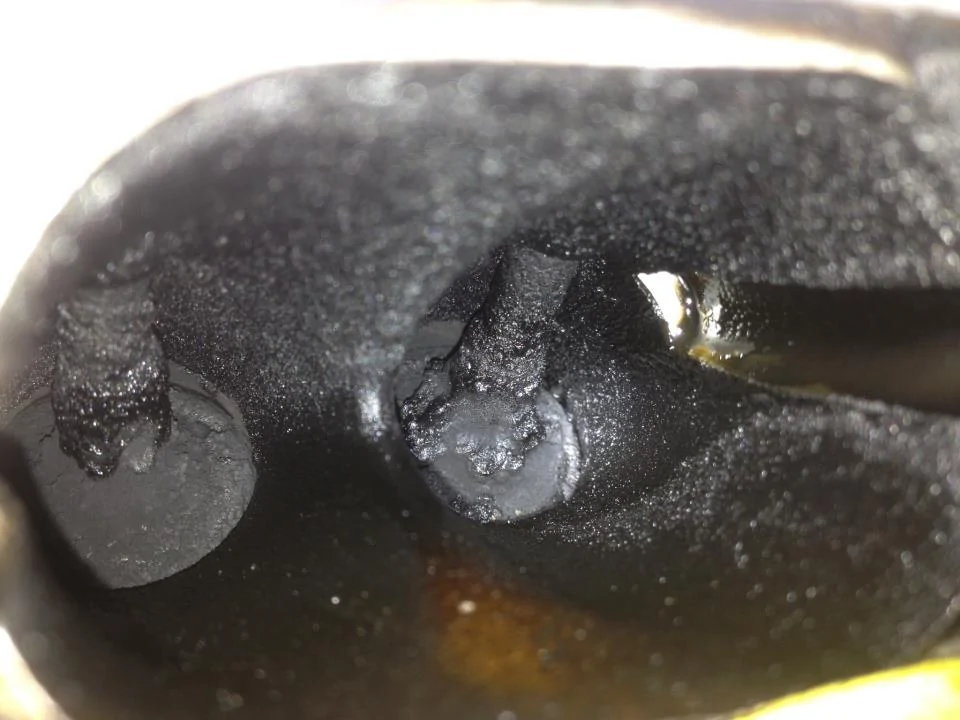
Port injection engines spray fuel directly on the intake valves and the detergents in the fuel assist in keeping the valves relatively clean. On DI engines without a port or intake fuel injection system the intake valves never come into contact with the fuel. Over time the vaporized oil from daily operation gets drawn past the intake valves and over time slowly starts to build up as carbon deposits. This buildup can cause loss of performance, mpg, poor idle. and in some extreme cases minor damage to intake valve or seats. Over the lifetime of a DI engine the buildup can get to be this bad or worse if not addressed in some sort of maintenance.

-sludge-build-up-intake-vavles-possible-fix-carbon.webp


Some manufactures have started adding a small pre-injector to regularly shoot small jets of fuel into the intake to help reduce this buildup, but most still have not as they see the added benefit does not override the increased expense. Add to that this issue does not typically present itself until well after the factory warranty has expired. Once it gets to this point cleaners like Seafoam and others like it are mostly useless. To clean this it would require pulling the intake and manually scraping the deposits off the valves, or using a walnut blaster and cleaning the ports and valves. Neither of these process is a quick and easy job.

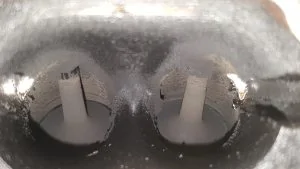
By adding a oil catch can you are putting a device inline that can temporarily slow the vacuum coming from the PCV allowing the vaporized oil to collect in a small reservoir, thus reducing the carbon buildup significantly. Regular cleaning of the valves and intake with a catalytic safe solvent like Seafoam while possibly not as effective as a quality catch can can prevent the valves from looking like the previous picture and looking more like this after 100K + miles.

Before-300x169.webp


If you add a catch can and do regular intake valve cleaning on top of that, then the intake runners and vales will very likely stay nearly as clean as the port injected engines.
 

Doc

Well-Known Member
First Name
Doc
Joined
Dec 24, 2018
Threads
94
Messages
5,767
Reaction score
23,233
Location
Live oak fla
Vehicle(s)
2026 5.0 Mustang GT, 2024 Ranger STX
Occupation
Retired
The carbon deposits the result of the PVC system. It's an inherent issue on all DI engines that lack any sort of pre-injector mounted on the intake plenum before the valves.

Port injection engines spray fuel directly on the intake valves and the detergents in the fuel assist in keeping the valves relatively clean. On DI engines without a port or intake fuel injection system the intake valves never come into contact with the fuel. Over time the vaporized oil from daily operation gets drawn past the intake valves and over time slowly starts to build up as carbon deposits. This buildup can cause loss of performance, mpg, poor idle. and in some extreme cases minor damage to intake valve or seats. Over the lifetime of a DI engine the buildup can get to be this bad or worse if not addressed in some sort of maintenance.

-sludge-build-up-intake-vavles-possible-fix-carbon.webp


Some manufactures have started adding a small pre-injector to regularly shoot small jets of fuel into the intake to help reduce this buildup, but most still have not as they see the added benefit does not override the increased expense. Add to that this issue does not typically present itself until well after the factory warranty has expired. Once it gets to this point cleaners like Seafoam and others like it are mostly useless. To clean this it would require pulling the intake and manually scraping the deposits off the valves, or using a walnut blaster and cleaning the ports and valves. Neither of these process is a quick and easy job.

By adding a oil catch can you are putting a device inline that can temporarily slow the vacuum coming from the PCV allowing the vaporized oil to collect in a small reservoir, thus reducing the carbon buildup significantly. Regular cleaning of the valves and intake with a catalytic safe solvent like Seafoam while possibly not as effective as a quality catch can can prevent the valves from looking like the previous picture and looking more like this after 100K + miles.

Before-300x169.webp


If you add a catch can and do regular intake valve cleaning on top of that, then the intake runners and vales will very likely stay nearly as clean as the port injected engines.
How do you get carbon deposits in the catch can...as @ Jacob said..
 

weasel1

Well-Known Member
First Name
Derek
Joined
Sep 14, 2019
Threads
8
Messages
566
Reaction score
726
Location
Pembroke, Ontario
Vehicle(s)
19 Ranger Lighting Blue FX4 w/302A
Occupation
Nuclear Operator
How do you get carbon deposits in the catch can...as @ Jacob said..
The pcv system returns oil vapor/combustion blow-by to the intake so that it can be recycled. Those vapors collect on the valves and stick. Hot/oily vapor turns to carbon deposits. A catch can collect most of that and prevent the eventual carbon deposits. Or something like that ?
 
  • Like
Reactions: Doc

Doc

Well-Known Member
First Name
Doc
Joined
Dec 24, 2018
Threads
94
Messages
5,767
Reaction score
23,233
Location
Live oak fla
Vehicle(s)
2026 5.0 Mustang GT, 2024 Ranger STX
Occupation
Retired
The pcv system returns oil vapor/combustion blow-by to the intake so that it can be recycled. Those vapors collect on the valves and stick. Hot/oily vapor turns to carbon deposits. A catch can collect most of that and prevent the eventual carbon deposits. Or something like that ?
How does the carbon get into the catch can...
Sponsored


Top