Sponsored

Maximizing Battery Life

OP
OP

TJC

Well-Known Member
First Name
Tony
Joined
Aug 28, 2020
Threads
45
Messages
3,943
Reaction score
9,900
Location
North Carolina
Vehicle(s)
93 Miata, 05 Ranger 4x4, 20 Ranger 4x4, 23 CX-5
Yes, not having an independent standard (IEEE) makes measurement algorithms variable. Even a subjective standard that all agreed to use would be a major step in the right direction.

For now it appears that the best one can hope for is to use whatever battery tester you have to establish a baseline, and then periodically measure for delta changes. Then correcting to insure you maintain optimal battery health to extend battery life.

There is an excellent article (thanks Dtech) that details the difficulty in measuring battery health - Tracking Battery Capacity and Resistance as part of Aging
Sponsored

 
Last edited:

OP
OP

TJC

Well-Known Member
First Name
Tony
Joined
Aug 28, 2020
Threads
45
Messages
3,943
Reaction score
9,900
Location
North Carolina
Vehicle(s)
93 Miata, 05 Ranger 4x4, 20 Ranger 4x4, 23 CX-5
With the activities of the holidays slowing, I was able to test my battery today using 3 different battery testers. Temps was 41F at the time of the test, and the battery remained electrically connected to the truck.

Here are the results:
1703831859511.webp


I believe the readings would be more accurate with the battery isolated from the truck. As simply moving from one negative stud to the other reduced internal resistance enough to affect the readings. I am referring to the 2 studs at the negative terminal. All of the readings above were taken using the neg stud directly above the battery neg terminal.

Resistance had the largest variance, and it directly affected the CCA and SOH readings. I have a Settings Saver Kit that allows me to pull the neg terminal without losing the current settings. I may run the test again with the battery isolated to see if anything changes.
 
Last edited:

airline tech

Well-Known Member
Joined
Aug 24, 2022
Threads
28
Messages
4,461
Reaction score
8,529
Location
Midwest - KS
Vehicle(s)
2022 Ranger Lariat-Super Crew, Cactus Gray
Occupation
Aircraft Tech
With the activities of the holidays slowing, I was able to test my battery today using 3 different battery testers. Temps was 41F at the time of the test, and the battery remained electrically connected to the truck.

Here are the results:
1703831859511.webp


I believe the readings would be more accurate with the battery isolated from the truck. As simply moving from one negative stud to the other reduced internal resistance enough to affect the readings. I am referring to the 2 studs at the negative terminal. All of the readings above were taken using the neg stud directly above the battery neg terminal.

Resistance had the largest variance, and it directly affected the CCA and SOH readings. I have a Settings Saver Kit that allows me to pull the neg terminal without losing the current settings. I may run the test again with the battery isolated to see if anything changes.
So, for the comparison factor between the Viking & Topdon pretty much matches my difference in variance readings and confirms that my Topdon is reading accurately for its calibration design.
It just boils down to how they are designed to measure.

Difference between the Topdon and Viking readings
The only factor between ours is I have the 800 CCA battery.
I am coming up on my monthly test soon, to see where I am at now.
I have monitored my voltmeter (PowerPoint) and still see the charge dropping off and only using the battery voltage 12.5 volts (while driving in daylight) on occasion it mainly stays in the 13.5 range (add .2) for actual voltage.
As I stated, I want to baby step this, so even though my battery tests are good, I am wanting to see what the SOC has to be set at to get the charge to not drop and only use battery voltage.
so even at 85% (current setting) it moved from seeing 12.4 volts at 75% Factory to 12.7 Volts (Actual Voltage) @ 85% SOC setting. At the 85% setting it stays in the 13.5 - 14.7 range more often.
I mainly drive at night now (season change) so when I do drive in daylight hours it does sometimes drop of to only battery voltage. (Fuel Savings - Economy Mode)
So, my plan is next baby step to 90% SOC and see what it does.
I am doing this as a test to see what changes as I step it up to 95% then 100% and if needed disable the BMS, depending on my test results.
I do not think my battery test results are going to get any better than my current readings, but I want to see what happens with the charging output as I progress further up the SOC scale.

Topdon vs Viking Readings
Yours
IR - .59 Difference
CCA - 291 Difference
SOH - 24% Difference

Mine
IR - .39 Difference
CCA - 285 Difference
SOH - 9% Difference
 
Last edited:
OP
OP

TJC

Well-Known Member
First Name
Tony
Joined
Aug 28, 2020
Threads
45
Messages
3,943
Reaction score
9,900
Location
North Carolina
Vehicle(s)
93 Miata, 05 Ranger 4x4, 20 Ranger 4x4, 23 CX-5
Interesting comparisons. I am going to isolate the battery on the next battery test to determine if the dark power draw affects the battery readings significantly.

I am using my 2005 Ranger as a base to try to understand the affect of temperature on the charge voltage. The pattern I see emerging on the 2005 Ranger is the colder the weather the higher the charge voltage. I have also noticed that the charge voltage is determined when the truck is first started and will not vary more than .3v - .4v, usually dropping as I drive. If I turn the truck off and immediately restart the charge voltage will be much lower. For instance, first thing in the AM it may be 14.4v and drop over time to 14.0v - 14.1v. If I turn the truck off and restart it, the charge voltage will drop to 13.8v and slowly drop to 13.5v. This is definable repeatable behavior.

I have not driven the 2020 Ranger in over a week, but I intend to move the the SOC target to 100% and leave it there a month or so to see if the charge cycle mimics the 2005 Ranger's pattern.

I am seeing a .3v difference in voltage from inside the cab vs battery terminals. You're seeing .2v. This could simply be due to different truck option configurations.

Thanks for the feedback.
 

got3fords

Well-Known Member
First Name
James
Joined
Apr 12, 2021
Threads
131
Messages
5,323
Reaction score
13,832
Location
22973
Vehicle(s)
2026 Marsh Gray Ranger Raptor, 1995 Harley XLH1200
Occupation
Mom Joke Professional
With the activities of the holidays slowing, I was able to test my battery today using 3 different battery testers. Temps was 41F at the time of the test, and the battery remained electrically connected to the truck.

Here are the results:
1703831859511.png


I believe the readings would be more accurate with the battery isolated from the truck. As simply moving from one negative stud to the other reduced internal resistance enough to affect the readings. I am referring to the 2 studs at the negative terminal. All of the readings above were taken using the neg stud directly above the battery neg terminal.

Resistance had the largest variance, and it directly affected the CCA and SOH readings. I have a Settings Saver Kit that allows me to pull the neg terminal without losing the current settings. I may run the test again with the battery isolated to see if anything changes.
Heck, I get similar differences when running three tests back to back with the same tester.


OP
OP

TJC

Well-Known Member
First Name
Tony
Joined
Aug 28, 2020
Threads
45
Messages
3,943
Reaction score
9,900
Location
North Carolina
Vehicle(s)
93 Miata, 05 Ranger 4x4, 20 Ranger 4x4, 23 CX-5
Here is an old article on from Motortrends that I stumbled upon looking for desulfators for my server battery backup units, that others might find interesting. Despite being dated, it is very good.

I am sure that the batteryminders would work, but I was hoping to find something smaller and less expensive. I ordered a few of them (Chinese origin) in the $18 - $25 range. They require the you to isolate the battery and let the desulfator do it thing until the battery is at 11.5v. Then charge and repeat two more times. Too inconvenient. I may just order the 24V batteryminders to do the job.

I want a desulfator that works when the battery is being charged. the goes into hibernate mode.

Battery Desulfators - Fact or Fiction
May 9, 2011
 
OP
OP

TJC

Well-Known Member
First Name
Tony
Joined
Aug 28, 2020
Threads
45
Messages
3,943
Reaction score
9,900
Location
North Carolina
Vehicle(s)
93 Miata, 05 Ranger 4x4, 20 Ranger 4x4, 23 CX-5
So, for the comparison factor between the Viking & Topdon pretty much matches my difference in variance readings and confirms that my Topdon is reading accurately for its calibration design.
It just boils down to how they are designed to measure.

Difference between the Topdon and Viking readings
The only factor between ours is I have the 800 CCA battery.
I am coming up on my monthly test soon, to see where I am at now.
I have monitored my voltmeter (PowerPoint) and still see the charge dropping off and only using the battery voltage 12.5 volts (while driving in daylight) on occasion it mainly stays in the 13.5 range (add .2) for actual voltage.
I just finished replacing four battery backup batteries. Each backup takes two 12v 9AH batteries wired in series for 24v system.
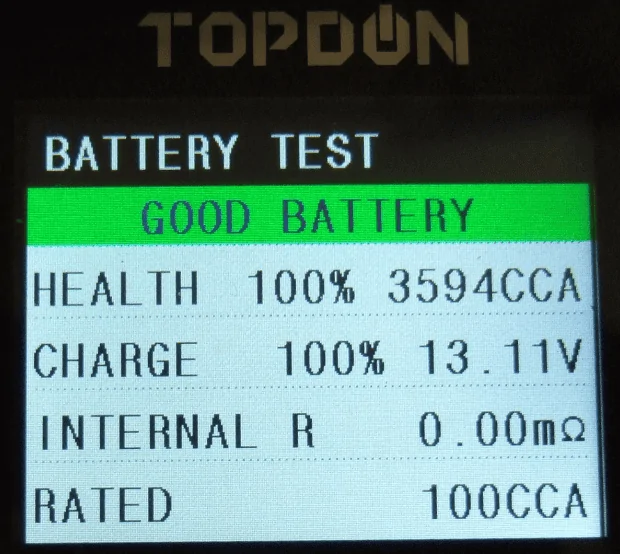
These are AGM lead/acid batteries. Resistance from the factory is spec'ed at 18 milliOhms. I almost sent them back until I found the manufacturers spec sheet that validated what I was seeing on the new batteries. I initially tested both the old and new batteries with the Topdon BT200. Readings were accurate (at least what I expected to see) on the new batteries, but I got downright crazy readings on the old batteries! CCA actual readings in the 6300 range! Resistance came back crazy low too! As in 0!

The BT200 does not have a setting for AH so I used 100CCA (the lowest CCA setting) even though the battery should more accurate be set to around 65-75AH.

I then broke out the Viking tester and ran the same tests using CCA at 100 ( I also tested using AH as the Viking offers it and had identical results). The new batteries tested very similar to the BT200, but the old batteries tested completely differently. Voltages tested the same on both testers, but most everything else was different. The Viking measured resistance much higher... as would be expected for sulfated batteries. It also failed each of the old batteries. The BT200 passed all the old batteries as good with extremely high levels of SOC and SOH.

I'll post actual screen readings of both when my camera finishes charging. But this much I know for sure. The BT200 does nto do well with smaller AGM batteries. The Viking handled them as expected. BTW, resistance was up to 632 milliOhms on the batteries that came right out the the backup units. I broke out my Batterminder chargers and started to try to bring them back. After 2 days the resistance level had drop by 50%. We'll see if I can get them back to under 20 milliOhms in a week or two.

Actual screen captures coming soon.
 
Last edited:
OP
OP

TJC

Well-Known Member
First Name
Tony
Joined
Aug 28, 2020
Threads
45
Messages
3,943
Reaction score
9,900
Location
North Carolina
Vehicle(s)
93 Miata, 05 Ranger 4x4, 20 Ranger 4x4, 23 CX-5
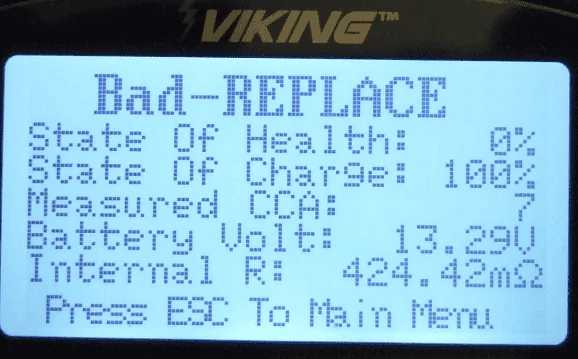
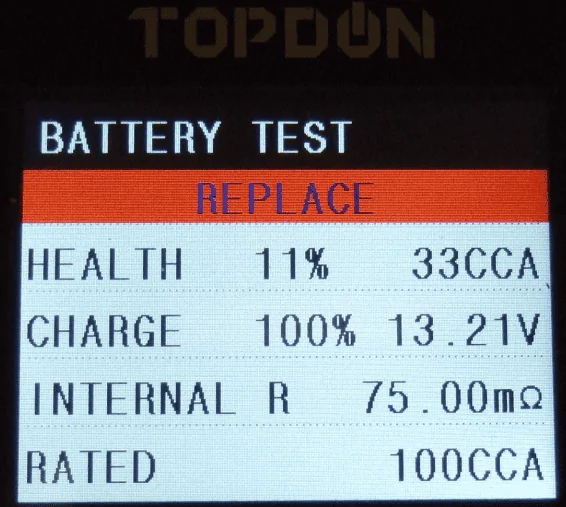
Here are the results of testing on two 12v /9AH AGM Batteries. The first is a battery that was pulled after 4 years of use in the Battery Backup Unit (BBU). No attempt at charging or desulfating. The Topdon test went first in both readings. Then the Viking followed. Clearly the Topdon results are out of the ballpark off. Both batteries removed from the BBU are heavily sulfated and the battery backup would fail to run on battery power.

Viking Test Results________________Topdon BT200 Yest Results
1- Viking Sulfated Battery .webp
1 - TooDon Sulfated Battery .webp


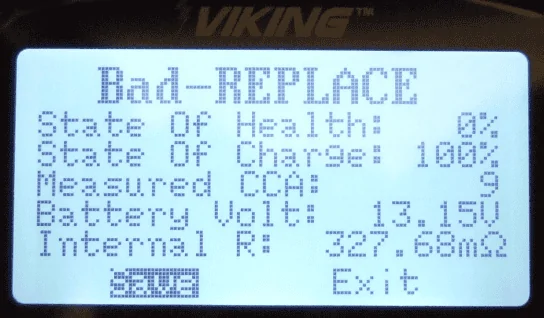
After conditioning the replacement batteries, I attempted to recharge and desulfate the spent batteries. These results are after 12 hours on the charger / desulfator.
Whatever algos are used by the Topdon are starting to work but are still way off the target. The Viking is reported more accurately. Note resistance is dropping from 424 to 327. 18-20 is the optimal for these batteries.

I think maybe Topdon's algos don't handle high resistance well.

Viking Test Results_________________Topdon BT200 Yest Results
2 - Viking after overnight desulfating 2.webp
2 - Topdon after desultating overnight .webp
 
OP
OP

TJC

Well-Known Member
First Name
Tony
Joined
Aug 28, 2020
Threads
45
Messages
3,943
Reaction score
9,900
Location
North Carolina
Vehicle(s)
93 Miata, 05 Ranger 4x4, 20 Ranger 4x4, 23 CX-5
I've let the batteries sit on a charger overnight, and measured again using both the BT200 and the Viking. BT200 is now reporting correctly, and even more, giving detailed info on the issues of each battery. I am pleasantly surprised with the BT200. Seems there is more to the BT200 than a pretty interface. I will use both to validate each other in the future.
 

IdahoRanger

Well-Known Member
First Name
Steve
Joined
Sep 26, 2019
Threads
12
Messages
4,330
Reaction score
21,513
Location
Idaho
Vehicle(s)
2019 Lariat SuperCrew FX4
Occupation
RETIRED
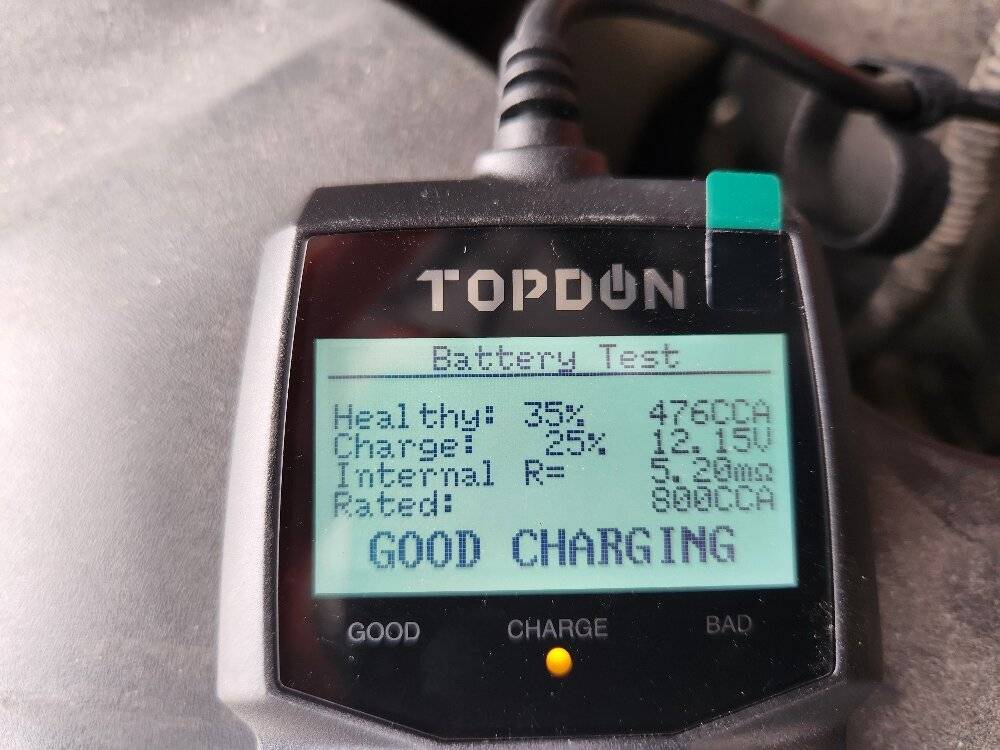
Finally got a tester and results on a 2019 OEM battery are in. YIKES. Have not gotten any of the telltale signs of a bad battery.

Hooked up the desulfator.

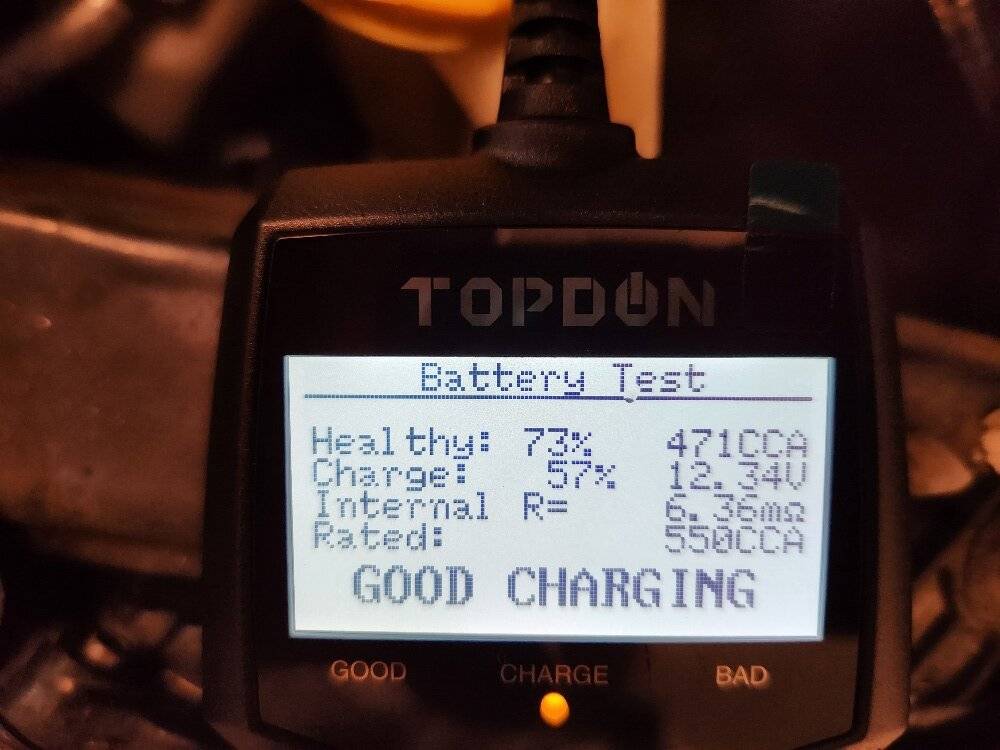
Battery 012224.jpg


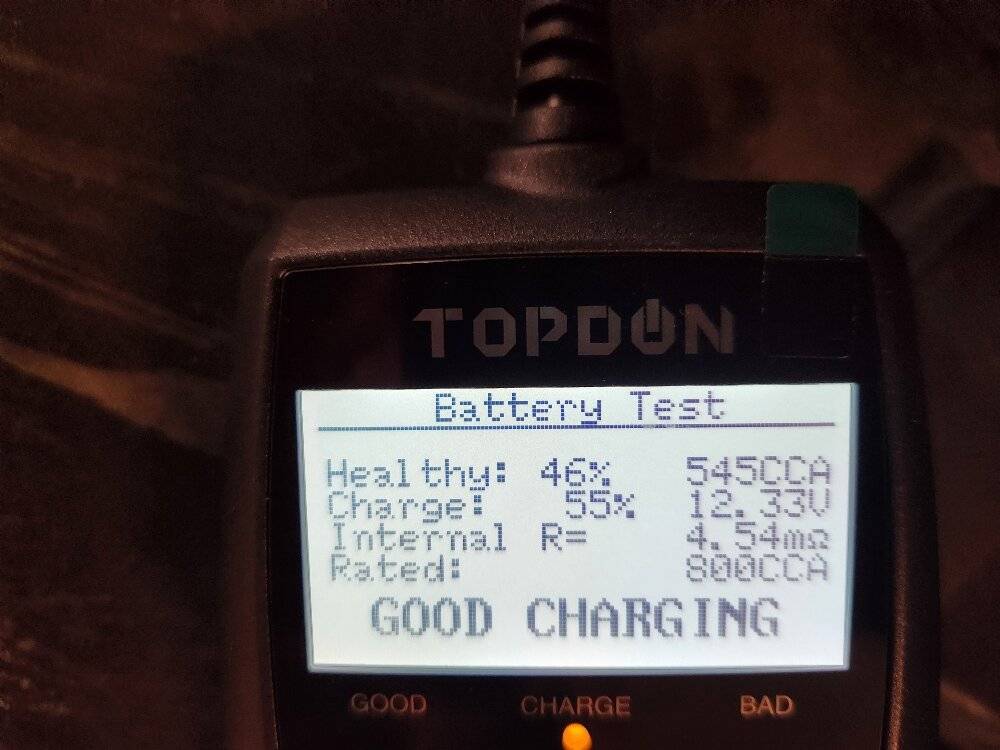
battery 2 012224.jpg


Same age flooded cell in Outback. Need to desulfate it too.

battery subaru 012224.jpg
 
Last edited:
OP
OP

TJC

Well-Known Member
First Name
Tony
Joined
Aug 28, 2020
Threads
45
Messages
3,943
Reaction score
9,900
Location
North Carolina
Vehicle(s)
93 Miata, 05 Ranger 4x4, 20 Ranger 4x4, 23 CX-5
Watch the internal resistance. Try to get it down to 2-3. Anything below 5 is far better than most. Once you hit 10 it is new battery shopping time. Below 5 is acceptable. Below 4 is good. Less than 3.5 is excellent.

These readings are temperature and charge dependent. They will vary but you can get a good feel by monitoring them over time.

Optimal Voltage should be in the 12.65 - 12.8 range after resting a few hours. It is impossible to achieve with the stock settings the Ford BMS is set to. Either unplug the BMS sensor or set the SOC threshold to 95% - 100% using Forscan, and resting battery voltage will go up.

Sulfation will begin at < 12.65v. The lower the voltage the faster the sulfation process. Each battery type is slightly different, but these rules of thumb generally apply to all auto lead acid batteries. Flooded and AGM. For exact specs go to the manufacturers website.
 

IdahoRanger

Well-Known Member
First Name
Steve
Joined
Sep 26, 2019
Threads
12
Messages
4,330
Reaction score
21,513
Location
Idaho
Vehicle(s)
2019 Lariat SuperCrew FX4
Occupation
RETIRED
Watch the internal resistance. Try to get it down to 2-3. Anything below 5 is far better than most. Once you hit 10 it is new battery shopping time. Below 5 is acceptable. Below 4 is good. Less than 3.5 is excellent.

These readings are temperature and charge dependent. They will vary but you can get a good feel by monitoring them over time.

Optimal Voltage should be in the 12.65 - 12.8 range after resting a few hours. It is impossible to achieve with the stock settings the Ford BMS is set to. Either unplug the BMS sensor or set the SOC threshold to 95% - 100% using Forscan, and resting battery voltage will go up.

Sulfation will begin at < 12.65v. The lower the voltage the faster the sulfation process. Each battery type is slightly different, but these rules of thumb generally apply to all auto lead acid batteries. Flooded and AGM. For exact specs go to the manufacturers website.
Thanks Tony, I always appreciate your insight on battery health. The Noco 5 shows full charge after about 5 minutes on the Ranger prior to "repair" and then desulfate process ran 4 hours. Running it on the Outback (charged for about 45 minutes) then set to "repair" When done will put back on the Ranger.
 

got3fords

Well-Known Member
First Name
James
Joined
Apr 12, 2021
Threads
131
Messages
5,323
Reaction score
13,832
Location
22973
Vehicle(s)
2026 Marsh Gray Ranger Raptor, 1995 Harley XLH1200
Occupation
Mom Joke Professional
Wife tried to remote start her Edge the other day, and couldn't because it said 'battery not charged' or something like that. So after it rested a couple of hours I took the Solar tester to it. The IR was a littel over 5mohm, SOC 63%. Now it is really difficult to get a good purchase on the negative terminal because it is tucked so far back toward the dash.
Then I took the tester to the Ranger. I got very similar results, though IR was slightly lower, upper 4 to low 5. (2 tests).
Ranger 2021 45k miles, stock battery
Edge 2019 30k miles, bought used not sure if battery ever replaced
Outside temp around 20 degrees.
I have not observed regen charging in the Ranger for months. The ASS still works occasionally, but a lot of times it doesn't because of Vehicle Charging.
 

IdahoRanger

Well-Known Member
First Name
Steve
Joined
Sep 26, 2019
Threads
12
Messages
4,330
Reaction score
21,513
Location
Idaho
Vehicle(s)
2019 Lariat SuperCrew FX4
Occupation
RETIRED
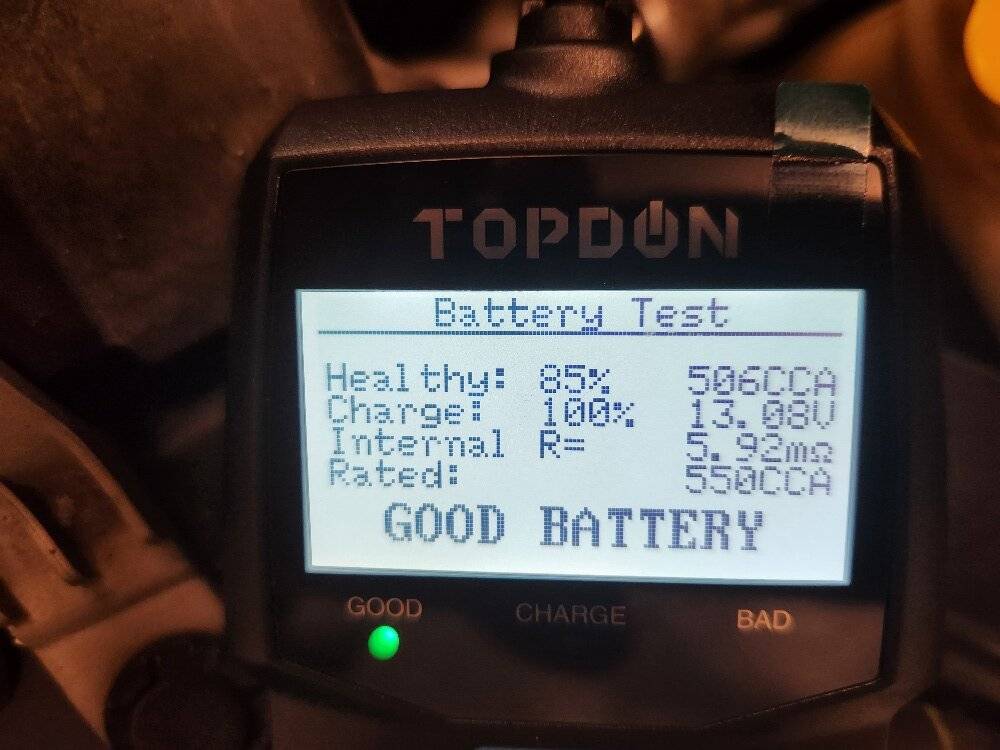
After one round of charging and desulfating with the Noco 5 the Ranger improved to this:

ranger 012224 charge.jpg


and the flooded cell on the Outback to this

subaru charge.jpg


Running second round on the Ranger.

I never knew about desulfating until this forum so I want to thank the battery experts on here for sharing helpful information.
 
Last edited:


Top