Sponsored

Maximizing Battery Life

OP
OP

TJC

Well-Known Member
First Name
Tony
Joined
Aug 28, 2020
Threads
45
Messages
3,931
Reaction score
9,861
Location
North Carolina
Vehicle(s)
93 Miata, 05 Ranger 4x4, 20 Ranger 4x4, 23 CX-5
From what I've read, the Autel MS906 PRO TS sounds like a nice package, esp for Fords.
Sponsored

 

airline tech

Well-Known Member
Joined
Aug 24, 2022
Threads
28
Messages
4,448
Reaction score
8,504
Location
Midwest - KS
Vehicle(s)
2022 Ranger Lariat-Super Crew, Cactus Gray
Occupation
Aircraft Tech
From what I've read, the Autel MS906 PRO TS sounds like a nice package, esp for Fords.
It is - This was a warranty replacement for an older version, my battery swelled and no parts replacement available - so worked a deal for $200 and upgrade to its nearest compatible model.

I have 4 others:

1. TopDon Phoenix Smart - I like this one as it also gives me a J2534 Passthrough Cable, so I can use it along with (FDRS), so on the occasion that I use the temporary use (FDRS) I am already set.
FDRS is finicky on what cables will communicate with FDRS (Must Be Approved) or it blocks the communication.

2. Snap-On - Trident D10 - Got a sweet deal on this one, it's more cumbersome to use and still playing with it - to set up custom PID Lists, has more functoriality than the Autel and TopDon - It was recently updated to 25.4, I have not checked what extras tests it gave in it. It is the closest to FDRS you can get in Special Functions & Test Procedures for Scan Tool functionality. .

Updates: Are expensive but manageable, - I keep all 3 current and up to date and out of the 3 I use the Autel & TopDon the most, the Autel is the slowest of the 3, but works great for a simple Live Data Monitor and it has a (Plug In VCI - Bluetooth) The TopDon is a Bluetooth VCI Module that is hard wired into the OBD Port, so I have a short cable to contend with.
The Snappy is a hard-wired cable - (LONG Cable) that if you are not careful, you can drag the cable with your foot and pull it out of the OBD Port exiting the vehicle.

3. Forscan - It's a GREAT software for (As-Built) Changes and Reading/Clearing Codes but LACKS a number of PIDs and it cumbersome to load the PIDs to view them.

4. Actron - Don't recall the model # - It was my very first scan tool (in 2004) - Its still works, just cannot part with it, I held onto it after I bought my 2nd scan tool. The OTC Genysis - it was no longer being supported with updates, so I sold it for 75% of what I paid for it.
 

airline tech

Well-Known Member
Joined
Aug 24, 2022
Threads
28
Messages
4,448
Reaction score
8,504
Location
Midwest - KS
Vehicle(s)
2022 Ranger Lariat-Super Crew, Cactus Gray
Occupation
Aircraft Tech
I have a couple questions for both @airline tech and @TJC How are you monitoring SOC, Charging amps and battery temps? Are you using Forscan or some other tester? Do you have the actual PID numbers for these values and the formulas?

I am asking because I have tracked down some numbers for other Ford vehicles and programmed them into my Torque Pro app. They appear to give valid values. I just want to see if they match up to what you are looking at. I have taken the time to fire up Forsan yet and compare my numbers to that. The weather has turned a bit cold here lately. We are at 4 degrees here right now and that looks to be our high today.

I have been following both of your excellent work on the BMS. I would like to monitor the battery numbers on my truck as I am sure many others would also. I'm not sure why these numbers need to be such a secret.
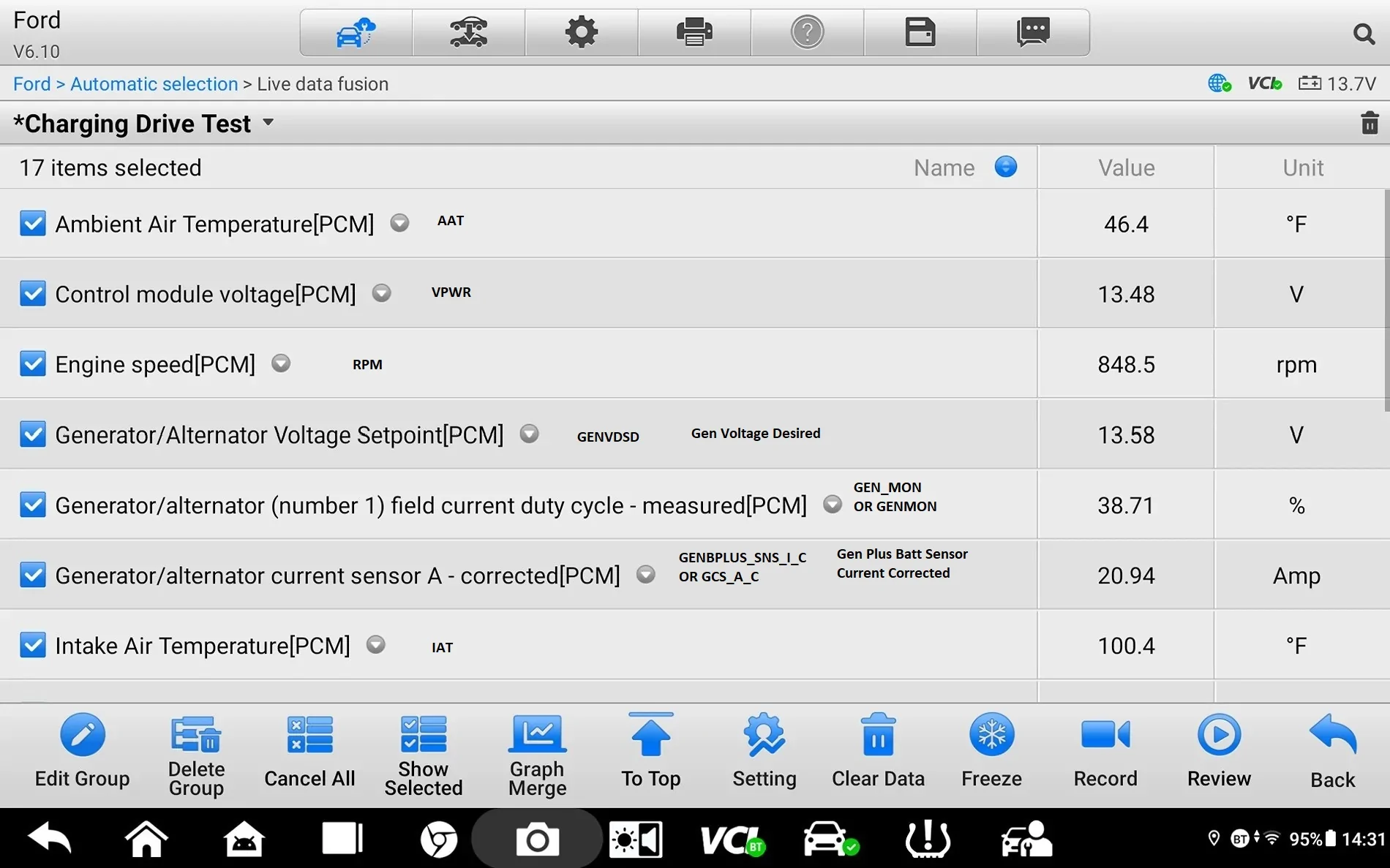
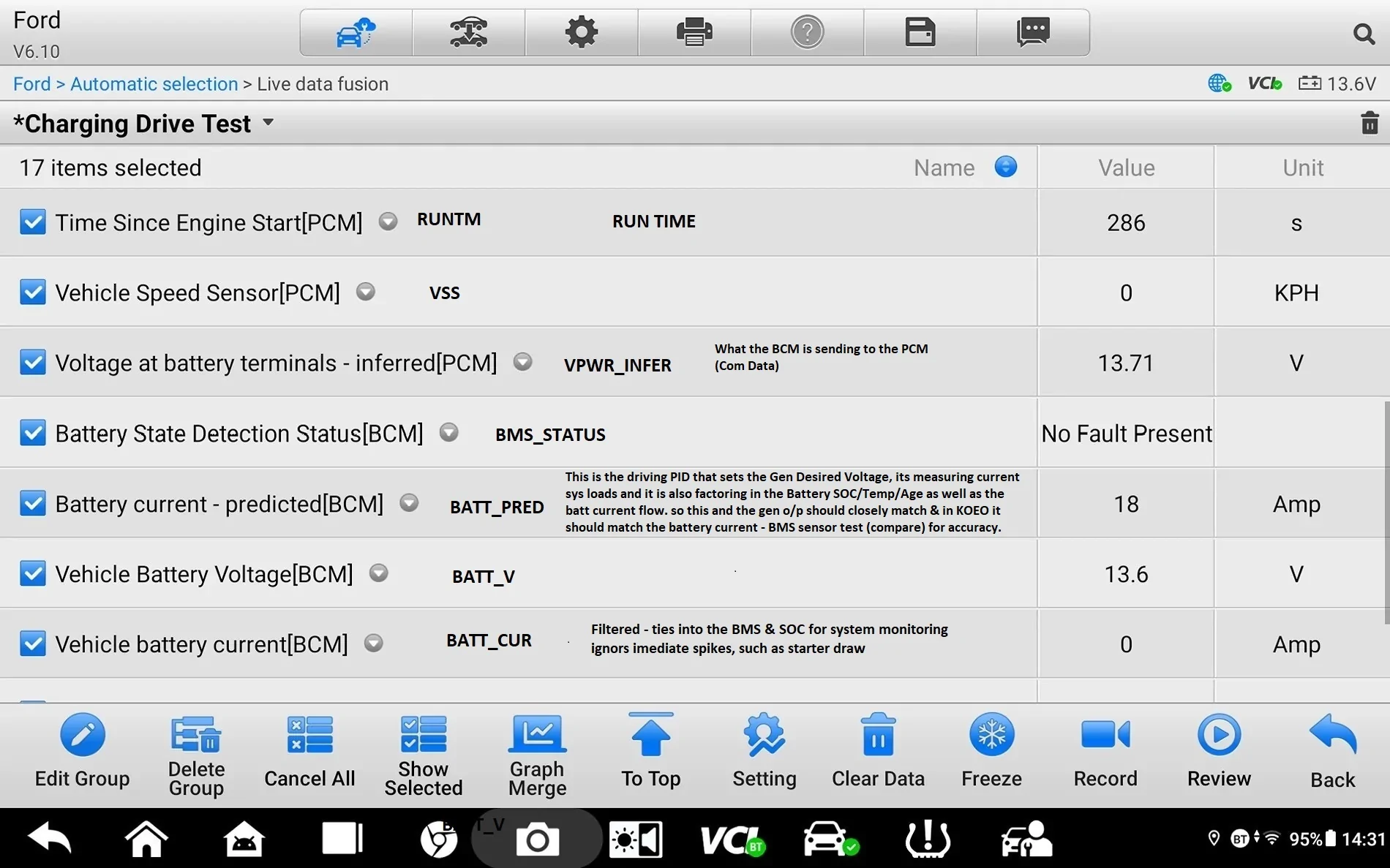
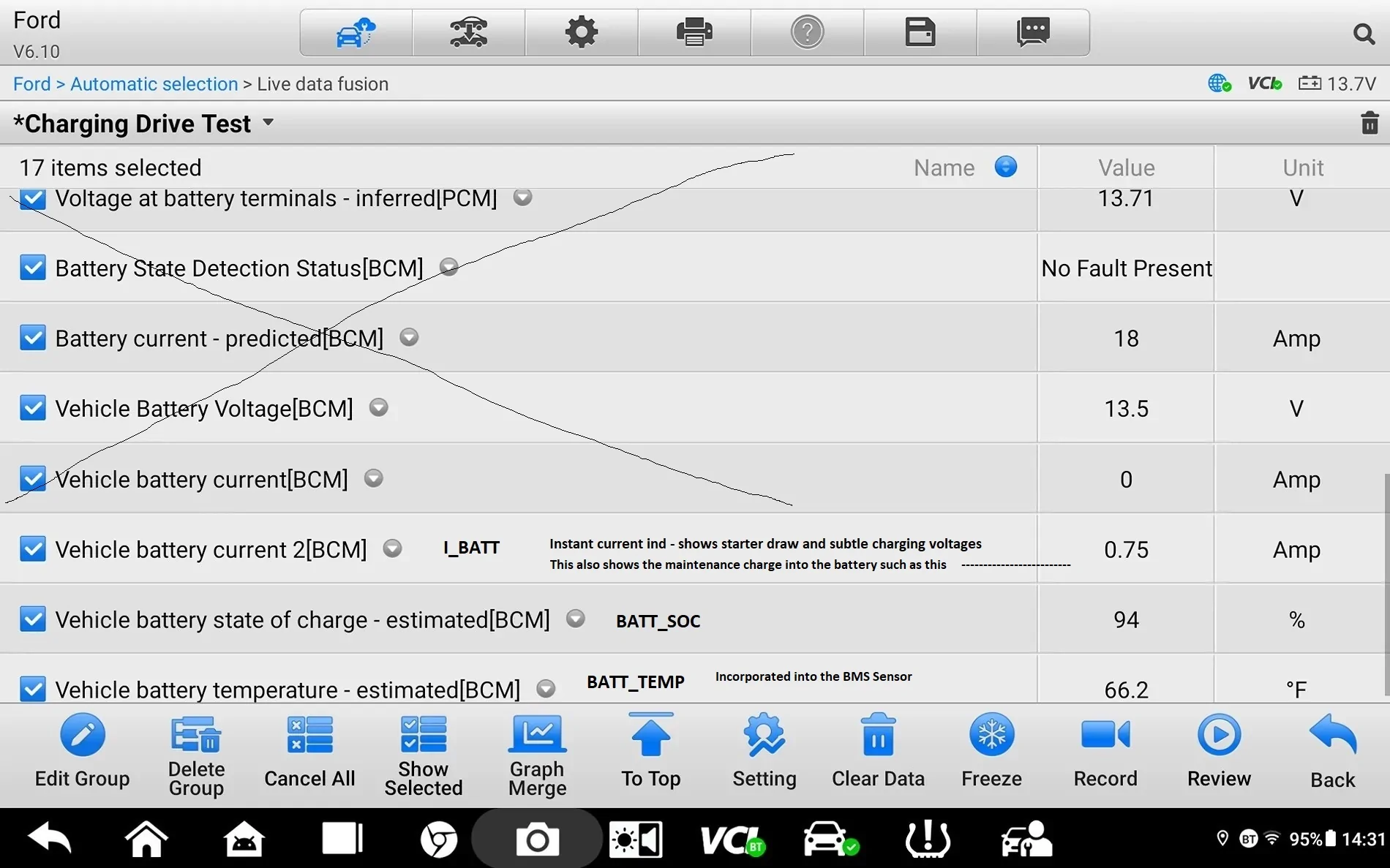
Here you go - keep in mind that sometimes different manufactures might alter the programming name of the PID some when typing in manually into a search such as the (_) may not be needed

Charging PID 1.webp


Charging PID 2.webp


Charging PID 3.webp


In a way - one could use the Battery Current Predicted as a T-Shoot Reference point, if you monitor the system you will get to know what is normal and note that the Predicted is just a few amps under the actual generator output (current)

I am thinking if a failing or drifting BMS sensor is feeding the BCM incorrect data, then the predicted will be thrown off and set the predicted (Lower) than it should be, thus the gen voltage desired would follow suite and produce lower duty cycle (output current)

This can also be used to monitor (Battery-IR) if the predicted and the generator output are constantly higher than normal - it's seeing the battery has an issue taking the charge and it's raising the setpoint higher to overcome that restriction of flow. remember that this PID is also part of the aging battery algorithm as well.

And as I noted in the Pic above - in Key On Engine Off (KOEO) - the predicted PID should match the BMS sensor current draw (Testing the BMS sensor for accuracy) is it seeing the true system draw.
 
Last edited:

Big Blue

Well-Known Member
First Name
Lee
Joined
May 5, 2020
Threads
16
Messages
3,927
Reaction score
9,352
Location
Wisconsin
Vehicle(s)
2019 Ford Ranger XLT FX4 Supercrew lighting blue
Occupation
Retired mechanical designer
Here you go - keep in mind that sometimes different manufactures might alter the programming name of the PID some when typing in manually into a search such as the (_) may not be needed

Charging PID 1.webp


Charging PID 2.webp


Charging PID 3.webp


In a way - one could use the Battery Current Predicted as a T-Shoot Reference point, if you monitor the system you will get to know what is normal and note that the Predicted is just a few amps under the actual generator output (current)

I am thinking if a failing or drifting BMS sensor is feeding the BCM incorrect data, then the predicted will be thrown off and set the predicted (Lower) than it should be, thus the gen voltage desired would follow suite and produce lower duty cycle (output current)

This can also be used to monitor (Battery-IR) if the predicted and the generator output are constantly higher than normal - it's seeing the battery has an issue taking the charge and it's raising the setpoint higher to overcome that restriction of flow. remember that this PID is also part of the aging battery algorithm as well.

And as I noted in the Pic above - in Key On Engine Off (KOEO) - the predicted PID should match the BMS sensor current draw (Testing the BMS sensor for accuracy) is it seeing the true system draw.
Thanks for the reply. What I am actually looking for is the HEX identification of the PID and the formula to convert the value returned to a usable number. Basically a scaling factor. This is what is needed to display these PIDs in the Torque Pro app or any of the various other apps used for this purpose.

I have search the various web forums and have found many of what I'm looking for. The biggest was the oil pressure one. I also have one that displays what gear the transmission is in.

Some of these forums have members that are very diligent at tracking these values down. I have values for the charging amps, SOC and Batttery Age that appear to work. These came from an Australian Ranger forum.
 
OP
OP

TJC

Well-Known Member
First Name
Tony
Joined
Aug 28, 2020
Threads
45
Messages
3,931
Reaction score
9,861
Location
North Carolina
Vehicle(s)
93 Miata, 05 Ranger 4x4, 20 Ranger 4x4, 23 CX-5
Thanks for the reply. What I am actually looking for is the HEX identification of the PID and the formula to convert the value returned to a usable number. Basically a scaling factor. This is what is needed to display these PIDs in the Torque Pro app or any of the various other apps used for this purpose.

I have search the various web forums and have found many of what I'm looking for. The biggest was the oil pressure one. I also have one that displays what gear the transmission is in.

Some of these forums have members that are very diligent at tracking these values down. I have values for the charging amps, SOC and Batttery Age that appear to work. These came from an Australian Ranger forum.
Here is a couple that I have on the transmission.

Torque Converter Actual Slip and Desired Slip

Slip Actual (RPM)
TXD: 07E0221E14
RXF: 0462851E0614
RXD: 3011
MTH: 000500020000
NAME: SLA

Slip Desired (RPM)
TXD: 07E0221E35
RXF: 0462851E0635
RXD: 3011
MTH: 000500020000
NAME: SLD

We really should consolidate and make a catalog of this data.
 
Last edited:


airline tech

Well-Known Member
Joined
Aug 24, 2022
Threads
28
Messages
4,448
Reaction score
8,504
Location
Midwest - KS
Vehicle(s)
2022 Ranger Lariat-Super Crew, Cactus Gray
Occupation
Aircraft Tech
Thanks for the reply. What I am actually looking for is the HEX identification of the PID and the formula to convert the value returned to a usable number. Basically a scaling factor. This is what is needed to display these PIDs in the Torque Pro app or any of the various other apps used for this purpose.

I have search the various web forums and have found many of what I'm looking for. The biggest was the oil pressure one. I also have one that displays what gear the transmission is in.

Some of these forums have members that are very diligent at tracking these values down. I have values for the charging amps, SOC and Batttery Age that appear to work. These came from an Australian Ranger forum.
TRY: 22022A - for the Engine Oil Pressure PID Display, its not confirmed but something I found
 

airline tech

Well-Known Member
Joined
Aug 24, 2022
Threads
28
Messages
4,448
Reaction score
8,504
Location
Midwest - KS
Vehicle(s)
2022 Ranger Lariat-Super Crew, Cactus Gray
Occupation
Aircraft Tech
I am actually working on - doing some - Test Drives for various (Custom PIDs) one of them is transmission - monitoring of normal.
My Autel limits to 50 PIDs (Live Data) and am using that at the moment.
The TD - Limits to 300 and the Snappy Limits to 250, note the smaller number of PIDs you have set the faster the refresh rate will be for precise monitoring.
I plan on using a few test drives and building a (this is normal under, normal driving conditions) and will expand it for other - (Custom PID sets) a better one than I have for the DPFE is one of them.
It's much easier to SEE what is actually happening during a Live Data Drive and take snapshots at varied levels of the drive recording.
 

Big Blue

Well-Known Member
First Name
Lee
Joined
May 5, 2020
Threads
16
Messages
3,927
Reaction score
9,352
Location
Wisconsin
Vehicle(s)
2019 Ford Ranger XLT FX4 Supercrew lighting blue
Occupation
Retired mechanical designer
TRY: 22022A - for the Engine Oil Pressure PID Display, its not confirmed but something I found
I have found d in various places and have compared to forscan that the PID 220415 IS THE Oil Pressure PID for our 2.3 Rangers it gives the pressure in Kpa and needs conversion to psi.

I have also found that 224027 is battery age, 234028 is battery SOC, 224029 is battery temp and 22402b is the ammeter.
 

Big Blue

Well-Known Member
First Name
Lee
Joined
May 5, 2020
Threads
16
Messages
3,927
Reaction score
9,352
Location
Wisconsin
Vehicle(s)
2019 Ford Ranger XLT FX4 Supercrew lighting blue
Occupation
Retired mechanical designer
Here is a couple that I have on the transmission.

Slip Actual (RPM)
TXD: 07E0221E14
RXF: 0462851E0614
RXD: 3011
MTH: 000500020000
NAME: SLA

Slip Desired (RPM)
TXD: 07E0221E35
RXF: 0462851E0635
RXD: 3011
MTH: 000500020000
NAME: SLD

We really should consolidate and make a catalog of this data.
Tying the PIDs HEX value to what it is reporting is a great start. The thing to make it useful is in the case of Torque Pro or any of the other apps is having the formula or other proprietary coding needed to make it display properly. Without that it is just a string of numbers and letters with a description.

It is really frustrating that they have to be so secretive about this information.
 
OP
OP

TJC

Well-Known Member
First Name
Tony
Joined
Aug 28, 2020
Threads
45
Messages
3,931
Reaction score
9,861
Location
North Carolina
Vehicle(s)
93 Miata, 05 Ranger 4x4, 20 Ranger 4x4, 23 CX-5
Tying the PIDs HEX value to what it is reporting is a great start. The thing to make it useful is in the case of Torque Pro or any of the other apps is having the formula or other proprietary coding needed to make it display properly. Without that it is just a string of numbers and letters with a description.

It is really frustrating that they have to be so secretive about this information.
I agree.

My scangauge required me to enter the 3 entries - TXD, RXF, & RXD to get it to report.
 

Ohwell

Well-Known Member
Joined
Jul 19, 2023
Threads
2
Messages
75
Reaction score
93
Location
Minnesota
Vehicle(s)
2023 Ford Ranger XLT FX4
Occupation
Retired
Looking in the 6g forum, a guy asked where the charge setting was in forscan and one member with a Raptor told him where to look and said when you see an 80 change it to 100. So has Ford upped the charge setting in the newer rangers from 70 or 75 to 80?
 

airline tech

Well-Known Member
Joined
Aug 24, 2022
Threads
28
Messages
4,448
Reaction score
8,504
Location
Midwest - KS
Vehicle(s)
2022 Ranger Lariat-Super Crew, Cactus Gray
Occupation
Aircraft Tech
Looking in the 6g forum, a guy asked where the charge setting was in forscan and one member with a Raptor told him where to look and said when you see an 80 change it to 100. So, has Ford upped the charge setting in the newer rangers from 70 or 75 to 80?
It appears - YES from what I read - all Rangers moved up to 80%, this makes sense since all other models that I found (recent years) are set to 80%, as far as I know the 5G Ranger was the only model to have it lowered.
 

Ohwell

Well-Known Member
Joined
Jul 19, 2023
Threads
2
Messages
75
Reaction score
93
Location
Minnesota
Vehicle(s)
2023 Ford Ranger XLT FX4
Occupation
Retired
It appears - YES from what I read - all Rangers moved up to 80%, this makes sense since all other models that I found (recent years) are set to 80%, as far as I know the 5G Ranger was the only model to have it lowered.
That kind of says 80 should be the minimum, doesn't it? My battery health has gone from 100% to 80% in the last 6 months, I've never messed with it in forscan, but I'm tempted to now. I put the Noco on it twice a month, thing has stayed over 100% until they fixed a bad connection I had from the factory between the under hood fuse box and the battery, 6 months later its health has dropped 20%. I just don't want to do anything that would mess up my warranty before the 3-year mark. I have an extended warranty, but I know the battery wouldn't be covered under that after 3 years either.
 
Last edited:

airline tech

Well-Known Member
Joined
Aug 24, 2022
Threads
28
Messages
4,448
Reaction score
8,504
Location
Midwest - KS
Vehicle(s)
2022 Ranger Lariat-Super Crew, Cactus Gray
Occupation
Aircraft Tech
Since I have been monitoring the PIDs for a behind the scenes look at exactly how the system operates - I have found the following and also have taken a deeper dive into the system - online system ops vs actual operation (via Live Data-Monitoring) as a backup and confirmation of the information provided.

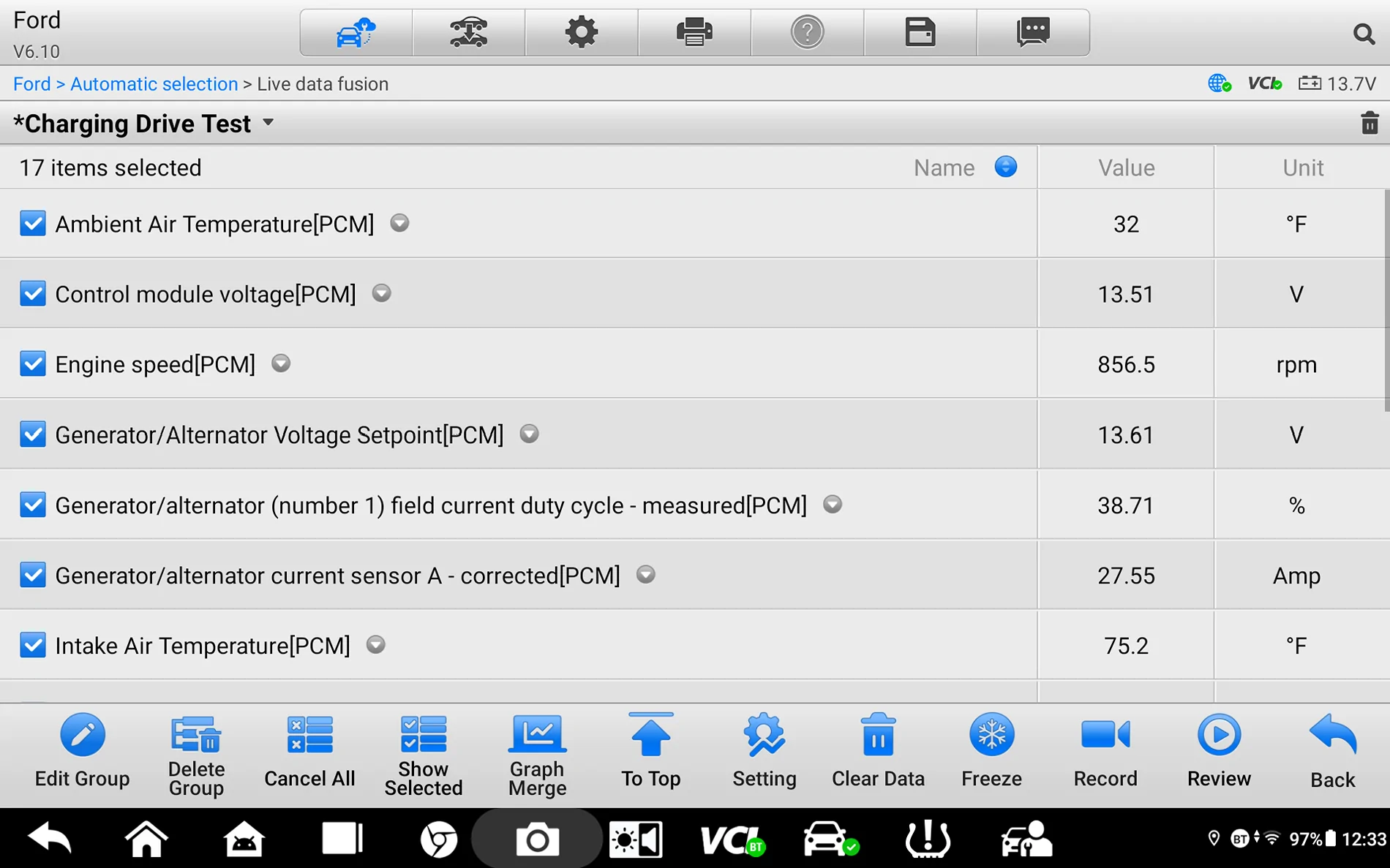
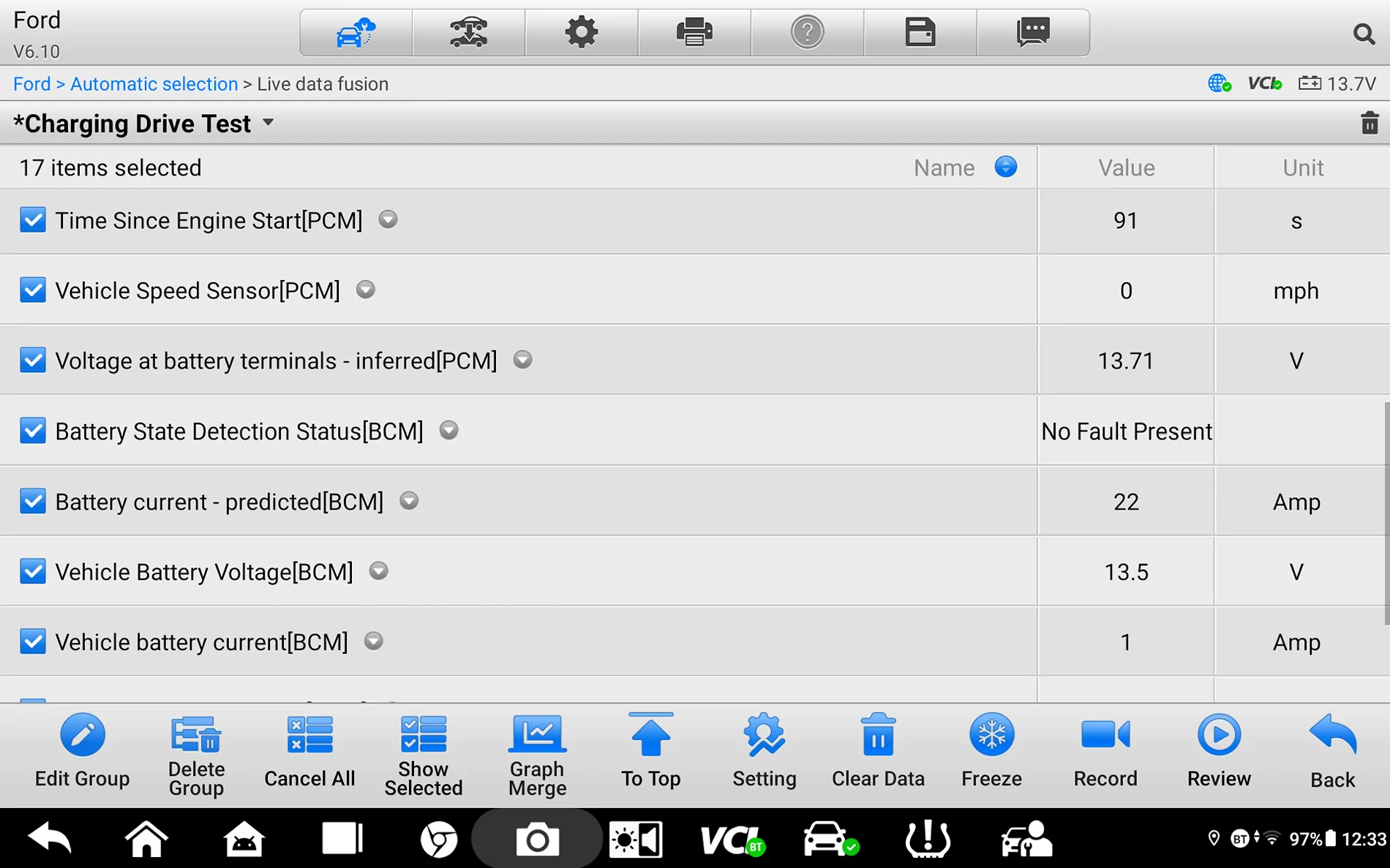
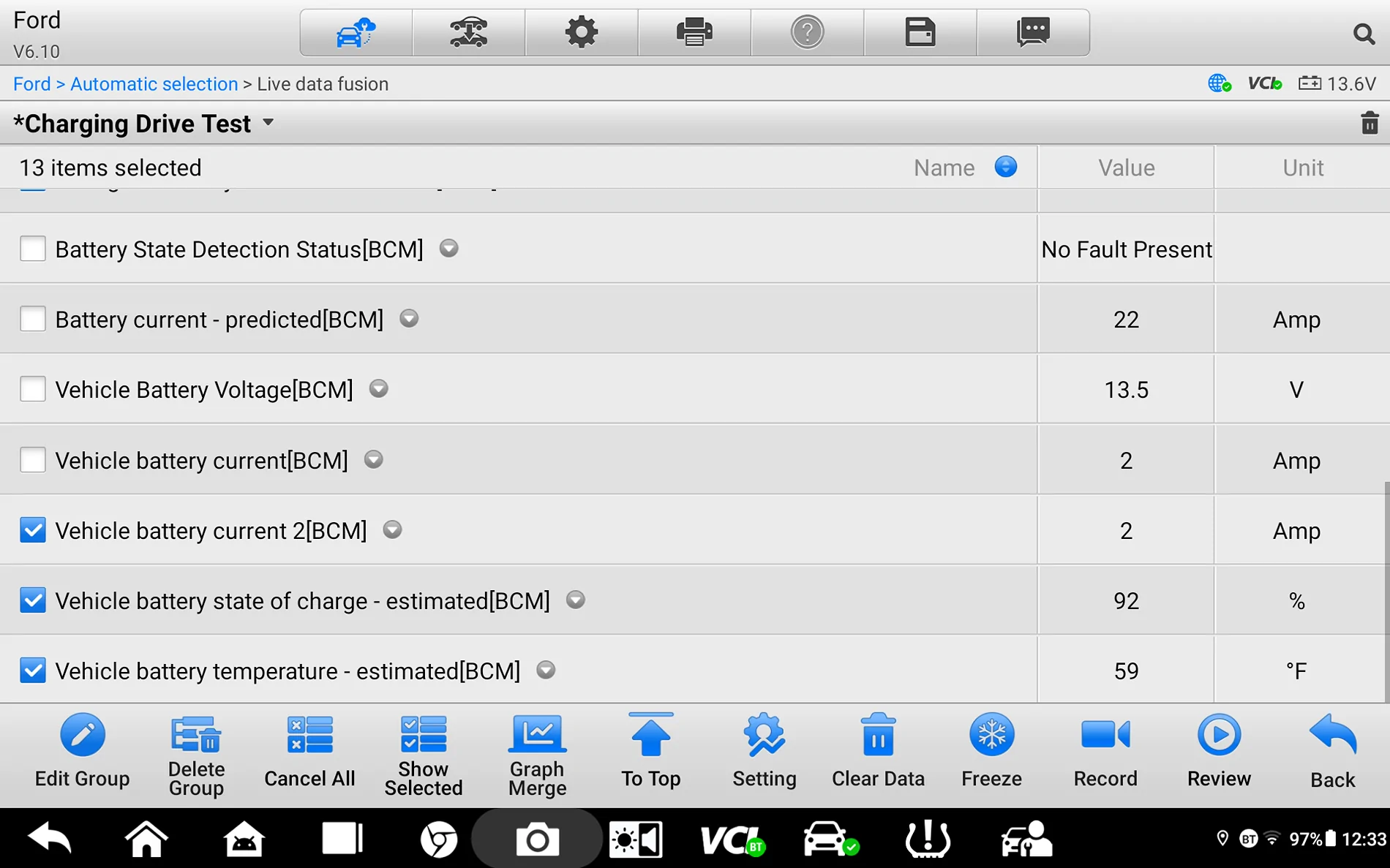
First: Here is the PIDs I have set up to monitor:
The MOST IMPORTANT PID = The Estimated SOC, this is the PID that is used by the BMS to determine the battery charge level and how it handles charging the battery - Dictated by the SOC Target (Level) so 75% Factory or (Forscan Adjusted)

C1.webp


C2.webp


Slight: Note - the Battey Current changed when I scrolled down and took the last screenshot- Live Data - so this is why the 2nd and last pic show different values.

C3.webp


First:
We need to think of the SOC (being) 100% charged as far as the BMS is concerned as this is what the factory setting of 75% does - with a 25% Headroom allowance for Regenerative Charging.
So as the BMS is concerned 75% SOC = 100% Charged if we are only looking at the basic charging operation.
So, if we bump that up to 90% - then we have a 10% Headroom Allowance and now 90% = 100% Charged.

My Live Data (Monitoring) proved that the SOC is slow to climb, and with longer drives it will continue to climb however (slowly) as the - Battery Current - PID shows it slowing down to a 1-to-2-amp charge or even drop off the charge to (0) as it nears the Target SOC.
For my monitoring (I am set to 90% SOC) and have noted that even at a SOC reading of 87 or 88 Percent - it still shuts off the voltage charge.
Then I thought about the Battery Temp (factor) and its now winter and colder.
So, I wanted to know how this affects my SOC readings I was seeing
and took a dive into the web.


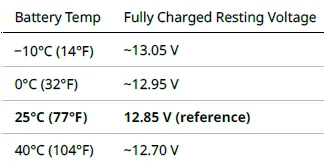
A Cold battery will read a higher resting voltage than a Hot Battery, so the system is taking this into account and the BMS uses these factors to determine the Estimated SOC

1. Battery Temp- used as a correction for SOC Readings, charge acceptance behavior- reduced (when cold) & IR expected to increase (when cold) - so it's also part of the (Gen Volt Desired) factor
2. Battery Voltage (Not actual voltage) just a ref (does the soc - plausibly match the voltage?)
3. Battery Current (In & Out) - How fast does it discharge and how fast does it charge - this is the way it measures the battery health & IR of the battery. This is a KEY POINT as this is a primary input for the SOC Calculation. (so not actually measuring the IR - just estimating the IR by the way it handles (Discharge & Charge)
4. The Battery Age - the BMS uses the theory that as the battery ages the IR will increase.

So, the above explains why - I can see the battery current drop to (0) when I have a SOC reading of 87 or 88 percent and my target is 90% but my resting voltage is reading 12.75 or Higher.
It's simply how the BMS works, the SOC is not a true factor of just Battery Voltage it's a compilation of many factors.

For the many owners who have varied issues with - Deep Sleep & Inop Functions and find that when their battery is tested and it tests - GOOD, and the real important factor is - What is the BMS - Actually BCM - reading of the Estimated SOC, as this is the MAIN driving factor on how the battery gets charged as well as - DEEP SLEEP Decisions and Load Shed Decisions.
The Downside of this IMPORTANT factor is that - Forscan will not display this specific needed PID, FDRS will along with other High End scan tools - but not Forscan.

The KEY is not the Battery Voltage but what the BMS reads as the SOC, the low SOC is the cause of the issues not the voltage. yes, they relate but as far as the BMS control and decision maker its only concerned with the SOC reading.

So, a battery that spends its life in the 75% SOC Range, will see an increased IR, this is the important factor here and the actual SOC reading.

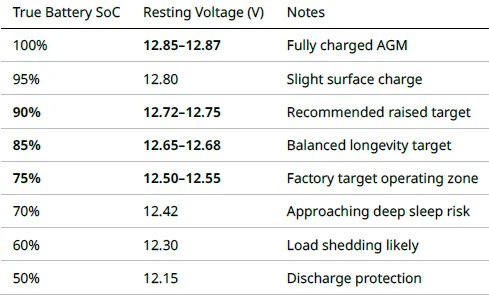
and using the following charts we can see what the Target SOC to Voltage is:
@ 77 Deg F

SOC Chart.webp


Temp vs Actual Voltage (Basic Chart)


Temp Correction.webp


So, with the above covered - we need to look at why the SOC is slow to climb and - it mainly gets slower as it nears the target SOC and this is highlighted by the Battery Current (In) as it drops down the charging amperage to 2 or 1 Amp and even (0)

As I can see this when set to 90%

(Example: 68–72% with 75% target, or 83–87% with 90% target)

Alternator output reduced - the desired voltage will drop slightly and set a desired to maintain - the system voltage as dictated by the (Battery Current Predicted - PID) this is telling the PCM what the total current (load) is - and this drives the Desired Gen Voltage (setting) - this PID is also looking at the (SOC) PID in its determining factor.

Battery current PID may show 0 A or a minimum charge of 1 to 2 amps.

Voltage is maintained but does not increase unless there has been a heavy current draw such as lights on & engine off and an initial replenish just after engine start.


Battery well below Target SOC:

(Example: 50% with 75% target, or 65% with 90% target)

Active charging resumes - so a higher Gen Voltage Desired to overcome the extra amperage charge on the battery plus maintain (system) current draw - The Predicted Current (Increases)

Current increases - the Battery Current (Charge) is higher roughly 8-10 amps
SoC climbs - faster than it does when it's near the target SOC

So Real World Testing:
If we reference my (Live Data) above - the battery was placed on an overnight charge recently.
It has had a few drives before this (PID) reference was pulled today.
I am set to 90% SOC - and throughout my testing I (on average) see the SOC reading in this range (87 to 94) Percent - however it has also been cold - the truck is parked in a garage and the average temp in the garage is maintained (heated) at about 45 Deg.
This (Ref) pull was after a trip to the store - so the battery temp is higher than a cold reading.

So now I have an understanding on what is actually happening behind the scenes with the Live Data Monitoring - and can understand why the SOC - is slow to climb and why it shuts off the (current) charge to the battery when it's close to the SOC Target.
It is slowing down the charge rate - to protect the battery and the temperature is a factor of the SOC Reading. I know that a overshoot of 94% is considered normal as well (if I am set to 90%)
also noted when set to 90% (In daylight) the system will sometimes still set the (Gen Voltage Desired) to a level where the battery will support the load - the same as the (75%) setting does, just not as often and I can still see the (regenerative charge) when coasting down a hill.

The 90% SOC bump - only moves the ceiling of the Target SOC up and it sets a higher (100%) charge (so the BMS thinks that the 90% SOC) is now 100% charged and it allows for some headroom cushion - greater than the factory 75% does.
Raising the SOC to 90%
Does not force constant charging, but it widens the threshold of the Deep Sleep and Load Shed parameters.
Lessens the IR (Increase) in the battery over time.

So, in short, the sweet spot is 85 to 90% SOC - if consistent short drives 90% and mixed highway and short drives 85%

Reasoning - the same as the factory 75% and sulphation and battery life in general.
At 75% - the battery stays at this level consistently and short trips (only)
Over Time:
This increases the IR of the Battery

The SOC slowly declines down to the (Deep Sleep and Load Shed) trigger points.

The SOC will drift low - due to Infrequent full charge events, so this prevents the BMS system from seeing a clean reference point of (True Full Charge) and the drift accumulates lower and will not recover on its own.

I actually have witnessed this - when I actually began my monitoring of the live data, I was stuck in the 83% SOC range - no issues with Deep Sleep etc, just a noted low SOC reading when I was set to 90%, granted it had been over a year since I performed any battery maintenance (external charging) but I do have a Batt Minder (On-Board) and have frequently tested the battery with a low IR test result.
But with my (Plug In) Voltmeter in the Power Point - I was seeing consistent voltage charge readings of 14.5 to 14.7 - never thought anything about it being (out of normal) since I was at 90% SOC setting - I thought this was a normal reading for that setting. It was not until I actually started the monitoring and wondered why I had such a high voltage charge and a normal battery voltage reading (resting) and a low IR but still had a low SOC reading, is when I realized the BMS sensor had drifted - and the generator was being overworked as the SOC did not match the true battery voltage. - Note: No DTC Codes were generated.

So YES - SOC Drift is Real as I saw it - even when set to 90% SOC, so I can imagine that a trck set to 75% SOC the (Deep Sleep etc) would have triggered - as I was above it, even with a drifted SOC reading.
The fix to bring it back into (normal) was a Battery Top Off - Charge & a few cycles of repair mode using my external charger. Genius 10 also just as an extra reset the BMS as it was a new battery installed (Only 3 years old) now new as far as the BMS knows.

So even at 90% - the battery still needs periodic help to maintain its health even with the on-board Batt Minder (Desulphator) the Batt Minder just helps keep the battery IR in the Low Range.

So, as you can see - my real-world findings at 90% SOC and imagine the same results with the SOC target set at 75% only puts the decision making (Deep Sleep Etc) in a (tighter window) of cushion - when it sees only short trip drives - bumping up the SOC Target increaes that window cushion.

Now for the BMS Disconnect:
Yes, this helps the system overall - eliminates the (BMS) control however the PCM still has control over the charging system - it's in a Fail-Safe Charging Mode.
Not entirely (Old School) as Old School had a fixed regulator, the PCM has a variable voltage regulator
So, there is no battery monitoring system involved, but the downside the (system now overcharges) the battery - not good for long term health - a trade off

Disconnected Long Term Trade Offs.

Battery spends more time at high voltage
Increased plate corrosion over time
Reduced fuel economy
Regenerative headroom lost
Battery lifespan can be shortened
ASS Disables (if you care) or use it

Benefits:
Eliminates the nuisance Deep Sleep & Load Shed - issues as it removes the SOC and related inputs the BMS system uses for its charging cycle.

To sum it up the factory 75% is not good for the battery and disconnecting the BMS sensor is not good for the battery (health wise)
the 75% SOC is worse as it creates 2 issues - battery health and the nuisance messages over time unless this is a fleet truck that spends a great amount of time - moving.

So, bumping the SOC to a better spot 85% to 90% - is a better solution, as anything above 90% SOC would be close to having the BMS disconnected, not good for battery health overall.

I also dug into - the TCU Health Checks and what is actually happening behind the scenes as this one has had me (shaking my head) on what actually happens and why we can hear the interaction when it occurs.
Coming Up - in my next post - Time for Dinner (when the wife says - diners ready) you say YES DEAR

Just a note - I have enjoyed this deep dive and gaining a full understanding on what's happening behind the scenes - the information that the manuals leave out (DETAILS) on how something actually works vs assuming they mean (this way or that way) and leaving more unanswered questions by their system operation notes. It wasn't until @TJC posted his findings that I actually hooked up and did my own monitoring - to see what was actually happening - use that data and dig from there. So much drama over a simple charging system makes your head spin, well that simple charging system proved to be not so simple after all with a lot of variables associated with it - Smart Charging System (as its officially known) has proven to be not entirely as smart as it is marketed to be or we would not have a need for this thread or the many pages of posted issues about it.
 
Last edited:

nate237

Well-Known Member
First Name
Nathan
Joined
Apr 29, 2022
Threads
8
Messages
61
Reaction score
158
Location
Moore, OK
Vehicle(s)
2022 Ford Ranger Lariat Tremor
Occupation
Solutions Architect
Thought I'd add a datapoint since I replaced the original OEM battery on my 2022 Tremor Lariat today.

I set SOC to 90% in Forscan at around 6 months of the battery age. The battery was 1,454 days old (3.98 years). Every 3-4 weeks I'd put my Solar/Clore PL2320 on it to completely charge overnight and condition a bit, particularly if I hadn't driven a lot recently.

My Topdon BT200 reported health at 55% (594CCA, internal resistance of 4.17mOhms). I normally have Auto Start-Stop disabled using my Auto-Start Eliminator, but I turned it back on to see how things were going. The truck refused to shut off with the reason via the dash display of the truck was charging. When i got home I let the truck settle a bit, and hooked my charger up which read 68% charged.

I let the charger charge it overnight to 100%. I unhooked the charger in the morning, and a bit later I decided to hook it back up and the charger reported it was at 78%. I decided to just go ahead and swap it out at Wal-Mart.

For the heck of it, I asked them to hook it up to their big DCA-8000 analyzer. It tested for around 6 minutes, then decided it needed to be charged. It charged for 20 minutes, then reported good, but it needed an extended charge. About that time, the lady at the counter noticed that the sides of the case were swelled a bit. I went ahead and swapped it for a new EverStart Platinum H7 manufacturerd December 2025. The battery case is completely identical to the OEM Motorcraft.

The new battery tested good with the Topdon, although it read at 91% health. Admittedly, I'm not completely sure I trust the BT200. If you watch the Project Farm battery tester video, the BT200 was one that failed a good battery.
Sponsored

 
Last edited:


Top