

Frenchy
Well-Known Member
- First Name
- Chris
- Joined
- Mar 15, 2020
- Threads
- 164
- Messages
- 7,541
- Reaction score
- 10,751
- Location
- Elizabeth, Colorado
- Vehicle(s)
- 2012 Nissan Frontier, 1994 F150 XL, 2022 Ford Transit
- Occupation
- Field Service Technician
- Thread starter
- #1
This Thread will be aimed towards those that are looking to add a Second Battery to their vehicle for House Type Accessories or perhaps those that have a Travel Trailer of sorts(OffRoad Trailers included) and need to know a bit more. Keep in mind I won't have all the information when it comes to the Travel Trailers, but I will do what I can.
Now first off for those that are not aware,any that like to go out and do remote travel will need a way to keep food and drinks cold. The best way to do this is with a Fridge over a Cooler/Ice Box. Of course with a Fridge you need to have power for it. That power will.be a 12 Volt Battery of sorts and preferably not the Starter Battery the vehicle is already equipped with. Of course there may be other accessories like some lights around camp hanging from an Awning or even a 12 Volt Oven(yes they exist and I have one)
If you are going to run a second Battery, it is highly recommended to use a DC-DC Charger vs hooking the Second Battery strait up to the Starter Battery. This is especially true with Modern Vehicles as you have the good old Variable Voltage System(AKA the supposive evil voodoo magical thing). With a DC-DC Charger you can help ensure that your Second Battery is fully charged regardless of what the Vehicle itself is doing. Also a DC-DC Charger is able to charge multiple types of Deep Cycle Batteries. Those types include Flooded, AGM, Calcium and Lithium. There may be another I'm not thinking of.
Attached is a video to explain a bit more in depth of the do's and don'ts with running a second Battery for House type stuff and other types
Now keep in mind that some may want to consider running Solar as well. If you get a good DC-DC Charger, you can tie Solar into it easily as a few brands out there are starting to incorporate it into the DC-DC Chargers vs being required to run a separate Charger. I know for a fact that RedArc and Renogy have them. Feel free to take a look and see what you find.
Here is a video more on Solar Charging.
For Travel Trailers it becomes a bit interesting as I'm not too familiar with them. I won't be surprised if someone else might need to step in. But I will do what I can.
With a Battery in the Travel Trailer, it is still a good idea to have a DC-DC Charger of sorts. A great example of one is the RedArc BCDC1212T. That particular one is cable of charging the Battery/Batteries on your Travel Trailer while you drive. The way it is designed is to have a good solid connection from the DC-DC Charger to the House Battery in the Travel Trailer and a Good Connection going to the Starter in the Vehicle. Now keep in mind you are going to need another connection over the 7 pin connector on the Tow Vehicle for that. Personally I would recommend a Anderson SB Type Connector for that. Down Under in Australia is is common for those who tow Travel Trailers to have this added to the Tow Vehicle and Travel Trailer. This way you have a solid connection and you can disconnect when not in use.
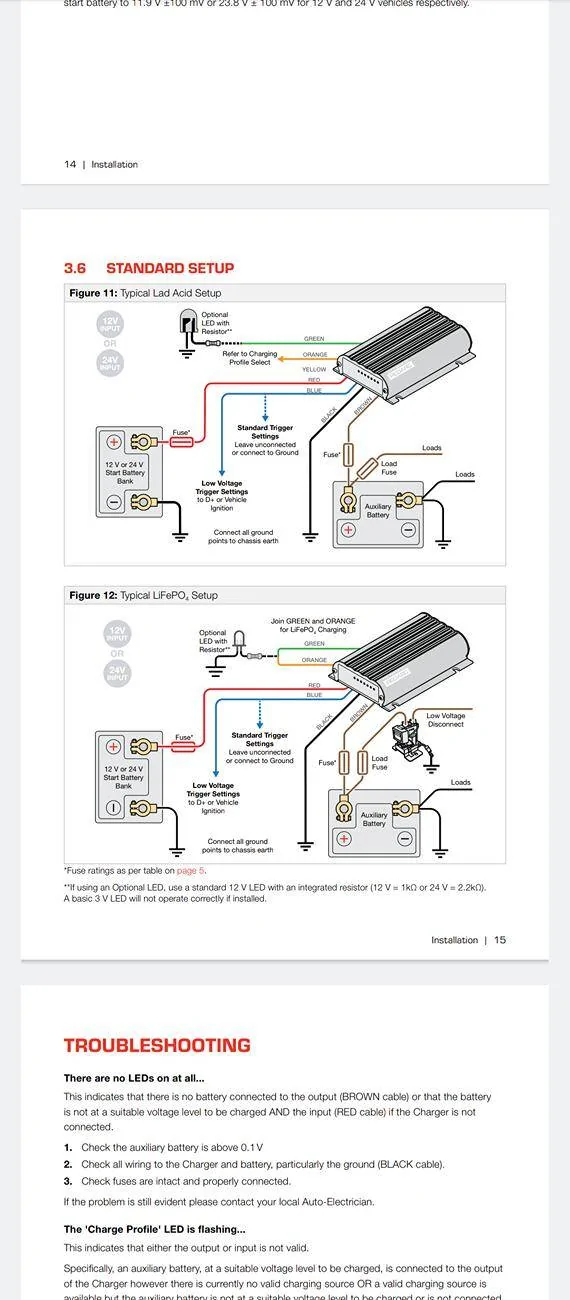
Here is the general wiring recommendation from RedArc

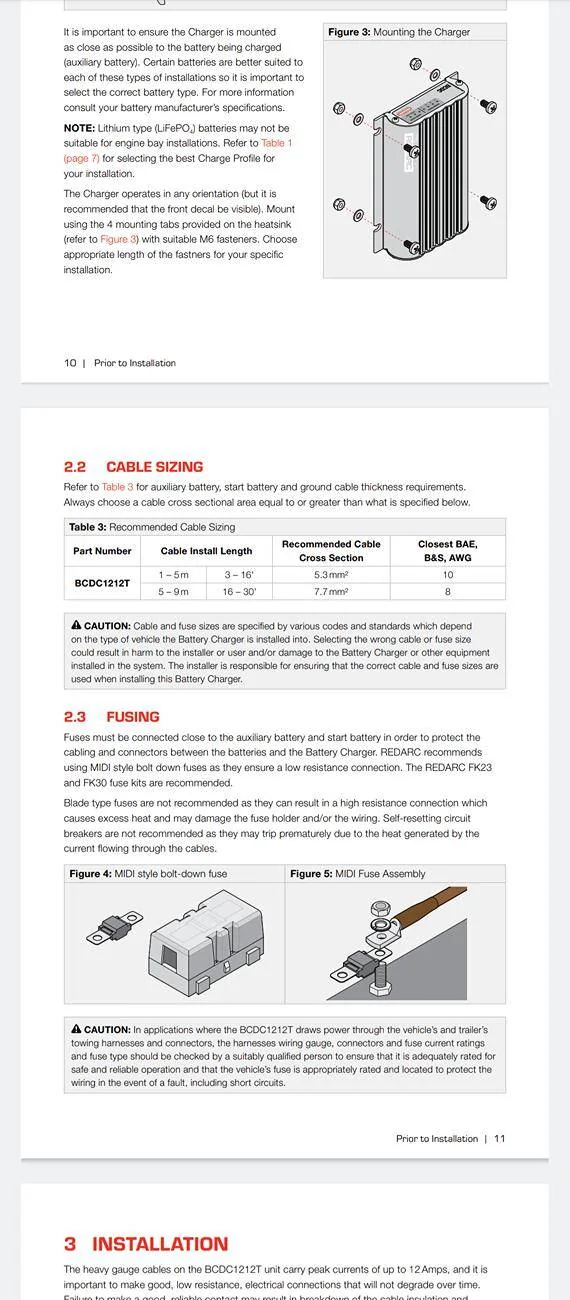
Here is the Power Cable Recommendation for this particular Charger
As for Batteries, you have a few different types. The common ones are Flooded, AGM and Lithium. For Starter Batteries you will normally see either a Flooded or AGM. For Deep Cycle Batteries you can see all 3. Just keep in mind that a Lithium will be more expensive. But if you plan to have the House Battery in said application for a long period of time(more that 3 years), then they can be worth the cost.
Why would one go for a Lithium over Flooded or AGM Batteries? Well for starters, Lithium Batteries are much lighter than a Flooded or AGM of the same size(go look up the weight of a Lithium, Flooded and AGM in Group Size 31. You will be surprised). When addressing the battery to your vehicle, that weight saving can mean quite a lot.
We also have the available Amp Hours to consider. Between AGM and Flooded, both are usually rated the same. Lithium will tend to be a little higher for the same size. For example a Flooded and AGM may be rated for 100 Amp Hours, but a Lithium can be rated up to 125 Amp Hours in the same size.
Last but not least a Lithium can be drained more without it being hurt as much. Typical Flooded and AGM Batteries prefer to not be discharged more than 50%. Lithium Batteries can easily be discharged by 80% without damaging it. So if you have a Flooded/AGM and Lithium both rated at 100 Amp Hours, you will have 30 more available Amp Hours with the Lithium Battery. Depending on what you are doing that can make a huge difference.
Now this is just the start and I'm sure there is more to add. Hopefully it is enough to give you a good enough start.
Now first off for those that are not aware,any that like to go out and do remote travel will need a way to keep food and drinks cold. The best way to do this is with a Fridge over a Cooler/Ice Box. Of course with a Fridge you need to have power for it. That power will.be a 12 Volt Battery of sorts and preferably not the Starter Battery the vehicle is already equipped with. Of course there may be other accessories like some lights around camp hanging from an Awning or even a 12 Volt Oven(yes they exist and I have one)
If you are going to run a second Battery, it is highly recommended to use a DC-DC Charger vs hooking the Second Battery strait up to the Starter Battery. This is especially true with Modern Vehicles as you have the good old Variable Voltage System(AKA the supposive evil voodoo magical thing). With a DC-DC Charger you can help ensure that your Second Battery is fully charged regardless of what the Vehicle itself is doing. Also a DC-DC Charger is able to charge multiple types of Deep Cycle Batteries. Those types include Flooded, AGM, Calcium and Lithium. There may be another I'm not thinking of.
Attached is a video to explain a bit more in depth of the do's and don'ts with running a second Battery for House type stuff and other types
Now keep in mind that some may want to consider running Solar as well. If you get a good DC-DC Charger, you can tie Solar into it easily as a few brands out there are starting to incorporate it into the DC-DC Chargers vs being required to run a separate Charger. I know for a fact that RedArc and Renogy have them. Feel free to take a look and see what you find.
Here is a video more on Solar Charging.
For Travel Trailers it becomes a bit interesting as I'm not too familiar with them. I won't be surprised if someone else might need to step in. But I will do what I can.
With a Battery in the Travel Trailer, it is still a good idea to have a DC-DC Charger of sorts. A great example of one is the RedArc BCDC1212T. That particular one is cable of charging the Battery/Batteries on your Travel Trailer while you drive. The way it is designed is to have a good solid connection from the DC-DC Charger to the House Battery in the Travel Trailer and a Good Connection going to the Starter in the Vehicle. Now keep in mind you are going to need another connection over the 7 pin connector on the Tow Vehicle for that. Personally I would recommend a Anderson SB Type Connector for that. Down Under in Australia is is common for those who tow Travel Trailers to have this added to the Tow Vehicle and Travel Trailer. This way you have a solid connection and you can disconnect when not in use.
Here is the general wiring recommendation from RedArc
Here is the Power Cable Recommendation for this particular Charger
As for Batteries, you have a few different types. The common ones are Flooded, AGM and Lithium. For Starter Batteries you will normally see either a Flooded or AGM. For Deep Cycle Batteries you can see all 3. Just keep in mind that a Lithium will be more expensive. But if you plan to have the House Battery in said application for a long period of time(more that 3 years), then they can be worth the cost.
Why would one go for a Lithium over Flooded or AGM Batteries? Well for starters, Lithium Batteries are much lighter than a Flooded or AGM of the same size(go look up the weight of a Lithium, Flooded and AGM in Group Size 31. You will be surprised). When addressing the battery to your vehicle, that weight saving can mean quite a lot.
We also have the available Amp Hours to consider. Between AGM and Flooded, both are usually rated the same. Lithium will tend to be a little higher for the same size. For example a Flooded and AGM may be rated for 100 Amp Hours, but a Lithium can be rated up to 125 Amp Hours in the same size.
Last but not least a Lithium can be drained more without it being hurt as much. Typical Flooded and AGM Batteries prefer to not be discharged more than 50%. Lithium Batteries can easily be discharged by 80% without damaging it. So if you have a Flooded/AGM and Lithium both rated at 100 Amp Hours, you will have 30 more available Amp Hours with the Lithium Battery. Depending on what you are doing that can make a huge difference.
Now this is just the start and I'm sure there is more to add. Hopefully it is enough to give you a good enough start.
Sponsored


