
Sponsored
Ford asks dealers to invest in EVs as it chases Tesla-like profit
- Thread starter Jbrubakerjr
- Start date
- Watchers 5
OP
OP

Jbrubakerjr
Well-Known Member
- First Name
- Jim
- Joined
- Mar 11, 2022
- Threads
- 19
- Messages
- 971
- Reaction score
- 2,202
- Location
- Woodstock, GA
- Vehicle(s)
- 2022 Ranger Lariat
- Thread starter
- #32
Well, I was trying to be a little less political, but your last 2 sentences really sum it all up.I was having coffee with a friend of mine this morning and we were discussing this topic as he is in the business and gives it a one in ten chance in succeeding under the current allocation of funds, and doubts he will even participate in any proposals.
With $7.5bn to build 500,000 charging stations thats only $15,000 to build each station. If those are slow charging stations at 240v the margins are slim but can be done if the infrastructure is in place. If they are fast charging stations then $15,000 is no where near the amount needed to build a station and no one would bid on the project for each state and the states will just pocket the money, much like they do with E911 funds already, since there is no oversight or mechanisms in place to ensure that funds are spent in the manner intended.
Then comes the issue on where to build the stations. The states don't own properties where charging stations are needed and will need to incentivize existing properties into allowing stations to be installed, ie existing gas stations, rest stops, restaurants, etc. Each come with unique challenges. Gas stations and high voltage charging is a huge red flag and those issues, regulations, and liability have not been addressed. Rest stops are typically run by the states DOT and over the years have been slowly disappearing due to lack of funds. Any location assumes that there is a dedicated 240v infrastructure in place for slow charging and 480v for fast charging. If not then the cost to retrofit will far exceed the $15,000 allocation of funds. Then since its state run who has access and when, who carries liability and how, and who is responsible for maintenance and upkeep. The model from Virginia assumes that gas stations, restaurants and businesses will be incentivized by the increase in traffic to the location too foot the bill or the state will spend its own money.Imagine trying to sell that ROI to a business owner while ignoring the headaches of dealing with irate drivers fighting for a charging station so you can sell a few more slurpees, jack links, and corn nuts on your already slim margins of profit.
In order for this to be successful states will need to raise taxes to pay for the incentives for property owners where stations are installed to manage the stations, and taxpayers will need to welcome those tax increases with open arms. Raising taxes and local elections are a-lot harder to deal with politically than on a national level.
My guess... most of that $7.5bn will disappear into the states and politically friendly contractors that get allocated funds. Just look at the press release from Indiana. They plan on building 44 stations out of their $100mn. Thats roughly $2.2mn per station!!! A far cry from the allocated $15,000 per station. So call me skeptical that anywhere near the 500,000 stations will be built and or anywhere near 10% still in service 5 years down the road. This infrastructure bill has always been a method to redistribute funds to blue states and unions. Nothing more....nothing less.
brroberts
Well-Known Member
- First Name
- Randy
- Joined
- Aug 20, 2021
- Threads
- 10
- Messages
- 440
- Reaction score
- 1,004
- Location
- Overbrook, KS
- Vehicle(s)
- 2021 Ford Ranger XLT 2WD SuperCab
- Occupation
- audio / semi retired
My dealer is small. No way do they have $500,000-1.2 million to invest.

dtech
Well-Known Member
In the link below it states that in August all 50 states had submitted plans to build out the charging infrastructure, the article also describes how gas stations in Europe are installing fast charging stations, the $7.5 billion allocated in the US to build out 500,000 charging stations isn't intend to cover the entire cost but assist with the required investment - to allow gas stations for instance to be able to invest and receive ROI over time - just like countless other capital intensive projects have been made financially viable. There is a lot going on towards making EVs viable - both globally and in the US with auto makers and private investments, globally automakers have announced and are making over $300B investments in EVs , and investments in global EV charging is projected to reach $360B by 2030. As history has shown however there is always a good deal of skepticism and resistance where transitional technology is involved but eventually the kerosene lamp was replaced as was the horse and buggy and so eventually will the ice auto, it's happening.Well apparently the current administration will fix the charging issue with $7.5 billion being spent to build out the charging infrastructure (in only 35 states?). BUT - How many fossil fuel generators or generating plants will need to be built to keep up with the new demand on the grid?
https://electrek.co/2022/08/04/gas-stations-ev-charging/
- First Name
- Joe
- Joined
- Oct 20, 2021
- Threads
- 24
- Messages
- 1,211
- Reaction score
- 2,692
- Location
- Charlotte, NC
- Vehicle(s)
- 2019 Ranger Lariat Super Crew Cab
- Occupation
- Retired
- Banned
- #35
you can thank me later…In the link below it states that in August all 50 states had submitted plans to build out the charging infrastructure, the article also describes how gas stations in Europe are installing fast charging stations.
The $7.5 billion allocated in the US to build out 500,000 charging stations isn't intend to cover the entire cost but assist with the required investment - to allow gas stations for instance to be able to invest and receive ROI over time - just like countless other capital intensive projects have been made financially viable.
There is a lot going on towards making EVs viable - both globally and in the US with auto makers and private investments, globally automakers have announced and are making over $300B investments in EVs , and investments in global EV charging is projected to reach $360B by 2030.
As history has shown however there is always a good deal of skepticism and resistance where transitional technology is involved but eventually the kerosene lamp was replaced as was the horse and buggy and so eventually will the ice auto, it's happening.
https://electrek.co/2022/08/04/gas-stations-ev-charging/

Trigganometry
Well-Known Member
- First Name
- Rick
- Joined
- Dec 4, 2020
- Threads
- 153
- Messages
- 5,833
- Reaction score
- 25,359
- Location
- Massachusetts
- Vehicle(s)
- 20 XLT scab 301A/tow 4X4 magnetic w/sport blackout
- Occupation
- Engineering
When we can't get natural gas pipelines approved and built then this point is pretty moot! I call it pipe dreams as you can talk all you want, making it happen is another story entirely!In the link below it states that in August all 50 states had submitted plans to build out the charging infrastructure, the article also describes how gas stations in Europe are installing fast charging stations, the $7.5 billion allocated in the US to build out 500,000 charging stations isn't intend to cover the entire cost but assist with the required investment - to allow gas stations for instance to be able to invest and receive ROI over time - just like countless other capital intensive projects have been made financially viable. There is a lot going on towards making EVs viable - both globally and in the US with auto makers and private investments, globally automakers have announced and are making over $300B investments in EVs , and investments in global EV charging is projected to reach $360B by 2030. As history has shown however there is always a good deal of skepticism and resistance where transitional technology is involved but eventually the kerosene lamp was replaced as was the horse and buggy and so eventually will the ice auto, it's happening.
https://electrek.co/2022/08/04/gas-stations-ev-charging/

Motorpsychology
Well-Known Member
- First Name
- Chris
- Joined
- Nov 13, 2019
- Threads
- 21
- Messages
- 3,316
- Reaction score
- 11,622
- Location
- Prescott, WI
- Vehicle(s)
- 2021 Ranger STX SuperCab 4X4 Carbonized grey; 2025 Mazda CX-90 Platinum Quartz
- Occupation
- Vagabond
He should be inducted into the Ranger5G Hall of fame. He'd get no resistance from meHis comment has some Potential

SigOris
Well-Known Member
- First Name
- John
- Joined
- May 18, 2022
- Threads
- 51
- Messages
- 1,260
- Reaction score
- 4,163
- Location
- Greenwood Maine
- Vehicle(s)
- MY23 F150 CC Lariat PB & MY25 Mustang GT Convertible 60th #0807
- Occupation
- Retired DoD EE
CURRENTLY many would support you ?He should be inducted into the Ranger5G Hall of fame. He'd get no resistance from me
SigOris
Well-Known Member
- First Name
- John
- Joined
- May 18, 2022
- Threads
- 51
- Messages
- 1,260
- Reaction score
- 4,163
- Location
- Greenwood Maine
- Vehicle(s)
- MY23 F150 CC Lariat PB & MY25 Mustang GT Convertible 60th #0807
- Occupation
- Retired DoD EE
How about ‘ The Corridor ‘ thru Maine to bring clean electricity from Canada ??When we can't get natural gas pipelines approved and built then this point is pretty moot! I call it pipe dreams as you can talk all you want, making it happen is another story entirely!
Motorpsychology
Well-Known Member
- First Name
- Chris
- Joined
- Nov 13, 2019
- Threads
- 21
- Messages
- 3,316
- Reaction score
- 11,622
- Location
- Prescott, WI
- Vehicle(s)
- 2021 Ranger STX SuperCab 4X4 Carbonized grey; 2025 Mazda CX-90 Platinum Quartz
- Occupation
- Vagabond
Ohm my God, I hadn't thought of that!CURRENTLY many would support you ?

SigOris
Well-Known Member
- First Name
- John
- Joined
- May 18, 2022
- Threads
- 51
- Messages
- 1,260
- Reaction score
- 4,163
- Location
- Greenwood Maine
- Vehicle(s)
- MY23 F150 CC Lariat PB & MY25 Mustang GT Convertible 60th #0807
- Occupation
- Retired DoD EE
I’m an EE, WATTS not to enjoy about this thread ?Ohm my God, I hadn't thought of that!

peterson1604
Well-Known Member
- First Name
- Scott
- Joined
- May 31, 2020
- Threads
- 32
- Messages
- 524
- Reaction score
- 2,139
- Location
- Escanaba, MI
- Vehicle(s)
- 2019 Ranger XLT FX4
- Occupation
- Body shop manager
- Vehicle Showcase
- 1
Nuclear is the answer but to many tree huggers are against them.Well apparently the current administration will fix the charging issue with $7.5 billion being spent to build out the charging infrastructure (in only 35 states?). BUT - How many fossil fuel generators or generating plants will need to be built to keep up with the new demand on the grid?
peterson1604
Well-Known Member
- First Name
- Scott
- Joined
- May 31, 2020
- Threads
- 32
- Messages
- 524
- Reaction score
- 2,139
- Location
- Escanaba, MI
- Vehicle(s)
- 2019 Ranger XLT FX4
- Occupation
- Body shop manager
- Vehicle Showcase
- 1
Spot on, ICE vehicles will be old news in 10 years as there is no stopping the conversion to EV vehicles. Additionally Tesla is building their own charging system which is superior to everything else available. In two years the Tesla Model Y will be the number one selling vehicle in the world. The US has reached a critical tipping point with EV purchases and they sales are going to double yearly for at least 4 years. That will put EV sales at over 60% of all vehicle sales by 2026. By 2030 Tesla alone will sell 20 million cars per year. Some of you may not want to hear this but you may have bought your last ICE vehicle and you'd be crazy to buy a new one right now because their value is going to crash significantly in the next 2 to 3 years.In the link below it states that in August all 50 states had submitted plans to build out the charging infrastructure, the article also describes how gas stations in Europe are installing fast charging stations, the $7.5 billion allocated in the US to build out 500,000 charging stations isn't intend to cover the entire cost but assist with the required investment - to allow gas stations for instance to be able to invest and receive ROI over time - just like countless other capital intensive projects have been made financially viable. There is a lot going on towards making EVs viable - both globally and in the US with auto makers and private investments, globally automakers have announced and are making over $300B investments in EVs , and investments in global EV charging is projected to reach $360B by 2030. As history has shown however there is always a good deal of skepticism and resistance where transitional technology is involved but eventually the kerosene lamp was replaced as was the horse and buggy and so eventually will the ice auto, it's happening.
https://electrek.co/2022/08/04/gas-stations-ev-charging/
https://www.bloomberg.com/news/arti...s-reach-key-milestone?leadSource=uverify wall
https://insideevs.com/news/602829/tesla-modely-best-selling/

Rinn69
Well-Known Member
- First Name
- Mike
- Joined
- Nov 25, 2018
- Threads
- 53
- Messages
- 1,407
- Reaction score
- 3,583
- Location
- N. Central Iowa
- Vehicle(s)
- '19 Ranger traded for 24 F-150 XL RCSB 4x4 5.0 :-P
- Occupation
- Retired USAF MSgt
- Vehicle Showcase
- 1
Just my thoughts. What is the ROI the dealers are going to get ? The ability to sell Ford electric vehicles ? How much of a profit will they make for each one sold ?
Personally, I think Ford is trying to get "investors" so Ford won't get stuck with such a big bill from R&D. The powers that be want everything NOW, and don't want to wait for things to be properly and scientifically tested and designed, so we could make the most of what we have....they are doing it all for votes and not to "save the earth".
I read that in 70 years, we will have mined all the lithium on earth (on land)...and how much pollution will that mining produce ?
https://www.zdnet.com/article/are-we-in-danger-of-running-out-of-lithium-for-rechargeable-batteries/
Will it really be worth it ???
Personally, I think Ford is trying to get "investors" so Ford won't get stuck with such a big bill from R&D. The powers that be want everything NOW, and don't want to wait for things to be properly and scientifically tested and designed, so we could make the most of what we have....they are doing it all for votes and not to "save the earth".
I read that in 70 years, we will have mined all the lithium on earth (on land)...and how much pollution will that mining produce ?
https://www.zdnet.com/article/are-we-in-danger-of-running-out-of-lithium-for-rechargeable-batteries/
Will it really be worth it ???
- First Name
- Joe
- Joined
- Oct 20, 2021
- Threads
- 24
- Messages
- 1,211
- Reaction score
- 2,692
- Location
- Charlotte, NC
- Vehicle(s)
- 2019 Ranger Lariat Super Crew Cab
- Occupation
- Retired
- Banned
- #45
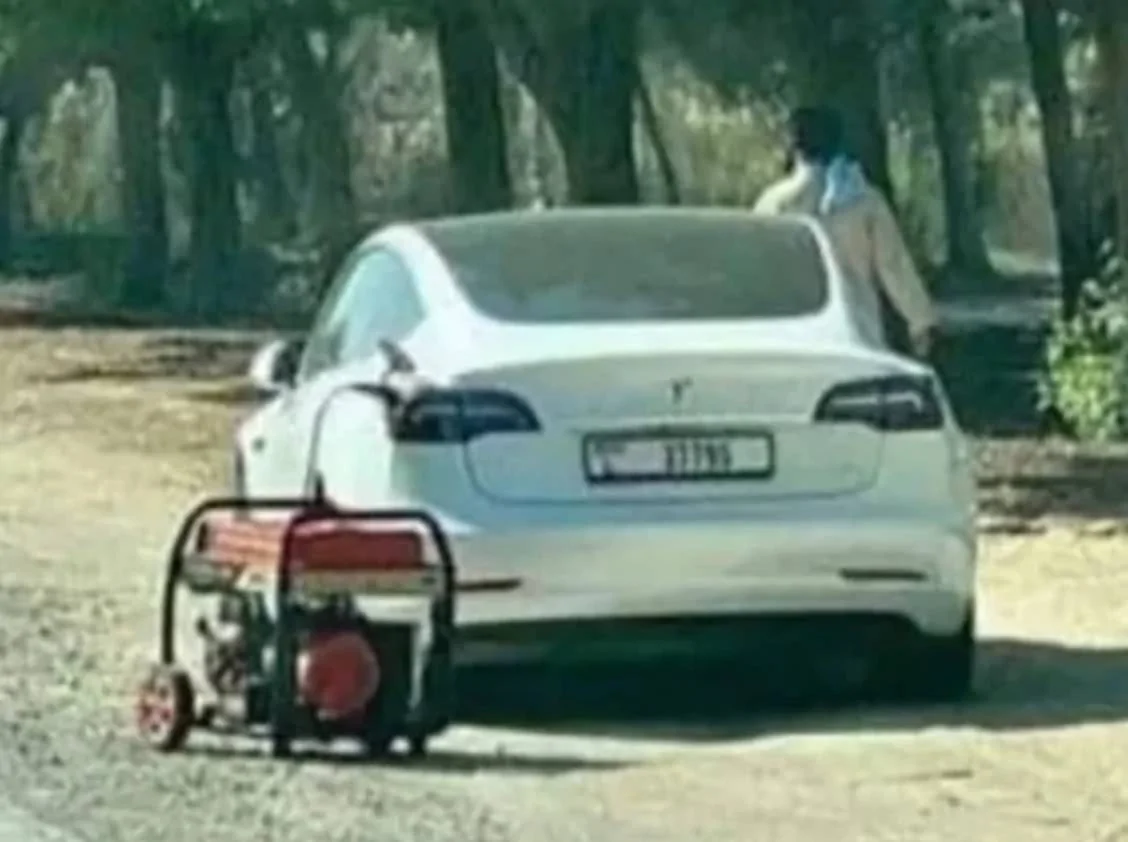
The ‘nightmare’ continues. Just like an Alfred Hitchcock movie. ?
https://en-volve.com/2022/09/15/tes...ut-of-car-until-paying-26000-for-new-battery/
https://en-volve.com/2022/09/15/tes...ut-of-car-until-paying-26000-for-new-battery/
Sponsored
Similar threads

- Replies
- 2
- Views
- 1,075


- Replies
- 59
- Views
- 7,617

