Sponsored

7-Pin Charge Current Data

emesel

Well-Known Member
First Name
Mark
Joined
Mar 8, 2022
Threads
12
Messages
92
Reaction score
87
Location
New England
Vehicle(s)
2019 Ranger
Occupation
Engineer
I have a 2019 Ranger Lariat and wanted to know how much current the Ranger typically allows over the 7-pin charge wire to determine if I should power a DC-DC charge via the 7-pin charge wire or not. I couldn't find anything online, so I decided to do a little test to measure it.

My trailer has 2 Lifeline AGM batteries. I ran tests with the 7-pin charge wire connected to the positive bus bar, as it was wired from the factory, then ran a test with the 7-pin charge wire powering a Victron Orion XS DC-DC charger.
  • With trailer battery under-load voltage at 12.1, trailer lights, furnace blower and fridge on battery
    • Current peaked at 20.1 amps
    • With headlights and high beams on current was 18.8 amps
    • With headlights off current rose to 19.1 amps
    • With fridge turned off current dropped to 16.2 amps
  • With battery under-load voltage at 11.9, trailer lights on, furnace blower and fridge off
    • I missed the peak at startup, but with just the lights on the current was 16 amps
    • No change when furnace and fridge turned on; still 16 amps
    • After a few minutes it settled at about 14 amps
    • Fridge turned off and current dropped to 13 amps
  • The above tests were done with me in the trailer monitoring current and my wife in the Ranger. The next day I tried to run tests pre and post DC-DC charger installation by myself. All I got was a peak current; when I got in the trailer the meter saved the "max" current, but when I switched to instantaneous it read zero. It seems a person needs to be in the driver's seat for the 7-pin charge wire to be "on".
  • Then I performed pre and post DC-DC charger installation:
    • Trailer battery under-load voltage of 11.5
      • Without DC-DC charger
        • Current as high as 24 amps, but settled at 18 amps
      • With DC-DC charger powered by 7-pin charge wire
        • Current was about 15 amps
It's interesting to note that there was only a couple of 1/10s of an amp difference between the input and output currents of the DC-DC charger. Also interesting to note that it seemed a person needed to be in the driver's seat to power the charge wire. I saw statements online that you needed to shift into drive and have your foot on the brake, etc; I didn't test for any of this.

Also, it's difficult to run tests on different days and draw some conclusions because the current running through the 7-pin charge wire depends on trailer battery needs as well as ranger needs, and I'm pretty sure the "brain" of the Ranger is making decisions based on many inputs.

So, I wired up the Orion XS to the 7-pin charge wire and configured it to limit input current to 20 amps and output current to 18 amps. I'll monitor this when I'm on my next trip and see if I should make any changes.

I hope this info is helpful to others. Of course, as they say, "your mileage may vary ..."

Mark
Sponsored

 

subquark

Well-Known Member
First Name
David
Joined
Jan 28, 2022
Threads
11
Messages
4,544
Reaction score
23,071
Location
Portsmouth, NH
Website
subQuark.com
Vehicle(s)
Soupie! Race Red '22 XL 101A Scab 4X2 w/steelies
Occupation
game publisher
I have a 2019 Ranger Lariat and wanted to know how much current the Ranger typically allows over the 7-pin charge wire to determine if I should power a DC-DC charge via the 7-pin charge wire or not. I couldn't find anything online, so I decided to do a little test to measure it.

My trailer has 2 Lifeline AGM batteries. I ran tests with the 7-pin charge wire connected to the positive bus bar, as it was wired from the factory, then ran a test with the 7-pin charge wire powering a Victron Orion XS DC-DC charger.
  • With trailer battery under-load voltage at 12.1, trailer lights, furnace blower and fridge on battery
    • Current peaked at 20.1 amps
    • With headlights and high beams on current was 18.8 amps
    • With headlights off current rose to 19.1 amps
    • With fridge turned off current dropped to 16.2 amps
  • With battery under-load voltage at 11.9, trailer lights on, furnace blower and fridge off
    • I missed the peak at startup, but with just the lights on the current was 16 amps
    • No change when furnace and fridge turned on; still 16 amps
    • After a few minutes it settled at about 14 amps
    • Fridge turned off and current dropped to 13 amps
  • The above tests were done with me in the trailer monitoring current and my wife in the Ranger. The next day I tried to run tests pre and post DC-DC charger installation by myself. All I got was a peak current; when I got in the trailer the meter saved the "max" current, but when I switched to instantaneous it read zero. It seems a person needs to be in the driver's seat for the 7-pin charge wire to be "on".
  • Then I performed pre and post DC-DC charger installation:
    • Trailer battery under-load voltage of 11.5
      • Without DC-DC charger
        • Current as high as 24 amps, but settled at 18 amps
      • With DC-DC charger powered by 7-pin charge wire
        • Current was about 15 amps
It's interesting to note that there was only a couple of 1/10s of an amp difference between the input and output currents of the DC-DC charger. Also interesting to note that it seemed a person needed to be in the driver's seat to power the charge wire. I saw statements online that you needed to shift into drive and have your foot on the brake, etc; I didn't test for any of this.

Also, it's difficult to run tests on different days and draw some conclusions because the current running through the 7-pin charge wire depends on trailer battery needs as well as ranger needs, and I'm pretty sure the "brain" of the Ranger is making decisions based on many inputs.

So, I wired up the Orion XS to the 7-pin charge wire and configured it to limit input current to 20 amps and output current to 18 amps. I'll monitor this when I'm on my next trip and see if I should make any changes.

I hope this info is helpful to others. Of course, as they say, "your mileage may vary ..."

Mark
That is great info and pretty thorough, thanks! =)

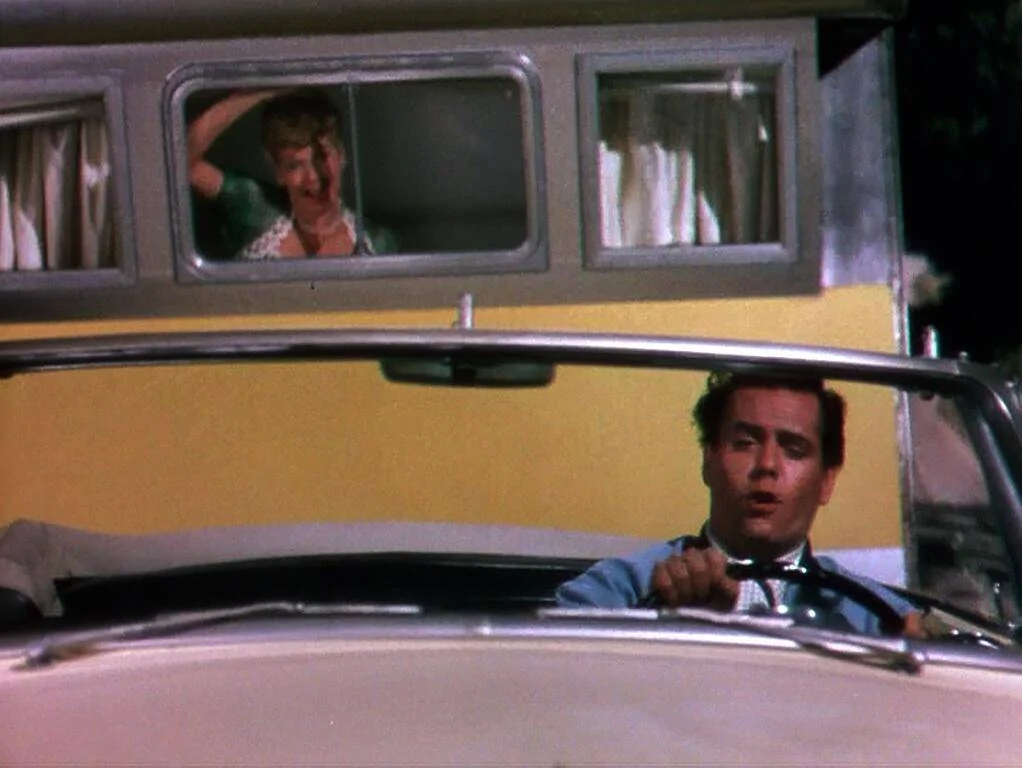
Of course, when you said you were in the trailer, this came to mind!

1736460658315-74.webp
 
OP
OP

emesel

Well-Known Member
First Name
Mark
Joined
Mar 8, 2022
Threads
12
Messages
92
Reaction score
87
Location
New England
Vehicle(s)
2019 Ranger
Occupation
Engineer
LOVE that movie, and it's very apropos ... every time we travel we come home with rocks and/or sea shells (my wife, not me!).

I was filling up at a gas station once and my wife said, "I'm going into the bathroom." I thought she meant into the gas station restroom, she meant into the trailer. I moved to get the trailer off the island ... she said she thought she wasn't going to make it out alive!
Mark
 

ctechbob

Well-Known Member
First Name
Shawn
Joined
Feb 2, 2021
Threads
32
Messages
1,588
Reaction score
4,142
Location
30666
Vehicle(s)
2020 Ranger XL/FX2/STX
Occupation
Adult Daycare
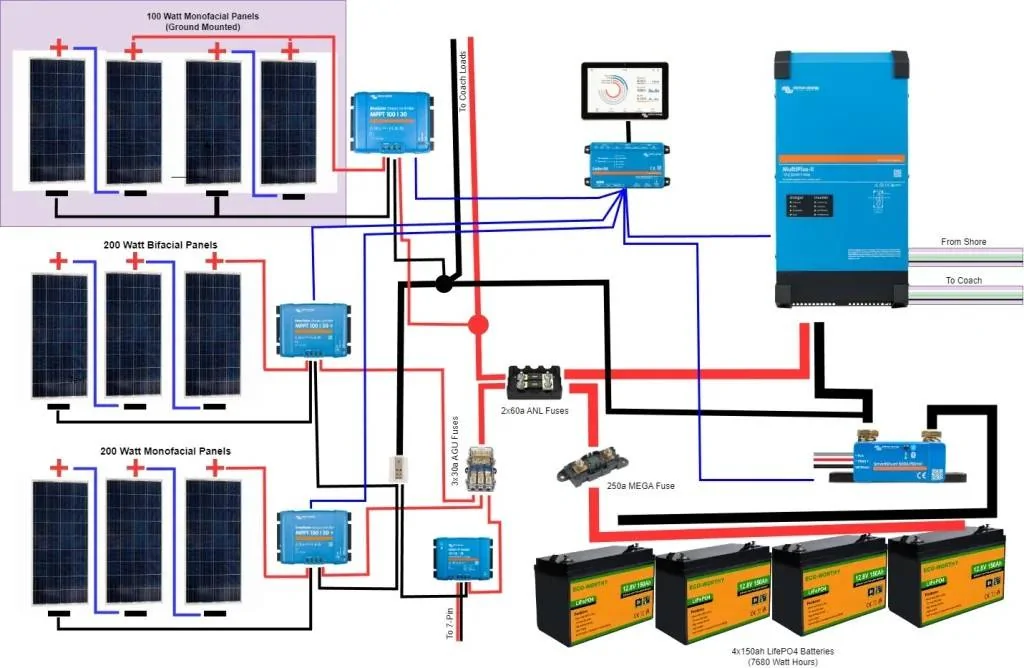
Very good information. I use the smaller/older Orion TR 12/12-18 in ours, just to supplement everything while we're moving. Never really liked that it doesn't integrate with the CerboGX and will probably upgrade to the XS sometime this year.

I've tried to look at charging data in my system, but since the Orion doesn't integrate with everything the data has always gotten lost in the weeds.

This is the system as it sits right now.

26DJSE Solar.webp
 

airline tech

Well-Known Member
Joined
Aug 24, 2022
Threads
28
Messages
4,448
Reaction score
8,504
Location
Midwest - KS
Vehicle(s)
2022 Ranger Lariat-Super Crew, Cactus Gray
Occupation
Aircraft Tech
I have a 2019 Ranger Lariat and wanted to know how much current the Ranger typically allows over the 7-pin charge wire to determine if I should power a DC-DC charge via the 7-pin charge wire or not. I couldn't find anything online, so I decided to do a little test to measure it.

My trailer has 2 Lifeline AGM batteries. I ran tests with the 7-pin charge wire connected to the positive bus bar, as it was wired from the factory, then ran a test with the 7-pin charge wire powering a Victron Orion XS DC-DC charger.
  • With trailer battery under-load voltage at 12.1, trailer lights, furnace blower and fridge on battery
    • Current peaked at 20.1 amps
    • With headlights and high beams on current was 18.8 amps
    • With headlights off current rose to 19.1 amps
    • With fridge turned off current dropped to 16.2 amps
  • With battery under-load voltage at 11.9, trailer lights on, furnace blower and fridge off
    • I missed the peak at startup, but with just the lights on the current was 16 amps
    • No change when furnace and fridge turned on; still 16 amps
    • After a few minutes it settled at about 14 amps
    • Fridge turned off and current dropped to 13 amps
  • The above tests were done with me in the trailer monitoring current and my wife in the Ranger. The next day I tried to run tests pre and post DC-DC charger installation by myself. All I got was a peak current; when I got in the trailer the meter saved the "max" current, but when I switched to instantaneous it read zero. It seems a person needs to be in the driver's seat for the 7-pin charge wire to be "on".
  • Then I performed pre and post DC-DC charger installation:
    • Trailer battery under-load voltage of 11.5
      • Without DC-DC charger
        • Current as high as 24 amps, but settled at 18 amps
      • With DC-DC charger powered by 7-pin charge wire
        • Current was about 15 amps
It's interesting to note that there was only a couple of 1/10s of an amp difference between the input and output currents of the DC-DC charger. Also interesting to note that it seemed a person needed to be in the driver's seat to power the charge wire. I saw statements online that you needed to shift into drive and have your foot on the brake, etc; I didn't test for any of this.

Also, it's difficult to run tests on different days and draw some conclusions because the current running through the 7-pin charge wire depends on trailer battery needs as well as ranger needs, and I'm pretty sure the "brain" of the Ranger is making decisions based on many inputs.

So, I wired up the Orion XS to the 7-pin charge wire and configured it to limit input current to 20 amps and output current to 18 amps. I'll monitor this when I'm on my next trip and see if I should make any changes.

I hope this info is helpful to others. Of course, as they say, "your mileage may vary ..."

Mark

It's interesting to note that there was only a couple of 1/10s of an amp difference between the input and output currents of the DC-DC charger. Also interesting to note that it seemed a person needed to be in the driver's seat to power the charge wire. I saw statements online that you needed to shift into drive and have your foot on the brake, etc; I didn't test for any of this.

Trailer Charging - Should activate when - ALL of the following are met:

1. The TRM detects that a trailer is connected
2. The engine is running
3. A brake pedal application has been detected in the present ignition cycle
4. The BCM load shed strategy is not active

So, it does not have to be in drive and foot does not need to be on the brake pedal.


ctechbob

Well-Known Member
First Name
Shawn
Joined
Feb 2, 2021
Threads
32
Messages
1,588
Reaction score
4,142
Location
30666
Vehicle(s)
2020 Ranger XL/FX2/STX
Occupation
Adult Daycare
It's interesting to note that there was only a couple of 1/10s of an amp difference between the input and output currents of the DC-DC charger.
Victron claims 98.5% efficiency, which, I find a smidge difficult to believe, but his results seem to line up with that.

I know Victron has some beautifully engineered pieces that they put a lot of work into.
 

brroberts

Well-Known Member
First Name
Randy
Joined
Aug 20, 2021
Threads
10
Messages
439
Reaction score
999
Location
Overbrook, KS
Vehicle(s)
2021 Ford Ranger XLT 2WD SuperCab
Occupation
audio / semi retired
I have not installed a dc dc charger yet, but eventually will. When I’ve used the truck in a pinch to charge trailer batteries, I had to put some load, I used max heat, to get the electrical output up. When actually driving, that shouldn’t be an issue.
 

Carl_Sj

Active Member
First Name
Carl
Joined
Nov 3, 2020
Threads
4
Messages
32
Reaction score
65
Location
Los Angeles
Vehicle(s)
2020 Ranger XLT Sport Supercab 4x4, '19 Lance 1995
Occupation
Retired
It's interesting to note that there was only a couple of 1/10s of an amp difference between the input and output currents of the DC-DC charger. Also interesting to note that it seemed a person needed to be in the driver's seat to power the charge wire. I saw statements online that you needed to shift into drive and have your foot on the brake, etc; I didn't test for any of this.

Trailer Charging - Should activate when - ALL of the following are met:

1. The TRM detects that a trailer is connected
2. The engine is running
3. A brake pedal application has been detected in the present ignition cycle
4. The BCM load shed strategy is not active

So, it does not have to be in drive and foot does not need to be on the brake pedal.
Very interesting. I thought my putting the truck in gear was starting the charging cycle. Didn’t realize it was the brake pedal application that triggered it. Good to know.
 
OP
OP

emesel

Well-Known Member
First Name
Mark
Joined
Mar 8, 2022
Threads
12
Messages
92
Reaction score
87
Location
New England
Vehicle(s)
2019 Ranger
Occupation
Engineer
Original poster here.

So, in actual use, I'm only getting a few amps out of the 7-pin charge wire, which many others have stated would happen. I assume it's because the Ranger BMS doesn't see the load of the trailer battery, it just sees the Orion XS DC-DC charger. (I even got a message pop up on dashboard at one point that my trailer battery wasn't charging effectively, or something like that.)

Anyway, I'd like to run 4 or 6 gauge wire from the Ranger battery back to the DC-DC charger is mounted in the trailer, with Anderson connectors at the rear bumper. I need help selecting the Anderson connectors. I was thinking of a bulkhead connector at the rear bumper with dust/water covers for both connectors. Is this what others have done? If not, then what?

Also, can I crimp the Anderson contacts with a hydraulic hex crimper (which I already have)?

Thanks in advance, Mark
 

LostMy65

Well-Known Member
First Name
Robert
Joined
Jul 26, 2022
Threads
18
Messages
1,064
Reaction score
2,677
Location
Oregon
Vehicle(s)
Ranger
I know we need to be careful not to draw more than 50% of our alternator's amps while running, so I'm thinking we should easily be able to install a 50amp DC to DC charger.
.
As it is now, a 12v 100ah battery with 20 amp charger would take around 5 hours driving to fully recharge.
.
Of course charging LiFePO4 at too high a rate isn't good for battery longevity, but 600w solar panels would charge at roughly the same rate as 50amps provided by a DC to DC charger.
The reduced 10 year lifespan of the LiFePO4 would likely be unnoticed.
.
I don't know...
I'll report back in 10 years.
🤔
 

ctechbob

Well-Known Member
First Name
Shawn
Joined
Feb 2, 2021
Threads
32
Messages
1,588
Reaction score
4,142
Location
30666
Vehicle(s)
2020 Ranger XL/FX2/STX
Occupation
Adult Daycare
Original poster here.

So, in actual use, I'm only getting a few amps out of the 7-pin charge wire, which many others have stated would happen. I assume it's because the Ranger BMS doesn't see the load of the trailer battery, it just sees the Orion XS DC-DC charger. (I even got a message pop up on dashboard at one point that my trailer battery wasn't charging effectively, or something like that.)

Anyway, I'd like to run 4 or 6 gauge wire from the Ranger battery back to the DC-DC charger is mounted in the trailer, with Anderson connectors at the rear bumper. I need help selecting the Anderson connectors. I was thinking of a bulkhead connector at the rear bumper with dust/water covers for both connectors. Is this what others have done? If not, then what?

Also, can I crimp the Anderson contacts with a hydraulic hex crimper (which I already have)?

Thanks in advance, Mark
I've got an XS on order to replace my older Victron Orion. Planned on capping it at 10 amps. I'm not really relying on the truck to charge much, but I want it to do something. If need be I just plug into the trucks inverter.

Anderson contacts are stupid thick. You can probably crimp them but they are tough as hell. I've mostly soldered mine, its just easier.
 
OP
OP

emesel

Well-Known Member
First Name
Mark
Joined
Mar 8, 2022
Threads
12
Messages
92
Reaction score
87
Location
New England
Vehicle(s)
2019 Ranger
Occupation
Engineer
Original poster here.

It turns out I had my Victron BMV-712 configured wrong. After re-configuring, I'm now getting 20 amps to the Orion XS and 15+ amps out. Based on this output, I'm going to continue running off the 7-pin charge wire rather than running separate cable with Anderson connectors.

Mark
 

ctechbob

Well-Known Member
First Name
Shawn
Joined
Feb 2, 2021
Threads
32
Messages
1,588
Reaction score
4,142
Location
30666
Vehicle(s)
2020 Ranger XL/FX2/STX
Occupation
Adult Daycare
Original poster here.

It turns out I had my Victron BMV-712 configured wrong. After re-configuring, I'm now getting 20 amps to the Orion XS and 15+ amps out. Based on this output, I'm going to continue running off the 7-pin charge wire rather than running separate cable with Anderson connectors.

Mark
I think Ford usually says 15a max out of the 7 pin, so just be careful. The truck should be able to protect itself but you'd hate to burn up the trailer module.
Sponsored


Top