Sponsored

10R80 Transmission Cooler Project

TJC

Well-Known Member
First Name
Tony
Joined
Aug 28, 2020
Threads
45
Messages
3,924
Reaction score
9,824
Location
North Carolina
Vehicle(s)
93 Miata, 05 Ranger 4x4, 20 Ranger 4x4, 23 CX-5
This thread is to intended to document my attempt at enhancing the cooling of the 10R80.

I've already gathered what I thought I needed to install a transmission cooler in my 2020 Ford Ranger.

And I've already removed the front end covers and grill of my Ranger. Then test fitted the cooler that I had purchased. It's too tall to work in the location that I had chosen, so I went on to purchase a second cooler, and moved the mounting location to the area below the intercooler. The new cooler should be arriving later this week.(I'll use the old cooler in my 4G Ranger to protect 2 year old (10K miles on it) Jasper remanufactured transmission.)

I'll try to keep posts current, but there is a lot of effort involved to find the best routing for hoses, and installation of the cooler itself.

I'm going to be using AN8 PTFE hose and fittings. Pictures of the parts and pieces will be coming as I do the work.

Here's the projected ROI... and why I am beginning / attempting this project... from a practical, financial, and performance perspective. I’m considering costs, benefits, and risk mitigation, then I'll finish with a clear summary.

I'm not one of the lucky ones who has not had issues (I still can't believe folks have reached 150+k without transmission issues)

Costs (Out-of-Pocket)
Approx. Cost (I'm already over by $115, but I'll use the part on my 2005 Ranger.)

Mishimoto 13-row cooler $150​
AN-8 hose & fittings (4Ă—90° elbows + hose) $100–150​
Hose clamps, separators, brackets $125​
Aluminum strap, grommets, foam seals $20–40​
Labor / personal time Variable (I'm getting old! What used to take me 2 hours now takes half a day :LOL:)​
Benefits / Value Added
a) Transmission longevity
  • Reduces peak ATF temps by 30–40°F under load (hopefully a tad more)
  • Protects ULV fluid from thermal breakdown, extending service life
  • Reduces clutch wear, which is one of the most expensive components of the 10R80 to replace (~$2,500–$3,500 in labor if failed)
b) Reduced maintenance costs
  • Fewer early fluid changes: 95%+ flush (Hopefully double the usual interval of 20K miles)
  • Lower risk of unscheduled repairs — preventing a single major rebuild is worth hundreds to thousands
c) Performance and peace of mind
  • Transmission operates cooler and more stable under towing or aggressive driving
  • Reduced slip → more efficient power delivery, smoother shifts
  • Real-time monitoring with my ScanGauge III allows proactive intervention
Risk Mitigation Value
Think of this as “insurance”:

Risk Likelihood Cost if it happens
ATF overheat → clutch damage Towing / Hot NC summers $2,500–$3,500
Fluid degradation → valve body wear High over 25K+ miles $500–$800 per rebuild/flush

Even if the cooler prevents one major repair, ROI is already extremely high.

Financial ROI Estimate
Let’s assume:

Cooler cost + materials: ~$400
Avoid one clutch rebuild at $2,500 (conservative)

1773519968199-7g.webp


That’s >500% return if it prevents a single major failure.

Even if it only extends fluid life and reduces minor wear, it still saves hundreds per 10K miles in ULV fluid replacement and early servicing.

Non-Financial ROI
  • Peace of mind: I can tow or drive aggressively in hot conditions without worrying about transmission damage.
  • Data-driven control: Real-time monitoring allows me to catch issues before they become costly.
  • Vehicle longevity: Cooler fluid → cooler clutch packs → longer transmission life, which keeps the truck more reliable and resale value higher.
Bottom Line
  • Financial ROI: Extremely high — likely >500% if it prevents a single major rebuild.
  • Performance ROI: Moderate-to-high — smoother shifts, lower peak temps, better durability.
  • Risk mitigation ROI: Very high — protects the transmission under heavy loads and NC summer heat.
I believe that this is one of the highest-impact mods that I can do for my Ranger from a cost vs. benefit perspective.

I'm not going to be updating this thread daily. Only after reaching a milestone or two along the way. If I fail to successfully complete the project, you'll know why. But I think I can pull it off. I'll then document the results. We'll see if it is truly worth the effort.
Sponsored

 
Last edited:
OP
OP

TJC

Well-Known Member
First Name
Tony
Joined
Aug 28, 2020
Threads
45
Messages
3,924
Reaction score
9,824
Location
North Carolina
Vehicle(s)
93 Miata, 05 Ranger 4x4, 20 Ranger 4x4, 23 CX-5
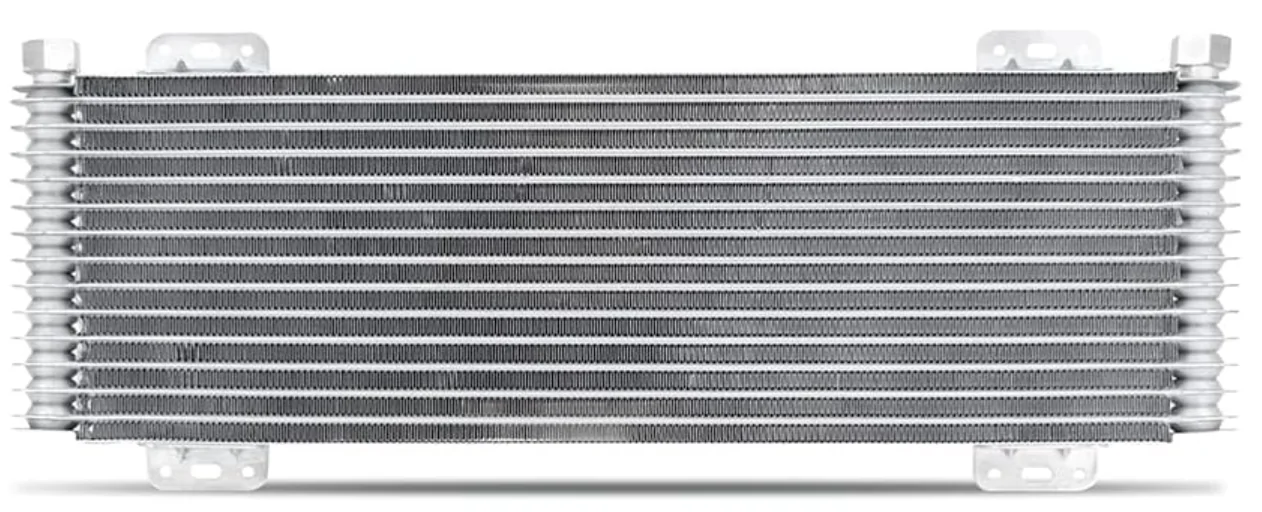
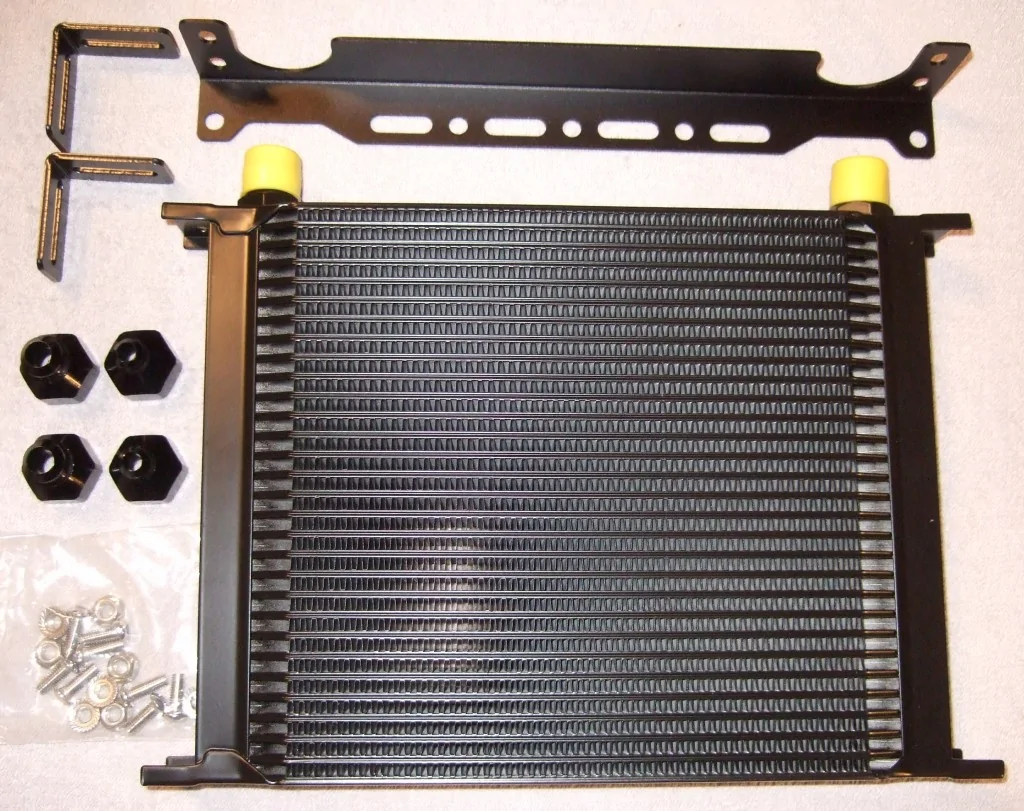
Here are the two coolers that I have purchased for this project.
This is the first, purchased thinking there was more space behind the grill than I found.

It will find a home in my 2005 Ranger protecting it's new Jasper remanufactured 5R55E transmission. It's a 30 row 12" x 10" x 2" design.

Parts N Tools -2 .webp


This one is a 13-Row Stacked Plate, 22.85" X 7.10” X 1.25” Core. It is what is going into my 2020 Ranger.
This one went back, and was replaced with a 40 row Stacked cooler much like the one above, just taller.

1773521436051-do.webp


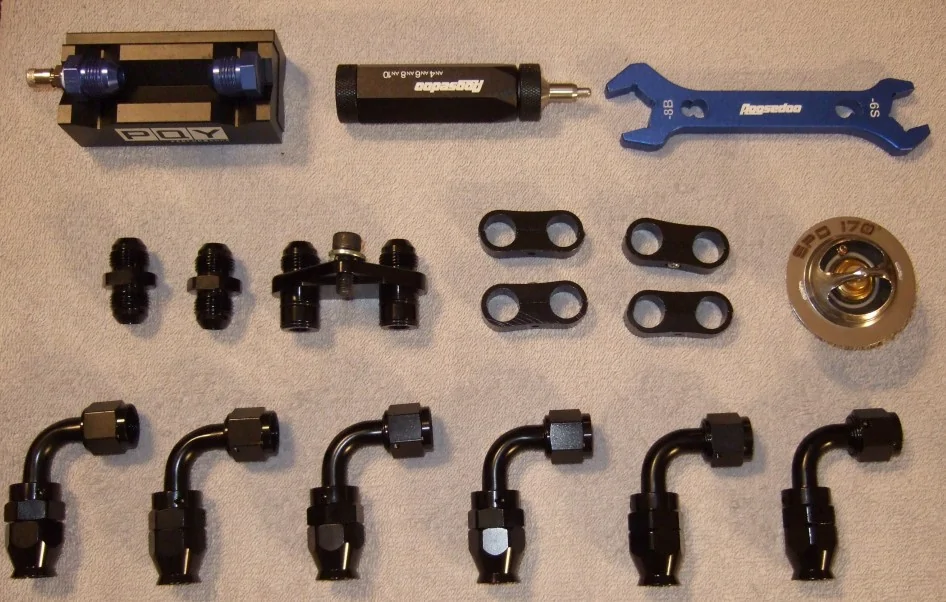
Some of the bits and pieces that I have collected before starting

Parts N Tools -1 .webp


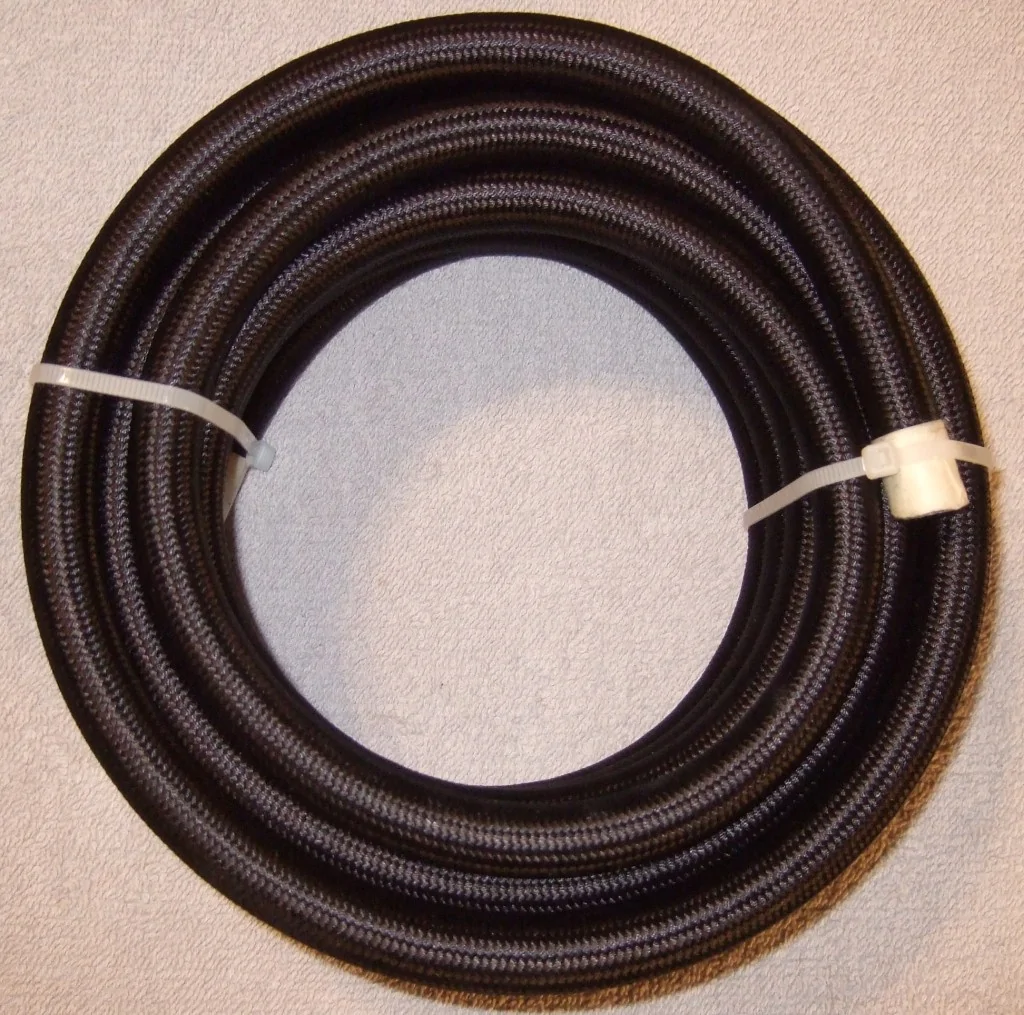
20' of AN8 PTFE hose
Parts N Tools -3 .webp
 
Last edited:
OP
OP

TJC

Well-Known Member
First Name
Tony
Joined
Aug 28, 2020
Threads
45
Messages
3,924
Reaction score
9,824
Location
North Carolina
Vehicle(s)
93 Miata, 05 Ranger 4x4, 20 Ranger 4x4, 23 CX-5
So will you bypass the coolant loop that effectively heats up our transmissions to 195 degree no matter what?
The heat exchanger does nothing until the coolant temp reaches 195F, so it is not heating up the transmission fluid until the engine is fully warmed up.

It only tries to keep the transmission at a base floor temp of 195F after the engine is warm.

My transmission takes ~40 miles to heat up to the 195F-200F range. But sitting at a stop light in drive I see the fluid temps rise 3F-5F in 2 minutes as the slip in the torque converter begins to generate heat. Once the slip is gone it cools back down a little bit, but never back to where it started from when I first approached the light. In stop and go traffic the torque converter slip is substantial by design.

I have been dynamically monitoring Target Slip, Actual Slip, and Fluid Temperatures in real driving conditions for 8 months. I see the patterns.

I find my transmission shifts flawlessly when the fluid temps are below 170F. From 130F to 165F it is flawless. I start to see very minor issues that grow worse as the transmission heats up above 185F. It gets the characteristic Ranger shifts above that. I find them unacceptable. It is not terrible, just clunky.

I stated my objectives in the previous post. I aim to mirror the GM temperature range of the GM 10L80 in my 10R80. My ideal goal is 150F-165F. I'll be happy if I see a 175F ceiling.

The Ford heat exchanger is being removed. The coolant lines running to/from the heat exchanger will be connected temporarily connected to each other, until I see and am satisfied with the results.

Once I am confident the concept is going to work out, I'll remove the lines from the coolant valve, and plug the 3 ports on the valve, and simply loop the coolant line.

I do not wish to impair coolant circulation. I have not studied the coolant flow enough to determine if plugging the coolant route (at its source) to/from the heat exchanger valve will do harm.

Only once I am sure it won't cause any issues will I remove the loop at the source and plug the ports.

I will be leaving the valve in place and electrically connected so as not to flag a DTC. It will open and close as coded, just not send coolant anywhere.

I am almost 6 years in on the antifreeze so it time to flush the cooling system as well and replace the antifreeze.
 
Last edited:

Dereku

Well-Known Member
First Name
Derek
Joined
May 18, 2022
Threads
30
Messages
2,804
Reaction score
6,877
Location
Chicagoland Area
Vehicle(s)
2021 Ford Ranger
Occupation
Project Manager
Ok, makes sense to me. My old F150 with cooling upgrades ran 50 over ambient temps. It was nice.

This ranger run so much hotter. Ford says the fluid is designed for it, I personally do not believe that.


stringbreaker

Well-Known Member
First Name
Mike
Joined
Jun 14, 2019
Threads
41
Messages
371
Reaction score
946
Location
washington state
Vehicle(s)
2019 Ranger XLT
Ok, makes sense to me. My old F150 with cooling upgrades ran 50 over ambient temps. It was nice.

This ranger run so much hotter. Ford says the fluid is designed for it, I personally do not believe that.
When it comes to the 10R80 transmission I take everything Ford say with a grain of salt
 

Dereku

Well-Known Member
First Name
Derek
Joined
May 18, 2022
Threads
30
Messages
2,804
Reaction score
6,877
Location
Chicagoland Area
Vehicle(s)
2021 Ford Ranger
Occupation
Project Manager
When it comes to the 10R80 transmission I take everything Ford say with a grain of salt
Aint that the truth. I was told clunkiness was normal in the beginning. A few years later it well stopped clunking or working at all.
 

Sojourner

Well-Known Member
Joined
Jul 25, 2023
Threads
1
Messages
188
Reaction score
471
Location
Maryland
Vehicle(s)
2023 Ford Ranger XLT Tremor
Occupation
Retired Army / Disabled Vet
Good luck! I'm looking fwd to reading the updates as you move forward.
 

GhostStrykre

Well-Known Member
First Name
Bee
Joined
Aug 20, 2020
Threads
20
Messages
492
Reaction score
1,822
Location
Ohio
Vehicle(s)
2019 Ford Ranger XLT FX4
Man this forum is awesome. Threads like this one! I’ll be watching along. I’ve thankfully not had major transmission issues, but it’s still good to see if people can come up with great ideas that help out. Thanks for your efforts in this, OP!
 

TxOTRRanger

Well-Known Member
First Name
Clay
Joined
Jul 14, 2025
Threads
5
Messages
1,446
Reaction score
6,595
Location
Elwood, Texas
Vehicle(s)
2022 Ford Ranger XLT supercrew SPORT 4X4
Occupation
factory worker Tyson Foods
I am watching this thread, and waiting patiently to see how well this ends up working in the Ranger. Good luck!
 
Last edited:
OP
OP

TJC

Well-Known Member
First Name
Tony
Joined
Aug 28, 2020
Threads
45
Messages
3,924
Reaction score
9,824
Location
North Carolina
Vehicle(s)
93 Miata, 05 Ranger 4x4, 20 Ranger 4x4, 23 CX-5
After pulling off the front end grill and panels, and measuring, I do not see a nondestructive way of mounting either of the coolers that I've tried. The Mishimoto 22" x 8" transmission cooler is being returned. Even if it fit, after doing the math, there wasn't enough surface area to drop the temps to my targeted temp objective. The smaller 30 row stacked cooler had 60% more surface area.

There is simply not a lot of room up front. I've come to the conclusion that the best course of action is to mount a 40 row stacked cooler near the transmission. I didn't like blocking the intercooler or the condenser/radiator, and I didn't want to cut the bottom panel below the intercooler make room for the fit.

So I've been searching fr a good candidate to mount under the truck... and i found what I was looking for.

American Volt had a great deal on a 40 row stacked cooler with thermostatically controlled fan, with a manual override circuit I can run to a switch in the cab. The fan draws 9 amps, produces 1860 CFM, and the temp sensor will screw into my 1/8" NPT port on the PPE pan. Temp control for the fan is adjustable from 104F-230F. All for $200. In for penny, In for a pound!

I now know what doesn't work!

Going to put the front end back together while awaiting delivery and start fabricating mounting brackets. Lines will be much shorter meaning temps will cool faster, pressure loss will be lower, and I will not be dependent on passive cooling with temps climbing in stop and go traffic. The downside is that extra 9amp draw when the fan is running on a less than impressive BMS.

Ever onward!
 
Last edited:

2021Ranger

Well-Known Member
First Name
Barry
Joined
Jan 29, 2023
Threads
46
Messages
453
Reaction score
667
Location
NJ
Vehicle(s)
2021 Ranger
I’m not crazy about mounting the cooler under the truck along with a 9 amp draw from the fan as I’m guessing that fan is going to be on most of the time with no real air flow threw the cooler.
All trans is putting it behind the grill with there bracket.
 
OP
OP

TJC

Well-Known Member
First Name
Tony
Joined
Aug 28, 2020
Threads
45
Messages
3,924
Reaction score
9,824
Location
North Carolina
Vehicle(s)
93 Miata, 05 Ranger 4x4, 20 Ranger 4x4, 23 CX-5
I
I’m not crazy about mounting the cooler under the truck along with a 9 amp draw from the fan as I’m guessing that fan is going to be on most of the time with no real air flow threw the cooler.
All trans is putting it behind the grill with there bracket.
I understand the drawbacks. I'm confident that it will pull the required air, but I also dislike the 9amp draw and the fact that it is no longer a passive system. I plan for the fan to be oriented at the top and pulling air rather than pushing. Pulling is more efficient. Fan should be enclosed and an inch from the cooler to avoid cavitation. I plan to have a plate protecting the cooler angled at 10-15 degrees from front to back. The cooler itself will be angled up slightly on the port side to clear any air that mat be trapped if level.

It takes 40 miles for my transmission fluid to reach 185F with the stock heat exchanger. The coolant hits 195 relatively quickly, so the trans fluid is heated up to 195F by the coolant flow only after the regulator sees 195F coolant.

I suspect that for most sub 20 mile trips the fan will not come on. And it will cycle unless going long distances at sustained highway speeds. The only way to know with any degree of certainty is to install and test.

Several 10R80 transmission builders have gone this route with success, one leaves the fan running nonstop. I prefer to cycle it if possible, but he has actually tested and has data to back up what he did. When I tested trans fluid warmup temps vs time, it took 38-39 minutes to reach 180F at idle.

Can you provide a link to Alltranz? I 'll delay reinstalling the front end work until I understand what the cooler specs are and how AllTranz mounted the cooler. I suspect that they removed the bottom pan completely to get the space needed.

I'd love to see the cooler specifications, and how they mounted it. I see where it can go, but not without permanently removing/modifying the lower air flow pan on the bottom to the radiator. The option of mounting the cooler coming up front is still a possibility, but the lower pan will have to be cut or removed. I'm not ready to do that yet. I've looked at F150 installs, and they have lots of room to work with. Things are much tighter on my 2020 Ranger.

My objective is to drop the transmission temps to the 150F-165F range. I'm not going to be satisfied with 180F transmission fluid temps. I don't like hearing electric fans running when I am driving my truck, so sound isolation is important too. But vibration is more important, even when mounting up front. Same goes for the PTFE hose integrity.

I'm putting the truck on the lift today and will explore possibilities again. I may even remove the pans. But I want a 40 stacked cooler installed. And I want whatever goes in to be dependable, one and done. I've read too many horror stories of Chinese knockoff coolers failing 8 months to a year after install. The question one must ask: Was the product defective or weak, or was the installation flawed?

I want a good deal (who doesn't), but not at the expense of quality. I want my 10R80 to last as long as possible. I'm convinced that the 150F- 165F fluid sweet spot enhances that possibility. Here is a table that I found when researching this project.

Transmission Temps - Typical ATF life curve:

Fluid Temp
Approx fluid life
175°F ~100k miles
195°F ~50k miles
205°F ~25k miles
220°F ~10k miles

205°F by itself isn’t catastrophic, but long-duration exposure is the key issue.
My driving pattern for the first 13K miles when my transmission symptoms began:
  • 13k+ miles of long interstate and back country road runs, 2K in mountains at 70-75mph
  • Sustained Fluid Temps ~205°F
  • torque converter cycling constantly on those back country roads with slow speed start/stops through lights, then back to 65mph.
That combination cooks the friction modifier package in the fluid. Once those modifiers degrade, the clutch-to-clutch shifts in the 10R80 start behaving poorly.

Typical symptoms that I encountered match exactly what cooked / oxidized fluid symptoms are:
  • delayed shifts
  • inconsistent shift timing
  • adaptive learning chasing corrections
  • “balky” feel
Changing the fluid 3x to get to 95%+ clean fluid and adding LubeGard Platinum cured my transmission issues. At 200F I see ever so slight transmission negative shift changes, I do not see any of them at 170F.

Now I am attempting to eliminate those mild shift annoyances, and extend the transmission fluid change interval.

<170F Fluid temps does that.

Look at the chart again. Those specs are for normal driving, not the "extreme conditions" like heavy traffic, short drives, etc., that most all of us encounter. And they are for "normal ATF, not the ultra thin ULV that the 10R80 requires. 30F makes a big difference! Tripling the distance your fluid lasts.

I can see where my objectives may differ from others. I don't go mudding or rock climbing.

Where ever I end up mounting the cooler, I need to insure that there is proper airflow, minimal vibration, lines are protected from abrasion, and that there is debris / water protection.
 
Last edited:
OP
OP

TJC

Well-Known Member
First Name
Tony
Joined
Aug 28, 2020
Threads
45
Messages
3,924
Reaction score
9,824
Location
North Carolina
Vehicle(s)
93 Miata, 05 Ranger 4x4, 20 Ranger 4x4, 23 CX-5
Yeah I found them. I've read the instructions for both the diesel and 3.0L V6. The front end configurations are completely different from our US Rangers (I wish I had that much space!). They actually doubled up 2 - 30 row stacked coolers, but they appear to be half the thickness of the one I purchased. It also looks like they covering 40% of the intercooler in the Ranger PX model - See Pic 4. They are also trimming the bumper back and the rear of the grill. (Option B)

Our intercoolers run the entire length of the area behind the grill. It is well in front of the condenser and radiator pair. No room in front as 3 large mounts support the intercooler bottom.

Below that area is the next alternative place to install the cooler up front. I thought this area was going to work out with the lower profile wider cooler. I had 3/8" of space available on each side of the 22' cooler, close but do-able. The height, even at 8" was too tall. The bottom panel would need to be completely removed if I used this cooler, and that cooler was already a compromise in cooling capacity, 45% less efficient than the smaller black cooler.

I then revisited the black cooler possibilities. I could cut the lower panel and easily create a cradle to hold the base of the cooler 1.5" lower, giving me the room at the top to fit the cooler in the nose, but I'd lose airflow through 25% of the cooler. This cooler was at the lower limit of my cooling capacity, with only 30 stacked rows instead of the 40 that I really wanted.

I'll investigate this further in the next day or so to see if this same idea will work with the 40 stacked row cooler coming. Ideally installing the fan with it - but that is going to be a stretch. I need to leave space between the cooler and the condenser and radiator... >=4" is optimal, but 2"-3" is acceptable.

I need to run a few more calculations to see if the math works.
Sponsored


Top