Sponsored

Long range fuel tank

OFC Ranger

Well-Known Member
First Name
Jack
Joined
Aug 3, 2020
Threads
297
Messages
5,019
Reaction score
13,925
Location
Georgia
Vehicle(s)
ZR2
Everything about handling gasoline is more hazardous than diesel. Vapor pressure, flash point, flammability, etc. DOT tank standards reflect the differences.
Yes correct. This is not the mystery. What people want to know is something more specific. Are diesel tank walls not as thick as gas tank walls (for example)? How about, are the welds done differently? What specifically from a raw materials and construction standpoint is the difference?

If spec for spec I have an aluminum tank, what makes the gas version different than diesel?

So far people seem to mostly answer with "because the government said so". This is the same reason we have shitty ass portable gas can spouts now a days, or because bleach manufacturers are required to put "do not drink" on the bottle.

What we would like to know is the validity of the boogey man known as "gas go boom, diesel no go boom, so tank must be different".

We already know that.
Sponsored

 
OP
OP
Frenchy

Frenchy

Well-Known Member
First Name
Chris
Joined
Mar 15, 2020
Threads
164
Messages
7,539
Reaction score
10,750
Location
Elizabeth, Colorado
Vehicle(s)
2012 Nissan Frontier, 1994 F150 XL, 2022 Ford Transit
Occupation
Field Service Technician
So what happens If I get a bed tank meant for diesel (less than 120 gallons) and put gas in it? Will the world stop spinning and small kittens die?

Are gas restrictions in "only diesel!" tanks like when they started making lame ass slow release gas tank spouts? Is there something inherently dangerous about diesel tanks with gas in them from a raw materials or design stand point?

I'm not talking about the possibility of explosion. I mean gas eating the material they use (which is uh... metal...) or pressure issues? I would assume even diesel tanks have mechanisms to regulate pressure?

Bottom Line: Are diesel tank restrictions just because "nanny state" or is there some other legitimate reason?

Or is it as simple as California being to blame like basically every automotive restriction known to man?

Edit: Here is a cherry picked quote when scouring the internet;


Again, cherry picked; but this in a nutshell says "government wants the money to give it a stamp of approval"
The tank you are talking about is totally different and has already been talked about. If you would have paid attention you wouldnt have to ask such a stupid question.
 

OFC Ranger

Well-Known Member
First Name
Jack
Joined
Aug 3, 2020
Threads
297
Messages
5,019
Reaction score
13,925
Location
Georgia
Vehicle(s)
ZR2
The tank you are talking about is totally different and has already been talked about. If you would have paid attention you wouldnt have to ask such a stupid question.
DarlingQuestionableArgentinehornedfrog-max-1mb.gif


this is exactly why i come to this thread and would never buy one of these tanks.
this is pure entertainment.
The ambassador to the project is such a tool and does more damage.
If I was the tank manufacturer, i would cut all ties with him on principle.
That is just Frenchy being Frenchy don't sweat it. It made me laugh.
 

slowmachine

Well-Known Member
First Name
Mike
Joined
Jul 18, 2020
Threads
39
Messages
929
Reaction score
1,978
Location
New Hampshire
Vehicle(s)
2015 Jeep Wrangler, waiting for a Ranger PHEV
Yes correct. This is not the mystery. What people want to know is something more specific. Are diesel tank walls not as thick as gas tank walls (for example)? How about, are the welds done differently? What specifically from a raw materials and construction standpoint is the difference?

If spec for spec I have an aluminum tank, what makes the gas version different than diesel?

So far people seem to mostly answer with "because the government said so". This is the same reason we have shitty ass portable gas can spouts now a days, or because bleach manufacturers are required to put "do not drink" on the bottle.

What we would like to know is the validity of the boogey man known as "gas go boom, diesel no go boom, so tank must be different".

We already know that.
I think it is important to consider the full storage and distribution system, and not just the tank itself.

I'll restrict this to a single fuel characteristic for brevity, but I think that this is the most important of the list of differences between gas and diesel from a storage and handling perspective. Standard #2 diesel fuel has a very low, almost negligible, vapor pressure. There are gas/ethanol/diesel/biodiesel blends that are more hazardous, but #2 ultra-low sulfur diesel (ULSD) with up to 10% biodiesel (for lubricity) is what you find at most retail suppliers. Gasoline, on the other hand, has a relatively high vapor pressure, and will rapidly produce ignitable, toxic, and polluting vapors, even at low temperatures. It is for this reason that modern gasoline-fueled cars and trucks have vapor collection mechanisms and air-tight sealed tanks that are built specifically to withstand the pressure. Diesel tanks are not built in this way, though they could be.

In the open air, an unpressurized gas or diesel tank that vents directly into the atmosphere will "breathe" fuel vapors as the ambient temperature fluctuates. As the temperature rises, fuel vapors are expelled from the tank, and fresh air is drawn in when the temperature decreases. The higher vapor pressure and volatility of gasoline purges much larger volumes of much more hazardous vapors.

If you park your truck in an enclosed garage, the gasoline vapors will be mostly contained in the garage. This is an inhalation hazard, as well as a potential explosive hazard. There have been some gasoline tanks made with an internal air bladder that is itself vented to the outside, allowing the gasoline to expand and contract without pressurizing the tank. They are very expensive, and have, to my knowledge, been completely replaced with the familiar vapor collection systems like the one in our Rangers.

This is one example where storing gasoline in a tank designed for diesel fuel can produce unintended consequences. Other factors include suitability of gasket materials in the tank seals, fuel pumps, etc., and corrosive properties of the fuel and additives to the tank materials.

These differences may seem negligible to some, but these designs have developed since the 1960s to solve specific problems related to safety and air pollution. I have owned a half dozen pickups with the fuel tank behind the seat, inside the cab. At some point, they all leak into the passenger compartment. I don't miss that at all.

I think that most of the bed-mounted diesel tanks would probably be fine if you can get gaskets and seals designed for gasoline. I would be careful not to overfill the tank (which will cause liquid gasoline to be expelled as the temperature rises) and I would not park it indoors.
 

OFC Ranger

Well-Known Member
First Name
Jack
Joined
Aug 3, 2020
Threads
297
Messages
5,019
Reaction score
13,925
Location
Georgia
Vehicle(s)
ZR2
I think it is important to consider the full storage and distribution system, and not just the tank itself.

I'll restrict this to a single fuel characteristic for brevity, but I think that this is the most important of the list of differences between gas and diesel from a storage and handling perspective. Standard #2 diesel fuel has a very low, almost negligible, vapor pressure. There are gas/ethanol/diesel/biodiesel blends that are more hazardous, but #2 ultra-low sulfur diesel (ULSD) with up to 10% biodiesel (for lubricity) is what you find at most retail suppliers. Gasoline, on the other hand, has a relatively high vapor pressure, and will rapidly produce ignitable, toxic, and polluting vapors, even at low temperatures. It is for this reason that modern gasoline-fueled cars and trucks have vapor collection mechanisms and air-tight sealed tanks that are built specifically to withstand the pressure. Diesel tanks are not built in this way, though they could be.

In the open air, an unpressurized gas or diesel tank that vents directly into the atmosphere will "breathe" fuel vapors as the ambient temperature fluctuates. As the temperature rises, fuel vapors are expelled from the tank, and fresh air is drawn in when the temperature decreases. The higher vapor pressure and volatility of gasoline purges much larger volumes of much more hazardous vapors.

If you park your truck in an enclosed garage, the gasoline vapors will be mostly contained in the garage. This is an inhalation hazard, as well as a potential explosive hazard. There have been some gasoline tanks made with an internal air bladder that is itself vented to the outside, allowing the gasoline to expand and contract without pressurizing the tank. They are very expensive, and have, to my knowledge, been completely replaced with the familiar vapor collection systems like the one in our Rangers.

This is one example where storing gasoline in a tank designed for diesel fuel can produce unintended consequences. Other factors include suitability of gasket materials in the tank seals, fuel pumps, etc., and corrosive properties of the fuel and additives to the tank materials.

These differences may seem negligible to some, but these designs have developed since the 1960s to solve specific problems related to safety and air pollution. I have owned a half dozen pickups with the fuel tank behind the seat, inside the cab. At some point, they all leak into the passenger compartment. I don't miss that at all.

I think that most of the bed-mounted diesel tanks would probably be fine if you can get gaskets and seals designed for gasoline. I would be careful not to overfill the tank (which will cause liquid gasoline to be expelled as the temperature rises) and I would not park it indoors.
Praise jesus someone willing to have a conversation.

So, taking into account your example, if people store 4 x 5 gallon jerry cans in their garage why does no one freak out? But I want to install a 20 gallon backup (not directly plumbed) tank in my truck bed and now people take issue?

From my understanding the only difference in jerry cans as it pertains to the contents is the color of the paint or plastic on the outside.

Why is a jerry can that can take gas, diesel, or kerosene not draw as much criticism?

Everyone probably assumes I was talking about 119 gallon tank. Maybe that changes the conversation, maybe it doesnt.


slowmachine

Well-Known Member
First Name
Mike
Joined
Jul 18, 2020
Threads
39
Messages
929
Reaction score
1,978
Location
New Hampshire
Vehicle(s)
2015 Jeep Wrangler, waiting for a Ranger PHEV
Praise jesus someone willing to have a conversation.
You need to have a serious talk with your Rabbi :)

So, taking into account your example, if people store 4 x 5 gallon jerry cans in their garage why does no one freak out? But I want to install a 20 gallon backup (not directly plumbed) tank in my truck bed and now people take issue?

From my understanding the only difference in jerry cans as it pertains to the contents is the color of the paint or plastic on the outside.

Why is a jerry can that can take gas, diesel, or kerosene not draw as much criticism?
I store my 5-gal cans outdoors, under my above-ground swimming pool deck. It sucks to have to retrieve them to fuel my backup generator when there is a lot of snow on the ground.

However, the common plastic cans are flexible enough to withstand the thermal expansion. Metal cans seem to do well, too, but only if not overfilled. The standard military cans and their knockoffs have the filler cap well below the top of the can to create a compressible air buffer inside the can. If you've use them very much, you know to unscrew the cap slowly to avoid being sprayed.

I think that a large part of resistance (legal and otherwise) to fuel cans in a motor vehicle come from a great many examples of leaking cans that are stupidly unsecured causing hazmat and safety problems on the roads. Negligent behavior has become common enough to prompt legal regulation.

With regard to the mounted auxiliary tanks, the DOT regulates all commercial use, and states are free to regulate non-commercial use. What you see in Georgia may not apply in other states. If I had to make an educated guess, there is probably a capacity and/or features that trigger regulation.
 

OFC Ranger

Well-Known Member
First Name
Jack
Joined
Aug 3, 2020
Threads
297
Messages
5,019
Reaction score
13,925
Location
Georgia
Vehicle(s)
ZR2
You need to have a serious talk with your Rabbi :)


I store my 5-gal cans outdoors, under my above-ground swimming pool deck. It sucks to have to retrieve them to fuel my backup generator when there is a lot of snow on the ground.

However, the common plastic cans are flexible enough to withstand the thermal expansion. Metal cans seem to do well, too, but only if not overfilled. The standard military cans and their knockoffs have the filler cap well below the top of the can to create a compressible air buffer inside the can. If you've use them very much, you know to unscrew the cap slowly to avoid being sprayed.

I think that a large part of resistance (legal and otherwise) to fuel cans in a motor vehicle come from a great many examples of leaking cans that are stupidly unsecured causing hazmat and safety problems on the roads. Negligent behavior has become common enough to prompt legal regulation.

With regard to the mounted auxiliary tanks, the DOT regulates all commercial use, and states are free to regulate non-commercial use. What you see in Georgia may not apply in other states. If I had to make an educated guess, there is probably a capacity and/or features that trigger regulation.
So that would be a point in my "nanny state" explanation. Laws are created because a handful of dumbasses ruin it for everyone, not because the material construction per say in every case is the cause.

I think the average limit is 120 gallons before requiring placards. Could be wrong, but I recall seeing 119 as the magic number in many places. Personally I am not looking at anything near that.
 

slowmachine

Well-Known Member
First Name
Mike
Joined
Jul 18, 2020
Threads
39
Messages
929
Reaction score
1,978
Location
New Hampshire
Vehicle(s)
2015 Jeep Wrangler, waiting for a Ranger PHEV
So that would be a point in my "nanny state" explanation. Laws are created because a handful of dumbasses ruin it for everyone, not because the material construction per say in every case is the cause.
Yes, the majority of responsible citizens will exert their will, by force of law, on the minority who are too ignorant or negligent to regulate their own behavior.
 

Rock squirrel

Well-Known Member
Joined
May 7, 2021
Threads
7
Messages
52
Reaction score
172
Location
Kern
Vehicle(s)
2021 Ranger Lariat FX4
Interesting discussion on the merits of gas v. diesel tanks and indeed, there is a DOT exemption based on flash point for combustible liquids (i.e. diesel) vs. flammable liquids (gasoline) for transportation under hazmat regulations. I thought this was a good point about design when brought up for Aussie extended tanks designed for diesel only.

What caught my eye about the South African extended tanks is they say for use with petrol or diesel and seem to work their way around the vapor recovery by only tying into the standard tank (just by quick glance at the listing). Theoretically, I could see how the tank could fill/drain from partially up the side and use a vent line tied to the main tank to equalize the air pressure. I found some other photos on a distributor that seems to support that:

https://www.4wd.com.sg/index.php?route=product/product&product_id=850

It seems however, there is the question of legality. While a quick search reveals differing opinions regarding DOT, in CA it appears it could run afoul of emissions laws (though, I could see how anything affecting the stock emissions controls might be an issue, auxiliary or replacement).

I do like the setup and wonder if the above-spare tank could pass the red tape. At the end of the day, I'll probably just go with a couple of jerry cans and call it a day...
 
OP
OP
Frenchy

Frenchy

Well-Known Member
First Name
Chris
Joined
Mar 15, 2020
Threads
164
Messages
7,539
Reaction score
10,750
Location
Elizabeth, Colorado
Vehicle(s)
2012 Nissan Frontier, 1994 F150 XL, 2022 Ford Transit
Occupation
Field Service Technician
Interesting discussion on the merits of gas v. diesel tanks and indeed, there is a DOT exemption based on flash point for combustible liquids (i.e. diesel) vs. flammable liquids (gasoline) for transportation under hazmat regulations. I thought this was a good point about design when brought up for Aussie extended tanks designed for diesel only.

What caught my eye about the South African extended tanks is they say for use with petrol or diesel and seem to work their way around the vapor recovery by only tying into the standard tank (just by quick glance at the listing). Theoretically, I could see how the tank could fill/drain from partially up the side and use a vent line tied to the main tank to equalize the air pressure. I found some other photos on a distributor that seems to support that:

https://www.4wd.com.sg/index.php?route=product/product&product_id=850

It seems however, there is the question of legality. While a quick search reveals differing opinions regarding DOT, in CA it appears it could run afoul of emissions laws (though, I could see how anything affecting the stock emissions controls might be an issue, auxiliary or replacement).

I do like the setup and wonder if the above-spare tank could pass the red tape. At the end of the day, I'll probably just go with a couple of jerry cans and call it a day...
So as mentioned before due to the EPA and DOT regulations of the US an Auxiliary tank that automatically siphons into the main tank is considered not legal for road use what so ever. This is something I learned while in Idaho and talking to the guys at LRA. A replacement tank is not am issue what so ever. An Auxiliary tank that has its own pump is a 50/50 hit as that can be a pain to get past the EPA and depending on the chassis layout the fuel filler can be a pain in the neck too. So unfortunately the front runner tank is out of the question.

I will also add(even though stated before) the DOT regulations in Australia far exceed the standards here in the states so a fuel tank even for gasoline wont be an issue from Australia. Why is thier standard higher than ours? My guess is the fact at least 85% is offroad out there.
 

U3270

Active Member
Joined
Mar 20, 2020
Threads
6
Messages
44
Reaction score
34
Location
SoCal
Vehicle(s)
2019 Lariat FX4
Late to the conversation so I apologize for asking what might have been answered, but, is this tank going into production? I'm very interested
 
OP
OP
Frenchy

Frenchy

Well-Known Member
First Name
Chris
Joined
Mar 15, 2020
Threads
164
Messages
7,539
Reaction score
10,750
Location
Elizabeth, Colorado
Vehicle(s)
2012 Nissan Frontier, 1994 F150 XL, 2022 Ford Transit
Occupation
Field Service Technician
Late to the conversation so I apologize for asking what might have been answered, but, is this tank going into production? I'm very interested
Unfortunately the current standings are up in the air. Back in March I went to try and get the first prototype installed and unfortunately some changes had to be made. With that being said still in the process of waiting for the next prototype to have installed on my truck so we can get this moving forward.
 

THLONE

Well-Known Member
First Name
Thom
Joined
Feb 12, 2019
Threads
10
Messages
1,456
Reaction score
2,177
Location
Tucson,AZ
Vehicle(s)
68 Chev C-20, 2019 Ford Ranger XL 4X4
Occupation
internet wise guy
Vehicle Showcase
1

Bludrok

Well-Known Member
First Name
Jason
Joined
Feb 4, 2021
Threads
27
Messages
551
Reaction score
1,237
Location
Acampo, California
Website
www.ranger5g.com
Vehicle(s)
2021 Ford Ranger Lariat Tremor
Interesting discussion on the merits of gas v. diesel tanks and indeed, there is a DOT exemption based on flash point for combustible liquids (i.e. diesel) vs. flammable liquids (gasoline) for transportation under hazmat regulations. I thought this was a good point about design when brought up for Aussie extended tanks designed for diesel only.

What caught my eye about the South African extended tanks is they say for use with petrol or diesel and seem to work their way around the vapor recovery by only tying into the standard tank (just by quick glance at the listing). Theoretically, I could see how the tank could fill/drain from partially up the side and use a vent line tied to the main tank to equalize the air pressure. I found some other photos on a distributor that seems to support that:

https://www.4wd.com.sg/index.php?route=product/product&product_id=850

It seems however, there is the question of legality. While a quick search reveals differing opinions regarding DOT, in CA it appears it could run afoul of emissions laws (though, I could see how anything affecting the stock emissions controls might be an issue, auxiliary or replacement).

I do like the setup and wonder if the above-spare tank could pass the red tape. At the end of the day, I'll probably just go with a couple of jerry cans and call it a day...
In CA emissions now are OBD and a visual inspection. My only point is even if not technically legal, you could most likely put it on and never have a legal issue.
 

D Fresh

Banned
Banned
First Name
Doug
Joined
Dec 10, 2020
Threads
20
Messages
6,272
Reaction score
13,570
Location
Colorado
Vehicle(s)
'20 Lariat FX4, '17 FiST, '16 CX-5, '95 YJ
Occupation
Milkman
Praise jesus someone willing to have a conversation.
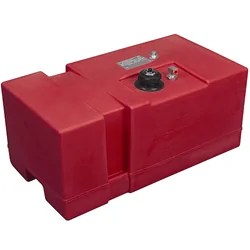
Just to give you something to think about, I've considered a marine "above deck tank" housed in small tool chest within the bed. Toolbox could hold simple siphon pump hose and be quick released in an out of bed.

This one is 18 gal. and 28x15x15, is EPA compliant and vented

8978421.jpg


Could be done fairly cheap, especially if one already had a chest to use. Tank is less than $400.
Sponsored


Top