
Motorpsychology
Well-Known Member
- First Name
- Chris
- Joined
- Nov 13, 2019
- Threads
- 21
- Messages
- 3,291
- Reaction score
- 11,492
- Location
- Prescott, WI
- Vehicle(s)
- 2021 Ranger STX SuperCab 4X4 Carbonized grey; 2025 Mazda CX-90 Platinum Quartz
- Occupation
- Vagabond
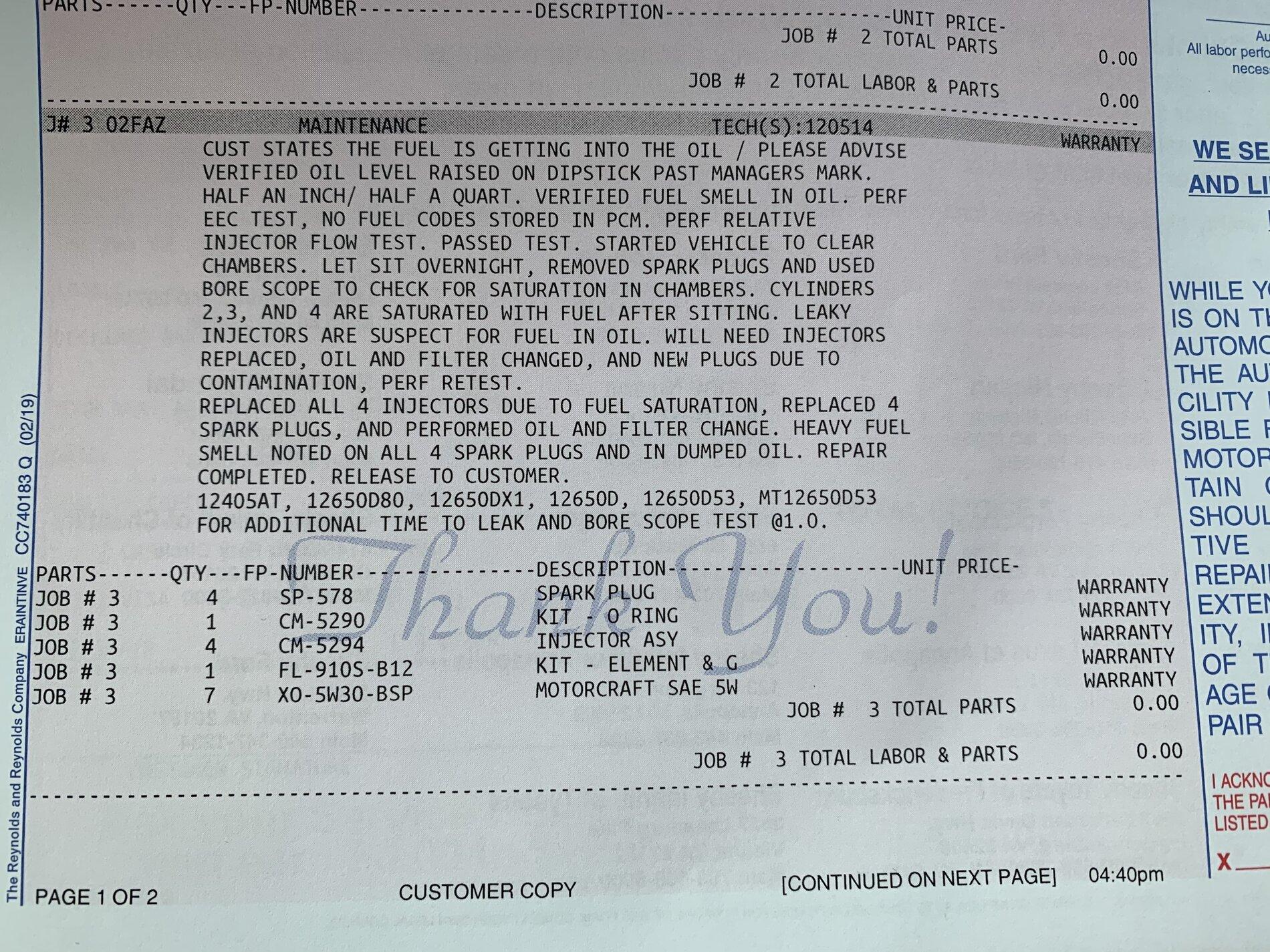
I'm no petrochemist, but I don't think it works like paint thinner. The refinery does't start out with a barrel of grease and keep adding gas or kerosine to thin it out to the desired grade. If you start out with 5w40, you end up with 5w40 with gasoline in it, not 5w30. The oil will dilute but the viscosity will remain the same, I would think.The only issue with this plan is that the viscosity would start out too high. In theory it would come down to the correct level over time but how long into the oil interval does it take for it to come down? On top of that, I don’t think it would solve the issue of the gas in your oil washing critical components of their oil coating. The higher viscosity can’t do much to help a cylinder wall that’s been cleaned of oil due to fuel washing it off.
It would probably be more effective to change the oil more often than to try and compensate for the fuel being there. Even better would be figuring out how to reduce the fuel dilution to a normal level for GDI engines.
This whole issue is real hit or miss; some have a lot some have none. It's a little early in the engine's application to determine if this has any bearing on longevity, but I haven't seen any reports on blown engines, excessive oil consumption, fires etc directly caused by fuel in oil.
I'll likely put an extended warranty on mine when it comes in. I've used every extended warranty I've ever bought. Haven't gotten all my money back on some, a couple I have. But it sure is convenient and painless when something goes wrong at five years, one hour/60,000.1 miles and your'e a time zone or two away from home.
Sponsored