
Sponsored

Random Misfire at startup and cylinder 3 misfire and O2 sensor

dtech

Well-Known Member
Joined
May 10, 2020
Threads
39
Messages
3,143
Reaction score
7,614
Location
colorado
Vehicle(s)
Ranger Lariat FX4, chromed and forever damperless
Agree with this, but I would get the misfire issue corrected before moving forward with O2 sensor those usually do not fail.
If there is no power to heat the O2 sensor I don't believe it can produce accurate info to regulate the AF mix - which could possibly be the source of the misfire code - one might assume that the ecu would log misfires on all cylinders but that isn't necessarily always the case. The wide band O2 sensors are a lot more complex than the old 2 or 3 wire narrow band sensors - which could function without the heating element after the engine was warmed up.
Sponsored

 
OP
OP

Starjammir

Well-Known Member
First Name
Bill
Joined
Jun 19, 2020
Threads
6
Messages
45
Reaction score
6
Location
Michigan
Vehicle(s)
2020 ranger
Occupation
Rn
If there is no power to heat the O2 sensor I don't believe it can produce accurate info to regulate the AF mix - which could possibly be the source of the misfire code - one might assume that the ecu would log misfires on all cylinders but that isn't necessarily always the case. The wide band O2 sensors are a lot more complex than the old 2 or 3 wire narrow band sensors - which could function without the heating element after the engine was warmed up.
I can datalog misfires on each cylinder. When I did this before I replaced plugs there was dozens on each cylinder. I'll check again tonight.
 

Dereku

Well-Known Member
First Name
Derek
Joined
May 18, 2022
Threads
31
Messages
2,822
Reaction score
6,911
Location
Chicagoland Area
Vehicle(s)
2021 Ford Ranger
Occupation
Project Manager
Ohm check each coil, specs are on the internet somewhere. But if one is bad it is obvious.
 

airline tech

Well-Known Member
Joined
Aug 24, 2022
Threads
28
Messages
4,482
Reaction score
8,553
Location
Midwest - KS
Vehicle(s)
2022 Ranger Lariat-Super Crew, Cactus Gray
Occupation
Aircraft Tech
Is the O2 Sensor coding?
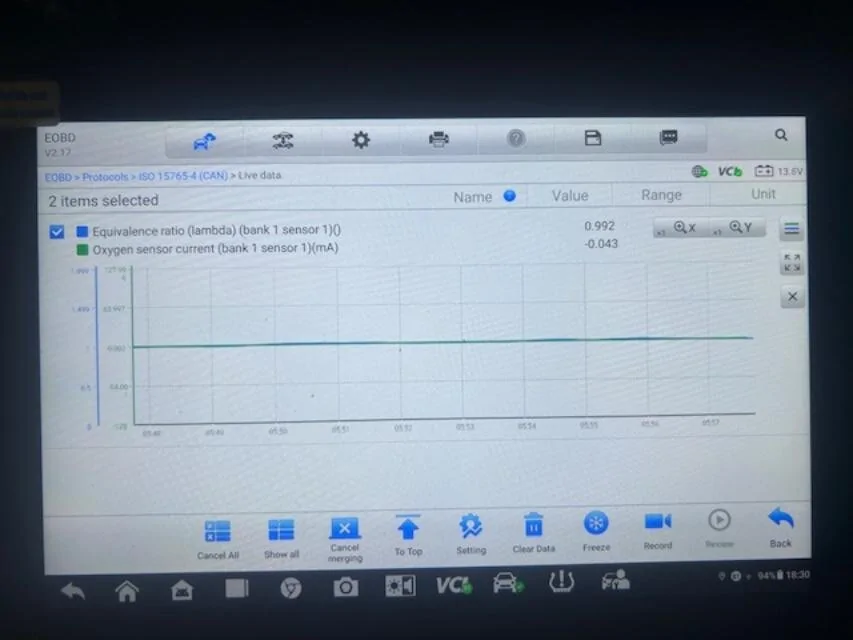
The Ford O2 sensors (PID) data is hard to read,
Suggest view (O2 Sensor Current = Ma)
and also use (Generic- OBD Data (Mode 6) or Lambda Value
You can also view (Mode 6) data to see Misfire Monitor (which cylinder or cylinders are misfiring)

Note: The Firing Order 1-3-4-2

Example: A bad misfire on Cyl #3 can Transend into Cyl #4 and show up as a multiple cylinder misfire when using the misfire monitor - (Cylinder #4) May or May not cause a P0300 code.
It depends on the misfire counts it registers.
When T-Shoot (Look for the Cylinder with the (Highest) Misfire Count as the problem cylinder.

Example: Cylinder 1 #2 or 3 & 4 are the highest, then more than likely a vacuum leak (Intake or Head Gasket) in between the cylinders

If you have a voltage supply issue going to the sensor it should be throwing a code.

If the plugs were replaced and the coil swap provides no help, then it is either a vacuum leak or injector issue, suspect a leaking injector as a possible

Taken @ Idle - Engine at Operating Temp (Example)

O2 Sensor.jpg


Tests than can help in T-Shoor are:

These are guided automated (self-tests) via High-End Scan Tool or Ford's FDRS


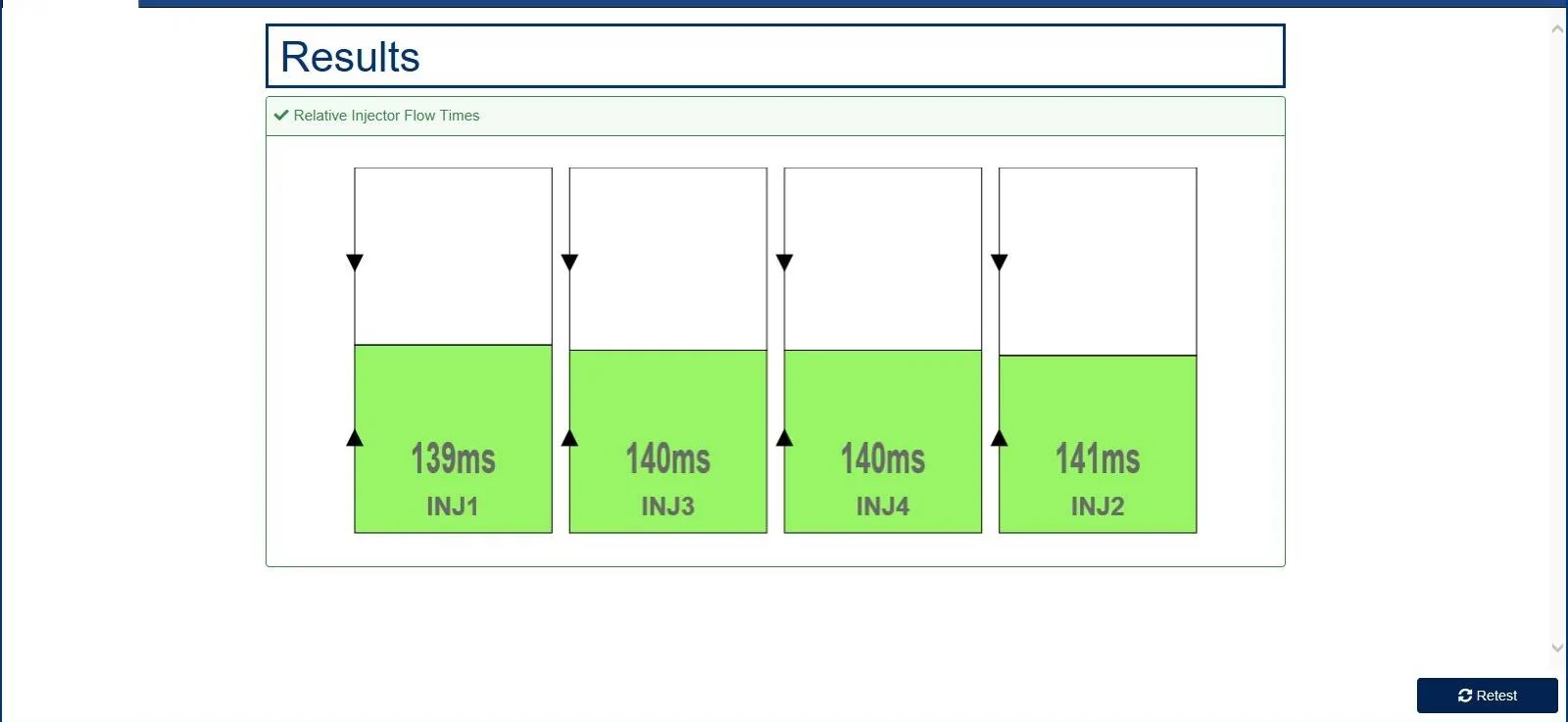
Relative Injector Flow Test (Normal Example from my truck)
This test sets a known rail pressure and pulses each injector (times) how long it takes to reach the (Min) target pressure - They all should be fairly equal.
This will highlight a (Clogged or Leaking) injector

Relative Injector Flow Test.jpeg


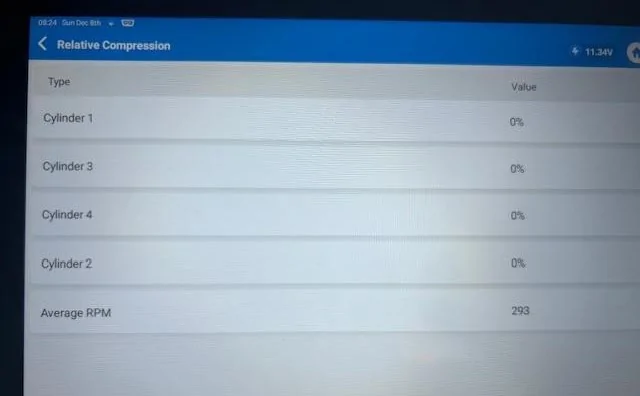
Relative Compression Test.
This test disables fuel and automatically engages the starter, it uses starter amperage draw as a calculating for each cylinder (compression) variables.
You want these to be at or near (0) as it is measuring a (Variance - Compare) for each cylinder.

Realtice Compression.jpg


Power Balance Test:

I cannot find my Power Balance example:

But it is an automated test that disables each injector (1) at a time and you note how much of a RPM-Drop you get - from each cylinder.
Some Tools - This is automated, and some you have to manually kill each injector


So, if you have a - O2 Sensor that is actually pushing out a code, then we need to do some wiring checks.

You stated the fuel trims are all over the place:

What are the STFT & LTFT Readings: At Idle & 1500-2000 RPMS?
 
Last edited:
OP
OP

Starjammir

Well-Known Member
First Name
Bill
Joined
Jun 19, 2020
Threads
6
Messages
45
Reaction score
6
Location
Michigan
Vehicle(s)
2020 ranger
Occupation
Rn
Is the O2 Sensor coding?
The Ford O2 sensors (PID) data is hard to read,
Suggest view (O2 Sensor Current = Ma)
and also use (Generic- OBD Data (Mode 6) or Lambda Value
You can also view (Mode 6) data to see Misfire Monitor (which cylinder or cylinders are misfiring)

Note: The Firing Order 1-3-4-2

Example: A bad misfire on Cyl #3 can Transend into Cyl #4 and show up as a multiple cylinder misfire when using the misfire monitor - (Cylinder #4) May or May does not cause a P0300 code.
It depends on the misfire counts it registers.
When T-Shoot (Look for the Cylinder with the (Highest) Misfire Count as the problem cylinder.

Example: Cylinder 1 #2 or 3 & 4 are the highest, then more than likely a vacuum leak (Intake or Head Gasket) in between the cylinders

If you have a voltage supply issue going to the sensor it should be throwing a code.

If the plugs were replaced and the coil swap provides no help, then it is either a vacuum leak or injector issue, suspect a leaking injector as a possible

Taken @ Idle - Engine at Operating Temp (Example)

O2 Sensor.webp


Tests than can help in T-Shoor are:

These are guided automated (self-tests) via High-End Scan Tool or Ford's FDRS


Relative Injector Flow Test (Normal Example from my truck)
This test sets a known rail pressure and pulses each injector (times) how long it takes to reach the (Min) target pressure - They all should be fairly equal.
This will highlight a (Clogged or Leaking) injector

Relative Injector Flow Test.webp


Relative Compression Test.
This test disables fuel and automatically engages the starter, it uses starter amperage draw as a calculating for each cylinder (compression) variables.
You want these to be at or near (0) as it is measuring a (Variance - Compare) for each cylinder.

Realtice Compression.webp


Power Balance Test:

I cannot find my Power Balance example:

But it is an automated test that disables each injector (1) at a time and you note how much of a RPM-Drop you get - from each cylinder.
Some Tools - This is automated, and some you have to manually kill each injector


So, if you have a - O2 Sensor that is actually pushing out a code, then we need to do some wiring checks.

You stated the fuel trims are all over the place:

What are the STFT & LTFT Readings: At Idle & 1500-2000 RPMS?
For the fuel trims does the truck need to be warmed to operating temperature? If not, I can grab it now.
For the o2 sensor, should they be showing voltage in a scanner?
Granted I am doing all this from my Livernois tuner so I am limited on what I see. Unless if course livernois turns the o2 sensors off.


airline tech

Well-Known Member
Joined
Aug 24, 2022
Threads
28
Messages
4,482
Reaction score
8,553
Location
Midwest - KS
Vehicle(s)
2022 Ranger Lariat-Super Crew, Cactus Gray
Occupation
Aircraft Tech
For the fuel trims does the truck need to be warmed to operating temperature? If not, I can grab it now.
For the o2 sensor, should they be showing voltage in a scanner?
Granted I am doing all this from my Livernois tuner so I am limited on what I see. Unless if course livernois turns the o2 sensors off.
Yes- Note Fuel Trims @ Operating Temp
Ensure the Loop Status: Switches from (open to closed) - Cold Engine to Warm Engine

The Voltage Reading - I think you are looking @ is the VREF Voltage (What does it read (KOEO)
Key on engine off - If this is the correct PID - Should be 5.0 Volts, with engine running it should read 0.14 Volts - The Scanner you have may not pick up that (detailed) voltage reading as it is under 1.0 volts (so it shows -0) that's why I am asking if the O2 sensor is actually coding.
I was mainly a GM guy until the Ranger, so some things such as O2 Sensor readings and Miss-Fire readings Ford PID's lack in the display of them in an easy-to-read PID.
With a GM - You can Live Data view each cylinder and watch the Misfire Counters and also see the O2 sensor on a 450 MV Scale - jump Low to High on each side of the 450MV scale, easy to see a lazy O2 sensor. Ford uses a (current) mA scale, and it only moves slightly off of (0) (- 0 -+)

Another factor is: Look at Freeze Fram Data: When is it picking up the Misfire (At Idle) or (Off Idle)
Engine Temp (Cold or Hot) or does it matter and Misfire in all conditions.
 

airline tech

Well-Known Member
Joined
Aug 24, 2022
Threads
28
Messages
4,482
Reaction score
8,553
Location
Midwest - KS
Vehicle(s)
2022 Ranger Lariat-Super Crew, Cactus Gray
Occupation
Aircraft Tech
Lately this truck has been something else to me. 49k
Just got it back from the dealer for leaf spring replacement.
Now it's throwing a misfire at startup and cylinder 3 misfire. Just replaced all the plugs ( motorcraft) not 100 miles ago. Not sure where to go.
Checked the fan harness and I'm good on that.
Also, replaced upstream O2 sensor for no voltage and it's still the same. Used a motorcraft sensor too. Fuel trims are all over the place too, as to be expected.
Question: Being I just caught this - Timing of event

Was this misfiring before the Leaf Spring Replacement?

Timing of the 100 Miles ago - for Spark Plugs before or after the Leaf Spring Replacement?

I also remember you having an evap code was this also after the Leaf Springs?

What specific code was the O2 Sensor code? when it originally coded?

I am thinking your whole issue is a Vacuum Leak somewhere around the Fuel Tank & The Evap hose routing either on top of the tank or to the EVAP Canister or the tubing along the top of the tank is cracked.

Leaf Spring (Tie In)
There is a vent tube connected to the rear differential, that vent tube runs up near the Evap canister - if the rear axle was lowered with the vent tube attached it would pull downwards on the Evap tubing or at least downwards in that area, this MAY have cracked or dislodged something on a connection.
You have so many issues that all tie together the EVAP, O2 and Misfire all relate to each other, and it is a RED FLAG that the last thing that was touched was the Leaf Springs and then this started.
If this is correct? I am thinking your issue is in this area and you're going down the wrong rabbit hole.

The O2 sensor will depend on what code you had.

Were you able to get the EVAP Test completed, this will tell us if the EVAP System is working or leaking may have to also use a - Smoke Test Tool, I actually have one and they work great for locating leaks.

To confirm my theory:
Not always but a good indicator of a vacuum leak is looking at LTFT
At idle High (Positive) numbers and moves towards (Neutral) closer to zero at higher RPMs
The system is running lean (To much air - not enough fuel) so the PCM adds fuel to compensate and if I am correct the O2 code you had was P0171 (System Too Lean)
This is not a O2 sensor failure code - its only reporting that it's telling the PCM to add more than normal fuel to compensate and it triggers that code.
If this was another code - let me know, for further investigation.

As far as the O2 sensor PIDs, My Truck also shows (0) volts for that PID, I had to do some self-training for this as the Ranger uses a (Wideband) O2 sensor for the Upstream and a (Narrowband) O2 senor for the Downstream.
As I previously stated, I have not had in depth experience with Fords PID's as some of them differ on how they are displayed (various makes) this is one of them, when I researched this, even mechanics were asking questions on what they were supposed to see as they, like me were used to seeing a (narrow band) sensor display jumping around (Lean/Rich) wide range of movement.
The Ranger does not display it that way

They all work the same but how the PID is displayed is different for a (wideband) sensor
But the pic I posted above is from my truck, so yours should be showing the same (normally) except with a (Positive - LTFT) the numbers are going to read differently

Keep in mind - that the O2 sensor reading is what drives the Fuel Trim tables.

I am actually having to do some self-teaching on the Ford (Wideband) PID display as it does differ from GM's> The others, I have seen display .76 or ,77 volts as a normal reading, so as you see the O2 data readings from the PIDs differ but for T-Shooting purposes they push you to view the (Current-PID) which is what I posted, the EQ PID is the same reading as the CURRENT just displayed in a different format (Ratio)
Zero (0) being perfect 14.7.1 Stoichiometric but Ford (at least for the Ranger) displays it as the 2 PIDs I posted.
Negative (-) of zero = Rich & Positive of zero = Lean, so see it matches the fuel trims
There is a variable of (0) that it has to reach before it codes (P0171 or P0172)

Again, this thread made me do some training :clap:,
Knowledge = Power, walking away from Automotive Maintenace in 1994 does have some drawbacks, sometimes you get lost especially with scan data (OBD2) was not even released yet.
Being that I do all my own Maintenace and of course family & friends and sometimes neighbors I have to do some training & research (myself) much simpler than a multimillion dollar flying tube but with automotive now (I do not receive) factory training or see it on a daily basis.
So, I do enjoy learning as it keeps me on my toes and in a way - still active in the field, I almost came back professionally after 9/11 - The Layoffs hit me hard, but I stuck it out and returned back to aviation and love it.

This is mainly why I like to help others on here - It helps me as well to keep a connection to the automotive side of maintenance, If I was still in it - most likely it would be - I do enough at work - Fend for yourself :LOL:

I think this will be a good PID reference to add, as I have planned on setting up a Ref: PID (Real Data) for the EGR as well, this way for the ones that replace the DPFE and still have issues they have a reference point for the related system readings they should be seeing provided they have something other the Forscan, as Forscan lacks the DPFE PID.
 
Last edited:
OP
OP

Starjammir

Well-Known Member
First Name
Bill
Joined
Jun 19, 2020
Threads
6
Messages
45
Reaction score
6
Location
Michigan
Vehicle(s)
2020 ranger
Occupation
Rn
Question: Being I just caught this - Timing of event

Was this misfiring before the Leaf Spring Replacement?

Timing of the 100 Miles ago - for Spark Plugs before or after the Leaf Spring Replacement?

I also remember you having an evap code was this also after the Leaf Springs?

What specific code was the O2 Sensor code? when it originally coded?

I am thinking your whole issue is a Vacuum Leak somewhere around the Fuel Tank & The Evap hose routing either on top of the tank or to the EVAP Canister or the tubing along the top of the tank is cracked.

Leaf Spring (Tie In)
There is a vent tube connected to the rear differential, that vent tube runs up near the Evap canister - if the rear axle was lowered with the vent tube attached it would pull downwards on the Evap tubing or at least downwards in that area, this MAY have cracked or dislodged something on a connection.
You have so many issues that all tie together the EVAP, O2 and Misfire all relate to each other, and it is a RED FLAG that the last thing that was touched was the Leaf Springs and then this started.
If this is correct? I am thinking your issue is in this area and you're going down the wrong rabbit hole.

The O2 sensor will depend on what code you had.

Were you able to get the EVAP Test completed, this will tell us if the EVAP System is working or leaking may have to also use a - Smoke Test Tool, I actually have one and they work great for locating leaks.

To confirm my theory:
Not always but a good indicator of a vacuum leak is looking at LTFT
At idle High (Positive) numbers and moves towards (Neutral) closer to zero at higher RPMs
The system is running lean (To much air - not enough fuel) so the PCM adds fuel to compensate and if I am correct the O2 code you had was P0171 (System Too Lean)
This is not a O2 sensor failure code - its only reporting that it's telling the PCM to add more than normal fuel to compensate and it triggers that code.
If this was another code - let me know, for further investigation.

As far as the O2 sensor PIDs, My Truck also shows (0) volts for that PID, I had to do some self-training for this as the Ranger uses a (Wideband) O2 sensor for the Upstream and a (Narrowband) O2 senor for the Downstream.
As I previously stated, I have not had in depth experience with Fords PID's as some of them differ on how they are displayed (various makes) this is one of them, when I researched this, even mechanics were asking questions on what they were supposed to see as they, like me were used to seeing a (narrow band) sensor display jumping around (Lean/Rich) wide range of movement.
The Ranger does not display it that way

They all work the same but how the PID is displayed is different for a (wideband) sensor
But the pic I posted above is from my truck, so yours should be showing the same (normally) except with a (Positive - LTFT) the numbers are going to read differently

Keep in mind - that the O2 sensor reading is what drives the Fuel Trim tables.

I am actually having to do some self-teaching on the Ford (Wideband) PID display as it does differ from GM's> The others, I have seen display .76 or ,77 volts as a normal reading, so as you see the O2 data readings from the PIDs differ but for T-Shooting purposes they push you to view the (Current-PID) which is what I posted, the EQ PID is the same reading as the CURRENT just displayed in a different format (Ratio)
Zero (0) being perfect 14.7.1 Stoichiometric but Ford (at least for the Ranger) displays it as the 2 PIDs I posted.
Negative (-) of zero = Rich & Positive of zero = Lean, so see it matches the fuel trims
There is a variable of (0) that it has to reach before it codes (P0171 or P0172)

Again, this thread made me do some training :clap:,
Knowledge = Power, walking away from Automotive Maintenace in 1994 does have some drawbacks, sometimes you get lost especially with scan data (OBD2) was not even released yet.
Being that I do all my own Maintenace and of course family & friends and sometimes neighbors I have to do some training & research (myself) much simpler than a multimillion dollar flying tube but with automotive now (I do not receive) factory training or see it on a daily basis.
So, I do enjoy learning as it keeps me on my toes and in a way - still active in the field, I almost came back professionally after 9/11 - The Layoffs hit me hard, but I stuck it out and returned back to aviation and love it.

This is mainly why I like to help others on here - It helps me as well to keep a connection to the automotive side of maintenance, If I was still in it - most likely it would be - I do enough at work - Fend for yourself :LOL:

I think this will be a good PID reference to add, as I have planned on setting up a Ref: PID (Real Data) for the EGR as well, this way for the ones that replace the DPFE and still have issues they have a reference point for the related system readings they should be seeing provided they have something other the Forscan, as Forscan lacks the DPFE PID.
So all of this ties in before the leaf spring.
I believe the o2 sensor was low voltage. It has NOT come back on since changing the sensor 30 miles and one driving cycle. The tech said it will come back on though as he cleared the codes. I'm not sure if the livernois scanner sees the data quick or not for the o2 sensor. It goes between 0-0.030v that's I can see.
The EVAP code is cleared as it was a bad wire and they replaced the harness.
Leaf springs came in as I was doing brakes and noticed they were broke.
I had one time it show a random misfire code and another cylinder code but can't recall what one. I figured I'd replace the plugs as it has close to 50k. Apparently, it didn't fix the misfire code.
Sponsored


Top