
lariat
Well-Known Member
- Joined
- Dec 17, 2023
- Threads
- 10
- Messages
- 317
- Reaction score
- 544
- Location
- Western US
- Vehicle(s)
- Ranger Lariat
- Occupation
- student
This has become clear....and many other markets.China owns the battery market.
Sponsored

This has become clear....and many other markets.China owns the battery market.
Really? I must have missed that f***ing memo.lol I am.You have to admit it was a beautiful day!
?
First would suggest that we keep this forum about trucks. No room for politics here. I simply responded to Dave's comment as the members here most likely have a variety of opinions. Again, talk trucks here, not politics. Political conversations can be had in the appropriate forums.Yes, you did. It would be good to start paying attention. Like I did about 30 years ago.

I grew up to poor to pay attention ?.Yes, you did. It would be good to start paying attention. Like I did about 30 years ago.
I'd love to see a parts list and more details on this. Electrical stuff as a general rule isn't my strong suit, but I can follow what others have done when it works well.I grew up to poor to pay attention ?.
I just use a battery, shunt, and inverter so I'm not stuck with proprietary components that cost a fortune to repair. For $300 you can have the power of a $900 proprietary box with higher grade cells.

There's a guy named Will Prowse that has a great youtube channel and website loaded with informationI'd love to see a parts list and more details on this. Electrical stuff as a general rule isn't my strong suit, but I can follow what others have done when it works well.
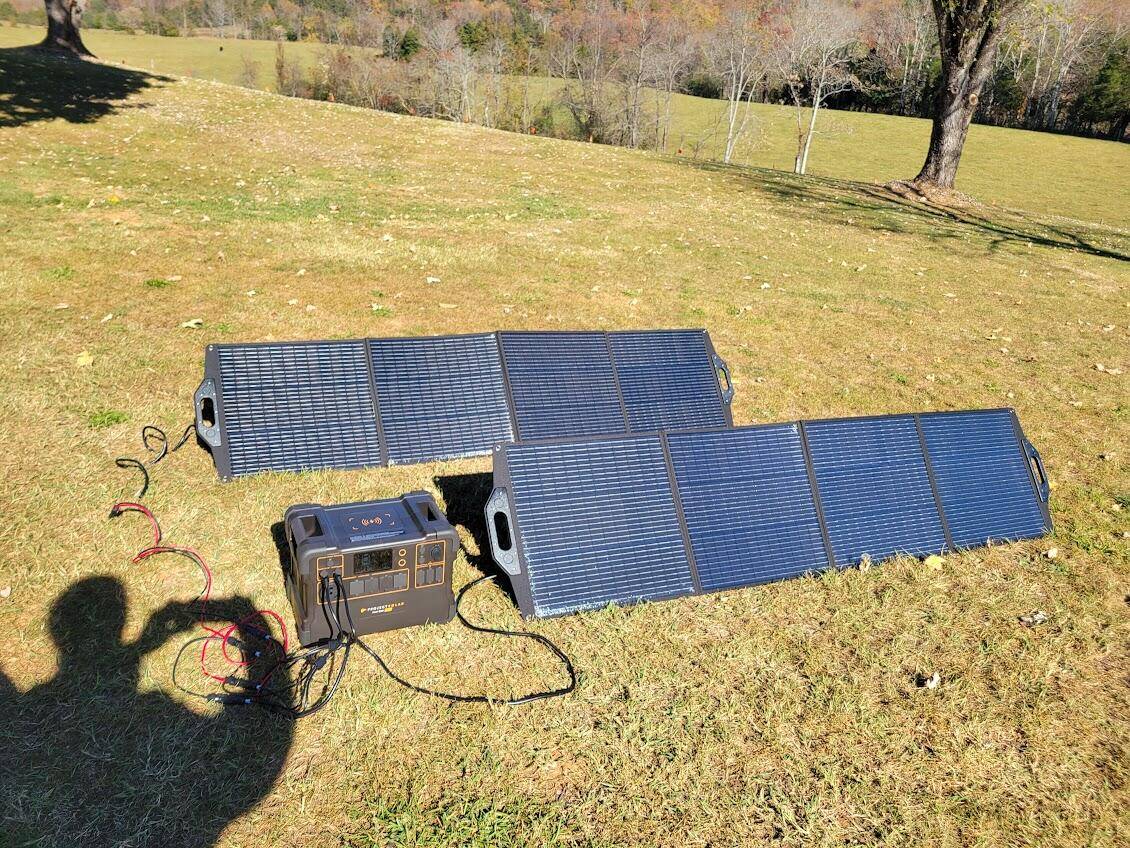
Runtime is relatively easy to calculate.. figure out how many watts something runs at and then divide by total watt hours.Well it came today. Sorry I am not talking trucks, this part of the forum is not about trucks. I set it up for a dry run so I knew how everything connected and how to aim the panels. The only thing not shown is the included wheeled cart.
I must say, so far I am impressed. The power vs. size, the portability, ease of operation features etc. Right now I have it running my beer fridge downstairs just to get an idea of run time.

So basically, you have the following:There's a guy named Will Prowse that has a great youtube channel and website loaded with information
I recently had a 12v 200 ah battery sent to me and just strapped on an inverter
This is a test system I set up with a 400 ah 48 volt battery to get data before I build the bigger system. Made a couple hundred kw with it the last couple months to run my barn. This battery was expensive though. I roll it up and plug in the house for lights and fridge when power goes out.
True story! However, it is not always obvious what an appliance's power consumption is. While my really old beer fridge was running, the generator said the power draw was ~325W. Plus when it was at idle, it showed a draw of 13W. I did not see when the generator reached 0%. I went to bed.Runtime is relatively easy to calculate.. figure out how many watts something runs at and then divide by total watt hours.
Yes that's basically it. The battery will be determined by the inverter size you need. The BMS of the battery must be able to handle the inverter power requirement. Most 12v 100 ah batteries have a 100 amp BMS so your basically limited to a 1000 watt 120 volt inverter. The inverter can also handle the charging and solar input if you spend a little more on a all in one making a much simpler system. Here's a common one that's affordable https://signaturesolar.com/eg4-3kw-...utput-5000w-pv-input-500-voc-input-pre-order/ Battery voltages of 12, 24, and 48 are common. The higher the battery voltage, the lower the amp draw allowing smaller size cables between everything. Solar panels are required for off grid applications and ther is a wide variety to choose from based on your system specs. With our electricity cost recently jumping from 16 cents a kw to 22.5 cents a kw I am gathering items now for a supplemental backup system next year before the tarrifs take effect.So basically, you have the following:
- Battery (the bigger the longer it will run without recharging)
- Inverter to convert DC to AC
- Charger
- Optional - solar panels to charge - It seems like this also requires a different charger?
Interesting stuff. I will continue to keep my eye on this - it is interesting to me - for now, I'm pretty happy with our generator when we have the occasional power outage.
We looked at adding solar panels but they were prohibitively expensive for what they would provide, but that was also with a company doing all the work. I am probably going to continue to investigate how we could supplement our electric usage with a solar system.Yes that's basically it. The battery will be determined by the inverter size you need. The BMS of the battery must be able to handle the inverter power requirement. Most 12v 100 ah batteries have a 100 amp BMS so your basically limited to a 1000 watt 120 volt inverter. The inverter can also handle the charging and solar input if you spend a little more on a all in one making a much simpler system. Here's a common one that's affordable https://signaturesolar.com/eg4-3kw-...utput-5000w-pv-input-500-voc-input-pre-order/ Battery voltages of 12, 24, and 48 are common. The higher the battery voltage, the lower the amp draw allowing smaller size cables between everything. Solar panels are required for off grid applications and ther is a wide variety to choose from based on your system specs. With our electricity cost recently jumping from 16 cents a kw to 22.5 cents a kw I am gathering items now for a supplemental backup system next year before the tarrifs take effect.
The problem we ran into is homeowners insurance if you add permanent solar to your house. I am planning on a trailer mounted portable system with 12k split phase output and about 40 kw of batteries. All batteries and equipment will be mounted in a room built on the trailer and just plugged into my backup generator plug on the house. That way my homeowners insurance premium doesn't go up 6x. My 14kw generator will recharge the batteries in a couple hours on cloudy days.We looked at adding solar panels but they were prohibitively expensive for what they would provide, but that was also with a company doing all the work. I am probably going to continue to investigate how we could supplement our electric usage with a solar system.
Our current generator for power outages is a 3500W inverter generator and it works well in emergencies - we can't power the whole house, but we can do the critical things. I like it because it doesn't use a ton of gas - it will go all day on 2 or 3 gallons of gas. We have the woodstove for heat, so the only thing we don't have is hot water during power outages.


