- Joined
- Dec 11, 2019
- Threads
- 1
- Messages
- 517
- Reaction score
- 1,010
- Location
- California
- Vehicle(s)
- 2019 Ford Ranger Crewcab
- Banned
- #976
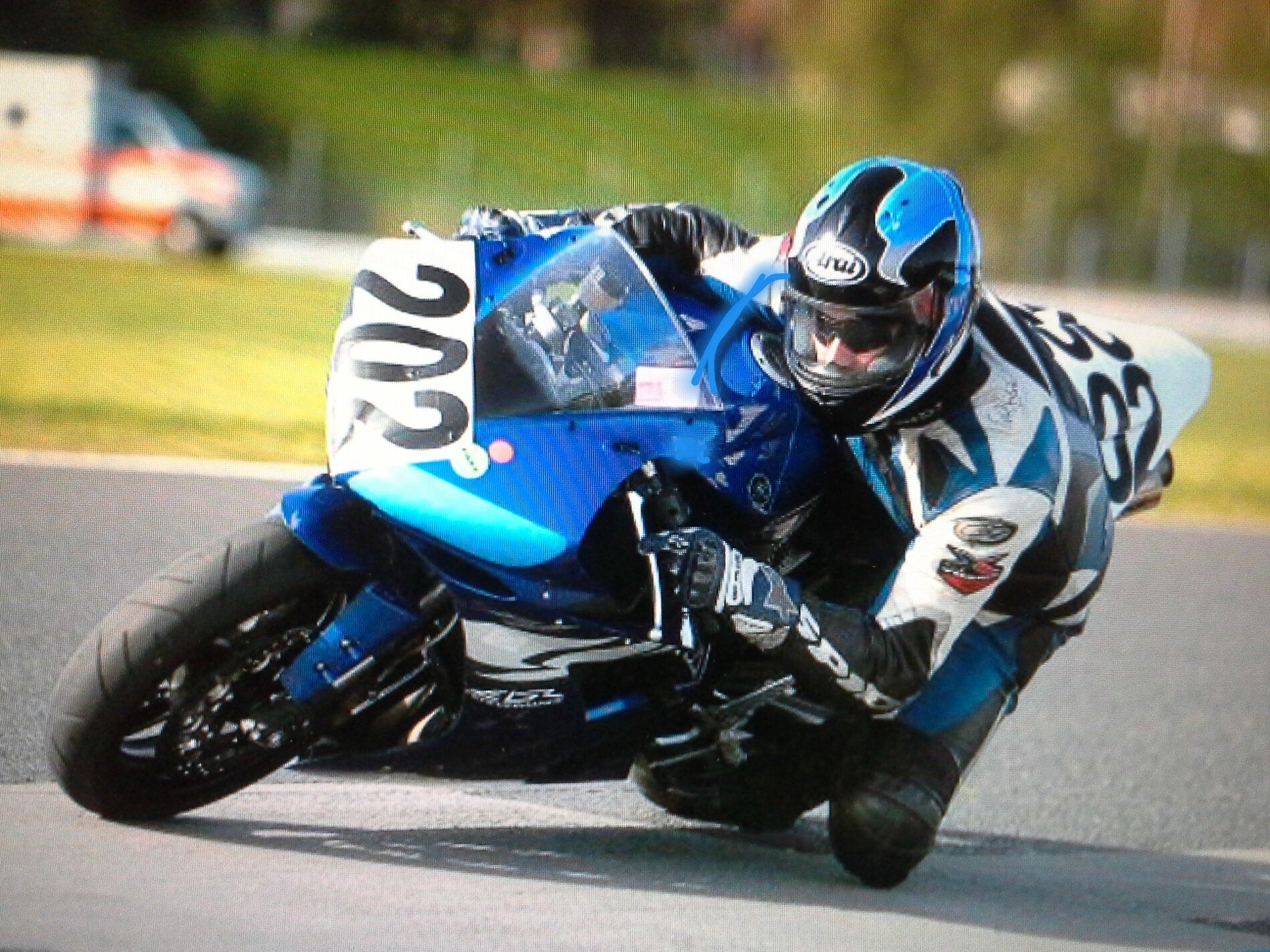
IIRC one of the MSF field exercises was to intentionally lock the rear tire and keep it locked until stopped. I don't remember anybody dumping it in class. Now that was decades ago and I'm sure physics has changed.As far as grasping the physics involved in riding a motorcycle, I would have to ask what are your qualifications and objectively quantifiable riding skill level? Based upon your choice of an R3, I think I already know the answer. In my case, my qualifications would include things like my background as an expert-licensed motorcycle road racer, motorcycle road racing instructor, motorcycle road racing race official, and motorcycle road racing endurance crew chief. My objectively quantifiable riding skill level, is about 6 seconds off the absolute lap record of my home track, and during track days, I have turned expert-level lap times with my wife on the back. That's good enough for a major motorcycle manufacturer to recruit me as a rider and model for their advertising campaigns, at the rate of $1,000 an hour.
No. That's how cars work. Cars are long, low, heavy, with brakes that are very small for their weight, and rock-hard tires intended to last tens of thousands of miles. The maximum braking abilities of cars, is limited by traction, until the brakes overheat, at which point they are then limited by braking power. Motorcycles are short, tall, light, with massive brakes, and soft sticky tires that don't last very long. Unless there is something wrong with your motorcycle, your maximum braking on pavement will not be limited by braking power or by front tire traction. The only braking limitation remaining at that point, is weight transfer.
Have you ever wondered why competent road motorcycles typically have two full-floating cross-drilled front brake discs about 300mm or so in diameter, two large radial-mount brake calipers with 8 to 12 front brake caliper pistons, a radial front brake master cylinder, and a single small non-floating rear disc with 1 or 2 brake caliper pistons in the back? That should be a clue to you.
Your first problem there, is that although the rear wheel can stabilize the motorcycle because it's locked in plane with almost the entire motorcycle, the front wheel cannot, because there's a hinge in between the front wheel and all that mass- the steering head.
And your second problem, is that when kids on 20" bikes lock up the rear wheel at 15 mph, they instantly have to balance the bicycle with steering and body english, which is easy because they weigh several times what their bicycle weighs. It's not the spinning front wheel keeping it up. If you remove the steering and body english, the bicycle will fall down when you lock up the rear tire. Body english alone, is not enough for you to be able to keep your 375-pound R3 upright with the rear wheel locked, because it outweighs you by a substantial margin. In theory, you MIGHT be able to keep it upright by steering alone, but in actual practice just about all motorcyclists fall down. Either way, the spinning front wheel will not be contributing to your endeavor. If/when the rear-end steps out enough to pull your foot off the rear brake, you will then high-side. As a police officer, I have seen this to be a VERY common cause of completely avoidable fatal motorcycle crashes.
There is an excellent book on this subject, that I highly recommend- "A Twist Of The Wrist 2" by Keith Code.

Sponsored