onobeka
Well-Known Member
Thank you for sending me to schoolDecrease in travel but livable if on a budget. I also found a stiffer ride experience with the spacer. Google the subject and you will see more. Here is a good writtup if you are on the fence. https://www.motortrend.com/how-to/1...ew-springs-the-need-to-knows-before-you-lift/
 .
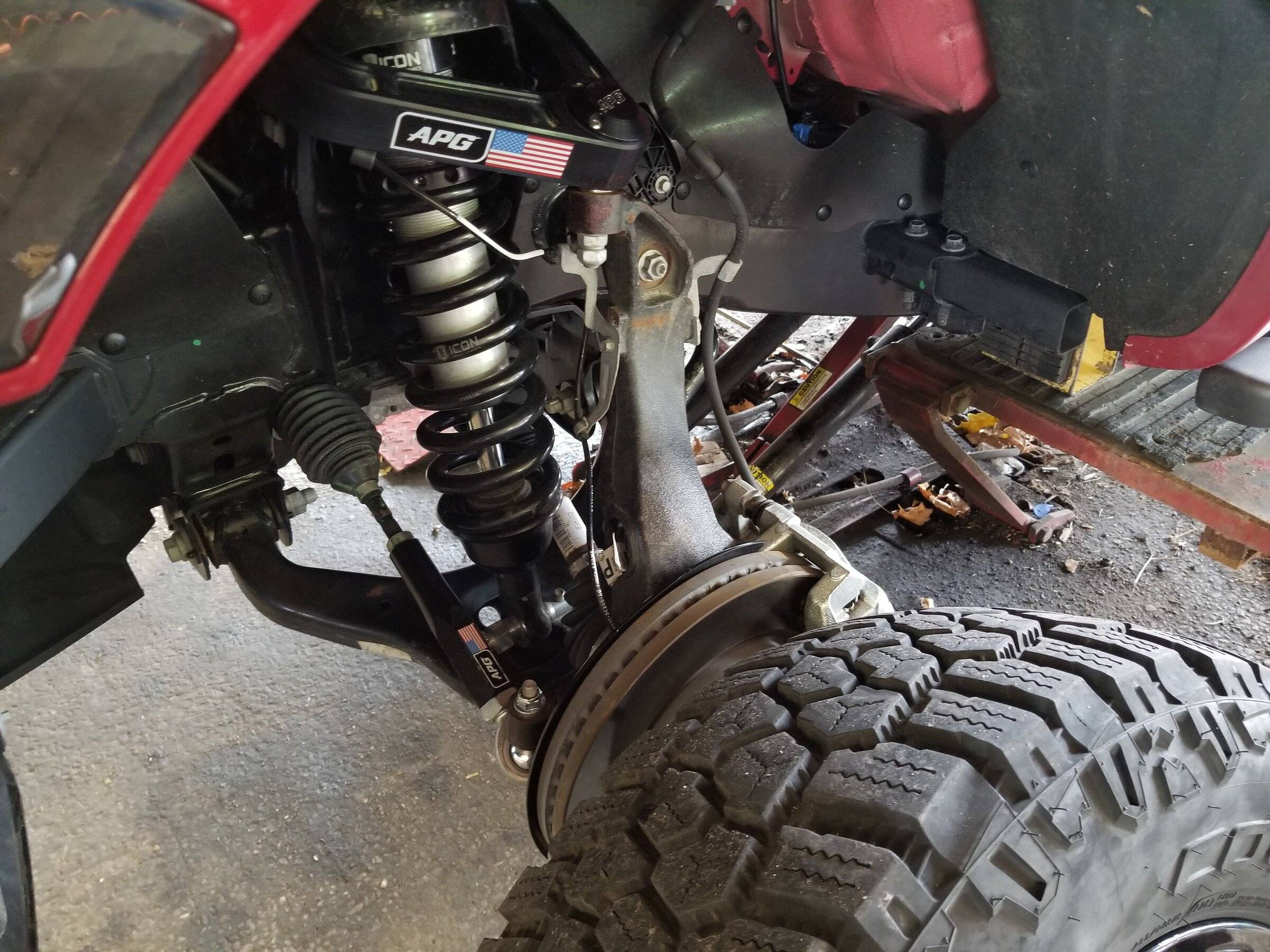
.Here's my view: you were talking about "extension geometry of the shock", which in other words means droop. On an IFS vehicle the spacer (top, preload, ...) and a coilover lifting the vehicle will compromise droop compared to stock suspension. The only way around it is to body lift. Stock suspension is sitting 50/50 between up travel and down travel, it's the most versatile position, period. When you lift (regardless how) the arms angle down, drooping already quite a bit from the total droop available, which is limited either by one of these: maximum extension of the shock, UCA hitting the coils or the top tower (this is the case of the Ranger) or CV binding. With stock UCAs, the Ranger has two droop limiters: with a spacer on top of the factory strut, it will be the UCA hitting the top strut mount on the body. With the aftermarket coilover it could be the shock itself limiting the droop or the UCA, whichever happens sooner. The worst combination would be an aftermarket UCA with a factory strut spacer - this will result in an overextended droop that would either break the CV or bind the UCA in the coils.
A spacer will increase travel compared to the stock suspension, possibly beyond capacity. A coilover is not guaranteed to increase travel - depends a lot on the details (above and below).
The article you've shared, talks about downsides related to compression (up travel). Indeed with a spacer, there could be coil bind happening sooner than with an aftermarket lifting coil over - debatable due to the bumpstop configuration on some vehicles. With the Ranger 2019 I can see that happening as they've removed the bumpstops on the lower control arms. The bumpstops are integrated in the shock. If the coil fully compresses before the bumpstop engages, the shock or the strut mount would break.
Sponsored