IdahoRanger
Well-Known Member
I find excuses to get out when the snow flies. Love driving around and playing but worry about the other drivers for sure.
Sponsored

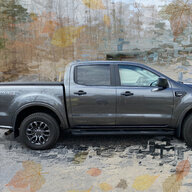
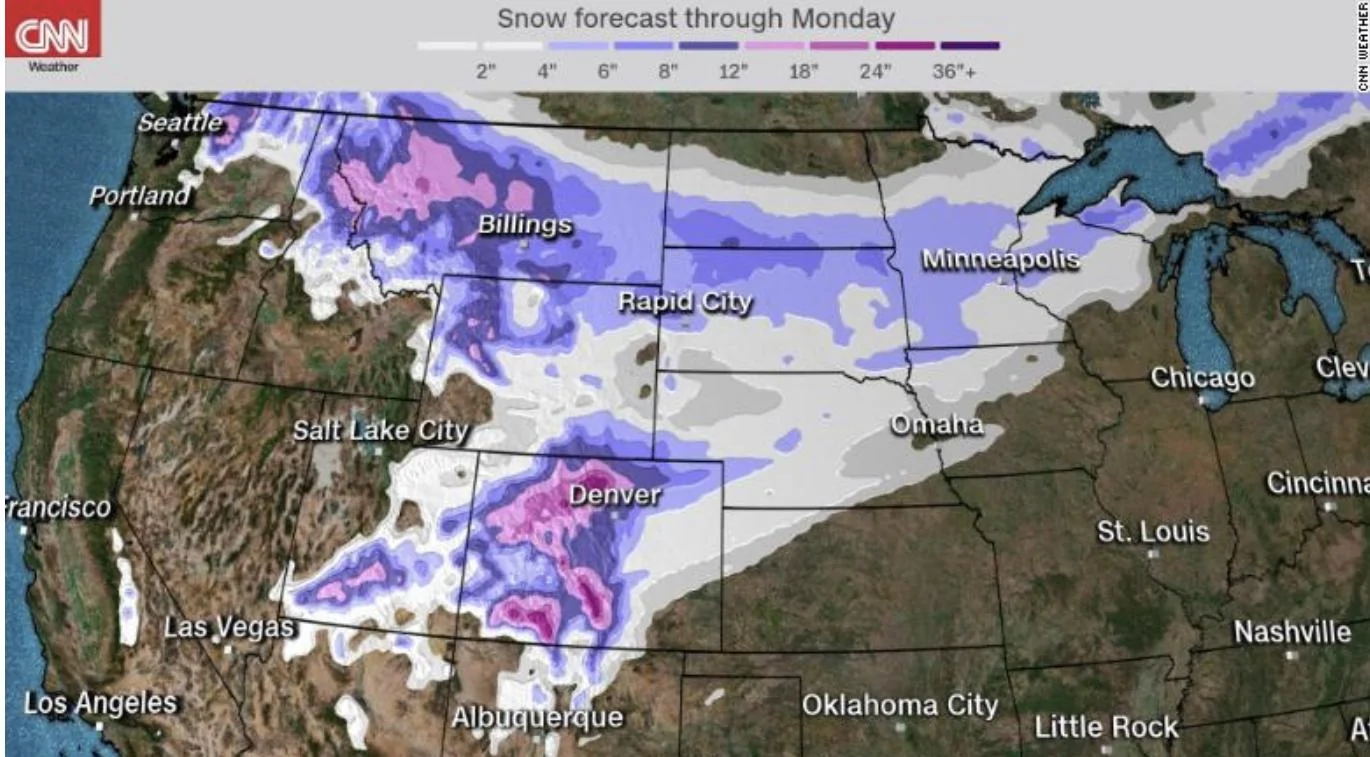
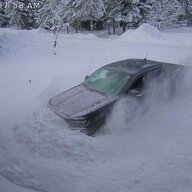
I plowed through a 24" deep driveway worth of snow and a headlight high plow bank in just 4H with no problems at all a couple weeks ago. Plenty of other snow storms since then as well with no issues, most of which I spent in 2H. The truck is pretty darn good in the snow, let it do the work for you. If you're not as comfortable driving in winter conditions, then feel free to do everything you thought and see what you think. Only you can decide what you're comfortable with.Guys, a few winter questions. We have not had any significantly stormy weather in Delaware since I bought my Ranger FX4 in August, but we usually have a couple of monster storms per year, the kind that can cover my driveway and the streets of our development with snow overnight. Sometimes the community snowplowing guy will do his work before I have to leave, sometimes not. Usually, the state services that clear the main roads and the freeway have cleared them before I leave, meaning that the tricky part is getting down my driveway and out of my development. (Obviously, I should shovel my driveway snow, but I am 66 with a bad back, and so I prefer just to plow through it with my vehicle, and park with the nose pointing outward from my garage for that reason.) My problem is, then, what is the best way to do so in the Ranger? My thinking is that I would start with "Grass, Gravel and Snow Mode" with the 4X4 function set to 4L until I get down the driveway and, if the roads in the development are still uneven with snow and ice, all the way to the main road, at which time, assuming it has been nicely plowed by then, I would switch to 2H. At that point, would I turn from "Snow Mode" back to "Normal," or just leave it on until I get to my destination, which requires about twenty minutes of freeway driving? Also, would it make sense to engage the rear locker at any point, perhaps just to get through the piled up snow on my driveway? Thanks in advance for any advice you can offer.
Matt, thanks. The consensus seems to be 4H for the deep stuff and 2H for the rest, trusting the truck's technology to deal with the situation on its own, which is what I will try once the snow starts flying! One final question: does anybody ever use the "Grass, Gravel and Snow Mode"?I plowed through a 24" deep driveway worth of snow and a headlight high plow bank in just 4H with no problems at all a couple weeks ago. Plenty of other snow storms since then as well with no issues, most of which I spent in 2H. The truck is pretty darn good in the snow, let it do the work for you. If you're not as comfortable driving in winter conditions, then feel free to do everything you thought and see what you think. Only you can decide what you're comfortable with.
I know some people have. And I've heard that it makes the truck even better in the snow. Certainly something worth trying. A longer distance drive (miles and miles) with more than 14-16" of untouched snow would probably be where I personally would use it. Probably not even needed in that situation either, but if you've got it, might as well use it. Might be good for when you're stuck too. Need to do some experimenting. hahaMatt, thanks. The consensus seems to be 4H for the deep stuff and 2H for the rest, trusting the truck's technology to deal with the situation on its own, which is what I will try once the snow starts flying! One final question: does anybody ever use the "Grass, Gravel and Snow Mode"?

You are correct. My point is that having the front wheels provide power as well as steering makes it a lot more likely that the fronts will lose traction, leaving you with little to no steering, often resulting in under-steer. The same applies to awd/4wd cars, but when proper application of the throttle is used in conjunction with what little steering traction you may have, you can maintain limited control of the direction of travel by inducing over-steer. In a RWD car, the steering tires have the best ability to maintain traction, and direction of travel can be controlled with the throttle if under-steer does occur.If your front tires lose traction you can't steer in any car lol plus, if you're roasting your front tires in a FWD and can't steer, that's your own fault for having a heavy foot.
This is absolutely false. That method does nothing other than cause under-steer. The best way to regain/maintain control of a fwd car is to give as little throttle/braking input as possible (shuffle steering can also help, but that's a different conversation). A free rolling tire will have the most possible steering traction. That is why people think RWD is the worst. The rears lose traction when power is applied, but the fronts still have traction which can result in a spin-out if the driver doesn't know how to properly counter-steer.\If you get squirrelly in a FWD vehicle, you steer where you want to go and hammer the gas.
I think his point is that, regardless of how many wheels are getting power, the best way to improve winter driving is by getting winter tires. FWD, RWD, AWD, and 4WD all stop exactly the same.Sure, agree to disagree. AWD or 4x4 adds a lot of traction in the case of accelerating. Sliding is a different story of course. Having a wheel pulling while another pushes results in much better traction than just 1 or 2 wheels pushing (RWD).
Yup--if your tires are losing traction at high speeds, the number of drive wheels is really the least of your problems. And I'd rather not be on the same road.I think his point is that, regardless of how many wheels are getting power, the best way to improve winter driving is by getting winter tires. FWD, RWD, AWD, and 4WD all stop exactly the same.
Hence why traction control is on.We have allot of farm fields. We can have sections of dry and snow covered and back and forth when the wind picks up. Sometime it can be covered for a few feet to miles and then dry and back and forth. We do not always just have dry or snow covered roads.
I really do not want to be switching between 4HI or 2 Hi continually..
I have always found pick ups to be light in the back and AWD is nice if it feels slippage.
I liked it when I would leave for work in the winter and put it in AWD. I didn't have to worry about trashing my trucks transfer case or tires.. It is a nice feature on my Colorado and I am going to miss it.
1) Yes, you can switch to 4H while drivingForm all this I have 2 questions:
1. Can I switch from 2H to 4H while driving? Without stopping?
2. When do I switch to 4H?
When you're having trouble getting moving.2. When do I switch to 4H?
1. You can switch between 4H and 2H at any speed under like 65mph or something like that. Only thing is it's nice to let the load off (i.e. let off the gas) while doing it so that it goes quicker and easier.Form all this I have 2 questions:
1. Can I switch from 2H to 4H while driving? Without stopping?
2. When do I switch to 4H?
...
Your fuel economy will tank, though.
If you're talking about fuel economy due to running in 4H, I disagree. In the Ranger, the front axle/diff/driveshaft are always turning in 2H and 4H. Very little happens in 4H other than locking the front and rear drive in the transfer case.Nothing will break, but it could accelerate wear to the transfer case if there is any sort of discrepancy between the front and rear wheel speed.
The jerking/lurching when you turn isn't caused by binding, btw. That's caused by your brakes trying to equalize your left to right wheel speed. Unless you have the locker engaged, there is no mechanical part to bind when you turn. It's jarring to be sure, but it wont damage anything.
Your fuel economy will tank, though.