
Sponsored

Ping when cold

airline tech

Well-Known Member
Joined
Aug 24, 2022
Threads
28
Messages
4,461
Reaction score
8,529
Location
Midwest - KS
Vehicle(s)
2022 Ranger Lariat-Super Crew, Cactus Gray
Occupation
Aircraft Tech
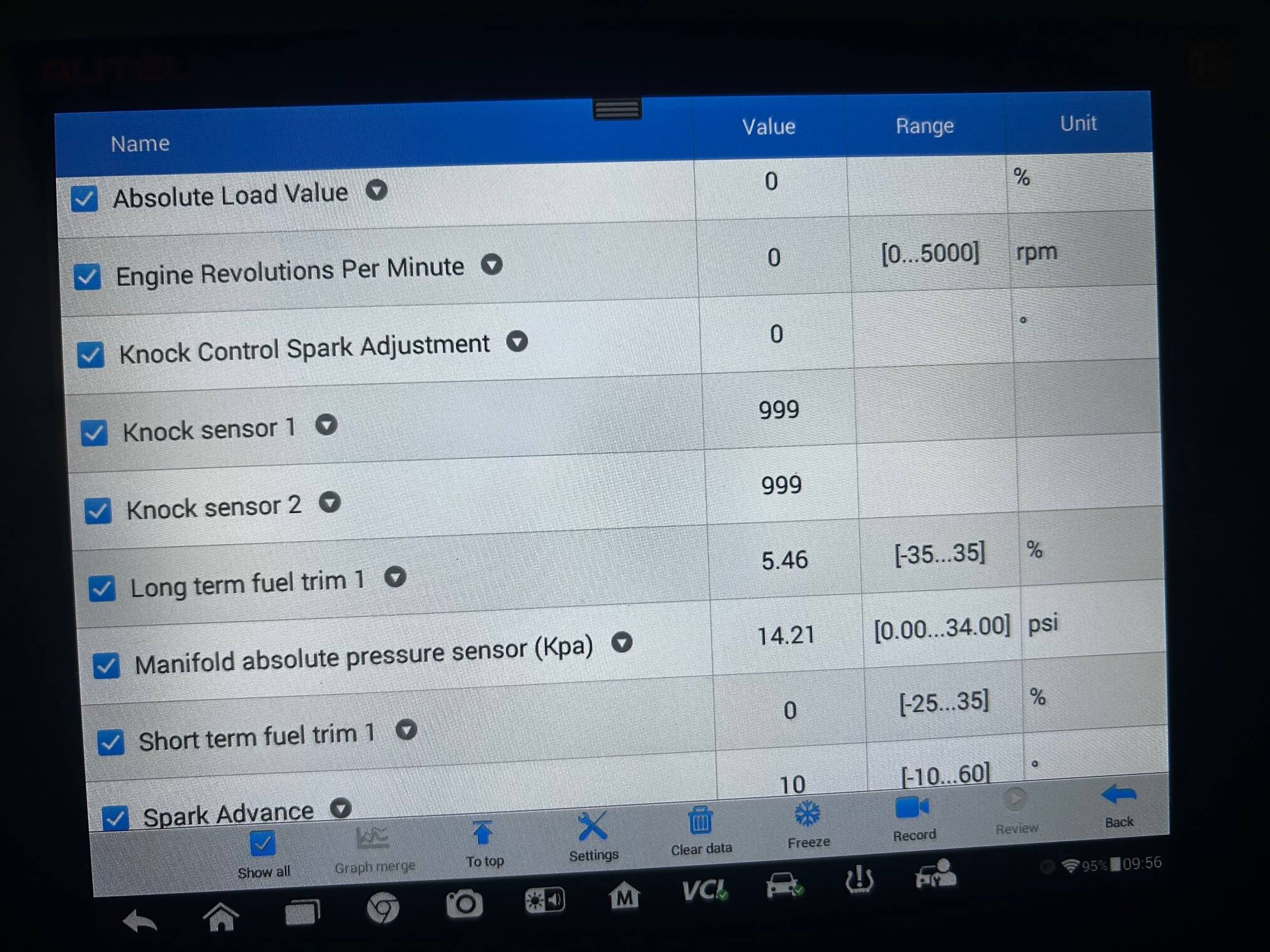
Just did a quick hook up in garage - all in garage, no driving.

KOEO

KOEO.jpg


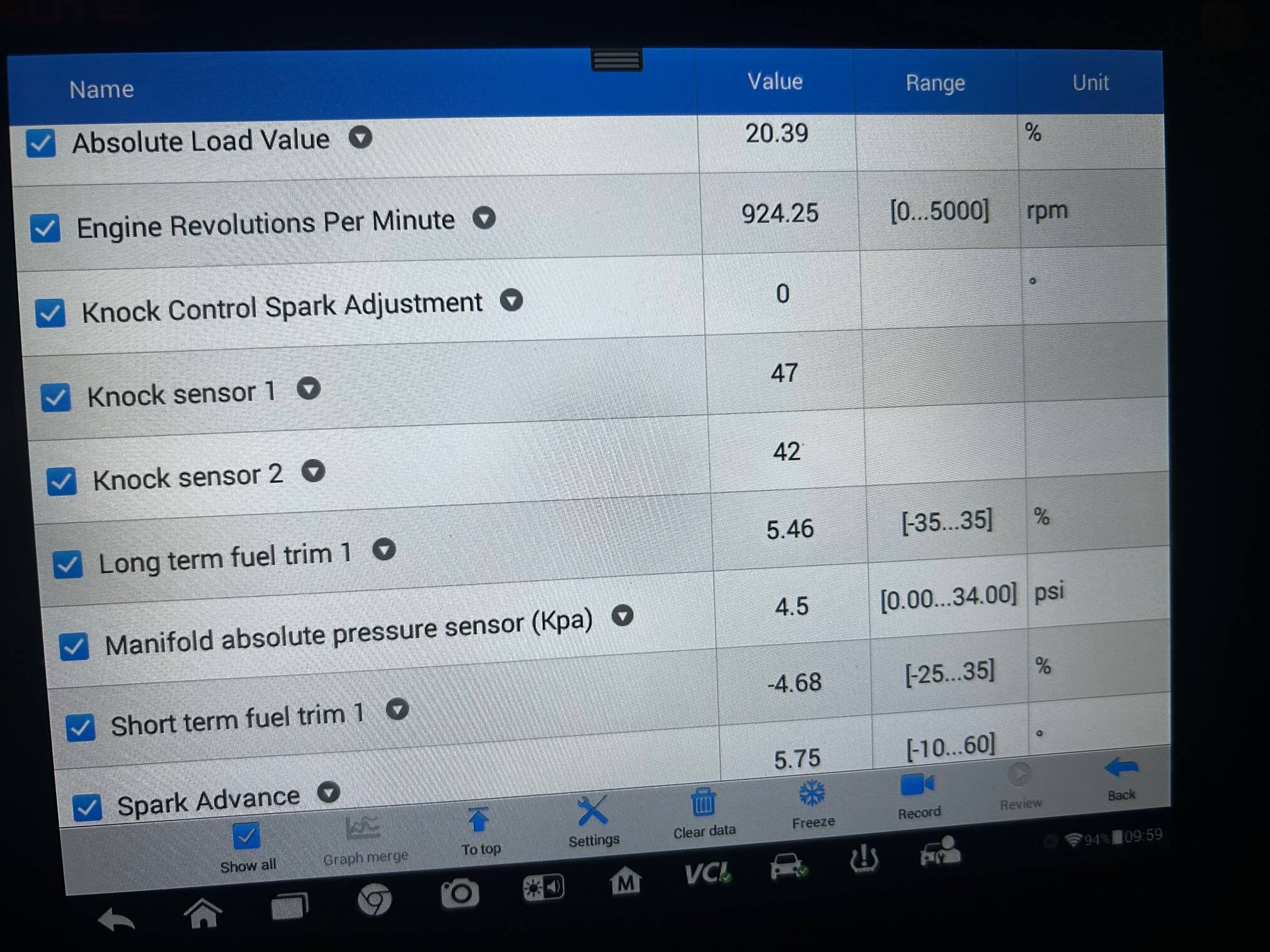
Cold Idle:
Cold Idle.jpg


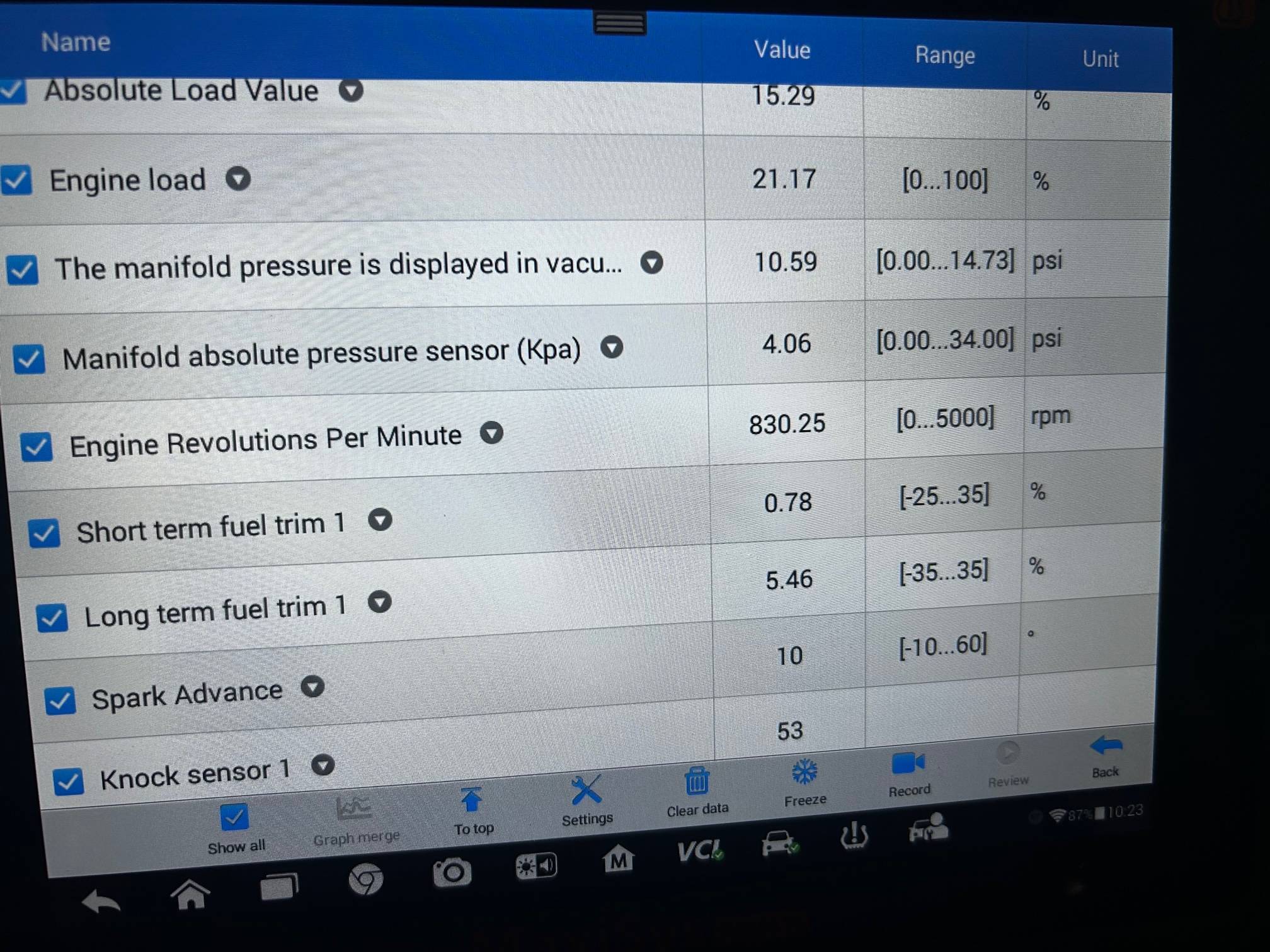
Hot Idle @ 198 Deg
Hot Idle.jpg


Hot @ 2700 RPM - IN Park (Not Driving-Under any Loads)
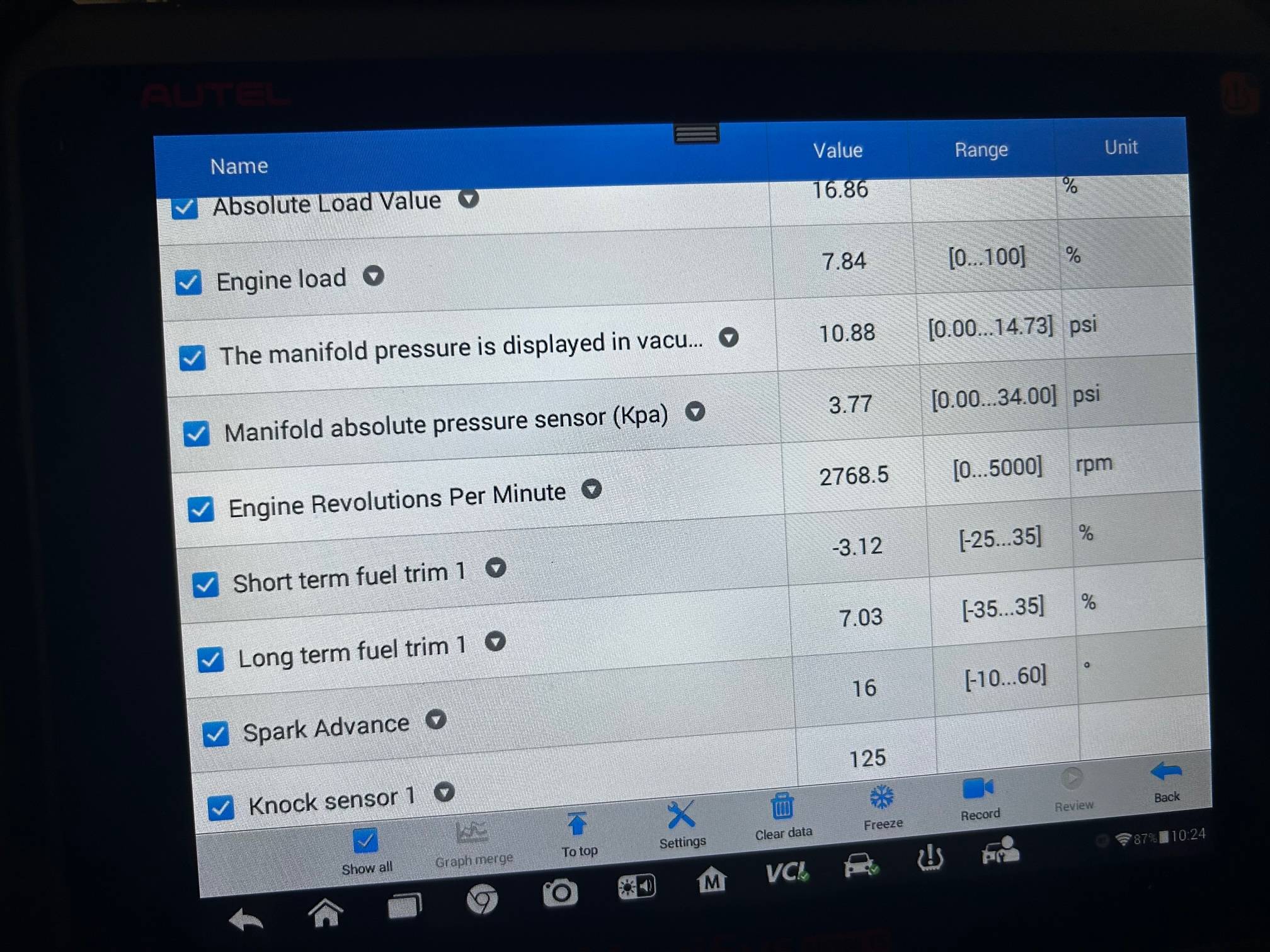
Hot 2700 RPM.jpg

This will at least give you a baseline reading on the MAP sensor and see if yours is off, Focus on MAP -KPA
I wish FORD would give you specs in RPM vs MPH, so I thought I would make it easier to compare MAP readings this way
Sponsored
 

airline tech

Well-Known Member
Joined
Aug 24, 2022
Threads
28
Messages
4,461
Reaction score
8,529
Location
Midwest - KS
Vehicle(s)
2022 Ranger Lariat-Super Crew, Cactus Gray
Occupation
Aircraft Tech
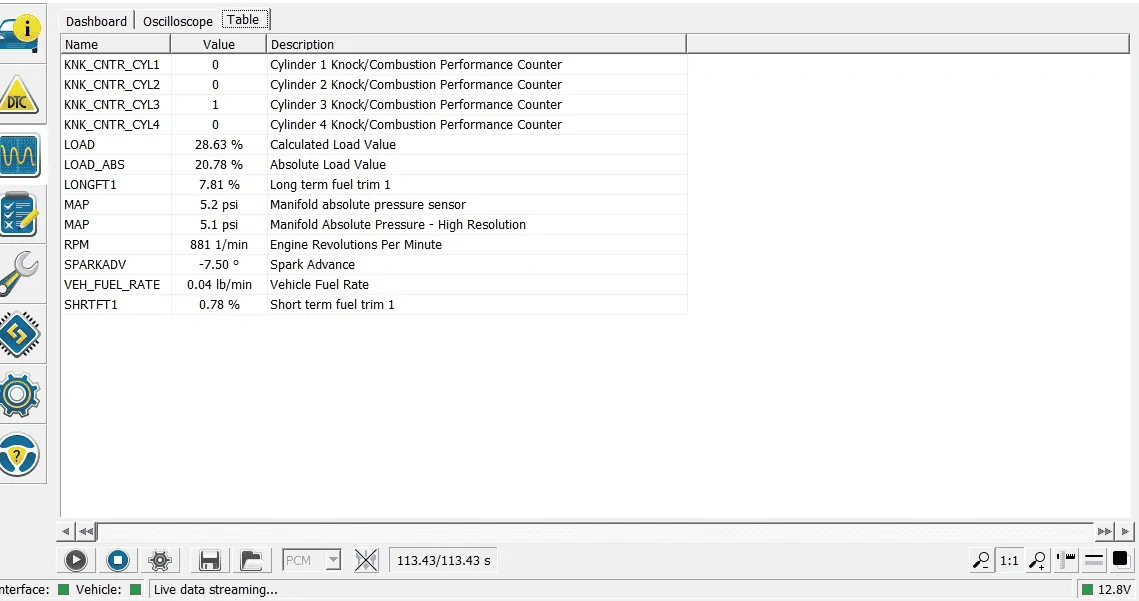
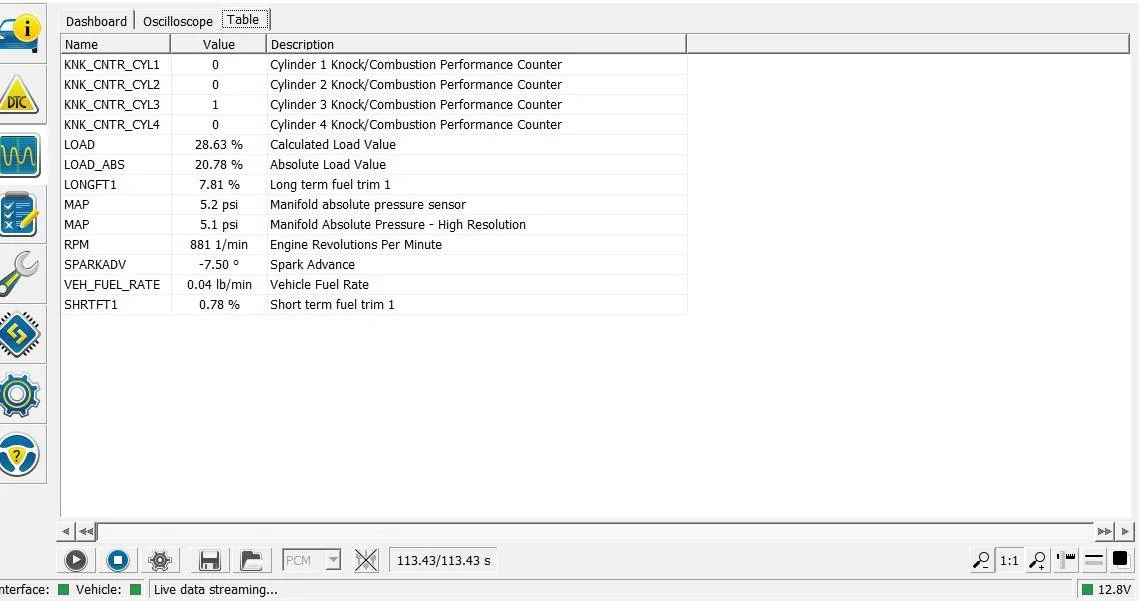
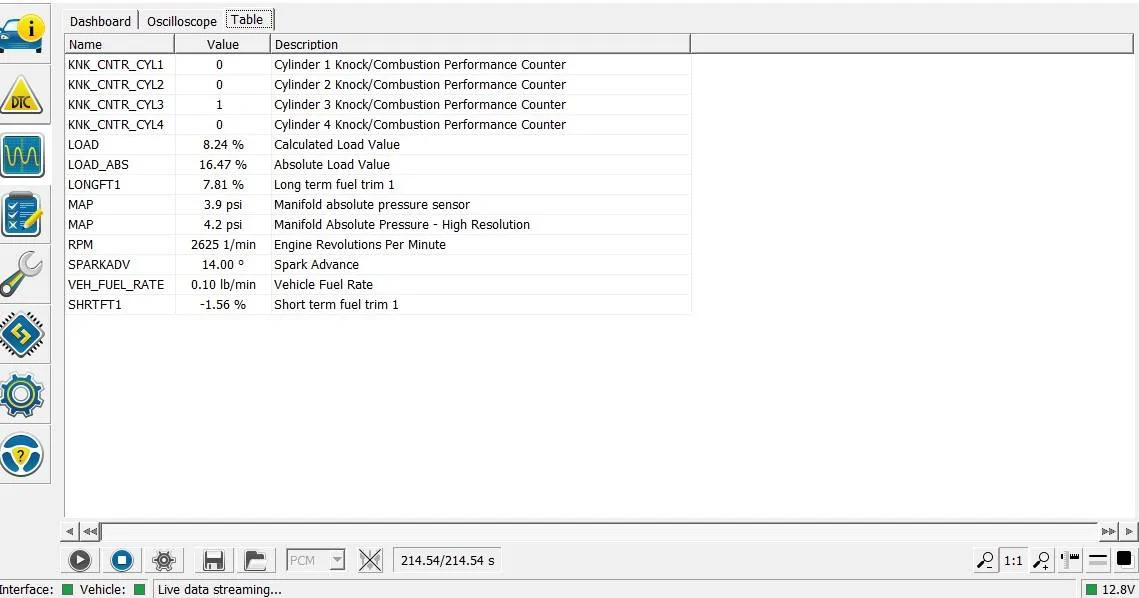
And to Compare Forscan to Forscan (Apples to Apples)
Since I was already at Temp - These are for Hot Engine @ 198 Deg
I threw in Vehicle Fuel Rate, just to see if this may be the Octane PID, I went through all PIDs in Forscan and did not see it either.
Current Ambient Temp = 67 Deg
I turned off AC, as the AC Compressor kicking in will bump the numbers some.

Refresh for Specs:
Load: Idle= 27% - 30 MPH=35% - 55 MPH=33%
MAP idle=4.93 PSI - 30 MPH= 11.46 PSI --55 MPH=13.92 PSI

Hot Idle
FS Hot Idle.jpg

So I am in Specs Here: Load Specs @ Idle 27%
MAP Specs @ Idle 4.93 PSI

Now for the rest, we will have to use RPM as a reference to Specs, since I am not driving to create RPM Specs

2600 RPM (In Park)
FS 2600 RPM.jpg

You are looking for MAP PSI to drop here, as there is a lower manifold vacuum, and should return back up to Idle reading after you release throttle.


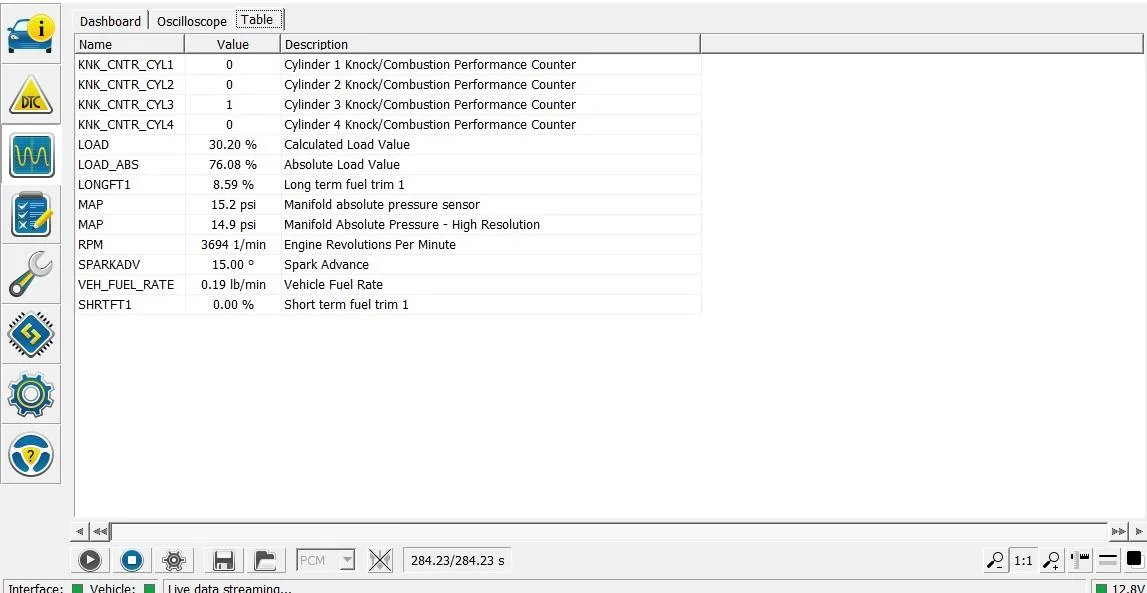
And a quick snap-throttle, to get the MAP PSI Reading to move and settle back down to idle.
I got the snapshot @ nearly 3700 RPM.
Snap Throttle = Push to Floor and Quickly Release, this checks the MAP for response
FS Snap Throttle.jpg


Anyway, it's a shot in the dark, but the only thing I can think of is the MAP as far as improper inputs to the PCM.
This is my First (Turbo) so I do not know if Oil can cause a spark knock, I do know that the Ranger is very picky.
I am thinking you may have a MAP sensor reading a higher PSI than it should and just wanted to give you a normal reading of the MAP Sensor
FYI - I think the BARO Reading comes from within the PCM itself, on the Ranger
 
Last edited:

airline tech

Well-Known Member
Joined
Aug 24, 2022
Threads
28
Messages
4,461
Reaction score
8,529
Location
Midwest - KS
Vehicle(s)
2022 Ranger Lariat-Super Crew, Cactus Gray
Occupation
Aircraft Tech
Another Confirmation Check:
Check these PIDS at KOEO:
Spec is 14.5, but 14.1 or 14.2 is good.

Baro Press: (PCM)
Map Press (Map Sensor)
TCBP Press (Turbo Charge Boost Press)
They should be within 1.5 PSI of each other, but equal is preferred.
 
OP
OP
seasprite

seasprite

Well-Known Member
Joined
Sep 1, 2022
Threads
25
Messages
468
Reaction score
1,111
Location
Missouri
Vehicle(s)
2022 Ranger XL STX
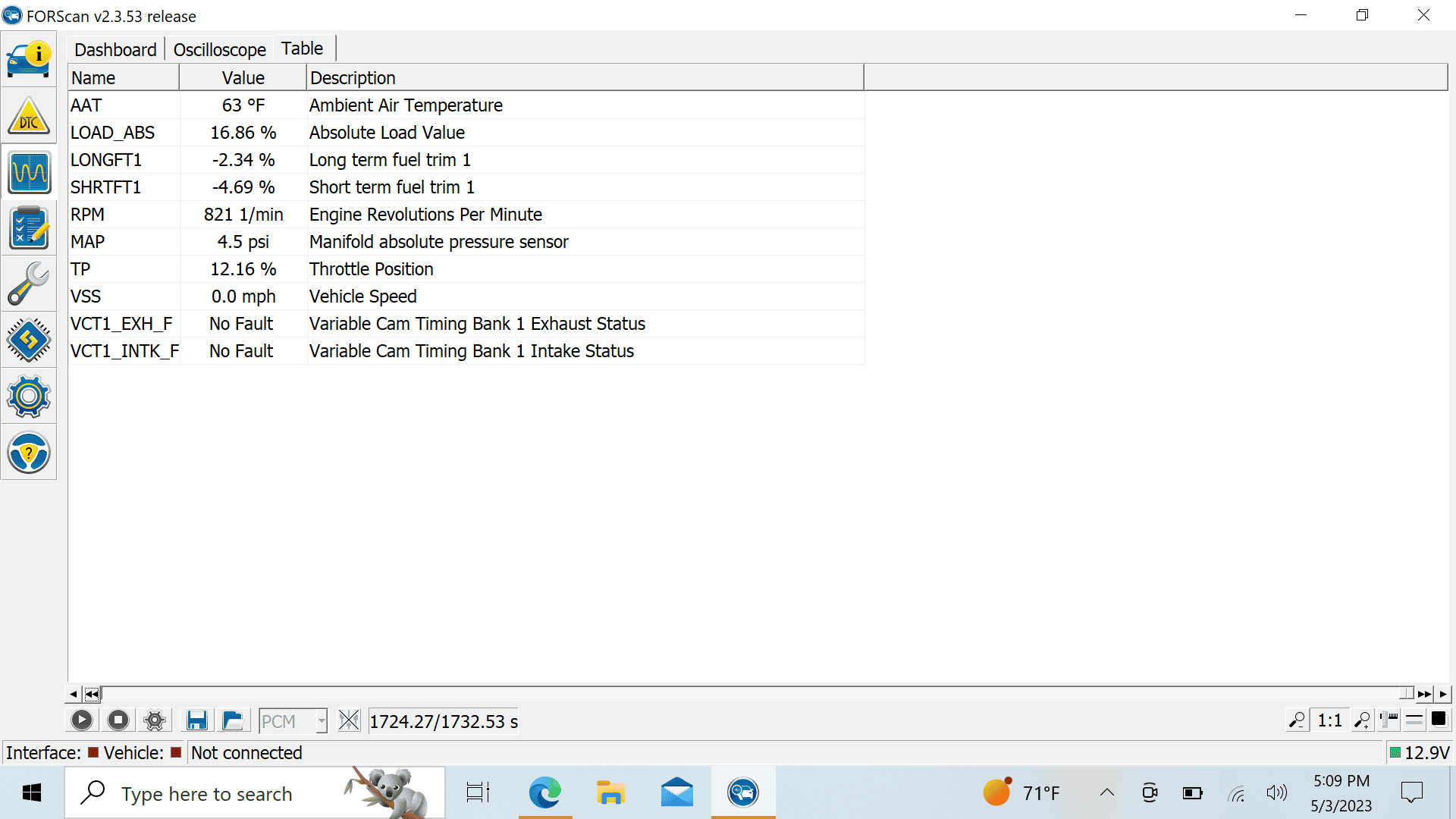
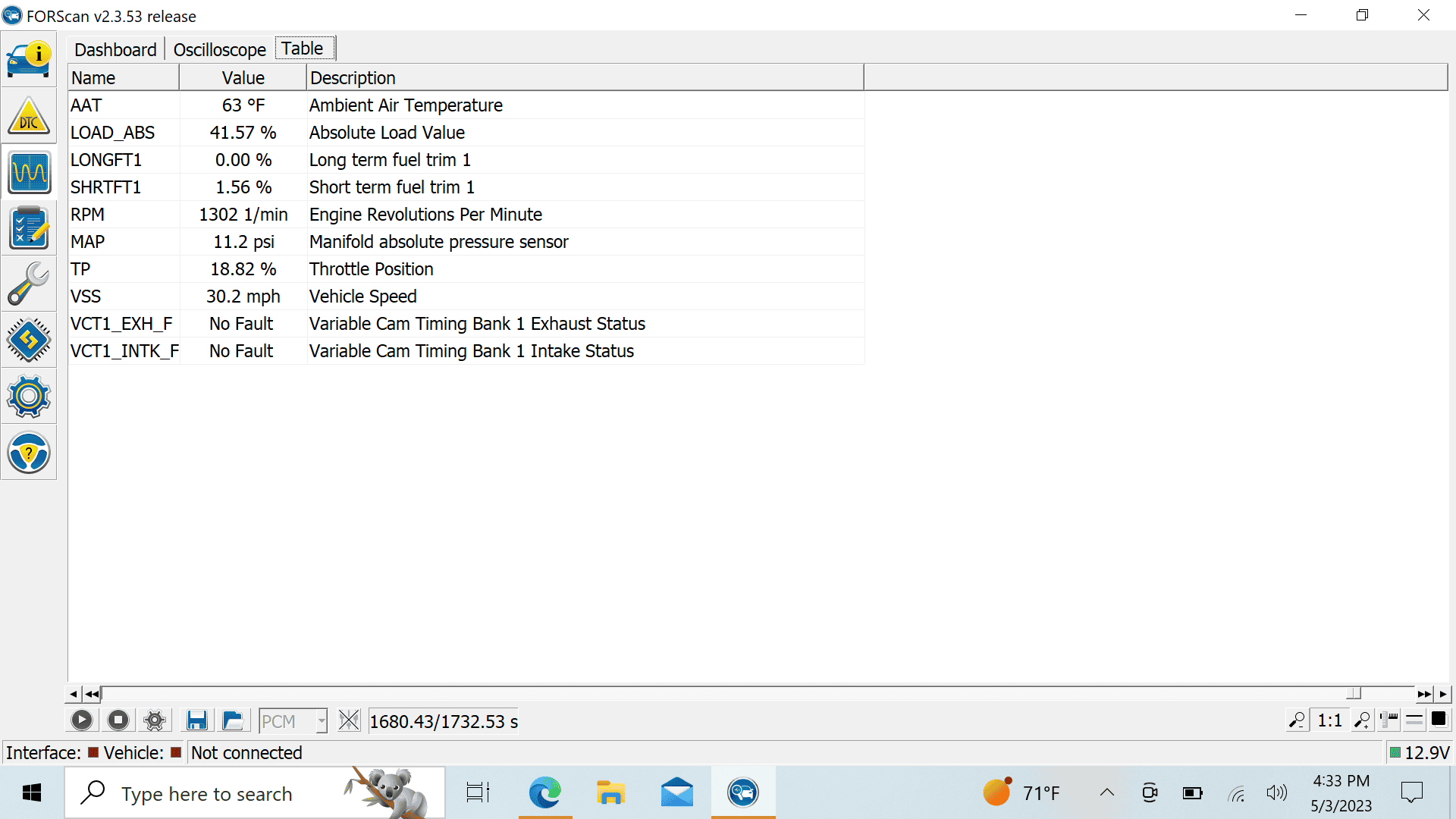
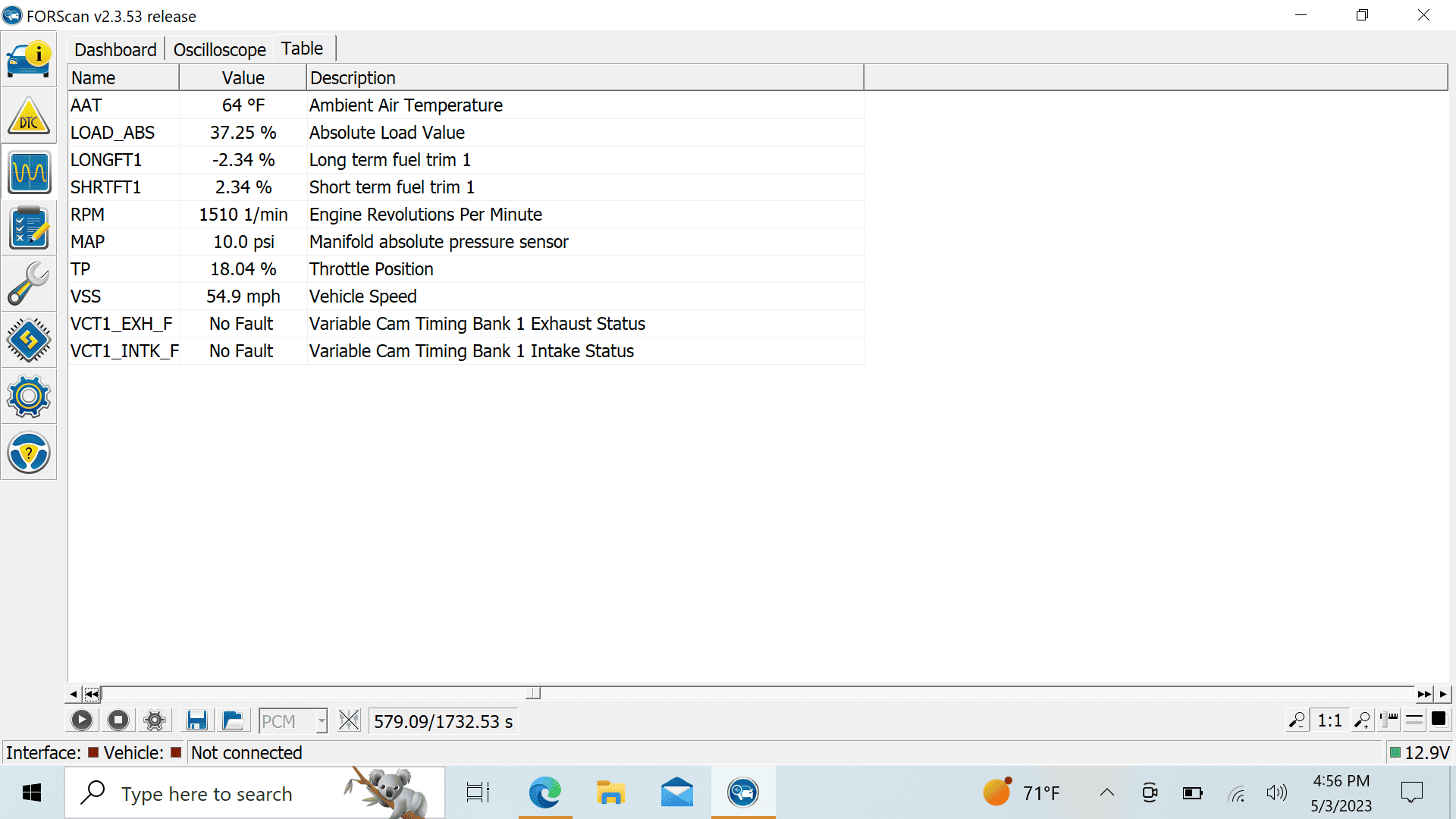
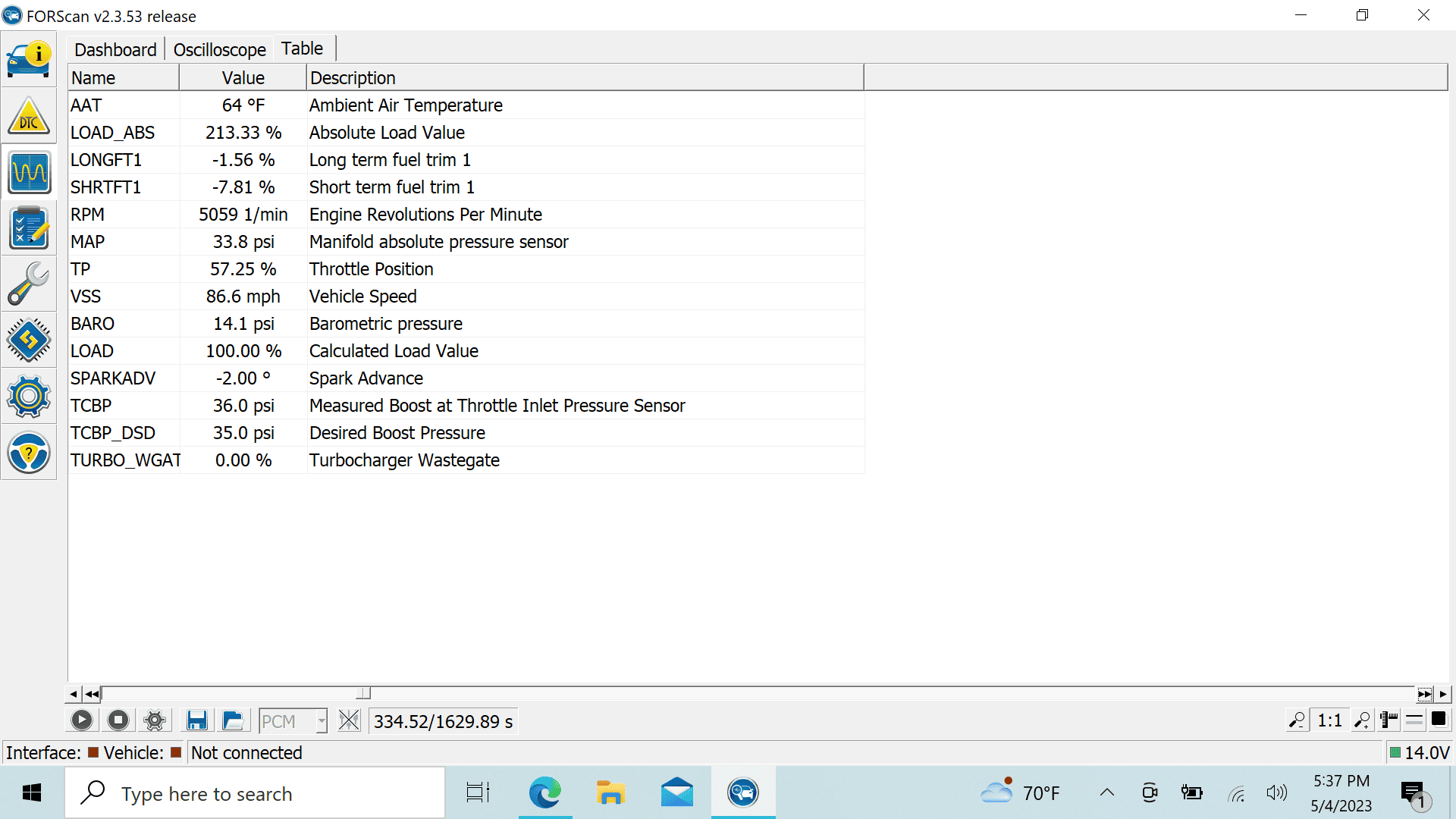
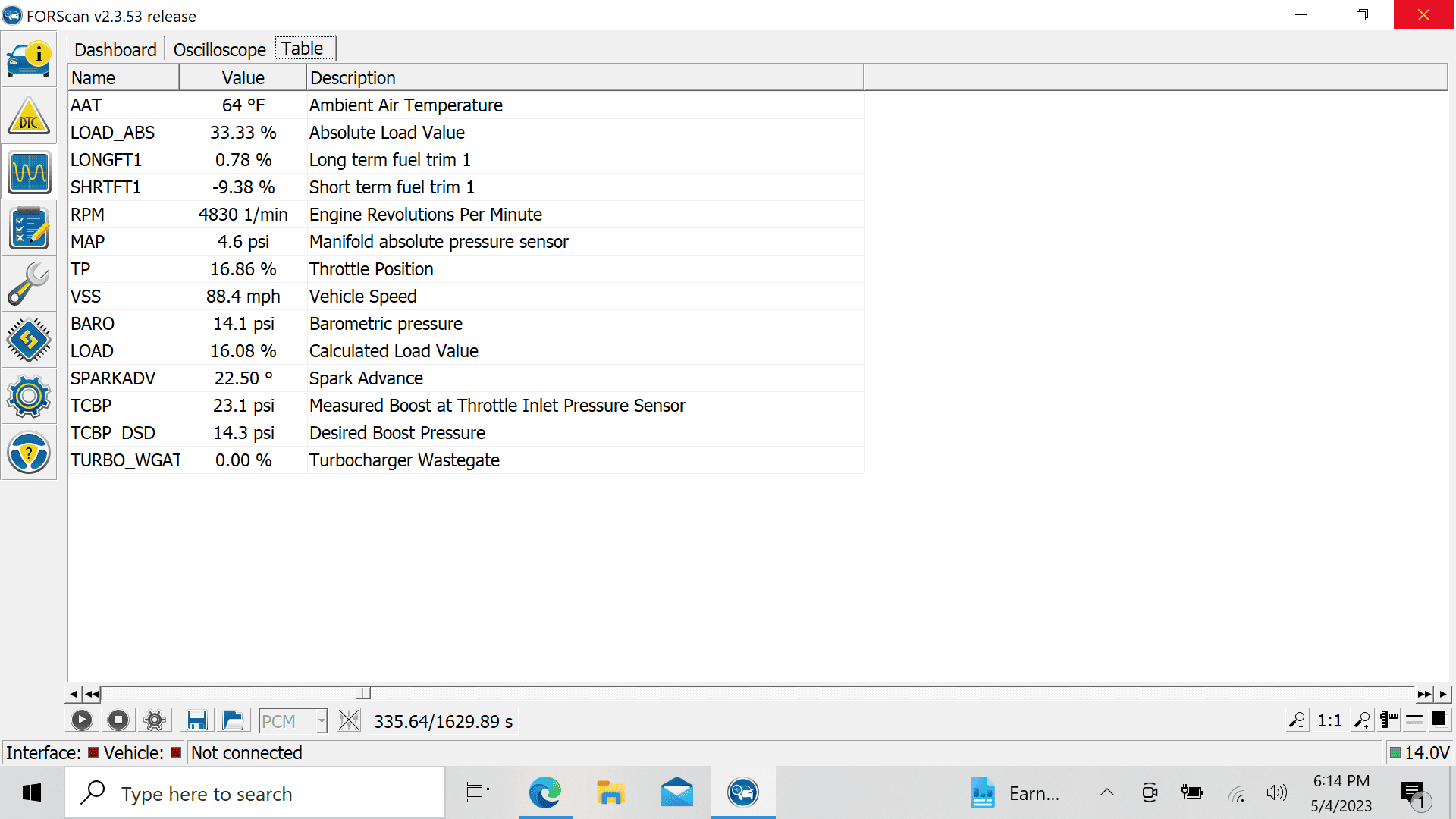
Well today the truck ran great. Ambient temp was 64 today, I'm still thinking this is temp based because of this? Did get some data though

Warm idle: just ran it 25 miles to work

warmidle.png


This your data Warm idle
1683158749925.webp


Hilly roads really make it impossible to get a good steady load reading

30mph

30mph.png

55mph

55mph.png
 
OP
OP
seasprite

seasprite

Well-Known Member
Joined
Sep 1, 2022
Threads
25
Messages
468
Reaction score
1,111
Location
Missouri
Vehicle(s)
2022 Ranger XL STX
LSPI is pretty severe and more random than what you are describing. It happens more at low rpm high load, also not what you described. Don’t rule out programming to meet emissions that is on the edge. I’ve run Mobil 1 since new no issues.

I don’t think this is your issue but working as a Field Technical Rep on a high end brand I saw an engine with a layer of carbon over the piston that was substantial enough to cause pre detonation. The engineers said it was caused by poor fuel after getting fuel and oil samples. I never heard of or saw another one like it.
Going to be picking up some cleaner tomorrow after work. I'm half tempted to pull a spark plug and stick a bore scope in there and see what I can see before I dump it in my tank.


airline tech

Well-Known Member
Joined
Aug 24, 2022
Threads
28
Messages
4,461
Reaction score
8,529
Location
Midwest - KS
Vehicle(s)
2022 Ranger Lariat-Super Crew, Cactus Gray
Occupation
Aircraft Tech
All looks good except 55 MPH and MAP is 10.0 PSI, a small difference from Spec of 13.9 PSI, noted but really matters. I am not sure yet.

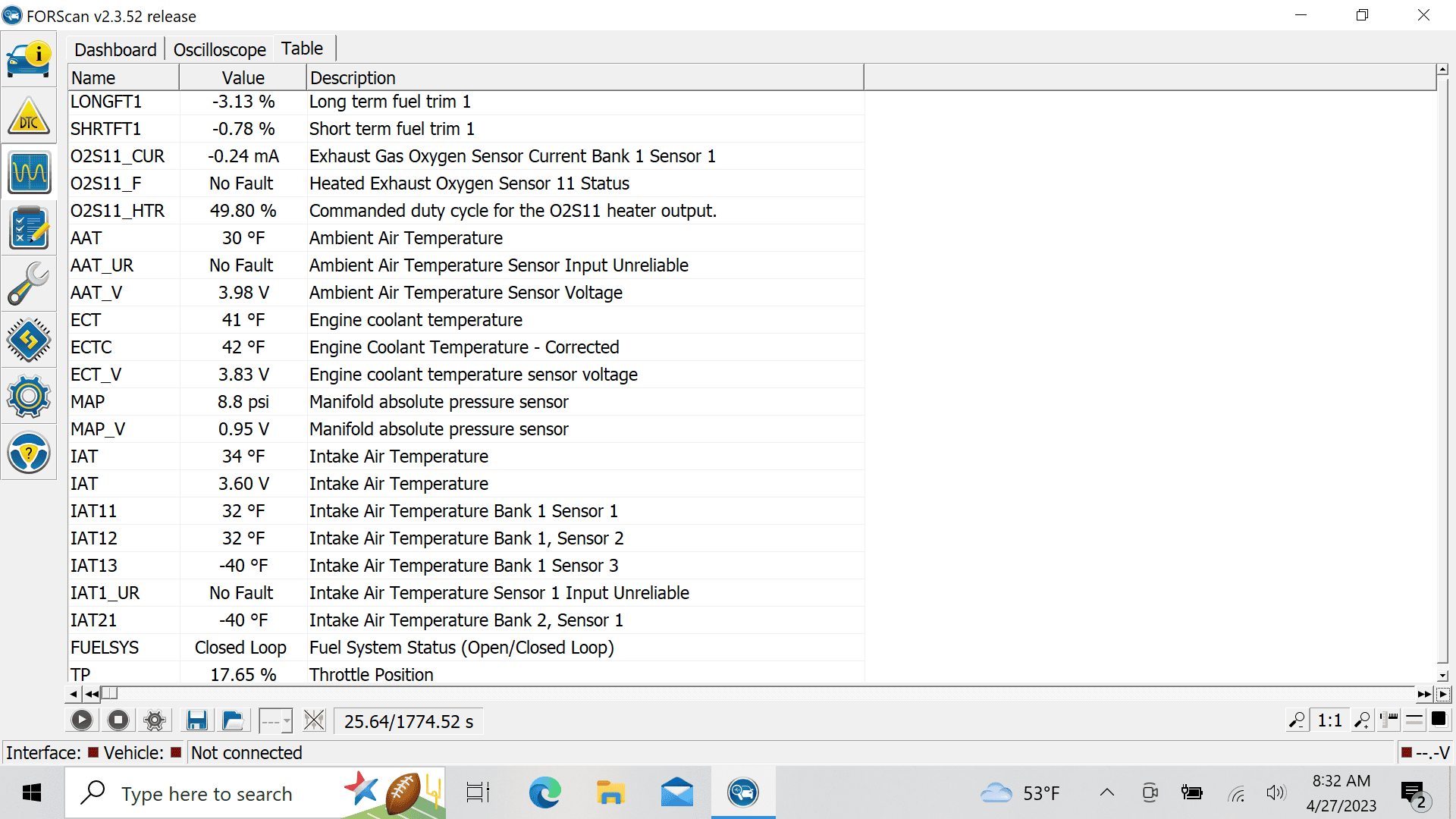
So, if we back up to one of your other PID posts and look at the MAP of 8.8 PSI and Ambient Temps @ 30 Deg, by your TPS I see you are above idle but don't know RPM
1683167330250.png


So, being that another poster here has determined it to be based on Ambient Temps, then the most logical thing is the MAPT sensor, although reading correctly temp wise, may be reading MAP pressure wrong when colder temps.
Just a thought
All of the last posting of PIDs is what you want to monitor except add + Calculated Load
Calculated Load = Inputted data from various sensors including the TPS and MAP, ECT, RPM Etc.
The calculated load is what the PCM uses to control Spark.
So, it is still quite possible of a screwy MAP sensor reading.

I know mine does not have Spark Knock, I use 87 Octane and have only 5,200 Miles on the OD, getting ready for 1st Oil Change and Tire Rotation.

So, this (MIGHT) be a focal point of Spark Knock issues and (MIGHT NOT) , so we just need to dwindle down to what specific sensor that has a (Temp Based) input is causing some owners a Spark Knock, be it all are using a higher octane than 87 or a mixture of both.
This is why I focused on the MAPT sensor.

It all may be just the programming of the PCM as well, this is where a Tuning Expert could help as they are familiar with how the PCM is programmed and handles fuel and air delivery (programming wise)
 

airline tech

Well-Known Member
Joined
Aug 24, 2022
Threads
28
Messages
4,461
Reaction score
8,529
Location
Midwest - KS
Vehicle(s)
2022 Ranger Lariat-Super Crew, Cactus Gray
Occupation
Aircraft Tech
Since I needed to get my transmission fluid hot, to do a fluid level check, I hooked up Forscan and went for a drive. My Map sensor pretty much matches yours.
I see that it is difficult to get a perfect match to manual specs, as I believe the specs are for a complete level and straight road, if using the MPH as a reference
So, it was a shot in the dark but turns out it appears normal.
So back to the drawing board as to the cause, we have at least possibly have a confirmation that it is related to ambient temp.
The only thing mechanical that stands out to be a possibility is the Cooling Fan clutch putting a load on the engine, the rest is all PCM control.
I know the fan is controlled differently from older vehicles, just have to dig into that possible cause.
Since we have ruled out anything obvious, just needs further investigation..
 
OP
OP
seasprite

seasprite

Well-Known Member
Joined
Sep 1, 2022
Threads
25
Messages
468
Reaction score
1,111
Location
Missouri
Vehicle(s)
2022 Ranger XL STX
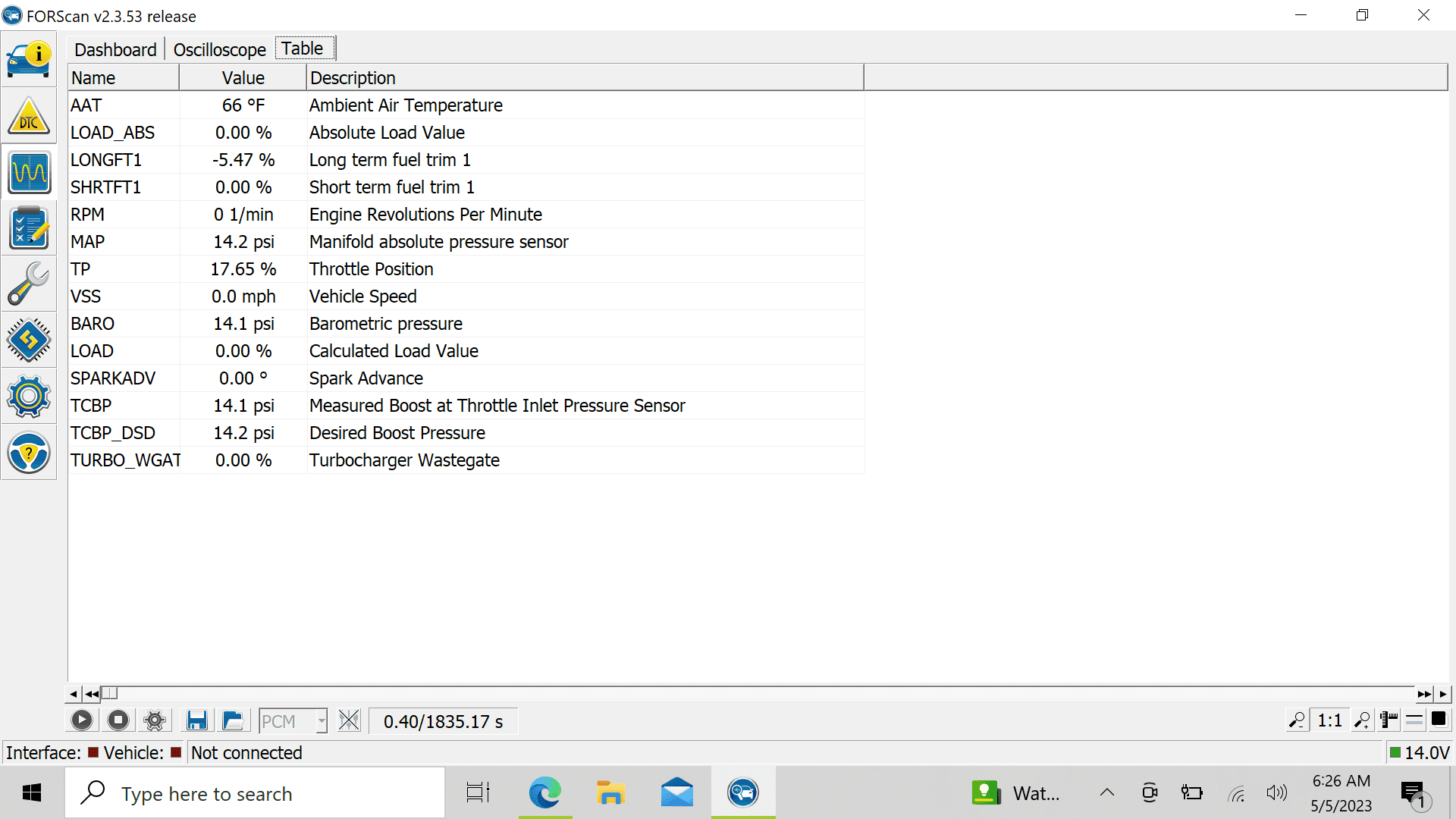
Did some more data logging and still everything looks normal. And today's screen shots.

KOEO
KOEO.png


On my way to work yesterday I noticed the waste gate pid never moved so I decided to on the way home I was going to go 100% throttle to see if it report anything and it didn't. Don't know what is up with that, other than the truck responded beautifully when I did it.
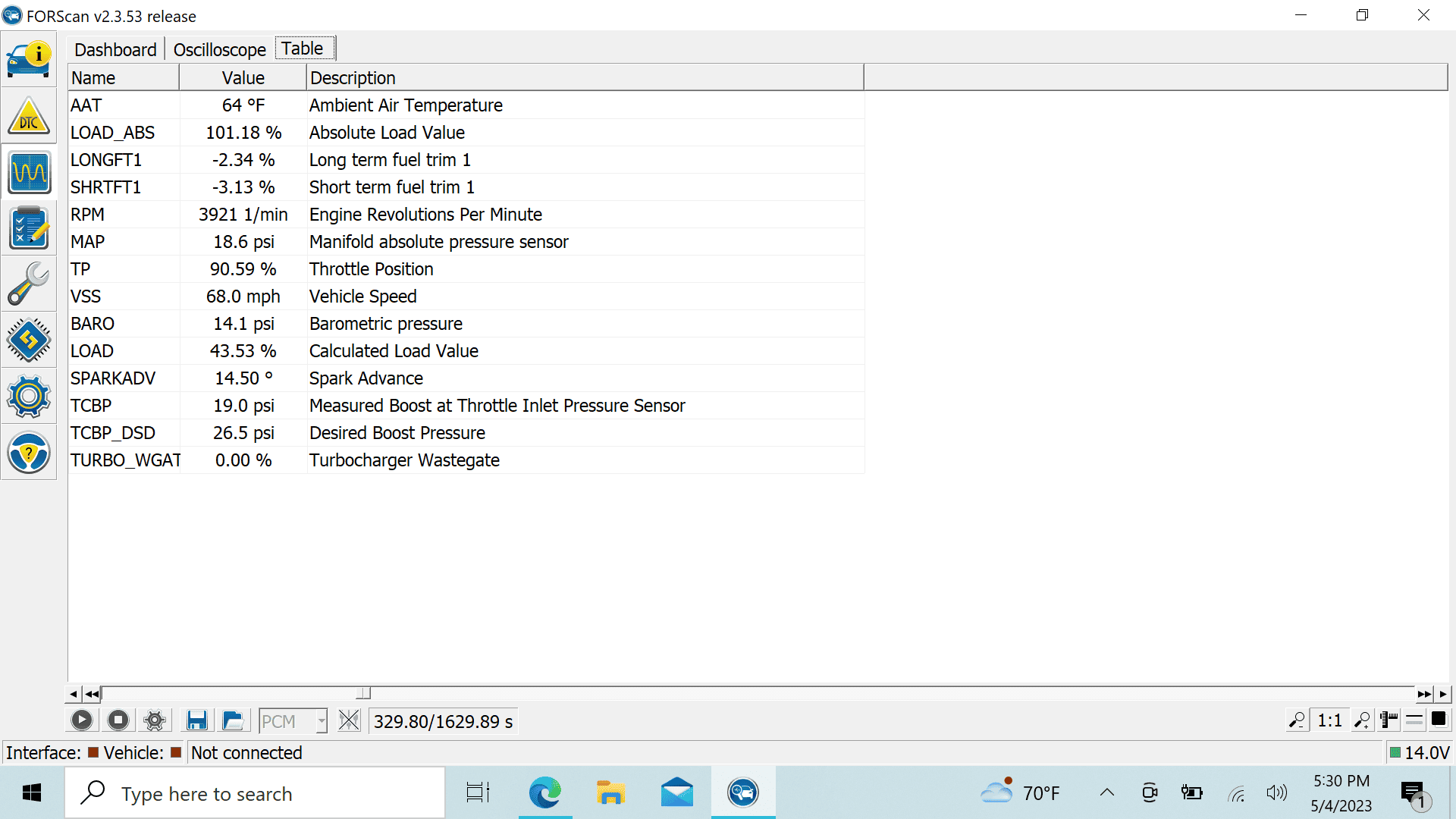
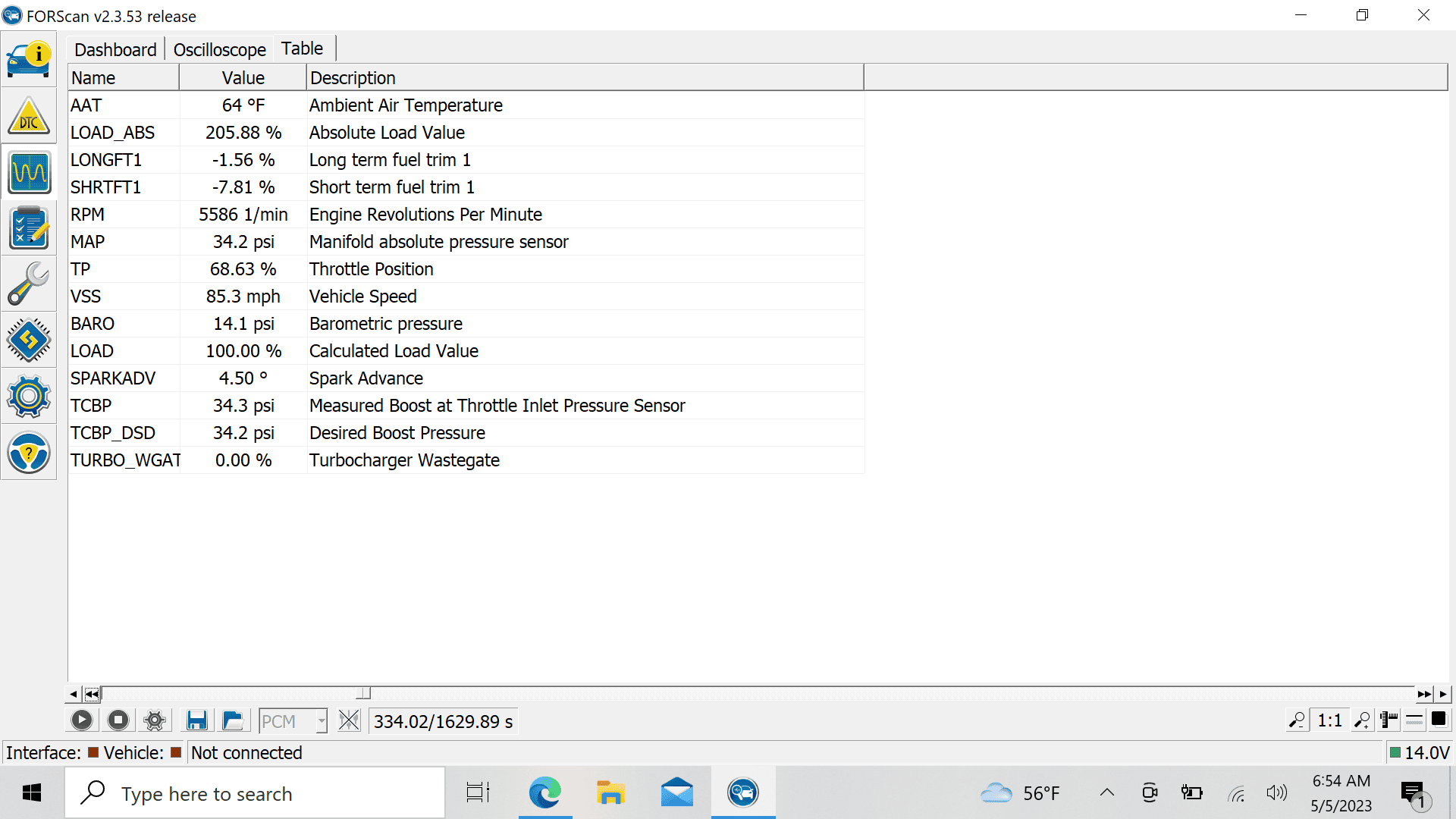
So here are some screen shots of full throttle and decel.

Full throttle
Fullthrottle.png


MaxRPM
MaxRPM.png


Max Load
Maxload.png


Decel

Decel.png


I think I'm going to pull the plugs tomorrow and see if I can see anything with a bore scope I have. It's meant for the bore of my guns, so I don't know how the image will turn out.
Plus this will give me an excuse to put a little bit of anti seize on the threads since plug rust seems to be creeping up as an issue on here.

I did drop a can of seafoam in the tank yesterday so we'll see how that does?
 
OP
OP
seasprite

seasprite

Well-Known Member
Joined
Sep 1, 2022
Threads
25
Messages
468
Reaction score
1,111
Location
Missouri
Vehicle(s)
2022 Ranger XL STX
Since I needed to get my transmission fluid hot, to do a fluid level check, I hooked up Forscan and went for a drive. My Map sensor pretty much matches yours.
I see that it is difficult to get a perfect match to manual specs, as I believe the specs are for a complete level and straight road, if using the MPH as a reference
So, it was a shot in the dark but turns out it appears normal.
So back to the drawing board as to the cause, we have at least possibly have a confirmation that it is related to ambient temp.
The only thing mechanical that stands out to be a possibility is the Cooling Fan clutch putting a load on the engine, the rest is all PCM control.
I know the fan is controlled differently from older vehicles, just have to dig into that possible cause.
Since we have ruled out anything obvious, just needs further investigation..
Another thing I need to do. How was the level?
 

airline tech

Well-Known Member
Joined
Aug 24, 2022
Threads
28
Messages
4,461
Reaction score
8,529
Location
Midwest - KS
Vehicle(s)
2022 Ranger Lariat-Super Crew, Cactus Gray
Occupation
Aircraft Tech
My level was right at Spec (Between 4 & 5), Kind of a pain to get to, I initially prepped by getting it lose before starting the truck, snugged it back up and drove it. Wrapped exhaust with a large towel and managed to get it back out and checked without any burns.
I have always hated automakers stupid decision to remove such an important tool (easy access dipstick)

Try these Wastegate PIDS:

Turbo-By Pass Valve - (TCBY)
KOEO - (0) --Idle (0) ---30 MPH -(100) --55 MPH (0) (Percent)

Wastegate Vac Sens (Wastegeate Position Motor)
KOEO - (3.95) - Idle -(1.37) - 30 MPH - (1.43) -55 MPH - (1.56) - (Volts)

Wastegate Position _Percent (Wastegate Position Sensor)
KOEO - (98.98) - Idle -(0) - 30 MPH (2.20) - 55 MPH -(6.43) (Percent)

I am assuming the Watergate PIDS are for the actuator rod that moves and is posted on here for being noisy (chirp) , this is one of the quirky items on the Ranger I wanted to look at, I have not noticed or paid grave attention to it. (if mine is noisy)

Yes, pulling the plugs is a great idea, and at least inspect them, might as well replace them, just to see if any difference. I just hit 5,400 miles on mine and have thought about pulling them and putting anti-seize as well, just a precaution. I did buy the engine cover just after I got the truck, so I am covered.
Another thought is checking your Air Filter and inlet ducting to it, just in case a mouse made a home in there as I forgot to check mine yesterday with the oil change, will do that today.
 
OP
OP
seasprite

seasprite

Well-Known Member
Joined
Sep 1, 2022
Threads
25
Messages
468
Reaction score
1,111
Location
Missouri
Vehicle(s)
2022 Ranger XL STX
My level was right at Spec (Between 4 & 5), Kind of a pain to get to, I initially prepped by getting it lose before starting the truck, snugged it back up and drove it. Wrapped exhaust with a large towel and managed to get it back out and checked without any burns.
I have always hated automakers stupid decision to remove such an important tool (easy access dipstick)

Try these Wastegate PIDS:

Turbo-By Pass Valve - (TCBY)
KOEO - (0) --Idle (0) ---30 MPH -(100) --55 MPH (0) (Percent)

Wastegate Vac Sens (Wastegeate Position Motor)
KOEO - (3.95) - Idle -(1.37) - 30 MPH - (1.43) -55 MPH - (1.56) - (Volts)

Wastegate Position _Percent (Wastegate Position Sensor)
KOEO - (98.98) - Idle -(0) - 30 MPH (2.20) - 55 MPH -(6.43) (Percent)

I am assuming the Watergate PIDS are for the actuator rod that moves and is posted on here for being noisy (chirp) , this is one of the quirky items on the Ranger I wanted to look at, I have not noticed or paid grave attention to it. (if mine is noisy)

Yes, pulling the plugs is a great idea, and at least inspect them, might as well replace them, just to see if any difference. I just hit 5,400 miles on mine and have thought about pulling them and putting anti-seize as well, just a precaution. I did buy the engine cover just after I got the truck, so I am covered.
Another thought is checking your Air Filter and inlet ducting to it, just in case a mouse made a home in there as I forgot to check mine yesterday with the oil change, will do that today.
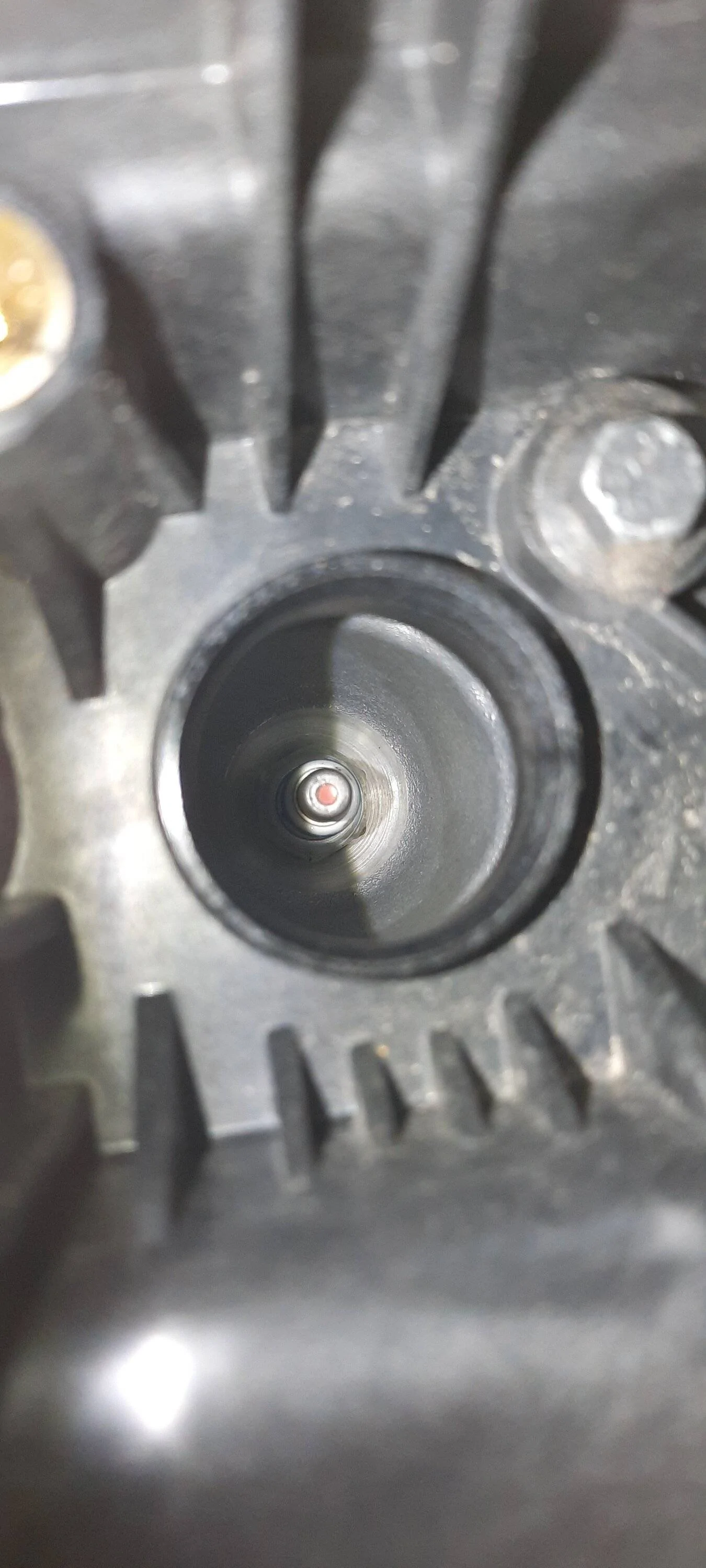
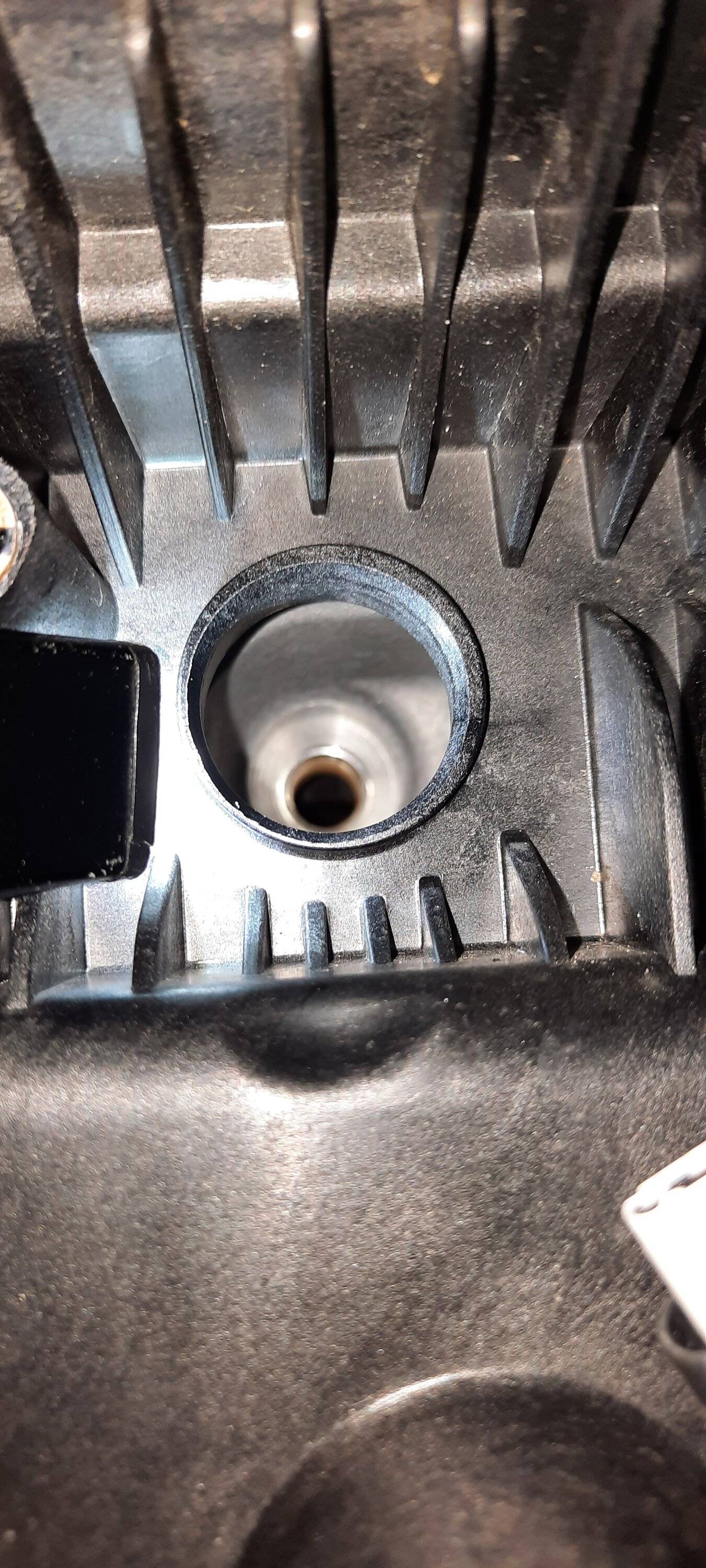
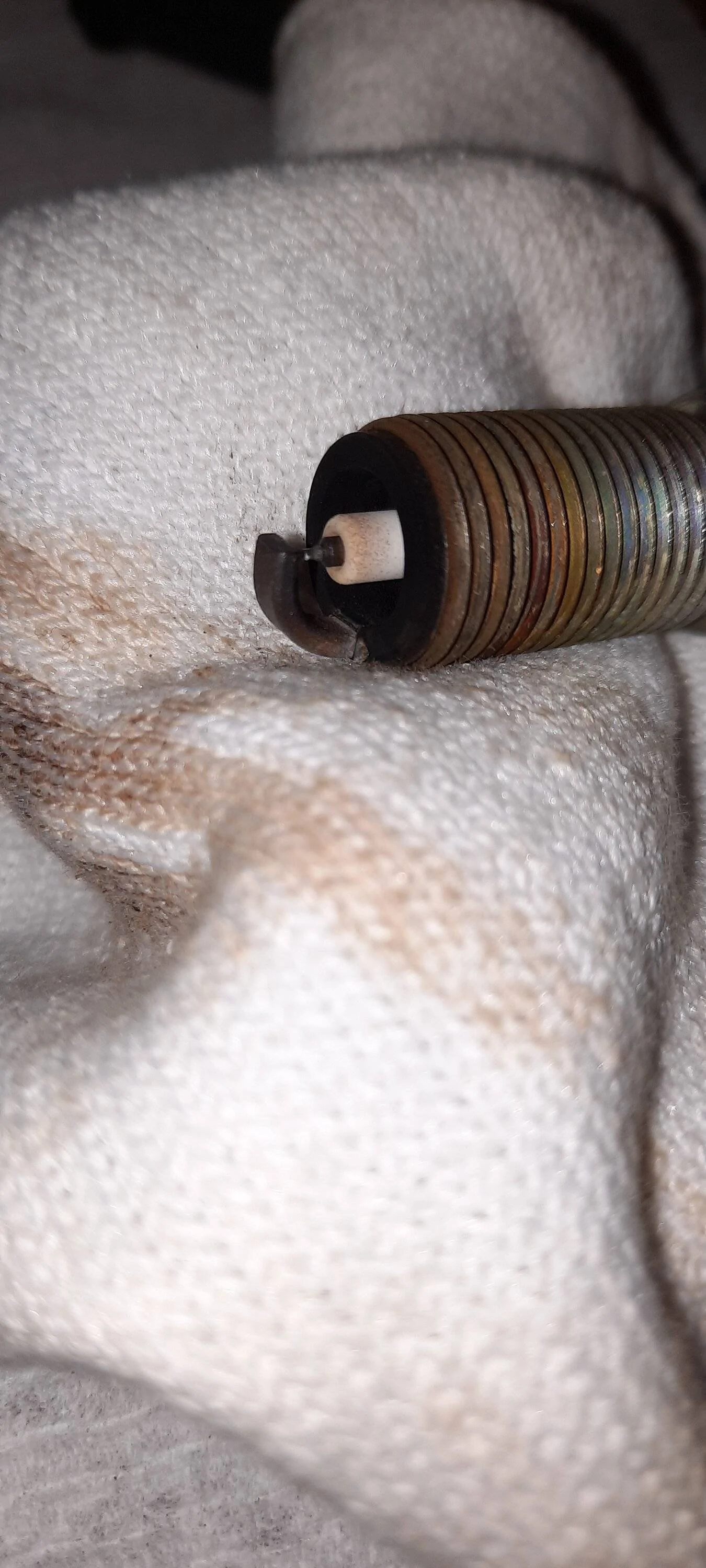
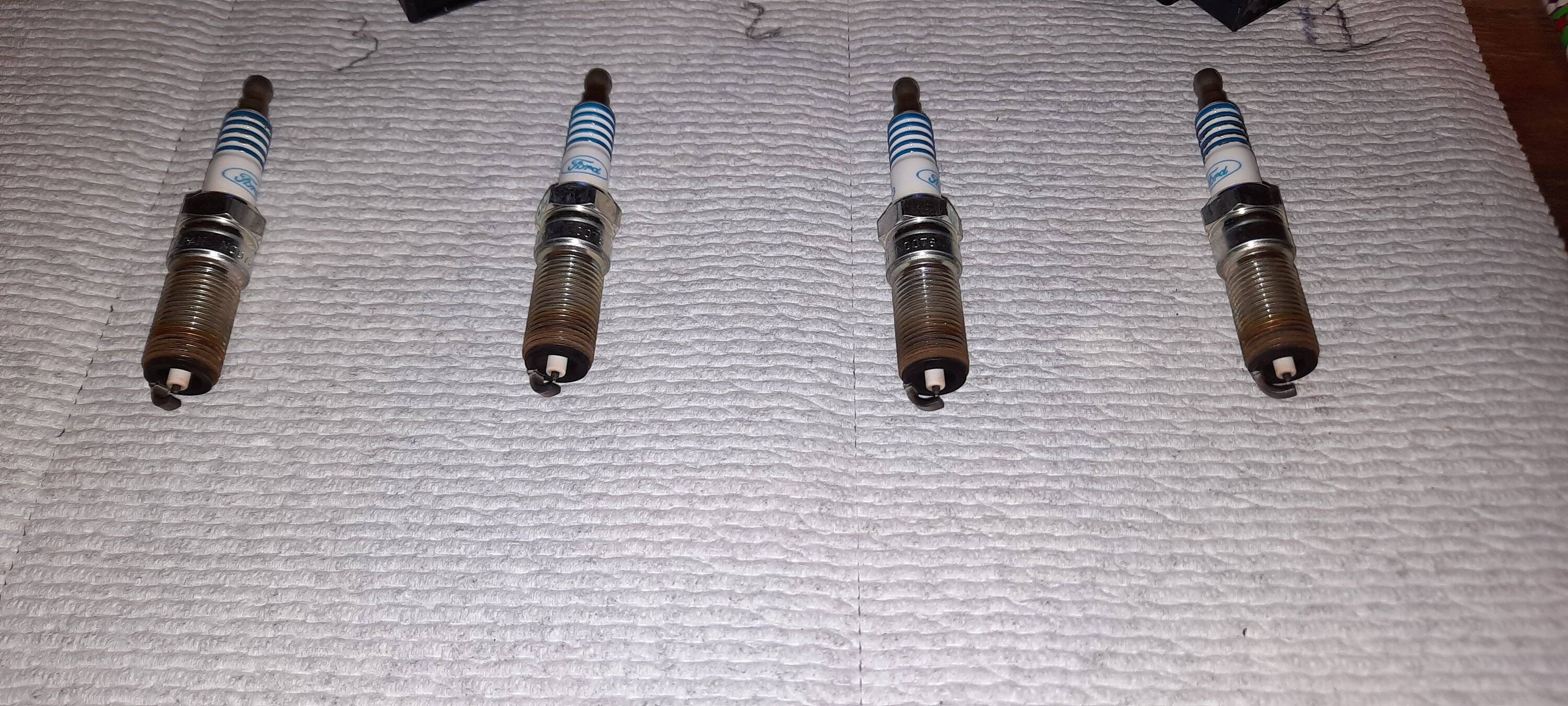
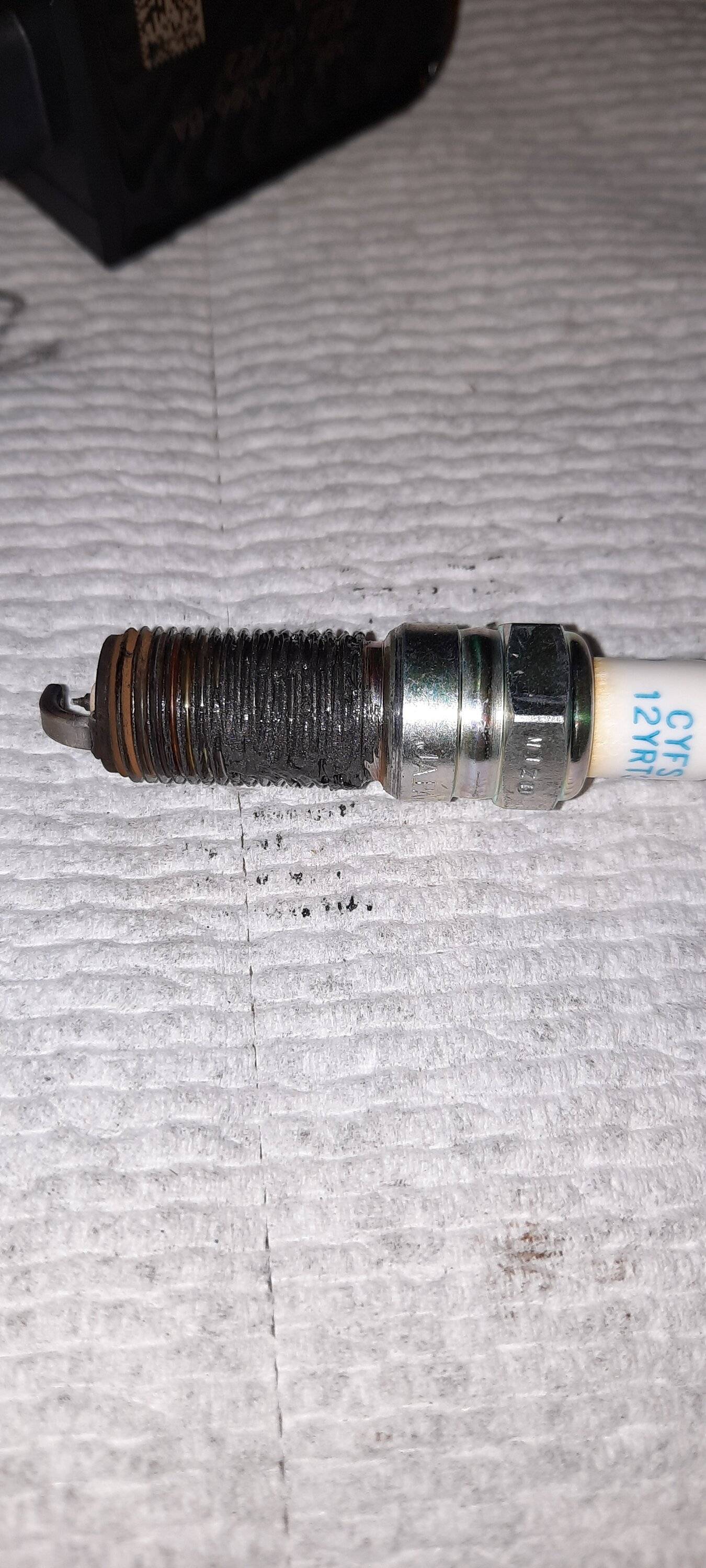
Ended up pulling the plugs tonight, good news is they look clean no rust. Bad new the bore scope was a bust.

20230505_180218.webp


20230505_182858.jpg


This cylinder 1 almost think there is some tiny blistering on the tip of the porcelain?
And this is the one that showed a 2 count on the knock sensor

20230505_180828.webp


20230505_182542.jpg

Just went with a skim coat or nickle anti seize.
20230505_183517.jpg


And back to looking factory fresh

20230505_185102.jpg


Well at this point I'm starting to run out of ideas on what to check. Going to give the seafoam a chance to do its thing, so I'll update the thread on how things are going.
Oh I did look at the waste gate operating rod when I started the truck and does cycle a few times so it must working and hear a hiss when it cycled.
 
OP
OP
seasprite

seasprite

Well-Known Member
Joined
Sep 1, 2022
Threads
25
Messages
468
Reaction score
1,111
Location
Missouri
Vehicle(s)
2022 Ranger XL STX
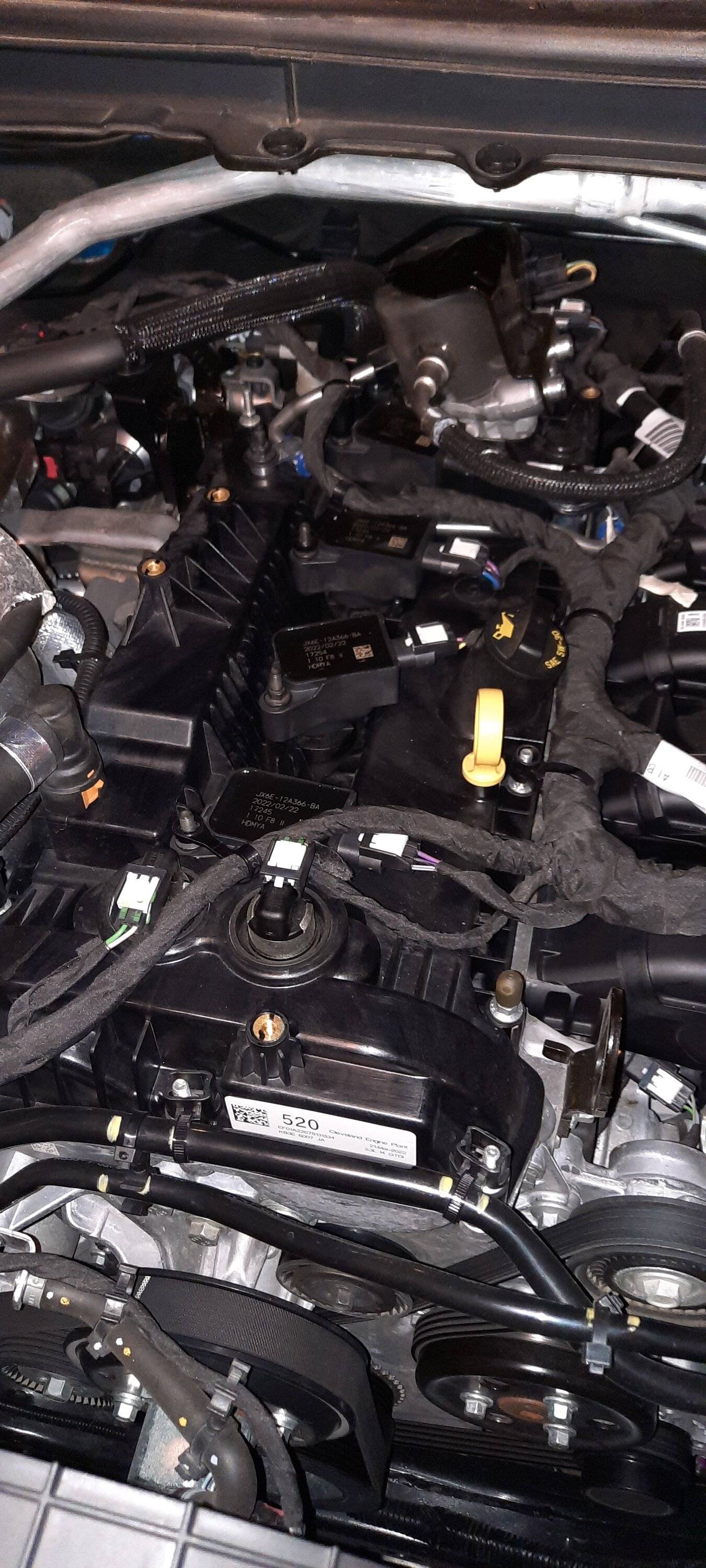
And one more thing for safety. I know the manual calls for unhooking the low pressure fuel line. I didn't do it I just rotated the coil to clear the fuel pump. But the prime kick on when I was unplugging the coils, so make sure you disconnect the batt.
 

airline tech

Well-Known Member
Joined
Aug 24, 2022
Threads
28
Messages
4,461
Reaction score
8,529
Location
Midwest - KS
Vehicle(s)
2022 Ranger Lariat-Super Crew, Cactus Gray
Occupation
Aircraft Tech
303-00 Engine System - General Information
2020 Ranger
General Procedures
Spark Plug Inspection
Inspection

NOTE:
Dropped spark plugs should always be discarded.

Unfired

    • An unfired spark plug should appear very clean with a pure nickel finish to the threads and ground strap. The center electrode ceramic insulator surface is often a matte or dull finish and pure white in color. The external primary insulator is often a polished white ceramic with appropriate stamping labels. Some spark plugs have a smooth barrel while others have a ribbed barrel insulator. Ford spark plugs almost universally use a ribbed barrel with glazed blue rib peaks. The Anti-Fouling silicone oil treatment used on all Ford spark plugs may be tinted pink. Some suppliers use this to designate the silicone oil has been applied.
    • No corrective action necessary.
image
Open In New TabZoom/Print
Normal Burning

    • A normal burning spark plug will often present with a white or slightly off-white (brown or light gray) color center electrode and clean or mildly discolored ground strap.
    • No corrective action necessary.
image
Open In New TabZoom/Print
Carbon Fouling

    • Carbon fouling can cause engine misfire. As carbon deposits, created during incomplete combustion, adhere to center electrode insulator surfaces, insulator dielectric and isolation or shunt resistance are compromised. In the case that sufficient carbon deposits are present on the center electrode and insulator surface the primary conduction path can change from spark creation to shorting through carbon deposits. This is also known as spark leakage. Upon shorting through carbon deposits, available voltage delivered to the center electrode tip is reduced until no spark is delivered to the mixture and a misfire occurs. Proper Heat Range selection is necessary to avoid pre-ignition and carbon fouling. Even with the proper Heat Range, avoid excessive cold starts and/or excessive idling at cold engine temperatures without a warm-up drive cycle. For proper self-cleaning, be sure to warm the spark plug using a medium-load drive cycle. A normal operating temperature for a spark plug may be 450-850°C (842-1562°F), at which point carbon deposits will burn off during spark plug self-cleaning.
    • A drive cycle of enough distance and rpm can clear the spark plugs of carbon fouling (ex: 4 mile drive at 3000 rpm).
    • Should this fail, install new spark plugs.
image
Open In New TabZoom/Print
Lead Fouling and Erosion

    • Lead fouling can occur in engines that use leaded gasoline. In modern engine applications, this failure mode is rare, as TEL (Tetraethyllead) was removed from consumer use at fuel filling stations long ago. Lead fouling can occur on engines used in high compression racing engines and, in some limited cases, aviation applications. Spark plugs that have been used in the presence of lead are characteristically identified by a yellow/brown tinted center electrode insulator and can cause engine misfire at high engine speed and high load. Additionally, ground strap electrodes will often be worn in engines exposed to leaded fuel for extended periods of time. This failure mode is caused by the tendency for lead compounds to react chemically with nickel electrode materials at high temperatures. These chemical reactions often cause increased brittleness and reduced material strength in the ground electrode.
    • Alert the customer to avoid using leaded fuel and/or octane enhancer.
    • Inspect the CMS (catalyst monitor sensor) and the HO2S for evidence of lead damage.
    • Install new spark plugs.
image
Open In New TabZoom/Print
Coolant/Oil Wet Fouling

    • Wet fouling is most often caused by excess fuel, oil, or coolant within the combustion chamber during operation. Spark plugs that are wet fouled often cause poor starting and misfiring. Often, a wet fouled spark plug is indicative of additional mechanical issues within the engine system such as a compromised head gasket, oil leakage past the control ring, or valve train leakage. In certain cases, other causes could be low compression, vacuum leaks, overly retarded timing, or improper spark plug heat range. The primary cause of misfire is the low resistance path created by oil, fuel, or coolant deposits. Wet materials provide a lower resistance path for spark leakage from the high voltage center electrode to ground. When driving with a coolant leak for an extended time, the plug may be cleaned.
    • Check for wet, black deposits on the insulator shell bore electrodes, caused by excessive oil entering the combustion chamber through worn rings and pistons, excessive valve-to-guide clearance or worn or loose bearings.
    • Correct the coolant or oil leak concern.
    • Install new spark plugs.
image
Open In New TabZoom/Print
Deposit Buildup

    • The presence of deposits on the spark plug can be indicative of oil leakage or poor fuel quality. Often, these ashy coatings cause misfires as a low resistance path from center electrode to ground is created.
    • Correct the oil leak, if necessary.
    • Inform the customer of possible poor quality fuel.
    • Install new spark plugs.
image
Open In New TabZoom/Print
Abnormal Erosion/Corrosion/Oxidation

    • Often, eroded, corroded, or oxidized spark plug conditions occur as a result of leaded gasoline, which reacts with electrode materials (see Lead Fouling). These symptoms appear as pitted, cracked, or eroded electrodes and on occasion will display with a green cast if copper oxidation is heavy. These conditions result in increased, improper spark plug gap and yield poor performance. More recently, the use of Ethanol fuel blends of E85 (85% Ethanol) can create this Oxidation condition. The Heat Range selection for E85 applications typically is 1 range colder due to added spark advance used to make up for the loss of performance. The hotter tip temperatures combined with the rapid thermal cycle on the electrode surface initiates surface cracks and eventual oxidation based corrosion.
    • Verify E85 isn’t being used in a vehicle not designated for E85 usage (Flex Fuel Vehicle).
    • Install new spark plugs.
image
Open In New TabZoom/Print
Ground Electrode Breakage

    • Ground electrode breakage can be caused by pre-ignition or any other excess shock load. Ground electrode breaks may be caused by incorrect ignition timing, wrong type of fuel, or unauthorized installation of a reduced thermal conductivity Heli-Coil insert in place of the spark plug threads.
    • Confirm the proper fuel and ignition timing.
    • Confirm the proper heat range of spark plugs.
    • Confirm that the cylinder head threads have not been repaired with a Heli-Coil thread repair kit.
    • Install new spark plugs.
image
Open In New TabZoom/Print
MMT Fouling (Hot Plug Fouling)

    • MMT (Methylcyclopentadienyl Manganese Tricarbonyl) is often used as an octane booster in combination with poor quality fuels to bring octane levels within acceptable limits. If excess Mn (Manganese) levels are present in the fuel during combustion, Mn deposits can foul the combustion chamber, catalytic converters, and spark plugs. Mn in higher concentrations can lead to pre-ignition and engine misfire. Mn deposit become conductive as the surface exceeds ~550°C (1022°F). For this reason the failure mode is referred to as Hot Plug Fouling. As MMT is high in manganese, a reddish coating will be present on the spark plug insulator and ground electrodes. The reddish coating is often covered up by carbon fouling if the spark plug is to the point of misfire.
    • Advise the customer to avoid use of leaded fuel and/or octane enhancer.
    • Inspect the CMS and the HO2S for evidence of MMT damage.
    • Install new spark plugs.
image
Open In New TabZoom/Print
Ferrocene Fouling (Hot Plug Fouling)

    • Ferrocene (metallocene) is an organometallic compound often used in place of MMT as an octane booster and presents itself with a bright orange surface color. If excess ferrocene levels are present in the fuel during combustion, ferrocene deposits can foul the combustion chamber, catalytic converters, and spark plugs. Deposit become conductive as the surface exceeds ~450°C (842°F). For this reason the failure mode is referred to as Hot Plug Fouling. Ferrocene in higher concentrations can lead to pre-ignition and engine misfire.
    • Advise the customer that they may be using leaded fuel and/or octane enhancer. Ask them to stop.
    • Inspect the CMS and the HO2S for evidence of ferrocene damage.
    • Install new spark plugs.
image
Open In New TabZoom/Print
Overheating and Melted Electrodes

    • Symptoms of overheating include white or light gray spots and a bluish-burnt appearance of the electrodes. This is caused by engine overheating, wrong type of fuel, loose spark plugs, spark plugs with an incorrect heat range, low fuel pump pressure, or incorrect ignition timing. Fused deposits present with melted or spotty deposits resembling bubbles or blisters and are indicative of sudden acceleration.
    • Confirm proper fuel and ignition timing.
    • Confirm proper heat range of spark plugs.
    • Check the coolant system for leaks and blockages, and check water pump for malfunction.
    • Repair coolant system and refill coolant, as necessary.
    • Install new spark plugs.
image
Open In New TabZoom/Print
Insulator Damage and Breakage

  1. NOTE: Upper right hand insert shows dielectric puncture typically due to excessively worn gaps.
    • Center electrode insulator breakage is often caused by a sudden thermal shock due to sudden heating or cooling. It can also be caused by mechanical load from an external source (droppage) or can even be caused by pre-ignition events where side loading from combustion pressure shock waves is strong enough to fracture the ceramic insulator material. Hotter heat range spark plugs have a longer insulator to reduce the spark plug fouling risk, but are also weaker to fracture during low speed pre-ignition events due to increase bending moment arm. Oil or Sulfur Oxide migration between the center electrode and the inner diameter of the insulator can cause internal outward force sufficient to create a “u” shaped fracture. See Sodium/Oil Migration section for further detail of this failure mode.
    • Install new spark plugs.
image
Open In New TabZoom/Print
Sodium/Oil Migration

    • In the case of oil migration, misted oil is absorbed into the combustion chamber during charge intake. For cylinder deactivation, valves remain closed and oil within the chamber does not combust. Misted oil adheres to the spark plug surfaces and oil penetrates into the clearance volume between the insulator and center electrode via capillary action. During cylinder reactivation, oil near the surface is burned off, while soot (carbon deposits) is generated within clearance volumes due to incomplete combustion. During spark plug reheating, the center electrode thermally expands at a much greater rate than the insulator, causing compressive stresses within the center electrode and tensile stresses on the electrode insulator exterior. These stresses can fracture the ceramic insulator if sufficiently high. In sodium migration, sodium sulfate is created during combustion and deposits form in the clearance volume between center electrode and insulator. Currently, the source of sodium sulfate is not known, although it is believed to originate from E100 fuel. Present theory suggests that failure is caused by electrode/insulator locking, where electrode and insulator are mechanically joined by the sodium sulfate. During cool down, the electrode contracts and increases in diameter, which pushes (via sodium sulfate) against the insulator and causes failure in the same manner as seen in oil migration.
    • Install new spark plugs.
image
Open In New TabZoom/Print
Bridged Gap

    • A bridged spark plug gap is often caused by fuel droplets present in the ion gap when spark is commanded. The spark event conducts through the fuel droplet leaving behind a carbon fiber. Other contributors include deposit build up on the electrode surface which is indicative of carbon or oil fouling. Often, this condition can present itself after many low and medium load cycles. Carbon deposits within the combustion chamber can break free during sudden applications of high load, lodge within the spark plug gap, and provide a dead short to ground.
    • Install new spark plugs.
    • A drive of between 4-10 miles targeting 3000 rpm will bring the plug to self-cleaning temperature.
image
Open In New TabZoom/Print
Wrench Breaking Cracks

    • Wrench breaking cracks are typically caused either by side load or torque applied from a socket of incorrect size. Impact loading can and will often crack the insulator shell as the porcelain is very brittle with very little strength under tension. Force direction is often easily determined as the ceramic often cracks vertically (although typically asymmetric about the centerline).
    • Avoid using anything but a spark plug socket and hand tools to better prevent these cracks.
    • Install new spark plugs.
image
Open In New TabZoom/Print
Tracking/Flashover

    • Tracking marks are markings left behind when a high voltage discharge occurs from electrode to ground through something other than the air gap at the spark plug end. Most often, these discharges occur along the primarily insulator (under/near the boot) and on the center electrode insulator. These discharges typically scorch the porcelain ceramic and leave a brown burned visual indicator. In the primary photo, a large brown scorch mark is apparent. In the upper secondary photo, track marks are present along each rib. In the lower secondary photo, which shows a case of typical carbon fouling, track marks are present along the primary center electrode insulator as the spark current tracked along the insulator until it jumped sideways to the metal shell.
    • Install new spark plugs.
    • Install new ignition coil boot (if tracking is above the hex).
    • If tracking is present above the hex, both of the above parts must be changed at the same time because the track is present on both components. If only one is changed, the problem will persist and a return visit is very likely.
image
Open In New TabZoom/Print
Corona Stain

    • A brown stain near where the insulator joins the metal shell of the spark plug is often called a corona stain and is produced when oil particles present in the air near the engine adhere to the insulator surface. Corona discharge occurs when high voltage applied to the conductor on top of the spark plug causes an insulation breakdown of the air gap between the insulator and metal shell. Corona stain does not affect spark plug performance. In the upper right photograph, tracking marks are present indicating evidence of flash over on ribs, but stop once the corona stain is reached. This suggests the corona stain is not conductive, even in the presence of high kilovolts during normal operation. The lower right photo demonstrates corona staining on the inside of a boot.
    • No corrective action is necessary if only a corona stain is present.
image
Open In New TabZoom/Print
Center Electrode Bending/Breaking from Pre-Ignition Events (Rattler)

    • Under extreme pre-ignition events, a shock wave traveling across the combustion chamber can bend the center electrode and break the center electrode porcelain insulator. Under these extreme circumstances, a “rattler” can be formed where the center electrode insulation breaks free of the spark plug and rattles under vibration. In the photos, a bent center electrode is highlighted in the main photo while the upper secondary photo shows the fracture surface of a broken insulator and the lower secondary photo shows a spark plug with a detached center electrode insulator.
    • Install new spark plugs.
image
Open In New TabZoom/Print
Corrosion (Water Damage)

    • Corrosion found on the wrench/threaded area can be a sign that the spark plug has experienced moisture and heat. Often this condition occurs when water has penetrated spark plug tube seals and entered the spark plug tube. Many times, this corroded spark plug also displays symptoms of misfire (as water provides a low resistance path from high voltage coil to ground) and the combustion chamber interface (center electrode and ground strap) will often be heavily carbon fouled.
    • Check for the source of water intrusion and correct as necessary.
    • Install new spark plugs.
    • Install new ignition coil and boot assembly.
    • Advise the customer to avoid direct water spray on the coil boots.
image
Open In New TabZoom/Print
 

airline tech

Well-Known Member
Joined
Aug 24, 2022
Threads
28
Messages
4,461
Reaction score
8,529
Location
Midwest - KS
Vehicle(s)
2022 Ranger Lariat-Super Crew, Cactus Gray
Occupation
Aircraft Tech
The manual does not state anything about fuel lines, but it is a good point. If you have FOB or Cell near truck, it does this. This is yet another quirk about the truck that is annoying, it is communicating to the truck hey I (MAY) need to start soon, so lets turn the pump on. My wife commented about it being possessed.
I think I have narrowed it down to the FOB itself as the main culprit, but I believe when the (Ford-Pass) app talks to the truck for updates (Milage, Tire PSI Etc) I think it also cycles the pump as well. (Not proven yet)
I need to work in garage without (Phone) for test, then without (FOB) for test, as if I am working near truck, it will come alive on its own without touching door handles.
 
OP
OP
seasprite

seasprite

Well-Known Member
Joined
Sep 1, 2022
Threads
25
Messages
468
Reaction score
1,111
Location
Missouri
Vehicle(s)
2022 Ranger XL STX
The manual does not state anything about fuel lines, but it is a good point. If you have FOB or Cell near truck, it does this. This is yet another quirk about the truck that is annoying, it is communicating to the truck hey I (MAY) need to start soon, so lets turn the pump on. My wife commented about it being possessed.
I think I have narrowed it down to the FOB itself as the main culprit, but I believe when the (Ford-Pass) app talks to the truck for updates (Milage, Tire PSI Etc) I think it also cycles the pump as well. (Not proven yet)
I need to work in garage without (Phone) for test, then without (FOB) for test, as if I am working near truck, it will come alive on its own without touching door handles.
I was using this as ref.
https://www.therangerstation.com/ra...ost-ignition-coil-spark-plug-removal-install/
Sponsored


Top