Sponsored

Bleeding brakes

ccasanova22

Well-Known Member
Joined
Oct 1, 2022
Threads
25
Messages
403
Reaction score
456
Location
Lakeland, MN
Vehicle(s)
2022 Ranger XLT Tremor
So…last few vehicles I’ve owned the owner’s manual was way off when it came to flushing brake fluid. Some said it was a “lifetime” fluid, or something like 150k miles.

Plenty of times I’ve seen dirt behind the pistons, leaky calipers, air in the lines, and torn rubber boots before 150k especially on caliper pistons that get used in the city in rough climates.

Should our Rangers have a 2-3 year brake inspection (clean calipers, check rubber boots, lubricate slides, and bleed all 4 corners) to optimize longevity?

I personally think the owner manual is a little optimistic, having seen 60k mile cars with so much air in the system and torn caliper piston boots due to weather.

I feel like a regular brake bleed and inspection is a must, especially for us Northerners.

Is this overkill or rather good Upkeep?
Sponsored

 

Trigganometry

Well-Known Member
First Name
Rick
Joined
Dec 4, 2020
Threads
153
Messages
5,833
Reaction score
25,359
Location
Massachusetts
Vehicle(s)
20 XLT scab 301A/tow 4X4 magnetic w/sport blackout
Occupation
Engineering
Personally I go 6 years and then bleed the system for a flush. Brake fluid is hydroscopic so in that amount of time even in a sealed system will see some degradation. After the bleed I would also do a Forscan ABS bleed too. Can’t hurt.
 

diesel924

Well-Known Member
First Name
Dan
Joined
Aug 17, 2020
Threads
0
Messages
157
Reaction score
345
Location
Ellington, Connecticut
Vehicle(s)
2019 Ranger Lariat, 2020 Escape
Occupation
Fire truck mechanic, EMT
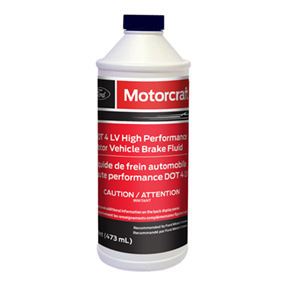
I do it every 2 years, I believe it's in the owner's manual. I also use a pressure bleeder with FDRS hooked up going through the on-screen prompts. I'm lucky to have access to the factory scan tool, not sure if Forscan will do this. One important thing is to use the proper fluid. Our trucks take low viscosity fluid, not regular old DOT 4. It has to meet Ford specs so I find it easiest to just use Motorcraft fluid. PM20 brake fluid
 

Frenchy

Well-Known Member
First Name
Chris
Joined
Mar 15, 2020
Threads
164
Messages
7,543
Reaction score
10,752
Location
Elizabeth, Colorado
Vehicle(s)
2012 Nissan Frontier, 1994 F150 XL, 2022 Ford Transit
Occupation
Field Service Technician
All depends on how you want to approach it. I myself prefer what Nissan recommends Wich is 30,000 miles or 3 years depending.


Wytchdctr

Well-Known Member
First Name
Doug P.
Joined
Nov 18, 2021
Threads
54
Messages
1,541
Reaction score
4,266
Location
Westside Htown, Texas
Vehicle(s)
2021 XLT
Occupation
Retired Military/HR Manager
I think I like nissans 30k or 3 years. Based on where I sit now it will be 30k right, around 2 years total. Very humid here.. don't want water settling down near the calipers and flashing to steam when I really need the brakes to transfer forward momentum into heat......
 
OP
OP

ccasanova22

Well-Known Member
Joined
Oct 1, 2022
Threads
25
Messages
403
Reaction score
456
Location
Lakeland, MN
Vehicle(s)
2022 Ranger XLT Tremor
I will bleed every 30k or 3 years then. I’ve had too many friends go 60-150k and didn’t notice a problem until their brake pedal sank to the floor and found a leak in one of the lines.
 
OP
OP

ccasanova22

Well-Known Member
Joined
Oct 1, 2022
Threads
25
Messages
403
Reaction score
456
Location
Lakeland, MN
Vehicle(s)
2022 Ranger XLT Tremor
So if the master cylinder accidentally went dry during bleeding (I know, stupid mistake) and the brake pedal now sinks to the floor, is the only way to bleed the ABS system with Forscan?

I’ve got some brake pressure with the ignition off, but it requires 2-3 taps of the pedal before it comes up.

I’ve taken off two calipers to check the hoses for obstructions, there are no collapsed brake lines (that I can see), fluid is in the reservoir and the pedal still goes all the way to the floor.

Any ideas?
 

Frenchy

Well-Known Member
First Name
Chris
Joined
Mar 15, 2020
Threads
164
Messages
7,543
Reaction score
10,752
Location
Elizabeth, Colorado
Vehicle(s)
2012 Nissan Frontier, 1994 F150 XL, 2022 Ford Transit
Occupation
Field Service Technician
You are correct. It is a pain, but it is what it is
 

airline tech

Well-Known Member
Joined
Aug 24, 2022
Threads
28
Messages
4,463
Reaction score
8,535
Location
Midwest - KS
Vehicle(s)
2022 Ranger Lariat-Super Crew, Cactus Gray
Occupation
Aircraft Tech
Depending on how much air was induced, you might have to bleed master cylinder and then move to the calipers.
You may try, pumping up brake pedal then open bleeder screw at the caliper. It will take some time but eventually you should get the air out.
Start with RR - LR - RF - LF
The Forscan bleed procedure will make this easier, but you want to monitor the master cylinder reservoir so it does not empty.
 
OP
OP

ccasanova22

Well-Known Member
Joined
Oct 1, 2022
Threads
25
Messages
403
Reaction score
456
Location
Lakeland, MN
Vehicle(s)
2022 Ranger XLT Tremor
Thank you. I tried bleeding again and although better, it takes 3-5 taps of the brake pedal before any braking force happens. The pedal otherwise sinks to the floor if you don’t keep tapping it over and over to build brake pressure.

I’m tempted to get Forscan to try the ABS bleed procedure, my thoughts are I got some air in the Master Cylinder and ABS valves, and nothing but triggering the ABS will release it.

Sucks that this is the start of a long weekend, but I guess I’ll have to mess with it more to get braking force back to normal.
 

diesel924

Well-Known Member
First Name
Dan
Joined
Aug 17, 2020
Threads
0
Messages
157
Reaction score
345
Location
Ellington, Connecticut
Vehicle(s)
2019 Ranger Lariat, 2020 Escape
Occupation
Fire truck mechanic, EMT
Thank you. I tried bleeding again and although better, it takes 3-5 taps of the brake pedal before any braking force happens. The pedal otherwise sinks to the floor if you don’t keep tapping it over and over to build brake pressure.

I’m tempted to get Forscan to try the ABS bleed procedure, my thoughts are I got some air in the Master Cylinder and ABS valves, and nothing but triggering the ABS will release it.

Sucks that this is the start of a long weekend, but I guess I’ll have to mess with it more to get braking force back to normal.
You need a pressure bleed.
 

airline tech

Well-Known Member
Joined
Aug 24, 2022
Threads
28
Messages
4,463
Reaction score
8,535
Location
Midwest - KS
Vehicle(s)
2022 Ranger Lariat-Super Crew, Cactus Gray
Occupation
Aircraft Tech
A pressure bleed is best or Forscan ABS module bleed.

But it is still possible to recover from this without it, so I can offer various procedures that may help. I know it sucks being down without a vehicle.

I would try starting at the LF, and then RF - Just open the caliper bleeder screws, and let it sit for about 30 minutes or so - Gravity bleed, just to get some fluid to flow, if you can get a good drip going then do the same on the rears.
You may also have luck with a good quality (One man bleeder) vacuum on the caliper bleeder screw. Once you have good fluid flow on the fronts then move to the rears, then start the process all over at the RR-LR-RF-LF.
I personally have never had much luck with the Vacuum Type bleeders and being that it appears you still have a ton of air in the system.
Try: This 2-Man method
Just to get it moving
Start at LF then RF, then LR - RR
Instead of pumping up the brake pedal use the Push Down / Let Up Method at each caliper.
Push Down - Open Bleeder -- When Pedal drops to floor then Close Bleeder and Let Up on the Brake Pedal, repeat this process until you see a fairly good steam of fluid.

One note to add, for the rears - you will need to actuate the parking brake 5 times when doing the rears, it will actuate the pistons and assist in removing trapped air.

There are quite a few Pressure Bleeders on the market, but the truck has a built-in way to do it, just need a scan tool to activate it. The only issue with using the built in method is paying attention to the reservoir fluid level.
The Pressure Bleeder will have a tank to keep the master cylinder reservoir full.
Note: I have used pressure bleeders in the past, but these were professional bleeders and the ones I used were for old school master cylinders that had the rectangular lid.
I have researched some on ones that would have the adapter for the Ranger and decided that it was not worth trial and error and spraying fluid all over the paint and engine bay.
If I can find one that is verified to fit and not leak, then I may add it to my tools.


Not a Ranger, but a general operation of the ABS Bleed procedure

Easy Brake Bleed with FORScan ?? - YouTube
 
Last edited:

MountainGoat

Well-Known Member
Joined
Dec 5, 2020
Threads
43
Messages
2,346
Reaction score
7,065
Location
Missouri
Vehicle(s)
2020 Ranger XLT Sport 4x4
A pressure bleed is best or Forscan ABS module bleed.

But it is still possible to recover from this without it, so I can offer various procedures that may help. I know it sucks being down without a vehicle.

I would try starting at the LF, and then RF - Just open the caliper bleeder screws, and let it sit for about 30 minutes or so - Gravity bleed, just to get some fluid to flow, if you can get a good drip going then do the same on the rears.
You may also have luck with a good quality (One man bleeder) vacuum on the caliper bleeder screw. Once you have good fluid flow on the fronts then move to the rears, then start the process all over at the RR-LR-RF-LF.
I personally have never had much luck with the Vacuum Type bleeders and being that it appears you still have a ton of air in the system.
Try: This 2-Man method
Just to get it moving
Start at LF then RF, then LR - RR
Instead of pumping up the brake pedal use the Push Down / Let Up Method at each caliper.
Push Down - Open Bleeder -- When Pedal drops to floor then Close Bleeder and Let Up on the Brake Pedal, repeat this process until you see a fairly good steam of fluid.

One note to add, for the rears - you will need to actuate the parking brake 5 times when doing the rears, it will actuate the pistons and assist in removing trapped air.

There are quite a few Pressure Bleeders on the market, but the truck has a built-in way to do it, just need a scan tool to activate it. The only issue with using the built in method is paying attention to the reservoir fluid level.
The Pressure Bleeder will have a tank to keep the master cylinder reservoir full.
Note: I have used pressure bleeders in the past, but these were professional bleeders and the ones I used were for old school master cylinders that had the rectangular lid.
I have researched some on ones that would have the adapter for the Ranger and decided that it was not worth trial and error and spraying fluid all over the paint and engine bay.
If I can find one that is verified to fit and not leak, then I may add it to my tools.


Not a Ranger, but a general operation of the ABS Bleed procedure

Easy Brake Bleed with FORScan ?? - YouTube
Yeah I could not do the Forscan bleed properly with the Motive Bleeder. It can only move air, fill it with brake fluid and it spits and leaks all over the engine bay. It is an iffy procedure since the Forscan bleed moves a ton of brake fluid!
 

Dgc333

Well-Known Member
First Name
Dave
Joined
Aug 24, 2021
Threads
17
Messages
1,742
Reaction score
4,113
Location
Massachusetts
Vehicle(s)
21 Ranger Lariat
Occupation
Engineer
FWIW, I am building a Factory Five Racing Speedstar. It uses a Wilwood pedal box that has two master cylinders (one for the front and one for the rear) they are connected to the pedal via a bias bar that allows for adjusting the bias between the front and back via a knob on the dash. This was by far the worst system I have ever worked on for getting the air out of the system. I have run 5 quarts of fluid through the system bleeding them. Interestingly everything is new in the system and the fluid coming out of the bleeders is quite discolored compared to the new fluid I am pouring into the reservoir.

Anyway, I started by using a vacuum bleeder to pull fluid through the system, this method in most cases will give you a decent pedal but no pedal on this system. I then used the Wilwood procedure of bleeding the RF and RR simultaneously by opening the bleeders and pump fluid through the system by pumping the pedal with the bleeders staying open (a hose is run into a bottle that is partially full of fluid so you do not draw air back into the system. The pedal got better but still not acceptable. I then used a pressure bleeder which again was made an improvement but still not where it needed to be. In frustration I called Wilwood and was told that with some systems the only way to flush all the air out is with a three person bleed. This process has one person manning the RR caliper and another on the RF caliper with the third person pumping the pedal. Doing it this way is the only way to ensure you get a full stroke on both MCs and build enough pressure to flush out trapped air. This worked and I now have a decent pedal.
Sponsored


Top