NotBudule2
Well-Known Member
Sponsored


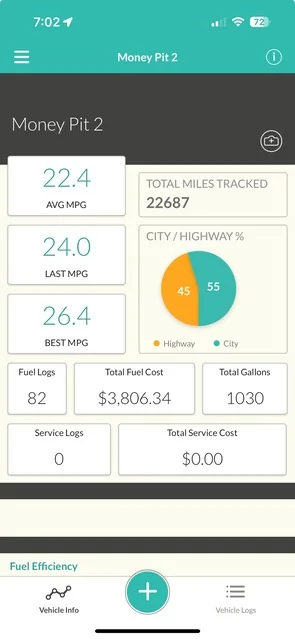
I tried the 91 at Costco for a while and got the same results. I just use that If I'm going to be towing. The 4wd number is just an estimate. My longest trip in 4wd is only about 40 miles home from Costco the other day in whiteout lake snow conditions below the speed limit. With one idiot in front of us driving a Toyota Tacoma 4wd 20mph or less for the last 10 miles.That's a good average especially using 87. My lifetime average is 22.4 using 91 and I do a lot of short, stop & go trips.

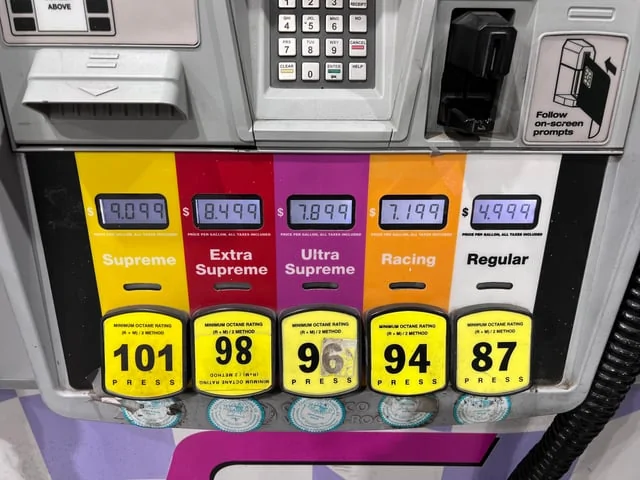
It's been a long time seeing above 94?? I guess if you can still get aviation fuel and mix it.

My son ran a couple tanks of aviation fuel through his Harley one summer. The pipes were coated black and that stuff cleaned them right up. I think it was 110.It's been a long time seeing above 94?? I guess if you can still get aviation fuel and mix it.
The octane numbers in South Texas are the exact same here in North Texas lol.We have 87, 89 and 93 here in south texas.
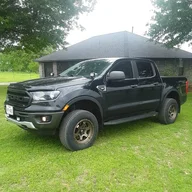
This 2024 ranger i have is a keeper. So i am running 93 octane shell gasoline through it. Hope it keeps the intake valves cleaner being a di engine.

Ford slipped in the additional injectors in the 24 and up Rangers to help mitigate the carboned valves issue.We have 87, 89 and 93 here in south texas.
This 2024 ranger i have is a keeper. So i am running 93 octane shell gasoline through it. Hope it keeps the intake valves cleaner being a di engine.
My fans are electric. Miss the the clutch driven fan. Ill look for pi but i have not seen them anywhere, and the oil filter is in the same old location. Ill have tonlook at the build date.Ford slipped in the additional injectors in the 24 and up Rangers to help mitigate the carboned valves issue.
The 2024 Ford Ranger 2.3L EcoBoost engine features several key updates over previous generations, even though it retains the same displacement. The most significant changes include:
- New Modular Power Cylinder (MPC) Engine Architecture, shared with the 2024 Mustang and refreshed 2025 Explorer, featuring dual fuel injection (port and direct injection at 350 bar), which helps reduce carbon buildup and improve emissions.
- A new twin-scroll, low-inertia turbocharger with a high-speed electronic wastegate for faster response and more precise boost control, reducing turbo lag.
- Integrated air induction system and integrated hot-side exhaust gas recirculation (EGR) for better thermal efficiency and emissions.
- Compact variable cam timing (VCT) and a revised oil pump relocated to the balance shafts for better packaging and improved oil flow.
- A new oil cooler housing and side-pointing oil filter for enhanced cooling and easier maintenance.
- The engine now uses a wider front belt and a belt-driven fan, improving cooling and efficiency.


Talk about hitting the nail on the head. You are correct about the resistance to knock and that's the primary reason for high octane fuel. Of course it always depends on the application to whether it actually should use it having a turbo charger it should be a no-brainer to use high octane fuel.I have run 89 octane in my 2019 XLT for almost 70,000 miles. Only exception is when towing the trailer. This is pretty much in accordance with the owner's manual.
Higher octane fuel does not contain any more hydrocarbons or additives than regular fuel except for the octane booster. All this does is prevent engine knocking. Top-tier fuel does contain better quality additives and that's how it gets the top-tier rating.
The Ranger's engine, like most modern engines, has a knock sensor that retards timing when the engine starts to knock. While this does protect the engine, it does cost you a bit in fuel mileage. Any improvement in mileage with higher octane gas is solely due to the gas's ability to reduce knock, thereby preventing the retarded timing.
Retired auto mechanic.Talk about hitting the nail on the head.
One other benefit I mentioned earlier is premium 93 is one of the few Non Ethanol gas, so I use it for that reason. More stable the gas with up to 10-15% Ethonal mixed in.Talk about hitting the nail on the head. You are correct about the resistance to knock and that's the primary reason for high octane fuel. Of course it always depends on the application to whether it actually should use it having a turbo charger it should be a no-brainer to use high octane fuel.
I don't blame youRetired auto mechanic.
It depends on where you're located. Here in Colorado we do have ethanol-free 87 and some places might even have ethanol free 91. I've also seen other states have ethanol free 91One other benefit I mentioned earlier is premium 93 is one of the few Non Ethanol gas, so I use it for that reason. More stable the gas with up to 10-15% Ethonal mixed in.
Can't get 93 Octane in Arizona, we have to get by with the diluted preium gas from California - 91 Octane. Went to Texas a few years back. They had real premium 93 Octane gasoline. The difference in power was quite noticeable.Is anyone running 93 in this cold weather?
I ran two of those 44 fuel system cleaners at the last 5000 mile intervals and have been topping off the tank with 93 the last month or so. I swear the truck runs better at 150,000 miles than it did new.!!!