Sponsored

should I use my parking brake?

mtbikernate

Well-Known Member
Joined
Apr 13, 2020
Threads
11
Messages
1,174
Reaction score
2,636
Location
NC
Vehicle(s)
2019 Ranger XLT 4x4
The truck would be sliding on the tires long before you could shear off the pawl in the transmission. The only time these fail is if people are slamming the vehicle into park while the vehicle is still moving. That will wear it down so it does not securely engage.

I would trust the pawl to hold the vehicle on a hill long before I would the parking brake.
I don't think people are necessarily worried about the pawl shearing off. rather, it's about the effort involved to disengage it after the weight of the vehicle on a slope has been holding it in place. using the parking brake takes some of the pressure off of it and makes it a TON easier to shift out of park.

in fact, in my wife's new toyota corolla cross, when you shift to park, it automatically engages the parking brake (it has one of those electronic parking brakes that I don't necessarily care for otherwise).
Sponsored
 

mtbikernate

Well-Known Member
Joined
Apr 13, 2020
Threads
11
Messages
1,174
Reaction score
2,636
Location
NC
Vehicle(s)
2019 Ranger XLT 4x4
On a manual transmission, I tried to keep it in first gear unless on a slope.
I understand the logic of this but when I was taught to drive a manual, I was taught to always use the parking brake, anyway. those lessons happened early enough that it's what I always did. belt & suspenders, I suppose.
 

Frenchy

Well-Known Member
First Name
Chris
Joined
Mar 15, 2020
Threads
164
Messages
7,542
Reaction score
10,751
Location
Elizabeth, Colorado
Vehicle(s)
2012 Nissan Frontier, 1994 F150 XL, 2022 Ford Transit
Occupation
Field Service Technician
The truck would be sliding on the tires long before you could shear off the pawl in the transmission. The only time these fail is if people are slamming the vehicle into park while the vehicle is still moving. That will wear it down so it does not securely engage.

I would trust the pawl to hold the vehicle on a hill long before I would the parking brake.
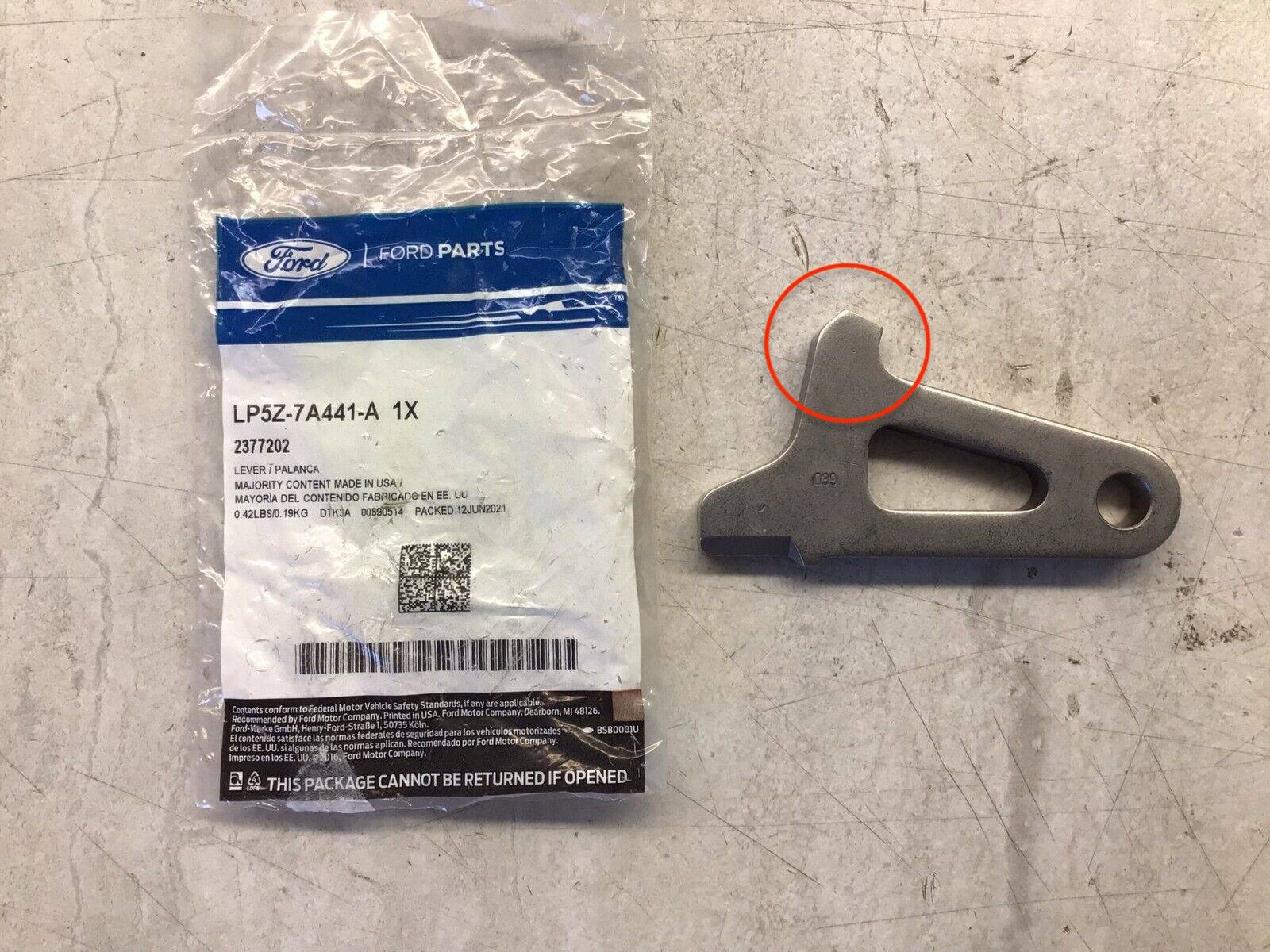
If one is on an incline and constantly uses the parking pawl instead of the parking break, guess what is going to break? That's right, the Parking Pawl. How you ask? Simple, the stress put on the Pawl will break the lever arm or teeth on the output shaft. To repair you have to hope that Ford has the pares available individually
 

ArchitectThom

Well-Known Member
First Name
Thom
Joined
Jul 2, 2020
Threads
2
Messages
218
Reaction score
538
Location
Mesa, AZ
Vehicle(s)
2022 Ranger Lariat FX4
Occupation
Architect
People use their parking brake on a regular basis? Why? Why would a vehicle even have a "Park" designation on the transmission if they expected you to use the parking brake every time you park? The only time I use mine is if I'm parked on a steep enough incline that it doesn't feel good to let the transmission take the brunt of the weight of the truck. I use mine maybe a couple times a month whenever I go to my friend's house who has a short fairly steep driveway. Otherwise... why use it? I don't get it.

That said... I would get it repaired cuz you never know when you might need it. Parked on an extreme incline somewhere, you don't want to trust the transmission to keep the truck in place. Gears can slip.
 

Dgc333

Well-Known Member
First Name
Dave
Joined
Aug 24, 2021
Threads
17
Messages
1,742
Reaction score
4,112
Location
Massachusetts
Vehicle(s)
21 Ranger Lariat
Occupation
Engineer
If one is on an incline and constantly uses the parking pawl instead of the parking break, guess what is going to break? That's right, the Parking Pawl. How you ask? Simple, the stress put on the Pawl will break the lever arm or teeth on the output shaft. To repair you have to hope that Ford has the pares available individually
I disagree with you on that one. The pawl and the output shaft it engages are made of heat treated steel and will take 10's of thousands of pounds of force to break either. As I mentioned before shifting into park before you are completely stopped will certainly wear the pawl which could cause a failure but the static load of the trucks weight won't.

As mentioned by mtbikernate using the parking brake to ease the effort of getting the tranny out of park is certainly a valid reason. In my 50+ years of driving I have never had an issue getting the tranny out of park on any of my vehicles so it wasn't something I considered.


Frenchy

Well-Known Member
First Name
Chris
Joined
Mar 15, 2020
Threads
164
Messages
7,542
Reaction score
10,751
Location
Elizabeth, Colorado
Vehicle(s)
2012 Nissan Frontier, 1994 F150 XL, 2022 Ford Transit
Occupation
Field Service Technician
I disagree with you on that one. The pawl and the output shaft it engages are made of heat treated steel and will take 10's of thousands of pounds of force to break either. As I mentioned before shifting into park before you are completely stopped will certainly wear the pawl which could cause a failure but the static load of the trucks weight won't.

As mentioned by mtbikernate using the parking brake to ease the effort of getting the tranny out of park is certainly a valid reason. In my 50+ years of driving I have never had an issue getting the tranny out of park on any of my vehicles so it wasn't something I considered.
And yet if on an incline the for it multiplied. I have seen one break. It isn't fun to deal with. The customer was not too happy either with the bill that was coming their way
 

Dgc333

Well-Known Member
First Name
Dave
Joined
Aug 24, 2021
Threads
17
Messages
1,742
Reaction score
4,112
Location
Massachusetts
Vehicle(s)
21 Ranger Lariat
Occupation
Engineer
And yet if on an incline the for it multiplied.
Not sure what you are saying here but the static load on the pawl will be the cosine of the incline angle and will be less than the weight of the truck.. For example you are parked on a 30 degree incline and your truck weighs 4400 lbs. The load on the pawl will be the cosine of 30 degrees times 4400lbs or 679 lbs. As the angle gets steeper the load will increase to the weight of the truck at 90 degrees.
 

Matt 57

Member
First Name
Matt
Joined
Aug 3, 2023
Threads
2
Messages
11
Reaction score
15
Location
06279
Vehicle(s)
2023 ranger
Occupation
retired
Here’s my situation. I have a 2021 Ford Ranger, and I’ve used the parking brake every time I park for the past 2.5 years. However, recently, my lines seized, (which I don’t even know how that happened because I used them every day). So now I’m wondering should I spend the money to get it fixed, or just leave them not working (like the mechanics suggested, he also said they will probably just seize again, and that on his own truck he ripped out the whole system).

So my question is, will I put unnecessary strain on my transmission by not using my parking break every time I park? I just don’t like feeling the vehicle clunk forward, even on a very slight incline.
better get a new mechanic, its not the best thing to rest on the parking pawl.
 

airline tech

Well-Known Member
Joined
Aug 24, 2022
Threads
28
Messages
4,458
Reaction score
8,519
Location
Midwest - KS
Vehicle(s)
2022 Ranger Lariat-Super Crew, Cactus Gray
Occupation
Aircraft Tech
All brake calipers are self adjusting. The fluid pressure pushes the piston/pad against the rotor. When the brakes are released the piston/pad relaxes but will stay lightly in contact with the rotor. It is the parking brake mechanism that self adjusts.

When the parking brake lever is pulled it has a defined amount of pull, because of the self adjusting going on in the caliper you will quickly run out of travel with the lever on the caliper and won't be able to apply the parking brake. A ratcheting mechanism is built into the caliper that keeps the lever mechanism adjusted as the caliper piston moves out to compensate for pad wear. This is why you need to use a tool to turn the piston back into the caliper when changing pads verse just pushing it back in on the front calipers.
This is NOT always the case, in design yes they will self adjust, BUT sometimes you will have a owner who does not use his parking brake frequently, and this leads to the piston (throw) being too short, older Chevy models with 4 wheel disc was prone to this- Ex- 82-86 Camero.
So in this design, if you did not regularly use the parking brake, you would eventually end up with zero rear brakes when you pushed the brake pedal, the piston throw would not be long enough to touch the rotors, then if this went on long enough the piston would seize as it was not ever being moved
 

ControlNode

Well-Known Member
First Name
John
Joined
Nov 29, 2021
Threads
16
Messages
1,709
Reaction score
3,642
Location
Eastern NC
Vehicle(s)
84 Civic "2000S"/16 Focus RS/21 Ranger XLT
Occupation
Computers
So that is what we call the Bumper to Bumper Warranty. After that is up you only have powertrain coverage
And in the US you have emissions system warranties that I think are federally required to 8yr/80k miles.
 

ControlNode

Well-Known Member
First Name
John
Joined
Nov 29, 2021
Threads
16
Messages
1,709
Reaction score
3,642
Location
Eastern NC
Vehicle(s)
84 Civic "2000S"/16 Focus RS/21 Ranger XLT
Occupation
Computers
Not sure what you are saying here but the static load on the pawl will be the cosine of the incline angle and will be less than the weight of the truck.. For example you are parked on a 30 degree incline and your truck weighs 4400 lbs. The load on the pawl will be the cosine of 30 degrees times 4400lbs or 679 lbs. As the angle gets steeper the load will increase to the weight of the truck at 90 degrees.
You forgot to account for gearing and distance of loads from the axis rotating points. That 679lb from your math is at the tire. What is the distance from the rear axle center point to the ground? And what is the radius of the wheel that pawl engages? I'm guessing we can just divide the force on the tire by the gear ratio to get the force on the prop shaft. So, at tire's radius from the prop shaft center the load is only about 182lb, but at half that distance it is back up to 364lb. Without knowing the radius of your trucks drive axle to ground and the radius of the wheel the pawl engages, we don't know the actual load on that part. And of course that is dependent on the angle it's parked at.
 

Motorpsychology

Well-Known Member
First Name
Chris
Joined
Nov 13, 2019
Threads
21
Messages
3,295
Reaction score
11,508
Location
Prescott, WI
Vehicle(s)
2021 Ranger STX SuperCab 4X4 Carbonized grey; 2025 Mazda CX-90 Platinum Quartz
Occupation
Vagabond
You forgot to account for gearing and distance of loads from the axis rotating points. That 679lb from your math is at the tire. What is the distance from the rear axle center point to the ground? And what is the radius of the wheel that pawl engages? I'm guessing we can just divide the force on the tire by the gear ratio to get the force on the prop shaft. So, at tire's radius from the prop shaft center the load is only about 182lb, but at half that distance it is back up to 364lb. Without knowing the radius of your trucks drive axle to ground and the radius of the wheel the pawl engages, we don't know the actual load on that part. And of course that is dependent on the angle it's parked at.
The pawl holds the truck just fine on level to moderate grades ~2% estimated but payload increases the stress on the pawl, and more likelihood of torque lock. Everything is usually just fine, Stellantis had a problem a few years back with certain Rams not engaging Park, but IIRC that was more software related.

I appreciate all the dazzling mathematics, but my eye bones just don't trust this thing:
s-l1600.jpg
 

puckdodger

Well-Known Member
First Name
Jim
Joined
Jan 16, 2021
Threads
31
Messages
902
Reaction score
3,496
Location
Oshawa
Vehicle(s)
2020 Black Lariat 2020 SOLD Black Cadillac XT5
Lots of back and forth here, so why not add my $0.02?

First, OP: your mechanic is an untrustworthy idiot. Find a new one if you can. What else does he think is okay to ignore?

When properly applied and used, the pawl is plenty strong enough to hold the truck, and I am sure it has been engineered to death over the years by smarter people than me. Same with the parking brake systems, so I tend to follow the manufacturers suggestions, for the most part.

I use mine regularly to prevent a repeat of the Great Frozen Parking Brake Fiasco of 09, when I drove my dad's F150 manual tranny a short distance, shut it off, applied the parking brake -- Like a normal, sane person might do I must add-- and then proceeded to have a fun afternoon at -20 temps on the ground of a truck stop on Hwy 17 trying to get that thing to release. Both calipers IIRC. Turns out the old boy never used it and always just left the truck in gear making ME the idiot for doing something that was an ingrained habit after driving stick for 20 years...

Flip side of that situation, a couple years ago when I was just a newbie driving a 5 ton straight truck I pulled into a stop feeling pretty proud of myself behind the wheel of such a beast and put it in park just a half second too soon, and that thing torquelocked tighter than a mouse's ear, and no matter what I did I could not get that thing out of park. The boss had to come about 30 miles and use his pickup to push me back enough to get it to release. He was nicer to me than my old man was too, now that I think about it.

It doesn't hurt to give the cable ends a shot of Fluid Film, as @airline tech suggests, and follow proper methods when replacing rear brakes to reset the piston.
Sponsored


Top