
Sponsored

Variable Voltage System Stuff

Frenchy

Well-Known Member
First Name
Chris
Joined
Mar 15, 2020
Threads
164
Messages
7,543
Reaction score
10,751
Location
Elizabeth, Colorado
Vehicle(s)
2012 Nissan Frontier, 1994 F150 XL, 2022 Ford Transit
Occupation
Field Service Technician
Hoping this will become a Sticky as I feel this is important stuff for those to know.

This particular Thread is to help those who don't understand the Variable Voltage Systems that are on many Modern Vehicles today.

After a bit of time in both Automotive and the Forklift Industry, I have been able to get a bunch of information together to help me get an understanding. Once I had the understanding, it had me at ease vs when I was introduced to it and asking why it won't stay at 14.7 Volts.

Now to go over the basics.

For starters there are two types of Charging Systems. The old Conventional Charging System and the new Variable Voltage System. I don't know what manufacturer first introduced the Variable Voltage System, but I want to say it first started around the early 2000's.

The old Conventional Charging System was set to try and keep Battery Voltage around 14.4-14.7 Volts while the Vehicle is Running. If anything it would apply more Amps as needed when loads are applied. Not a bad thing necessarily, but not the best way to do things.

On modern vehicles you have the Variable Voltage Systems. The excuse Vehicle Manufacturers give us for the system is to help improve Fuel Economy. Honestly I feel that is a bit of BS as the fuel savings are miniscule. But that doesn't mean there isn't an advantage to it.

The real advantage of a Variable Voltage System is to Charge the Battery as needed. If the Battery is already at a full charge, then why push it further? Overcharging a Battery can Damage it. In reality you want to look at the Variable Voltage System as a Fancy Battery Charger that you would have at home plugged into the wall. The Battery Charger you have at home already has Programmed Charging Profiles for a few different types of Batteries. This is to help the Battery Charge Efficiently and Safely without Damaging the Battery. The Variable Voltage System acts in a similar way.

Now of course different vehicle manufacturers will vary how they operate, but most will be very similar to what I am about to explain. Once you get this part, it will be fairly easy to understand what's going on.

For a vehicle with Variable Voltage, there is one key component. That component is the Amp Meter on the Ground Cable. Depending on the vehicle will depend on the shape. This can have either 2 or 3 wires going to it. This particular sensor simply measures the Total Amps being pulled from any Electrical Load from the Vehicle and any Additional Aftermarket Equipment that may have been added(like Auxiliary Lights or a DC-DC Charger for an Auxiliary Battery). It also measures the Charge going in from a small Battery Charger like a Battery Tender or the NOCO Battery Maintainer that Ford Offers.

Now I would have to see the wiring diagram for the for the Ranger and I'm sure a certain someone(@airline tech ) can assist with this, but I believe the Amp Meter is wired directly to the ECM/PCM and the Data is sent to the BCM VIA CAN Communication. After that the BCM calculates the the Battery State of Charge along with the Amp Load applied so it can tell the Alternator to be at any set Voltage ranging from 12.7-14.7 Volts with an Amperage upto 180 Amps(I thing that is the Factory Amp Rating for the Alternator at least). This basically means that even if the truck is running at 13 Volts because that battery is charged, it can still apply 100 Amps at 13 Volts if the 100 Amp Load is applied from Factory Vehicle Equipment and any Additional Aftermarket Equipment that you have added.

Now that we have that bit over with, let's talk about wiring in Aftermarket Equipment correctly so the Variable Voltage System operates normally.

As mentioned above, the Variable Voltage System has an Amp Meter on the Ground Cable. It is Important that does not get Bypassed. If you do, the Amp Meter will not see all the Loads being pulled and the Alternator will not be able to Apply the Necessary Amps at any given Voltage to make sure the Battery is Charged Correctly. It can also cause multiple Vehicle Systems like the Radio to not operate Normally and be very Glitchy.

Now for any Aftermarket Equipment you add, you have the Okay from every Vehicle Manufacturer to pull the 12 Volt Positive strait from the Battery. As for the Ground, it is Extremely Important that you go to either the Body or the Chassis for the Ground. This will help ensure that the Amp Meter on the Ground Cable will be able to read the Amp Load so the Alternator can Apply the correct Amperage at any Given Voltage that is Commanded.

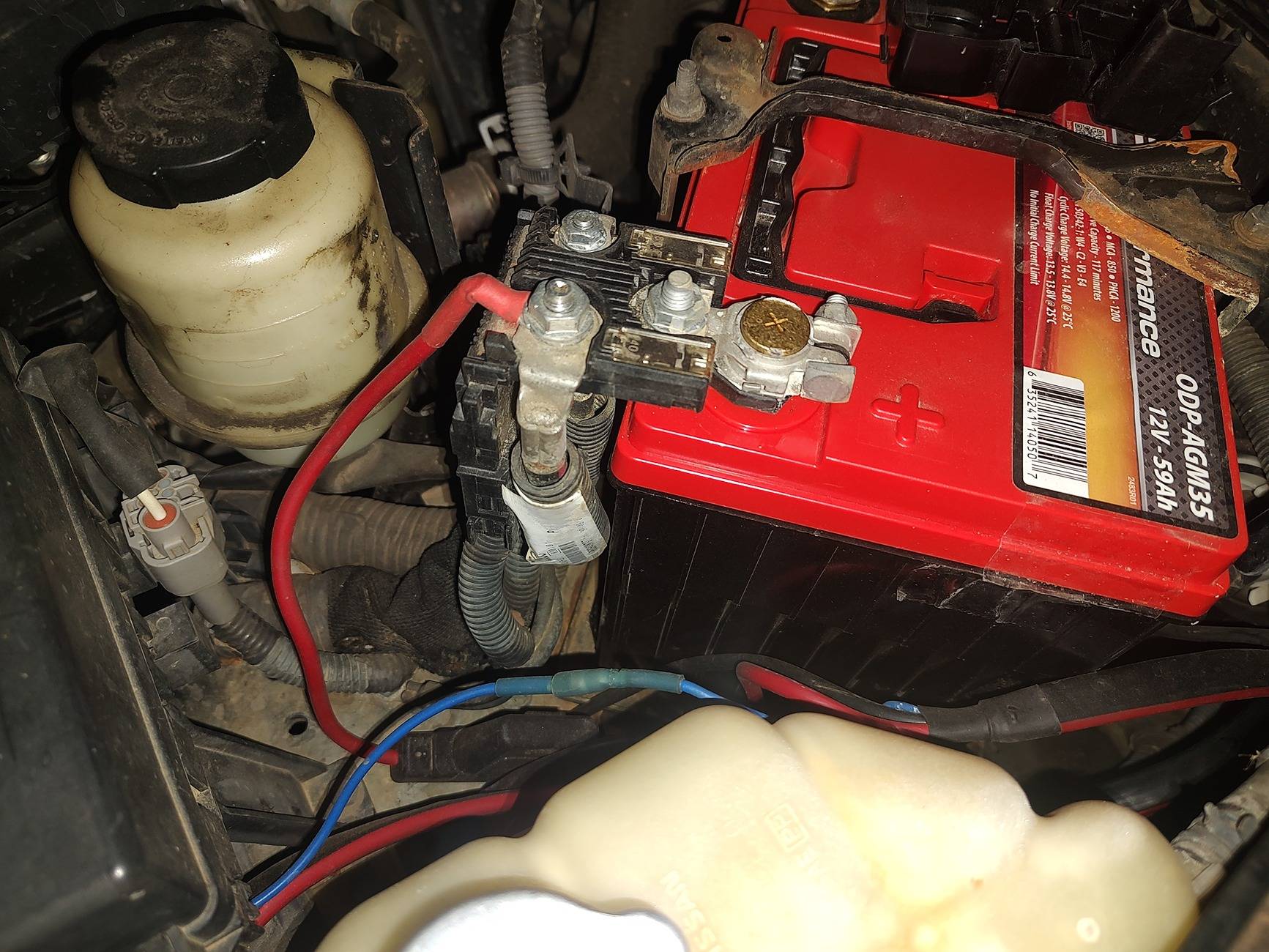
Though it is on a different type of vehicle, here is a great example of what to do. This particular example is on my 2012 Frontier that is also equipped with a Variable Voltage System.

This is for a DC-DC Charger and the same Principle will apply for the Ranger and other Vehicles with the Variable Voltage System.

For starters I did connect to the Positive Battery Terminal for the Power Itself. With a good clean connection like such, it shouldn't be an issue. Just keep in mind that if you are going to have multiple Electrical Equipment added, you might want a fair size Cable going to a Bridge.

IMG_20240916_194141388.jpg


For the Ground I simply found a good Body Ground near the Battery. This helps ensure the the Amp Meter will see the Load from the DC-DC Charger.(Phone wants to be a pain, so I will add a picture later)

Now because I have Variable Voltage, I had to make sure the DC-DC Charger has a way to work at a Lower Voltage. The one I have has a Signal wire. This wire should go to a Switched Power from the Ignition. This wire tells the DC-DC Charger to turn on at a Lower Voltage when it gets 12 Volt Power.
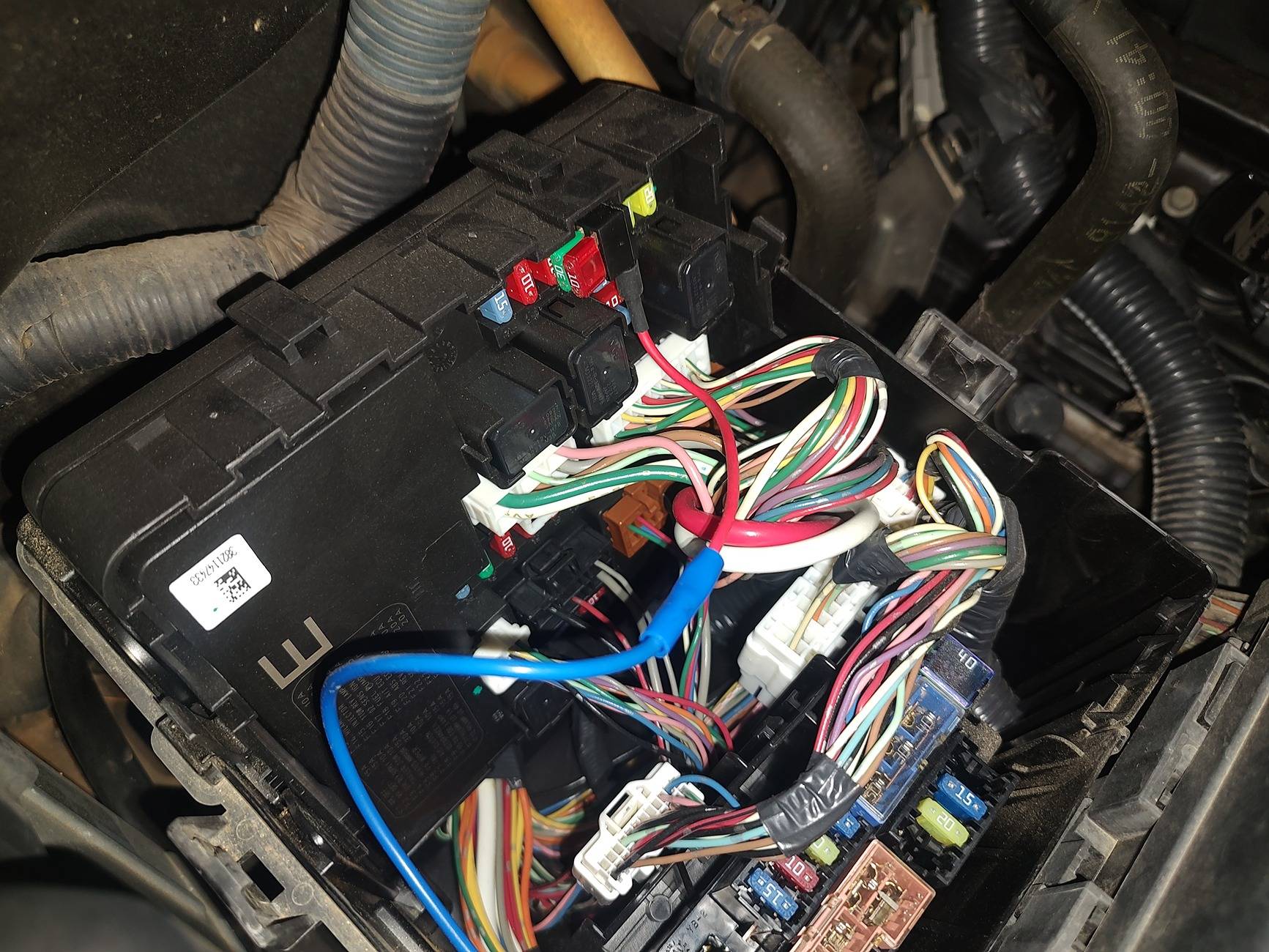
IMG_20240916_194333664.jpg


Now here is an example of what not to do!!!! This is also on a Nissan Frontier from someone who thought they knew what they were doing(spoiler alert, they didn't know what they were doing). On the Positive Side of the Battery it is ok. Probably a bit better than what I have honestly, but I'm not going to worry about it. As for the Ground Side..... That is a Disaster........ Adding all the Ground Cables like this will make any and all Electrical Loads bypass the Amp Meter and not allow the Alternator to apply the Correct Amount of Amps at any Voltage.
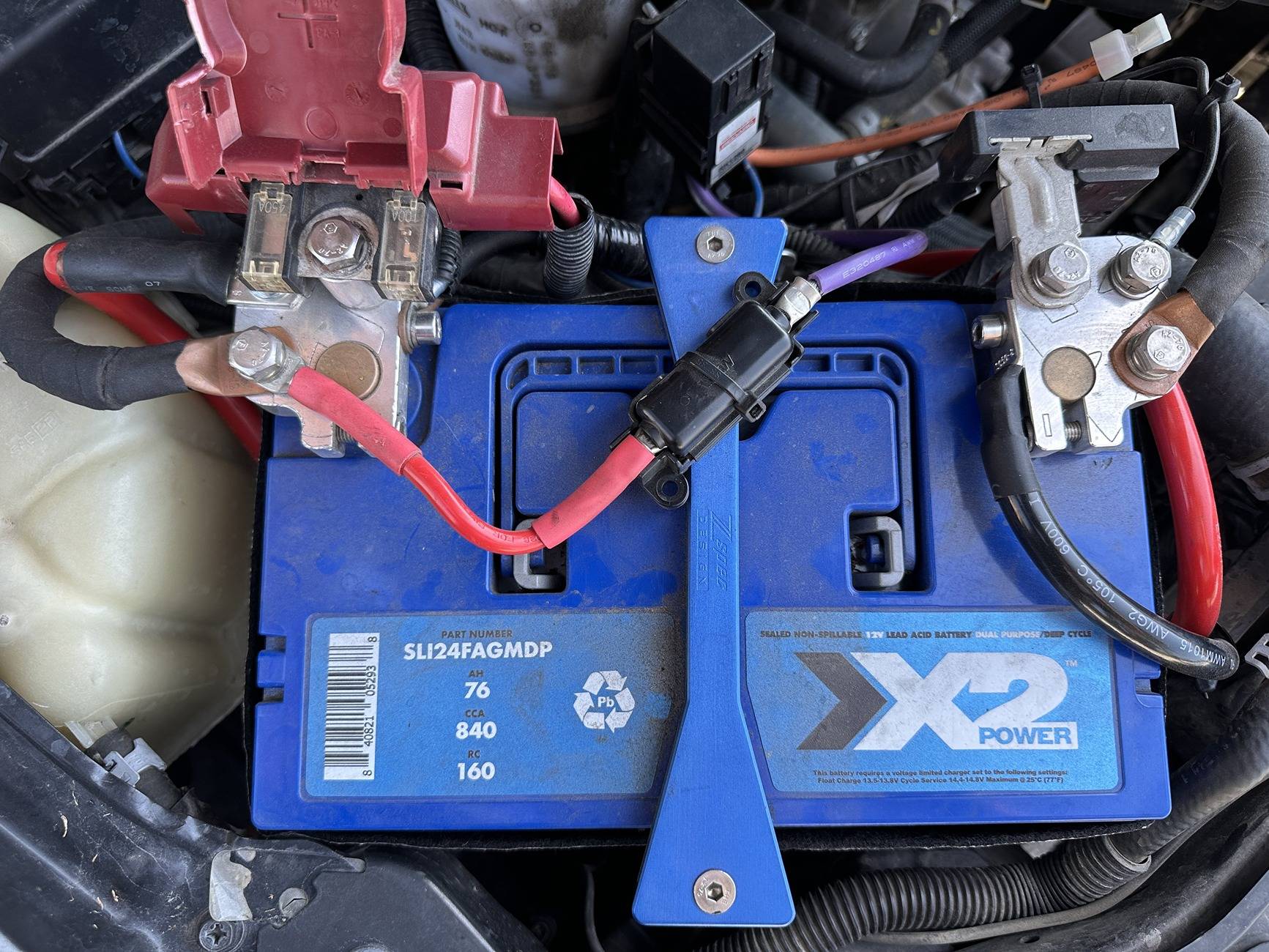
IMG_1754.jpg


Hopefully this has been very helpful to those that are curious and didn't know much about the Variable Voltage System.
Sponsored


 

ctechbob

Well-Known Member
First Name
Shawn
Joined
Feb 2, 2021
Threads
32
Messages
1,588
Reaction score
4,144
Location
30666
Vehicle(s)
2020 Ranger XL/FX2/STX
Occupation
Adult Daycare
Alternators are a voltage source, they do not, as you say, 'supply amps'. (they do, but not the way you describe it)

The voltage regulator strives to maintain whatever voltage it is set at, be that 13, 14, or whatever volts. If the voltage regulator is set at 13 volts, and the battery is at 13 volts, no current will flow until the system voltage is pulled down by a load. Once the voltage starts being pulled down, the regulator increases the field to try and pull the voltage back up to the set point. In doing so, the voltage raises and current begins to flow. You must have a higher voltage for current to flow.

Pure and simple, the system is designed to save fuel. It certainly isn't designed for battery longevity. There's no battery manufacturer on the planet that will tell you that their battery will last the longest being undercharged and cycled, and no 13 volts isn't near being charged.

My source, I used to work pretty closely with Hawker Batteries (Where Odyssey batteries come from) and they will tell you straight up that the best way to maintain an AGM battery is with a constant voltage charge and maintain. The old way was fine, manufacturers just found a way to eek out better EPA numbers. There is nothing better about the new system except fuel and emissions. (And maybe, and I mean MAYBEEEEEEEEE a slight uptick in alternator longevity, but that number would be so far down in the weeds as to be almost unproveable.)

And yes, you absolutely should never connect anything on the battery side of the current shunt. Unless you disable the system, which is mostly fine as well. Although, it isn't particularly accurate that the truck won't be able to figure it out. Case in point. You disconnect the battery and let the truck sit for a while, long enough that you loose some charge from the battery, or you reinstall a battery that isn't fully charged. None of that current made it through the shunt, but I guarantee you that the BCM can see that the battery voltage is somewhat less than 12.8 nominal, and it will apply charge to raise it. The same thing would happen if you bypassed the shunt, but it will probably confuse the BCM in the long run or make it think that there is a dead or dying battery, but it will still charge and supply the load. The shunt mainly senses current, but it probably also senses voltage, and even if it didn't, voltage would be sensed elsewhere.

I'll bullet point Frenchy's Post

- Our trucks don't keep batteries fully charged (at stock settings)
- Don't connect any aftermarket accessories directly to the negative battery post and bypass the current shunt. (Or, if you do, disable the system.)

Otherwise, there's nothing super special about the charging system. It is still a 3 phase alternator rectified by diodes, the same way they've always been and controlled by a voltage regulator. Not much has changed except more granular control over it.

To which I will add.

- If you're interested in battery longevity, either disable the system, or increase the charge percentage in the BCM.
 
OP
OP
Frenchy

Frenchy

Well-Known Member
First Name
Chris
Joined
Mar 15, 2020
Threads
164
Messages
7,543
Reaction score
10,751
Location
Elizabeth, Colorado
Vehicle(s)
2012 Nissan Frontier, 1994 F150 XL, 2022 Ford Transit
Occupation
Field Service Technician
Alternators are a voltage source, they do not, as you say, 'supply amps'. (they do, but not the way you describe it)

The voltage regulator strives to maintain whatever voltage it is set at, be that 13, 14, or whatever volts. If the voltage regulator is set at 13 volts, and the battery is at 13 volts, no current will flow until the system voltage is pulled down by a load. Once the voltage starts being pulled down, the regulator increases the field to try and pull the voltage back up to the set point. In doing so, the voltage raises and current begins to flow. You must have a higher voltage for current to flow.

Pure and simple, the system is designed to save fuel. It certainly isn't designed for battery longevity. There's no battery manufacturer on the planet that will tell you that their battery will last the longest being undercharged and cycled, and no 13 volts isn't near being charged.

My source, I used to work pretty closely with Hawker Batteries (Where Odyssey batteries come from) and they will tell you straight up that the best way to maintain an AGM battery is with a constant voltage charge and maintain. The old way was fine, manufacturers just found a way to eek out better EPA numbers. There is nothing better about the new system except fuel and emissions. (And maybe, and I mean MAYBEEEEEEEEE a slight uptick in alternator longevity, but that number would be so far down in the weeds as to be almost unproveable.)

And yes, you absolutely should never connect anything on the battery side of the current shunt. Unless you disable the system, which is mostly fine as well. Although, it isn't particularly accurate that the truck won't be able to figure it out. Case in point. You disconnect the battery and let the truck sit for a while, long enough that you loose some charge from the battery, or you reinstall a battery that isn't fully charged. None of that current made it through the shunt, but I guarantee you that the BCM can see that the battery voltage is somewhat less than 12.8 nominal, and it will apply charge to raise it. The same thing would happen if you bypassed the shunt, but it will probably confuse the BCM in the long run or make it think that there is a dead or dying battery, but it will still charge and supply the load. The shunt mainly senses current, but it probably also senses voltage, and even if it didn't, voltage would be sensed elsewhere.

I'll bullet point Frenchy's Post

- Our trucks don't keep batteries fully charged (at stock settings)
- Don't connect any aftermarket accessories directly to the negative battery post and bypass the current shunt. (Or, if you do, disable the system.)

Otherwise, there's nothing super special about the charging system. It is still a 3 phase alternator rectified by diodes, the same way they've always been and controlled by a voltage regulator. Not much has changed except more granular control over it.

To which I will add.

- If you're interested in battery longevity, either disable the system, or increase the charge percentage in the BCM.
I won't go into the details on the about the adjustments in the BCM as I'm not too familiar with that(not one of the things I did with ForScan). That much is fair. This is more of the General Operation and understanding of the Variable Voltage System.

For the Variable Voltage System in General (not specific to just the Ranger or only Ford Products), it is capable of Applying Amps at a lower Voltage with no problems thanks to the Amp Meter that is on the Ground Cable(assuming things are still active of course). This is thanks to the Amp Meter giving the ECM/PCM the information and the ECM/PCM being shared with the BCM(or IPDM-ER if talking about about a Nissan).

Now keep in mind that if the Variable Voltage System is running around 13 Volts, the System is under the impression that the Battery is Charged. If the System feels the Battery is not Charged, the Voltage may be between 13.5-14.7 Volts Depending. How long it stays that high all depends on the Variable Voltage System Settings. I know that my 2012 Frontier has no problem switching with the DC-DC Charger active and my Odyssey has had no problems handling it so far.

Also keep in mind that regardless if you have a Variable Voltage System or not, you still need to drive the vehicle. If short trips are the only things done, then there is no way the Battery will.ever be charged.
 

ctechbob

Well-Known Member
First Name
Shawn
Joined
Feb 2, 2021
Threads
32
Messages
1,588
Reaction score
4,144
Location
30666
Vehicle(s)
2020 Ranger XL/FX2/STX
Occupation
Adult Daycare
For the Variable Voltage System in General (not specific to just the Ranger or only Ford Products), it is capable of Applying Amps at a lower Voltage with no problems thanks to the Amp Meter that is on the Ground Cable(assuming things are still active of course). This is thanks to the Amp Meter giving the ECM/PCM the information and the ECM/PCM being shared with the BCM(or IPDM-ER if talking about about a Nissan).
You can't just 'apply amps' The voltage HAS to rise for current to flow (or the voltage on the load side has to drop). Not debatable, sensor or no, that is how electricity works. The higher the setpoint and the lower the load dictates how much current flows. You can't have a load at 13 volts, and a setpoint at 13 volts and move 100 amps across the wire. There has to be a difference in potential for current to flow. Once some load comes on, say 1300 watts (Lets say we connected a bigass .13 ohm resistor into the circuit.) voltage will fall (rapidly) and the regulator will attempt to pull it back up to the setpoint (13 volts) up to the physical limit of the alternator*.

*150 amps in our case......buuuuuutttt there's a bunch of additional asterisks on that rating which is a whole other discussion. Hint, it won't do that output on a constant basis for extended times, and you'd better be cruising down the highway if you're loading it to that extent.

Now, the fact that Ford thinks a battery is fully charged at 13 volts, yea, I agree with you there. They are just wrong and don't give a shit about anything other than an EPA rating. Who loses? We do. Winners are Ford and the people making batteries. Although, I guess if you look at it a certain way, we are the winners because we get to have the truck as it sits now, and not crippled in some other way.

In a perfect word, where the customer wins and battery life is a thing (And the EPA F's off) they would program the system to bring the battery back up to full charge (14.4-1.8 give or take depending on the style of lead chemistry you're using. AGM for us so 14.4+ ish) and then once that is met for a certain amount of time, float the system at a lower voltage (roughly 13.6v give or take) and leave it there. That would be where there is (practically) no current flowing into the battery. From there, the systems only job is to maintain that voltage. When the lights come on, or you crank the radio, the voltage dips, the field increases, the system responds by upping the voltage back to try and maintain the 13.6 volts, in the process, amps are flowing.

Now that I think about it. I wonder how the MachE handles its 12v battery. No alternator, so no drag on the motive system, so no reason not to maintain the voltage at the proper level.
 
OP
OP
Frenchy

Frenchy

Well-Known Member
First Name
Chris
Joined
Mar 15, 2020
Threads
164
Messages
7,543
Reaction score
10,751
Location
Elizabeth, Colorado
Vehicle(s)
2012 Nissan Frontier, 1994 F150 XL, 2022 Ford Transit
Occupation
Field Service Technician
You can't just 'apply amps' The voltage HAS to rise for current to flow (or the voltage on the load side has to drop). Not debatable, sensor or no, that is how electricity works. The higher the setpoint and the lower the load dictates how much current flows. You can't have a load at 13 volts, and a setpoint at 13 volts and move 100 amps across the wire. There has to be a difference in potential for current to flow. Once some load comes on, say 1300 watts (Lets say we connected a bigass .13 ohm resistor into the circuit.) voltage will fall (rapidly) and the regulator will attempt to pull it back up to the setpoint (13 volts) up to the physical limit of the alternator*.

*150 amps in our case......buuuuuutttt there's a bunch of additional asterisks on that rating which is a whole other discussion. Hint, it won't do that output on a constant basis for extended times, and you'd better be cruising down the highway if you're loading it to that extent.

Now, the fact that Ford thinks a battery is fully charged at 13 volts, yea, I agree with you there. They are just wrong and don't give a shit about anything other than an EPA rating. Who loses? We do. Winners are Ford and the people making batteries. Although, I guess if you look at it a certain way, we are the winners because we get to have the truck as it sits now, and not crippled in some other way.

In a perfect word, where the customer wins and battery life is a thing (And the EPA F's off) they would program the system to bring the battery back up to full charge (14.4-1.8 give or take depending on the style of lead chemistry you're using. AGM for us so 14.4+ ish) and then once that is met for a certain amount of time, float the system at a lower voltage (roughly 13.6v give or take) and leave it there. That would be where there is (practically) no current flowing into the battery. From there, the systems only job is to maintain that voltage. When the lights come on, or you crank the radio, the voltage dips, the field increases, the system responds by upping the voltage back to try and maintain the 13.6 volts, in the process, amps are flowing.

Now that I think about it. I wonder how the MachE handles its 12v battery. No alternator, so no drag on the motive system, so no reason not to maintain the voltage at the proper level.
I think you are a bit confused. You seem to be under the impression that when your vehicle is running at any said voltage(whether it be 13 volts or even 14 volts) that the Alternator is not Applying Amps. In reality it is. The only question is how much? The true answer and most accurate answer all depends on the Load at the given moment (and that can change at any moment). These load may include(but are not limited to), the Factory Lights on the Vehicle being turned on, the Fan for the HVAC running at any speed, the Engine Electronics at any load and RPM(Ignition Coils and Fuel Injectors can pull a fair amount in a short time)and perhaps an Auxiliary Light that you happened to have added that you decided to turn on.

All those things I just mentioned are pulling a load(aka Amps). When they are pulling Amps, the Amp Meter on the Ground Cable will Sense that and send the information along. The Controller for the Variable Voltage(the BCM in this case) will see that load and tell the Alternator to apply that amount of Amps so it can maintain the level of Voltage it is running at that given time. Doesn't matter if it's 5 Amps or 150 Amps. If it sees it being Drawn, it will Apply it so the Voltage does not get below the set Target.

Do not misunderstand this as applying Amps for no reason. There is a Reason. That reason is for the Load being Drawn. Even if the Battery is Charged, the Alternator can still Apply Amps as needed to help ensure everything else doesn't have an issue. Not a hard concept and I feel you are blowing things out of proportion.


OP
OP
Frenchy

Frenchy

Well-Known Member
First Name
Chris
Joined
Mar 15, 2020
Threads
164
Messages
7,543
Reaction score
10,751
Location
Elizabeth, Colorado
Vehicle(s)
2012 Nissan Frontier, 1994 F150 XL, 2022 Ford Transit
Occupation
Field Service Technician
My source, I used to work pretty closely with Hawker Batteries (Where Odyssey batteries come from).
I decided to take a peak and found out that they are simply EnerSys. EnerSys is where Odyssey comes from.
 

ctechbob

Well-Known Member
First Name
Shawn
Joined
Feb 2, 2021
Threads
32
Messages
1,588
Reaction score
4,144
Location
30666
Vehicle(s)
2020 Ranger XL/FX2/STX
Occupation
Adult Daycare
None of the load maintenance current flows through that shunt. Not a single amp.

It can't. The ground side of the alternator is on the same side of the shunt as the loads. If the alternator is supplying 5 amps @ 13 volts, none of it flows through that shunt.

NONE OF IT

The only current flowing through that shunt is battery charge/discharge current.

The only way you could measure alternator output is with another shunt or an inductive pickup on the output of the alternator, and as far as I know, that doesn't exist on this truck.

That shunt is purely there to measure current in and out of the battery to calculate battery state of charge. The end.

The only time that current shunt will see load current in one of two ways.

#1 the load exceeds the output of the alternator
#2 the load at the time the alternator is ramping output to meet the load. (Transients)
 
Last edited:

ctechbob

Well-Known Member
First Name
Shawn
Joined
Feb 2, 2021
Threads
32
Messages
1,588
Reaction score
4,144
Location
30666
Vehicle(s)
2020 Ranger XL/FX2/STX
Occupation
Adult Daycare
I decided to take a peak and found out that they are simply EnerSys. EnerSys is where Odyssey comes from.
1733730736722-ds.jpg


All of my involvement with Hawker was in the 2001 area and I was out of the industry shortly after that.

So, yes, Hawker
 
Last edited:
OP
OP
Frenchy

Frenchy

Well-Known Member
First Name
Chris
Joined
Mar 15, 2020
Threads
164
Messages
7,543
Reaction score
10,751
Location
Elizabeth, Colorado
Vehicle(s)
2012 Nissan Frontier, 1994 F150 XL, 2022 Ford Transit
Occupation
Field Service Technician
None of the load maintenance current flows through that shunt. Not a single amp.

It can't. The ground side of the alternator is on the same side of the shunt as the loads. If the alternator is supplying 5 amps @ 13 volts, none of it flows through that shunt.

NONE OF IT

The only current flowing through that shunt is battery charge/discharge current.

The only way you could measure alternator output is with another shunt or an inductive pickup on the output of the alternator, and as far as I know, that doesn't exist on this truck.
Almost sounds like you are figuring it out. That said you don't need another Amp Meter so measure the Output of the Alternator. The BCM already know how much to apply with any given load. It has that logic already programmed into it. If it see a 20 amp draw through the Amp Meter, it will send the necessary signal to the Alternator to apply 20 amps. Perhaps even a little more for a short period of time and then settle at 20. It's the same idea if the BCM Detects a 50 Amp Draw or a 100 Amp Draw. It's much simpler than one would think.
 

ctechbob

Well-Known Member
First Name
Shawn
Joined
Feb 2, 2021
Threads
32
Messages
1,588
Reaction score
4,144
Location
30666
Vehicle(s)
2020 Ranger XL/FX2/STX
Occupation
Adult Daycare
Almost sounds like you are figuring it out. That said you don't need another Amp Meter so measure the Output of the Alternator. The BCM already know how much to apply with any given load. It has that logic already programmed into it. If it see a 20 amp draw through the Amp Meter, it will send the necessary signal to the Alternator to apply 20 amps. Perhaps even a little more for a short period of time and then settle at 20. It's the same idea if the BCM Detects a 50 Amp Draw or a 100 Amp Draw. It's much simpler than one would think.
It's not tracking amps.

It is tracking voltage drop.

The BCM does NOT say 'hey I need 20 amps' it says 'the voltage needs to be back to XXX Volts" and whatever current flows to make it happen is what flows.

There's a difference, and you are missing it.
 

ctechbob

Well-Known Member
First Name
Shawn
Joined
Feb 2, 2021
Threads
32
Messages
1,588
Reaction score
4,144
Location
30666
Vehicle(s)
2020 Ranger XL/FX2/STX
Occupation
Adult Daycare
Again. The BCM has absolutely no way of knowing what current is flowing in the system. There's no way, no how. There's no way it could know the resistance in the system to calculate current, and that shunt is not measuring anything other than battery charge current. It is tracking a voltage level. The BCM commands the alternator field until the voltage reaches the set point. It isn't commanding XX number of amps, it is commanding a set Voltage.
 
OP
OP
Frenchy

Frenchy

Well-Known Member
First Name
Chris
Joined
Mar 15, 2020
Threads
164
Messages
7,543
Reaction score
10,751
Location
Elizabeth, Colorado
Vehicle(s)
2012 Nissan Frontier, 1994 F150 XL, 2022 Ford Transit
Occupation
Field Service Technician
It's not tracking amps.

It is tracking voltage drop.

The BCM does NOT say 'hey I need 20 amps' it says 'the voltage needs to be back to XXX Volts" and whatever current flows to make it happen is what flows.

There's a difference, and you are missing it.
If it didn't track the Amps, then it wouldn't have an Amp Meter in the first place. Think what you want, but you have it wrong. Battery Chargers like the Variable Voltage System are capable of going off both Voltage and Amps.
 

ctechbob

Well-Known Member
First Name
Shawn
Joined
Feb 2, 2021
Threads
32
Messages
1,588
Reaction score
4,144
Location
30666
Vehicle(s)
2020 Ranger XL/FX2/STX
Occupation
Adult Daycare
If it didn't track the Amps, then it wouldn't have an Amp Meter in the first place. Think what you want, but you have it wrong. Battery Chargers like the Variable Voltage System are capable of going off both Voltage and Amps.
It tracks amps.

In and out of the battery. That's it. for the last time, it cannot and does not know the current output of the alternator. It is purely there for battery state of charge, that it, the end.

Alternator output is controlled by voltage.

And we're not talking about battery chargers, those are engineered differently (and have CV and CC Modes).

You don't want to admit it, but you're the wrong one here and I don't think I can convince you otherwise, so we'll let some others chime in.
 
Last edited:

ctechbob

Well-Known Member
First Name
Shawn
Joined
Feb 2, 2021
Threads
32
Messages
1,588
Reaction score
4,144
Location
30666
Vehicle(s)
2020 Ranger XL/FX2/STX
Occupation
Adult Daycare
A little on battery chargers.

Some have a few different modes.

Constant Voltage and Constant Current

Guess what happens during constant current charge?

The voltage rises to a point where a set amount of current will flow. If it takes 20 volts to force the desired amount of current through a battery, then that's what the voltage will be. That would require either having a current shunt on the charge line, or knowing exactly what the resistance of the battery is. Usually, you would use a current shunt.

No battery charger that I know of would stay in that mode for long or you'd be cooking batteries. Lots of them start off in constant current, and then finish in constant voltage.

There's no vehicle with an internal combustion engine that would use a Constant Current charging scheme in them. Engineers would have to build the electronics modules to handle wildly high (for a car) voltages.

Constant voltage just sets the voltage at XX volts and whatever current flows (up to the limit of the supply) is what flows and will gradually taper off as the battery charges.
 
OP
OP
Frenchy

Frenchy

Well-Known Member
First Name
Chris
Joined
Mar 15, 2020
Threads
164
Messages
7,543
Reaction score
10,751
Location
Elizabeth, Colorado
Vehicle(s)
2012 Nissan Frontier, 1994 F150 XL, 2022 Ford Transit
Occupation
Field Service Technician
It tracks amps.

In and out of the battery. That's it. for the last time, it cannot and does not know the current output of the alternator. It is purely there for battery state of charge, that it, the end.

Alternator output is controlled by voltage.

And we're not talking about battery chargers, those are probably engineered differently.

You don't want to admit it, but you're the wrong one here and I don't think I can convince you otherwise, so we'll let some others chime in.
Clearly you are the one in the wrong here. The Amp Meter detects Amp Draw from any Loads that are being Drawn. Not hard to understand right? With that being said, that gets sent to the next Controller which most likely is the ECM. After that it gets sent to the BCM VIA CAN. The BCM processes that information and sees the the Load through that Amp Meter. If the Amp Meter wasn't there, then the BCM would not have any idea of the exact Load Value. Part of why you need to keep any added Grounds from Aftermarket Equipment on the Body or Chassis. Once that load is processed, a signal is sent to the Alternator to increase the Amps as needed to maintain the Target Voltage.

Why this is hard for you to understand is beyond me.

Also the Battery is a crucial part of the circuit. Without it in place, things will not operate correctly if at all.
Sponsored


Top