
Sponsored

Preparing to Tow a Travel Trailer

ControlNode

Well-Known Member
First Name
John
Joined
Nov 29, 2021
Threads
16
Messages
1,709
Reaction score
3,640
Location
Eastern NC
Vehicle(s)
84 Civic "2000S"/16 Focus RS/21 Ranger XLT
Occupation
Computers
I left the northeast between storms last Friday towing a 19' Airstream, gross weight 5k. We'll be gone for 2-3 months. My first extended towing trip,just short local stuff before.
Wishing I'd purchased towing mirrors. My clamp ons are ok but the glass quality is poor and they are dirtier more often. Drivers side is useable, passenger side is so far out that I need to cram neck to see.
Gas mileage was only 11 mph first long day of 450 miles. Second day I limited speed to 62 and got to 14,big difference. Using mid grade,89 octane. Third day I filled water Tank knowing next stop had bad water. Extra 200 lbs lost me some mileage,so go light on the weight if possible. Otherwise, truck has been great,performs well in the hills and mountains. Seats could be better, but my first 2 days had a lot of time and miles,hard to complain.
Just be safe .
Just remember, Ford states that 91+ should be used while towing. It is in the owner's manual.
Sponsored


brroberts

Well-Known Member
First Name
Randy
Joined
Aug 20, 2021
Threads
10
Messages
439
Reaction score
999
Location
Overbrook, KS
Vehicle(s)
2021 Ford Ranger XLT 2WD SuperCab
Occupation
audio / semi retired
Just remember, Ford states that 91+ should be used while towing. It is in the owner's manual.
My manual recommends, it does not require. While I try to use it when under load, I have been places I was glad to even get 87, and still towed just fine.
 

ctechbob

Well-Known Member
First Name
Shawn
Joined
Feb 2, 2021
Threads
32
Messages
1,588
Reaction score
4,142
Location
30666
Vehicle(s)
2020 Ranger XL/FX2/STX
Occupation
Adult Daycare
I don't sweat it if I'm in a situation where I can't get 91/93, but towing around down here in the south in the summer I prefer the little bit of added safety using 91/93. Those intake temps get mighty high sometimes.
 

ControlNode

Well-Known Member
First Name
John
Joined
Nov 29, 2021
Threads
16
Messages
1,709
Reaction score
3,640
Location
Eastern NC
Vehicle(s)
84 Civic "2000S"/16 Focus RS/21 Ranger XLT
Occupation
Computers
My manual recommends, it does not require. While I try to use it when under load, I have been places I was glad to even get 87, and still towed just fine.
I didn't say they stated it was "required". "Should" and "recommended" are about the same.
 

brroberts

Well-Known Member
First Name
Randy
Joined
Aug 20, 2021
Threads
10
Messages
439
Reaction score
999
Location
Overbrook, KS
Vehicle(s)
2021 Ford Ranger XLT 2WD SuperCab
Occupation
audio / semi retired
I read it as should is a requirement. Not trying to offend, but to me, should is a mandate, recommend is an advisement. Your intent, and my reading are different. It’s always nice to clarify however; which you did. Thanks


dtech

Well-Known Member
Joined
May 10, 2020
Threads
37
Messages
3,135
Reaction score
7,574
Location
colorado
Vehicle(s)
Ranger Lariat FX4, chromed and forever damperless
Easiest thing to do is scrap the factory and start over, this is where ours is now.

1000008814.jpg
that's a lot of solar panels - did you calculate the power requirements from the get go or add solar panels as needed ? I'm currently at 300 w solar panels and 300 ah batteries and will add 1 or 2 more 100w solar panels, mostly sunny days where I camp and don't need to run the AC when boondocking. I would like to get sufficient power to run the microwave though, but that also is not a necessity.
 

ctechbob

Well-Known Member
First Name
Shawn
Joined
Feb 2, 2021
Threads
32
Messages
1,588
Reaction score
4,142
Location
30666
Vehicle(s)
2020 Ranger XL/FX2/STX
Occupation
Adult Daycare
that's a lot of solar panels - did you calculate the power requirements from the get go or add solar panels as needed ? I'm currently at 300 w solar panels and 300 ah batteries and will add 1 or 2 more 100w solar panels, mostly sunny days where I camp and don't need to run the AC when boondocking. I would like to get sufficient power to run the microwave though, but that also is not a necessity.

Well, I fell victim to MASSIVE scope creep when I set up the system.

My original intent was to run the fridge when preparing to leave or between trips. About 400w worth of panels and a single big AGM will cover that pretty nicely.

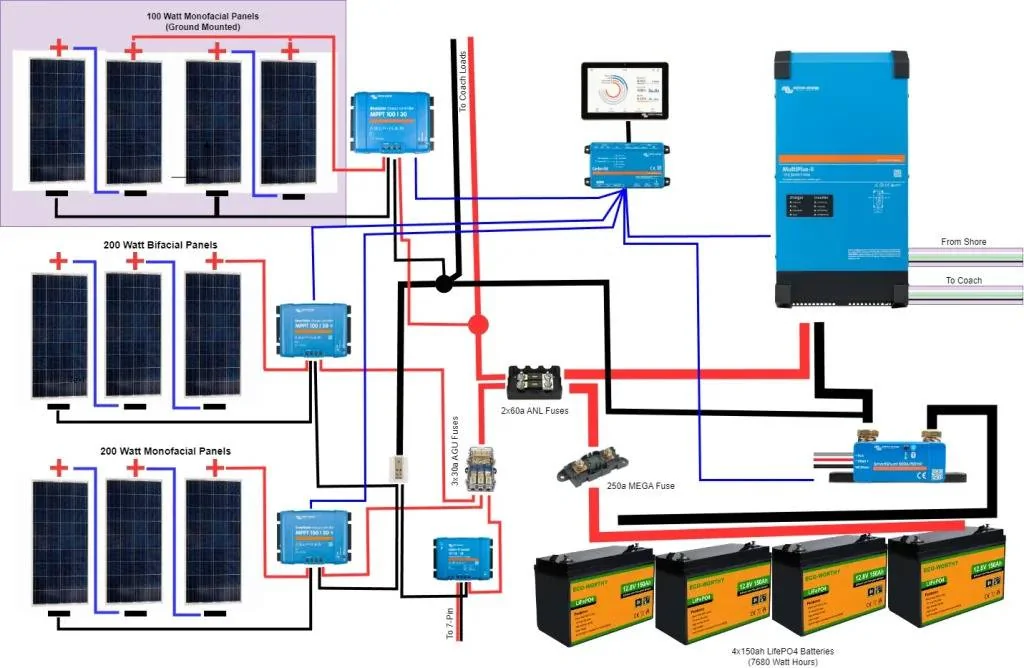
I basically ended up with all the panels that would fit reasonably (Although I do have room for 2 more 200w panels, I don't know if I'll do that or not.) So 1200 watts worth of panels on top and the 400w on the ground....)

Here's where I ended.

3000va worth of inverter (Think 3000 watts give or take). The Victron will power up everything in the coach with ease. It is a beast of a unit and anyone thinking of doing a 'big' solar project or really anything where you remotely think you'll want to run ac or microwave, the Victron is the only way to fly. Expensive, yes, but it has some features that are extremely hard to find (Power assist being the #1 feature. It is out there, but you're going to pay big for it)

Enough battery/inverter that I can power the AC for around 3 hours with no sun and no truck charging. Meaning for our short weekend trips, in the summer, in GA, I can turn the AC on when we leave and when we get to our campsite it will have cooled the thing down some. First world problems, I know. With some solar input and truck charging that run time will be extended of course.

Not to mention, all of the Victron stuff works together sooooo very well.

If anyone wants to poke around my solar data, feel free:

https://vrm.victronenergy.com/installation/488934/share/26ec45af

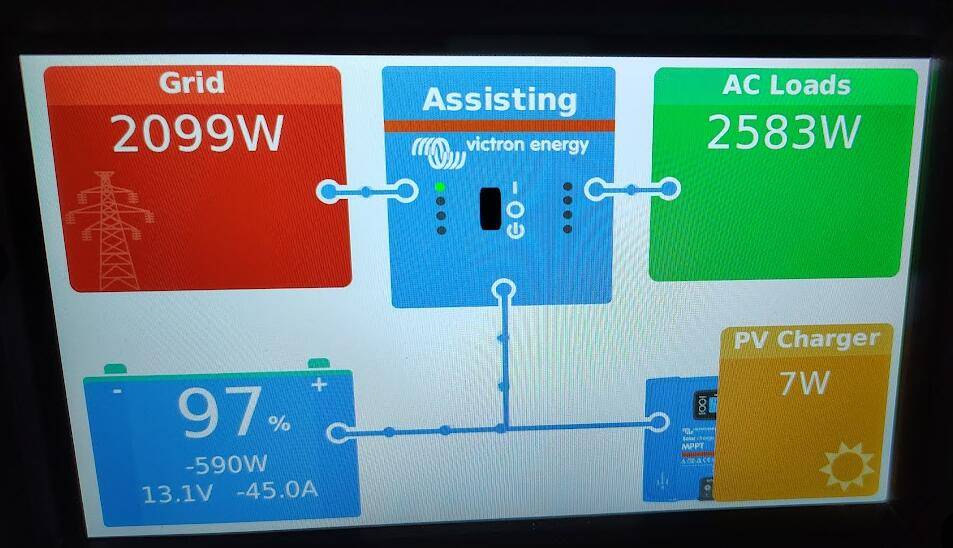
I will never ever again melt a 30 amp connector on a parks crappy connection. I limit my AC input to 24 amps and the Victron will kick in the rest when needed. I can actually power everything in the camper off of a 15 amp circuit if I want so long as the loads are semi-intermittent.

Here's an example. AC and Electric water heat are on, and I've limited the AC input to (something, I don't remember exactly, maybe 20 amps?). It is pulling the make-up current from the battery bank. As soon as the water heater is finished, it will switch over and charge the batts. Totally automatic, no input from me needed.

1739295486081-p3.jpg


I also run some circuits in the house when the camper is parked and idle, that's where the 400w worth of ground panels come in. I'd installed a generator panel a while back that runs 6 circuits in the house. It is a simple matter to run a 30a TT cord from the camper back to the house and power them at will. This summer it will be powering the mini split in my master bedroom. I should have plenty of spare power to run it with the longer days.

At the risk of going on forever, here's my build thread over on an RV Forum.

https://rvthe.us/community/threads/26djse-solar-upgrade.896/

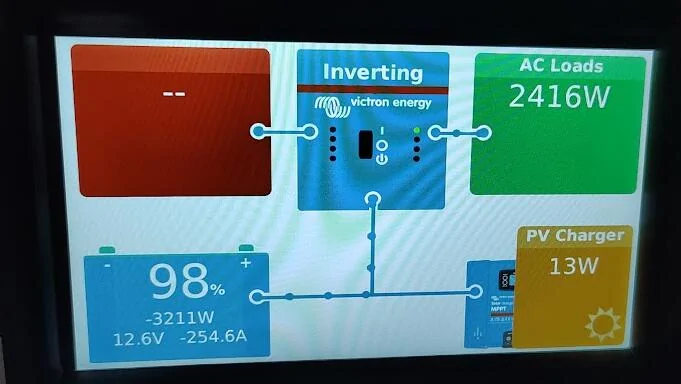
Random additional picture. Here we are doing a bit of a load test. I don't do this very often because I used leftover car audio wiring I had from back in the day and only had enough for a single 1/0AWG run to the Inverter. Plans are afoot to double that, I've actually already got the cable, I just have to find the time.

1739296110002-f9.jpg
 
Last edited:

dtech

Well-Known Member
Joined
May 10, 2020
Threads
37
Messages
3,135
Reaction score
7,574
Location
colorado
Vehicle(s)
Ranger Lariat FX4, chromed and forever damperless
Well, I fell victim to MASSIVE scope creep when I set up the system.

My original intent was to run the fridge when preparing to leave or between trips. About 400w worth of panels and a single big AGM will cover that pretty nicely.

I basically ended up with all the panels that would fit reasonably (Although I do have room for 2 more 200w panels, I don't know if I'll do that or not.) So 1200 watts worth of panels on top and the 400w on the ground....)

Here's where I ended.

3000va worth of inverter (Think 3000 watts give or take). The Victron will power up everything in the coach with ease. It is a beast of a unit and anyone thinking of doing a 'big' solar project or really anything where you remotely think you'll want to run ac or microwave, the Victron is the only way to fly. Expensive, yes, but it has some features that are extremely hard to find (Power assist being the #1 feature. It is out there, but you're going to pay big for it)

Enough battery/inverter that I can power the AC for around 3 hours with no sun and no truck charging. Meaning for our short weekend trips, in the summer, in GA, I can turn the AC on when we leave and when we get to our campsite it will have cooled the thing down some. First world problems, I know. With some solar input and truck charging that run time will be extended of course.

Not to mention, all of the Victron stuff works together sooooo very well.

If anyone wants to poke around my solar data, feel free:

https://vrm.victronenergy.com/installation/488934/share/26ec45af

I will never ever again melt a 30 amp connector on a parks crappy connection. I limit my AC input to 24 amps and the Victron will kick in the rest when needed. I can actually power everything in the camper off of a 15 amp circuit if I want so long as the loads are semi-intermittent.

Here's an example. AC and Electric water heat are on, and I've limited the AC input to (something, I don't remember exactly, maybe 20 amps?). It is pulling the make-up current from the battery bank. As soon as the water heater is finished, it will switch over and charge the batts. Totally automatic, no input from me needed.

1739295486081-p3.jpg


I also run some circuits in the house when the camper is parked and idle, that's where the 400w worth of ground panels come in. I'd installed a generator panel a while back that runs 6 circuits in the house. It is a simple matter to run a 30a TT cord from the camper back to the house and power them at will. This summer it will be powering the mini split in my master bedroom. I should have plenty of spare power to run it with the longer days.

At the risk of going on forever, here's my build thread over on an RV Forum.

https://rvthe.us/community/threads/26djse-solar-upgrade.896/

Random additional picture. Here we are doing a bit of a load test. I don't do this very often because I used leftover car audio wiring I had from back in the day and only had enough for a single 1/0AWG run to the Inverter. Plans are afoot to double that, I've actually already got the cable, I just have to find the time.

1739296110002-f9.webp
Impressive, I won't ask how much you put into it, but better to never run out of juice, especially if you have wife and kids .
 
Last edited:

ctechbob

Well-Known Member
First Name
Shawn
Joined
Feb 2, 2021
Threads
32
Messages
1,588
Reaction score
4,142
Location
30666
Vehicle(s)
2020 Ranger XL/FX2/STX
Occupation
Adult Daycare
Impressive, I won't ask how much you put into it, but better to never run out of juice.
Lol, I have no idea. I did try and shop smart, but there's no getting around Victron being pricey, but you do get what you pay for with them.
 

Ranger Mel

Well-Known Member
First Name
Mel
Joined
Dec 31, 2024
Threads
1
Messages
426
Reaction score
2,285
Location
Post Falls, Idaho
Vehicle(s)
2019 Ranger XLT Super Crew FX4 Tow Package
Occupation
RETIRED (as of 6/11/25) Sports Med, Health and PE Teacher
I figured I wouldn't de-rail the forum with all of my trailer specific questions...But sense a few of you are bringing up batteries/solar/boondocking etc... Here is what mine comes with (pretty basic):

12V Interstate 24M marine deep cell battery (1)
185W solar panel (1)

My thought is to add a second battery or tell the dealer to not even bother with putting that one on and putting 2 LifePO4s on. Secondly, I am going to have them add a second 185W panel to get close to 400W.

I'm a beginner with this part so I appreciate the input from those of you who are experienced!

We do plan to do some boondocking from time to time. Our summer camping will mostly be with hookups but our winter use case is unique. Our local ski resort has RV parking, 30 sites with power and a bunch of spots for boondocking. I'll try and get the power sites but I'm sure there will be a few weekends of boondocking. I'm not planning to use water (lodge has 24/7 bathrooms and showers). But obviously we will be chewing up some power and gas to stay warm and keep a couple of lights on. This would typically be from Friday evening to Monday morning at the longest.
Our set up is an old '88 Prowler Lynx 18 ft travel trailer (4100 GVWR). Haven't hooked the Ranger up to it yet since I bought the Ranger last August after camping season for us. I bought a 2000w Champion generator several years ago to charge batteries back up and phones since we camp off grid on USFS land here in north Idaho. Works well. Yes, it makes a little noise but run it sometime during the day and the batteries are good all night for the furnace. Our fridge runs on propane when we don't have power. The solar option would be nice for the batteries but this works for us pretty well. Old school and simple.
 
OP
OP
MattMc7

MattMc7

Member
First Name
Matt
Joined
Mar 11, 2022
Threads
3
Messages
23
Reaction score
74
Location
Oregon (The part with the trees not PDX)
Vehicle(s)
2022 Ford Ranger Tremor
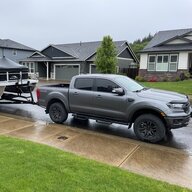
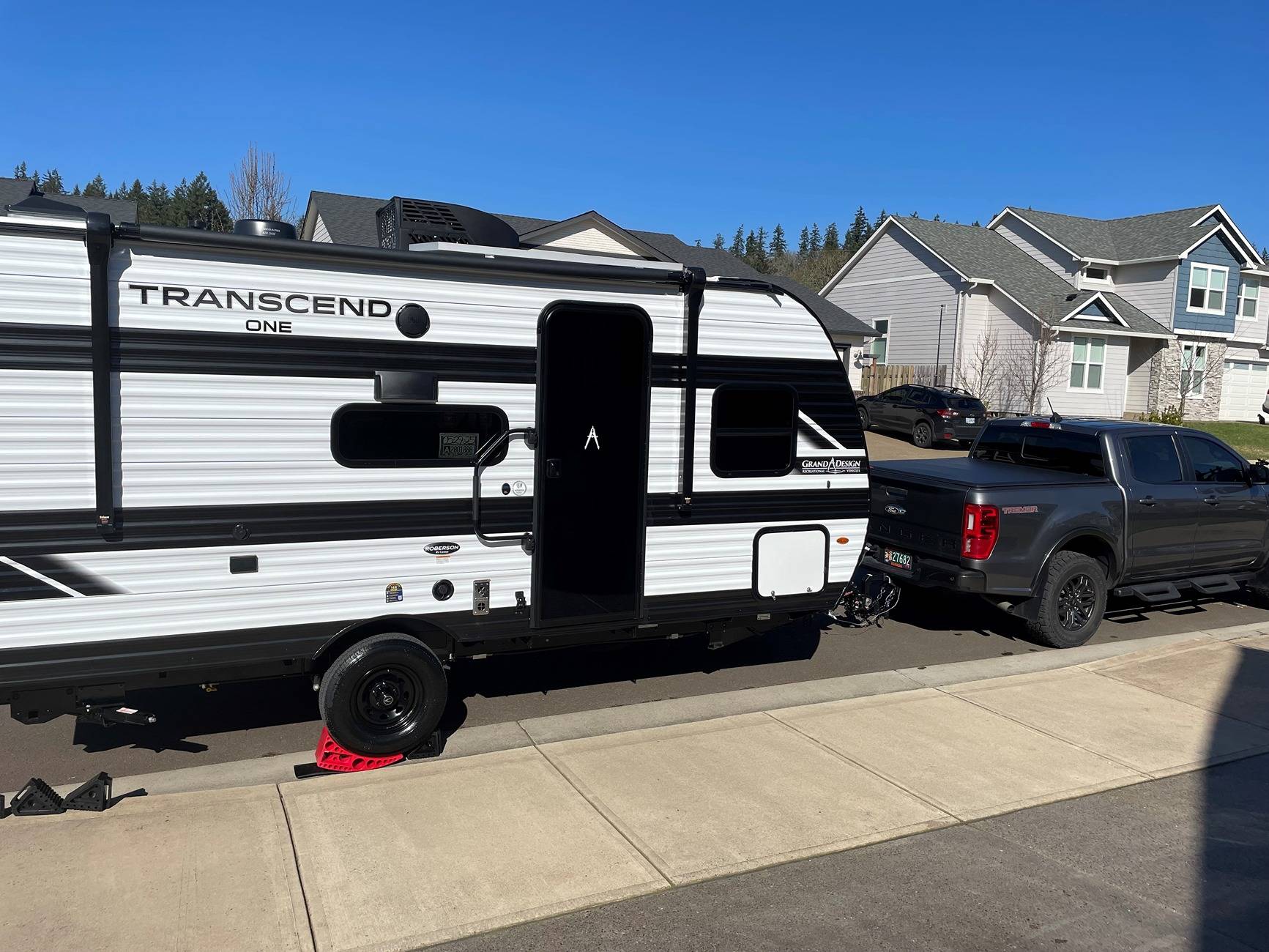
Checking back in - Brought the trailer home this weekend and did a few test drives to make sure everything felt dialed and comfortable. From rural backroads, highways, to some interstate driving. Have to say...I am impressed all over again with the truck. Plenty of power. The WDH and sway control I can tell makes a big difference. I have not been using WDH or sway on my boat which is about 1K lbs lighter than this yet the TT tows much smoother.

Thanks to all on the thread for the advice! First trip will be about 90 miles from essentially sea level up to about 5K feet in the Cascade mountains. Will be a good test!

2.jpg
 

ControlNode

Well-Known Member
First Name
John
Joined
Nov 29, 2021
Threads
16
Messages
1,709
Reaction score
3,640
Location
Eastern NC
Vehicle(s)
84 Civic "2000S"/16 Focus RS/21 Ranger XLT
Occupation
Computers
Just remember, by the letter of the owner's manual, at 5k ft the GCWR of the Ranger is only 10,625lbs (loss of nearly 1,900lbs from sea-level). So, as you get higher up, take it easier on the truck and run +91 octane.

Doing some quick math based on the mentioned camper GVWR (4,420) and the truck's GVWR (6,050), you should be just under the GCWR limit at that altitude at 10,470lbs, if you were to be fully loaded in the trailer and truck.
Sponsored

 
Last edited:


Top