Sponsored

One Piece Driveshaft

TJC

Well-Known Member
First Name
Tony
Joined
Aug 28, 2020
Threads
45
Messages
3,925
Reaction score
9,831
Location
North Carolina
Vehicle(s)
93 Miata, 05 Ranger 4x4, 20 Ranger 4x4, 23 CX-5
Mine has arrived, but Ian is passing through and it is too gusty and rainy to install today. I have a separate garage and lift, but I hate my cars dripping (raining) on me while I work. If it clears tonight and dries out I may get it installed tomorrow.
Sponsored

 

TJC

Well-Known Member
First Name
Tony
Joined
Aug 28, 2020
Threads
45
Messages
3,925
Reaction score
9,831
Location
North Carolina
Vehicle(s)
93 Miata, 05 Ranger 4x4, 20 Ranger 4x4, 23 CX-5
Mine gets weird on a hard stop. I still want a one piece but also want the hoop. :-/
My 2005 Ranger just has a cross member about 6" before the transfer case union with the driveshaft. If the front u joint ever broke, I think the shaft would stay off the ground, but it would make a hell of a mess between the cross member and the tunnel area.
 

Justin says...

Well-Known Member
First Name
Justin
Joined
Apr 14, 2022
Threads
16
Messages
246
Reaction score
731
Location
NC
Vehicle(s)
2024 Maverick XLT Lux
Occupation
IT System Analyst II
I can actually feel the wobble of the driveshaft as I drive up my 12 degree driveway everyday. Is concerning.
 

navsnipe

Well-Known Member
First Name
Dave
Joined
Sep 6, 2020
Threads
4
Messages
440
Reaction score
893
Location
Rockland County, NY
Vehicle(s)
20 Ranger FX4 Lariat (totaled), 23 Audi Q5
Occupation
Automating Buildings and confusing humans
Mine has arrived, but Ian is passing through and it is too gusty and rainy to install today. I have a separate garage and lift, but I hate my cars dripping (raining) on me while I work. If it clears tonight and dries out I may get it installed tomorrow.
Mine is "out for delivery". I keep on checking the ups tracking. ⏳
 

navsnipe

Well-Known Member
First Name
Dave
Joined
Sep 6, 2020
Threads
4
Messages
440
Reaction score
893
Location
Rockland County, NY
Vehicle(s)
20 Ranger FX4 Lariat (totaled), 23 Audi Q5
Occupation
Automating Buildings and confusing humans
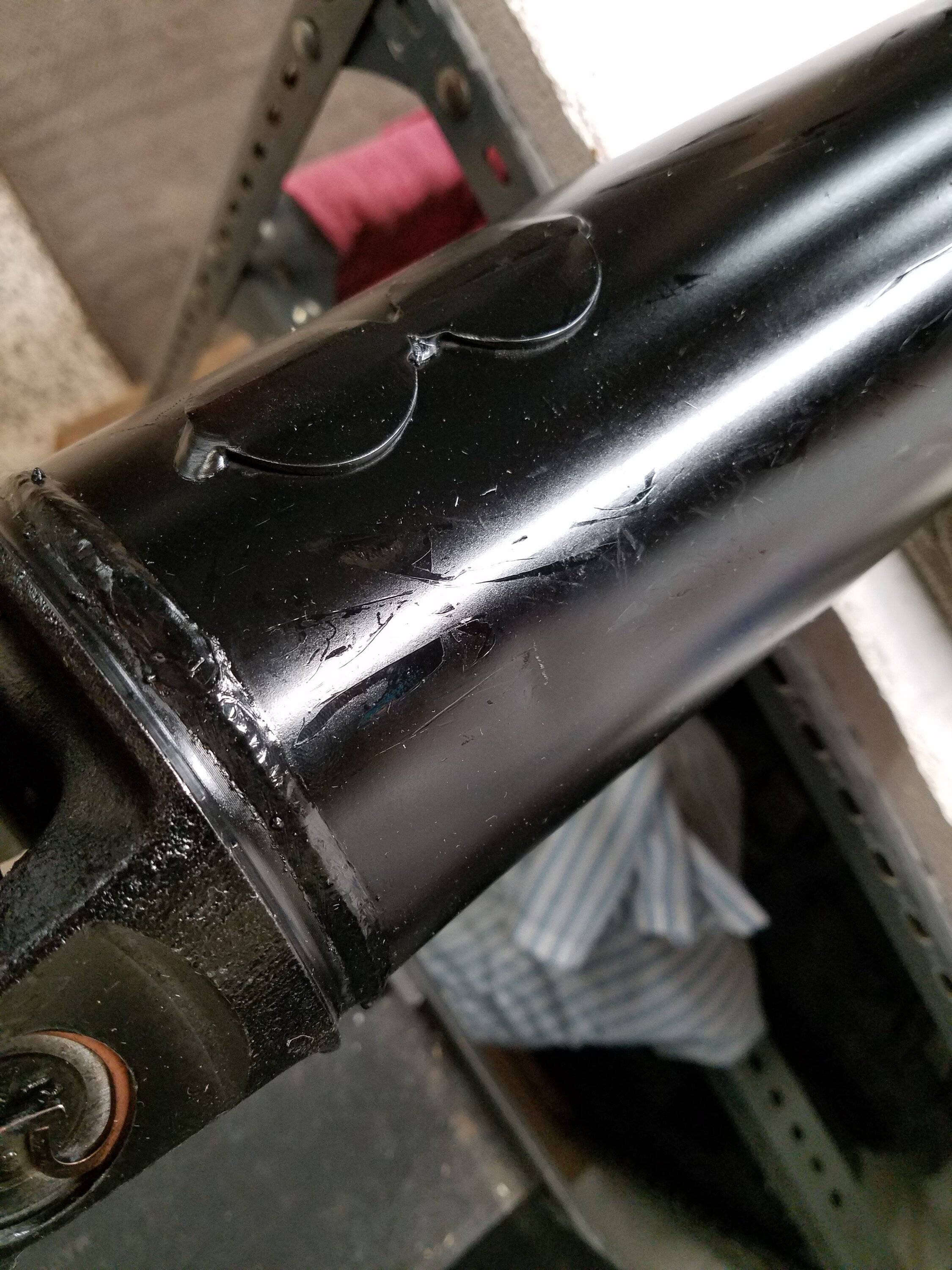
Gotta love UPS. Not sure if this is a problem. One end of the box was open when I got home and looks like a dent on the shaft. Any opinions if this is an issue.

I left Shawn a message at his shop and here on the forum. Hopefully this is a non-issue.

20220930_193541.jpg
 
Last edited:


Big Blue

Well-Known Member
First Name
Lee
Joined
May 5, 2020
Threads
16
Messages
3,927
Reaction score
9,352
Location
Wisconsin
Vehicle(s)
2019 Ford Ranger XLT FX4 Supercrew lighting blue
Occupation
Retired mechanical designer
Gotta love UPS. Not sure if this is a problem. One end of the box was open when I got home and looks like a dent on the shaft. Any opinions if this is an issue.

I left Shawn a message at his shop and here on the forum. Hopefully this is a non-issue.

20220930_193541.jpg
Heck yes that is a problem and needs to be reported to UPS immediately. Hopefully shawn can get you a new shaft quickly.
 

navsnipe

Well-Known Member
First Name
Dave
Joined
Sep 6, 2020
Threads
4
Messages
440
Reaction score
893
Location
Rockland County, NY
Vehicle(s)
20 Ranger FX4 Lariat (totaled), 23 Audi Q5
Occupation
Automating Buildings and confusing humans
Heck yes that is a problem and needs to be reported to UPS immediately. Hopefully shawn can get you a new shaft quickly.
UPS claim is filed. Amazingly this is the first time I've had to do this. Hopefully it is quick and painless.
 

CO2Ranger

Well-Known Member
Joined
Apr 27, 2020
Threads
34
Messages
1,097
Reaction score
2,105
Location
Colorado
Vehicle(s)
2021 JLURD / Former: 2021 Ranger Lariat FX4
@Shawn at Tom Wood's

OK. So there's been a lot of talk about wanting to know the math on these things so I built what I believe to be a couple of accurate calculators for both driveshaft speed as well as vehicle speed [One is based off of our transmission specifically and uses customizable variables, the other is related solely to tire size, vehicle speed, and rear gear ratio].

In my opinion, if we're using 4,000 RPM at the driveshaft as the safety value, I find it to be a bit risky. The truck will exceed this limit before it hits the stock speed limiter. Those of us who are tuned don't have a built-in speed limiter and are at greater risk.

Additionally, it appears that there is a phenomenon that happens at 1/2 of the critical driveshaft speed which could cause instability during rotation and it is undesirable to have that value in the cruising MPH range of the vehicle.

Also, I'm not in either camp here, just trying to understand myself. What possibilities are there to make a drive shaft for our vehicles that is safe for everyone. Based on playing with the calculators, it would seem a driveshaft with a critical speed of around 7,000 RPMs is the sweet spot for safety. Though I'm not even sure if that's feasible.

Stock limiting factors:
30.1 inches is the smallest tire available on a Ranger
6k engine RPMs is redline
Gearing is 3.73

Discuss.
 

navsnipe

Well-Known Member
First Name
Dave
Joined
Sep 6, 2020
Threads
4
Messages
440
Reaction score
893
Location
Rockland County, NY
Vehicle(s)
20 Ranger FX4 Lariat (totaled), 23 Audi Q5
Occupation
Automating Buildings and confusing humans
UPS claim is filed. Amazingly this is the first time I've had to do this. Hopefully it is quick and painless.
Shawn Woods responded to me and is going to take back the damaged shaft and build a new one for me. There is still excellent customer service in this world. Outside of the UPS inflicted damage, the driveshaft is a quality piece of work. Thank you, Shawn!
 

Shawn at Tom Wood's

Well-Known Member
First Name
Shawn
Joined
Sep 13, 2022
Threads
0
Messages
50
Reaction score
312
Location
Ogden, UT
Vehicle(s)
Vespa Scooter
Occupation
Drive shaft guy
@Shawn at Tom Wood's

OK. So there's been a lot of talk about wanting to know the math on these things so I built what I believe to be a couple of accurate calculators for both driveshaft speed as well as vehicle speed [One is based off of our transmission specifically and uses customizable variables, the other is related solely to tire size, vehicle speed, and rear gear ratio].

In my opinion, if we're using 4,000 RPM at the driveshaft as the safety value, I find it to be a bit risky. The truck will exceed this limit before it hits the stock speed limiter. Those of us who are tuned don't have a built-in speed limiter and are at greater risk.

Additionally, it appears that there is a phenomenon that happens at 1/2 of the critical driveshaft speed which could cause instability during rotation and it is undesirable to have that value in the cruising MPH range of the vehicle.

Also, I'm not in either camp here, just trying to understand myself. What possibilities are there to make a drive shaft for our vehicles that is safe for everyone. Based on playing with the calculators, it would seem a driveshaft with a critical speed of around 7,000 RPMs is the sweet spot for safety. Though I'm not even sure if that's feasible.

Stock limiting factors:
30.1 inches is the smallest tire available on a Ranger
6k engine RPMs is redline
Gearing is 3.73

Discuss.
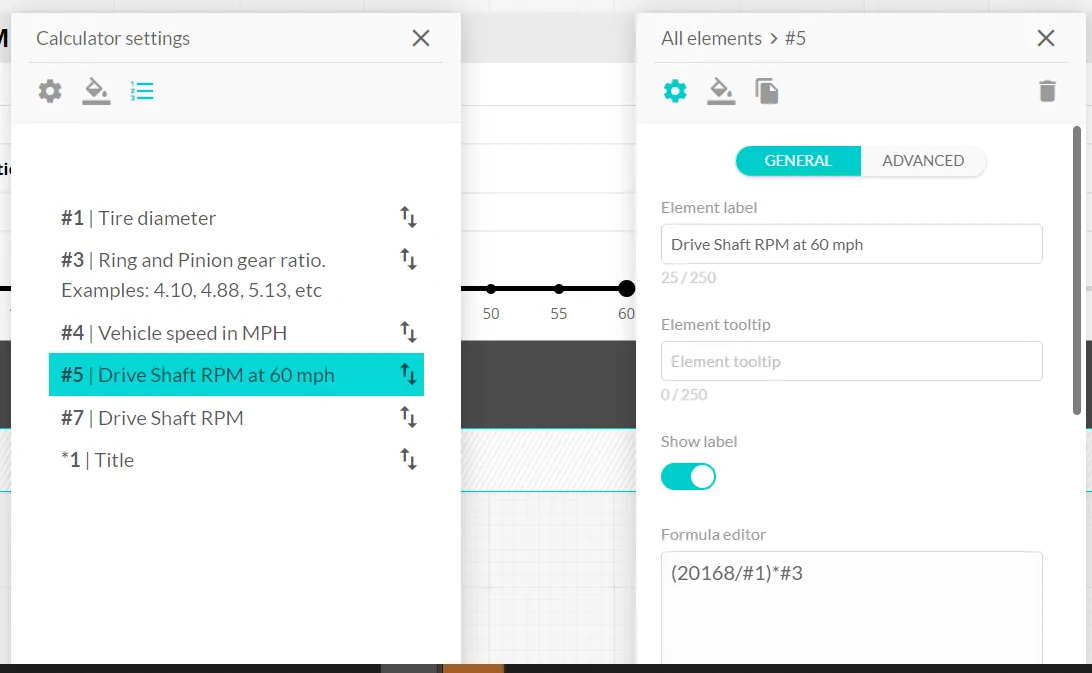
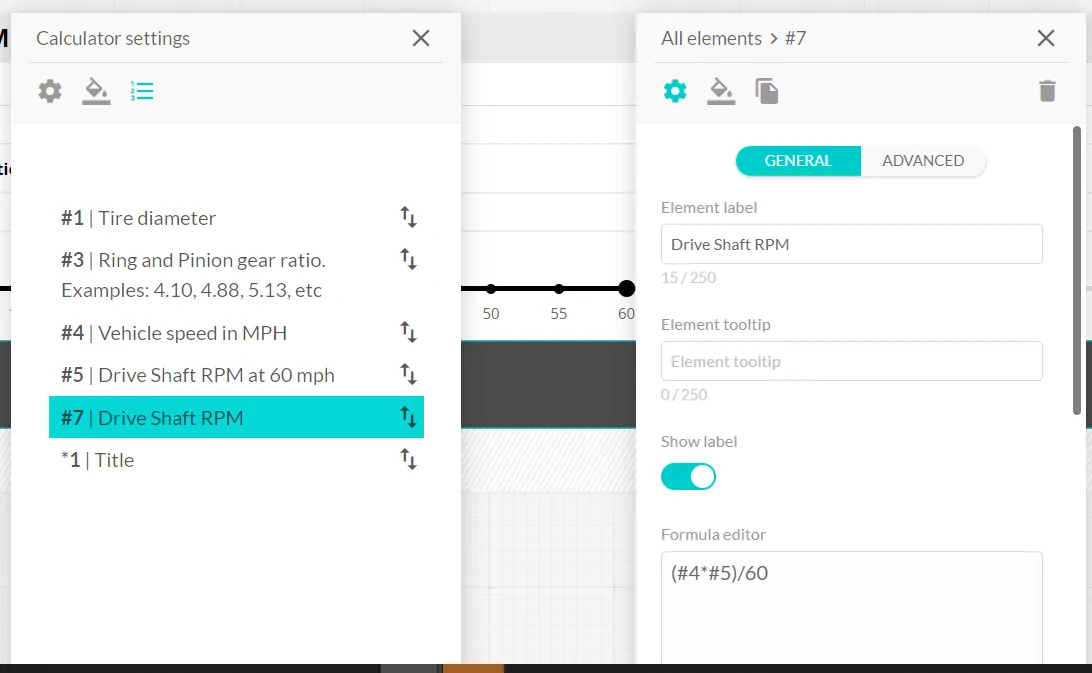
Here's the math to determine drive shaft RPM. 20168/tire diameter in inches = x, (X)ring and pinion gear ratio = drive shaft rpm at 60mph. 20168 is the number we have figured out but you can check the math by finding the circumference of a tire (lets use 30 inches as an example for tire diameter) 94.25" then seeing how many times that goes into the number of inches in a mile (63,360). 63,360/94.25=672.33. Likewise 2,0168/30=672.26. A tiny bit of difference depending on how you do it but essentially the same result. So now that we know how many rotations a tire has to make to travel one mile we also know that if you are driving 60mph that is 1 minute per mile. So the rotations to drive 1 mile is going to be the tire revolutions per minute (rpm) when you are driving 1 minute per mile (60mph). Now we multiply this by the gear ratio, as a 3.73 ring and pinion gear means that the drive shaft is spinning 3.73 times faster than the tires. This is your drive shaft RPM at 60mph. In our example a 30 inch tire and 3.73 gears is going to result in about 2507 rpm at 60mph. With that 60mph RPM figured out it is as simple as multiplying that by the ratio of speed/60mph. So 75mph/60mph=1.25. 1.25x our established example 60mph rpm of 2507 equals 3,009 rpm at 75mph. That's the math I used to create our calculator. Tire diameter and gear ratio figures the RPM at 60 then speed on the slide bar divided by 60 = a ratio, that ratio times rpm at 60 equals the rpm at that speed. I think I made that more confusing that I needed to but hopefully that makes sense.

The important thing to remember with this is that it doesn't matter if your engine is redlining or if your engine is dead and you are coasting downhill at 60mph, the drive shaft rpm is the drive a product of tire diameter and gear ratio.

Regarding the 4,000 max that I've put on our shafts. That is about 97mph in a vehicle with 30.1" tires and 3.73 gears. Everyone: Please don't drive that fast, even if the truck can technically go faster than that. Going to bigger tires without re-gearing decreases the drive shaft RPM. Also, my 4,000 limit is conservative. There's the factors such as DOM tube, and the long spline we are using that will increase the critical speed to a number higher than the speed the Spicer calculator comes up with, which is about 3,800 rpm (4,000 is barely more than their calculator says). But if you read the part in my text file linked in my previous post my friend the engineer, using some of dana/spicers own numbers, comes up with something closer to 6,000 rpm, even after applying a safety factor of .75. 6,000 rpm is almost 150 in a ranger with 30" tires and 3.73 gears. So depending on which math you are following, the shaft could be safe up to 150 mph. I'm choosing to be much more conservative though and basically I'm telling people not to drive 100 mph or above. Or, you get a choice, you can choose to have a shaft two piece shaft that shudders (if you are one of the unlucky ones) or you can choose to have a shaft with a speed limit of around 100mph (depending on tire diameter etc.). It is admittedly a bit of a pick your poison scenario.

Bottom line though, we've seen from the video posted earlier on the thread what the @quangdog's stock shaft does. Instinctually I have a lot more fear about that shaft spinning at 4,000 rpm than the one that has been shown to not bang side to side as it rotates.
 
Last edited:

Shawn at Tom Wood's

Well-Known Member
First Name
Shawn
Joined
Sep 13, 2022
Threads
0
Messages
50
Reaction score
312
Location
Ogden, UT
Vehicle(s)
Vespa Scooter
Occupation
Drive shaft guy
Here's a couple screenshots of the backend of the calculator, for those of you who understand math better than I can explain it. :) The formula for each mathy step is in the bottom right corner where it says "formula editor"
Screenshot (60).webp

Screenshot (59).webp
 

CO2Ranger

Well-Known Member
Joined
Apr 27, 2020
Threads
34
Messages
1,097
Reaction score
2,105
Location
Colorado
Vehicle(s)
2021 JLURD / Former: 2021 Ranger Lariat FX4
Here's the math to determine drive shaft RPM. 2,0168/tire diameter in inches = x, (X)ring and pinion gear ratio = drive shaft rpm at 60mph. 2,0168 is the number we have figured out but you can check the math by finding the circumference of a tire (lets use 30 inches as an example) 94.25" then seeing how many times that goes into the number of inches in a mile (63,360). 63,360/94.25=672.33. Likewise 2,0168/30=672.26. A tiny bit of difference depending on how you do it but essentially the same result. So now that we know how many rotations a tire has to make to travel one mile we also know that if you are driving 60mph that is 1 minute per mile. So the rotations to drive 1 mile is going to be the tire revolutions per minute (rpm) when you are driving 1 minute per mile (60mph). Now we multiply this by the gear ratio, as a 3.73 ring and pinion gear means that the drive shaft is spinning 3.73 times faster than the tires. This is your drive shaft RPM at 60mph. In our example a 30 inch tire and 3.73 gears is going to result in about 2507 rpm at 60mph. With that 60mph RPM figured out it is as simple as multiplying that by the ratio of speed/60mph. So 75mph/60mph=1.25. 1.25x our established example 60mph rpm of 2507 equals 3,009 rpm at 75mph. That's the math I used to create our calculator. Tire diameter and gear ratio figures the RPM at 60 then speed on the slide bar divided by 60 = a ratio, that ratio times rpm at 60 equals the rpm at that speed. I think I made that more confusing that I needed to but hopefully that makes sense.

The important thing to remember with this is that it doesn't matter if your engine is redlining or if your engine is dead and you are coasting downhill at 60mph, the drive shaft rpm is the drive a product of tire diameter and gear ratio.

Regarding the 4,000 max that I've put on our shafts. That is about 97mph in a vehicle with 30.1" tires and 3.73 gears. Everyone: Please don't drive that fast, even if the truck can technically go faster than that. Going to bigger tires without re-gearing decreases the drive shaft RPM. Also, my 4,000 limit is conservative. There's the factors such as DOM tube, and the long spline we are using that will increase the critical speed to a number higher than the speed the Spicer calculator comes up with, which is about 3,800 rpm (4,000 is barely more than their calculator says). But if you read the part in my text file linked in my previous post my friend the engineer, using some of dana/spicers own numbers, comes up with something closer to 6,000 rpm, even after applying a safety factor of .75. 6,000 rpm is almost 150 in a ranger with 30" tires and 3.73 gears. So depending on which math you are following, the shaft could be safe up to 150 mph. I'm choosing to be much more conservative though and basically I'm telling people not to drive 100 mph or above. Or, you get a choice, you can choose to have a shaft two piece shaft that shudders (if you are one of the unlucky ones) or you can choose to have a shaft with a speed limit of around 100mph (depending on tire diameter etc.). It is admittedly a bit of a pick your poison scenario.

Bottom line though, we've seen from the video posted earlier on the thread what the @quangdog's stock shaft does. Instinctually I have a lot more fear about that shaft spinning at 4,000 rpm than the one that has been shown to not bang side to side as it rotates.
I appreciate your response. I believe your methodology to be correct and to match my calculator 2 findings, though your number for 75mph is incorrect (guessing a typo). Should be 3134ish.

That being said, your figure of 6000rpms as the true critical speed is much more reassuring. That I can live with. There's a margin of error there that is much safer for most use cases.
 

CO2Ranger

Well-Known Member
Joined
Apr 27, 2020
Threads
34
Messages
1,097
Reaction score
2,105
Location
Colorado
Vehicle(s)
2021 JLURD / Former: 2021 Ranger Lariat FX4
Here's the math to determine drive shaft RPM. 2,0168/tire diameter in inches = x, (X)ring and pinion gear ratio = drive shaft rpm at 60mph. 2,0168 is the number we have figured out but you can check the math by finding the circumference of a tire (lets use 30 inches as an example) 94.25" then seeing how many times that goes into the number of inches in a mile (63,360). 63,360/94.25=672.33. Likewise 2,0168/30=672.26. A tiny bit of difference depending on how you do it but essentially the same result. So now that we know how many rotations a tire has to make to travel one mile we also know that if you are driving 60mph that is 1 minute per mile. So the rotations to drive 1 mile is going to be the tire revolutions per minute (rpm) when you are driving 1 minute per mile (60mph). Now we multiply this by the gear ratio, as a 3.73 ring and pinion gear means that the drive shaft is spinning 3.73 times faster than the tires. This is your drive shaft RPM at 60mph. In our example a 30 inch tire and 3.73 gears is going to result in about 2507 rpm at 60mph. With that 60mph RPM figured out it is as simple as multiplying that by the ratio of speed/60mph. So 75mph/60mph=1.25. 1.25x our established example 60mph rpm of 2507 equals 3,009 rpm at 75mph. That's the math I used to create our calculator. Tire diameter and gear ratio figures the RPM at 60 then speed on the slide bar divided by 60 = a ratio, that ratio times rpm at 60 equals the rpm at that speed. I think I made that more confusing that I needed to but hopefully that makes sense.

The important thing to remember with this is that it doesn't matter if your engine is redlining or if your engine is dead and you are coasting downhill at 60mph, the drive shaft rpm is the drive a product of tire diameter and gear ratio.

Regarding the 4,000 max that I've put on our shafts. That is about 97mph in a vehicle with 30.1" tires and 3.73 gears. Everyone: Please don't drive that fast, even if the truck can technically go faster than that. Going to bigger tires without re-gearing decreases the drive shaft RPM. Also, my 4,000 limit is conservative. There's the factors such as DOM tube, and the long spline we are using that will increase the critical speed to a number higher than the speed the Spicer calculator comes up with, which is about 3,800 rpm (4,000 is barely more than their calculator says). But if you read the part in my text file linked in my previous post my friend the engineer, using some of dana/spicers own numbers, comes up with something closer to 6,000 rpm, even after applying a safety factor of .75. 6,000 rpm is almost 150 in a ranger with 30" tires and 3.73 gears. So depending on which math you are following, the shaft could be safe up to 150 mph. I'm choosing to be much more conservative though and basically I'm telling people not to drive 100 mph or above. Or, you get a choice, you can choose to have a shaft two piece shaft that shudders (if you are one of the unlucky ones) or you can choose to have a shaft with a speed limit of around 100mph (depending on tire diameter etc.). It is admittedly a bit of a pick your poison scenario.

Bottom line though, we've seen from the video posted earlier on the thread what the @quangdog's stock shaft does. Instinctually I have a lot more fear about that shaft spinning at 4,000 rpm than the one that has been shown to not bang side to side as it rotates.
Also, as an aside, some on here have run their trucks at the track and it's important for everyone to know the limits of their vehicle so that when we decide to push them, we're taking calculated risks. 100+ on the street? Not me, but on the track? Never know.
 

Shawn at Tom Wood's

Well-Known Member
First Name
Shawn
Joined
Sep 13, 2022
Threads
0
Messages
50
Reaction score
312
Location
Ogden, UT
Vehicle(s)
Vespa Scooter
Occupation
Drive shaft guy
Also, as an aside, some on here have run their trucks at the track and it's important for everyone to know the limits of their vehicle so that when we decide to push them, we're taking calculated risks. 100+ on the street? Not me, but on the track? Never know.
You are right, I made a typo when figuring the rpm at 75 I entered 1.2 on the calculator instead of 1.25. Good catch.

I hesitate to even say that the shaft is potentially safe up to 150 mph because I don't want to seem like I'm saying "100 max speed, wink wink, you can really drive 150". I'm definitely not saying that. For sure we are not building these, or any, shafts to be run on the race track. We build shafts for off-road vehicles, we don't/won't even build shafts for 2WD cars. If someone is looking to take their truck to the track or drive recklessly fast on the interstate they should not buy our shaft. For very high speed applications a single piece is probably still better but it should be a single piece aluminum or carbon fiber shaft. Something that is lighter, which means it would have a higher critical speed and maybe more importantly will do less damage if it comes loose. If you were to ask me what is the guaranteed 100% safe way to drive a truck 100mph+ I'd tell you, without hesitation "By not driving that fast". I agree with you, calculated risks. That's why I like to lay out all the facts and details for people, so they can make well informed decisions. But if we truly believe that something has a significant chance of being unsafe we just won't do it. Profit on a $700 shaft is maybe $70. We'd rather pass on that $70 all day every day than to risk the consequences of a failure if we believe something to be unsafe.
Sponsored


Top