
Frenchy
Well-Known Member
- First Name
- Chris
- Joined
- Mar 15, 2020
- Threads
- 164
- Messages
- 7,541
- Reaction score
- 10,751
- Location
- Elizabeth, Colorado
- Vehicle(s)
- 2012 Nissan Frontier, 1994 F150 XL, 2022 Ford Transit
- Occupation
- Field Service Technician
- Thread starter
- #1
As some of you are aware, I recently replaced the Radiator in my 2012 Frontier. Well I have no intention of putting the old one back in and instead will replace the current one with a new OEM Radiator.
Well because of all that I decided to go ahead and do a teardown of the OEM Radiator I took out! To say the least what I found was interesting. If possible I would actually want @P. A. Schilke to chime in and give his input for the overall design and how it may compare to what he has seen with his days with Ford!
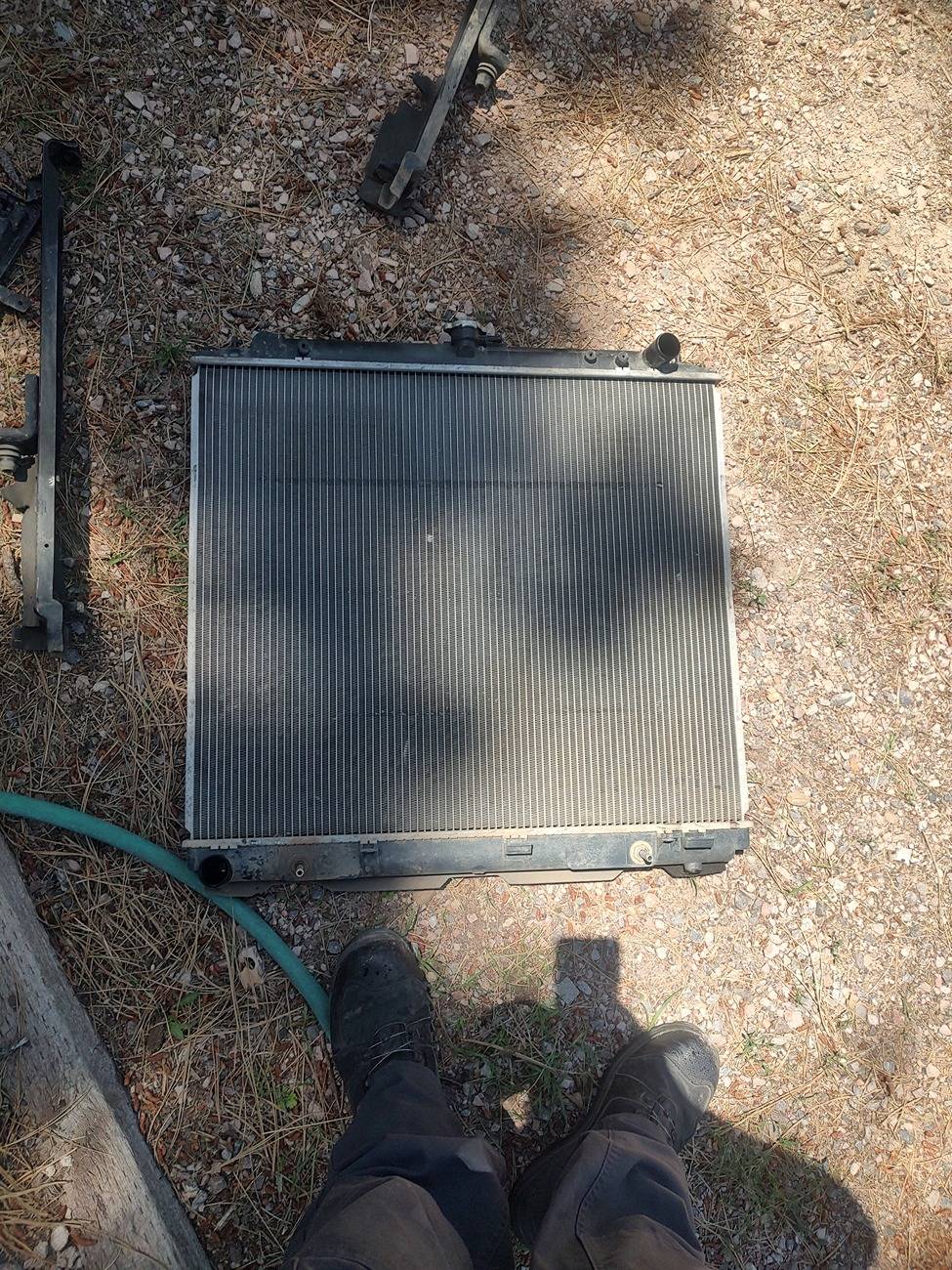
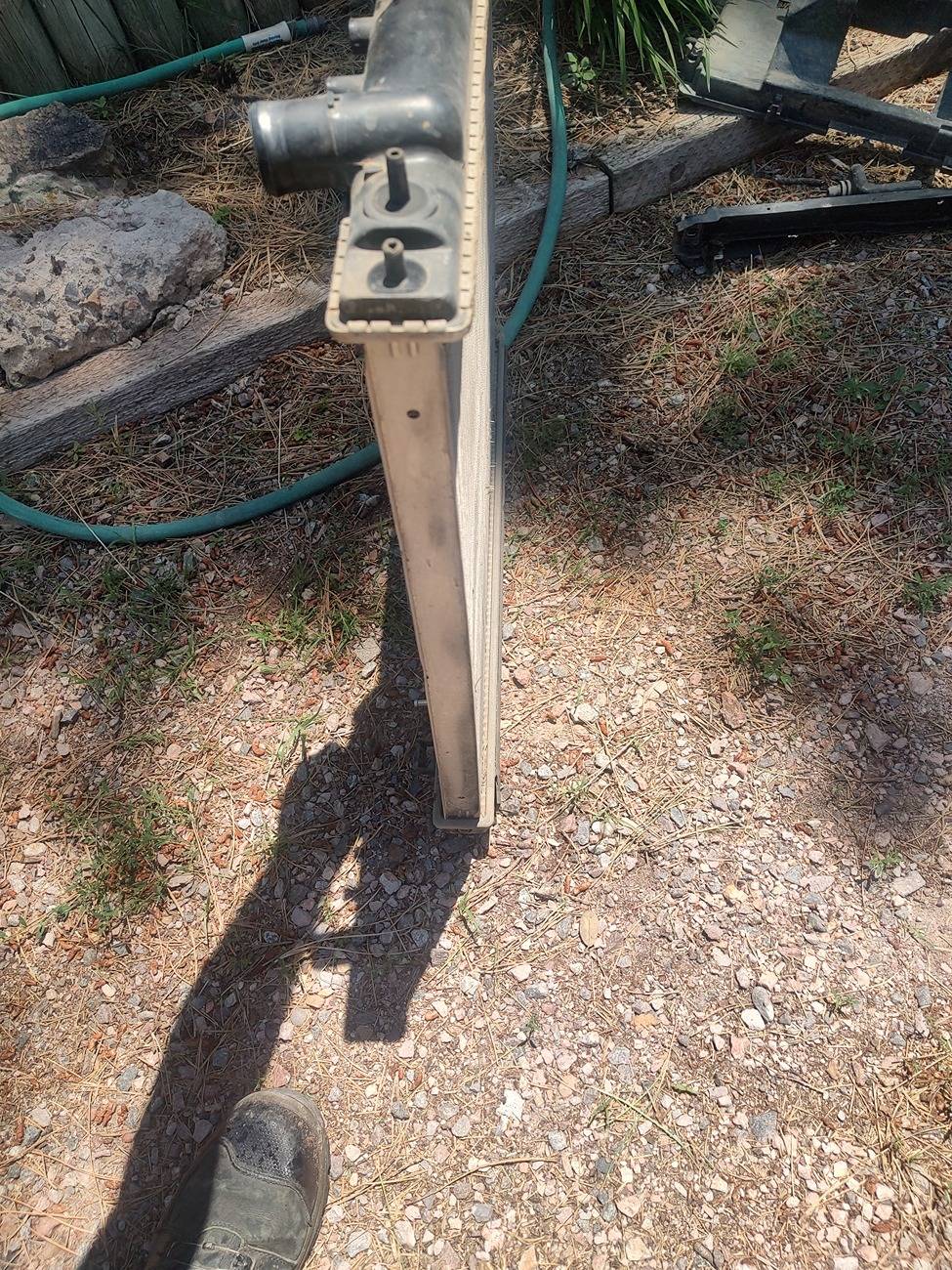
First we have the Radiator. As to no surprise it was a bit dirty in general. It's also 13-14 years old. For a Plastic Aluminum Radiator, it's a good idea to replace it before it cracks

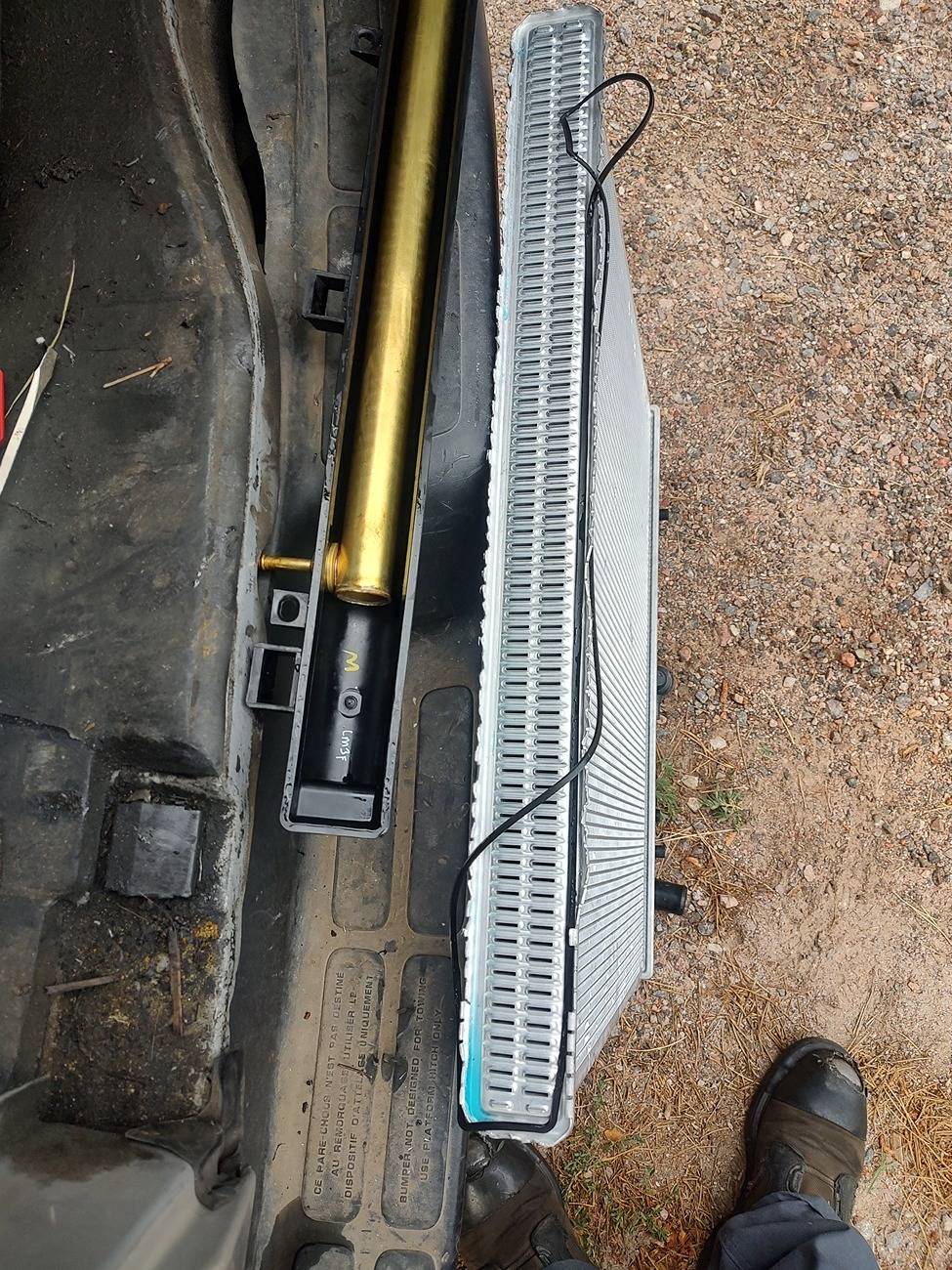
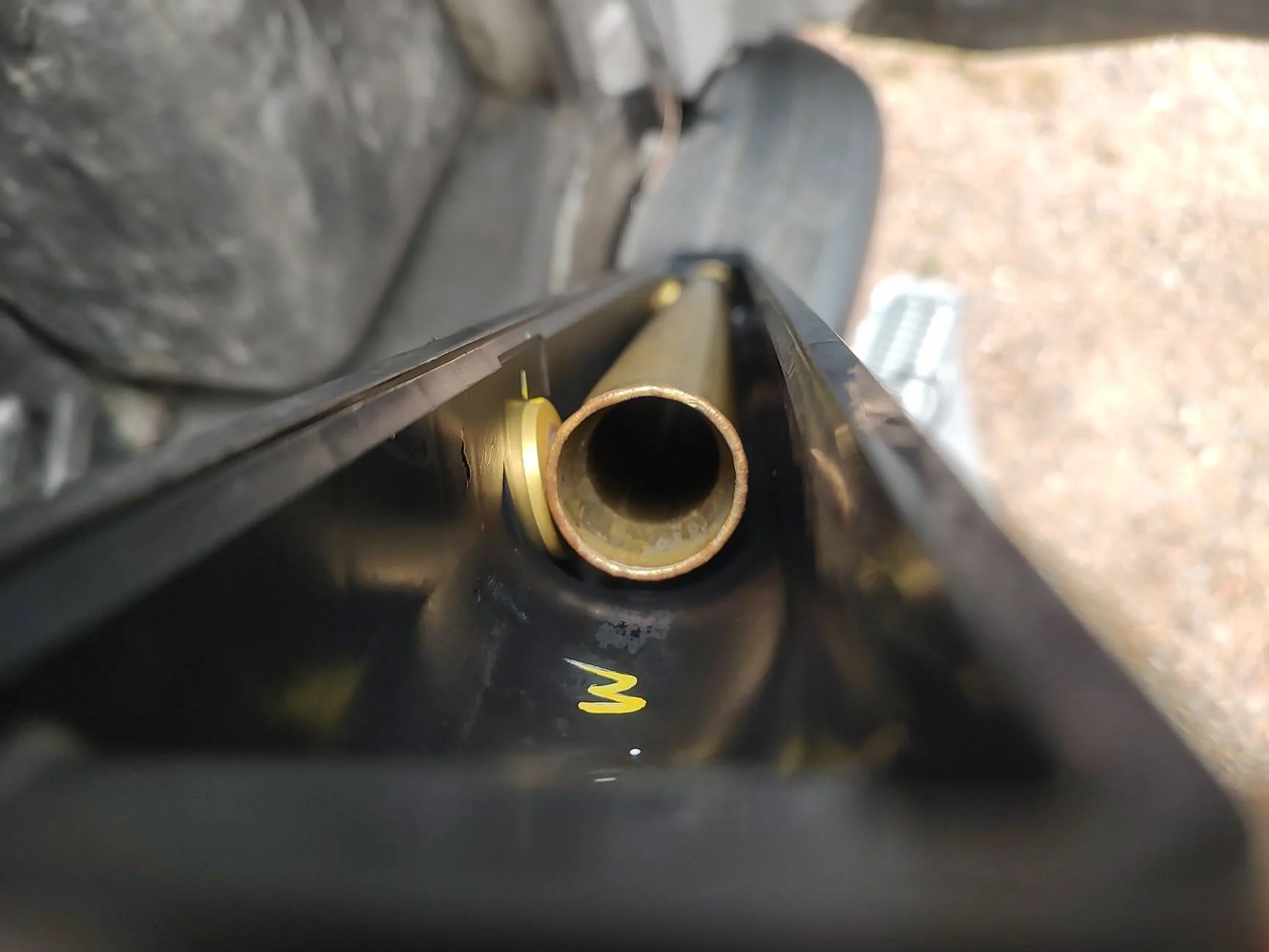
Now is the time I got curious. I decided to go ahead and loosen the crimps and remove the side tanks. I started with the top to get a good look at the Radiator Core. What I found were some nice looking tubes! Many try to claim that the OEM Radiator for the VQ40DE is a 1 Row, but in reality this would be classified as a 2 Row(this is incorrect as it is just a 1 row. The cent piece is a strut to help with strength against vibration and twisting). That is determined by how many rows of tubes you have from front to back. In this case we have 2 Rows of tubes hence the 2 Row Radiator. I also decided to measure the tubes. From the outer edge of the tube I measured 1 3/8(in Millimeters it is 35 mm. Figured this would help some). The center divider is about 1/16. That makes the tubes fairly effective at 1 5/16 - 1 3/8. I also counted the Rows of tubes from left to right and found 76 total Rows. With some basic math I was able to determine that there is roughly 5,065.25 square inches of surface area for the Tubes to allow for cooling. That's quite a bit when you think about it.
Next I decided to open the bottom of the Radiator since that is where the Transmission Fluid Cooler/Warmer is located for this Vehicle (and many others). Now I did this because I wanted to get a closer look at the Cooler and see how it is designed. I originally thought it was simply a closed end pipe. Well to say the least I was wrong! If anything it is more like two things wall pipes fairly close in diameter(one being a bit smaller) and sealed to each other. The center of the cooler is completely hollow and allows coolant to go right through. For what it's worth I actually like it as it should be more effective for heat transfer having coolant on both sides of the cooler/warmer.


Now once I get my new OEM Radiator, I will be taking the KOYO apart and comparing. Something tells me that it will not be the same and I suspect I will see reasoning why it isn't as efficient as the OEM.
EDIT: so the total thickness of the OEM Radiator is 35 mm for this particular vehicle. Also I found out that the center piece in the tubes is called a strut support for the tubes. This simply helps the radiator with bending and twisting and vibration when the vehicle is operated. A bit important when you think about it.
Well because of all that I decided to go ahead and do a teardown of the OEM Radiator I took out! To say the least what I found was interesting. If possible I would actually want @P. A. Schilke to chime in and give his input for the overall design and how it may compare to what he has seen with his days with Ford!
First we have the Radiator. As to no surprise it was a bit dirty in general. It's also 13-14 years old. For a Plastic Aluminum Radiator, it's a good idea to replace it before it cracks
Now is the time I got curious. I decided to go ahead and loosen the crimps and remove the side tanks. I started with the top to get a good look at the Radiator Core. What I found were some nice looking tubes! Many try to claim that the OEM Radiator for the VQ40DE is a 1 Row, but in reality this would be classified as a 2 Row(this is incorrect as it is just a 1 row. The cent piece is a strut to help with strength against vibration and twisting). That is determined by how many rows of tubes you have from front to back. In this case we have 2 Rows of tubes hence the 2 Row Radiator. I also decided to measure the tubes. From the outer edge of the tube I measured 1 3/8(in Millimeters it is 35 mm. Figured this would help some). The center divider is about 1/16. That makes the tubes fairly effective at 1 5/16 - 1 3/8. I also counted the Rows of tubes from left to right and found 76 total Rows. With some basic math I was able to determine that there is roughly 5,065.25 square inches of surface area for the Tubes to allow for cooling. That's quite a bit when you think about it.
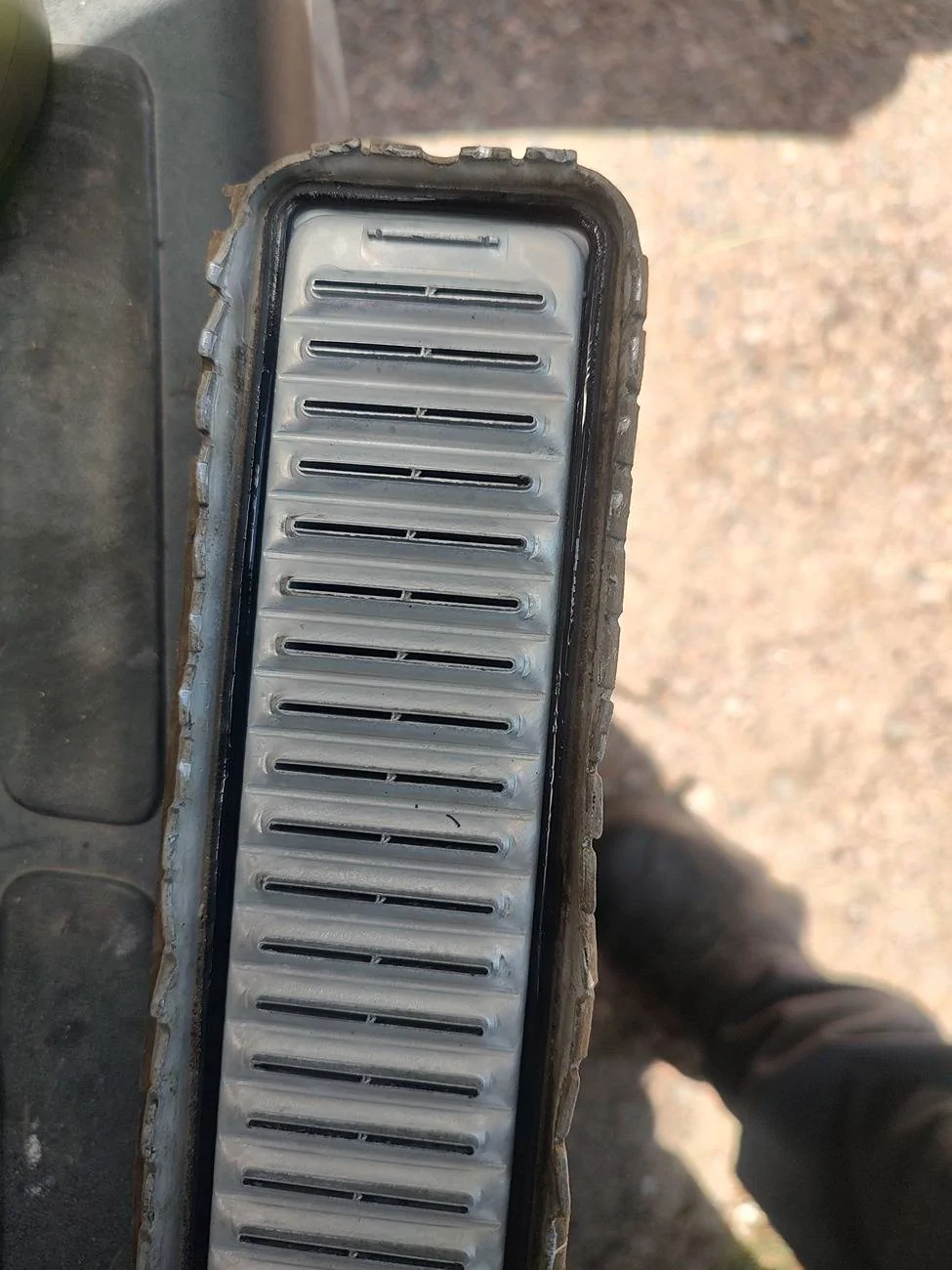
Next I decided to open the bottom of the Radiator since that is where the Transmission Fluid Cooler/Warmer is located for this Vehicle (and many others). Now I did this because I wanted to get a closer look at the Cooler and see how it is designed. I originally thought it was simply a closed end pipe. Well to say the least I was wrong! If anything it is more like two things wall pipes fairly close in diameter(one being a bit smaller) and sealed to each other. The center of the cooler is completely hollow and allows coolant to go right through. For what it's worth I actually like it as it should be more effective for heat transfer having coolant on both sides of the cooler/warmer.
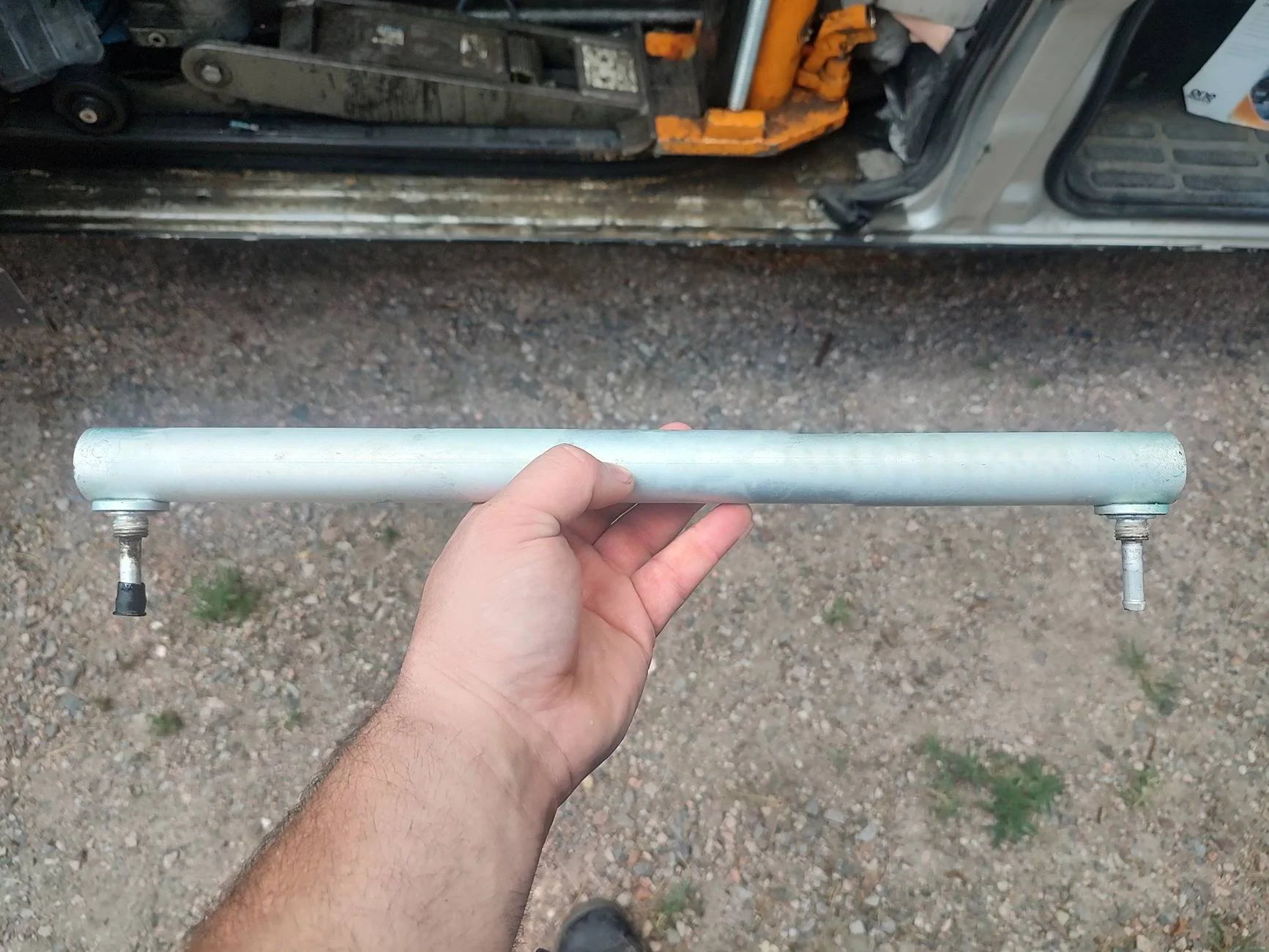
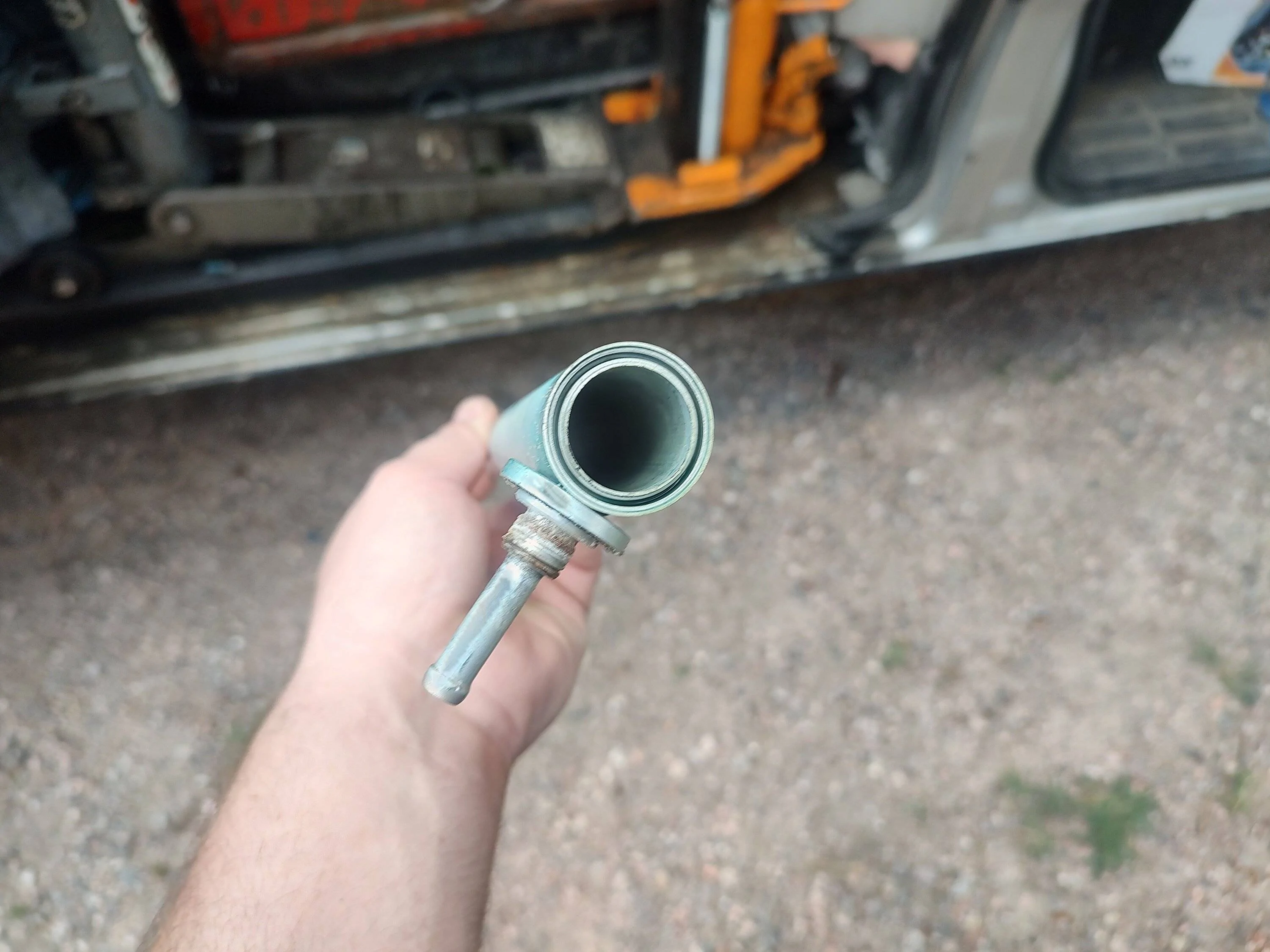
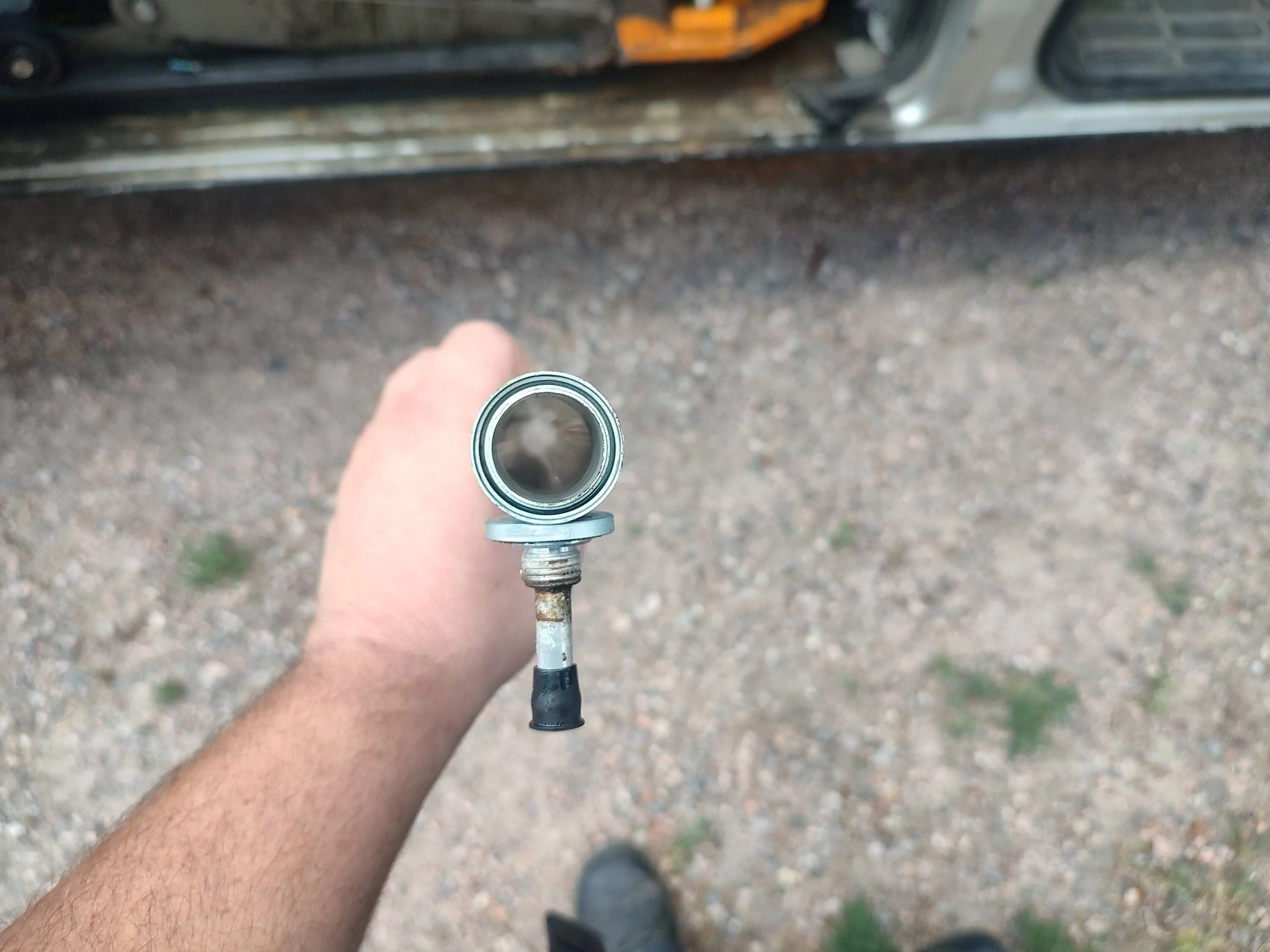
Now once I get my new OEM Radiator, I will be taking the KOYO apart and comparing. Something tells me that it will not be the same and I suspect I will see reasoning why it isn't as efficient as the OEM.
EDIT: so the total thickness of the OEM Radiator is 35 mm for this particular vehicle. Also I found out that the center piece in the tubes is called a strut support for the tubes. This simply helps the radiator with bending and twisting and vibration when the vehicle is operated. A bit important when you think about it.
Sponsored
Last edited: