
Sponsored

“Overheating”

airline tech

Well-Known Member
Joined
Aug 24, 2022
Threads
28
Messages
4,467
Reaction score
8,543
Location
Midwest - KS
Vehicle(s)
2022 Ranger Lariat-Super Crew, Cactus Gray
Occupation
Aircraft Tech
If it is possible you might want to run your test again, but this time with the coolant hoses temporarily pinched before and after the EGR cooler. If the bubbles stop and color doesn't change, you'll have isolated the problem to the cooler. A thin pair of vice grips should do the trick, if you have access to the hoses.

Best of luck to you.
I see you thought process but at least our US version EGR Cooler has:
Note: EGR Valve - Mounts on the EGR Cooler Outlet

1. One Exhaust Inlet Port (2-Bolt Block Flange) and if the EGR Valve is closed - Ex Pressure Dead Ends
2. One Coolant Inlet Port - Rigid Tube (2-Bolt -Block Flange)
3. One Coolant - Return Outlet - Rigid Tube (Nipple Style) with Rubber Hose

So, if you pinch off the only possible (Return) then the leak would not stop - it would back pressure the inlet and still show as a leak, only (Increase) the pressure - so this would not isolate the EGR Cooler from the system as you cannot pinch off both sides, not physically possible by the design.
Sponsored
 

TJC

Well-Known Member
First Name
Tony
Joined
Aug 28, 2020
Threads
45
Messages
3,946
Reaction score
9,914
Location
North Carolina
Vehicle(s)
93 Miata, 05 Ranger 4x4, 20 Ranger 4x4, 23 CX-5
I see you thought process but at least our US version EGR Cooler has:
Note: EGR Valve - Mounts on the EGR Cooler Outlet

1. One Exhaust Inlet Port (2-Bolt Block Flange) and if the EGR Valve is closed - Ex Pressure Dead Ends
2. One Coolant Inlet Port - Rigid Tube (2-Bolt -Block Flange)
3. One Coolant - Return Outlet - Rigid Tube (Nipple Style) with Rubber Hose

So, if you pinch off the only possible (Return) then the leak would not stop - it would back pressure the inlet and still show as a leak, only (Increase) the pressure - so this would not isolate the EGR Cooler from the system as you cannot pinch off both sides, not physically possible by the design.
Thanks for the explanation. I prefaced my statement (If it is possible...), simply because I did not know the design of the system. I am barely acquainted with the EGR system in my Ranger, only knowing about it from your provided diagrams in earlier posts. (BTW, Thanks!) I'm visualizing the system in my mind's eye, not seeing the actual physical design.

I'm still convinced that the EGR cooler is the most probable failure point. I believe the turbo in his diesel engine is water cooled. An internal coolant leak could cause air to enter the coolant system, but not combustion gases. You'd still see burbling / gurgling in the coolant from air /water vapor.

Thinking this through, coolant hits a hot spot and vaporizes, steam displaces the coolant creating temporary temperature spike. Once things begin to cool down, the vacuum in the cooling system draws outside air into the system, adding, more air gaps in the cooling system.

This might not show up driving around town, but would overheat on the freeway or hills, maybe when towing, then go away when engine loads drop. Heater might go hot then cold, and I would think there would be some gurgling in the overflow tank after shutting down.

All this said, I've done a little more research, and found that on the 2.0Bi-Turbo Ranger, the EGR cooler is a very common culprit. Symptoms are very similar, but you would see a positive CO2 test that would not appear it it were the turbo cooling leaking.

I then found this test to prove /disprove the EGR Cooler as the problem.

EGR COOLER COOLANT BYPASS TEST
2019 Ford Ranger 2.0 Bi-Turbo

Important before you start
  • Engine must be STONE COLD
  • This is temporary, for testing only
  • Expect a check engine light (normal)
  • Do not tow or thrash it during the test
  • Monitor temp closely
What this test proves
You are removing the EGR cooler from the coolant circuit. If symptoms improve → the EGR cooler is very likely leaking internally
(Exhaust gas <-> coolant or coolant <-> exhaust)

Tools & parts needed
  • ~200–300 mm (8–12 in) of coolant hose
    (Same internal diameter as EGR cooler hoses — typically ~16 mm / 5⁄8")
  • 2 hose clamps
  • Pliers / screwdriver
  • Coolant (correct spec)
  • Rags
Step 1: Locate the EGR cooler

On the 2.0 Bi-Turbo:
  • Passenger side of the engine (RHD markets)
  • Stainless steel heat exchanger
  • Connected to the exhaust manifold
  • Has TWO rubber coolant hoses going into it
    (ignore the exhaust pipes — do NOT touch those)
Step 2: Identify and Disconnect the coolant hoses

You’ll see:
  • One coolant feed hose
  • One coolant return hose
Disconnect the coolant hoses
  1. Place rags underneath (some coolant will spill)
  2. Remove both hoses from the EGR cooler
  3. Move them aside so they’re free of the cooler
You can leave the EGR cooler ports open or cap them (optional but cleaner)

Step 3: Join the hoses together (the bypass)
  1. Insert your spare hose between the two engine-side hoses
  2. Clamp both ends securely
You’ve now maintained coolant circulation and removed the EGR cooler from the system

Step 4: Refill & bleed (These engines trap air easily — take your time.)
  1. Top up radiator and overflow
  2. Start engine
  3. Set heater to HOT
  4. Let it idle
  5. Squeeze top radiator hose gently to help air escape
  6. Top up again as level drops
Step 5: Test drive

Drive it exactly how it normally causes problems:
  • Highway
  • Hills
  • Steady load (not aggressive)
Watch for:
  • Temperature stability
  • Bubbling in overflow
  • Heater staying consistently hot
  • Cooling hoses not going rock-hard
Interpreting the results
If Symptoms improve or disappear it is v
ery strong evidence of:
  • Cracked EGR cooler
  • Exhaust gas entering coolant
  • Or coolant entering exhaust
At this point:
  • Replacement the EGR Cooler
  • A repeat block test often turns negative
No change at all
More likely:
  • Turbo coolant leak
  • Air ingress elsewhere
  • Radiator / cap issue
  • Head gasket (less likely, but possible)
Extra confirmation (highly recommended)
After bypassing:
  • Perform a CO₂ / block test
    • Positive before, negative after → EGR cooler confirmed
    • Positive both times → look deeper (HG, head, etc.)
VERY IMPORTANT WARNINGS
  • Do NOT leave it bypassed long-term
  • EGTs can rise if driven hard
  • This test is for diagnosis only
Why this test is so effective on the 2.0
  • High exhaust pressure
  • High EGR flow
  • Thin-wall EGR coolers
    → they crack internally before leaking externally
 
  • Like
Reactions: Iwo

Cabose-1

Well-Known Member
First Name
Eli
Joined
Jan 19, 2021
Threads
9
Messages
1,982
Reaction score
7,473
Location
Texas
Vehicle(s)
2024 Ranger XLT, 4x2, Advance Tow, E-Locker
Occupation
Student
Sorry to hear about the issue on tour Ranger. Vaya con dios. Good luck.

Same thing as my sons 2013 vw. 5cyl. Timing chain on back of engine. :(

Not saying to do this. But on a 2013 with timing chain between the tranny and motor. This is what we did. Small little problem beginning like yours. Oil jhst starting to become creamed coffee.

Good luck man.
Head. Gasket. Leak down test in order.

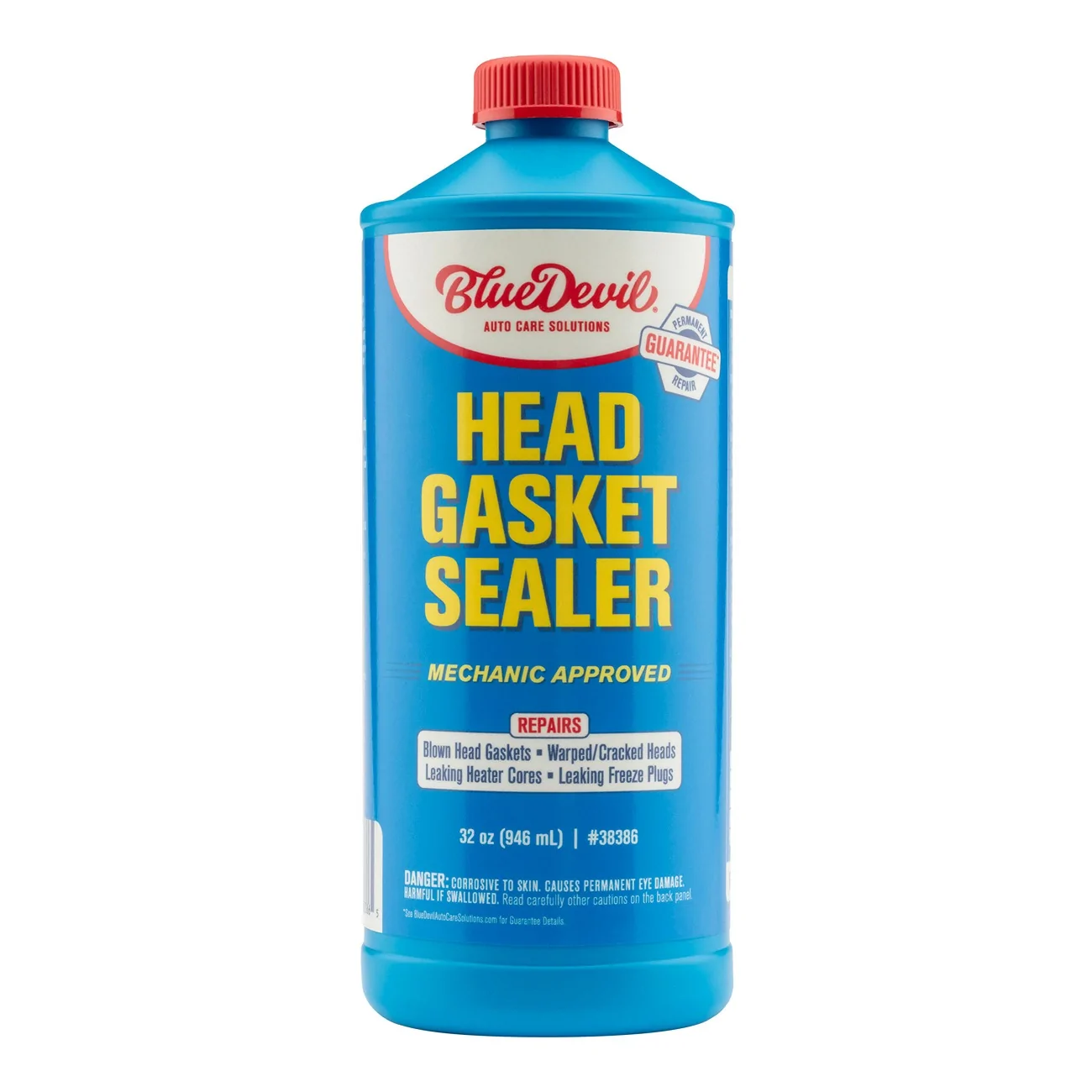
BDEV38386_HeadGasketSealer_T3_32oz_BDH38606_6721.webp
 

TxOTRRanger

Well-Known Member
First Name
Clay
Joined
Jul 14, 2025
Threads
5
Messages
1,459
Reaction score
6,663
Location
Elwood, Texas
Vehicle(s)
2022 Ford Ranger XLT supercrew SPORT 4X4
Occupation
factory worker Tyson Foods
Sorry to hear about the issue on tour Ranger. Vaya con dios. Good luck.

Same thing as my sons 2013 vw. 5cyl. Timing chain on back of engine. :(

Not saying to do this. But on a 2013 with timing chain between the tranny and motor. This is what we did. Small little problem beginning like yours. Oil jhst starting to become creamed coffee.

Good luck man.
Head. Gasket. Leak down test in order.

BDEV38386_HeadGasketSealer_T3_32oz_BDH38606_6721.webp
Head gasket in a can. That's a ROADKILL number 1 repair.
 

Stevedbvik1

Well-Known Member
First Name
Steve
Joined
Oct 4, 2021
Threads
38
Messages
2,715
Reaction score
8,072
Location
Michigan
Vehicle(s)
2022 Ranger Tremor XLT
Occupation
Retired
Thanks for the explanation. I prefaced my statement (If it is possible...), simply because I did not know the design of the system. I am barely acquainted with the EGR system in my Ranger, only knowing about it from your provided diagrams in earlier posts. (BTW, Thanks!) I'm visualizing the system in my mind's eye, not seeing the actual physical design.

I'm still convinced that the EGR cooler is the most probable failure point. I believe the turbo in his diesel engine is water cooled. An internal coolant leak could cause air to enter the coolant system, but not combustion gases. You'd still see burbling / gurgling in the coolant from air /water vapor.

Thinking this through, coolant hits a hot spot and vaporizes, steam displaces the coolant creating temporary temperature spike. Once things begin to cool down, the vacuum in the cooling system draws outside air into the system, adding, more air gaps in the cooling system.

This might not show up driving around town, but would overheat on the freeway or hills, maybe when towing, then go away when engine loads drop. Heater might go hot then cold, and I would think there would be some gurgling in the overflow tank after shutting down.

All this said, I've done a little more research, and found that on the 2.0Bi-Turbo Ranger, the EGR cooler is a very common culprit. Symptoms are very similar, but you would see a positive CO2 test that would not appear it it were the turbo cooling leaking.

I then found this test to prove /disprove the EGR Cooler as the problem.

EGR COOLER COOLANT BYPASS TEST
2019 Ford Ranger 2.0 Bi-Turbo

Important before you start
  • Engine must be STONE COLD
  • This is temporary, for testing only
  • Expect a check engine light (normal)
  • Do not tow or thrash it during the test
  • Monitor temp closely
What this test proves
You are removing the EGR cooler from the coolant circuit. If symptoms improve → the EGR cooler is very likely leaking internally
(Exhaust gas <-> coolant or coolant <-> exhaust)

Tools & parts needed
  • ~200–300 mm (8–12 in) of coolant hose
    (Same internal diameter as EGR cooler hoses — typically ~16 mm / 5⁄8")
  • 2 hose clamps
  • Pliers / screwdriver
  • Coolant (correct spec)
  • Rags
Step 1: Locate the EGR cooler

On the 2.0 Bi-Turbo:
  • Passenger side of the engine (RHD markets)
  • Stainless steel heat exchanger
  • Connected to the exhaust manifold
  • Has TWO rubber coolant hoses going into it
    (ignore the exhaust pipes — do NOT touch those)
Step 2: Identify and Disconnect the coolant hoses

You’ll see:
  • One coolant feed hose
  • One coolant return hose
Disconnect the coolant hoses
  1. Place rags underneath (some coolant will spill)
  2. Remove both hoses from the EGR cooler
  3. Move them aside so they’re free of the cooler
You can leave the EGR cooler ports open or cap them (optional but cleaner)

Step 3: Join the hoses together (the bypass)
  1. Insert your spare hose between the two engine-side hoses
  2. Clamp both ends securely
You’ve now maintained coolant circulation and removed the EGR cooler from the system

Step 4: Refill & bleed (These engines trap air easily — take your time.)
  1. Top up radiator and overflow
  2. Start engine
  3. Set heater to HOT
  4. Let it idle
  5. Squeeze top radiator hose gently to help air escape
  6. Top up again as level drops
Step 5: Test drive

Drive it exactly how it normally causes problems:
  • Highway
  • Hills
  • Steady load (not aggressive)
Watch for:
  • Temperature stability
  • Bubbling in overflow
  • Heater staying consistently hot
  • Cooling hoses not going rock-hard
Interpreting the results
If Symptoms improve or disappear it is v
ery strong evidence of:
  • Cracked EGR cooler
  • Exhaust gas entering coolant
  • Or coolant entering exhaust
At this point:
  • Replacement the EGR Cooler
  • A repeat block test often turns negative
No change at all
More likely:
  • Turbo coolant leak
  • Air ingress elsewhere
  • Radiator / cap issue
  • Head gasket (less likely, but possible)
Extra confirmation (highly recommended)
After bypassing:
  • Perform a CO₂ / block test
    • Positive before, negative after → EGR cooler confirmed
    • Positive both times → look deeper (HG, head, etc.)
VERY IMPORTANT WARNINGS
  • Do NOT leave it bypassed long-term
  • EGTs can rise if driven hard
  • This test is for diagnosis only
Why this test is so effective on the 2.0
  • High exhaust pressure
  • High EGR flow
  • Thin-wall EGR coolers
    → they crack internally before leaking externally
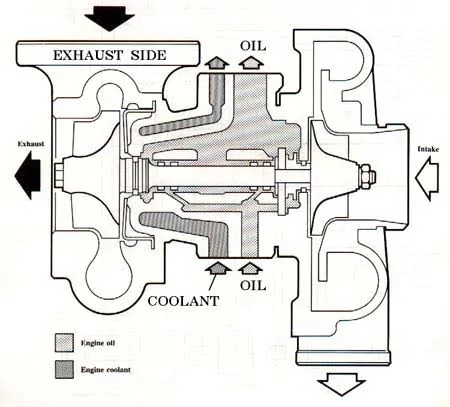
“I believe the turbo in his diesel engine is water cooled. An internal coolant leak could cause air to enter the coolant system, but not combustion gases. You'd still see burbling / gurgling in the coolant from air /water vapor.”
Just an FYI. An internal coolant leak in the turbo would not reach the compressor side. The coolant jacket is on the exhaust side of the turbo. So if it leaks internally it’s either going into the oil cavity or out the exhaust side of the turbo. Compressed air would not reach the coolant passages.

IMG_2442.webp


Iwo

Member
First Name
Ivica
Joined
Dec 14, 2025
Threads
0
Messages
23
Reaction score
14
Location
Croatia
Vehicle(s)
Ford ranger 2019 2.0 biturbo
Hello friends, last weekend I tested according to the description
airline tech
thanks for watching


TJC

Well-Known Member
First Name
Tony
Joined
Aug 28, 2020
Threads
45
Messages
3,946
Reaction score
9,914
Location
North Carolina
Vehicle(s)
93 Miata, 05 Ranger 4x4, 20 Ranger 4x4, 23 CX-5
The 2019 Ranger 2.0 Bi-Turbo does have a known history of EGR cooler leaking problems, and it’s one of the more frequent causes of coolant loss or overheating issues on that engine — particularly internally leaking coolant.

This is the answer I rec'd from Chatgpt when I asked it about the possibility of the EGR cooler leaking... I still would temporarily isolate the cooler and see if symptoms cease.
 

Iwo

Member
First Name
Ivica
Joined
Dec 14, 2025
Threads
0
Messages
23
Reaction score
14
Location
Croatia
Vehicle(s)
Ford ranger 2019 2.0 biturbo
This is the answer I rec'd from Chatgpt when I asked it about the possibility of the EGR cooler leaking... I still would temporarily isolate the cooler and see if symptoms cease.
hi , I'll have to go to a local repair shop for that part of the job.
 

Iwo

Member
First Name
Ivica
Joined
Dec 14, 2025
Threads
0
Messages
23
Reaction score
14
Location
Croatia
Vehicle(s)
Ford ranger 2019 2.0 biturbo
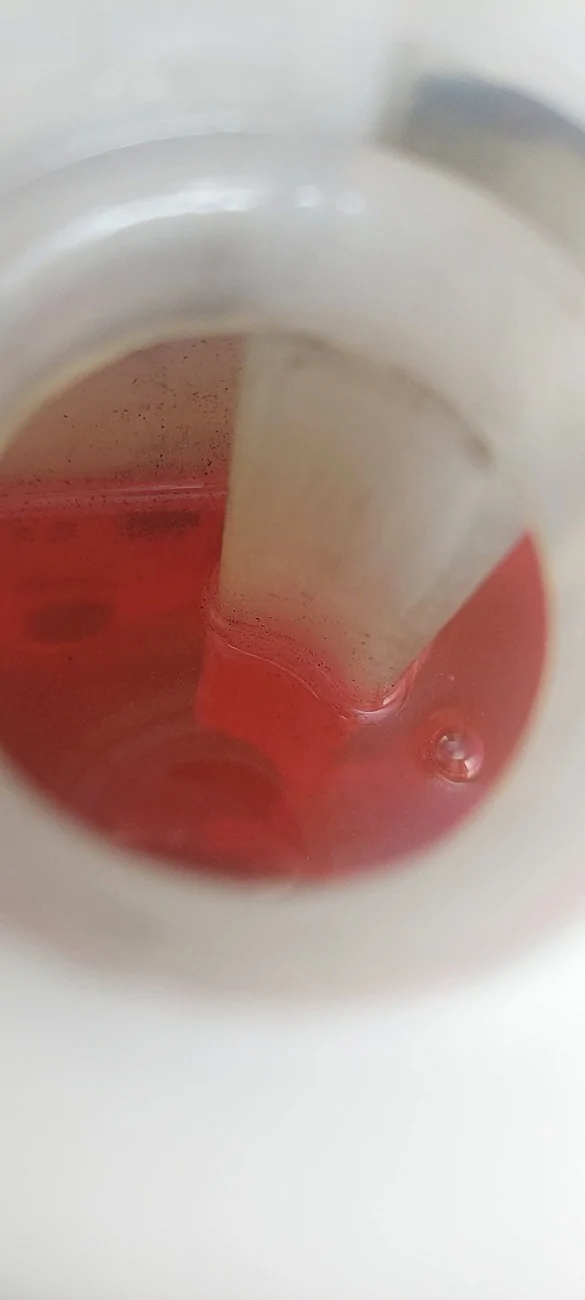
Today I took a photo of the liquid in the container. I don't know what the black particles are. I haven't noticed that before. In the video, you can see them on the inner walls of the container. The level changes as does the liquid.

20260208_100608.webp
 

airline tech

Well-Known Member
Joined
Aug 24, 2022
Threads
28
Messages
4,467
Reaction score
8,543
Location
Midwest - KS
Vehicle(s)
2022 Ranger Lariat-Super Crew, Cactus Gray
Occupation
Aircraft Tech
Today I took a photo of the liquid in the container. I don't know what the black particles are. I haven't noticed that before. In the video, you can see them on the inner walls of the container. The level changes as does the liquid.

20260208_100608.webp
Just curious if you ever found a resolution, but a quick check on the floating debris

Pour it over a paper towel

If it smears when you put your finger on it - its combustion partials
If it stays solid, then its debris from - Rubber Hoses or Radiator Fins or other metal sources
or
When the partials dry out (evaporates) they will leave a stain on the paper towel.
 

Iwo

Member
First Name
Ivica
Joined
Dec 14, 2025
Threads
0
Messages
23
Reaction score
14
Location
Croatia
Vehicle(s)
Ford ranger 2019 2.0 biturbo
Just curious if you ever found a resolution, but a quick check on the floating debris

Pour it over a paper towel

If it smears when you put your finger on it - its combustion partials
If it stays solid, then its debris from - Rubber Hoses or Radiator Fins or other metal sources
or
When the partials dry out (evaporates) they will leave a stain on the paper towel.
The car is going to the mechanic next week, so I'll know exactly what the problem is then. Unfortunately, he can't tell me anything in advance, everyone wants to test the car themselves first.
 

airline tech

Well-Known Member
Joined
Aug 24, 2022
Threads
28
Messages
4,467
Reaction score
8,543
Location
Midwest - KS
Vehicle(s)
2022 Ranger Lariat-Super Crew, Cactus Gray
Occupation
Aircraft Tech
Yes your issue is slightly unique as you are not loosing coolant (notably) and you are not overheating (notably)- Just be sure to explain in Detail what your issue is and what you have done so far to troubleshoot it.
It only appears to be either sucking air in or exhaust air being pushed in.
 

Iwo

Member
First Name
Ivica
Joined
Dec 14, 2025
Threads
0
Messages
23
Reaction score
14
Location
Croatia
Vehicle(s)
Ford ranger 2019 2.0 biturbo
Hello everyone
The car was finally repaired, the problem was a cracked cylinder head.
A small crack, which was only noticed when the head was sanded. Between the water channels and the exhaust channels, supposedly there was also a back pressure.
I asked the mechanic how come there was no white smoke from the exhaust, the answer was, the car has a dpf, and it swallows everything.
Anyway, after the repair, I drove 900 km and so far everything is ok.
Thanks again to everyone for your help
 

airline tech

Well-Known Member
Joined
Aug 24, 2022
Threads
28
Messages
4,467
Reaction score
8,543
Location
Midwest - KS
Vehicle(s)
2022 Ranger Lariat-Super Crew, Cactus Gray
Occupation
Aircraft Tech
Awesome - The reason for no white smoke is it was not leaking into the exhaust; the exhaust pressure was always greater than the coolant system pressure and was pressurizing the cooling system via exhaust - at least the source was finally located

This was the cause of the Positive CO2 (Tests) and the bubbles noted in the reservoir and the constant air in the cooling system
Sponsored


Top