Sponsored

“Overheating”

airline tech

Well-Known Member
Joined
Aug 24, 2022
Threads
28
Messages
4,465
Reaction score
8,542
Location
Midwest - KS
Vehicle(s)
2022 Ranger Lariat-Super Crew, Cactus Gray
Occupation
Aircraft Tech
antifreeze in the container.


Ok - Based on your descriptions and issues -and no major fluid loss being reported.
Even though the CO2 Test Passed.

You have one of 2 issues or both.

1. On a COLD engine - you should NOT have any pressure release from the reservoir - You FAILED

2. So, this brings us to (2 Possibilities) for that to happen
A. Bad Cap - Not letting the normal 21 PSI - Bleed off and equalize to atmospheric pressure
A1: If the pistons are adding pressure to the system (this may produce) a pressure release on a cold engine.

3. While driving - your issues are jumping temp gauge and cabin heat loss:
Reason - Pressure imbalance in the cooling system - creating air pockets, so the cap and or pressure being introduced from an outside source. (Pistons)

4. Your video of the reservoir - I believe I hear and see some pressure bursts as noted by the fluid pulsations and the poof of the air pocket - as this leads me to think that is piston pressure (bursts) pushing into the cooling system or it is simply air pockets that are being created from a bad cap
This is the main issue - if the system has been bled, you have to think about how air is being introduced into the system as for T-Shooting the issue.

Since it is a VERY SMALL leak - it may pass the CO2 Test, as I suspect the issue is being (increased) at higher RPMs above Idle is when the piston pressure is being introduced.

Either Way: Bad Head Gasket or Bad Cap or BOTH are the issue, something affecting cooling system pressure - and the above are it.
The main driving factor is - Pressure Release (On a Cold Engine)

So, Pressure Test the Cap or replace as precaution and monitor for continued issues. If it continues then its (Piston) Pressure

I am going to ADD - I know this has been pressure tested and showed no pressure loss, there is (ONE) more possibility here and that is a (VERY SMALL) hose clamp leaking - and its sucking air into the system and not physically leaking fluid - so as an extra step, check every hose connection for any (wetness) and possibly reposition the clamps and or tighten them and monitor again - as this is the last on the list of things that could cause the (air pocket) issue.
I would take a very detailed look at every hose clamp connection and inspect for any wet areas.
Plus - place the system on an (Overnight) Pressure test again - start with the engine (hot) and let it sit.
If the above provides (0) findings and the Cap has been replaced - then I would highly suspect the (Piston) Pressure introduction. is the issue.

Key Point - Would be - How Long Does it take? for the system issues to be seen - Temp Gauge/Cabon Heat Loss?

From a freshly bled system - Looking for how fast is the air being introduced - Time Frame. Important as it is a small leak.
 
Last edited:

airline tech

Well-Known Member
Joined
Aug 24, 2022
Threads
28
Messages
4,465
Reaction score
8,542
Location
Midwest - KS
Vehicle(s)
2022 Ranger Lariat-Super Crew, Cactus Gray
Occupation
Aircraft Tech
I have a way to help isolate: Using a Cooling System Pressure Tester

1. Normal Sys Pressure Test

Advanced Testing - Goes along with my question of How Fast are you seeing the (symptoms)? as I want to know how long does it take for the pressure imbalance to happen?

Starting with a Cold Engine

1. With Tester Connected - Start the Engine - Let the Engine idle- pressurize the system
a. Gradual Slow Climb to 20 -21 PSI normal (Cap Rating) = Normal
b. Rapid Spike (Pulsing, especially from a cold engine start) = Piston Pressure Introduction
c. Erratic Drops = Air being sucked in = (Hose Clamp - Leak or similar)

2. Rev the Engine to 1500-2000 RPM (for a few seconds) - Warming Engine
a. Gauge Response: Normal - Pressure will rise smoothly
b. Gauge Response: Fast Pulsating Gauge = (Piston Introduction)
c. Gauge Response: Slow Pulsating Gauge = Air being sucked in (Hose Clamp or Similar)


Hot System Pressure Test: Engine at operating Temp - Using the Pressure Tester
a. Normal System Pressure = +/- 2 PSI of the Cap Rated Pressure (21 PSI)
b. Spiking above the (Cap Rated) Pressure = Piston Introduction
c. Pressure fails to reach - System Pressure but steady reading = External Leak of Coolant

Rev Test Hot Engine: Slightly increase engine speed and note Gauge Pressure Response:
a. Pressure Drop during the Rev and then recovers = Air Being Sucked In (Hose Clamps or Sim)
b. Pressure Increase during the Rev - possibly over system pressure = Piston Introduction

This requires a cooling system pressure tester, and we are using it as an outside the box testing to give us a better indication of where the air is being introduced - effectively isolating the Piston Pressure as being the culprit is the general idea here.
Just some outside the box thinking here and using the pressure tester to do it and the only part that is not included in this test is the (Cap Itself)

So here in the US - Auto Parts Stores - have a Loan A Tool (Program) the problem is they are generally low quality and may provide (Tool Leaks) on the tool connections themselves, giving you a false result - so just be aware of this - mostly the styles that have the QD hose connections, those connections provide a leak point.
 
Last edited:


TJC

Well-Known Member
First Name
Tony
Joined
Aug 28, 2020
Threads
45
Messages
3,945
Reaction score
9,908
Location
North Carolina
Vehicle(s)
93 Miata, 05 Ranger 4x4, 20 Ranger 4x4, 23 CX-5
Airline Tech,

FWIW, I think that you are correct in your analysis.

Question for the owner... Has the truck ever suffered from being overheated prior to this issue?

From the video, I can see air being pushed out into the overflow tank (I am assuming the overflow tank is part of the closed coolant system, not vented). That generally means head gasket blown (warped heads) or cracked heads/block.

Loose hoses would typically be expelling fluid when under pressure, unless they are on a negative low pressure point. And offhand, I can't think of an instance where that would occur.

Are there any other secondary functions tied into the cooling system that could allow air into the system if they were compromised? Perhaps lines to/from transmission cooler (if a secondary coolant thermostat is involved), or EGR Exhaust types of cooler on the truck? (I'm throwing darts here...)

The lack of combustion gases in the coolant is a real head scratcher.

Whatever and wherever the leak is, the pressure must be greater than the cooling system pressure to enter the cooling system. Otherwise, you'd be seeing coolant external to the engine. And all we are seeing is pressure building in the coolant system, and the changes in coolant temps indicating air being collected/trapped in the system.

My old v8 GM diesel loved to blow head gaskets, and I'd see serious bubbling in the overflow tank, but those were large gasket failures between the combustion chamber and the coolant jackets adjacent to the cylinders. The first symptoms were temporary coolant temp spikes, which as things progressed, turned into serious steady overheating, and serious boiling of the coolant in the overflow tank (which was vented and would puke on the ground).

I became very proficient at changing heads/gaskets on that car.
 

airline tech

Well-Known Member
Joined
Aug 24, 2022
Threads
28
Messages
4,465
Reaction score
8,542
Location
Midwest - KS
Vehicle(s)
2022 Ranger Lariat-Super Crew, Cactus Gray
Occupation
Aircraft Tech
Airline Tech,

FWIW, I think that you are correct in your analysis.

Question for the owner... Has the truck ever suffered from being overheated prior to this issue?

From the video, I can see air being pushed out into the overflow tank (I am assuming the overflow tank is part of the closed coolant system, not vented). That generally means head gasket blown (warped heads) or cracked heads/block.

Loose hoses would typically be expelling fluid when under pressure, unless they are on a negative low pressure point. And offhand, I can't think of an instance where that would occur.

Are there any other secondary functions tied into the cooling system that could allow air into the system if they were compromised? Perhaps lines to/from transmission cooler (if a secondary coolant thermostat is involved), or EGR Exhaust types of cooler on the truck? (I'm throwing darts here...)

The lack of combustion gases in the coolant is a real head scratcher.

Whatever and wherever the leak is, the pressure must be greater than the cooling system pressure to enter the cooling system. Otherwise, you'd be seeing coolant external to the engine. And all we are seeing is pressure building in the coolant system, and the changes in coolant temps indicating air being collected/trapped in the system.

My old v8 GM diesel loved to blow head gaskets, and I'd see serious bubbling in the overflow tank, but those were large gasket failures between the combustion chamber and the coolant jackets adjacent to the cylinders. The first symptoms were temporary coolant temp spikes, which as things progressed, turned into serious steady overheating, and serious boiling of the coolant in the overflow tank (which was vented and would puke on the ground).

I became very proficient at changing heads/gaskets on that car.
The neg test - has me scratching my head as well,
But note: How the timing of the (Burps) is approx. every 5-seconds.
So, for me - and looking at it this way - A small hairline crack (Piston) Pressure will send - short bursts of air into the cooling system - once the pressure builds - it gets trapped in the system, most likely the heater core, that build-up is what is releasing at the reservoir (Burp)
Thinking on this there is (1) other possibility and that is the EGR Cooler (Exhaust Pressure) actually providing the - outside pressure source vs the (Pistons)
Normally - A bad head gasket will produce (Violent) burp into the reservoir, but this scenario, since it's such as small leak proves difficult to truly - Office Chair (T-Shoot)
This is why I cannot say with 100% certainty what the issue is without actually doing it myself.

This is why - I suggested a way to assist in isolating the issue with the pressure tester, out of normal of its intended use - but using the pressure gauge itself as the tool to see system pressure with it actually running and get a visual indication on exactly what the pressure is doing.

So yes, I added another possible - yes, the CO2 test Pass would make you think - It's not this. But it still can be.
Another thing I thought of - was this test (CO2 Test) was done at idle, I wonder if the test would pick up (Color Change) if the RPMs were raised - piston or exhaust pressure would be produced faster and the fluid may pick it up.

So, you may try the CO2 Test again - Engine at Operating Temp
Raise RPM to 1500-2000 and hold for 30-60 Seconds
Did the fluid (slowly) change colors?
Reason - To increase the (Pressure) pulses from the (Piston or EGR Cooler) if indeed that is where it is coming from and possibly get the fluid to pick it up.
 

airline tech

Well-Known Member
Joined
Aug 24, 2022
Threads
28
Messages
4,465
Reaction score
8,542
Location
Midwest - KS
Vehicle(s)
2022 Ranger Lariat-Super Crew, Cactus Gray
Occupation
Aircraft Tech
The more I think about this:
Previous (CO2) Test Fail
It's not a violent (Press) burp
Exhaust Pressure in the (EGR Cooler) closely matches (Cooling Sys Pressures) w/o Turbo and slightly elevated with Turbo-Boost

Brings me to the conclusion - it's not the Pistons it's the EGR Cooler - and would explain why it appears as a slow leak or pressure offset.
Makes more logical sense than the Piston Pressure as it's a much greater pressure and would provide the (More Notable - aggressive violent Burps)
 

TJC

Well-Known Member
First Name
Tony
Joined
Aug 28, 2020
Threads
45
Messages
3,945
Reaction score
9,908
Location
North Carolina
Vehicle(s)
93 Miata, 05 Ranger 4x4, 20 Ranger 4x4, 23 CX-5
The more I think about this:
Previous (CO2) Test Fail
It's not a violent (Press) burp
Exhaust Pressure in the (EGR Cooler) closely matches (Cooling Sys Pressures) w/o Turbo and slightly elevated with Turbo-Boost

Brings me to the conclusion - it's not the Pistons it's the EGR Cooler - and would explain why it appears as a slow leak or pressure offset.
Makes more logical sense than the Piston Pressure as it's a much greater pressure and would provide the (More Notable - aggressive violent Burps)
It is a real possibility.
 

Iwo

Member
First Name
Ivica
Joined
Dec 14, 2025
Threads
0
Messages
23
Reaction score
14
Location
Croatia
Vehicle(s)
Ford ranger 2019 2.0 biturbo
Thanks for your help, I'll try to find someone to test my pressures.
I've given up testing for now, my wife drives about 7-8 km to work every day, and there are no problems.
A friend told me that maybe the fan isn't cooling enough.
The fan is constantly running at idle, I tried to stop it while the engine was cold and I managed to do it without much resistance. I also did the same thing when the temperature was close to operating temperature and the same thing, I stopped the fan, I don't know if that should be possible.
By the way, when I did the Co2 test, the fluid at idle was still, but when I stepped on the gas, the pressure pulled it in and not out.
 

Iwo

Member
First Name
Ivica
Joined
Dec 14, 2025
Threads
0
Messages
23
Reaction score
14
Location
Croatia
Vehicle(s)
Ford ranger 2019 2.0 biturbo
And I'll try to find someone to take out my EGR and test it.
Authorized services here are very expensive for testing without any solutions.
 

TJC

Well-Known Member
First Name
Tony
Joined
Aug 28, 2020
Threads
45
Messages
3,945
Reaction score
9,908
Location
North Carolina
Vehicle(s)
93 Miata, 05 Ranger 4x4, 20 Ranger 4x4, 23 CX-5
A friend told me that maybe the fan isn't cooling enough.
The fan is constantly running at idle, I tried to stop it while the engine was cold and I managed to do it without much resistance. I also did the same thing when the temperature was close to operating temperature and the same thing, I stopped the fan, I don't know if that should be possible.
By the way, when I did the Co2 test, the fluid at idle was still, but when I stepped on the gas, the pressure pulled it in and not out.
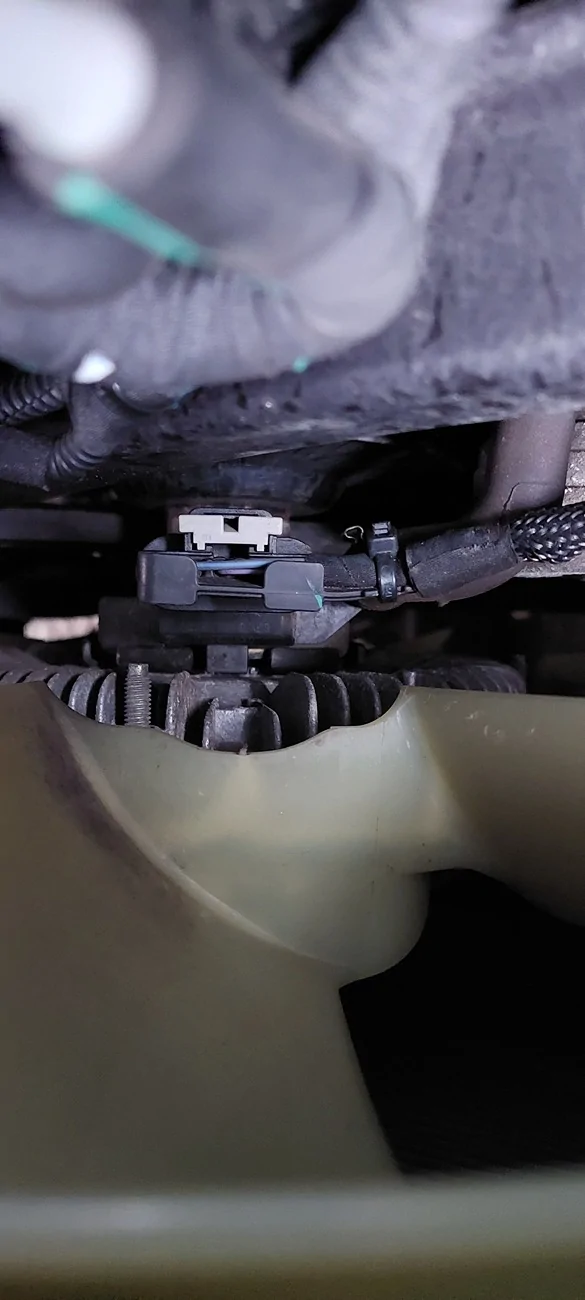
Is it viscous clutch fan or electric? Once warm the fan should cycle off/on as the engine heats up. If it is not cycling, the viscous clutch may have failed.

When first starting our USA Rangers, the fan clutch cycles on and our truck sounds like a multi-ton diesel truck for a few seconds as the rush of air is quite loud, even in the cab with the windows up.

Your friend may very well be correct!
 

airline tech

Well-Known Member
Joined
Aug 24, 2022
Threads
28
Messages
4,465
Reaction score
8,542
Location
Midwest - KS
Vehicle(s)
2022 Ranger Lariat-Super Crew, Cactus Gray
Occupation
Aircraft Tech
for the air issues he has and a shop previously found CO2 in the system. I am going with a leaking EGR Cooler - (Exhaust to Cooling System) - small exhaust pressure pulses entering the cooling system and building up (in the high point) Heater Core then releasing in a sequenced pulse into the reservoir. (Exhaust System Pressure -No Turbo) = at idle slightly above Barro - so about 14.5 PSI the cooling system operates close to that prressure range with a max cap pressure of 21 psi.
For me - it's the EGR Cooler - One Way Leak - Exhaust to Cooling System.

In fact - To possibly CONFIRM its the EGR Cooler and I suspect this may be how the other shop performed the test:

1. Set up the Block Test - the same as you did previously
2. Park in an open area - in front of the truck
3. Set Parking Brake
4. Start Eng and Hold Hard Pressure on Brake
5. Raise Engine RPMs to 1500-2000 - hold for 60 seconds
6. Note: Did air bubbles increase at the reservoir and did the color change (Block Test)

Reason: You are placing the engine under a load and forcing the exhaust pressure pulses to increase - to induce the issue at a greater possibility of a positive CO2 Test.
 

Iwo

Member
First Name
Ivica
Joined
Dec 14, 2025
Threads
0
Messages
23
Reaction score
14
Location
Croatia
Vehicle(s)
Ford ranger 2019 2.0 biturbo
Is it viscous clutch fan or electric? Once warm the fan should cycle off/on as the engine heats up. If it is not cycling, the viscous clutch may have failed.

When first starting our USA Rangers, the fan clutch cycles on and our truck sounds like a multi-ton diesel truck for a few seconds as the rush of air is quite loud, even in the cab with the windows up.

Your friend may very well be correct!
Elektric or ?

20260118_094736.webp
 

airline tech

Well-Known Member
Joined
Aug 24, 2022
Threads
28
Messages
4,465
Reaction score
8,542
Location
Midwest - KS
Vehicle(s)
2022 Ranger Lariat-Super Crew, Cactus Gray
Occupation
Aircraft Tech
Elektric or ?

20260118_094736.webp
Its electro viscous - its not a true electric fan, its pulse width modulated (PWM) controlled by the PCM Its still a clutch fan style - only instead of a thermal spring it has the PCM controlling the speed via a VREF circuit -I do not think this is your issue.
Sponsored


Top