docthndr
Member
- Thread starter
- #1
After seeing intake threads go in circles, I wanted to lay out what actually matters on this platform. The Ranger’s stock intake is already a cold-air intake, and Ford engineered it around stable airflow, water management, and consistent temperature readings — not flashy looks or loud noises. It uses baffling, a proper velocity bellmouth, water drainage, and stable sensor placement. Since the Ranger runs a speed-density strategy (no MAF), the ECU bases fueling on pressure and temperature, not on intake “tricks.” Changing box shape or adding shiny tubing doesn’t magically alter the engine’s calculations. Where people go wrong is assuming older MAF-based logic applies here — it doesn’t.
Filtration is simple: if you want maximum protection and engine life, stick to a good paper filter like Motorcraft or Fram. They filter about 99.8% of particulates and perform even better once partially loaded with dirt. High-flow filters like K&N, AFE, or S&B trade a very small amount of filtration efficiency—fractions of a percent—for improved airflow. And the whole “oiled filter ruins the MAF” myth does not apply because the Ranger doesn’t use a MAF at all. The first sensor after the filter is only an intake temperature sensor. The PCV system introduces far more oil vapor into the intake tract than any oiled filter ever could.
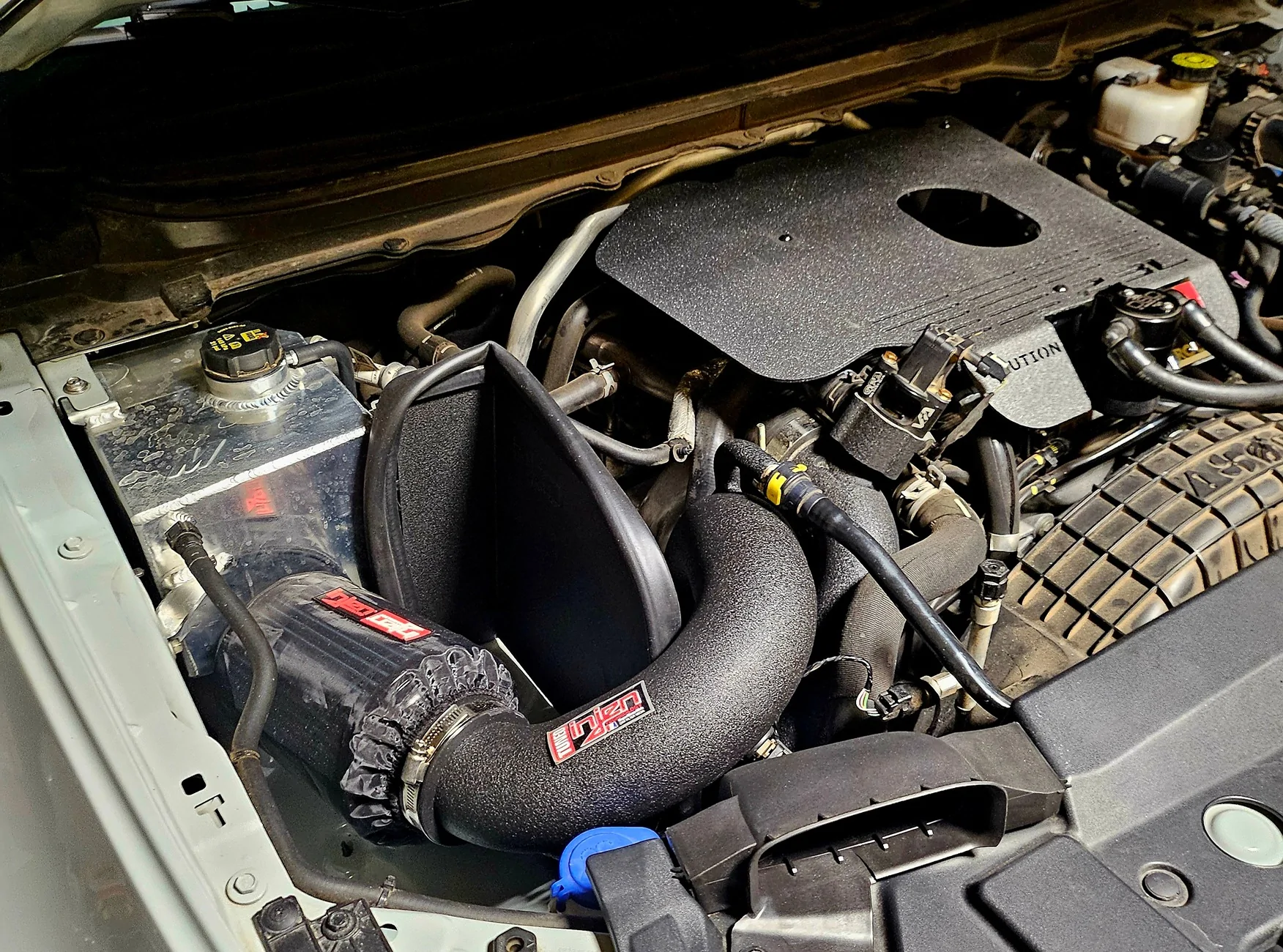
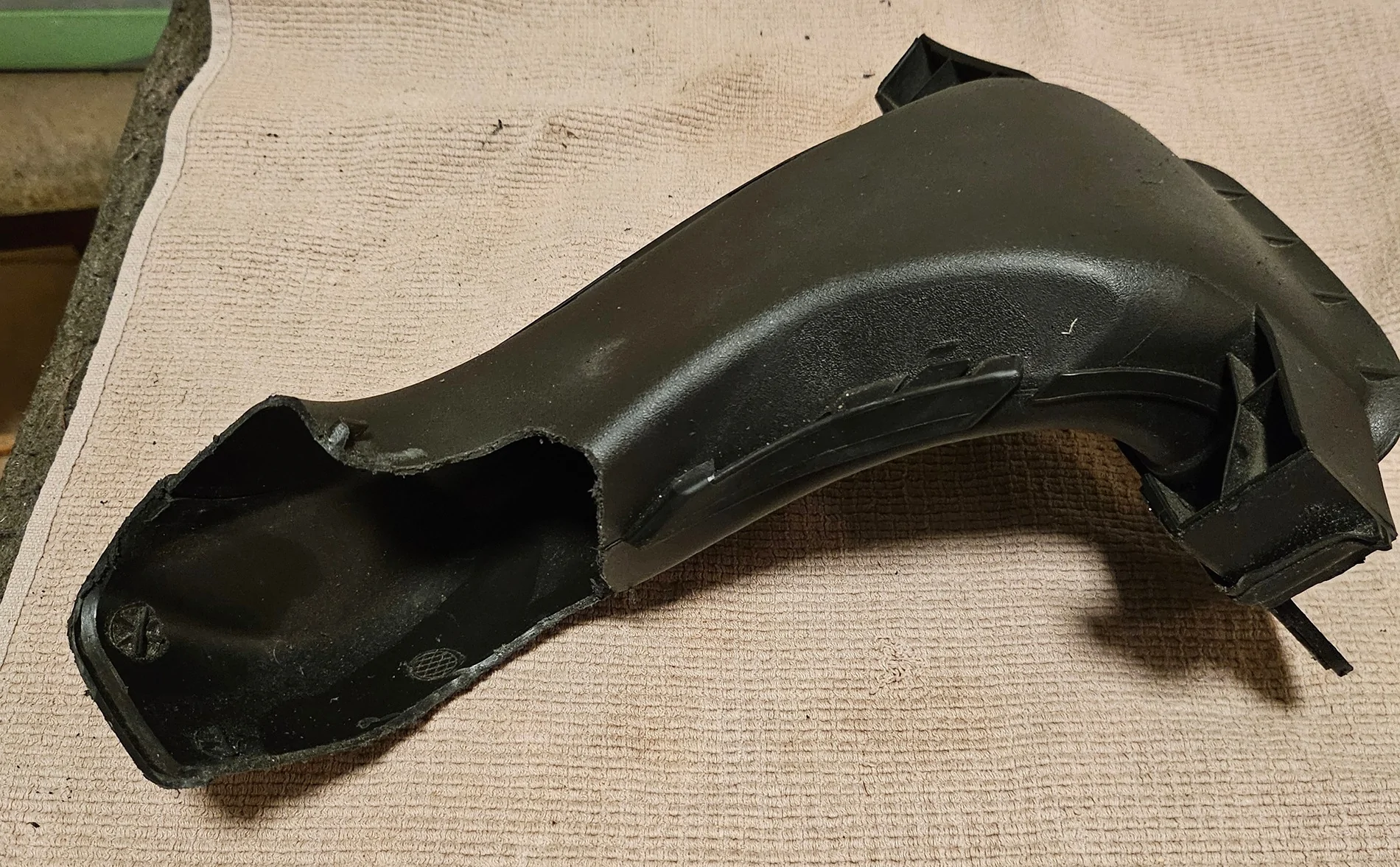
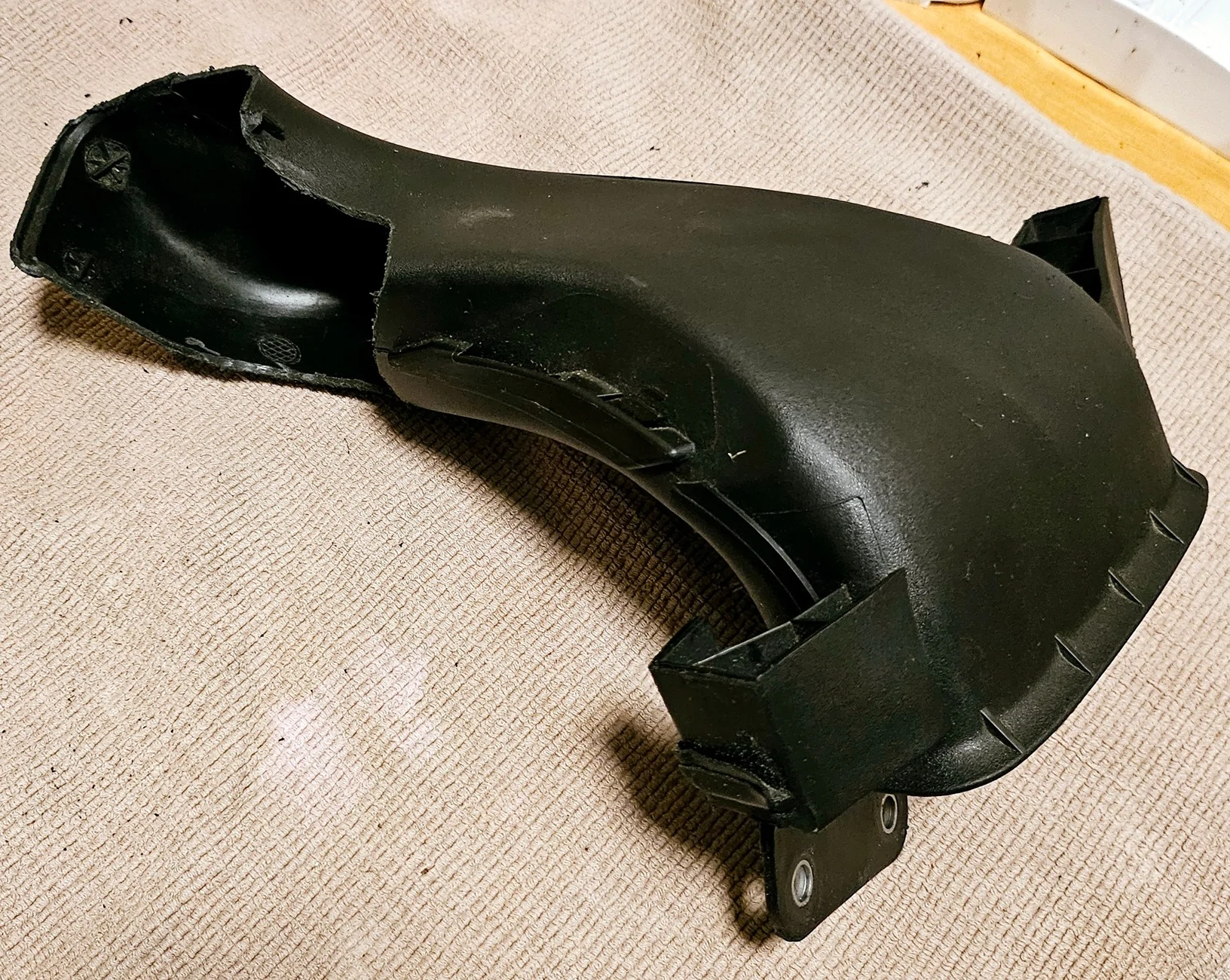
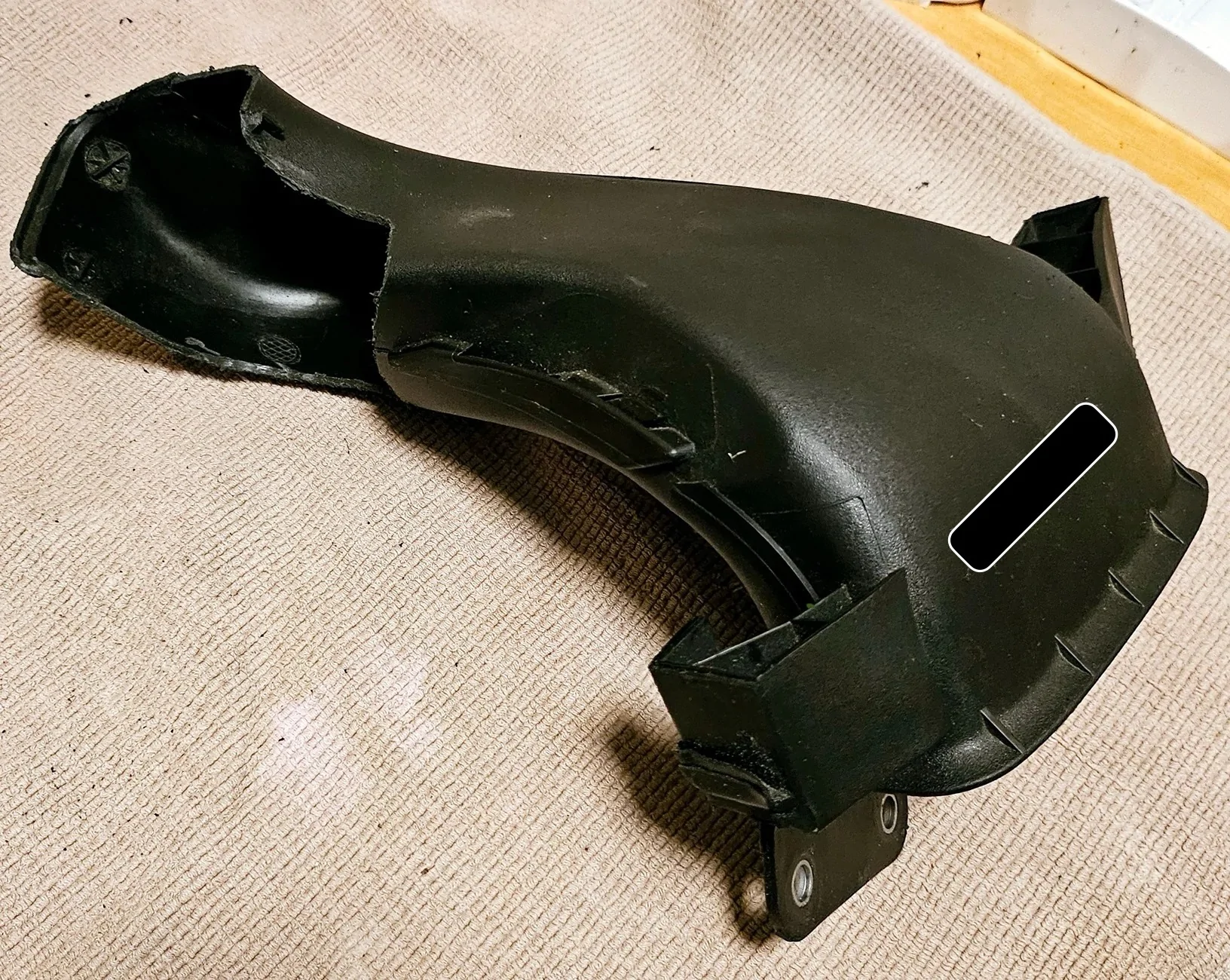
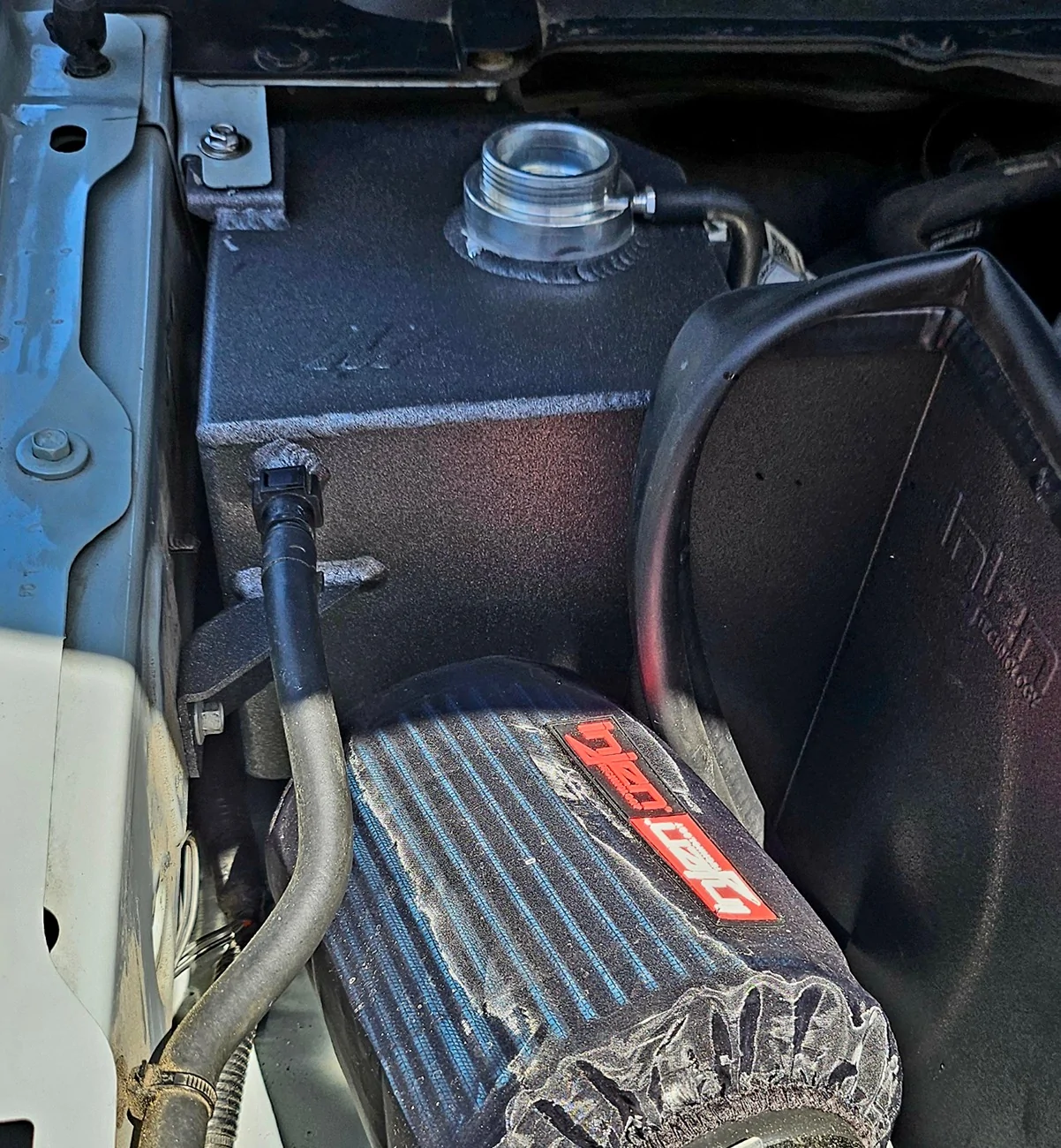
The truth is that aftermarket intake gains come from one thing: more inlet area. Bigger inlets, additional openings, and less restrictive paths allow the turbo to access more available air. That’s why S&B’s ISO graphs look “better”—the filter flows more and the box has more ways for air to reach the inlet. But this isn’t unique to S&B; every aftermarket intake relies on the same two tricks: high-flow filters and larger or multiple openings. That’s why improving the inlet on the factory box yields similar benefits. My setup does exactly that: I cut a 3" hole into the stock box, routed a silicone tube behind the passenger headlight to provide another low-restriction air path, and paired it with the AFE front scoop. I kept the stock box, its shielding, and its drain system. With a high-flow panel filter, you get 90% of the airflow benefit for about $20.
Here’s something most people never think about: water ingestion. Any intake—OEM or aftermarket—will ingest some amount of water during rain, car washes, snow, or puddle spray. The stock box has intentional drainage so water can escape without soaking the filter. Many aftermarket boxes do not. So the question becomes: where does that water go? Does it accumulate at the bottom? Does it get sprayed directly onto the filter media? Does the filter absorb it? And then what happens when the turbo pulls on damp filter material? This isn’t a problem unique to S&B — it applies to every open-path or high-exposure aftermarket intake design. People love looking at airflow charts but never ask what happens when a filter gets hit with mist or splash.
If you actually want measurable performance, the intercooler is a far bigger upgrade than any intake. The stock intercooler heat-soaks fast, especially in warm weather or under load. A larger intercooler reduces charge air temperatures, allowing more fuel and timing, resulting in real torque gains and more consistent performance. The intake determines how easily the turbo can get air; the intercooler determines how useful that air actually is.
For anyone trying to understand the physics behind all this instead of buying parts based on marketing, these two videos explain more in 10 minutes than most forum threads do in years:
Plus, one that’s just entertaining but still accurate:
In short: the stock intake isn’t a performance bottleneck. Filter choice determines filtration versus flow. Inlet design determines how much air the turbo has available. The intercooler determines how much power you actually get out of that air. Most aftermarket intakes are mostly aesthetic and auditory upgrades, not true airflow necessities. But if you want a bit more response, improve the inlet, choose the filter you prefer, and skip the hype.
Attachments:
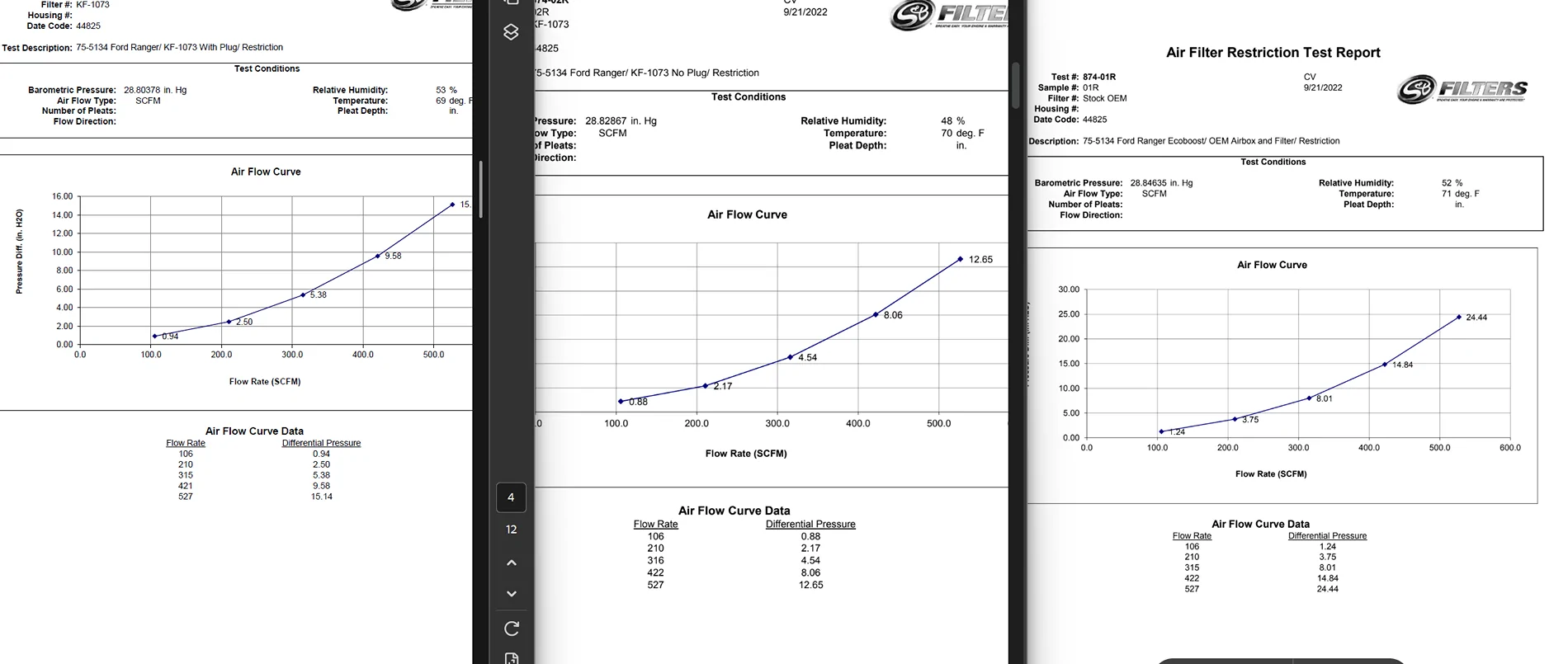
When you look closely at these airflow curves, you can see two different restrictions at work—one at low flow, and one at higher flow. Down low, the improvement comes mainly from inlet design. This is where a larger or additional opening into the airbox helps create more positive pressure feeding the box. That’s why the “with plug / without plug” designs show a noticeable difference at the lower SCFM numbers: a freer inlet path simply lets more air reach the filter before the turbo starts pulling hard.
But once airflow climbs, you start to see the second restriction: the filter media itself. The OEM paper filter is more restrictive by nature. So after the inlet restriction is overcome, the graph begins to diverge more sharply because the high-flow filters have less resistance at higher CFM. This is where they show their advantage. In other words, the box inlet limits flow early, and the filter media limits flow later. You have to strip away the marketing and “look between the lines” to understand what’s really happening: the inlet controls the early part of the curve, and the filter controls the upper part. That’s why improving the inlet and using a higher-flow panel filter together can nearly replicate what full aftermarket kits show in their ISO tests.

Filtration is simple: if you want maximum protection and engine life, stick to a good paper filter like Motorcraft or Fram. They filter about 99.8% of particulates and perform even better once partially loaded with dirt. High-flow filters like K&N, AFE, or S&B trade a very small amount of filtration efficiency—fractions of a percent—for improved airflow. And the whole “oiled filter ruins the MAF” myth does not apply because the Ranger doesn’t use a MAF at all. The first sensor after the filter is only an intake temperature sensor. The PCV system introduces far more oil vapor into the intake tract than any oiled filter ever could.
The truth is that aftermarket intake gains come from one thing: more inlet area. Bigger inlets, additional openings, and less restrictive paths allow the turbo to access more available air. That’s why S&B’s ISO graphs look “better”—the filter flows more and the box has more ways for air to reach the inlet. But this isn’t unique to S&B; every aftermarket intake relies on the same two tricks: high-flow filters and larger or multiple openings. That’s why improving the inlet on the factory box yields similar benefits. My setup does exactly that: I cut a 3" hole into the stock box, routed a silicone tube behind the passenger headlight to provide another low-restriction air path, and paired it with the AFE front scoop. I kept the stock box, its shielding, and its drain system. With a high-flow panel filter, you get 90% of the airflow benefit for about $20.
Here’s something most people never think about: water ingestion. Any intake—OEM or aftermarket—will ingest some amount of water during rain, car washes, snow, or puddle spray. The stock box has intentional drainage so water can escape without soaking the filter. Many aftermarket boxes do not. So the question becomes: where does that water go? Does it accumulate at the bottom? Does it get sprayed directly onto the filter media? Does the filter absorb it? And then what happens when the turbo pulls on damp filter material? This isn’t a problem unique to S&B — it applies to every open-path or high-exposure aftermarket intake design. People love looking at airflow charts but never ask what happens when a filter gets hit with mist or splash.
If you actually want measurable performance, the intercooler is a far bigger upgrade than any intake. The stock intercooler heat-soaks fast, especially in warm weather or under load. A larger intercooler reduces charge air temperatures, allowing more fuel and timing, resulting in real torque gains and more consistent performance. The intake determines how easily the turbo can get air; the intercooler determines how useful that air actually is.
For anyone trying to understand the physics behind all this instead of buying parts based on marketing, these two videos explain more in 10 minutes than most forum threads do in years:
Plus, one that’s just entertaining but still accurate:
In short: the stock intake isn’t a performance bottleneck. Filter choice determines filtration versus flow. Inlet design determines how much air the turbo has available. The intercooler determines how much power you actually get out of that air. Most aftermarket intakes are mostly aesthetic and auditory upgrades, not true airflow necessities. But if you want a bit more response, improve the inlet, choose the filter you prefer, and skip the hype.
Attachments:
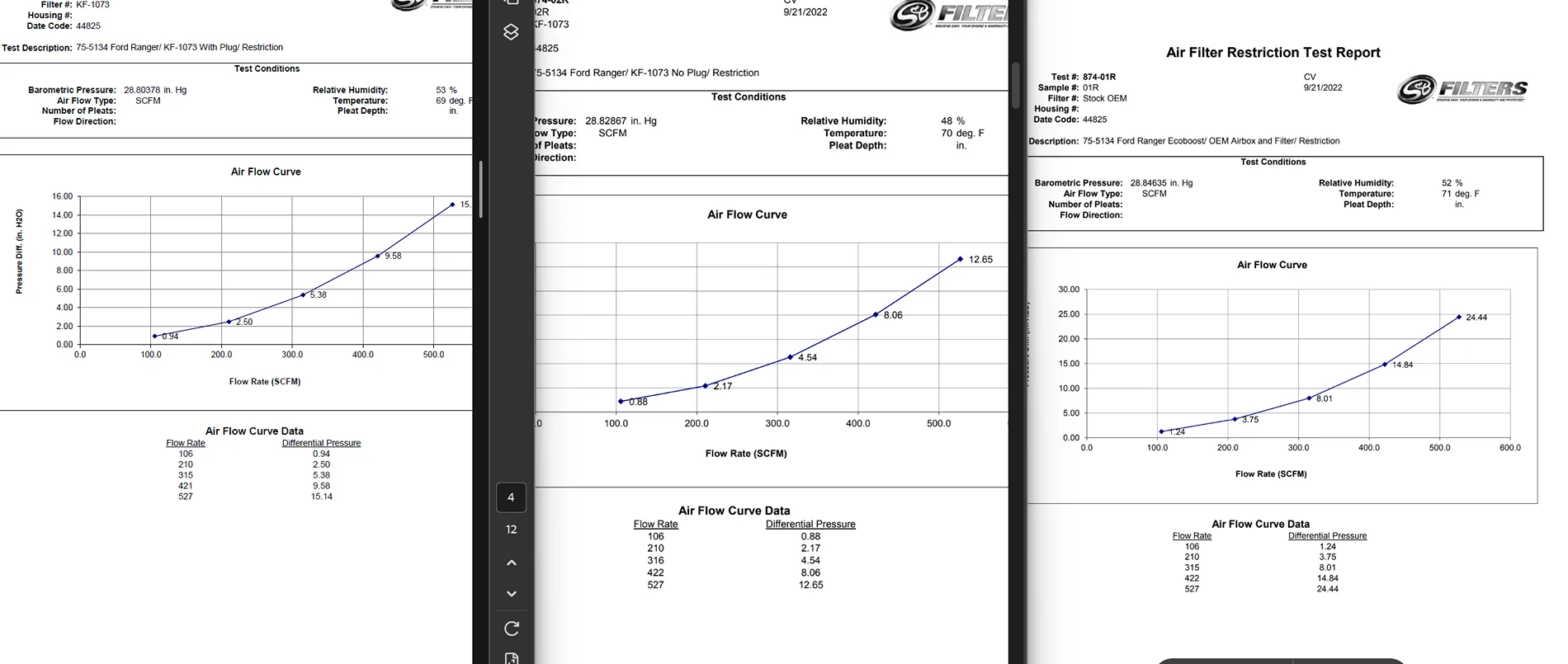
When you look closely at these airflow curves, you can see two different restrictions at work—one at low flow, and one at higher flow. Down low, the improvement comes mainly from inlet design. This is where a larger or additional opening into the airbox helps create more positive pressure feeding the box. That’s why the “with plug / without plug” designs show a noticeable difference at the lower SCFM numbers: a freer inlet path simply lets more air reach the filter before the turbo starts pulling hard.
But once airflow climbs, you start to see the second restriction: the filter media itself. The OEM paper filter is more restrictive by nature. So after the inlet restriction is overcome, the graph begins to diverge more sharply because the high-flow filters have less resistance at higher CFM. This is where they show their advantage. In other words, the box inlet limits flow early, and the filter media limits flow later. You have to strip away the marketing and “look between the lines” to understand what’s really happening: the inlet controls the early part of the curve, and the filter controls the upper part. That’s why improving the inlet and using a higher-flow panel filter together can nearly replicate what full aftermarket kits show in their ISO tests.
Sponsored
Last edited: