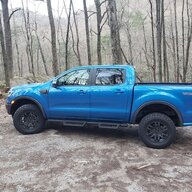

Sponsored

Aluminum Radiators vs OEM Plastic Aluminum Radiators

Frenchy

Well-Known Member
First Name
Chris
Joined
Mar 15, 2020
Threads
164
Messages
7,544
Reaction score
10,753
Location
Elizabeth, Colorado
Vehicle(s)
2012 Nissan Frontier, 1994 F150 XL, 2022 Ford Transit
Occupation
Field Service Technician
I'm putting this here since my current vehicle is the topic at hand. Regardless I feel it can still apply across the board with different vehicles.

So for those that are aware I am not a Ranger owner anymore and have been for about 3 years now(don't gete wrong I kinda miss the truck but yet don't). Now I'm in a 2012 Nissan Frontier and I feel it is the right fit for me.

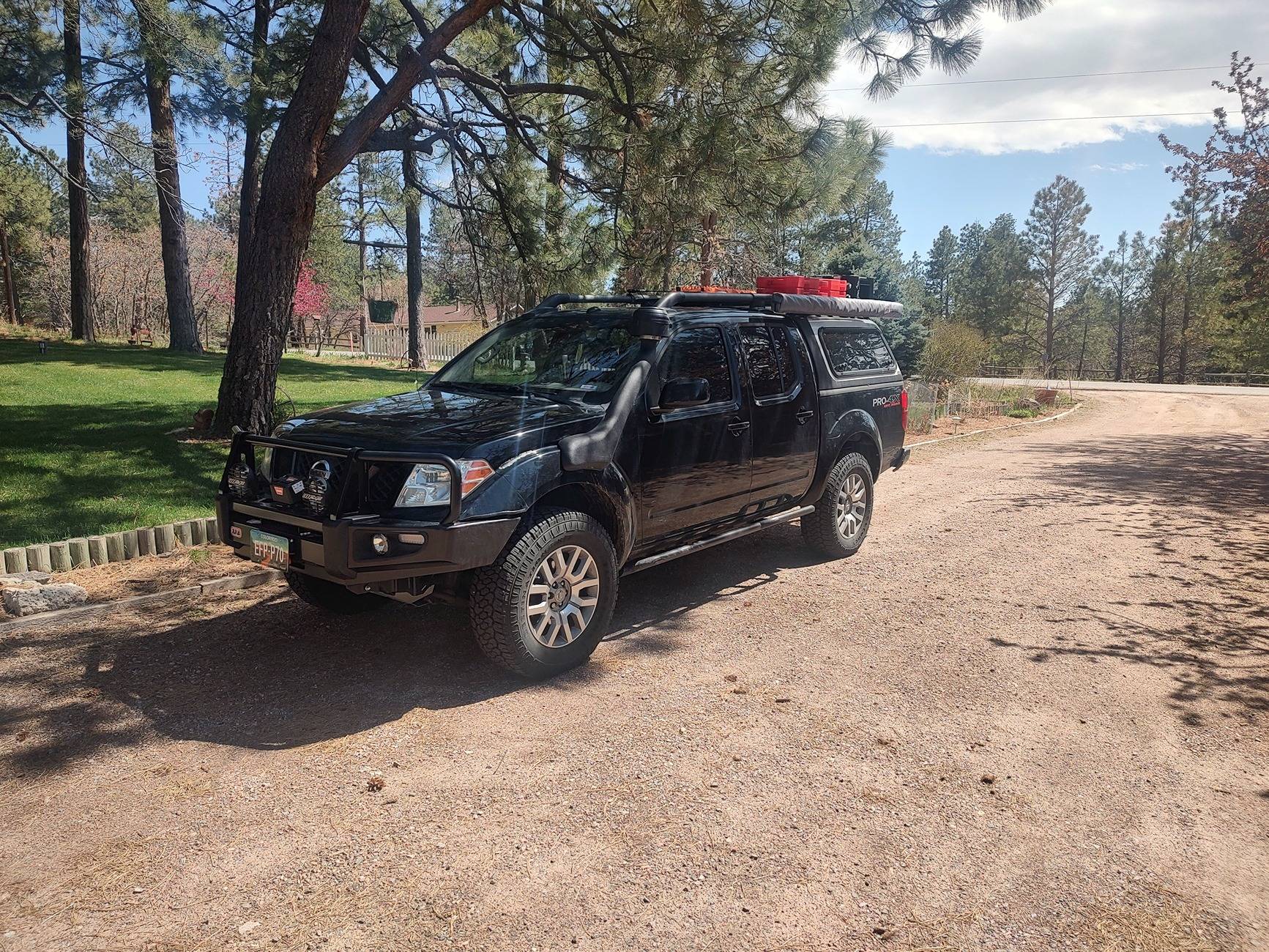
The vehicle in question
IMG_20250426_143541842_HDR.jpg


Now it is loaded pretty well for Touring/Overlanding and with a recent trip I noticed the Engine Coolant Temperature getting on the warm side lately. To specify for this vehicle, the OEM Thermostat is a 180°F and is set to start opening around 180° and be fully open around 205°. After it is open it will close around 170-175°F. When I took a trip to Arizona the other week, it was a bit hot in Arizona and New Mexico. I would say it was around 90-95°F and @P. A. Schilke can confirm as I was in his neck of the woods(or desert in this case). During that time I noticed while cruising around 60-70 MPH the Engine Coolant Temperature wanted to stay around 195-205°F depending on the conditions(again just cruising and would hit the occasional slight incline). In reality not really working it that hard.

Now in my opinion it may still be considered a "Normal area for the truck, but at the same time it is a bit warm for my taste when not under heavy load. I would be a bit more comfortable if it was closer to 180°F like between 185-195°F for normal operation on a hot day.

Now with that said I have been considering replacing the OEM Plastic Aluminum Radiator with an Aluminum Radiator from CSF(unfortunately the only option that may be reliable) for better cooling efficiency. The only question is how much of a difference it will make with the vehicle I have?

To put simple, for those of you that have swapped out the OEM Plastic Aluminum Radiator for an Aluminum Radiator in any of your vehicles(especially if it was heavily loaded like my Frontier), how much of a change did you see on Cooling Performance? Did it do what you were hoping or was it not what you were expecting? If you have before and after numbers for coolant temp, that would be excellent!
Sponsored


Friday yet?

Well-Known Member
Joined
Oct 14, 2022
Threads
46
Messages
2,516
Reaction score
11,315
Location
Tennessee
Vehicle(s)
‘23 Lariat Tremor, Focus ST
Occupation
Corporate drone. Dilbert's world is alive & well.
Not helping you get an answer at all but…

Even though my ‘06 NISMO turned out to be a complete POS, I always loved that 4.0 engine. Other than replacing the timing chain guides (yet another issue with the 05-06 models) it was solid as a tank. As to radiator, had to replace that too. Another known issue and I was past the acceptable “we’ll help” mileage.

NISMO had ? break constantly. Mostly electronics, but axle seals too. But, I loved the truck. Truly. To the point that I briefly entertained getting a Nissan again when I bought the blue beauty. My memories of Nissan corporate, not the truck, prevented that thought process from moving any farther.

IMHO it’s a damn good truck Frenchy. By 2012 they had the issues sorted out. Change out the radiator and rock on.
 

Dgc333

Well-Known Member
First Name
Dave
Joined
Aug 24, 2021
Threads
17
Messages
1,742
Reaction score
4,113
Location
Massachusetts
Vehicle(s)
21 Ranger Lariat
Occupation
Engineer
Going from plastic to aluminum tanks on a radiator is not going to make enough of a difference to be worth the effort. You are going to need a radiator with an improved core. More coolant tubes, denser cooling fins, etc.

FWIW, 180 degree thermostat is awfully low these days. The Ranger has a 198 degree thermostat and the 5.7 Hemi in my hot rod has a 205 degree thermostat.
 
OP
OP
Frenchy

Frenchy

Well-Known Member
First Name
Chris
Joined
Mar 15, 2020
Threads
164
Messages
7,544
Reaction score
10,753
Location
Elizabeth, Colorado
Vehicle(s)
2012 Nissan Frontier, 1994 F150 XL, 2022 Ford Transit
Occupation
Field Service Technician
Going from plastic to aluminum tanks on a radiator is not going to make enough of a difference to be worth the effort. You are going to need a radiator with an improved core. More coolant tubes, denser cooling fins, etc.

FWIW, 180 degree thermostat is awfully low these days. The Ranger has a 198 degree thermostat and the 5.7 Hemi in my hot rod has a 205 degree thermostat.
Imports have a different range than the domestic vehicles, so keep that in mind. Nissan has usually stayed in the 170°-180° Thermostat Range over the years vs the US Domestic running a 195° from the Factory.

When looking at CSF's site for the Aluminum Radiators it looks like the Core is improved with the tubes and the fins. It also seems like the core is only slightly thicker thank Factory. This would make it where one could see the improvement they are looking for within reason. Not like I'm trying to make it run colder than what the Thermostat is rated for.

I should ask if you are speaking from experience(whether it's with the Ranger or a different vehicle)?
 
OP
OP
Frenchy

Frenchy

Well-Known Member
First Name
Chris
Joined
Mar 15, 2020
Threads
164
Messages
7,544
Reaction score
10,753
Location
Elizabeth, Colorado
Vehicle(s)
2012 Nissan Frontier, 1994 F150 XL, 2022 Ford Transit
Occupation
Field Service Technician
Well a new option has been added to the idea and there is fair thoughts behind it.

First off I want to state that the OEM Radiator for this particular vehicle is a 1 Row and has a Core Thickness of 1.25 inches. For a OEM Radiator for a Factory Application that is not bad especially for a vehicle of this size.

The CSF Aluminum Radiator I was considering is a 2 Row with a Core Thickness of 1.625 inches.

The next option that has come to the table is a KOYO Radiator. It is still a Plastic Aluminum like the OEM. It is a 2 Row with a Core Thickness of 1.4375 inches. This is also made in Japan, so there is no question if it will be a quality piece. It also costs less than the CSF Aluminum Radiator.

Now with all that said I do understand that a radiator needs to be sized correctly to a vehicle in order to be efficient. A radiator that is too big for a particular application will not Cool as well as one might need. Then again you get the same effect with a radiator that's too small. I understand that my factory radiator is currently up at undersized for the current load.

Thanks to a recent article that I found and took time to read, doing a simple upgrade from a 1 Row to a 2 Row radiator would be an excellent idea for someone like myself that has a vehicle that's heavily loaded and does a lot of off-road touring or perhaps even towing. Whether it is plastic aluminum or aluminum is a different story. This particular article doesn't cover that but it's still a good read.

https://www.speedwaymotors.com/the-...PGaESGXEJNeEi5Wpy_EmSs_IhhBvNG5-urhFGvMgHM2M8

Now I'm still having a tough time deciding if I should go with the full aluminum radiator or perhaps stick with the plastic aluminum radiator. Due to cost reasons I might just go with the KOYO as it is still an OEM type and is it also made in Japan, so I know it won't be an issue of quality. Even with a little bit of increase in core thickness and having the second row it should improve cooling efficiency to an extent. It might even do enough for what I'm looking for.


Dgc333

Well-Known Member
First Name
Dave
Joined
Aug 24, 2021
Threads
17
Messages
1,742
Reaction score
4,113
Location
Massachusetts
Vehicle(s)
21 Ranger Lariat
Occupation
Engineer
Imports have a different range than the domestic vehicles, so keep that in mind. Nissan has usually stayed in the 170°-180° Thermostat Range over the years vs the US Domestic running a 195° from the Factory.

When looking at CSF's site for the Aluminum Radiators it looks like the Core is improved with the tubes and the fins. It also seems like the core is only slightly thicker thank Factory. This would make it where one could see the improvement they are looking for within reason. Not like I'm trying to make it run colder than what the Thermostat is rated for.

I should ask if you are speaking from experience(whether it's with the Ranger or a different vehicle)?
I speak from experience, early in my engineering career I was a test engineer for a company that made heat exchangers for aero space applications, was an OEM supplier of thermostats to the big three and had a line of transmission and oil coolers for automotive use. We also did custom work: we supplied radiators to Ford for the GT40 program, made radiators for Richard Petty's NASCAR team and supplied radiators to Andy Granatelli's Indy Car program. Our solution brazed aluminum cores were extremely efficient but were to expensive for OE radiators.
 

Friday yet?

Well-Known Member
Joined
Oct 14, 2022
Threads
46
Messages
2,516
Reaction score
11,315
Location
Tennessee
Vehicle(s)
‘23 Lariat Tremor, Focus ST
Occupation
Corporate drone. Dilbert's world is alive & well.
Frenchy, what did you decide on the radiator?
 

JohnnyO

Well-Known Member
First Name
Jon
Joined
Apr 8, 2021
Threads
23
Messages
1,970
Reaction score
6,145
Location
Pittsburgh, PA
Vehicle(s)
2020 Ranger STX 4x4
Occupation
Asst. Greenskeeper, Bushwood Country Club
Going from plastic to aluminum tanks on a radiator is not going to make enough of a difference to be worth the effort. You are going to need a radiator with an improved core. More coolant tubes, denser cooling fins, etc.

FWIW, 180 degree thermostat is awfully low these days. The Ranger has a 198 degree thermostat and the 5.7 Hemi in my hot rod has a 205 degree thermostat.
There is probably little functional difference in a street application between the OE plastic tanks and a full aluminum unit.
Main thing is the aluminum tanks won't crack like the plastic ones which aren't repairable.
In the Sport Trac word where I came from, the plastic tanks and plastic thermostat housings (on the 4.0) would crack. Had both happen on mine, the radiator was covered on extended warranty.
The thermostat housing is a more common problem but easy to change yourself and aluminum units are available.
What we did there was a trick I figured out, swapping the OE 20 lb radiator cap with a 16 lb unit from a Mustang.
 
OP
OP
Frenchy

Frenchy

Well-Known Member
First Name
Chris
Joined
Mar 15, 2020
Threads
164
Messages
7,544
Reaction score
10,753
Location
Elizabeth, Colorado
Vehicle(s)
2012 Nissan Frontier, 1994 F150 XL, 2022 Ford Transit
Occupation
Field Service Technician
There is probably little functional difference in a street application between the OE plastic tanks and a full aluminum unit.
Main thing is the aluminum tanks won't crack like the plastic ones which aren't repairable.
In the Sport Trac word where I came from, the plastic tanks and plastic thermostat housings (on the 4.0) would crack. Had both happen on mine, the radiator was covered on extended warranty.
The thermostat housing is a more common problem but easy to change yourself and aluminum units are available.
What we did there was a trick I figured out, swapping the OE 20 lb radiator cap with a 16 lb unit from a Mustang.
Thankfully that isn't an issue for my truck as we speak. The only big issue the D40 had during the first 5 years of production was the transmission cooler leaking in the radiator. Thankfully that isn't an issue either.
 
OP
OP
Frenchy

Frenchy

Well-Known Member
First Name
Chris
Joined
Mar 15, 2020
Threads
164
Messages
7,544
Reaction score
10,753
Location
Elizabeth, Colorado
Vehicle(s)
2012 Nissan Frontier, 1994 F150 XL, 2022 Ford Transit
Occupation
Field Service Technician
Frenchy, what did you decide on the radiator?
Pretty sure I mentioned it above. That said I got a KOYO Radiator. It already arrived, but it will be installed next weekend. It is a two row and supposed to be a bit thicker allowing for more cooling capacity. Once I have it installed and test I will report back
 
OP
OP
Frenchy

Frenchy

Well-Known Member
First Name
Chris
Joined
Mar 15, 2020
Threads
164
Messages
7,544
Reaction score
10,753
Location
Elizabeth, Colorado
Vehicle(s)
2012 Nissan Frontier, 1994 F150 XL, 2022 Ford Transit
Occupation
Field Service Technician
Well today is the day finally...... It took me a bit to get to the Radiator. What pushed me? The last few days where it was getting a bit hot and the AC not performing as well. The Fan Clutch is also getting replaced.

That said there are a few notes about the KOYO. The Plastic Aluminum ones are not made in Japan but instead made in Indonesia..... Not to thrilled with that, but as long as it doesn't break and does its job, I'll deal with it.

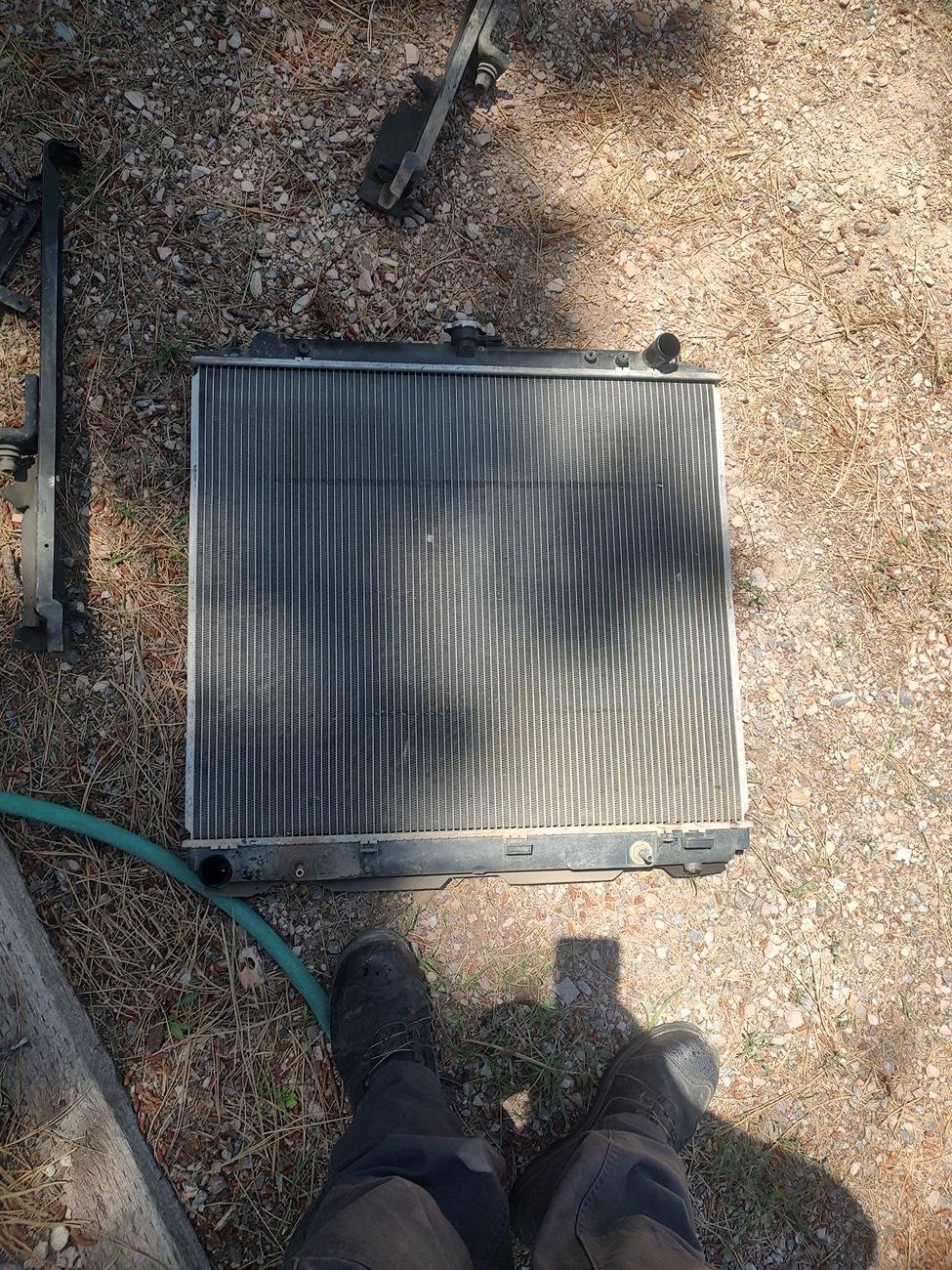
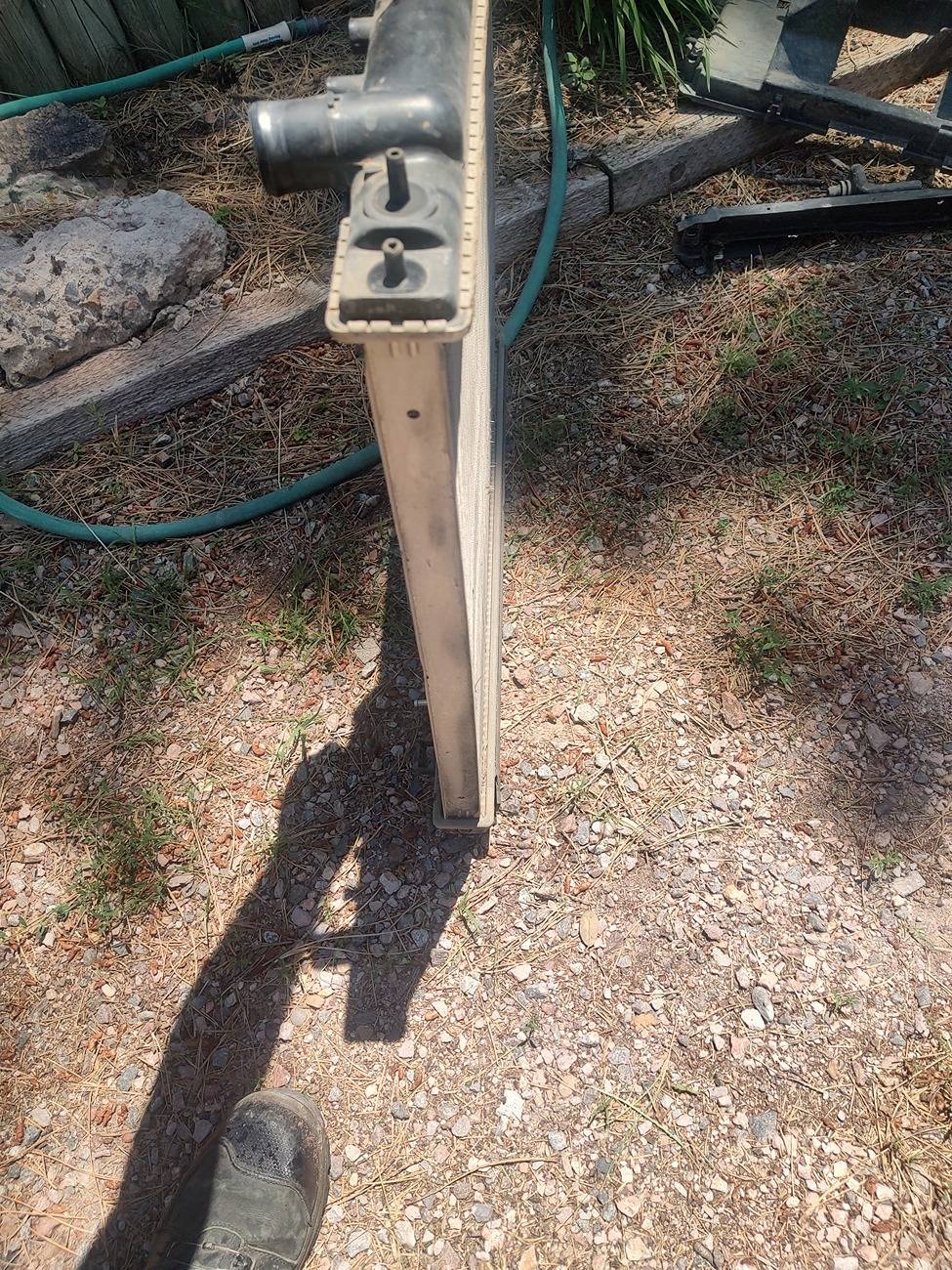
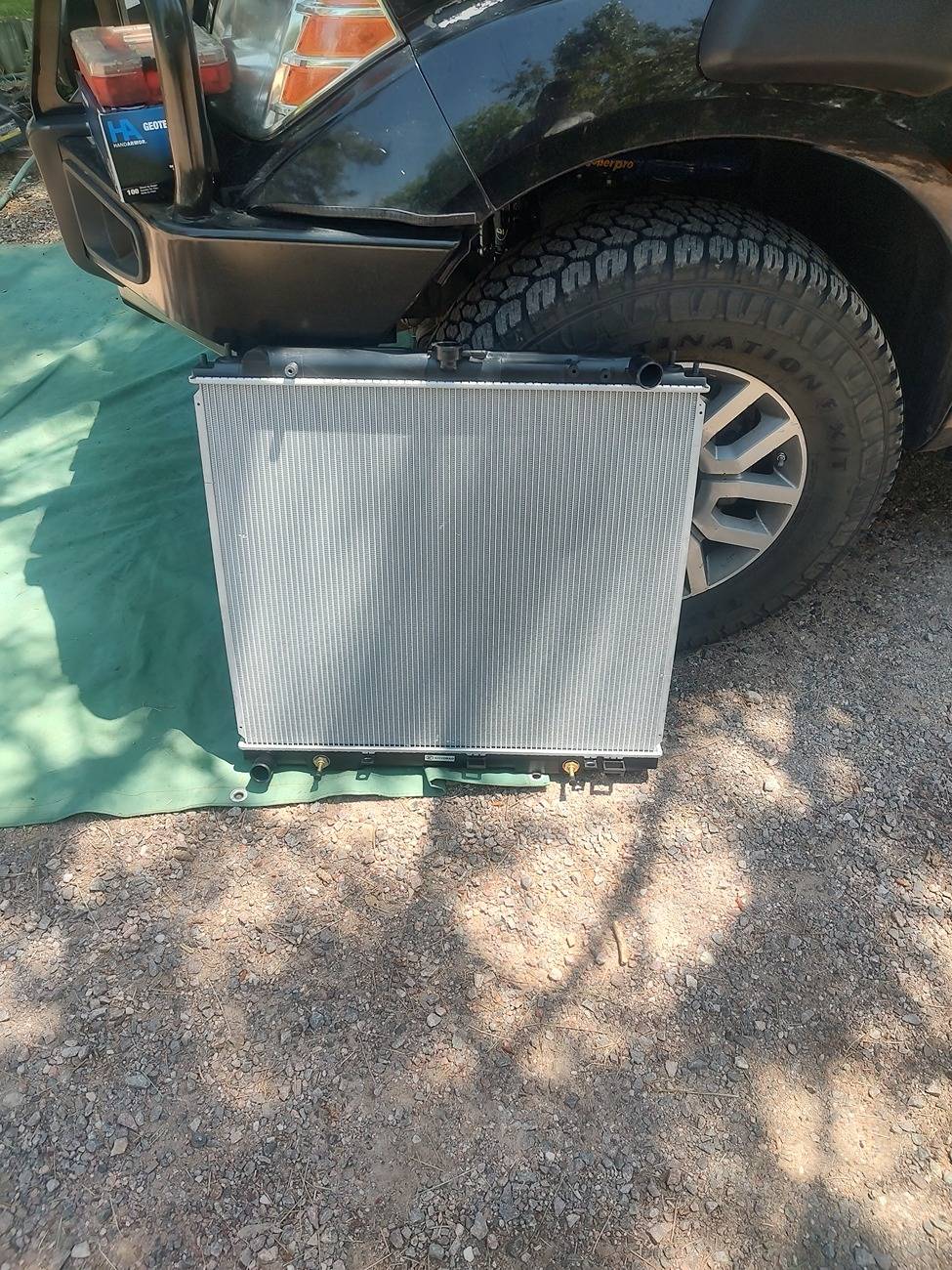
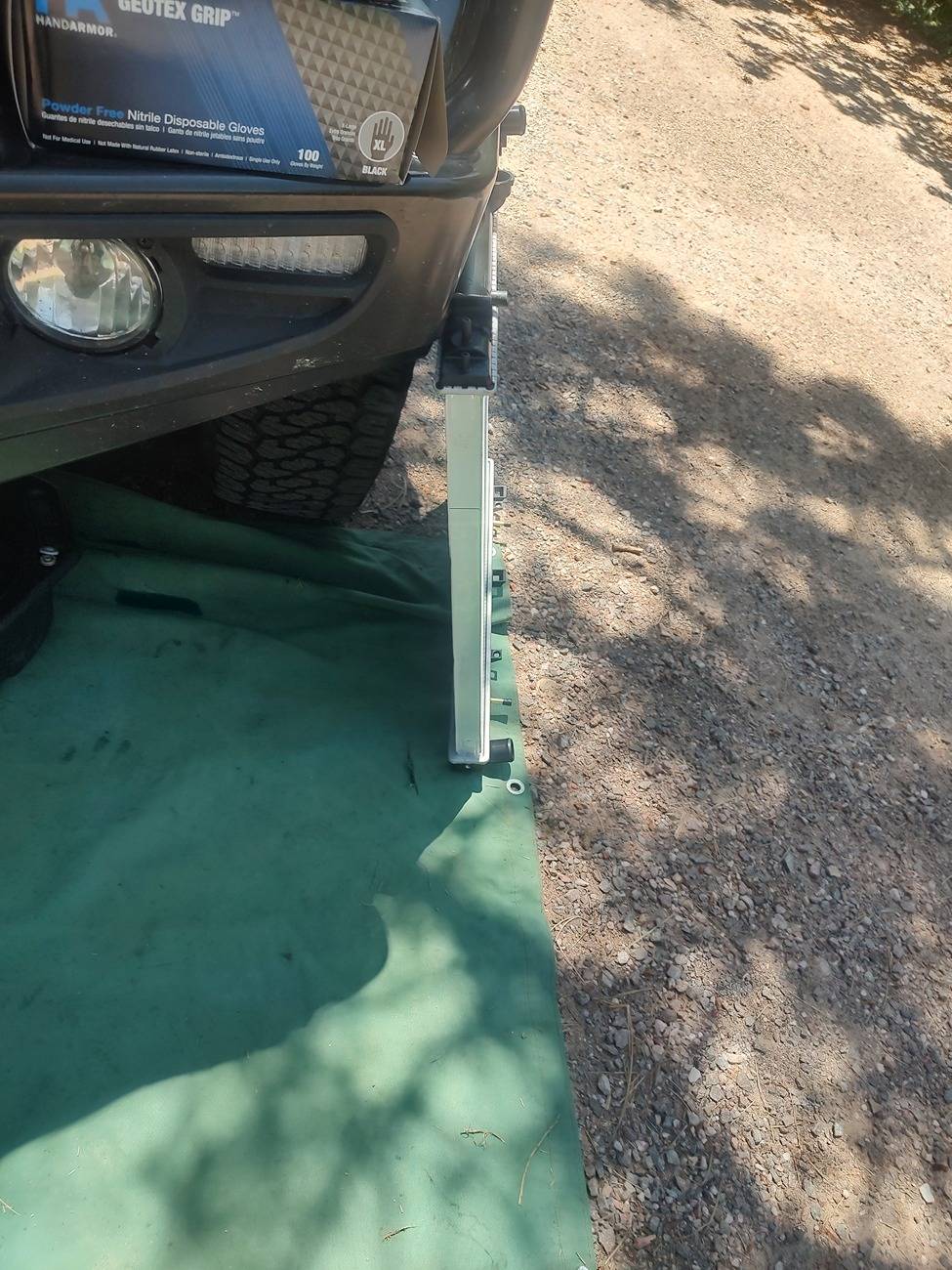
Next is the size, the OEM is a 1 Row Radiator with a thickness of roughly 34 MM. The KOYO is a 2 Row Radiator with a thickness of roughly 37 MM. Because of this it is hard to say if the Capacity is increased or not.

Overall the Radiator still looks good and should do what I need.

Here is the Factory Radiator

IMG_20250712_131238916_HDR.jpg


IMG_20250712_131244297_HDR.jpg


Here is the KOYO

IMG_20250712_131218760_HDR.jpg


IMG_20250712_131223394_HDR.jpg


While replacing the Radiator I also took it upon myself to get new Rubber Insulators for the Radiator. With the Original being 13 years old, it was time.

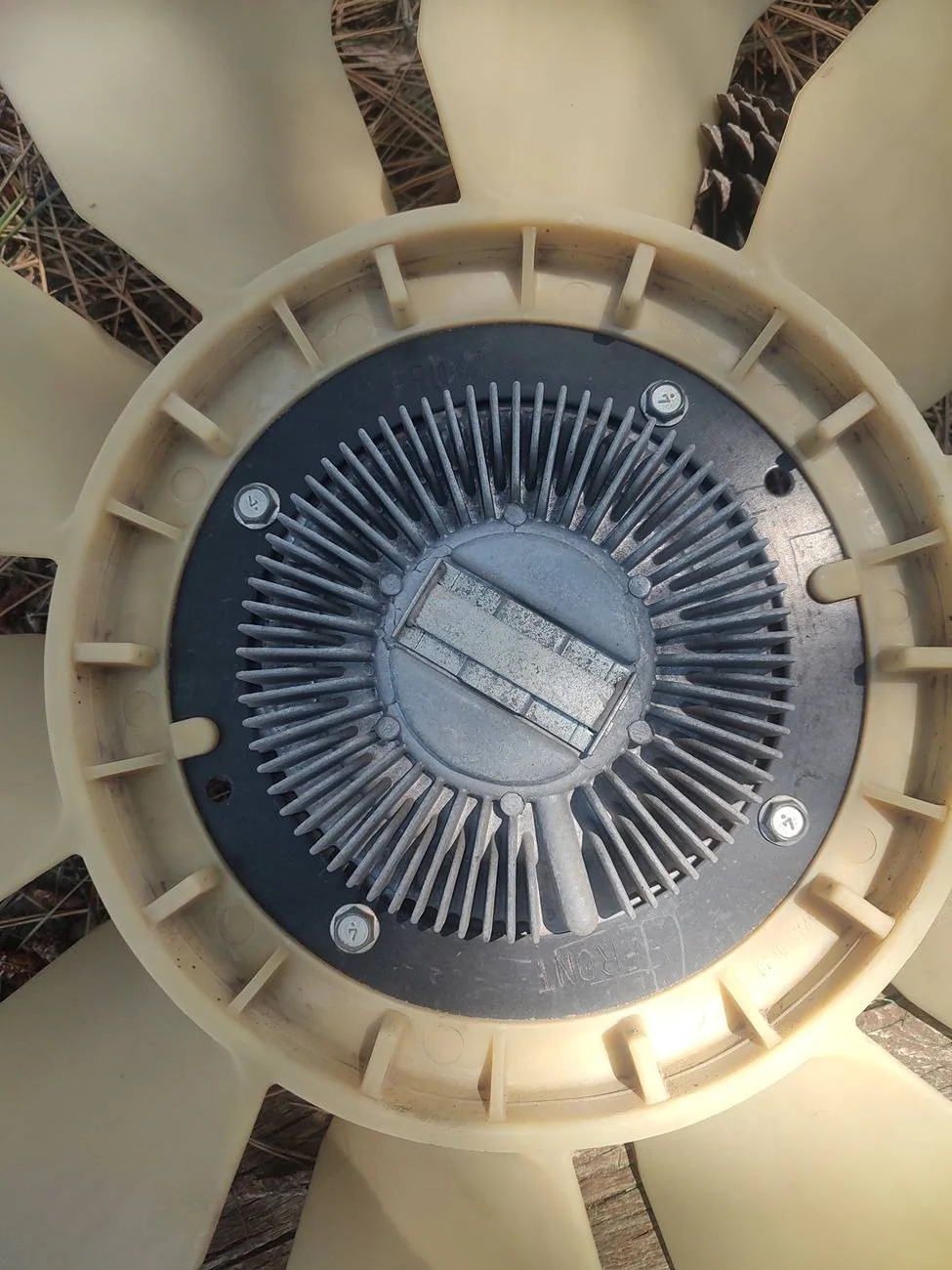
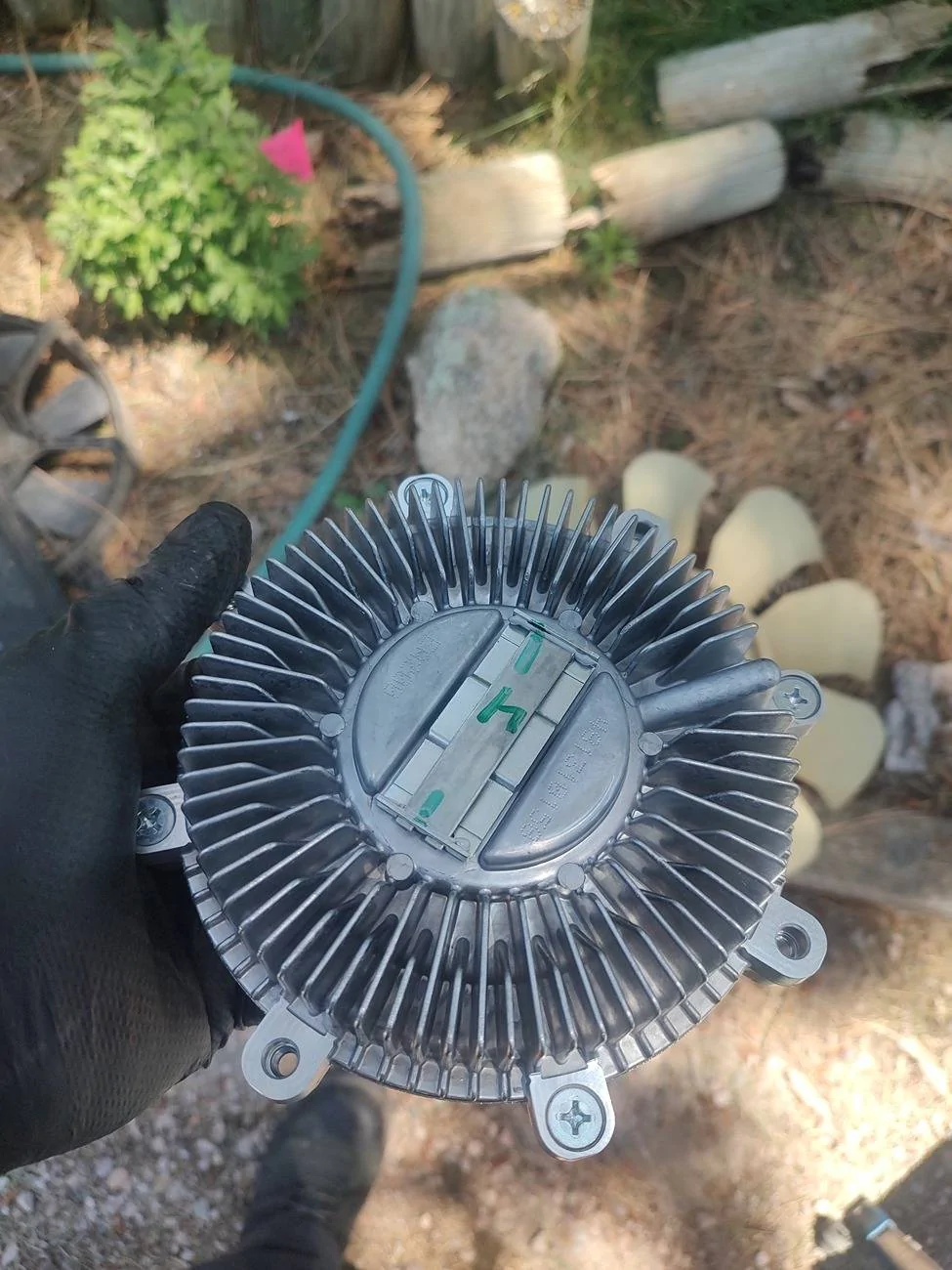
For the Fan Clutch you can look and see the Original is a bit worn and corroded. The new one should work a whole lot better! Also I did go with the OEM for the Fan Clutch. It was available and tends to work best.

17523487904285336414323305784212.webp


17523488009942164460483134632259.webp
 
OP
OP
Frenchy

Frenchy

Well-Known Member
First Name
Chris
Joined
Mar 15, 2020
Threads
164
Messages
7,544
Reaction score
10,753
Location
Elizabeth, Colorado
Vehicle(s)
2012 Nissan Frontier, 1994 F150 XL, 2022 Ford Transit
Occupation
Field Service Technician
So a little update. As I'm finishing up the install and doing my clean up I started looking at the old radiator just for fun.One thing I happen to notice with the old radiator is that It is in fact a two row radiator. What does this mean? That I should have increased the overall capacity with the new radiator. Because of this I should have a little bit more cooling capacity to an extent. They should definitely help me with resistance to overheating in high temp situations. That said the real test will come in about 2 weeks when I head up to Wyoming for a nice off-road trip.
 

TJC

Well-Known Member
First Name
Tony
Joined
Aug 28, 2020
Threads
45
Messages
3,944
Reaction score
9,905
Location
North Carolina
Vehicle(s)
93 Miata, 05 Ranger 4x4, 20 Ranger 4x4, 23 CX-5
I'm putting this here since my current vehicle is the topic at hand. Regardless I feel it can still apply across the board with different vehicles.

So for those that are aware I am not a Ranger owner anymore and have been for about 3 years now(don't gete wrong I kinda miss the truck but yet don't). Now I'm in a 2012 Nissan Frontier and I feel it is the right fit for me.

The vehicle in question
IMG_20250426_143541842_HDR.jpg


Now it is loaded pretty well for Touring/Overlanding and with a recent trip I noticed the Engine Coolant Temperature getting on the warm side lately. To specify for this vehicle, the OEM Thermostat is a 180°F and is set to start opening around 180° and be fully open around 205°. After it is open it will close around 170-175°F. When I took a trip to Arizona the other week, it was a bit hot in Arizona and New Mexico. I would say it was around 90-95°F and @P. A. Schilke can confirm as I was in his neck of the woods(or desert in this case). During that time I noticed while cruising around 60-70 MPH the Engine Coolant Temperature wanted to stay around 195-205°F depending on the conditions(again just cruising and would hit the occasional slight incline). In reality not really working it that hard.

Now in my opinion it may still be considered a "Normal area for the truck, but at the same time it is a bit warm for my taste when not under heavy load. I would be a bit more comfortable if it was closer to 180°F like between 185-195°F for normal operation on a hot day.

Now with that said I have been considering replacing the OEM Plastic Aluminum Radiator with an Aluminum Radiator from CSF(unfortunately the only option that may be reliable) for better cooling efficiency. The only question is how much of a difference it will make with the vehicle I have?

To put simple, for those of you that have swapped out the OEM Plastic Aluminum Radiator for an Aluminum Radiator in any of your vehicles(especially if it was heavily loaded like my Frontier), how much of a change did you see on Cooling Performance? Did it do what you were hoping or was it not what you were expecting? If you have before and after numbers for coolant temp, that would be excellent!
Why type of radiator fan is it equipped with? If it is a viscous clutch it may be showing its age.
 
OP
OP
Frenchy

Frenchy

Well-Known Member
First Name
Chris
Joined
Mar 15, 2020
Threads
164
Messages
7,544
Reaction score
10,753
Location
Elizabeth, Colorado
Vehicle(s)
2012 Nissan Frontier, 1994 F150 XL, 2022 Ford Transit
Occupation
Field Service Technician
Why type of radiator fan is it equipped with? If it is a viscous clutch it may be showing its age.
It technically has two different fans from the factory. The primary fan is a Thermal Fan Clutch. If you look above you can see the Bi-Metal Plate. It's a different design than most, but works. The secondary fan is an Electric and only comes on with AC or Temperature too high.
 

TJC

Well-Known Member
First Name
Tony
Joined
Aug 28, 2020
Threads
45
Messages
3,944
Reaction score
9,905
Location
North Carolina
Vehicle(s)
93 Miata, 05 Ranger 4x4, 20 Ranger 4x4, 23 CX-5
Why type of radiator fan is it equipped with? If it is a viscous clutch it may be showing its age.
i didn't read though the entire thread before responding. You were a step ahead of me. Best of luck with your adventure. I loved climbing all over Colorado and Wyoming with my FJ40 back in the late 70's.
Sponsored


Top