
Sponsored

Towing with the 2019-2023 Ranger

Grumpaw

Well-Known Member
First Name
Steve
Joined
Jul 1, 2021
Threads
84
Messages
5,862
Reaction score
29,210
Location
Fishersville, Va.
Vehicle(s)
Previous 2021 Ranger, Now 2019 Ford Expedition
Occupation
Navy Vet., Retired Police Sgt., Grumpy Old Senior Citizen
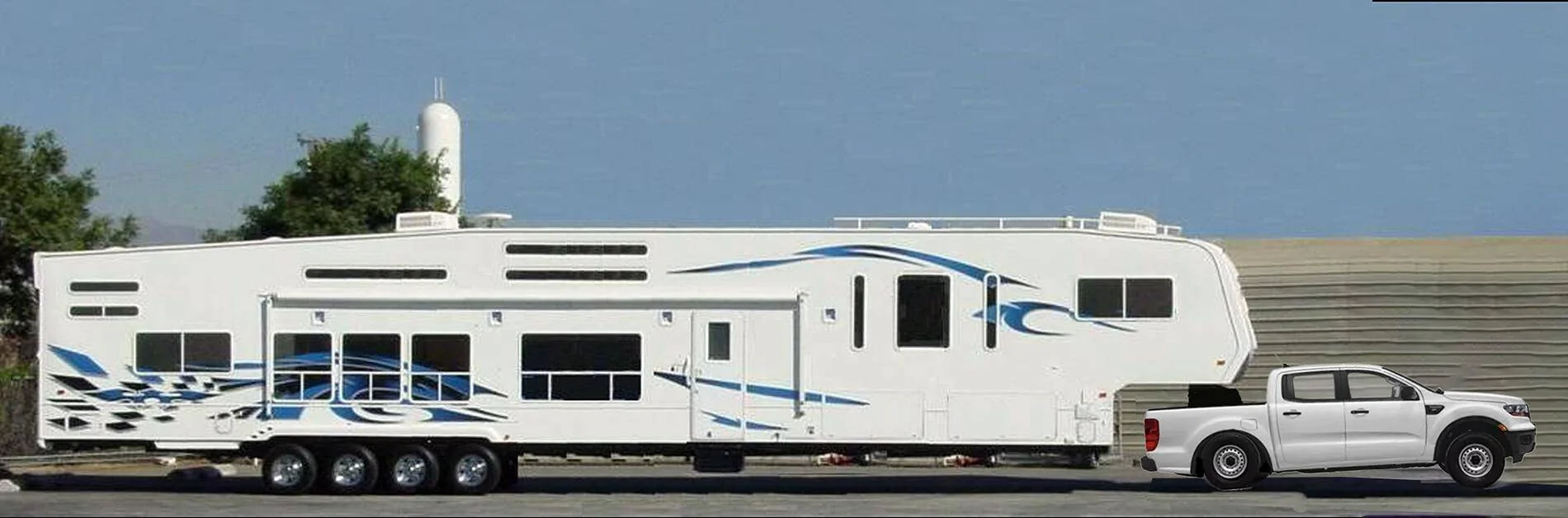
When towing a large enclosed camper, a truck with a wide track and longer wheelbase is probably all thats needed as opposed to our narrow track Rangers.
And, a utility trailer with a heavy load, properly situated, will always tow better than a tall, wide, long box. And, because it's low, it's not affected by wind or passing vehicles like a travel trailer is.
I've towed em all, and a larger truck, even though it may weigh close to the same as a Ranger, will always tow better.
And, I'm using the current F series for comparison...our Rangers are almost if not the same weight/size as comparable F series from 15-20 years ago. The current F series are huge by comparison to our Rangers.
Sponsored
 

Cabose-1

Well-Known Member
First Name
Eli
Joined
Jan 19, 2021
Threads
9
Messages
1,982
Reaction score
7,473
Location
Texas
Vehicle(s)
2024 Ranger XLT, 4x2, Advance Tow, E-Locker
Occupation
Student
I like the way you think grumpaw :)

I am comparing to a 2016.
 
Last edited:

PeterDB

New Member
First Name
Peter
Joined
Aug 30, 2024
Threads
0
Messages
4
Reaction score
5
Location
Aloha, OR
Vehicle(s)
2019 Ford Ranger Lariat
Occupation
Retired
I tow a 24 footer/7000 lb, properly set up, and have no problems at all towing with the Ranger.
In regards to the OP, a 29 footer is just too much trailer, size wise, for the Ranger. The trailer he listed is within the capabilities of the Ranger, but it is just too much side surface to tow mile after mile the way he's planning. That long a trailer is going to sway back and forth when a small van passes, much less a semi. Thats a long trailer for a midsize truck to pull SAFELY. Once that long of a trailer start's to sway it is gonna be hard to control....a case of the tail wagging the dog.
There is a huge difference between my 24 footer and your 23 foot Airstream as opposed to the OP's 29 footer.
A larger, heavier truck is much more stable with a trailer that big, and easier to correct sway with a large rig. Not affected as much as the smaller, lighter Ranger.
To be clear, I'm not advocating the Ranger as the best tow vehicle ever. I wanted, and I suppose others want a TV that is also a good daily driver that fits in a parking space and is somewhat agile on the road. Those who can afford a separate TV from daily driver or don't mind the larger size for daily driving should consider larger vehicles for towing. My posts focus on the questions of "is the Ranger capable enough" and "how to optimize towing setup to make the Ranger capable and safe to tow". To that end, I believe that more important than the weight of the TV is the overhang - the distance between the rear axle and the ball - and the overhang ratio - the ratio of the distance between axles and the overhang. These determine the leverage a sideways trailer movement has on the TV. So I agree that a longer truck might have better stability IF its length improves the overhang ratio. To be frank, the Ranger does not have the best overhang or overhang ratio - most trucks don't have short overhangs. Some SUVs, especially European SUVs, have much shorter overhangs contributing to better overhang ratios and thus can be better TVs than trucks. Even so, if it's a problem you can shorten the overhang by shortening the WDH shank (I did this) or use a WDH type that projects the pivot point forward closer to the TV rear axle. As others have mentioned, "sway" is uncontrolled oscillation that is triggered by a single impulse that pushes the trailer off track. If you experience sway your weight distribution hitch may not be set up properly and/or your load in the trailer is not distributed properly. Sometimes you might need a hitch that has discrete sway control features to augment the passive sway control provided by the WDH.
 

ControlNode

Well-Known Member
First Name
John
Joined
Nov 29, 2021
Threads
16
Messages
1,710
Reaction score
3,643
Location
Eastern NC
Vehicle(s)
84 Civic "2000S"/16 Focus RS/21 Ranger XLT
Occupation
Computers
We tow a 2013 Airstream 23D GVWR 6000 lbs with our 2019 Ranger Lariat FX4 with tow package, Blue Ox hitch with 1000lb bars. Fully loaded for a 45-day trip from the Portland, OR region east to North Carolina, then north to New England, then to the Bayfield WI area and back home, the truck and trailer each weighed in at 5500lb on a CAT scale on our way out. The rear axle weighed heavy but within Ford specifications. We drove some pretty hairy mountain passes including that stretch of Utah 44 and US 191 from Manila to Vernal on our way to Colorado National Monument. We've towed regularly over the Cascades and Oregon Coast Range. The Ranger is completely capable towing as described, keeping up with sane traffic speeds. When a tractor-trailer rig passes us we get a slight blip of trailer-truck movement, requiring one steering correction and back as the force of the air being pushed by the tractor-trailer moves along our rig. We have a friend pulling a 24-foot square-ish trailer with his 2022 Ranger without a problem but with more fuel consumption due to worse aerodynamics. I'm not sure that if your trailer length is a problem or not but I somehow doubt that a longer or heavier truck will necessarily reduce the effect of a large rig passing you if your weight distribution hitch is set up properly and your trailer is loaded properly.
I don't know grumpaw. My uncles f150 weighs 100 lbs less than my ranger.
2016 F150 xl regular cab, long beg 5.0
2022 ranger xlt fx2.
So towing with his "new" truck is worse and better than my ranger.
He has a 3.31 rear end 6 speed?
Ranger has a 3.73 rear-end 10 spd.
Mine tows so much better!
His is long a long take off, what he does have that I don't
Wider and longer wheel base.
We do not go around towing travel trailers. What we do tow is heavy utility trailers. No wdh average 5500 to 7000 a tow. We tow lighter with the cargo trailers.
So I do not think that bigger trucks tow better because they are heavier. Unless you have a hd. Big difference, especially if diesel.
Just depends on application. No one set up for all tows.
Though proper application is common on all trailers. Weight, tounge ,height and so on.
And each of these posts illustrate common cases of not staying within limits of the tow vehicle. In the first towing with a Ranger from OR to NC, you will in of at altitudes that reduces the Ranger's GCWR to only 9,500 (assuming a route that goes between 8,000-8,999 ft), instead of the sea-level rating of 12,500. With the poster stating the truck and trailer are each 5,500 that puts the GCW at 11,000, so only 1,500 overweight. For the second they mention using a 2016 F-150 with 5,500-7000 trailers without a WHD, the F-150 clearly defines it's trailer weight limit as 5,000 unless using a WDH. Both of these cases are common with these trucks.
 

Cabose-1

Well-Known Member
First Name
Eli
Joined
Jan 19, 2021
Threads
9
Messages
1,982
Reaction score
7,473
Location
Texas
Vehicle(s)
2024 Ranger XLT, 4x2, Advance Tow, E-Locker
Occupation
Student
Okay to make the ranger a better capable tow vehicle, use a rear sway bar or the road assist springs. Keep the vehicle as close to stock possible. As in don't add heavy bumpers use a 4x2, anything to add stability. The ranger is a capable vehicle, I don't use a wdh and have no problem with a properly set up 7k trailer. We do field work stuff. The ranger does just fine. I am off road a lot too. No roads, and no need for 4x4s. They help but are not needed.


PeterDB

New Member
First Name
Peter
Joined
Aug 30, 2024
Threads
0
Messages
4
Reaction score
5
Location
Aloha, OR
Vehicle(s)
2019 Ford Ranger Lariat
Occupation
Retired
And each of these posts illustrate common cases of not staying within limits of the tow vehicle. In the first towing with a Ranger from OR to NC, you will in of at altitudes that reduces the Ranger's GCWR to only 9,500 (assuming a route that goes between 8,000-8,999 ft), instead of the sea-level rating of 12,500. With the poster stating the truck and trailer are each 5,500 that puts the GCW at 11,000, so only 1,500 overweight. For the second they mention using a 2016 F-150 with 5,500-7000 trailers without a WHD, the F-150 clearly defines it's trailer weight limit as 5,000 unless using a WDH. Both of these cases are common with these trucks.
Altitude only affects horsepower. If you need to mostly drive with a trailer at high altitude then a bigger engine solves the problem. Ford has a tune for the Ranger 2.3L that significantly increases HP & torque, and of course there's the 2.7L engine option for the right model year. For occasional high altitude driving (crossing mountain passes, for example) just go slower and downshift.
 

ControlNode

Well-Known Member
First Name
John
Joined
Nov 29, 2021
Threads
16
Messages
1,710
Reaction score
3,643
Location
Eastern NC
Vehicle(s)
84 Civic "2000S"/16 Focus RS/21 Ranger XLT
Occupation
Computers
Altitude only affects horsepower. If you need to mostly drive with a trailer at high altitude then a bigger engine solves the problem. Ford has a tune for the Ranger 2.3L that significantly increases HP & torque, and of course there's the 2.7L engine option for the right model year. For occasional high altitude driving (crossing mountain passes, for example) just go slower and downshift.
On the 2019-2023 that is not what Ford says, they state that for every 1,000 ft over sea-level you reduce the GCWR by 3%. Now, on the 2024+ Ranger that wording is changed to be inline with your statement, but there were other changes to the truck. At altitude, it's not just less HP, there is also a loss in cooling efficiency. I do know that the newer Ranger has an electric fan that can run independently of the engine RPM, unlike the belt driving fan of the 2019-2023 Ranger.
 
  • Like
Reactions: EJH

ControlNode

Well-Known Member
First Name
John
Joined
Nov 29, 2021
Threads
16
Messages
1,710
Reaction score
3,643
Location
Eastern NC
Vehicle(s)
84 Civic "2000S"/16 Focus RS/21 Ranger XLT
Occupation
Computers
Okay to make the ranger a better capable tow vehicle, use a rear sway bar or the road assist springs. Keep the vehicle as close to stock possible. As in don't add heavy bumpers use a 4x2, anything to add stability. The ranger is a capable vehicle, I don't use a wdh and have no problem with a properly set up 7k trailer. We do field work stuff. The ranger does just fine. I am off road a lot too. No roads, and no need for 4x4s. They help but are not needed.
The Ranger is good to 7,500 lb. (its max) without the WDH. It's the F-150 that requires it over 5,000 lb.


Top