Sponsored

Oil Catch Can. Yes or No?

Do you have a catch can?


  • Total voters
    44

PNW_Ranger87

Well-Known Member
First Name
Erik
Joined
Oct 10, 2019
Threads
3
Messages
551
Reaction score
674
Location
Renton, WA
Vehicle(s)
2019 Ranger XLT 4X4
Occupation
Parts Specialist
Engineering explained. Not sure if this one in particular has been posted. One thing he said that really piqued my attention was "any of these are better options than doing nothing at all."

Sponsored

 
Last edited:

beetlespin

Well-Known Member
Joined
Mar 18, 2019
Threads
7
Messages
109
Reaction score
184
Location
NJ
Vehicle(s)
2019 Ford Ranger Lariat Supercrew FX4
So which of these catch cans include a sensor to tell you when it's getting full?

What happens when you forget to empty one of these when it's full?
 

HenryMac

Well-Known Member
First Name
John
Joined
Sep 14, 2019
Threads
66
Messages
2,783
Reaction score
5,360
Location
Colorado
Vehicle(s)
2019 SuperCab XL - FX4 - Magnetic - Rocksliders
Occupation
Mech. Engineer - Retired
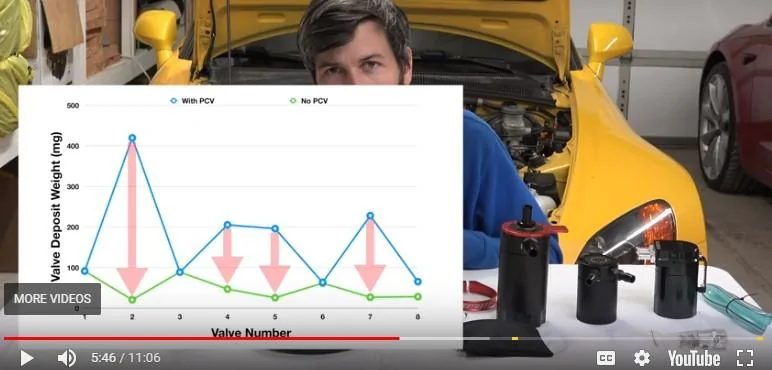
Wonder why only half the valves saw reduced deposits...

Catch Can 2 4 5 7.webp
 

Rick - Saber

Well-Known Member
First Name
Rick
Joined
Apr 18, 2019
Threads
4
Messages
303
Reaction score
377
Location
NC
Vehicle(s)
Sport Ranger 4x4
Wonder why only half the valves saw reduced deposits...
He explains this in the video. The valves that got the most build up are the ones closest to the PCV inlet at the intake manifold (located between valves 4 and 5). The contaminants follow the path of least resistance and go to the nearest open valve for each cylinder. In this dual intake valve per cylinder example that means valves 2, 4, 5 and 7.
 
Last edited:

HenryMac

Well-Known Member
First Name
John
Joined
Sep 14, 2019
Threads
66
Messages
2,783
Reaction score
5,360
Location
Colorado
Vehicle(s)
2019 SuperCab XL - FX4 - Magnetic - Rocksliders
Occupation
Mech. Engineer - Retired
He explains this in the video. The valves that got the most build up are the ones closest to the PCV inlet at the intake manifold (located between valves 4 and 5). The contaminants follow the path of least resistance and go to the nearest open valve for each cylinder. In this dual intake valve per cylinder example that means valves 2, 4, 5 and 7.
But I thought the catch can was supposed to "catch" the contaminates?

The chart clearly shows nearly zero difference at all on half the valves, so what's the point? It's good information though.

Using the guy in the video's logic, if it does anything at all it's worth doing... and that's just flawed logic.

Looking forward to results from folks here that are installing the catch cans on Rangers... to see what they are getting and if there is tangible evidence that the cans are actually worth installing. Actual real world results from unbiased users in real world conditions.


Rick - Saber

Well-Known Member
First Name
Rick
Joined
Apr 18, 2019
Threads
4
Messages
303
Reaction score
377
Location
NC
Vehicle(s)
Sport Ranger 4x4
You might want to try watching that part of the video again.

The deposits were acquired when the PCV was connected to the intake runner on a stock DI engine that did not have a catch can. The next part of the test was done with the PCV not routed into the intake runner at all.
 
Last edited:

PNW_Ranger87

Well-Known Member
First Name
Erik
Joined
Oct 10, 2019
Threads
3
Messages
551
Reaction score
674
Location
Renton, WA
Vehicle(s)
2019 Ranger XLT 4X4
Occupation
Parts Specialist
Using the guy in the video's logic, if it does anything at all it's worth doing... and that's just flawed logic.
I'm curious why you think that's flawed logic? If it's beneficial to a measurable extent then I feel like depending on your definition of worth I would think it should be done.
 

HenryMac

Well-Known Member
First Name
John
Joined
Sep 14, 2019
Threads
66
Messages
2,783
Reaction score
5,360
Location
Colorado
Vehicle(s)
2019 SuperCab XL - FX4 - Magnetic - Rocksliders
Occupation
Mech. Engineer - Retired
I'm curious why you think that's flawed logic? If it's beneficial to a measurable extent then I feel like depending on your definition of worth I would think it should be done.
Measurable to the extent that it is a benefit to the end user, a benefit being it prevents future failures or maintenance issues.

i know these cans collect "stuff". The question is would that stuff have been an issue in a 2.3 Ranger engine if the can wasn't there?

Looking forward to results from folks here that are installing the catch cans on Rangers... to see what they are getting and if there is tangible evidence that the cans are actually worth installing. Actual real world results from unbiased users in real world conditions.
 
Last edited:

RCMUSTANG

Well-Known Member
First Name
Ray
Joined
Jan 22, 2019
Threads
22
Messages
1,867
Reaction score
2,191
Location
Los Angeles
Vehicle(s)
2017 Fusion 1995 Ranger
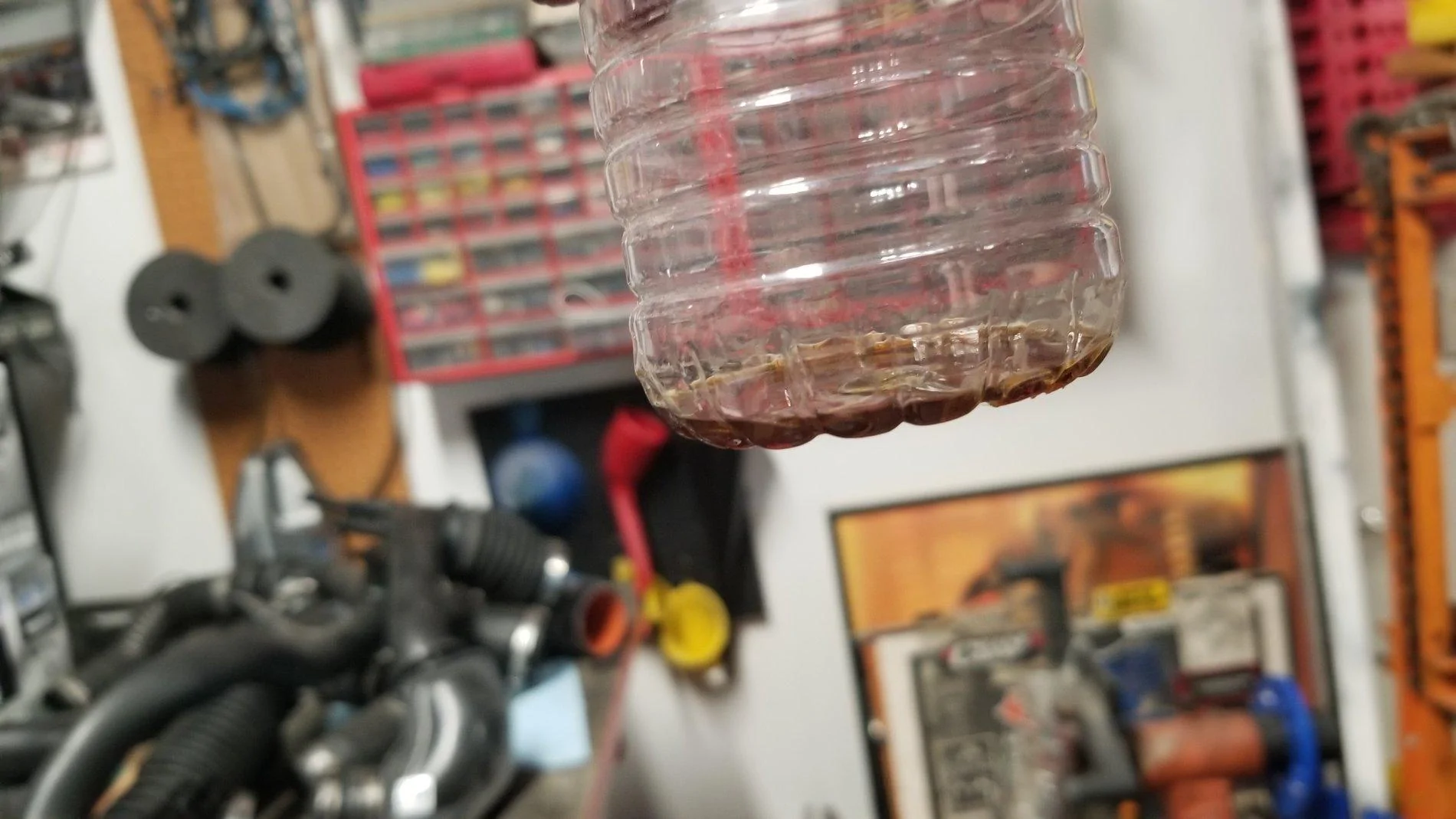
I've already posted a couple times with pictures of the junk I've collected over a time period.
 

I_smell_like_diesel

Well-Known Member
First Name
Chris
Joined
Sep 2, 2019
Threads
15
Messages
257
Reaction score
338
Location
Western Maine
Vehicle(s)
2019 Ford Ranger FX4 Lariat
Occupation
Self Employed
The video that this chart was taken from... the test was not performed with a catch can. They just vented the crankcase vapors to some other place (atmosphere or condensed and collected? Didn't specifically say.)

I ran a catch can for a very short while (was curious) and all it seemed to collect is mostly water and a slight amount of fuel (enough fuel to light with a match but it would not hold a flame). I ended up taking it off because I'd rather be burning that fuel instead of throwing it into my waste oil. Also I think having fuel vapors running though the intake may help keep the valves somewhat clean as well. In addition, someone mentioned that PCV vapors it could aid in keeping the valve seats and guides lubricated.

Just my $0.02. I'm not an Engineer, I just fix things......
 

HenryMac

Well-Known Member
First Name
John
Joined
Sep 14, 2019
Threads
66
Messages
2,783
Reaction score
5,360
Location
Colorado
Vehicle(s)
2019 SuperCab XL - FX4 - Magnetic - Rocksliders
Occupation
Mech. Engineer - Retired
I've already posted a couple times with pictures of the junk I've collected over a time period.
And thanks. But from what I'm seeing, I'm not convinced that this small amount of "junk" in 1100 miles will be an issue. What oil are you running? Do you use 93 octane top tier fuel?

RCMUSTANG 1100 miles.webp
 

RCMUSTANG

Well-Known Member
First Name
Ray
Joined
Jan 22, 2019
Threads
22
Messages
1,867
Reaction score
2,191
Location
Los Angeles
Vehicle(s)
2017 Fusion 1995 Ranger
And thanks. But from what I'm seeing, I'm not convinced that this small amount of "junk" in 1100 miles will be an issue. What oil are you running? Do you use 93 octane top tier fuel?

RCMUSTANG 1100 miles.webp
1. Look to my second picture of how much I picked up. 2. Mobil 1 full synthetic. 3. There is not 93 or 92 around here. Also, fuel has nothing to do with the amount of oil being sucked back into the intake. You think that amount of oil is ok? Then don't get one. As I mentioned several times my intake is now bone dry since the catch can. It was coated before. That would include all the intake tract, turbo and intercooler.
 

DavidR

Well-Known Member
First Name
David
Joined
Jul 22, 2019
Threads
4
Messages
389
Reaction score
328
Location
Eastern CA
Vehicle(s)
2019 Ranger XLT Supercab Saber FX4
Occupation
Engineer
i know these cans collect "stuff". The question is would that stuff have been an issue in a 2.3 Ranger engine if the can wasn't there?
We will never know the detailed answer to that. Ford has likely torn down many engines that were run under different conditions, and know exactly the degree to which carbon buildup occurs, but we will never see the results of that since it is proprietary.

You can easily find cases of valve coking on Ecoboost engines, and you can find cases where Ford has replaced entire head assemblies under warranty, so it sometimes does occur within the warranty period, but nobody knows how those vehicles were run, how they were maintained, and nobody knows how often problems occur or at how many miles they typically occur. While there seem to be fewer problems than with VW or BMW GDI engines, the problems are not nonexistent.

What separates the folks here is how they respond to the very limited data, knowing that problems can and do occur but not knowing how often or under what conditions. The data is limited and people are dividing on whether or not to take any preventative measures, which is fine either way, IMHO.
 

Roofhopper

Well-Known Member
First Name
Ted
Joined
Mar 5, 2019
Threads
6
Messages
326
Reaction score
607
Location
Fairfield OH
Vehicle(s)
2019 Ford Ranger XLT FX4
Occupation
HVAC Service Manager
Vehicle Showcase
1
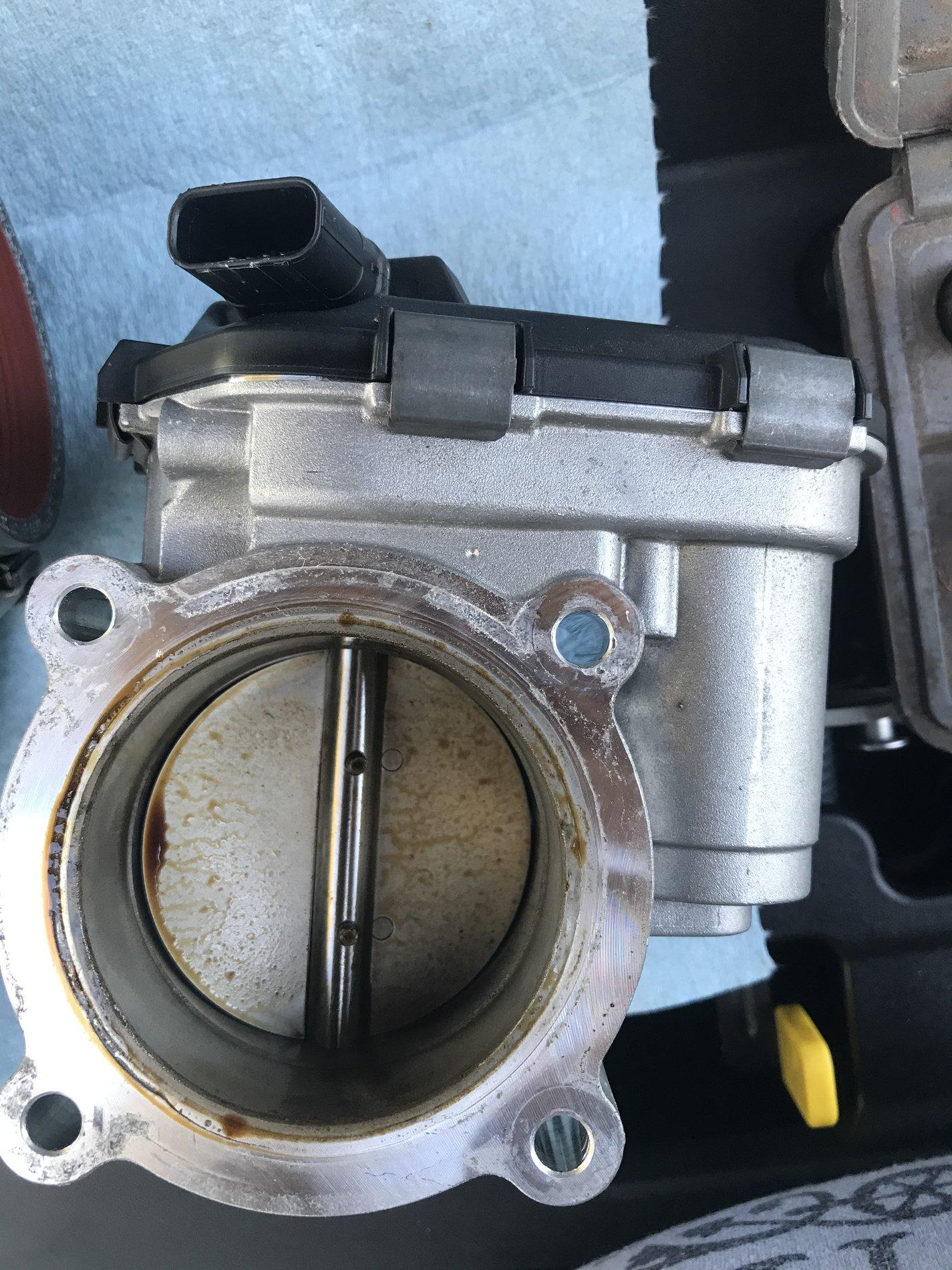
I decided to install the JLT when my truck was at 12k miles after pulling off the throttle body at around 10k miles and finding it completely coated in oil
2A5E10F9-7791-4CDD-B82E-45FF95864134.jpeg

The truck currently has 13,500 miles and I haven’t noticed any negative effects of having the catch can installed. The plan is to re-inspect throttle body at 20k but I may do it at 15k after the next dealer oil change. I’ve only checked the contents of the can once so far after about 500 miles and it picked up about an equal amount of oil as what I found on the back of the throttle body. Sorry I didn’t take an accurate measurement at the time but enough oil to cover 1/4 of a blue shop towel. Will try to find time this weekend to pull can and measure contents, will definitely post results
 

DavidR

Well-Known Member
First Name
David
Joined
Jul 22, 2019
Threads
4
Messages
389
Reaction score
328
Location
Eastern CA
Vehicle(s)
2019 Ranger XLT Supercab Saber FX4
Occupation
Engineer
You might not see much of a change in oil on the throttle body. The reason is that the JLT, by default, installs in the PCV (non-boost) crankcase return path. Those gasses are introduced after the throttle body. Any oil on the TB is coming from the on-boost path where gasses are returned from the valve cover to the turbo inlet because the PCV path will not return gasses with positive pressure in the manifold.

To see a change here, you would need to route the on-boost path (what some people call the CCV path) through a catch can or oil separator. Currently, none of the common plug-and-play kits do that for the Ranger. You need to rig it up yourself.
I decided to install the JLT when my truck was at 12k miles after pulling off the throttle body at around 10k miles and finding it completely coated in oil
2A5E10F9-7791-4CDD-B82E-45FF95864134.jpeg

The truck currently has 13,500 miles and I haven’t noticed any negative effects of having the catch can installed. The plan is to re-inspect throttle body at 20k but I may do it at 15k after the next dealer oil change. I’ve only checked the contents of the can once so far after about 500 miles and it picked up about an equal amount of oil as what I found on the back of the throttle body. Sorry I didn’t take an accurate measurement at the time but enough oil to cover 1/4 of a blue shop towel. Will try to find time this weekend to pull can and measure contents, will definitely post results
Sponsored

 
Last edited:


Top